Are Bulgarians Catholic Or Orthodox?
Bulgaria's traditional religion is Eastern Orthodox Christianity, and Veliko Tarnovo, the medieval capital on the Yantra river, shows it in every church and monastery. What visitors can enter, what it costs and what to expect.
Bulgaria sits in the Eastern Orthodox Christian world, and Veliko Tarnovo, the inland city on the Yantra river that served as capital of the Second Bulgarian Kingdom from the late 12th century, is one of the places where that heritage is most visible. The fortress hill of Tsarevets carries the Patriarchal Cathedral of the Holy Ascension. Below it stand medieval churches, and around the city a ring of monasteries still holds services. Catholic and Muslim communities exist in Bulgaria, but the churches and feast days a visitor to this city encounters are overwhelmingly Orthodox. This page explains what that means in practice: what the buildings are, what tickets cost, and how the religious calendar shapes a stay.
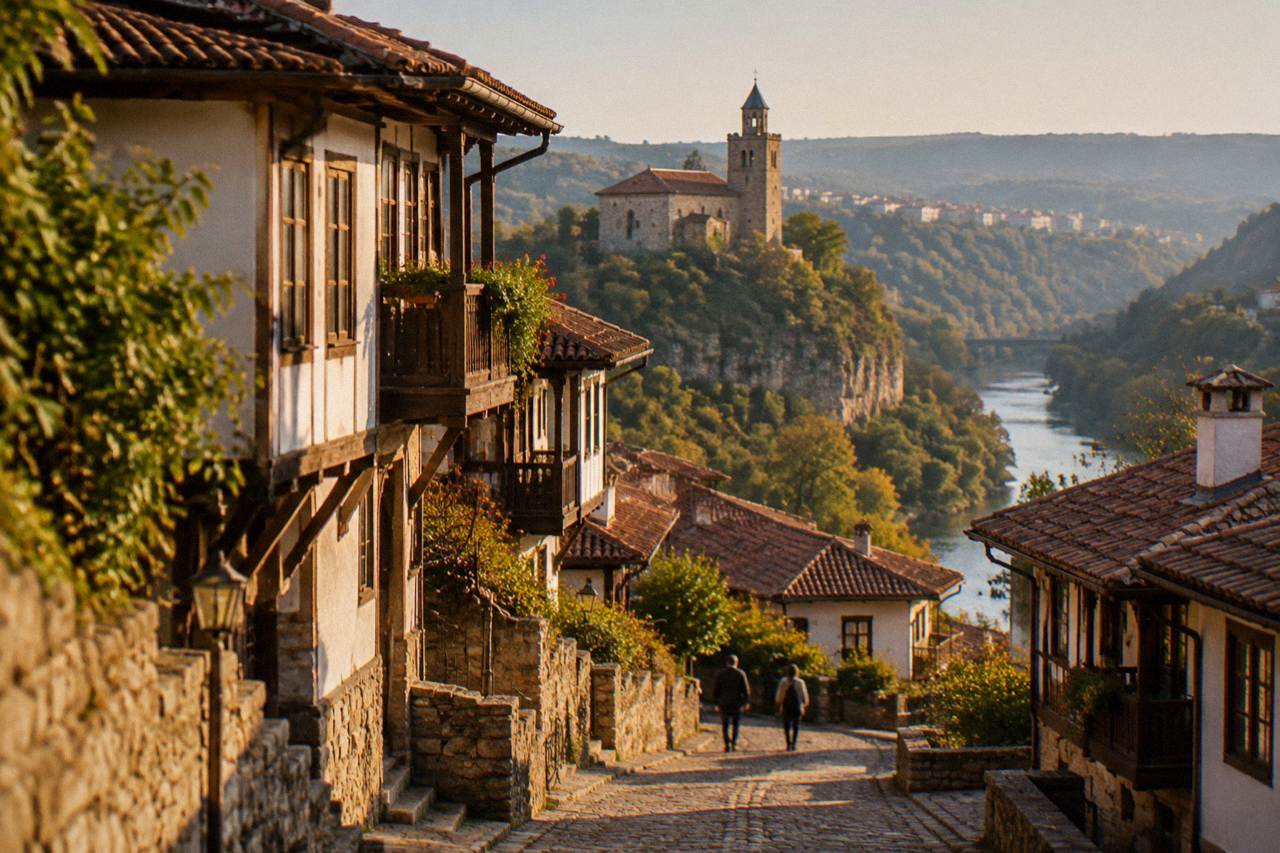
Bulgarians are traditionally Eastern Orthodox Christians, and the Bulgarian Orthodox Church is the country's historic and largest religious body. The faith took its medieval form in cities exactly like Veliko Tarnovo, which was the capital of the Second Bulgarian Kingdom from the late 12th century and the seat of the Bulgarian patriarchate.
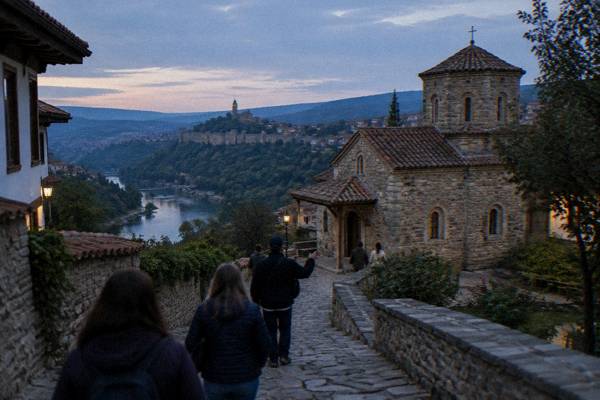
Catholic communities exist in Bulgaria and so does a long-established Muslim minority, but every church on Tsarevets, in the Varosha quarter and in the village of Arbanasi is an Orthodox church, run today as museum sites by the Regional Museum of History.
The distinction matters historically, not just as trivia. The medieval Bulgarian state fell to the Ottomans in 1393, and Orthodoxy survived the centuries that followed partly through monasteries in the hills around this city. When the modern Bulgarian state re-emerged, the Tarnovo Constitution was adopted here in 1879, and full independence was declared on 22 September 1908, when Prince Ferdinand read the Manifesto at the Church of the Holy Forty Martyrs. That church, at the foot of Tsarevets, also holds the marble victory column of Ivan Asen II from 1230, commemorating the Battle of Klokotnitsa. The dates and the buildings are inseparable from the faith.
For a visitor, the practical face of Orthodoxy here is a set of churches you can walk into with a ticket, monasteries you can visit outside the city, and a calendar of feast days that produces the city's biggest public celebrations. The city holiday itself, 22 March, is tied to the Holy Forty Martyrs, whose church feast it is.
Which Orthodox Churches In Veliko Tarnovo Can You Visit, And What Do They Cost?
The Regional Museum of History sells tickets for the church sites in euro: 7.67 euro for an adult at Tsarevets Architectural-Museum Reserve, 5.11 euro at the Church of the Holy Forty Martyrs, and 7.67 euro at the two medieval churches in Arbanasi, each with a family ticket. The Patriarchal Cathedral of the Holy Ascension is inside the Tsarevets ticket, and a combined ticket covering the Tsarevgrad Tarnov multimedia centre with the churches of Sts Peter and Paul and St Ivan Rilski costs 10.23 euro.
Tsarevets is the anchor. It is open daily with no day off, from 08:00 to 20:00 between April and September, and from 09:00 to 16:00 with a 17:00 close once winter hours begin on 25 October 2026. The family ticket, at 10.23 euro, covers parents and up to three children aged 7 to 18, and children under 7 enter free. A Tuesday maintenance slot from 09:10 to 11:00 is listed on the ticket page, so a Tuesday morning arrival may meet a short wait.
The smaller churches follow seasonal hours too, and two of them pause in winter. The church of St Dimitar of Thessaloniki at the east foot of Trapezitsa opens only by prior request between April and October and closes November to March. The churches of Sts Peter and Paul and St Ivan Rilski move to visits by prior request in the winter block. Planning around these dates beats arriving on spec.
| Church site | Adult ticket | Family ticket |
|---|---|---|
| Tsarevets Reserve (includes Patriarchal Cathedral) | 7.67 euro | 10.23 euro |
| Church of the Holy Forty Martyrs | 5.11 euro | 7.67 euro |
| Church of the Nativity, Arbanasi | 7.67 euro | 12.78 euro |
| Church of Sts Archangels Michael and Gabriel, Arbanasi | 7.67 euro | 12.78 euro |
| Konstantsalieva House, Arbanasi | 7.67 euro | 12.78 euro |
A two-day pass covering ten museum sites exists at 20.45 euro for an individual, valid 1 April to 30 November, with a family version at 25.56 euro. For a visitor whose interest is specifically the Orthodox sites, the single tickets above are the ones to compare against that pass, and churches and monasteries near Veliko Tarnovo gathers the fuller list.
What Are The Monasteries Around Veliko Tarnovo?
The working Orthodox monasteries within reach of the city include the Preobrazhenski Monastery about 6 km out, the Holy Trinity Monastery about 7 km out, the Kilifarevo Monastery about 17 km out and the Dryanovo Monastery about 33 km out, with the Bacho Kiro cave beside the last of these. The Monastery of the Holy Transfiguration of God, the Preobrazhenski Monastery's formal name, is the easiest of them to reach from the centre and is open to visitors.
Monasteries in Bulgaria are living religious houses, not ruins. Grounds are generally open in daylight hours, and the visitor etiquette is simple: dress modestly, keep quiet near services, and photograph with restraint inside churches.
| Monastery | Distance from the centre |
|---|---|
| Preobrazhenski Monastery | about 6 km |
| Holy Trinity Monastery | about 7 km |
| Kilifarevo Monastery | about 17 km |
| Dryanovo Monastery | about 33 km |
One structured way to see the Preobrazhenski Monastery is a self-guided product on the roster, Monastery of the Holy Transfiguration of God, self-guided, which covers the monastery visit at your own pace: Check availability. The Preobrazhenski Monastery guide has the background on the site itself.
The Shipka Memorial Church, a Bulgarian Orthodox church built to honour those who fell in the war of liberation, stands near the Shipka Pass, and a day trip from the city combines it with the Buzludzha Monument. Farther afield, the Rock-Hewn Churches of Ivanovo, an Orthodox cave monastic complex, are one of the two nearest UNESCO World Heritage Sites to Veliko Tarnovo, inscribed in 1979; nothing in the city itself is inscribed or on the Tentative List, though Nicopolis ad Istrum, about 20 km north, has been on the Tentative List since 1984.
How Does The Orthodox Calendar Show Up In Veliko Tarnovo?
The city's public year runs on Orthodox feast days: 22 March is the city holiday, tied to the Holy Forty Martyrs and the Battle of Klokotnitsa; Easter is the biggest religious weekend; and 22 September, Independence Day, is marked with a liturgy at the Church of the Holy Forty Martyrs followed by reenactments and a flag ritual on Tsarevets. Christmas and the feast of St George anchor the Arbanasi Summer Music festival, held 15 to 25 July 2026 in the churches of Sts Archangels and St George in Arbanasi.
The 28th International Folklore Festival ran 18 to 25 July 2026, and the Unification Day programme ran 5 to 6 September 2026. Kukeri masquerade processions take place around Sirni Zagovezni, before Lent, in Arbanasi and Veliko Tarnovo, and the dates follow the church calendar each year. A wooden-chalet Christmas market in Marno Pole park follows a late-November-to-1-January pattern, with the 2026 opening dates announced closer to the season.
One dated detail worth folding into a winter plan: the Church of the Nativity in Arbanasi is free to enter on its feast day, 25 December 2026, and paid on every other day of the year.
Do You Need Tickets, Head Coverings Or Exact Change In Bulgarian Orthodox Churches?
The museum-run churches in Veliko Tarnovo charge admission in euro and follow seasonal hours, with winter hours starting on 25 October 2026, and no special dress code is imposed beyond the ordinary courtesy of covered shoulders in a working church. Bulgaria has used the euro since 1 January 2026, at a fixed rate of 1.95583 lev per euro, so there is no local currency to change, and children under 7 enter the museum sites free.
The changeover matters to visitors who remember the lev: every price on the museum's ticket pages is now printed in euro, quoted exactly as 7.67 euro or 5.11 euro. As a full Schengen member since 1 January 2025, Bulgaria also runs the Entry/Exit System at its external borders, in operation since 10 April 2026.
For context on how the medieval capital frames all of this, what was the old capital of Bulgaria answers the historical half of the question, and the Arbanasi guide covers the village whose two churches appear in the ticket table above. The shared thread runs through Veliko Tarnovo Travel Guide: a small inland city whose churches, monasteries and feast days are the visible record of an Orthodox country.
Common Questions About Religion In Veliko Tarnovo
Are Bulgarians Catholic Or Orthodox?
Bulgarians are traditionally Eastern Orthodox Christians. The churches of Veliko Tarnovo, from the Patriarchal Cathedral on Tsarevets to the medieval churches of Arbanasi, are all Orthodox, and the city's calendar of public holidays follows the Orthodox feast days.
Can You Go Inside The Churches On Tsarevets?
Yes. The Patriarchal Cathedral of the Holy Ascension is inside the Tsarevets ticket, which costs 7.67 euro for an adult or 10.23 euro for a family. Between April and September the reserve is open daily from 08:00 to 20:00.
What Is The Church Of The Holy Forty Martyrs Known For?
It is the church where Bulgaria's independence was declared on 22 September 1908, and it holds the marble victory column of Ivan Asen II from 1230, commemorating the Battle of Klokotnitsa. An adult ticket costs 5.11 euro.
Are The Monasteries Near Veliko Tarnovo Open To Visitors?
The Preobrazhenski Monastery, about 6 km from the centre, the Holy Trinity Monastery at about 7 km and the Kilifarevo Monastery at about 17 km all welcome visitors. They are working religious houses, so modest dress and quiet conduct near services are the norm.
Do Bulgarian Churches Close In Winter?
Some do. The church of St Dimitar of Thessaloniki is closed November to March, the churches of Sts Peter and Paul and St Ivan Rilski move to visits by prior request in winter, and winter hours at all museum sites begin on 25 October 2026. Tsarevets stays open daily year round.
Whether the visit centers on the fortress churches, a monastery day outside the city or a feast-day crowd on Tsar Asen I Square, the Orthodox tradition of Bulgaria is not background detail in Veliko Tarnovo, it is the reason the buildings, tickets and holidays look the way they do.