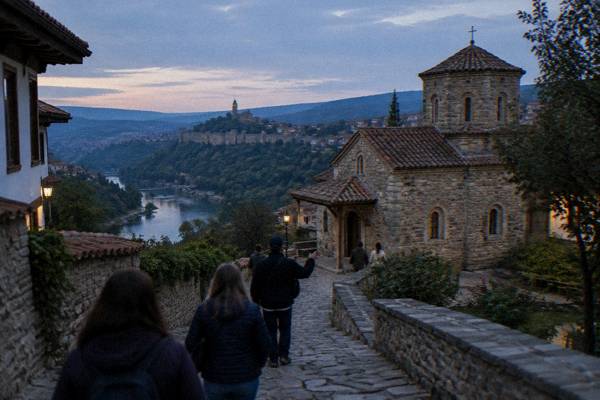
Church Of The Holy Forty Martyrs: Tsar Ivan Asen II's Victory Church
The Church of the Holy Forty Martyrs in Veliko Tarnovo holds a marble victory column from 1230 and the spot where Bulgaria's independence was declared on 22 September 1908. Here is what the Regional Museum of History's listings say about hours, tickets and what stands inside.
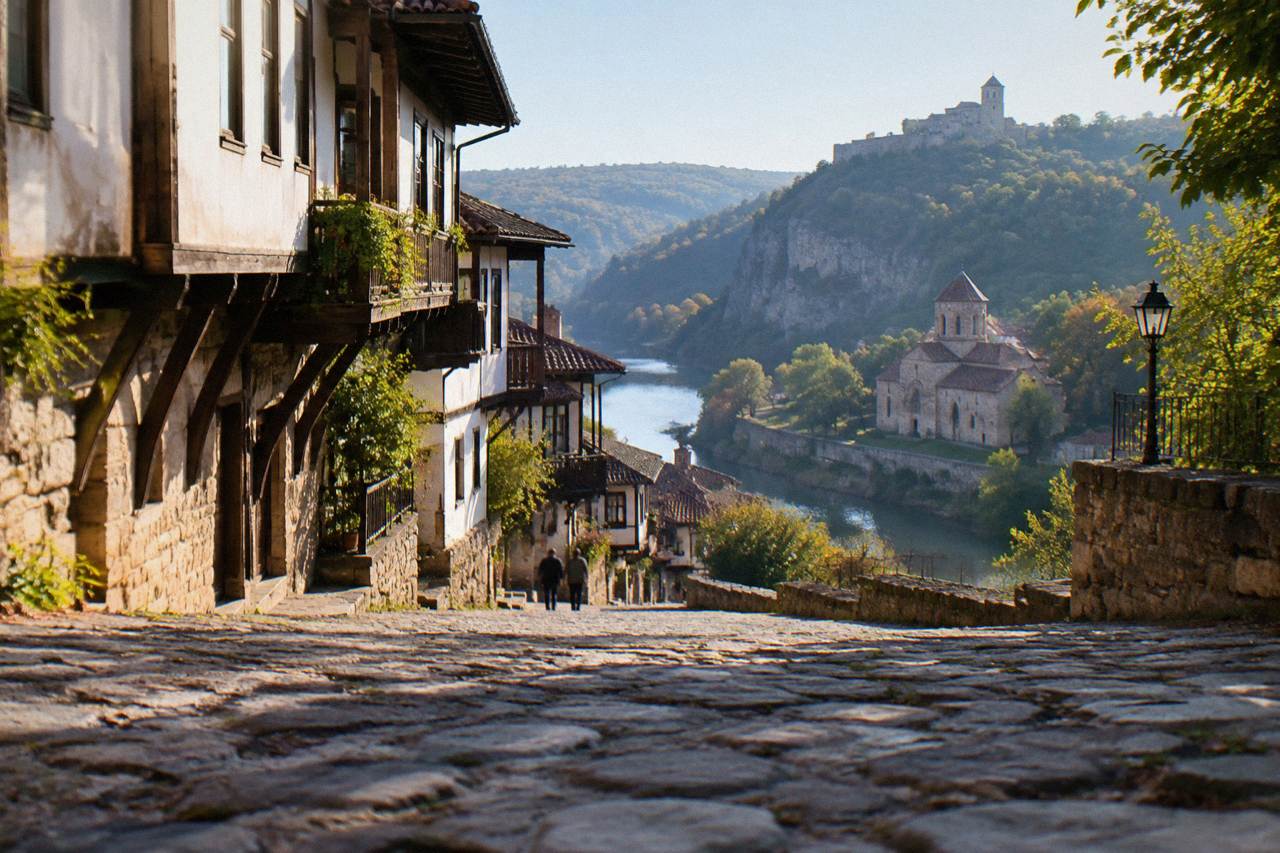
The Church of the Holy Forty Martyrs in Veliko Tarnovo is open April to September 09:00 to 18:00 and October through winter 09:00 to 17:00, with an adult ticket at 5.11 euro per the museum's ticket page. It holds the 1230 victory column of Tsar Ivan Asen II and was where Prince Ferdinand read the Independence Manifesto on 22 September 1908.
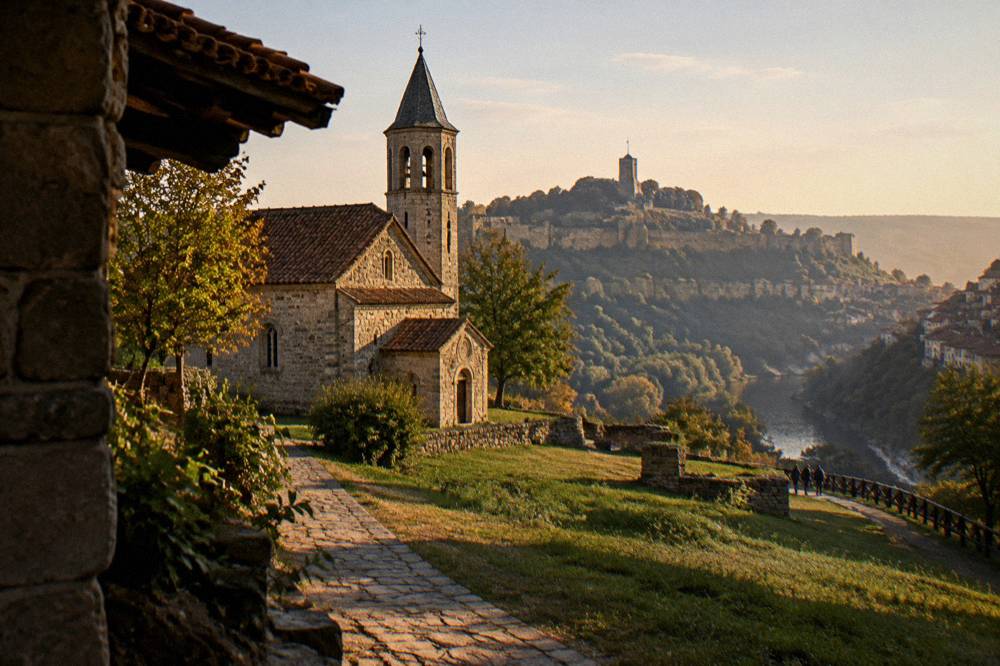
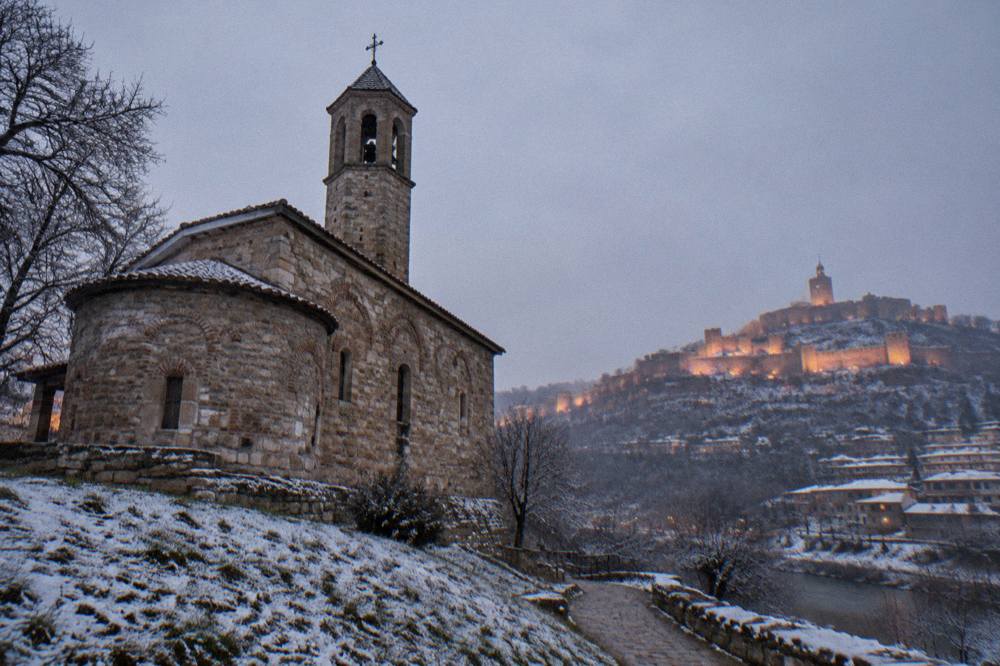
The Church of the Holy Forty Martyrs in Veliko Tarnovo, an inland city on the Yantra river in Bulgaria, carries two of the country's defining dates inside one small building. A marble victory column raised by Tsar Ivan Asen II in 1230 after the Battle of Klokotnitsa stands here, and it was at this church that Prince Ferdinand read the Manifesto declaring Bulgaria's independence on 22 September 1908. The church is part of the Regional Museum of History network, and its hours and ticket prices come straight from the museum's own catalogue and ticket pages. This guide gathers what those listings say, places the church alongside the other museum sites of the medieval capital, and shows how a visit fits into a day around Tsarevets, the Varosha quarter and the river gorge. If you are mapping the wider city first, start with the Veliko Tarnovo Travel Guide root page.
What Is The Church Of The Holy Forty Martyrs In Veliko Tarnovo?
The Church of the Holy Forty Martyrs is a museum site in Veliko Tarnovo holding the 1230 marble victory column of Tsar Ivan Asen II, which commemorates his victory at the Battle of Klokotnitsa, and it is the church where Bulgaria's independence was declared on 22 September 1908, when Prince Ferdinand read the Manifesto there. The Regional Museum of History operates the church as part of the Great Laurels monastic complex, with a standard adult ticket at 5.11 euro.
Those two events sit at opposite ends of the city's story. The column belongs to the medieval chapter, when Veliko Tarnovo was the capital of the Second Bulgarian Kingdom for more than two centuries, from the late 12th century to the 14th. The museum's own page on Tsarevets describes the city as a metropolitan centre after the state was restored in 1186, following the 1185 to 1186 uprising of Asen and Peter. A ruler's victory column in the city's church was a statement about where power lived.
The 1908 chapter is the modern one. Bulgaria's independence was declared on 22 September 1908, and Prince Ferdinand read the Manifesto at this church, not on Tsarevets, a distinction the national news agency's coverage of the anniversary celebrations makes explicit. Every 22 September the programme in Veliko Tarnovo still includes a liturgy at the Church of the Holy Forty Martyrs and a flag ritual on Tsarevets. The city holiday itself falls on 22 March, tied to the Holy Forty Martyrs feast day and the Battle of Klokotnitsa, which is why this small church gives the whole city its spring holiday.
The church sits within the Regional Museum of History's network, alongside Tsarevets Fortress, Trapezitsa and a string of medieval churches including the Church of St Demetrius and the Church of Sts Peter and Paul. That network shares one seasonal calendar, one price structure and one winter schedule, which makes planning a multi-site day simpler than it first looks.
What Are The Opening Hours And Ticket Prices?
The Church of the Holy Forty Martyrs is open April to September from 09:00 to 18:00 with last entry at 17:30, and in October and winter from 09:00 to 17:00 with last entry at 16:30, per the Regional Museum of History's ticket page. A Monday maintenance slot runs 09:00 to 11:00, and the adult ticket is 5.11 euro, with a family ticket at 7.67 euro.
The museum quotes those euro figures exactly, and every price in its network has been printed in euro since Bulgaria adopted the currency on 1 January 2026 at a fixed rate of 1.95583 lev per euro. Children under 7 enter free across the museum network, as do people with permanent disabilities travelling with an assistant, and organised school groups from the municipality can enter free by written request.
| Period | Hours | Last entry |
|---|---|---|
| April to September | 09:00 to 18:00 | 17:30 |
| October and winter | 09:00 to 17:00 | 16:30 |
| Monday maintenance | 09:00 to 11:00 | site closed those two hours |
| Ticket | Price |
|---|---|
| Adult, standard | 5.11 euro |
| Family | 7.67 euro |
Winter hours across the museum sites start on 25 October 2026, so a visit from late October onward runs on the shorter schedule. The Monday morning slot is a maintenance window rather than a closing day, but arriving after 11:00 on a Monday avoids it altogether. The same logic applies across the network, though the weekday of the maintenance slot varies: Tsarevets lists Tuesday morning, the Archaeological Museum and the Forty Martyrs church list Monday morning.
A two-day pass covering 10 museum sites exists at 20.45 euro for an individual, valid 1 April to 30 November, with a family version at 25.56 euro. Whether it pays off depends on how many of the 10 sites a trip actually includes, and the museum's own objects page carries the full conditions. For a shorter stay built around the church and the fortress, single tickets are the straightforward route.
For travellers building the rest of the visit, these pages from the network are the natural companions:
Why Was Bulgarian Independence Declared At This Church In 1908?
Bulgaria's independence was declared on 22 September 1908 and Prince Ferdinand read the Manifesto at the Church of the Holy Forty Martyrs in Veliko Tarnovo, in the medieval capital rather than in a modern government building, and the Bulgarian news agency's coverage of the 118th anniversary confirms the church as the place. The anniversary programme each 22 September still opens with a liturgy there.
The choice of church carried the symbolism. By 1908 the state had a constitution adopted in Tarnovo in 1879, and the declaration of full independence was staged in the city that had been the capital of the Second Bulgarian Kingdom. The Forty Martyrs church, already holding the 1230 column of Ivan Asen II, tied the new act to the medieval one. The fall of the medieval capital to the Ottomans in 1393 and the Tarnovo Constitution of 1879 bracket the long arc between those moments.
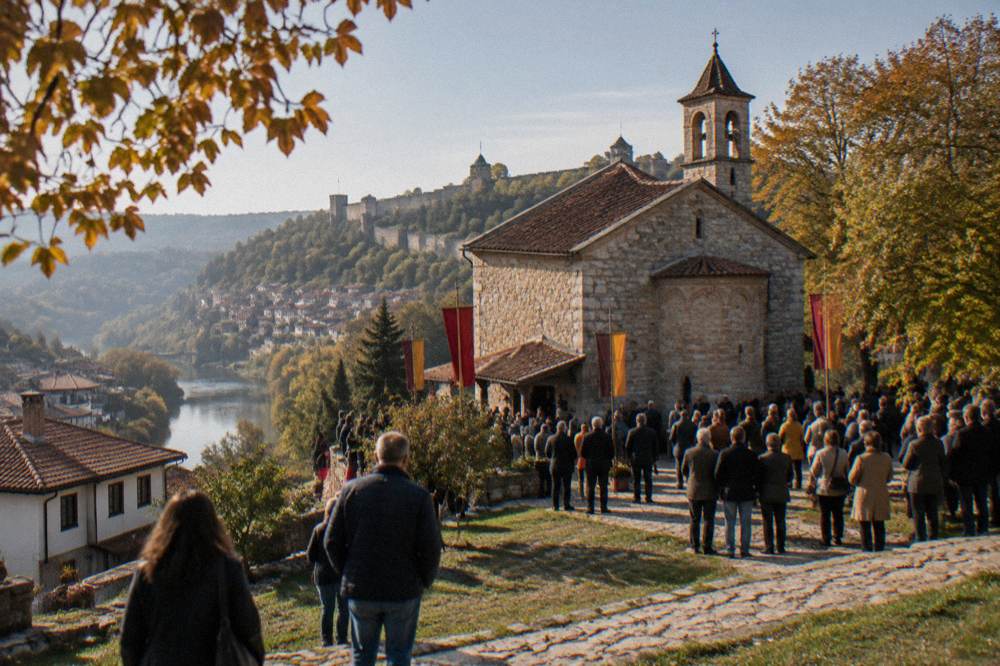
The 22 September programme in Veliko Tarnovo includes the liturgy at the church, a historical reenactment and a flag ritual on Tsarevets, with the Sound and Light show featured in the evening programme around the date. The show runs on announced evenings only, with no fixed nightly schedule, and watching it from Tsar Asen I Square is free. Details for any given year sit on the official show site and the Tourist Information Centre feed, since dates are announced rather than standing.
For anyone visiting outside the anniversary, the church still reads as the hinge between the two Bulgarias, and pairing it with the Regional Museum of History collections and the Patriarchal Cathedral on Tsarevets covers both ends of that arc in a single day.
What Is The Ivan Asen II Victory Column?
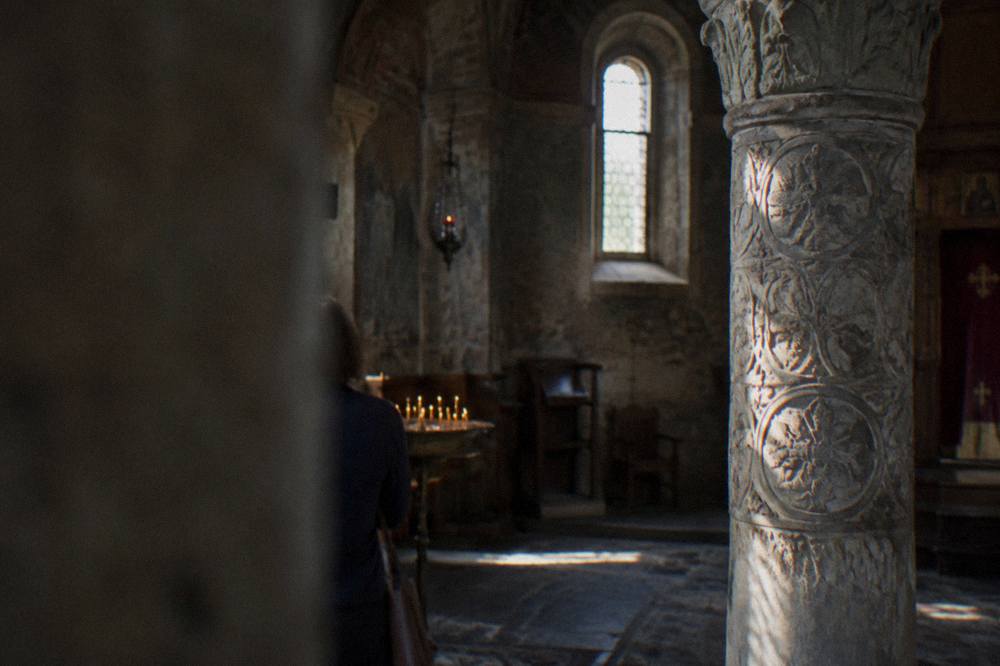
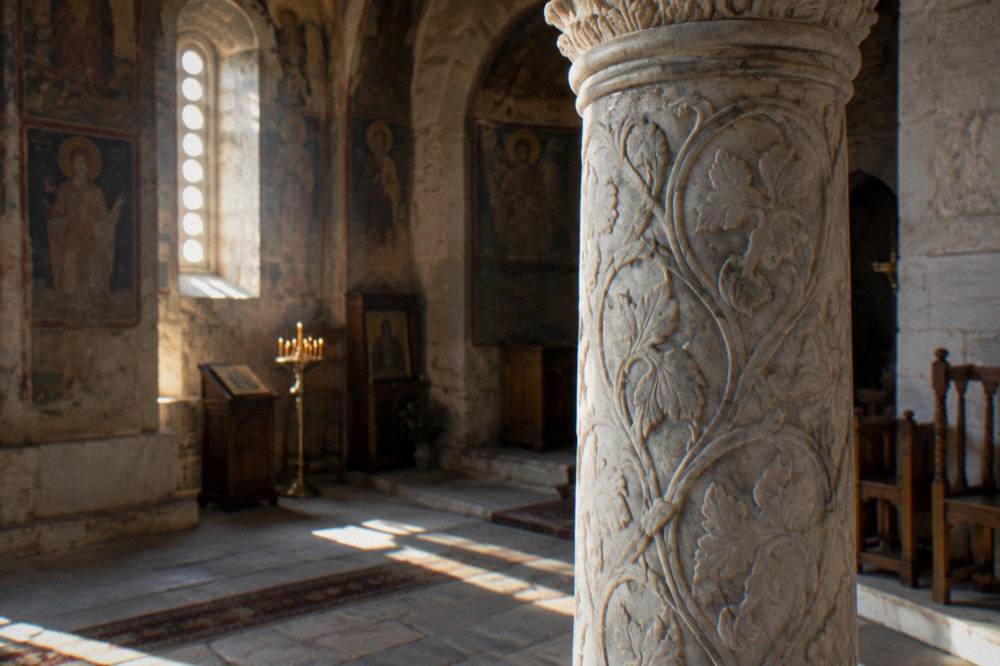
The Ivan Asen II victory column is a marble column from 1230 that stands in the Church of the Holy Forty Martyrs and commemorates the Bulgarian victory at the Battle of Klokotnitsa, per the Bulgarian National Radio's account of the city holiday. Together with the church's feast day of the Holy Forty Martyrs on 22 March, the column gives the city both its March holiday and its most tangible medieval trophy.
The museum network adds context around it: Tsarevets was the fortress core of a capital that ran from the late 12th century to the 14th, and the Asenevtsi Monument honours the dynasty the uprising of Asen and Peter founded in 1185 to 1186.
Beyond the column and the 1908 declaration, the sourced record for the church is deliberately short, and a visit earns its half-day by combining the site with the rest of the museum's calendar:
| Date | Event tied to the church |
|---|---|
| 1185 to 1186 | Uprising of Asen and Peter; the museum's page dates the restoration of the state to 1186 |
| 1230 | Ivan Asen II raises the marble victory column after the Battle of Klokotnitsa |
| 1393 | The medieval capital falls to the Ottomans |
| 1879 | The Tarnovo Constitution is adopted in the city |
| 22 September 1908 | Independence declared; Prince Ferdinand reads the Manifesto at the church |
| 22 March each year | City holiday on the feast of the Holy Forty Martyrs |
How Does The Church Fit Into A Day Around Tsarevets And The Varosha Quarter?
The church belongs naturally to a day that takes in Tsarevets Fortress, open April to September 08:00 to 20:00 with a 7.67 euro adult ticket, and the free public spaces of the Varosha quarter, Samovodska Charshiya and Gurko Street, all of which need no ticket, with the Asenevtsi Monument free as well. The Sound and Light show can close the same evening from Tsar Asen I Square at no charge on an announced date.
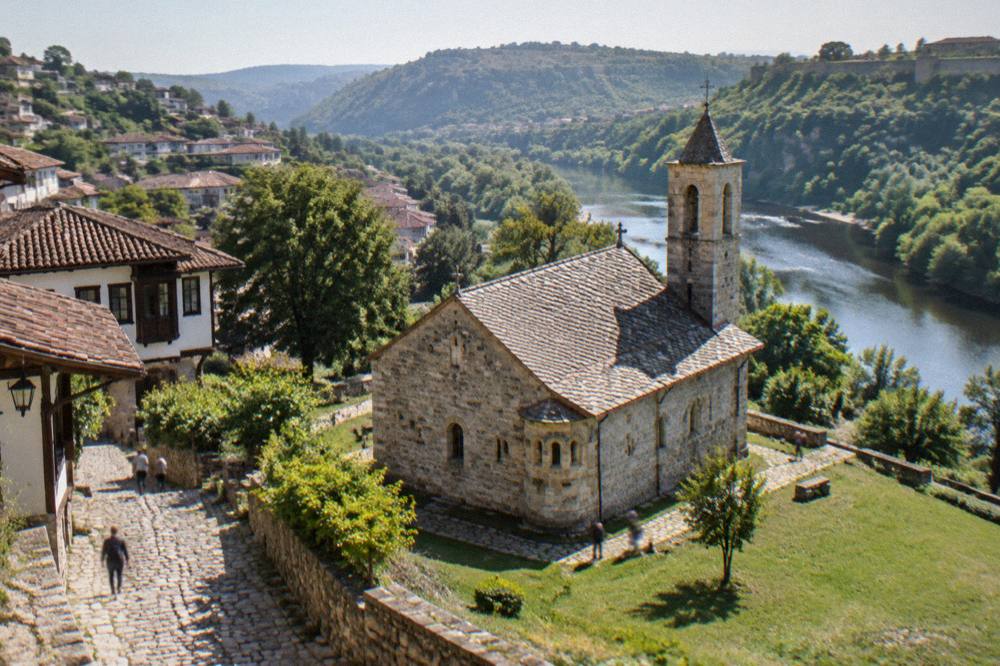
The museum's seasonal blocks make sequencing simple. Tsarevets opens earliest in summer and takes the longest to see, so it earns the first slot. The Forty Martyrs church's 09:00 to 18:00 summer hours overlap comfortably with an afternoon descent from the fortress. The Varosha old town, Samovodska Charshiya and Gurko Street fill whatever gaps remain, and all three are public streets open at all hours. A one-day itinerary on the site lays out this exact sequence with timings that respect the last-entry windows.
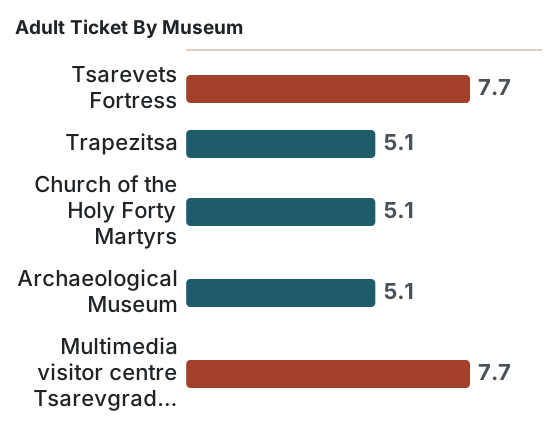
Here is how the museum's headline sites compare on price and hours, per the museum's ticket and catalogue pages:
| Museum site | Adult ticket | Summer hours (April to September) |
|---|---|---|
| Tsarevets Fortress | 7.67 euro | 08:00 to 20:00, last entry 19:00 |
| Trapezitsa | 5.11 euro | 09:00 to 19:00, last entry 18:00 |
| Church of the Holy Forty Martyrs | 5.11 euro | 09:00 to 18:00, last entry 17:30 |
| Archaeological Museum | 5.11 euro | April to October 09:00 to 18:00 |
| Multimedia visitor centre Tsarevgrad Tarnov | 7.67 euro | 09:00 to 19:00, last entry 18:00 |
Two seasonal warnings matter for this plan. Trapezitsa is closed to visitors from 30 November 2026 to 31 March 2027, and its funicular stops for the season on 31 October 2026. Winter hours across the museum network start on 25 October 2026. A late-autumn or winter visit therefore leans more heavily on Tsarevets, the Forty Martyrs church and the indoor museums, with the church on its 09:00 to 17:00 winter schedule and last entry at 16:30. Winter visitors get a fuller picture in the dedicated winter guide, and the month-by-month question is covered separately in what is the best month to go to Bulgaria.
For visitors who want a guide rather than self-direction, the walking tours on the roster are paid products, and there is no free guided walk in the city; the open public spaces are free to walk on your own. The self-guided option below pairs a monastery visit with an e-guide format:
What Do The 22 September And 22 March Events Look Like?
The 22 September independence programme includes a liturgy at the Church of the Holy Forty Martyrs, a historical reenactment and a flag ritual on Tsarevets, with Sound and Light performances featured in the evening programme, and 22 March brings the city holiday on the feast of the Holy Forty Martyrs with a liturgy, procession and a Sound and Light show. Both dates are annual, and the 2026 editions ran on these patterns.
The two holidays bracket the year. March belongs to the medieval victory, September to the modern state, and both route their central ceremonies through this church or the hill above it. The International Folklore Festival ran 18 to 25 July in 2026 in its 28th edition, and the Arbanasi Summer Music chamber festival ran 15 to 25 July 2026 in the churches of Sts Archangels and St George in Arbanasi, giving the summer its own anchors. Christmas market dates for 2026 had not been announced, and the market follows a late-November-to-1-January pattern in Marno Pole park.
A planner for the church year looks like this, using only the dates the events calendar confirms:
| Date | Event | Role of the Forty Martyrs church |
|---|---|---|
| 22 March | City holiday | Liturgy and procession on the feast of the Holy Forty Martyrs |
| 15 to 25 July 2026 | Arbanasi Summer Music | Separate churches in Arbanasi host the concerts |
| 18 to 25 July 2026 | 28th International Folklore Festival | Citywide programme |
| 22 September | Independence Day | Liturgy at the church, flag ritual on Tsarevets, evening show programme |
If the trip cannot land on either holiday, the church keeps its standard hours year-round, with no weekly closing day, and the Monday morning maintenance slot is the only recurring interruption.
What Else Is Worth Combining With The Church?
The museum network around the church includes Tsarevets with the Patriarchal Cathedral, Trapezitsa, the Archaeological Museum, the multimedia visitor centre Tsarevgrad Tarnov, Sarafkina House from 1861 and the Konak museum of 1872, plus the free public spaces of the Asenevtsi Monument, Samovodska Charshiya, Gurko Street and the Varosha quarter, and the Sound and Light show viewed free from Tsar Asen I Square on announced evenings.
A fuller museum day draws on the smaller houses too. Sarafkina House, built in 1861, opens Tuesday to Saturday 09:30 to 17:30 and charges 5.11 euro. The Konak, built in 1872 by master Kolyu Ficheto, holds the Museum of Revival and Constituent Assembly on the same ticket. The Prison Museum shares the Tuesday-to-Saturday pattern. The Museum of New and Newest History is temporarily not accepting visitors, and the Church of St Dimitar opens April to October by prior request only, so neither belongs in a fixed plan.
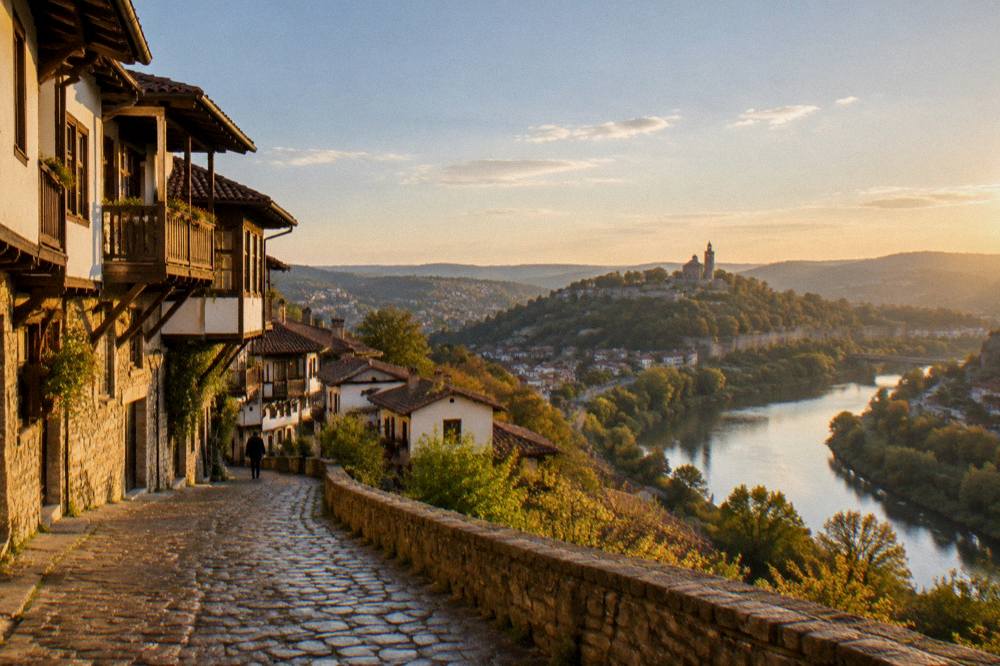
For the spaces between museum visits, the viewpoints of Veliko Tarnovo, the Sound and Light show page and the one-day itinerary fill out the plan, and the things to do in Veliko Tarnovo root page indexes everything the site covers. Visitors with more time can also reach the Monastery of the Holy Transfiguration through a self-guided product, with Check availability showing the current listing.
Beyond the city, the museum network extends to Nicopolis ad Istrum, about 20 road km away, on the UNESCO Tentative List since 1984 with a 5.11 euro ticket, and the two inscribed World Heritage Sites nearest the city are the Rock-Hewn Churches of Ivanovo and the Thracian Tomb of Kazanlak, both inscribed in 1979. Nothing in Veliko Tarnovo itself is inscribed or on the Tentative List. Day-trip products cover the wider region in both directions.
Common Questions About The Church Of The Holy Forty Martyrs
What are the opening hours of the Church of the Holy Forty Martyrs in Veliko Tarnovo?
April to September the church is open 09:00 to 18:00 with last entry at 17:30, and October through winter 09:00 to 17:00 with last entry at 16:30, per the Regional Museum of History's ticket page. A Monday maintenance slot runs 09:00 to 11:00.
How much does it cost to visit the Church of the Holy Forty Martyrs?
The standard adult ticket is 5.11 euro and the family ticket is 7.67 euro, per the museum's listings. Children under 7 enter free across the museum network.
Why is the Church of the Holy Forty Martyrs important in Bulgarian history?
It holds the marble victory column raised by Tsar Ivan Asen II in 1230 after the Battle of Klokotnitsa, and it is where Prince Ferdinand read the Manifesto declaring Bulgaria's independence on 22 September 1908.
Is the Church of the Holy Forty Martyrs a UNESCO World Heritage Site?
No. Nothing in Veliko Tarnovo is inscribed on the World Heritage List or on the Tentative List. The nearest inscribed sites are the Rock-Hewn Churches of Ivanovo and the Thracian Tomb of Kazanlak, both from 1979, while Nicopolis ad Istrum near the city has been on the Tentative List since 1984.
When is the city holiday connected to the church?
The city holiday of Veliko Tarnovo falls on 22 March each year, tied to the feast of the Holy Forty Martyrs and the Battle of Klokotnitsa, with a liturgy, a procession and a Sound and Light show in the programme.
Can you buy a combined ticket for the museum sites?
The Regional Museum of History sells a two-day pass covering 10 museum sites at 20.45 euro for an individual, valid 1 April to 30 November, with a family pass at 25.56 euro. Single tickets at each site remain the simple option for a short visit.
A visit to the Church of the Holy Forty Martyrs takes under an hour, but it compresses seven centuries of Bulgarian statehood into one building: a tsar's column from 1230, a manifesto read in 1908, and two annual holidays that still begin at its door. Pair it with Tsarevets in the morning, walk the free streets of the Varosha quarter in the afternoon, and check the show calendar for the evening.