Trapezitsa Fortress: The Second Royal Hill And Its Funicular
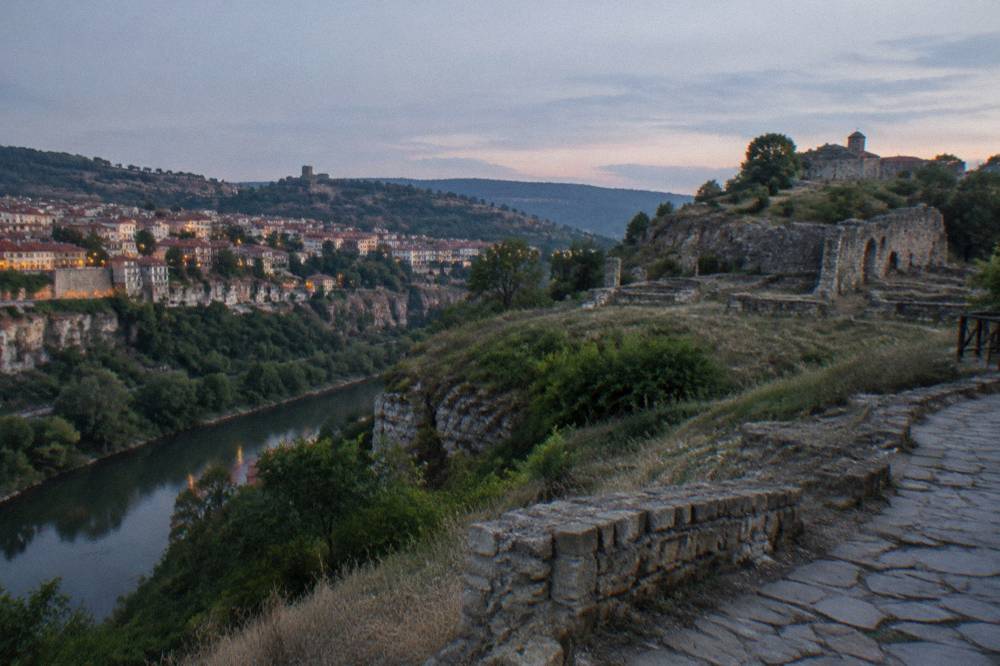
Trapezitsa is the second fortified royal hill of Veliko Tarnovo, across the Yantra from Tsarevets and run by the same Regional Museum of History, with its own ticket, its own funicular and a long winter closure every year.
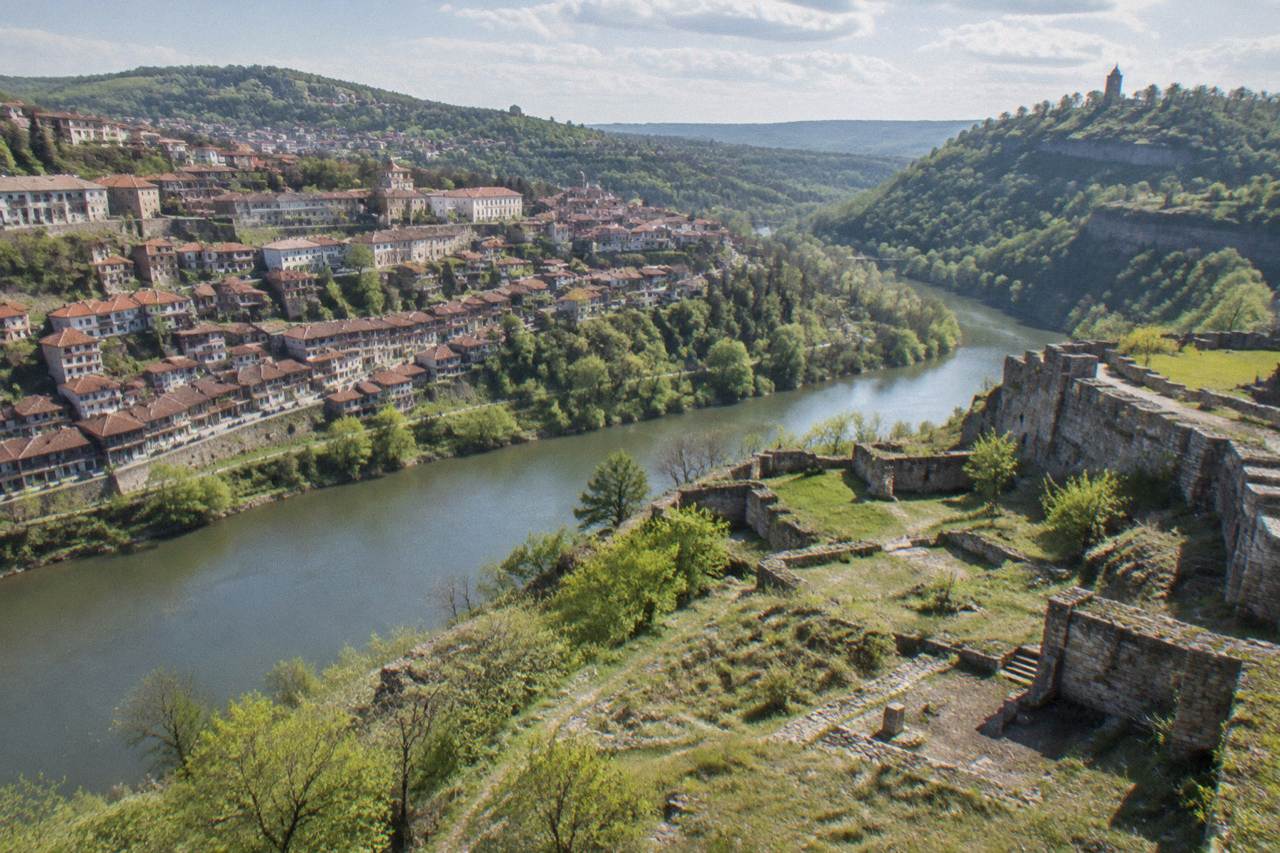
Trapezitsa Fortress in Veliko Tarnovo is open April to September 09:00 to 19:00 and October 09:00 to 18:00, with an adult ticket at 5.11 euro and a family ticket at 7.67 euro; the funicular runs 1 May to 31 October, 09:00 to 16:00 with a lunch break, and the whole reserve closes to visitors from 30 November 2026 to 31 March 2027.
Veliko Tarnovo, an inland city on the Yantra river in Bulgaria, was the capital of the Second Bulgarian Kingdom for more than two centuries, and it kept not one fortified hill but two. Tsarevets, across the water, takes the fame and the crowds; Trapezitsa stands on the north side of the river bend as the second royal hill of the medieval capital, run today by the Regional Museum of History as an architectural and museum reserve with its own ticket, its own season and its own funicular. The museum's catalogue page and the municipal winter announcements hold the practical detail this page reports: hours, euro prices, the funicular's May to October season and the closure that removes the whole site from the winter map of Veliko Tarnovo.
The hill matters historically because the restored Bulgarian state made this city its capital after the 1185 to 1186 uprising of Asen and Peter, and the medieval capital spread across both banks of the Yantra. Trapezitsa was part of that city. The story of the period is covered in the history of Veliko Tarnovo guide, and the sight itself pairs naturally with Tsarevets Fortress, the Patriarchal Cathedral on that hill and the Sound and Light show watched from Tsar Asen I Square below.
What Is Trapezitsa Fortress In Veliko Tarnovo?
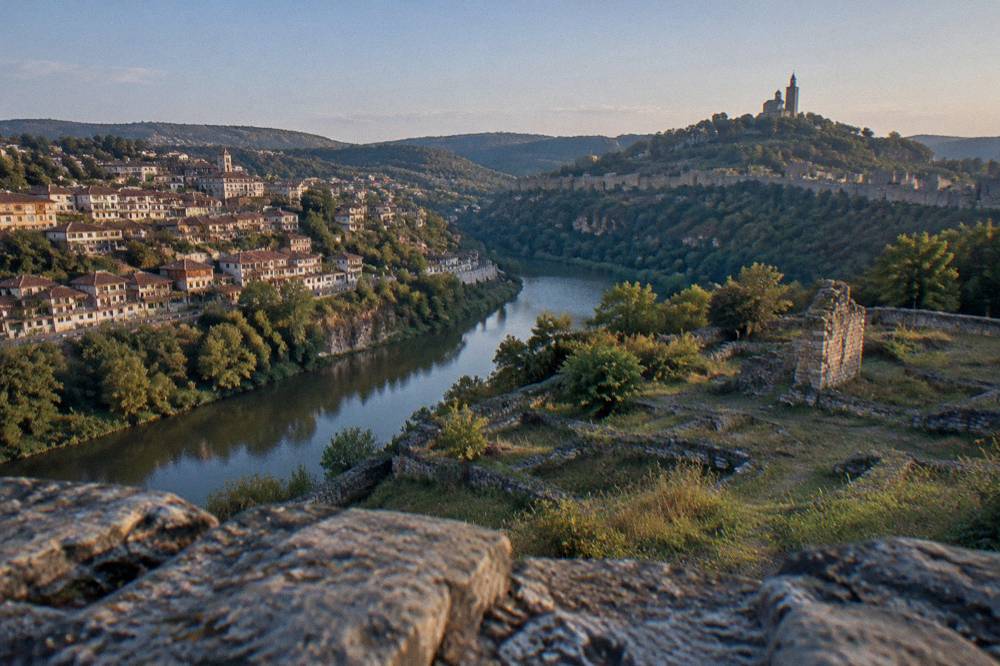
Trapezitsa is the second fortified hill of medieval Veliko Tarnovo, standing on the north bank of the Yantra opposite Tsarevets, and it is operated today as an architectural and museum reserve by the Regional Museum of History. The city became the capital of the Second Bulgarian Kingdom after the 1185 to 1186 uprising and fell to the Ottomans in 1393, and Trapezitsa belongs to that period as a royal quarter of the medieval capital, with its own ticket, season and funicular.
The museum's own catalogue page describes the reserve and sets its hours and prices, and everything practical on this page comes from that page, from the museum's price list and from the museum's winter-season news items. Treat Trapezitsa as a separate visit rather than an annex of Tsarevets: the two reserves have different tickets, different last-entry times and, above all, different winter fates. Tsarevets stays open all year with reduced hours; Trapezitsa closes completely for four months.
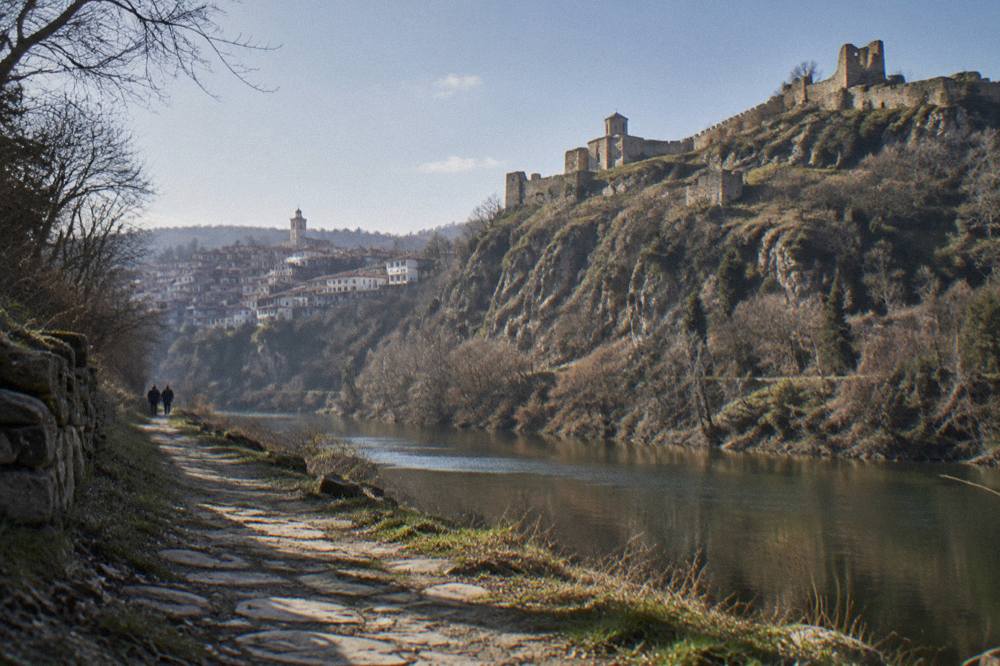
For context before the practical detail, the city around the hill is worth a page of its own. The Varosha old town sits on the same side of the river, and the one day in Veliko Tarnovo itinerary sequences the hills, the churches and the viewpoints for a short stay. A longer stay can add the monasteries and villages outside the city, several of which keep the same medieval thread, before returning to the river bend for an evening above the Yantra.
What Are The Opening Hours And Ticket Prices At Trapezitsa Fortress?
Trapezitsa Fortress is open April to September daily from 09:00 to 19:00 with last entry at 18:00, and in October from 09:00 to 18:00, per the Regional Museum of History's catalogue page. The adult ticket is 5.11 euro, students and Bulgarian citizens over 60 pay 2.56 euro, and the family ticket is 7.67 euro. Winter entry runs 09:00 to 16:00 before the reserve closes entirely from 30 November 2026 to 31 March 2027.
Those prices are printed in euro, like every museum price in Bulgaria since the euro replaced the lev on 1 January 2026 at a fixed rate of 1.95583 lev per euro. Children under 7 enter free across the museum's sites, and people with permanent disabilities together with an assistant also enter free, per the museum's price list. Present the figures as a planning frame and confirm before you go; the museum updates its pages each season.
| Season | Hours | Last entry |
|---|---|---|
| April to September | 09:00 to 19:00 daily | 18:00 |
| October | 09:00 to 18:00 | not stated separately |
| Winter, from 25 October 2026 | entry 09:00 to 16:00 | closes 17:00 season pattern |
| 30 November 2026 to 31 March 2027 | closed to visitors | closed |
| Ticket | Price |
|---|---|
| Adult | 5.11 euro |
| Student | 2.56 euro |
| Bulgarian citizens over 60 | 2.56 euro |
| Family | 7.67 euro |
| Children under 7 | free |
Two practical notes from the museum's material. First, winter hours at the museum sites in Veliko Tarnovo start on 25 October 2026, so late-October visitors move from the October schedule straight into the short winter entry window. Second, the same museum network sells a two-day pass covering ten museum sites at 20.45 euro for an individual and 25.56 euro for a family, valid 1 April to 30 November; Trapezitsa's own closure means that pass and this reserve only overlap in the warm part of the year. The state of the museum network in winter in Veliko Tarnovo explains which sites stay open when the hills shut.
A ticket bought at Trapezitsa covers the reserve alone, so a day that includes both hills means two purchases unless the two-day pass fits the dates. That is a real planning decision rather than a footnote: the pass runs out on 30 November, the same day Trapezitsa itself disappears from the schedule, and the family version of each option is priced differently at the two hills. Reading the two price lists together before choosing is the simpler way through.
How Does The Trapezitsa Funicular Work, And What Does It Cost?
The Trapezitsa funicular runs from 1 May to 31 October, daily from 09:00 to 16:00 with a lunch break from 12:00 to 13:00, per the museum's catalogue page. A return ride costs 5.11 euro, a one-way ride 2.56 euro and a family return 10.23 euro. The lift stops running in bad weather and stops for the season on 31 October 2026, returning on 1 May, and it is separate from the reserve's own entry ticket.
The lunch break and the weather clause are the two details that shape a visit: an arrival at 12:30 finds the lift standing still, and a stormy autumn afternoon can stop it even inside the season. The fare is charged on top of the entry ticket, so a full visit with a return ride and an adult entry ticket is a combination of the two printed figures rather than a single bundled price. The museum does not publish a seat or capacity figure, and none is invented here.
| Funicular ticket | Price |
|---|---|
| Return | 5.11 euro |
| One way | 2.56 euro |
| Family return | 10.23 euro |
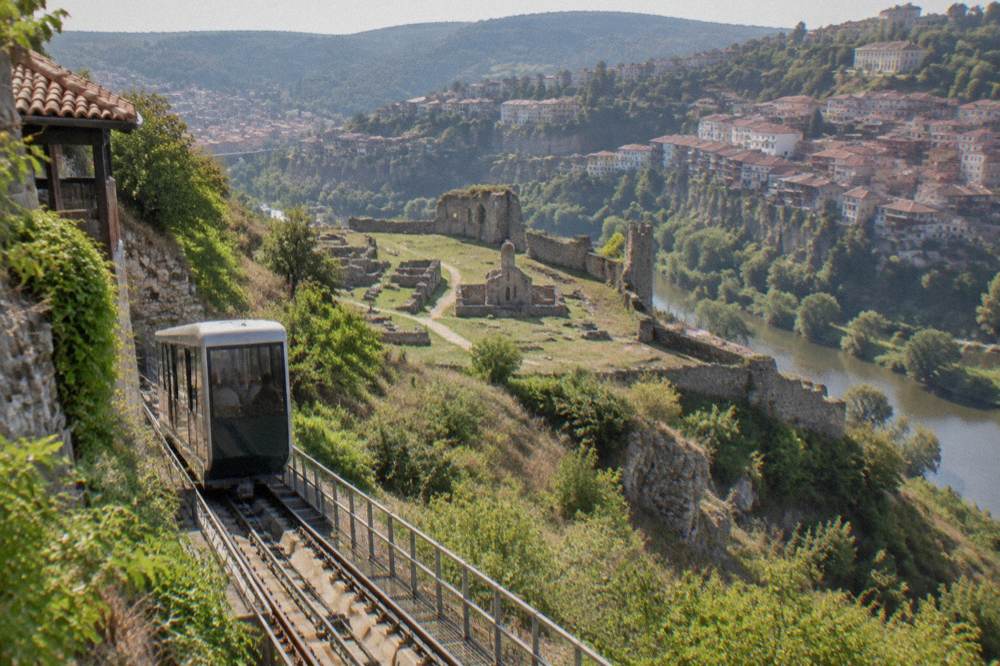
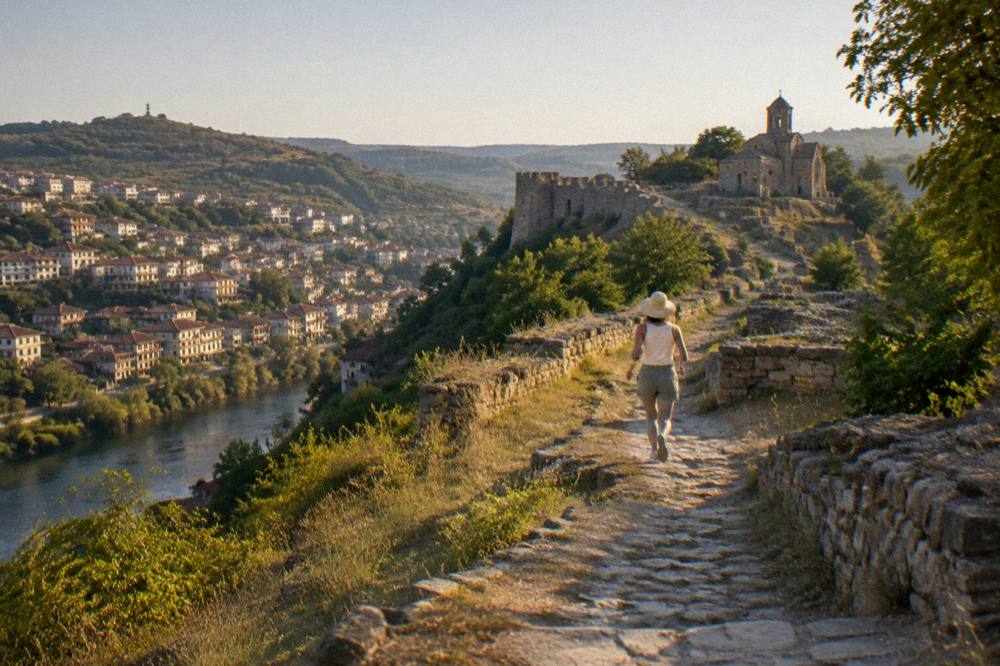
The lift is the reason the October end date matters so much: after 31 October 2026 the funicular stops and only weeks later, on 30 November 2026, the reserve itself closes. A visitor planning a late-autumn trip to Veliko Tarnovo has a narrow window, roughly the first four weeks of November, when the site is open but the lift is not. In that window the visit depends on the path up the hill on foot, and the last-entry time of the winter schedule, rather than on the lift's timetable, becomes the number to plan around.
Beyond the dates, the lift's separate pricing rewards a small amount of arithmetic by the reader: the one-way fare exists for anyone who prefers to ride up and walk down, or the reverse, and the family return is printed only for the lift, not for a combined entry-and-lift package. The museum's pages keep the two products cleanly apart, and mixing them up at the ticket window simply means buying twice.
How Does Trapezitsa Compare With Tsarevets Fortress In Veliko Tarnovo?
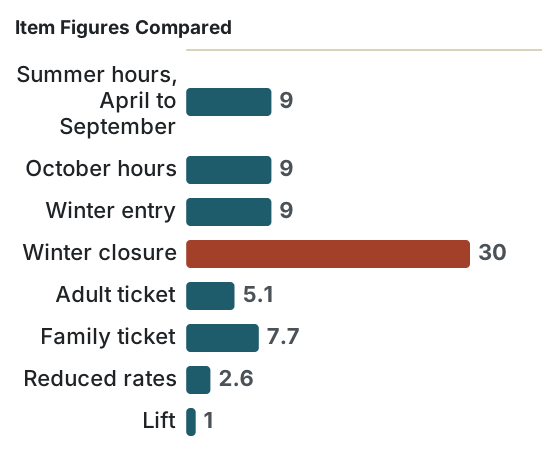
Tsarevets is the larger of the two hills in every practical sense: it is open all year with no day off, its adult ticket is 7.67 euro against Trapezitsa's 5.11 euro, and it carries the Patriarchal Cathedral of the Holy Ascension inside the same ticket, per the museum's pages. Trapezitsa answers with lower prices, reduced rates of 2.56 euro for students and Bulgarian citizens over 60, and a funicular, but it closes completely from 30 November 2026 to 31 March 2027 while Tsarevets continues on winter hours.
The comparison is best read side by side. Both are reserves of the Regional Museum of History, both print prices in euro since the changeover, and both sit over the same river bend of the Yantra.
| Tsarevets | Trapezitsa | |
|---|---|---|
| Summer hours, April to September | 08:00 to 20:00, last entry 19:00 | 09:00 to 19:00, last entry 18:00 |
| October hours | 09:00 to 18:00, last entry 17:00 | 09:00 to 18:00 |
| Winter entry | 09:00 to 16:00 from 25 October 2026 | 09:00 to 16:00, then closed |
| Winter closure | none, no day off | 30 November 2026 to 31 March 2027 |
| Adult ticket | 7.67 euro | 5.11 euro |
| Family ticket | 10.23 euro | 7.67 euro |
| Reduced rates | none listed | 2.56 euro students and citizens over 60 |
| Lift | none listed | funicular, 1 May to 31 October |
| Included extra | Patriarchal Cathedral | funicular priced separately |
The maintenance slots differ too: the Tsarevets ticket page lists a Tuesday slot from 09:10 to 11:00, while the winter news for the wider museum network spreads short morning closures across weekdays at individual sites. Neither is a closing day, but an early arrival on the wrong morning meets a rope rather than a gate. The Patriarchal Cathedral page carries the cathedral's own hours inside the Tsarevets ticket, and the Holy Forty Martyrs church, where Bulgarian independence was declared on 22 September 1908, is a separate museum site below the hills.
When Is The Best Time Of Year To Visit Trapezitsa Fortress?
The museum's own schedule answers this: any day from April to September, when the reserve is open 09:00 to 19:00 and the funicular runs from 1 May, or October, when hours shorten to 09:00 to 18:00 and the lift stops on the 31st.
The ERA5 reanalysis for Veliko Tarnovo, 1991 to 2020, puts the mean daily high at 21.7 C in May, 27.6 C in July and 17.6 C in October, with May the wettest month at 95.7 mm and August the driest at 51.3 mm.
Those climate figures are modelled normals for the grid cell over the city, not a station record, and they describe the whole destination rather than the hill alone. Read alongside the museum's calendar, they frame the choice: the warm months carry the full day and the working lift, October trades an hour of opening for cooler walking, and November to March removes the site altogether.
| Month | Mean daily high | Mean daily low | Rain |
|---|---|---|---|
| April | 16.9 C | 6.0 C | 71.6 mm |
| May | 21.7 C | 11.1 C | 95.7 mm |
| June | 25.4 C | 15.1 C | 85.0 mm |
| July | 27.6 C | 17.2 C | 79.5 mm |
| August | 28.1 C | 17.1 C | 51.3 mm |
| September | 23.3 C | 12.9 C | 63.0 mm |
| October | 17.6 C | 8.0 C | 58.9 mm |
The rainfall column deserves as much attention as the temperature one. May carries the highest monthly total in the table at 95.7 mm, June follows at 85.0 mm, and the curve falls to 51.3 mm in August, so the driest stretch of the open season lands in high summer rather than spring. September sits between the two at 63.0 mm with a mean daily high of 23.3 C, which is the combination the numbers themselves point to for long days on the hill without the lift closing early in bad weather.
One reported development sits behind the calendar rather than in front of it: the municipality is reported to have initiated the design of a full restoration of Trapezitsa, with no closure tied to it. Nothing in the museum's current announcements connects that project to visitor access, so the season table above remains the operative plan. Any change to the published dates would come through the museum's news pages first, and the winter closure of 30 November 2026 to 31 March 2027 is the anchor date to check against.
What Else Should You Know Before Visiting Trapezitsa In Veliko Tarnovo?
Bring the practical frame rather than assumptions: prices are in euro, the reserve has no day off inside its season but closes fully from 30 November 2026 to 31 March 2027, the funicular stops for lunch and in bad weather, and children under 7 enter free per the museum's price list. The single European emergency number is 112, and the city sits in the EET time zone, UTC+2 in winter and UTC+3 in summer.
A few surrounding facts help the plan. Bulgaria has been a full Schengen member since 1 January 2025 and has used the euro since 1 January 2026, so a visit from elsewhere in the euro area involves no currency step at all. Nothing in Veliko Tarnovo is a UNESCO World Heritage Site or on the Tentative List; the nearest inscribed sites are the Rock-Hewn Churches of Ivanovo and the Thracian Tomb of Kazanlak, both from 1979, and Nicopolis ad Istrum, about 20 km away, has been on the Tentative List since 1984.
Timing around the city's calendar can lift a visit as well. The city holiday falls on 22 March, before Trapezitsa opens its main season, while the International Folklore Festival ran 18 to 25 July in 2026 and the Arbanasi Summer Music chamber series ran 15 to 25 July in 2026, both inside the reserve's fullest opening window. The Independence Day programme on 22 September, with the liturgy at the Forty Martyrs church, sits in late September when the hill still keeps its summer hours and the funicular still runs. A trip built around one of those dates stacks the museum visit and the city's events into the same days.
The rest of the day can absorb the other free public spaces of the city: the Asenevtsi Monument, Samovodska Charshiya, General Gurko Street, the Varosha quarter and watching the Sound and Light show from Tsar Asen I Square cost nothing, and the show runs on announced evenings only. The Sound and Light show page and the Asenevtsi Monument page carry the detail. Beyond walking the hills on your own, the walking tours on the roster are paid products, and the active options include an ATV and quad off-road tour whose route covers Veliko Tarnovo and Arbanasi, with Check availability showing current dates and the operator's cancellation terms.
The wider region adds day trips that keep the medieval thread: Lovech to the west, and, for a longer line through the Second Bulgarian Kingdom's neighbours, the route ideas on Veliko Tarnovo Travel Guide. For a fuller sweep of the city's sights, the things to do in Veliko Tarnovo page is the root guide. Whatever the season, plan Trapezitsa around its calendar rather than around Tsarevets's, because the second royal hill keeps its own clock, its own prices and four silent months each winter.
Common Questions About Trapezitsa Fortress In Veliko Tarnovo
What are the ticket prices for Trapezitsa Fortress?
Per the Regional Museum of History's catalogue page, the adult ticket is 5.11 euro, students and Bulgarian citizens over 60 pay 2.56 euro, and the family ticket is 7.67 euro. Children under 7 enter free. Confirm before you go, as the museum updates prices by season.
What are the opening hours of Trapezitsa Fortress?
April to September the reserve is open daily 09:00 to 19:00 with last entry at 18:00, and in October 09:00 to 18:00. Winter entry from 25 October 2026 runs 09:00 to 16:00, and the site closes to visitors entirely from 30 November 2026 to 31 March 2027.
Is Trapezitsa Fortress open in winter?
Only for the first weeks of it. Winter entry hours of 09:00 to 16:00 apply from 25 October 2026, but the reserve closes completely from 30 November 2026 to 31 March 2027. The funicular stops earlier still, on 31 October 2026, and returns on 1 May.
How much does the Trapezitsa funicular cost?
Per the museum's catalogue page, a return ride is 5.11 euro, one way is 2.56 euro and a family return is 10.23 euro. The lift runs 1 May to 31 October, 09:00 to 16:00 with a lunch break from 12:00 to 13:00, and stops in bad weather.
Is Trapezitsa the same ticket as Tsarevets Fortress?
No. The two reserves have separate tickets: Tsarevets charges 7.67 euro for an adult and includes the Patriarchal Cathedral, while Trapezitsa charges 5.11 euro with the funicular priced separately. The museum's two-day pass across ten sites at 20.45 euro is the one combined option, valid 1 April to 30 November.
Do students and seniors get a discount at Trapezitsa Fortress?
Yes, at this site specifically. The museum's price list gives 2.56 euro for students and for Bulgarian citizens over 60, alongside the 7.67 euro family ticket.