Veliko Tarnovo History: Capital Of The Second Bulgarian Empire
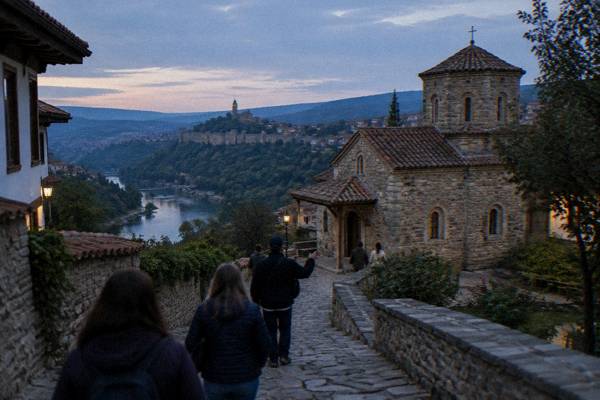
Veliko Tarnovo, an inland city on the Yantra river in northern Bulgaria, was the capital of the Second Bulgarian Kingdom for more than two centuries, and its fortress walls, churches and revival houses still carry that story in stone.
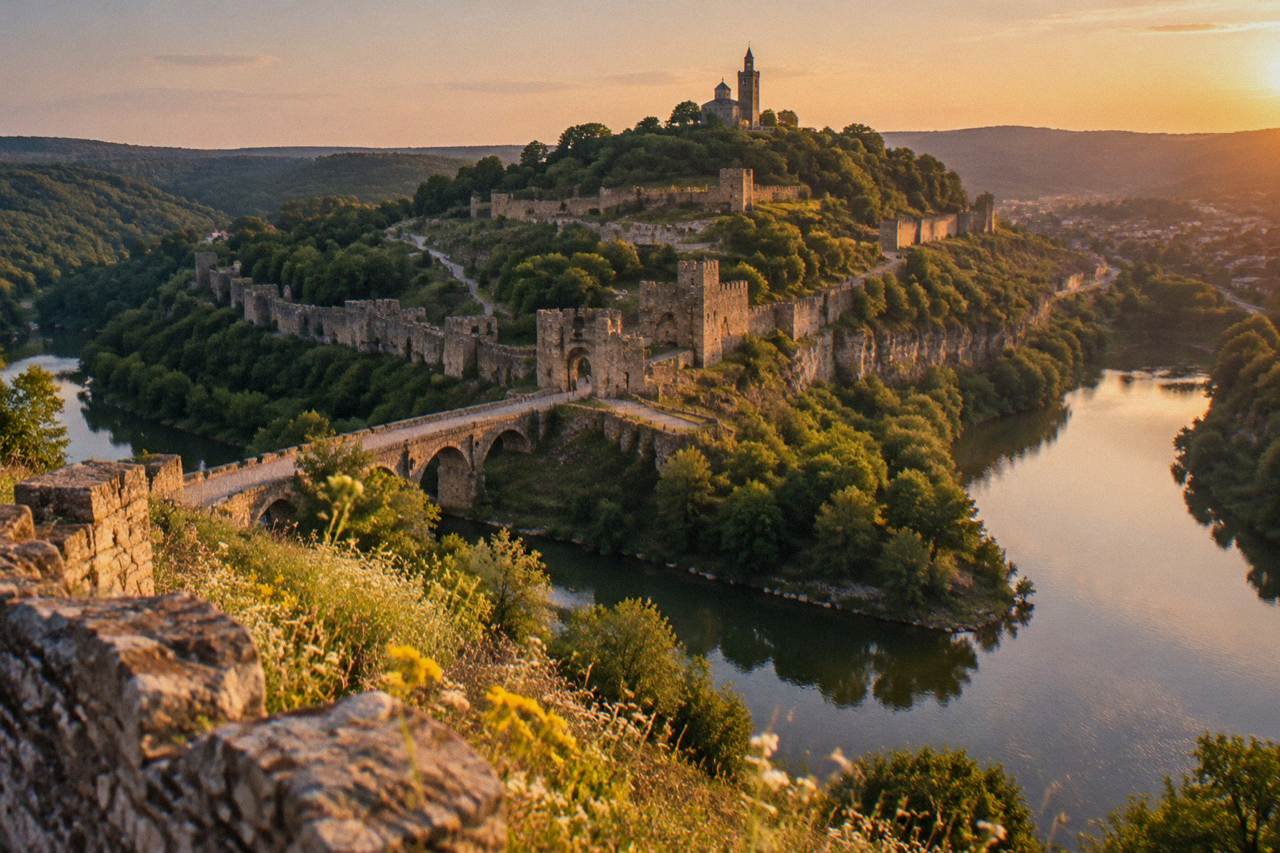
Veliko Tarnovo was the capital of the Second Bulgarian Kingdom from the late 12th century to the 14th, after the 1185 to 1186 uprising of Asen and Peter restored the Bulgarian state. The city fell to the Ottomans in 1393, hosted the Tarnovo Constituent Assembly in 1879, and saw Bulgaria's independence declared at the Church of the Holy Forty Martyrs on 22 September 1908.
Veliko Tarnovo sits inland in northern Bulgaria, wrapped in the meanders of the Yantra river, with no sea coast and no airport of its own. What it has instead is a past that few cities of its size can match: for more than two centuries, from the late 12th century to the 14th, it was the capital of the Second Bulgarian Kingdom, the seat of tsars and patriarchs, and after that the stage for two of the defining acts of modern Bulgaria, the Tarnovo Constitution of 1879 and the declaration of independence on 22 September 1908. The municipality counted an estimated 77,067 residents on 31 December 2025, yet the city's footprint on Bulgarian national memory is far larger than its population. This page walks through that history using only what the museum network, the municipal records and the UNESCO listings state, and points to the places where each chapter can still be seen.
Why Was Veliko Tarnovo The Capital Of The Second Bulgarian Kingdom?
Veliko Tarnovo became the capital because the uprising of Asen and Peter, dated 1185 to 1186, restored the Bulgarian state with its centre here, and the Regional Museum of History's own page describes the city as a metropolitan centre after the state was restored in 1186. The hills above the Yantra river then held the royal and patriarchal seat of the Second Bulgarian Kingdom for more than two centuries, from the end of the 12th century to the 14th.
The restoration of the state is the hinge of the whole story. The museum's Tsarevets page gives 1186 as its date, while the uprising itself is generally dated 1185 to 1186, so the careful phrasing is "the 1185 to 1186 uprising of Asen and Peter". From that moment the city grew into the political and religious centre of a restored kingdom. Its seat was Tsarevets, the fortified hill that today carries the Patriarchal Cathedral of the Holy Ascension, and the story of the fortress and its buildings is covered in detail on the Tsarevets Fortress guide pages of this site.
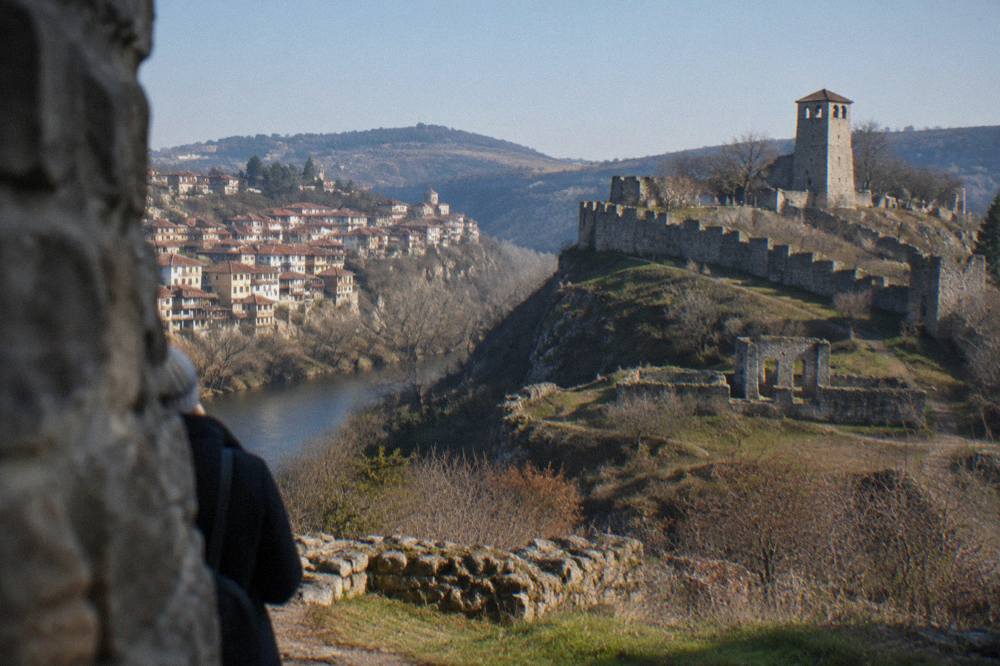
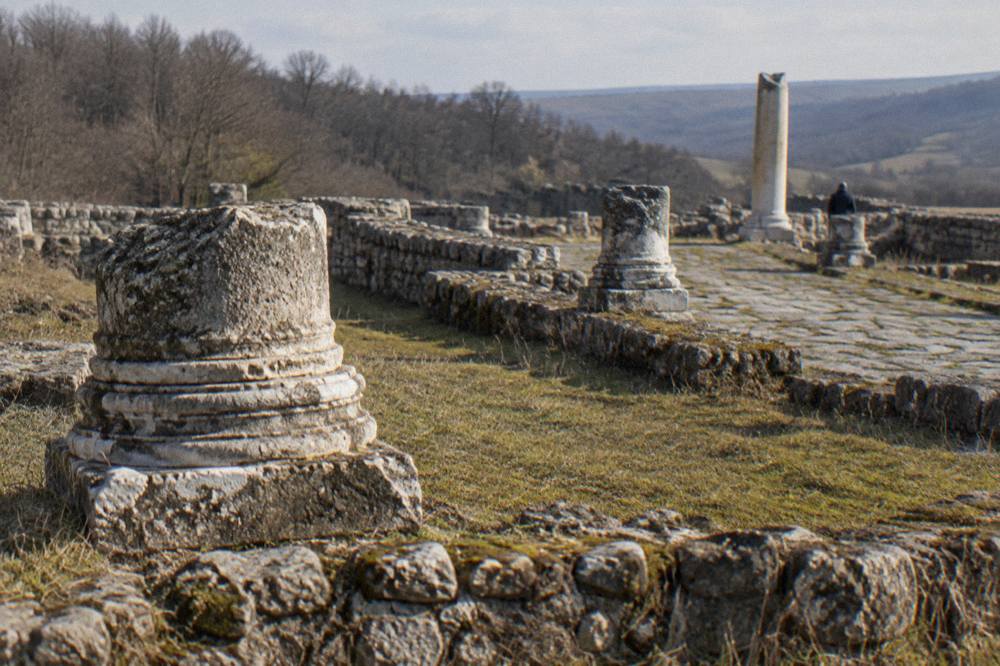
Across the river stands Trapezitsa, the second fortified hill of the medieval city, now an architectural and museum reserve in its own right. Together the two hills and the river gorge between them defined the shape of the medieval capital. The museum network now runs both as ticketed reserves, and their combined story is what draws travellers who come specifically for the medieval past.
It is worth being precise about one thing: nothing in the city is a UNESCO World Heritage Site or on the Tentative List. The nearest inscribed sites are the Rock-Hewn Churches of Ivanovo and the Thracian Tomb of Kazanlak, both inscribed in 1979, and Nicopolis ad Istrum, about 20 road km away, has been on the Tentative List since 1984. The city's standing rests on its national history, not on a UNESCO plaque.
What Is The Timeline Of Veliko Tarnovo History?
The timeline of Veliko Tarnovo history runs from the 1185 to 1186 uprising of Asen and Peter, through the 1230 victory column of Ivan Asen II, to the fall of the city to the Ottomans in 1393, then onward through the 1879 Tarnovo Constitution and the declaration of independence on 22 September 1908 at the Church of the Holy Forty Martyrs. Each of those dates is tied to a place in the city you can still visit.
The table below gathers the dated events, with the place where each one is remembered. The years are the ones the museum network and the national records state; anything else about the medieval city, its daily life, its trade or its builders, this page does not add.
| Year | Event | Where it is marked today |
|---|---|---|
| 1185 to 1186 | Uprising of Asen and Peter; the museum's page dates the restoration of the state to 1186 | Tsarevets Architectural-Museum Reserve |
| 1230 | Ivan Asen II marble victory column commemorating the Battle of Klokotnitsa | Church of the Holy Forty Martyrs |
| 1393 | Fall of the city to the Ottomans | The medieval reserves on Tsarevets and Trapezitsa |
| 1861 | Sarafkina House built | Sarafkina House, 88 General Gurko Street |
| 1872 | The Konak built by master Kolyu Ficheto | Museum "Revival and Constituent Assembly" |
| 1879 | Tarnovo Constitution adopted | Museum "Revival and Constituent Assembly", in the Konak |
| 1908 | Independence declared on 22 September | Church of the Holy Forty Martyrs |
| 1979 | Rock-Hewn Churches of Ivanovo and Thracian Tomb of Kazanlak inscribed by UNESCO | Day trips from the city, at about 128 and 98 road km |
Reading the timeline in one sweep shows how the city bookends Bulgarian statehood twice: once as the capital where the medieval kingdom was restored, and once as the town where the modern state's founding documents were written and its independence proclaimed. For anyone planning around these dates, the best time to visit Veliko Tarnovo guide covers the seasons, and the city's own holiday on 22 March, tied to the Holy Forty Martyrs and the Battle of Klokotnitsa, is marked with a liturgy and a programme each year.
What Happened To Veliko Tarnovo After The Fall Of 1393?
After the city fell to the Ottomans in 1393, the medieval capital lost its political role, and the historical record that the museums present picks the story up again through the buildings of the Bulgarian revival: Sarafkina House, built in 1861, and the Konak of 1872 by master Kolyu Ficheto, which became the meeting place whose work produced the Tarnovo Constitution of 1879.
The centuries between 1393 and the revival era remain obscure, and inventing colour for them would be dishonest. What the record does show is a town that re-entered national history in the revival era. The Tarnovo Constitution, adopted that year, is one of the founding documents of the modern Bulgarian state, and the museum in the Konak presents that assembly.
Sarafkina House, built in 1861 and standing at 88 General Gurko Street, is the other revival landmark with a firm date. It operates today as a house museum of the Regional Museum of History, open Tuesday to Saturday from 09:30 to 17:30 and closed Sunday and Monday, with a standard adult ticket of 5.11 euro per the museum's listings. Together with the Konak it frames the revival quarter of the city, the streets around General Gurko Street and the Varosha old town, which are public spaces free to walk at any hour.
The two museum buildings sit on a modest ticket compared with the fortress, which makes them an easy add-on for a history-focused day.
Where Was Bulgarian Independence Declared In 1908?
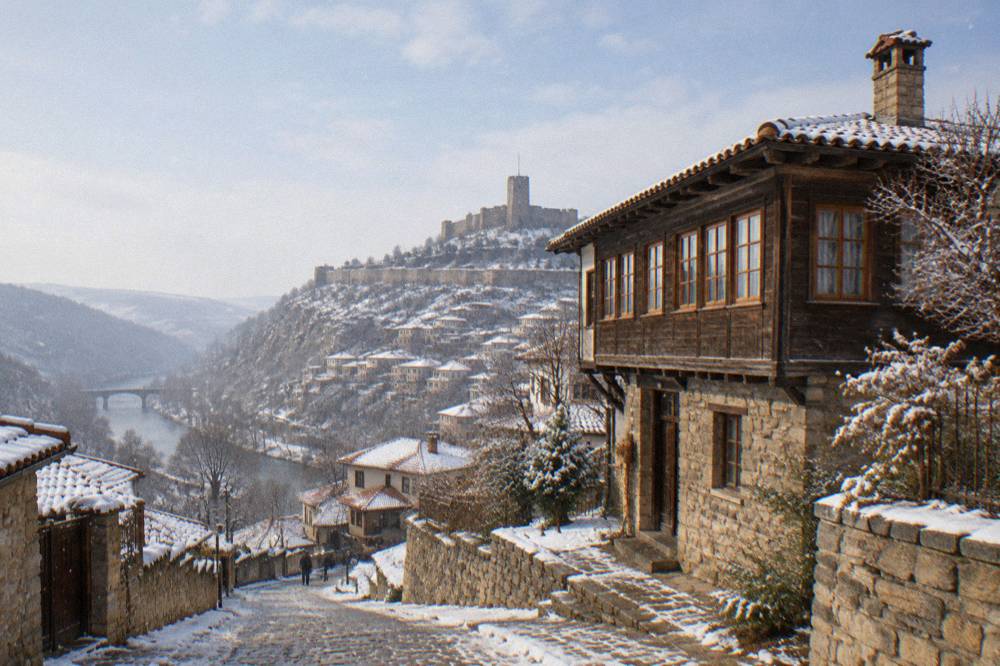
Bulgaria's independence was declared on 22 September 1908 at the Church of the Holy Forty Martyrs in Veliko Tarnovo, where Prince Ferdinand read the Manifesto, and the date is marked every year with a liturgy in the same church, historical reenactments and a flag ritual on Tsarevets. The church also holds the marble victory column of Ivan Asen II from 1230, commemorating the Battle of Klokotnitsa.
The Church of the Holy Forty Martyrs therefore carries two separate chapters of the national story in one building: the medieval column of 1230 and the independence manifesto of 1908. That pairing is why the church, rather than the fortress, is the site the national celebrations use each 22 September. The Bulgarian Telegraph Agency's reporting on the 2026 celebrations describes the liturgy at the church, the reenactment and the flag ritual on Tsarevets as the core of the programme.
The church is a ticketed site of the museum network. Per the museum's ticket page, it is open April to September from 09:00 to 18:00 with last entry at 17:30, and in October and winter from 09:00 to 17:00 with last entry at 16:30, with a Monday maintenance slot from 09:00 to 11:00. The standard adult ticket is 5.11 euro, with a family ticket at 7.67 euro.
A detail worth flagging: the independence declaration belongs to the Forty Martyrs church, not to Tsarevets. Guides elsewhere sometimes blur the two.
Which Medieval Sights Of Veliko Tarnovo Can You Visit Today?
The medieval sights open today are the Tsarevets Architectural-Museum Reserve, including the Patriarchal Cathedral of the Holy Ascension, and the Trapezitsa Architectural-Museum Reserve across the river, both run by the Regional Museum of History, with adult tickets of 7.67 euro and 5.11 euro respectively, plus the Church of Sts Peter and Paul and the multimedia visitor centre Tsarevgrad Tarnov, whose combined ticket is 10.23 euro.
Tsarevets is the headline site. Per the museum's ticket page it is open April to September daily from 08:00 to 20:00 with last entry at 19:00, in October from 09:00 to 18:00 with last entry at 17:00, and from 25 October 2026 in winter hours with entry from 09:00 to 16:00 and closing at 17:00. It has no closing day, though a Tuesday maintenance slot from 09:10 to 11:00 is listed. The adult ticket is 7.67 euro, and the family ticket, covering parents and up to three children aged 7 to 18, is 10.23 euro. The Patriarchal Cathedral on the hill is covered by the same ticket, with its own seasonal hours printed by the museum.
Trapezitsa, the second hill, costs 5.11 euro for a standard adult, with reduced rates of 2.56 euro for students and for Bulgarian citizens over 60, and a family ticket at 7.67 euro. Its funicular runs 1 May to 31 October from 09:00 to 16:00 with a lunch break from 12:00 to 13:00, a return ticket at 5.11 euro, and it stops for the season on 31 October 2026. Trapezitsa itself is closed to visitors from 30 November 2026 to 31 March 2027. There is more detail on the Trapezitsa Fortress page.
| Site | Standard adult ticket | Family ticket | Season to note |
|---|---|---|---|
| Tsarevets Reserve, incl. Patriarchal Cathedral | 7.67 euro | 10.23 euro | Winter hours from 25 October 2026 |
| Trapezitsa Reserve | 5.11 euro | 7.67 euro | Closed 30 November 2026 to 31 March 2027 |
| Trapezitsa funicular, return | 5.11 euro | 10.23 euro | Stops for the season on 31 October 2026 |
| Church of the Holy Forty Martyrs | 5.11 euro | 7.67 euro | Monday maintenance 09:00 to 11:00 |
| Archaeological Museum | 5.11 euro | 7.67 euro | Monday maintenance 09:00 to 11:00 |
The Archaeological Museum rounds out the medieval material, open April to October from 09:00 to 18:00 and in winter from 09:00 to 17:30, at 5.11 euro for a standard adult. The Tsarevgrad Tarnov multimedia visitor centre sells a standard ticket of 7.67 euro and a combined ticket with the Church of Sts Peter and Paul and the St Ivan Rilski church at 10.23 euro. There is also a two-day pass covering 10 museum sites, at 20.45 euro individual and 25.56 euro family, valid 1 April to 30 November. Free entry applies to children under 7, to people with permanent disabilities with an assistant, and to organised school groups from the municipality by written request.
How Does Arbanasi Fit Into The Story?
Arbanasi, a village about 2.8 km straight line from the centre of Veliko Tarnovo, preserves houses and churches from the centuries after the medieval capital's fall, and its Church of the Nativity and the Konstantsalieva House are now museum sites with standard adult tickets of 7.67 euro each and family tickets of 12.78 euro, per the museum's ticket pages.
The village's churches are the reason it belongs on a history itinerary. The Church of the Nativity is open April to September from 09:00 to 18:00 and in October from 09:00 to 17:00, with winter entry from 10:00 to 15:30, and the museum notes free entry on the church feast on 25 December 2026. The Church of Sts Archangels Michael and Gabriel shares the same seasonal pattern and the same 7.67 euro ticket.
| Arbanasi site | Standard adult ticket | Family ticket | Hours to note |
|---|---|---|---|
| Church of the Nativity | 7.67 euro | 12.78 euro | Winter entry 10:00 to 15:30 |
| Church of Sts Archangels Michael and Gabriel | 7.67 euro | 12.78 euro | April to September 09:00 to 18:00 |
| Konstantsalieva House | 7.67 euro | 12.78 euro | From 30 November 2026 to 20 March 2027 open Friday to Sunday only, 10:00 to 16:00 |
Konstantsalieva House is the domestic counterpart to the churches, and its winter schedule matters for planning: from 30 November 2026 to 20 March 2027 it opens only Friday, Saturday and Sunday, from 10:00 to 16:00. In season it runs daily from 09:00 to 18:00, and October from 09:00 to 17:00.
Arbanasi also hosts the Arbanasi Summer Music festival of classical chamber music in its medieval churches, which ran 15 to 25 July 2026 in the churches of Sts Archangels and St George. The ground between the city and the village can also be covered off road, and the Check availability link shows the tour page for that route.
What Historical Dates Still Shape Veliko Tarnovo's Calendar?
The dates that still shape the city's calendar are 22 March, the city holiday tied to the Holy Forty Martyrs and the Battle of Klokotnitsa, and 22 September, when the independence declaration of 1908 is marked with a liturgy at the Forty Martyrs church, reenactments and a flag ritual on Tsarevets, while the Sound and Light audiovisual show on Tsarevets runs on announced evenings and is free to watch from Tsar Asen I Square.
The 22 March holiday honours the medieval past the city is built on. The Bulgarian National Radio's reporting describes a liturgy, a procession and a programme built around the day. The 22 September celebrations follow the pattern the Bulgarian Telegraph Agency reported for 2026, with the show on Tsarevets in the evening as part of the programme.
| Date | What is marked | Core programme |
|---|---|---|
| 22 March | City holiday, Holy Forty Martyrs and the Battle of Klokotnitsa | Liturgy, procession, evening programme |
| 5 to 6 September 2026 | Unification Day programme | City programme per the Tourist Information Centre feed |
| 22 September | Independence declared in 1908 | Liturgy at the Forty Martyrs church, reenactment, flag ritual on Tsarevets |
| Announced evenings | Sound and Light show on Tsarevets | Free viewing from Tsar Asen I Square; paid seats on the panoramic platform |
The Sound and Light show has no fixed nightly schedule, an example in the official feed being 1 May 2026 at 21:15, and upcoming dates are announced by the operator. Watching from the square is free.
Beyond the city, two historic day trips carry firm dates of their own. Nicopolis ad Istrum, a Roman and early Byzantine site about 20 road km away and on the UNESCO Tentative List since 1984, is a museum site with a 5.11 euro adult ticket, open April to September from 09:00 to 18:00. Further out, the Rock-Hewn Churches of Ivanovo, inscribed by UNESCO in 1979, lie about 128 road km from the centre, and the Thracian Tomb of Kazanlak, also inscribed in 1979, about 98 road km. The churches and monasteries near Veliko Tarnovo guide covers the religious sites in between.
How Do You Plan A History Trip Around Veliko Tarnovo?
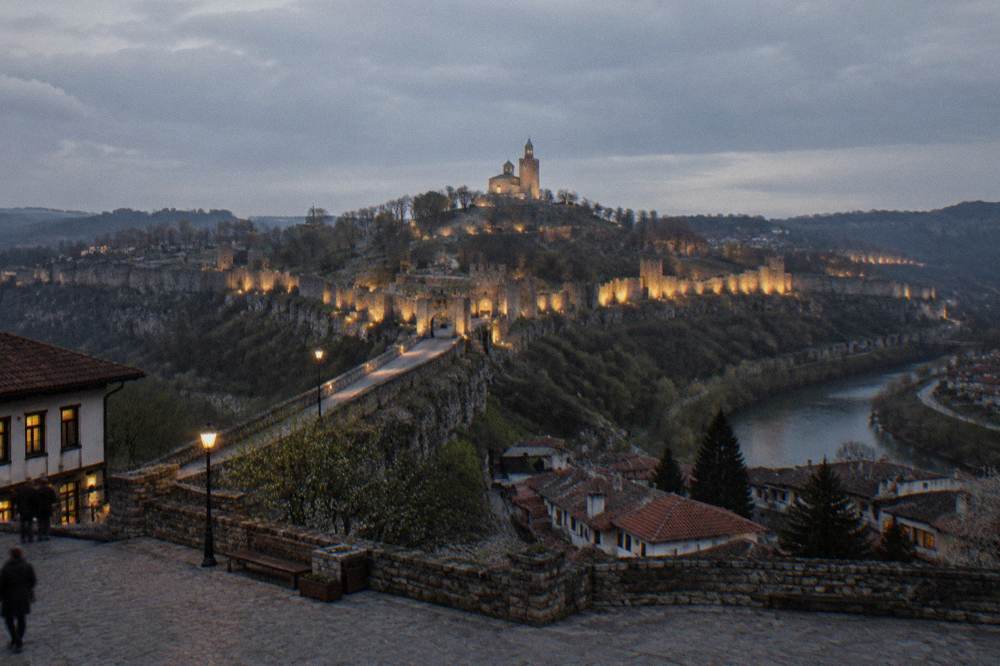
Plan a history trip around Veliko Tarnovo by anchoring it on Tsarevets and the Forty Martyrs church, adding Trapezitsa and the Archaeological Museum in season, walking the free historic streets of Samovodska Charshiya, General Gurko Street and Varosha, and timing the visit around 22 March or 22 September if the commemorative programmes matter, while checking the winter-hour dates of 25 October 2026 before booking anything late in the year.
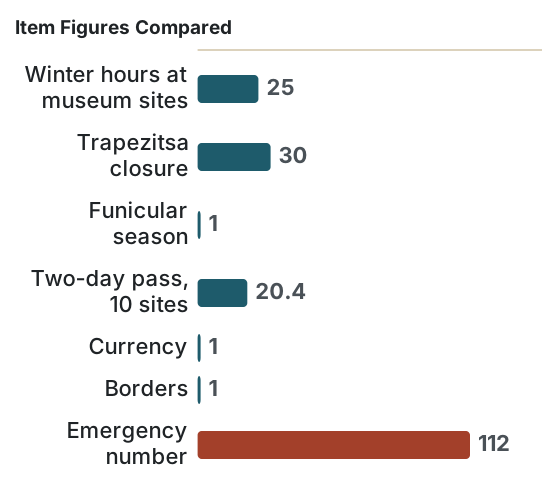
The practical spine is the museum network's seasonal clock. Summer hours run to the end of September, October shortens the days, and winter hours start on 25 October 2026. Trapezitsa closes for the winter on 30 November 2026, its funicular stops on 31 October, and Konstantsalieva House in Arbanasi drops to weekends only from 30 November. A visit before late October can include everything; a winter visit leans on Tsarevets, the Forty Martyrs church, the Archaeological Museum and the free public streets.
| Planning item | What the record states |
|---|---|
| Winter hours at museum sites | Start on 25 October 2026 |
| Trapezitsa closure | 30 November 2026 to 31 March 2027 |
| Funicular season | 1 May to 31 October, stops 31 October 2026 |
| Two-day pass, 10 sites | 20.45 euro individual, 25.56 euro family, valid 1 April to 30 November |
| Currency | Euro since 1 January 2026, fixed rate 1.95583 lev per euro |
| Borders | Full Schengen member since 1 January 2025 |
| Emergency number | 112 |
Getting there is covered on the how to get to Veliko Tarnovo page, including the fact that there is no direct train from Sofia and that the fastest connections change at Gorna Oryahovitsa. Money questions are handled on the Bulgaria euro and money page, since the changeover on 1 January 2026 is recent enough that older guides still quote lev prices.
What Does The Free Historic City Look Like Beyond The Ticketed Sites?
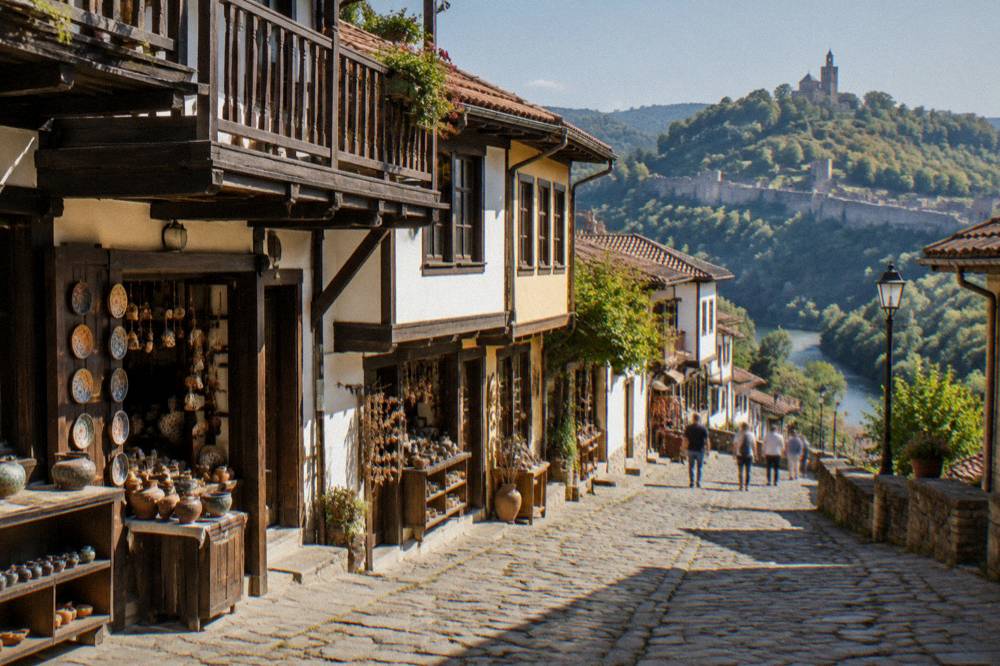
The free historic city consists of the Asenevtsi Monument, Samovodska Charshiya, General Gurko Street, the Varosha quarter and the view of the Sound and Light show from Tsar Asen I Square, all public spaces open at any hour with no ticket, per the municipal listing, and together they frame the fortress hills from the streets where the revival city actually lived.
These are the spaces between the museums, and they cost nothing. The Asenevtsi Monument stands as the public marker of the Asen dynasty whose 1185 to 1186 uprising began the whole story. Samovodska Charshiya is the historic market street, General Gurko Street runs along the ridge with the revival houses above the river, and Varosha is the old quarter around them. Sarafkina House at number 88 on General Gurko Street is the ticketed exception in the neighbourhood, built in 1861.
The walking tours on the roster are paid products, and the open public spaces can be walked on your own at no charge. For readers deciding how long to stay, the question of how many days the city deserves has its own treatment, and the spring and autumn in Veliko Tarnovo guide covers the shoulder seasons that suit a history walk best, with the ERA5 reanalysis for 1991 to 2020 showing mean daily highs of 16.9 C in April and 17.6 C in October.
Why Does The Old Capital Question Keep Coming Up?
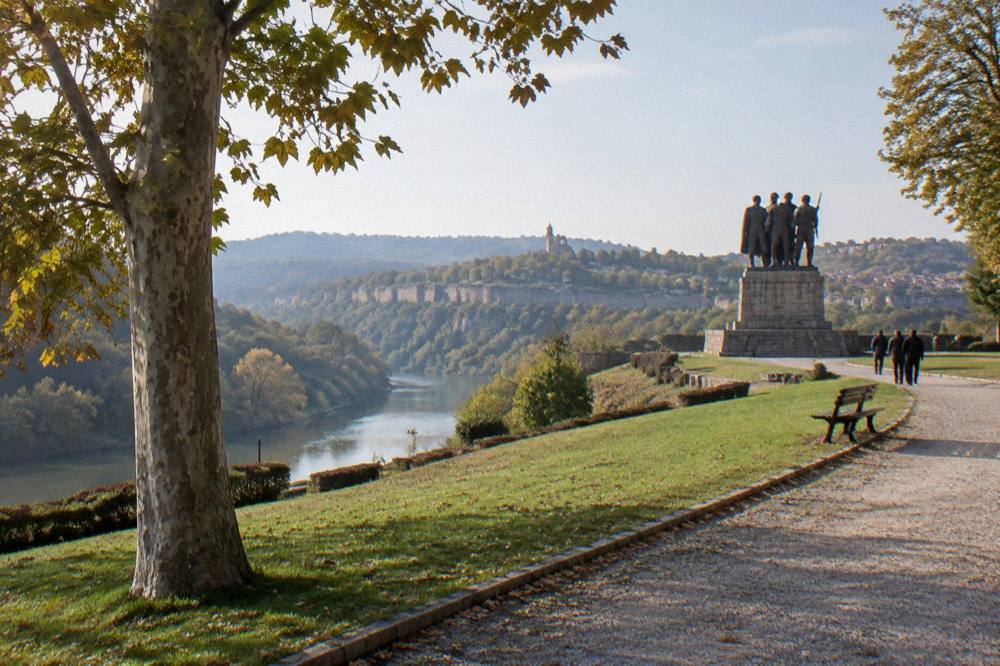
The question of what was the old capital of Bulgaria keeps coming up because the answer changed twice: the medieval capital of the Second Bulgarian Kingdom was Veliko Tarnovo from the late 12th century to the 14th, and the modern state's constitution was drafted here in 1879, while today's capital is Sofia, so searches for "the old capital" land on this city and its fortress.
That double role is the reason the city's history compresses so much into one river bend. The medieval kingdom was governed from Tsarevets, the modern state was legislated into being in the Konak of 1872, and independence was proclaimed at the Forty Martyrs church in 1908. Three buildings, three dates, one walkable town.
The wider region adds the deeper layers. Nicopolis ad Istrum carries the Roman and early Byzantine past on the Tentative List since 1984, and the two 1979 UNESCO inscriptions at Ivanovo and Kazanlak sit within day-trip range. For the question itself, the what was the old capital of Bulgaria answer page gives the short version.
Common Questions About Veliko Tarnovo History
How old is Veliko Tarnovo?
The city's role as capital of the Second Bulgarian Kingdom dates from the late 12th century, after the 1185 to 1186 uprising of Asen and Peter, with 1186 marking the year the state was restored. No founding date for the settlement itself is stated by the records this site uses.
Was Veliko Tarnovo the capital of Bulgaria?
Yes, it was the capital of the Second Bulgarian Kingdom for more than two centuries, from the end of the 12th century to the 14th. Today's capital of Bulgaria is Sofia.
Is Tsarevets Fortress a UNESCO World Heritage Site?
No. Nothing in Veliko Tarnovo is inscribed by UNESCO or on the Tentative List. The nearest inscribed sites are the Rock-Hewn Churches of Ivanovo and the Thracian Tomb of Kazanlak, both from 1979, while Nicopolis ad Istrum near the city has been on the Tentative List since 1984.
Where was Bulgarian independence declared?
At the Church of the Holy Forty Martyrs in Veliko Tarnovo, on 22 September 1908, where Prince Ferdinand read the Manifesto. The date is marked each year with a liturgy at the church and ceremonies on Tsarevets.
What is the Tarnovo Constitution?
The constitution adopted in Veliko Tarnovo in 1879, drafted by the assembly that met in the Konak, the building of 1872 by master Kolyu Ficheto. The building now houses the Museum "Revival and Constituent Assembly".
When is the city holiday of Veliko Tarnovo?
22 March, tied to the Holy Forty Martyrs and the Battle of Klokotnitsa, which the Ivan Asen II column of 1230 in the Forty Martyrs church commemorates.
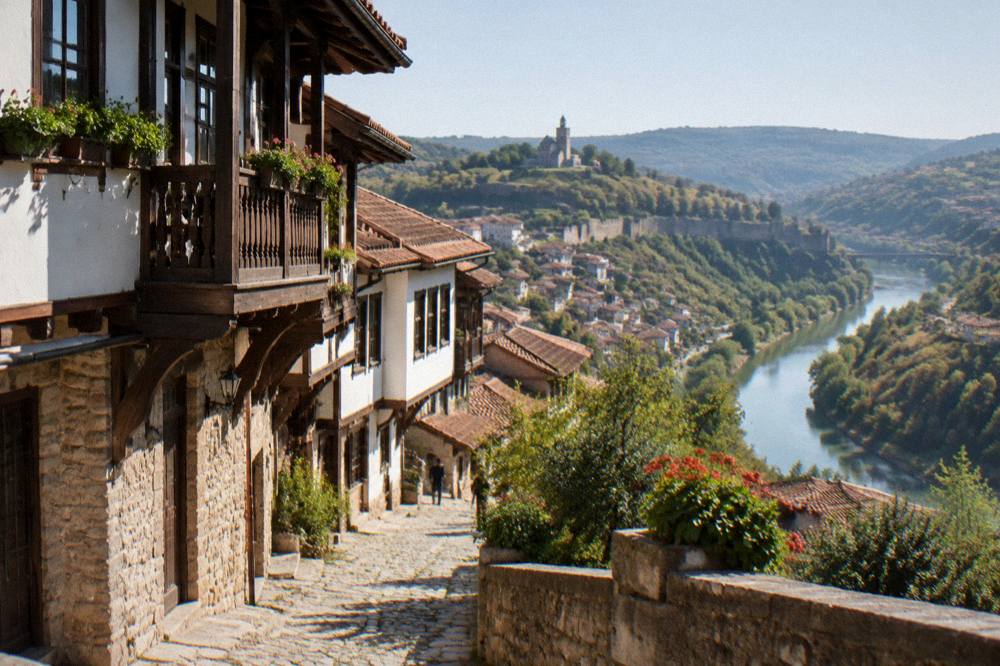
The story of this city fits into a single walk: fortress hill, river bend, revival street, and the church where a kingdom's end and a state's beginning are both marked in stone. Plan the visit inside the season, check the winter-hour dates of 25 October 2026 against the calendar, and the rest of the itinerary, from the museums to the free streets, falls into place along the Yantra. More on the wider region, the day trips and the practical planning sits across the Veliko Tarnovo Travel Guide, including the things to see across the city overview and the Veliko Tarnovo weather page for choosing the month.
Want that walk with commentary at your own pace? Book a self-guided audio tour.