Money In Veliko Tarnovo: The Euro, Cards And Cash
Bulgaria swapped the lev for the euro on 1 January 2026, and every price in Veliko Tarnovo, from the Tsarevets Fortress ticket to a museum pass, is now set in euro. Here is what that means for a visit.
Bulgaria has used the euro since 1 January 2026, at a fixed rate of 1.95583 lev per euro, and it is a full Schengen member since 1 January 2025. Cash and cards both work in Veliko Tarnovo; sight tickets are printed in euro, with Tsarevets Fortress at 7.67 euro for an adult.
Veliko Tarnovo, the old capital of the Second Bulgarian Kingdom on the Yantra river, prices everything in euro these days. The change is recent: Bulgaria adopted the euro on 1 January 2026 as the 21st member of the euro area, at a fixed rate of 1.95583 lev per euro, which means the old lev figures visitors remember from earlier trips convert at exactly that rate and nothing else. Every museum ticket in the city is now printed in euro, and the Regional Museum of History, which runs Tsarevets Fortress, quotes its adult entry as 7.67 euro, the converted 15 lev of the old price list. This page sets out what the currency change means in practice, what the sights cost, and how to plan cash and cards for a stay, with more background in the Bulgaria travel tips guide and the cost overview for Veliko Tarnovo.
What Currency Does Bulgaria Use In 2026?
Bulgaria uses the euro, and has done since 1 January 2026, when it became the 21st country of the euro area. The conversion rate is fixed at 1.95583 lev per one euro, the same rate at which the lev was pegged to the German mark before it. Any price you see in Veliko Tarnovo, from a 7.67 euro fortress ticket to a 5.11 euro museum entry, is a euro price, and no shop, museum or hotel in the city should quote the lev as a live currency.
The lev is gone as everyday money, but it survives as a unit of memory. The fixed rate was set years in advance as part of the euro area entry path, and it means every old lev price maps onto a euro price with simple arithmetic: 10 lev became 5.11 euro, 15 lev became 7.67 euro, 20 lev became 10.23 euro. The Regional Museum of History's own ticket pages print those euro figures, which is why the sight prices on this page carry numbers like 7.67 rather than round ones.
| Question | Answer |
|---|---|
| Currency since 1 January 2026 | Euro |
| Euro area membership | 21st member, from 1 January 2026 |
| Fixed conversion rate | 1.95583 lev per euro |
| Old currency | Lev, withdrawn from everyday use |
| Schengen status | Full member since 1 January 2025 |
| Typical museum adult ticket | 5.11 euro or 7.67 euro |
The changeover also matters at the border. Bulgaria is a full Schengen member since 1 January 2025, and the Entry/Exit System has run at all external Schengen borders since 10 April 2026, registering travellers biometrically instead of stamping passports. US, UK, Canadian and Australian citizens are reported to be visa-free for 90 days in any 180; confirm your own status with official sources before travelling.
Do You Need Cash In Veliko Tarnovo?
Carry some euro cash, and do not plan on paying for everything by card. The paid sights sell printed euro tickets, market stalls and small shops in the old quarters may prefer notes, and the practical rule anywhere in a euro-area city applies here too: a modest amount of cash covers the places a card does not. How much you need depends on what you buy, since the big fixed costs of a visit, the sight tickets, are published euro prices you can budget exactly before you arrive.
The free side of the city needs no wallet at all. The Asenevtsi Monument, Samovodska Charshiya, General Gurko Street and the Varosha quarter are public spaces with no ticket and no hours, and the Sound and Light show is free to watch from Tsar Asen I Square when it runs on an announced evening. That leaves the museums, the churches with entry fees, and food and shopping as the things that cost money, and the museum side of that list is fully priced in euro on the official ticket pages.
No meal, drink or room rate belongs on a money page unless a source prints it, and none does, so plan those lines from your own booking confirmations rather than from a round number lifted off a forum.
Since the euro is a currency you may already hold, the old advice about changing money at the airport or hunting for a fair exchange rate has largely evaporated. There is no exchange rate to get wrong inside the euro area. What remains is the ordinary travel hygiene of any euro trip: keep some notes for small purchases, tell your bank you are travelling if that is your bank's requirement, and check what your own card charges for euro transactions, which depends on where your account lives and not on Bulgaria.
What Do The Sights In Veliko Tarnovo Cost?
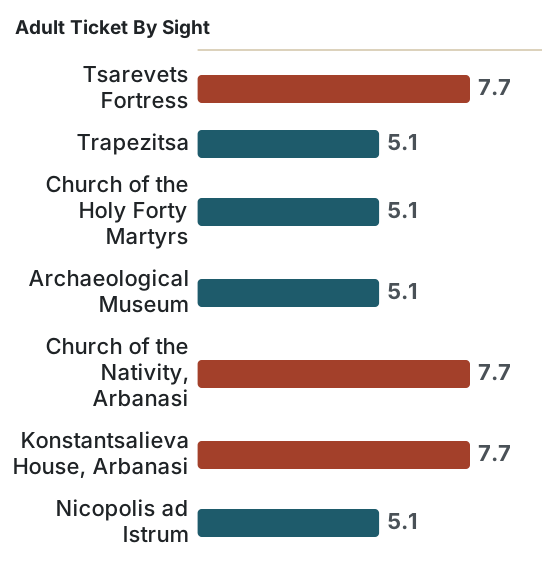
The Regional Museum of History prices its main sites in euro, and the headline figures are: Tsarevets Fortress at 7.67 euro for an adult and 10.23 euro for a family of parents with up to three children aged 7 to 18, Trapezitsa at 5.11 euro, the Church of the Holy Forty Martyrs at 5.11 euro, and the Tsarevgrad Tarnov multimedia visitor centre at 7.67 euro. Children under 7 enter free, and people with permanent disabilities enter free with an assistant.
Those figures come straight from the museum's ticket pages, which print the euro prices the 2026 changeover produced. The family tickets are worth reading closely: Tsarevets defines a family as parents plus up to three children aged 7 to 18, the Forty Martyrs church lists a family ticket at 7.67 euro, Trapezitsa lists one at 7.67 euro, and the multimedia centre lists a family rate on its own ticket page. The two-day pass covering 10 museum sites costs 20.45 euro for an individual, valid 1 April to 30 November, or 25.56 euro for a family.
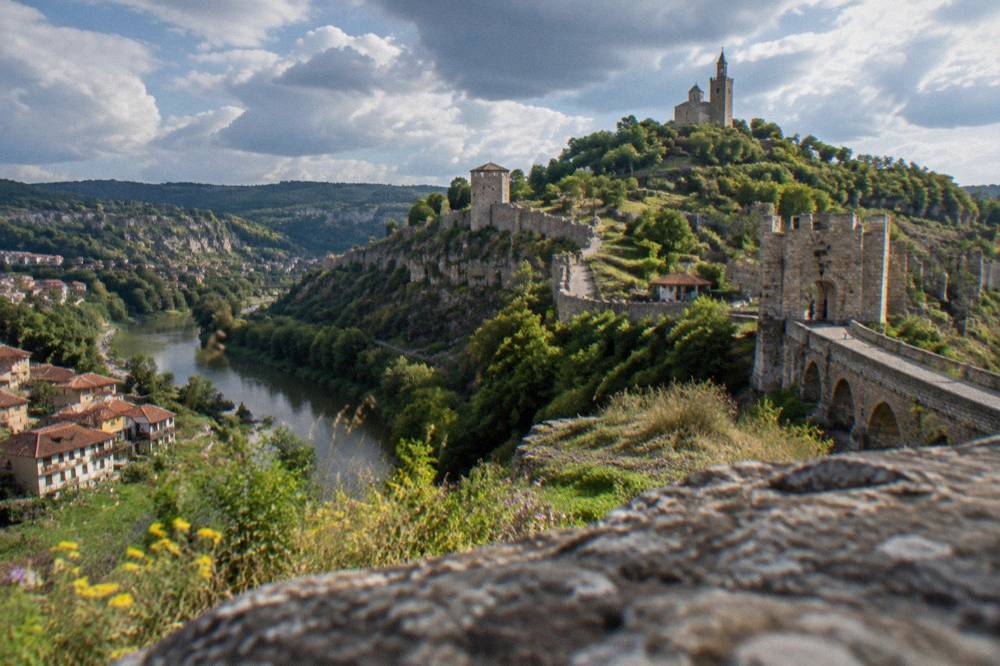
| Sight | Adult ticket | Family ticket |
|---|---|---|
| Tsarevets Fortress | 7.67 euro | 10.23 euro |
| Trapezitsa | 5.11 euro | 7.67 euro |
| Church of the Holy Forty Martyrs | 5.11 euro | 7.67 euro |
| Archaeological Museum | 5.11 euro | 7.67 euro |
| Church of the Nativity, Arbanasi | 7.67 euro | 12.78 euro |
| Konstantsalieva House, Arbanasi | 7.67 euro | 12.78 euro |
| Nicopolis ad Istrum | 5.11 euro | Not published |
Reduced rates exist at the ticket office for students, seniors and pupils at several sites, and Trapezitsa lists them explicitly: 2.56 euro for students and 2.56 euro for Bulgarian citizens over 60. The Archaeological Museum also lists a 2.56 euro student rate. Ask at the ticket window with a document, since the reductions are sold on the spot rather than online.
Seasonal closures shape what any of this buys you in winter. Winter hours at the museum sites start on 25 October 2026, Trapezitsa closes to visitors entirely from 30 November 2026 to 31 March 2027, its funicular stops for the season on 31 October 2026, and Konstantsalieva House in Arbanasi is open Friday to Sunday only from 30 November 2026 to 20 March 2027. If your trip falls between November and March, budget around the sites that stay open daily, above all Tsarevets itself, which has no closing day, only a Tuesday maintenance slot from 09:10 to 11:00.
Guided talks inside Tsarevets carry their own euro prices: a translated talk at 20.45 euro and a foreign language talk at 25.56 euro, per the ticket page. The Tsarevets Fortress guide and the Trapezitsa guide walk through what each site holds; from a pure money angle the choice is simple, since the ticket prices are fixed and printed, and only the opening hours vary with the season.
Can You Pay By Card At The Museums And Sights?
Treat cards as backup rather than as the guaranteed way into a museum. The prices are euro prices wherever you pay them, but the practical payment rules at each ticket window can vary, so carry enough cash to cover a day of sightseeing and treat card acceptance as a bonus. The one payment method that definitely works from anywhere is booking ahead through the tour page, which is charged online before you travel.
A reasonable plan for a sightseeing day is cash sufficient for the full ticket list, exactly calculable from the table above, with a card for anything beyond it. The same logic applies to the getting around guide: the city bus fare, taxi fare and parking tariff are not published in advance, so those lines of a budget need local confirmation on arrival.
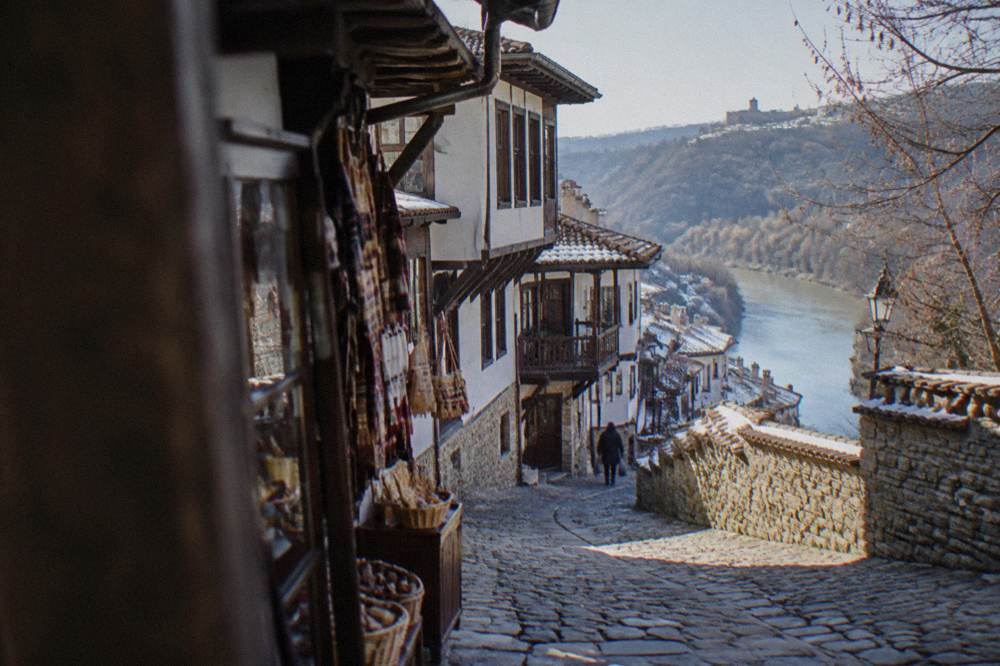
Bookable products solve part of this in advance. The Mini Bulgaria Park package near the city bundles entry with an e-guide, and its price, rating and duration all render on the tour page: Check availability. Paying before you arrive removes one cash question from the trip entirely.
What Happened To The Bulgarian Lev?
The lev stopped being legal tender when Bulgaria joined the euro area on 1 January 2026, and the conversion was fixed at 1.95583 lev per euro. The rate was not a market rate on the day; it had been locked in advance through the currency board arrangement that pegged the lev to the euro, so every lev figure a visitor remembers, a 15 lev fortress ticket, a 10 lev museum entry, became a euro figure at that single rate and no other.
That fixed rate explains the odd-looking euro prices all over the city. A museum ticket at 5.11 euro looks strange until you recognise it as the old 10 lev, and 7.67 euro is the old 15 lev. Nothing was re-priced for round numbers, which is why the ticket pages carry figures to the cent. For a visitor arriving from another euro country this is pure convenience: the money in your pocket is the money on the price list. The full index of guides sits on Veliko Tarnovo Travel Guide.
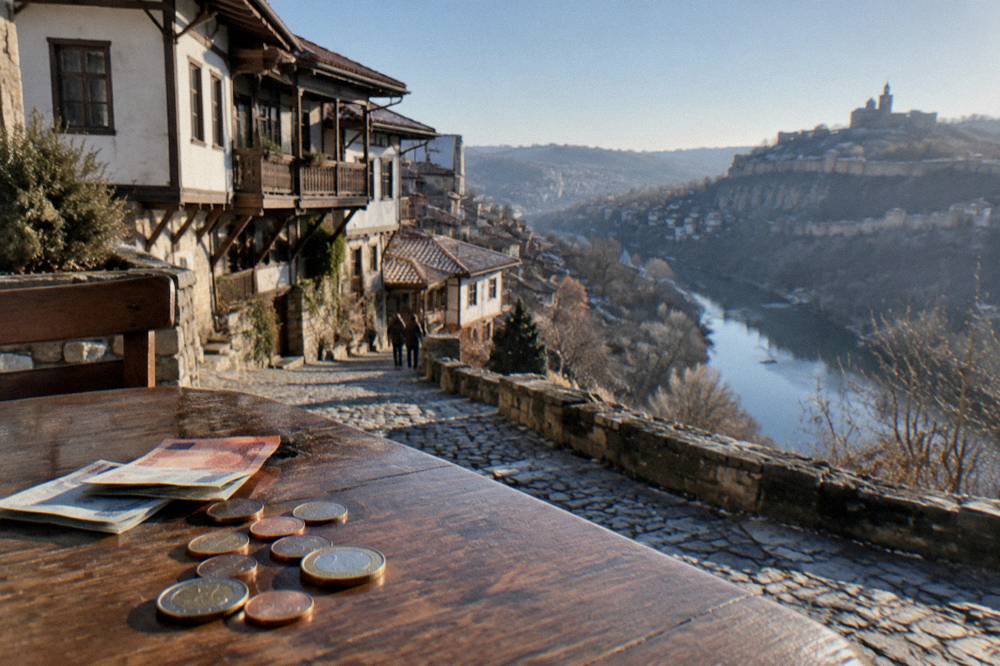
Any leftover lev from an older trip cannot be spent in Veliko Tarnovo. The changeover is complete and the lev exists only as a reference to the past, like the fixed rate itself. If you find an old guidebook quoting lev prices, divide by 1.95583 and you have today's euro figure, which is exactly how the museum's own numbers were produced.
Should You Exchange Or Withdraw Money Before You Arrive?
If your home currency is the euro, exchange nothing, because the currency you hold is already the currency of the country. If it is something else, the ordinary euro-area logic applies: withdraw euro from an ATM or use a card with fair euro terms, and avoid exchanging at airports and hotels where the margin is widest. There is no Bulgarian currency to buy any more, so the old pre-euro ritual of ordering lev in advance has simply disappeared.
The arrival route also shapes the money plan. No airport with scheduled flights serves Veliko Tarnovo itself; visitors come through Sofia, about 216 road km away, Varna, about 214, or Bucharest Otopeni, about 205, and those are three different currency situations, two euro-area airports and one Romanian one. The nearest airport guide and the how to get there guide cover the routes; from a money perspective the only point that matters is that you can arrive with euro in hand and never need a second currency for the stay.
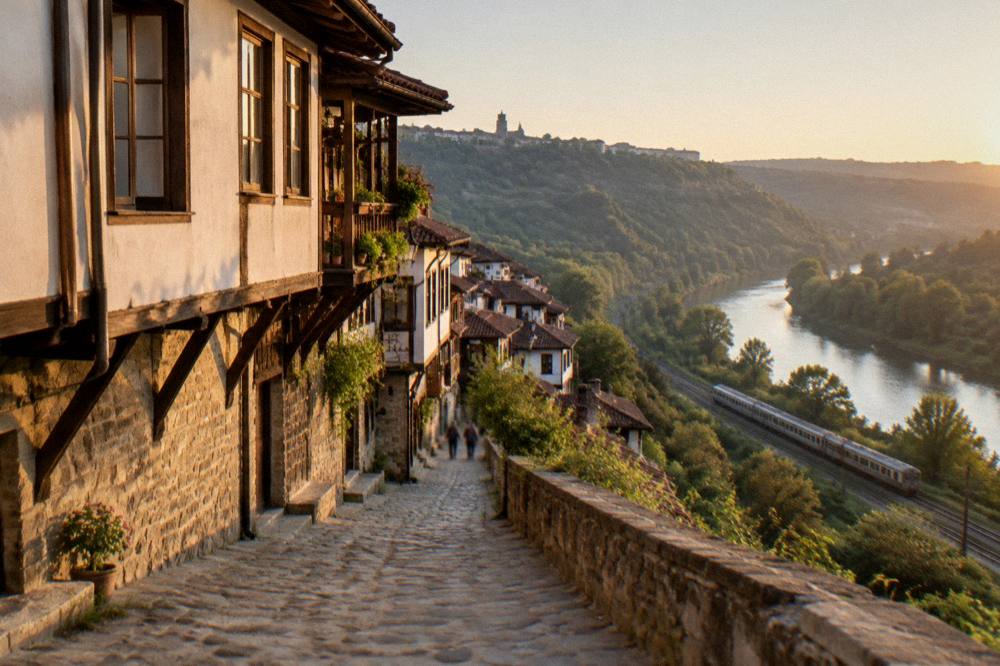
Train travellers have one published fare to work with: the BDZ example of about 9.82 euro second class from Sofia to Veliko Tarnovo, with no direct train on that route and the fastest connections taking 4 h 33 min and 4 h 51 min with a change, usually at Gorna Oryahovitsa. The train station guide has the detail. Bus fares vary by operator and date, so check the current price when you book rather than from a rounded figure.
| Arrival route | What is published |
|---|---|
| Sofia to Veliko Tarnovo by train | fastest 4 h 33 min and 4 h 51 min, change usually at Gorna Oryahovitsa |
| Sofia to Veliko Tarnovo fare example | about 9.82 euro, second class |
| Varna to Veliko Tarnovo by train | one direct train, 3 h 53 min |
| Ruse to Veliko Tarnovo by train | direct 2 h 25 min |
| Airports with scheduled flights | Sofia, Varna, Bucharest Otopeni |
How Much Does A Day Of Sights Cost In Veliko Tarnovo?
A full sightseeing day priced from the museum's own list runs 7.67 euro for Tsarevets, 5.11 euro for the Archaeological Museum, 5.11 euro for the Forty Martyrs church and 7.67 euro for the Tsarevgrad Tarnov multimedia centre, with each figure quoted separately and no bundle assumed. The two-day pass at 20.45 euro covers 10 museum sites and is valid 1 April to 30 November, which is the one published way to cover many sites with a single euro figure.
No adding-up is needed to compare those numbers: the pass price, the individual prices and the family prices are all printed facts, and whether the pass suits your itinerary depends on which of the 10 sites your days actually include. A winter trip changes the maths by subtraction rather than by price, since Trapezitsa is closed from 30 November 2026 and several Arbanasi sites drop to weekend hours.
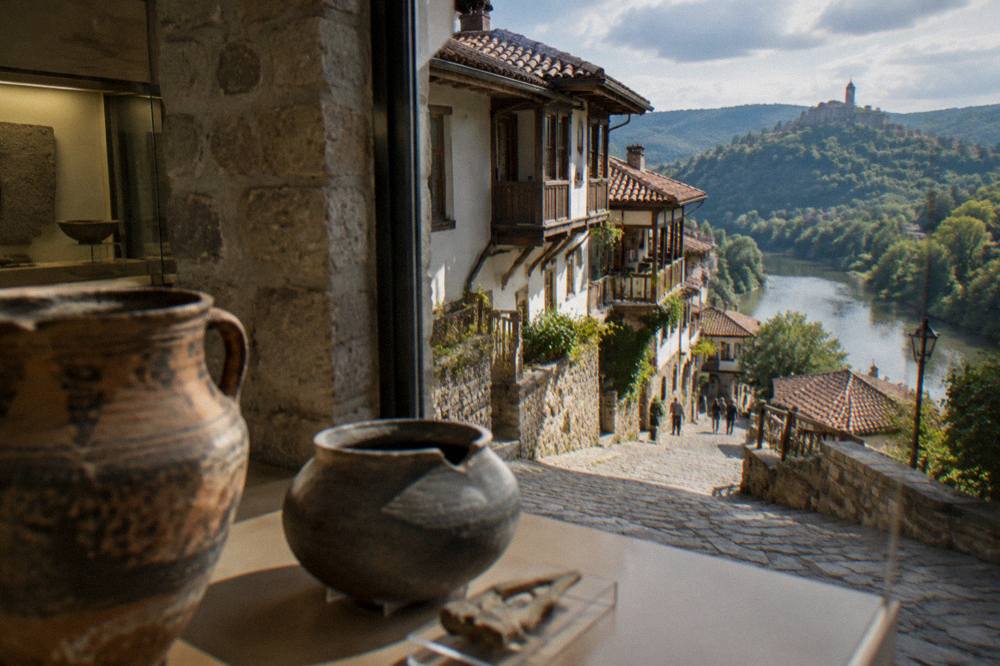
Arbanasi, about 2.8 km straight-line from the centre, prices its two main museum sites at 7.67 euro each, with family tickets at 12.78 euro, and the Church of the Nativity is free on its feast day, 25 December 2026. Nicopolis ad Istrum, the Roman site about 20 km north that has sat on UNESCO's Tentative List since 1984, charges 5.11 euro. The Arbanasi guide and the Nicopolis ad Istrum guide cover both.
| Pass or reduction | Price | Notes |
|---|---|---|
| Two-day pass, 10 museum sites | 20.45 euro | individual, valid 1 April to 30 November |
| Two-day pass, family | 25.56 euro | family rate |
| Tsarevets guided talk, translated | 20.45 euro | per the ticket page |
| Tsarevets guided talk, foreign language | 25.56 euro | per the ticket page |
| Trapezitsa reduced rate | 2.56 euro | students, and Bulgarian citizens over 60 |
Day trips out of the city add their own published figures. Etar, the open-air architectural museum near Gabrovo about 53 km away, lists an adult ticket at 7.16 euro, a pensioner rate of 4.09 euro and a student rate of 3.07 euro, with children under 7 free.
What About Deposits, Tips And Tourist Tax In Veliko Tarnovo?
No hotel rate, nightly price or deposit amount belongs on this page, and tips are a matter of custom rather than a published figure, so tip as you would anywhere in the euro area and let the service decide.
Hold euro, budget the sight tickets from the museum's printed prices, keep cash for the small and unpriced things, and confirm the accommodation total, tax included, when you book.
If a tasting or a small experience is on your list, the same rule holds as for the sights: the price and rating render from the listing, never from a memorised figure, and the euro price you see is the price you pay. For more on the local drinking culture, the rakia and Bulgarian wine guide is the companion page.
Common Questions About Money In Veliko Tarnovo
What currency does Bulgaria use?
Bulgaria uses the euro, adopted on 1 January 2026 at a fixed rate of 1.95583 lev per euro. The lev is no longer legal tender, and every price in Veliko Tarnovo, including all museum tickets, is set in euro.
Should I bring cash to Veliko Tarnovo?
Carry some euro cash. Sight tickets, market stalls and small shops may each handle payment differently, and no card-acceptance rule is published in advance, so cash covers a day of sightseeing with certainty. The free public spaces, from Samovodska Charshiya to Gurko Street, need no money at all.
What does Tsarevets Fortress cost?
Entry is 7.67 euro for an adult and 10.23 euro for a family of parents with up to three children aged 7 to 18, per the Regional Museum of History's ticket page. Children under 7 enter free, and the site has no closing day, only a Tuesday maintenance slot from 09:10 to 11:00.
Can I still use Bulgarian lev?
No. The lev stopped being legal tender when Bulgaria joined the euro area on 1 January 2026. Old lev figures convert at the fixed rate of 1.95583 lev per euro, which is how the museum's euro prices, such as 5.11 euro for the old 10 lev ticket, were produced.
Is there a tourist tax in Veliko Tarnovo?
Confirm the total, tax included, at booking, and treat any room rate you see elsewhere as unconfirmed until your reservation states it.
Do museum prices change in winter?
The euro prices stay the same; the hours change. Winter hours at the museum sites start on 25 October 2026, Trapezitsa closes entirely from 30 November 2026 to 31 March 2027, its funicular stops on 31 October 2026, and Konstantsalieva House in Arbanasi goes to Friday-to-Sunday opening from 30 November 2026.