Nearest Airports To Veliko Tarnovo: Sofia, Varna And Bucharest
Veliko Tarnovo, an inland city on the Yantra river in northern Bulgaria, has no airport of its own with scheduled flights. Every visitor arrives through Sofia, Varna or Bucharest Otopeni, and the choice between them shapes the whole trip.
No airport with scheduled flights serves Veliko Tarnovo itself. The three practical gateways are Sofia (SOF), about 216 road km away, Varna (VAR), about 214 road km, and Bucharest Otopeni (OTP), about 205 road km. The airfield at Gorna Oryahovitsa, about 10 km from the centre, has no regular scheduled flights and cannot be used as a gateway.
Veliko Tarnovo, an inland city on the Yantra river in northern Bulgaria with no sea coast, has no airport with scheduled flights of its own. The medieval capital of the Second Bulgarian Kingdom sits in a river valley, and every traveller reaching it lands somewhere else first: Sofia (SOF) about 216 road km away, Varna (VAR) about 214, or Bucharest Otopeni (OTP) about 205. Which of the three makes sense depends on where you start, how you like to cover the last stretch of road, and whether the airport is the beginning of a Bulgaria trip or the whole point of it.
Which Airport Is Closest To Veliko Tarnovo?
Bucharest Otopeni (OTP) in Romania is the closest of the three gateways by road, about 205 km from the centre of Veliko Tarnovo, with Varna (VAR) about 214 km and Sofia (SOF) about 216 km behind it. No airport with scheduled flights serves the city itself, and the small airfield at Gorna Oryahovitsa, about 10 km away, has no regular scheduled flights, so the three big gateways are the real choice.
The three distances are close enough that the airport decision rarely comes down to kilometres alone. Sofia works for trips built around Bulgaria, since the capital is the country's main hub and the run north to Veliko Tarnovo can be folded into a wider route through Sofia or the monasteries and towns of the interior. Varna suits arrivals from Black Sea beach itineraries, and Bucharest Otopeni suits travellers already in Romania, or anyone whose flight options into Bucharest are simply better. Distances are computed on the road network from the centre, and every figure on this page carries "about" for that reason.
Wondering which gateway suits your travel dates? Book a flight to Veliko Tarnovo.
The comparison is worth making carefully, because the three gateways differ more in character than in distance. Sofia is the largest hub of the three and the one with the widest range of connections into Bulgaria, but it is also the farthest of the three by a matter of kilometres so small that it should not decide anything on its own. Varna is seasonal in feel, tied to the coast and the summer schedule. Otopeni is a busy international airport in a capital city of a neighbouring country, and its distance advantage is real but modest, roughly 11 km closer than Sofia. What should decide the choice is where the rest of the itinerary sits, not the odometer.
| Airport | Code | Country | Road distance from Veliko Tarnovo |
|---|---|---|---|
| Bucharest Otopeni | OTP | Romania | about 205 km |
| Varna | VAR | Bulgaria | about 214 km |
| Sofia | SOF | Bulgaria | about 216 km |
One practical point matters more than any of the three distances: Bulgaria is a full Schengen member since 1 January 2025, so crossing the Romanian land border after landing in Bucharest does not involve the border regime it once did. The euro has been Bulgaria's currency since 1 January 2026, fixed at 1.95583 lev per euro, so there is no money change between the two legs of a Sofia or Varna arrival; Romania is a separate matter, covered on the Bulgaria euro and money page. The city waiting at the end of the run had an estimated 77,067 municipality residents on 31 December 2025, and its museum sites, stations and bus stops all price in euro now.
How Do You Get From Sofia Airport To Veliko Tarnovo?
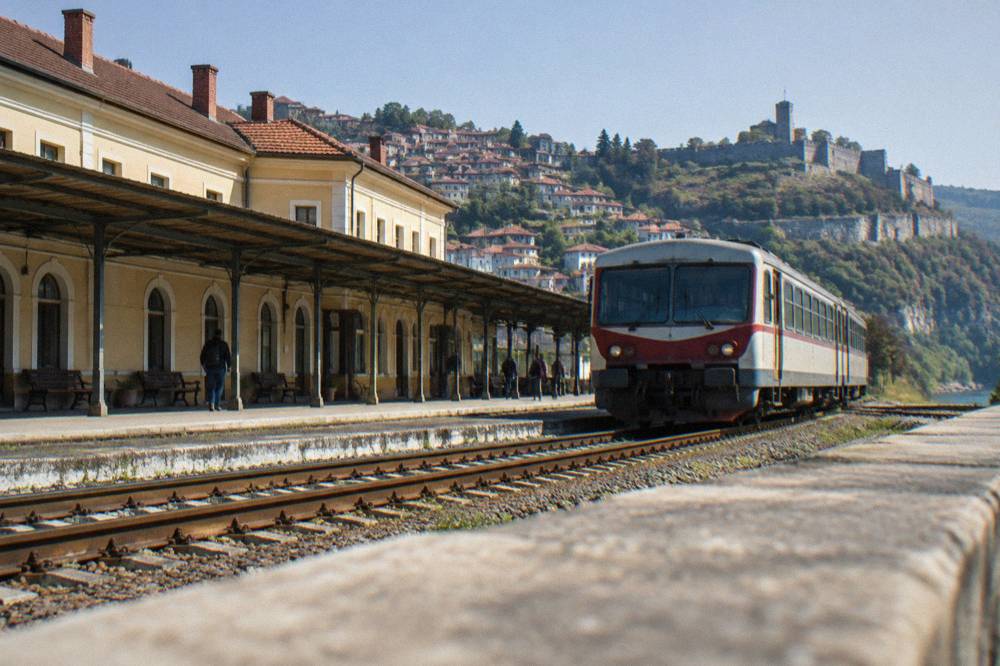
From Sofia you reach Veliko Tarnovo by bus or by train with a change, and there is no direct train: the BDZ timetable of 17 October 2026 shows the fastest trips at 4 h 33 min and 4 h 51 min, with changes usually at Gorna Oryahovitsa, while other connections take 6 to 10 hours. Buses cover the run in about 3 to 3.5 hours with several operators, arriving at the Yug bus station in the centre.
The bus is the quicker of the two public options from the capital. Services leave from the Sofia side and arrive at Yug station, 74 Hristo Botev Blvd, the city's main stop for long-distance routes. The train is the slower but scenic alternative: the BDZ route pages show every Sofia to Veliko Tarnovo journey involving at least one change, usually at the Gorna Oryahovitsa junction about 10 km from the centre. Times change with each timetable revision, so the BDZ timetable is the place to check a specific date rather than any fixed list. A second-class fare of about 9.82 euro appears as a single example, and fares move with the booking system.
| Route | Direct? | Fastest journey | Notes |
|---|---|---|---|
| Sofia to Veliko Tarnovo by train | no, change at Gorna Oryahovitsa | 4 h 33 min | 07:00 departure runs 4 h 51 min; others 6 to 10 h |
| Sofia to Veliko Tarnovo by bus | yes | about 3 to 3.5 h | several operators, arriving at Yug station |
The spread between the fastest and slowest rail journeys is wide, and it rewards a little planning. The 10:10 departure from Sofia lands in the city in the late afternoon on the fastest pairing, while the 07:00 departure arrives earlier in the day but takes eighteen minutes longer. Connections in the 6 to 10 hour bracket exist on the same route, so checking the specific date on the BDZ timetable rather than assuming a fixed pattern is the single most useful thing a rail traveller through Sofia can do. The bus removes that variability: the run is direct, the arrival point is central, and the Yug station address is a short reference for any accommodation directions.
Arrivals through Sofia who would rather not organise the transfer themselves can also take a day tour from Sofia to the former capital, which covers the road both ways. The wider options for the Sofia gateway are on the Sofia day trips page, and the Veliko Tarnovo train station page covers what to expect when the rail leg ends.
Is Varna Airport A Good Gateway To Veliko Tarnovo?
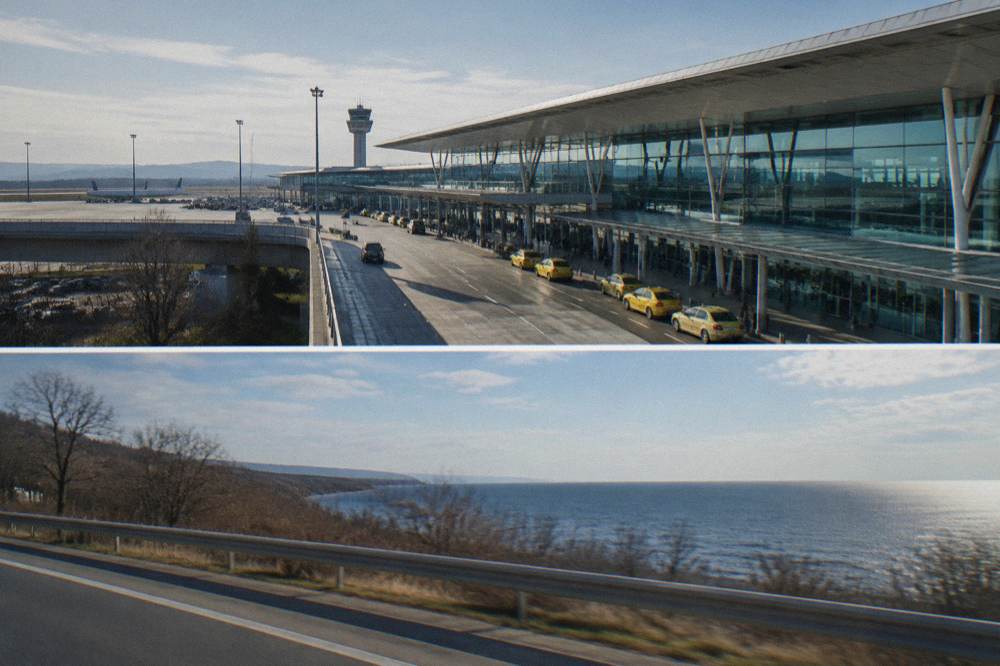
Varna (VAR) on the Black Sea coast is about 214 road km from Veliko Tarnovo, and the route page on the comparison site read for this guide lists 16 direct buses a day plus one direct train of 3 h 53 min departing at 05:00, with other rail connections changing at Gorna Oryahovitsa and taking 4 h 36 min or longer. That makes Varna a workable gateway, especially combined with a coastal leg.
The single direct train is the 05:00 departure, an early start that lands in the city well before the museum sites open their last entries. The 16 direct buses spread across the day and arrive at the Yug bus station. The road run between Varna and the city crosses the northern Bulgarian plain, and the Varna day trips page covers what else the coastal gateway unlocks.
Sixteen direct buses a day is a frequency few regional routes in the country match, and it removes the main worry of a coastal arrival: being stranded at the end of a flight with a long transfer ahead. The spread of departures means a morning landing can still produce an afternoon arrival, and an evening landing can still move the same day or the next morning without a long wait. The rail alternative from Varna splits into two shapes, the one direct train at 05:00 and the changing services at 4 h 36 min and longer, so the bus carries the day-trip traffic and the train carries the early risers.
Varna as a gateway pairs naturally with a summer itinerary, but the season matters for the city at the end of the run too. The museum sites move to winter hours from 25 October 2026, Trapezitsa closes to visitors from 30 November 2026 to 31 March 2027, and the funicular stops for the season on 31 October 2026, all covered in detail on the best time to visit Veliko Tarnovo page and the Veliko Tarnovo weather page.
Why Is Bucharest Otopeni Often The Nearest Airport For Veliko Tarnovo?
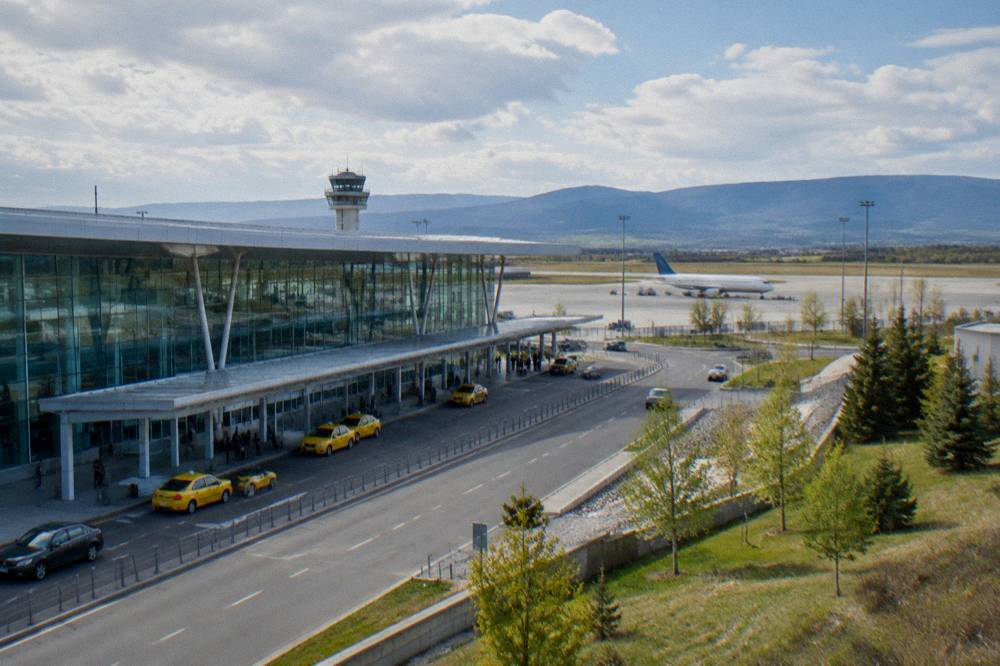
Bucharest Otopeni (OTP) lies about 205 road km from Veliko Tarnovo, the shortest of the three gateway distances, and direct buses cover the run in about 3 h 50 min to 4 h 15 min, crossing from Romania into Bulgaria overland. Since Bulgaria became a full Schengen member on 1 January 2025, that crossing is an internal Schengen movement rather than an external border check.
For travellers already in Romania, or flying routes that serve Bucharest well, Otopeni turns Veliko Tarnovo into a straightforward day-trip distance. The direct bus services arrive at the Veliko Tarnovo stops used by the international routes, and the run is the basis of the whole Bucharest day-trip category on this site. No bus fare for the route is quoted here, so check the current price with the operator before booking. The day trips from Bucharest page collects the full set of options from the Romanian capital.
| Gateway | Direct bus to Veliko Tarnovo | Direct train | Road distance |
|---|---|---|---|
| Sofia (SOF) | yes, about 3 to 3.5 h | no | about 216 km |
| Varna (VAR) | yes, 16 direct buses a day | yes, 3 h 53 min | about 214 km |
| Bucharest Otopeni (OTP) | yes, about 3 h 50 min to 4 h 15 min | no | about 205 km |
The Schengen point deserves a sentence of its own, because it changed the arithmetic of this gateway. Before full membership on 1 January 2025, the land crossing between Romania and Bulgaria carried passport control on both sides, and a bus journey of under four hours could stretch well past it. Since membership, the crossing is an internal movement, and the bus times quoted for the route reflect the road rather than the border. Arrivals by air into Otopeni from outside Schengen still meet the Entry/Exit System, running at all external borders since 10 April 2026, but that check happens once at the airport and not again on the road south.
The Bucharest gateway also feeds the popular combined route that strings Romania and Bulgaria together, covered on the Bucharest to Sofia via Veliko Tarnovo itinerary page. The featured day trip for travellers on this corridor is the shared day trip to Bulgaria and Veliko Tarnovo from Bucharest, with live dates and pricing on the operator's listing: Check availability.
Can You Fly Into Gorna Oryahovitsa Airfield?
No scheduled flights serve Gorna Oryahovitsa, the airfield about 10 km from the centre of Veliko Tarnovo, so it cannot be used as a gateway. The name appears in older flight searches and occasionally in schedules, but no regular scheduled passenger service operates, and every planning decision should be built on Sofia, Varna or Bucharest Otopeni instead.
The airfield matters to the traveller in one indirect way: the Gorna Oryahovitsa railway junction, a separate facility from the airfield in practical terms, is where Sofia trains change for the last short leg into Veliko Tarnovo station. That junction is about 10 km from the centre, and the change is a normal part of rail travel here rather than an inconvenience to plan around. The getting around Veliko Tarnovo page covers the last kilometres after the train or bus arrives.
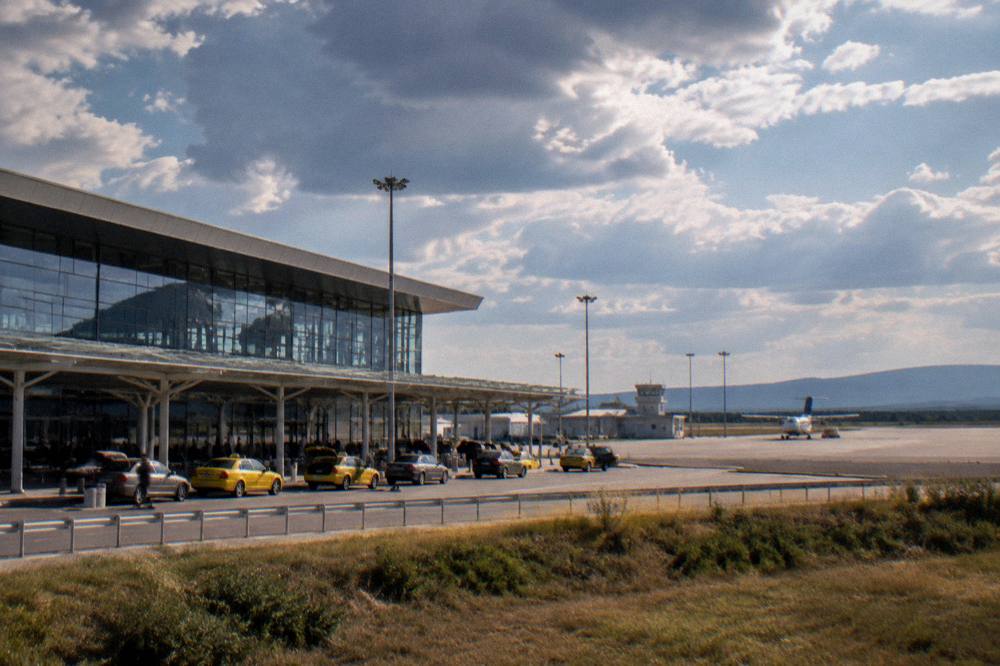
A search that surfaces Gorna Oryahovitsa as an "airport near Veliko Tarnovo" is technically accurate and practically useless, which is why this page says plainly that it cannot be used. The three real gateways all sit at roughly 205 to 216 road km, and the transfer from each is a bus, a train or a booked tour rather than a hop. Building the plan around that fact from the start saves the disappointment of a booking that cannot be completed.
What Comes After The Airport: Distances Worth Knowing?
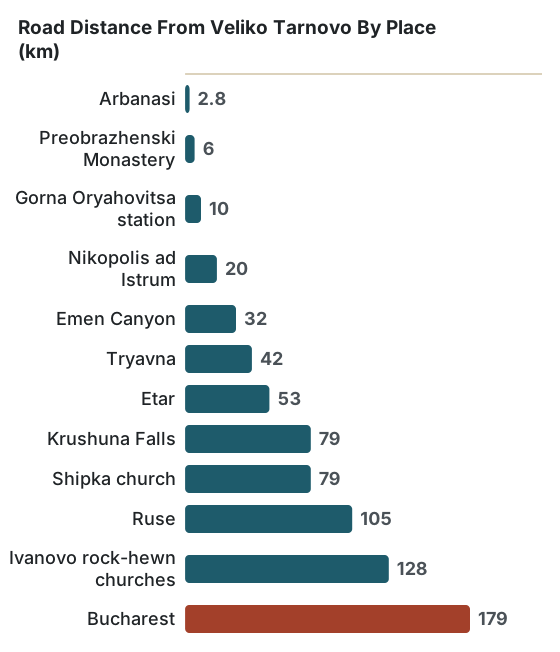
Once you are in Veliko Tarnovo, the day-trip ring extends from Arbanasi at about 2.8 km straight-line from the centre out to the Ivanovo rock-hewn churches at about 128 road km, with Etar at about 53 km, Shipka church and Krushuna Falls at about 79 km each and Ruse at about 105 km, so the airport choice pairs naturally with one side of that ring.
Arriving through Varna or Bucharest puts one edge of the ring on your route in; arriving through Sofia puts the other. The distances below are computed on the road network from the centre and carry "about" throughout.
| Place | Road distance from Veliko Tarnovo |
|---|---|
| Arbanasi | about 2.8 km straight-line |
| Preobrazhenski Monastery | about 6 km |
| Gorna Oryahovitsa station | about 10 km |
| Nikopolis ad Istrum | about 20 km |
| Emen Canyon | about 32 km |
| Tryavna | about 42 km |
| Etar | about 53 km |
| Krushuna Falls | about 79 km |
| Shipka church | about 79 km |
| Ruse | about 105 km |
| Ivanovo rock-hewn churches | about 128 km |
| Bucharest | about 179 km |
| Plovdiv | about 208 km |
| Sofia | about 223 km |
A western arrival through Sofia passes close to the Etar architectural complex and Tryavna side of the ring; a northern arrival through Bucharest or Varna brushes Ruse and the Ivanovo rock-hewn churches, both inscribed World Heritage from 1979, unlike anything in the city itself, which holds no UNESCO inscription. The northern Bulgaria road trip page strings the whole ring together.
The ring is also the reason the gateway decision rewards a little forward thinking. A traveller who lands in Sofia, spends two nights in the city, then works east through Etar and Tryavna arrives in Veliko Tarnovo having already covered a third of the day-trip map. A traveller who lands in Bucharest and rides straight down can spend the whole stay in the city and save the ring for a return trip. Neither is wrong, and the distances in the table are the raw material for either plan.
When Should You Skip The Flight Altogether?
If the trip is Bulgaria-focused rather than airport-focused, the train and bus network makes a flight-free arrival realistic: Ruse has a direct train of 2 h 25 min to Veliko Tarnovo, Varna a direct train of 3 h 53 min, and Sofia a 3 to 3.5 hour bus ride, so a European arrival by rail into Sofia can finish without boarding a plane at all.
The euro changeover of 1 January 2026 also removed a small friction from domestic transport: tickets, stations and museum counters all price in euro now, with the museum's own figures printed as 7.67 euro for Tsarevets and 5.11 euro for the smaller sites. The Veliko Tarnovo cost page assembles those figures for a full budget picture, and the Bulgaria travel tips page covers the entry side: full Schengen membership since 1 January 2025, the Entry/Exit System running at external borders since 10 April 2026, and the single European emergency number 112.
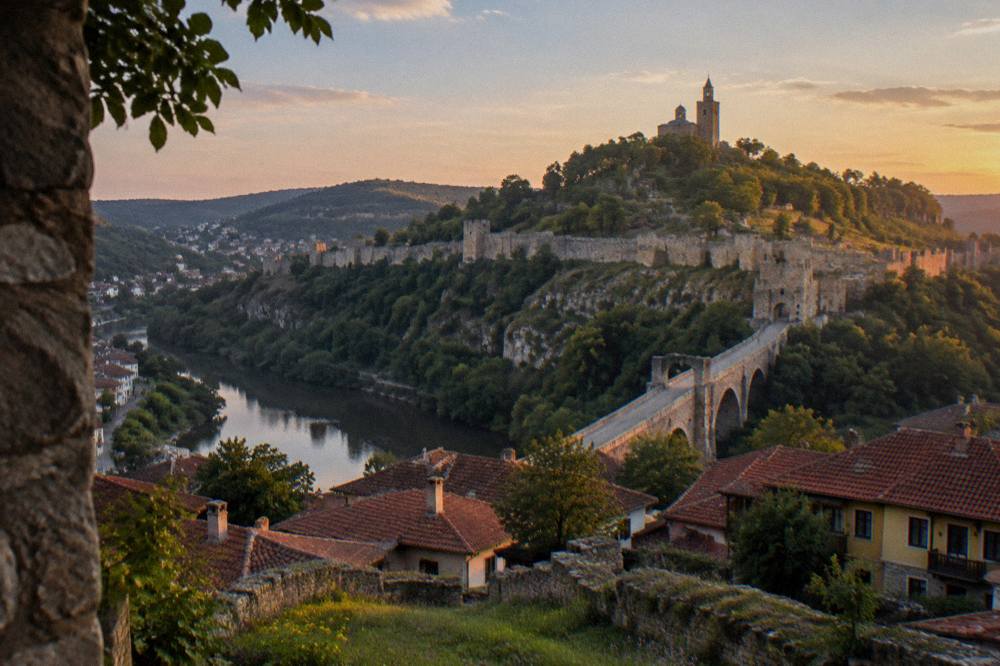
The Ruse connection deserves a line of explanation, because it is the sleeper option of the three. A traveller combining Bucharest with Bulgaria by land can cross at Ruse and ride the short rail leg south, turning the Otopeni gateway into a two-step arrival that skips the long bus entirely. The alternative connection through Gorna Oryahitsa runs 2 h 33 min from the 06:20 departure, so the pairing exists at more than one hour of the morning.
For a first visit, the arrival day matters less than what the season allows once you are there. The ERA5 reanalysis, 1991-2020, puts the mean daily high at 27.6 C in July and 4.9 C in January, with a mean daily low of -3.8 C in January and May the wettest month at 95.7 mm of rain. Those numbers frame the choice on the best time to visit page: summer arrivals get long evenings and the Sound and Light show dates announced through the season, viewable free from Tsar Asen I Square, while winter arrivals get the Christmas-market window and shorter museum hours.
Where Should You Sleep After A Long Transfer Day?
After a gateway transfer, the practical base is the city centre around Tsar Asen I Square and the Varosha quarter, because the Yug bus station at 74 Hristo Botev Blvd sits centrally and the museum core is reachable on foot from the central streets, so a long arrival day can end within a short walk of dinner and a bed.
The where to stay in Veliko Tarnovo page maps the quarters in detail, and the best restaurants in Veliko Tarnovo and Bulgarian food pages pick up the evening. The point for this page's purpose is simpler: unlike cities where the airport transfer dumps you at an edge-of-town terminus, both arrival points here sit in or beside the historic fabric. A bus from Sofia, Varna or Bucharest finishes at Yug in the centre, and the train station connects onward by the means described on the getting-around page, so the transfer day can absorb a late arrival without losing the following morning.
Common Questions About Airports For Veliko Tarnovo
Does Veliko Tarnovo have its own airport?
No. No airport with scheduled flights serves the city, and the airfield at Gorna Oryahovitsa about 10 km away has no regular scheduled flights. Visitors arrive through Sofia, Varna or Bucharest Otopeni.
Which airport is closest to Veliko Tarnovo?
Bucharest Otopeni (OTP), about 205 road km from the centre, is the closest of the three gateways, ahead of Varna at about 214 km and Sofia at about 216 km.
Is there a direct train from Sofia to Veliko Tarnovo?
No. Every Sofia to Veliko Tarnovo train involves a change, usually at Gorna Oryahovitsa. The fastest journeys on the timetable read are 4 h 33 min and 4 h 51 min, and others take 6 to 10 hours. Buses run the route directly in about 3 to 3.5 hours.
How do I get from Bucharest Airport to Veliko Tarnovo?
Direct buses run from Bucharest to Veliko Tarnovo in about 3 h 50 min to 4 h 15 min. The land crossing is an internal Schengen movement since Bulgaria became a full member on 1 January 2025.
Is Varna Airport a reasonable option?
Yes. Varna is about 214 road km away, with 16 direct buses a day and one direct train of 3 h 53 min departing at 05:00, plus connections changing at Gorna Oryahovitsa.
Do I need a visa or a different currency after landing?
Bulgaria is a full Schengen member since 1 January 2025 and has used the euro since 1 January 2026, so there is no currency change on the Bulgarian side of any of the three gateways. Entry rules are covered on the Bulgaria entry requirements pages of Veliko Tarnovo Travel Guide.
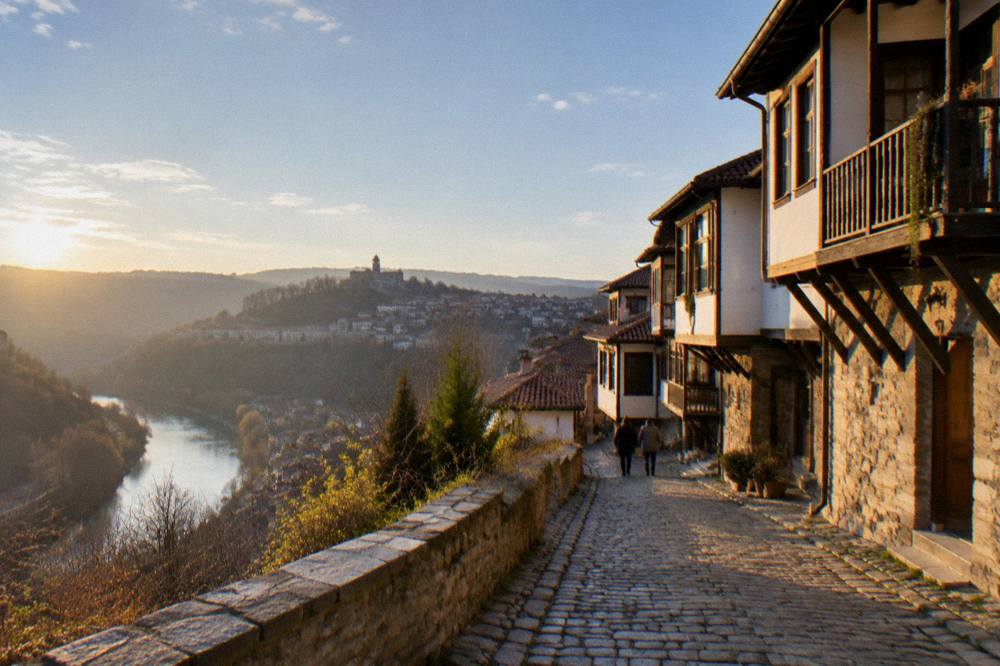
Whichever gateway carries you in, the last stretch ends the same way: a hill city on a bend of the Yantra, with Tsarevets above the rooftops and the museums pricing in euro since the start of 2026. Land where the flights are cheap, ride the bus or the changing train in, and spend the hours saved on the fortress hill rather than on the road.