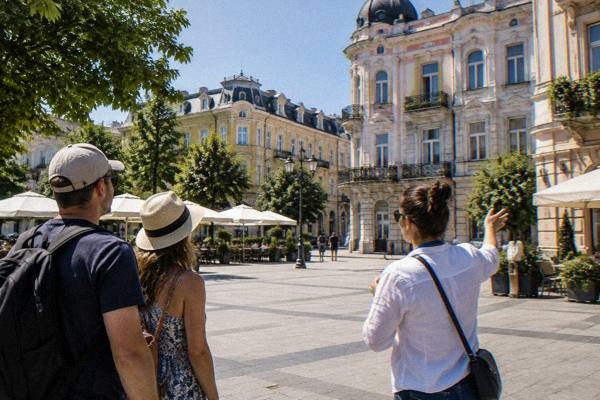
Ruse: The Danube City Of Belle Epoque Facades
Ruse sits about 105 road km north of Veliko Tarnovo on the Danube, and a direct train of 2 h 25 min connects the two cities.
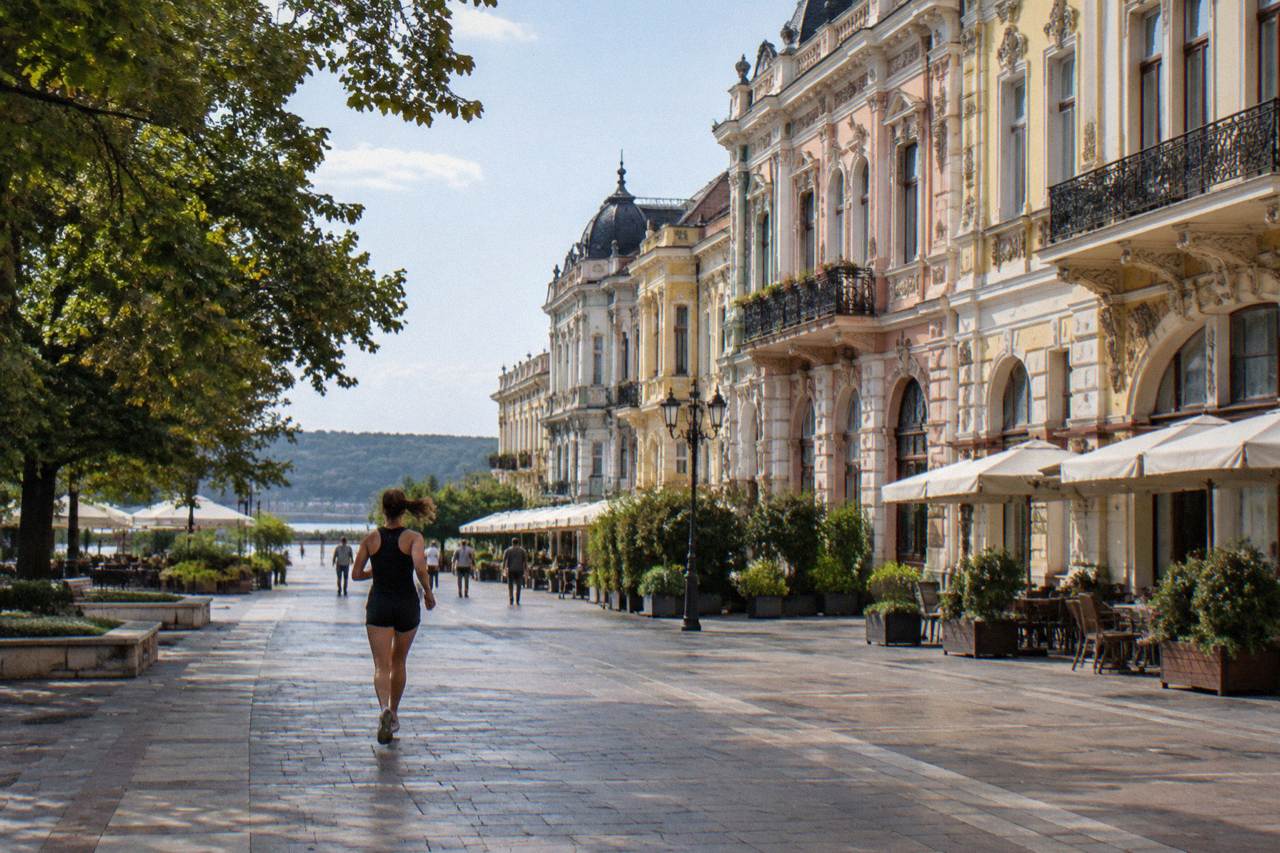
Ruse is about 105 road km north of Veliko Tarnovo, reached by a direct train of 2 h 25 min (04:49 departure) or by bus in about 1 to 2 hours, several services a day. The city is known for its Danube setting and its Belle Epoque facades, and pairs naturally with the Rock-Hewn Churches of Ivanovo, over 100 km from Veliko Tarnovo.
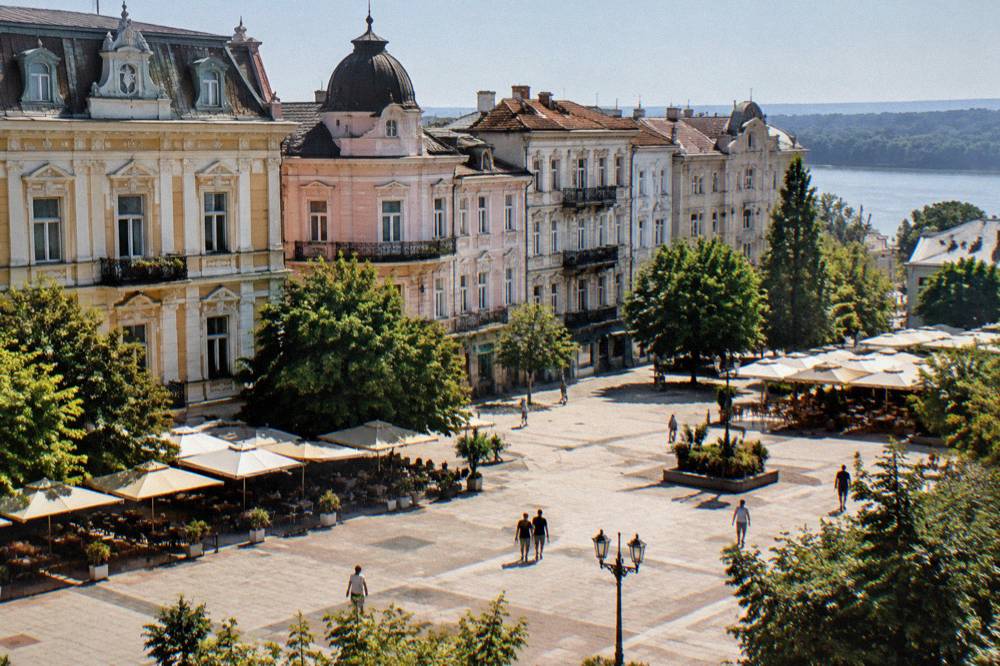
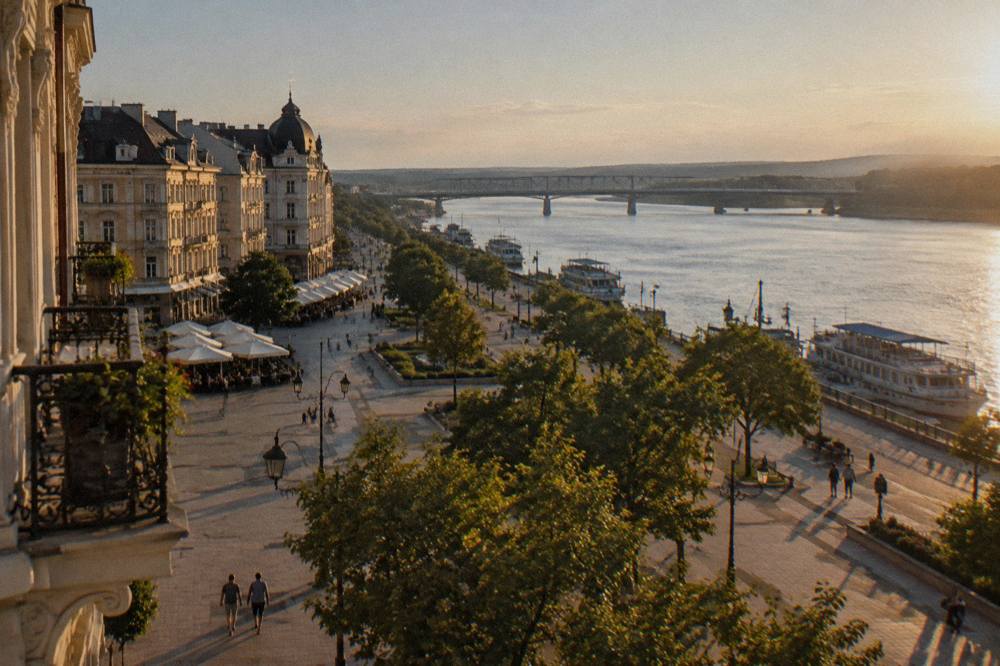
Ruse, on the Danube in northern Bulgaria, is the one big-city day trip from Veliko Tarnovo that heads downhill to a river rather than uphill into the Balkan range. The approved framing of the city on this page is its Belle Epoque facades, the streetscape that gives Ruse its identity, set on the south bank of the Danube about 105 road km north of Veliko Tarnovo. A direct train links the two cities in 2 h 25 min, which puts Ruse closer by rail than Sofia, Plovdiv or Bucharest, and makes it one of the practical full-day options from the medieval capital on the Yantra. The pages on Veliko Tarnovo Travel Guide cover the city itself in depth; this one is about the trip north.
Where Is Ruse And Why Does It Pair Well With Veliko Tarnovo?
Ruse lies about 105 road km north of Veliko Tarnovo, on the Danube river that forms the border with Romania, and the two cities pair well because the direct train of 2 h 25 min makes a there-and-back day practical without a car. Veliko Tarnovo is an inland city on the Yantra with no sea coast; Ruse is the place where a day trip from it reaches a major navigable river.
The contrast between the medieval hill capital and a Danube city of Belle Epoque facades is the point of the pairing.
The road distance of about 105 km is computed on the OpenStreetMap route from the centre of Veliko Tarnovo, and it is the shortest of the big-city options in this direction: Bucharest is about 179 km and Varna about 214 km by the same measure. Ruse also sits on the rail line through the Gorna Oryahovitsa junction, about 10 km from the centre of Veliko Tarnovo, which is why the train connection is direct while the Sofia route, famously, is not.
Geography explains the rest. Veliko Tarnovo is a city of hills folded into the meanders of the Yantra, the capital of the Second Bulgarian Kingdom for more than two centuries from the late 12th century, and its sights, from Tsarevets to Trapezitsa to the Varosha quarter, are vertical ones. Ruse is flat, riverside and open to the horizon, a border city that looks across the Danube at Romania. A traveller who spends one day in each gets two entirely different Bulgarias.
For context, the answers page is Ruse Bulgaria worth visiting covers the question from the traveller's side, and the things to do in Veliko Tarnovo page covers the base city before you leave it.
How Do You Get From Veliko Tarnovo To Ruse?
The BDZ timetable shows a direct train from Ruse to Veliko Tarnovo of 2 h 25 min, departing 04:49, and a connection via Gorna Oryahovitsa of 2 h 33 min departing 06:20. Buses run the route too, with multiple daily services, and the road distance is about 105 km. Train times change with the timetable, so the live BDZ schedule is the reference before you commit to a date.
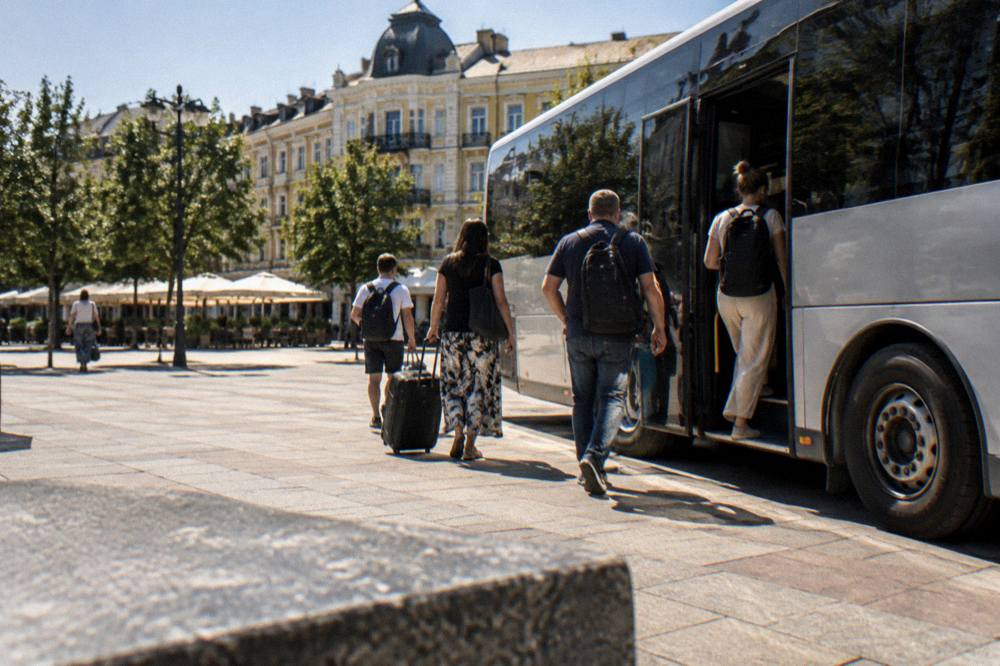
To ride the bus instead of the train, book an intercity bus ticket.
The table below holds only the rail figures the timetable read supports, in the direction Ruse to Veliko Tarnovo, plus the road distance. Print no other journey time from memory: the timetable is the authority.
| Route | Figure | Notes |
|---|---|---|
| Ruse to Veliko Tarnovo, direct train | 2 h 25 min | 04:49 departure on the timetable read |
| Ruse to Veliko Tarnovo, via Gorna Oryahovitsa | 2 h 33 min | 06:20 departure |
| Road distance, centre to centre | about 105 km | Computed on the OSM route |
| Ruse by bus from Veliko Tarnovo | about 1 to 2 hours | Multiple daily services |
Two bus stations serve Veliko Tarnovo: Yug, at 74 Hristo Botev Blvd in the centre, for long-distance and international routes, and Zapad, on Nikola Gabrovski Blvd, for regional ones. Check which station your service uses before you set out. For comparison, the Sofia route has no direct train at all: every service changes, usually at Gorna Oryahovitsa, and the fastest connections run 4 h 33 min, which is nearly double the Ruse leg. Varna has a single direct train of 3 h 53 min departing 05:00, with the alternatives changing at the junction and taking 4 h 36 min or longer.
That comparison is the strongest argument for Ruse as the rail day trip from this base. If a self-planned day by train does not appeal, the tour band below lists guided alternatives.
What Should A Day Trip From Veliko Tarnovo To Ruse Look Like?
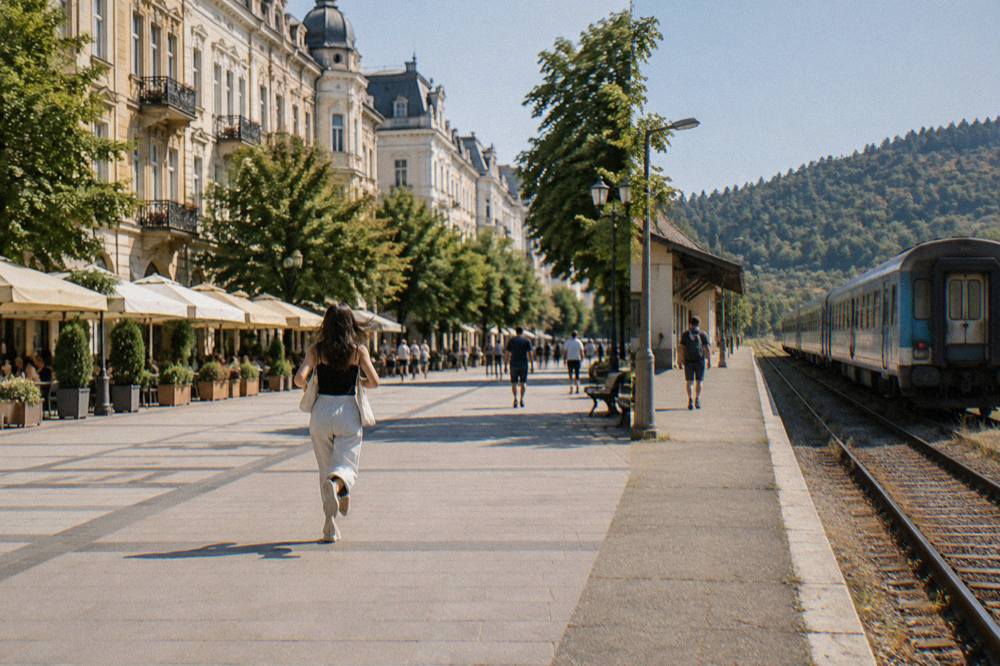
A sensible shape is an early direct or once-change train north, the middle of the day in Ruse around its Belle Epoque facades and the Danube bank, and a late-afternoon or evening return by rail or bus. The timetable's 04:49 direct departure exists for exactly this kind of day, and the about 105 km distance keeps both legs short.
The practical rhythm follows from that. A morning arrival gives you the streets in the flat light the architecture deserves, the middle of the day for the riverbank, and enough slack that a missed return connection is an inconvenience rather than a crisis. The emergency number in Bulgaria is 112, EU-wide and free, should the day go sideways. And because the whole trip stays inside Bulgaria unless you cross the bridge, no border formalities complicate the return.
The related tour on this page, Private Day Trip to Veliko Tarnovo and Arbanasi from Ruse, is aimed at travellers coming from the other direction: it starts in Ruse and spends the day in the medieval capital. Check availability if that direction fits your plans better than the train north.
Can You Combine Ruse With The Ivanovo Rock Churches?
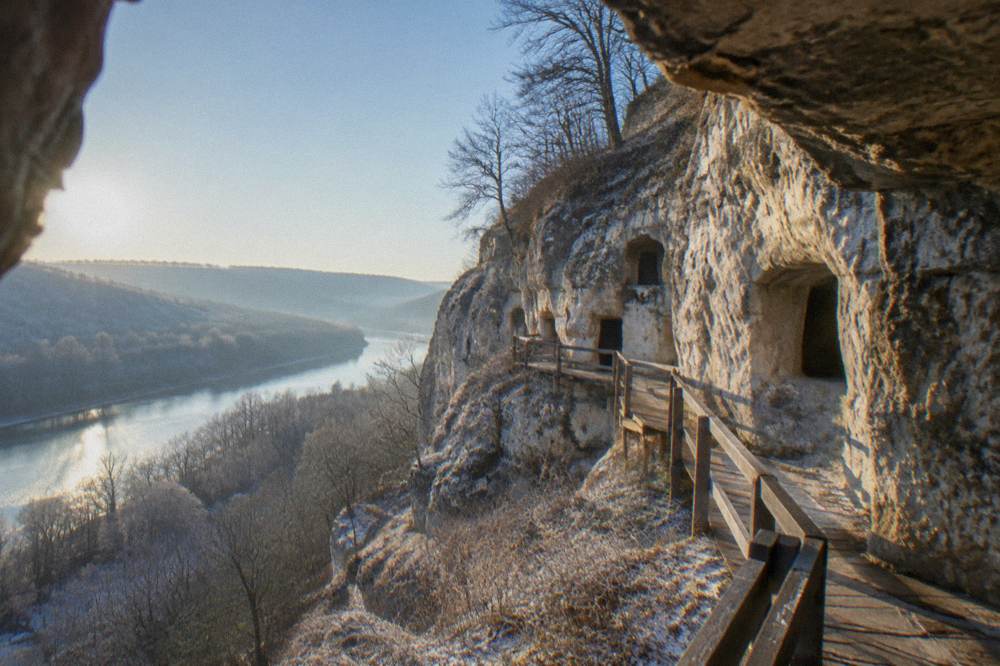
Yes, as a car day: the Rock-Hewn Churches of Ivanovo are a UNESCO World Heritage Site inscribed in 1979, and they lie over 100 km from Veliko Tarnovo in the Ruse direction, so Ruse and Ivanovo form a natural single loop by road. By train the combination is harder, because Ivanovo is not on the rail line. The churches are one of only two inscribed sites near this destination, the other being the Thracian Tomb of Kazanlak, also 1979.
The full page on the Ivanovo rock churches covers the site itself. The distance figure deserves a note: the computed 128 km is a protected-area centroid and overstates the drive, so this page says only "over 100 km".
Worth restating what UNESCO status means here, because the internet gets it wrong in both directions. Nothing in Veliko Tarnovo itself, not Tsarevets, not the Old Town, is inscribed or even on the Tentative List. The nearest inscribed sites are the Ivanovo churches and the Kazanlak tomb, both from 1979, and the only Tentative List entry in the area is Nicopolis ad Istrum, listed since 1984, about 20 road km from the centre and ticketed by the Regional Museum of History at 5.11 euro. A day that combines Ruse with Ivanovo therefore collects the region's only World Heritage inscription.
A private tour removes the timing risk. This one covers Ruse and its surroundings from a Veliko Tarnovo base:
How Does Ruse Compare With The Other Day Trips From Veliko Tarnovo?
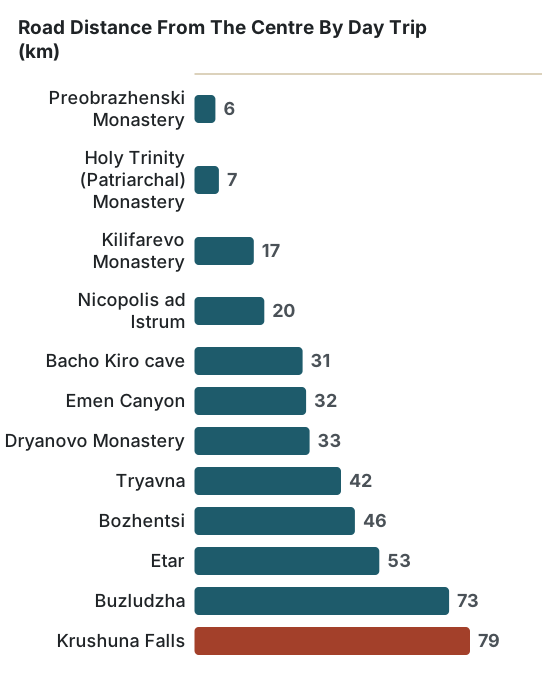
Ruse, at about 105 road km, sits in the middle of the day-trip band around Veliko Tarnovo: farther than the monasteries and the close heritage sites, closer than Sofia at about 223 km or Plovdiv at about 208 km. The difference is kind, not just distance: Ruse is a big river city, while Tryavna, Bozhentsi and Etar to the south are small revival-era towns. The table below gives the computed road distances from the centre.
| Day trip | About km from the centre |
|---|---|
| Preobrazhenski Monastery | 6 |
| Holy Trinity (Patriarchal) Monastery | 7 |
| Kilifarevo Monastery | 17 |
| Nicopolis ad Istrum | 20 |
| Bacho Kiro cave | 31 |
| Emen Canyon | 32 |
| Dryanovo Monastery | 33 |
| Tryavna | 42 |
| Bozhentsi | 46 |
| Etar | 53 |
| Buzludzha | 73 |
| Krushuna Falls | 79 |
| Shipka church | 79 |
| Lovech | 86 |
| Devetashka Cave | 89 |
| Kazanlak tomb | 98 |
| Ruse | 105 |
| Bucharest | 179 |
| Plovdiv | 208 |
| Sofia | 223 |
Read the table by bands. Under 35 km sit the half-day and short-day options: the monasteries, Nicopolis ad Istrum, Bacho Kiro cave and Emen Canyon, the gorge of the Negovanka river about 20 km west of the city whose Lower Boaz section has 90 m sheer cliffs, per the municipal tourism site. Between 40 and 100 km lie the Balkan-range towns and the nature sites: Tryavna, Bozhentsi, Etar, Buzludzha, Krushuna, Lovech and Kazanlak. Ruse opens the third band, the big-city trips, and it is the only one of those three with a direct train under three hours.
Each of these has its own page: Etar, Tryavna, Dryanovo Monastery and Bacho Kiro cave, Emen Canyon, Krushuna Falls, Devetashka Cave, Prohodna Cave, Shipka, Buzludzha, Kazanlak and the Rose Valley, Bozhentsi, Gabrovo, Lovech, Nicopolis ad Istrum, Kilifarevo Monastery, Elena, Sofia, Plovdiv and Varna, plus the Bucharest crossing page.
What Can You Ticket On The Way Out Of Veliko Tarnovo?
If you leave time for the medieval capital before the train north, the Regional Museum of History's ticket pages give the prices: Tsarevets at 7.67 euro, Trapezitsa and the Church of the Holy Forty Martyrs at 5.11 euro each, and a two-day pass across ten museum sites at 20.45 euro, valid 1 April to 30 November. A family ticket for Tsarevets is 10.23 euro. These are the euro prices the museum prints since the changeover on 1 January 2026.
| Site | Adult ticket | Family ticket |
|---|---|---|
| Tsarevets Architectural-Museum Reserve | 7.67 euro | 10.23 euro |
| Trapezitsa | 5.11 euro | 7.67 euro |
| Church of the Holy Forty Martyrs | 5.11 euro | 7.67 euro |
| Archaeological Museum | 5.11 euro | 7.67 euro |
| Nicopolis ad Istrum | 5.11 euro | none listed |
| Two-day pass, 10 museum sites | 20.45 euro | 25.56 euro |
The museum's own hour blocks matter if you are squeezing a morning sight before a midday train. Tsarevets runs April to September daily 08:00 to 20:00 with last entry at 19:00, and in October 09:00 to 18:00 with last entry at 17:00. The Church of the Holy Forty Martyrs, where Bulgaria's independence was declared on 22 September 1908 and where the marble victory column of Ivan Asen II from 1230 stands, is open April to September 09:00 to 18:00 and from October 09:00 to 17:00. Children under 7 enter free across the museum network, and the two-day pass exists precisely for travellers packing several sites around a day trip.
Winter matters here: museum-site winter hours start on 25 October 2026, Trapezitsa is closed 30 November 2026 to 31 March 2027, and the Trapezitsa funicular stops for the season on 31 October 2026. A late-autumn Ruse day that skips the closed hill sites loses little, since the Ruse draw is outdoors and the streets ask no ticket.
What Should You Know About Money And Borders On A Ruse Day Trip?
Bulgaria has used the euro since 1 January 2026 and has been a full Schengen member since 1 January 2025, so a day trip to Ruse needs no currency exchange and no border formalities, and the crossing to Romania across the Danube is an internal Schengen border. The Entry/Exit System has run at all external Schengen borders since 10 April 2026, but it does not apply to movement between Bulgaria and Romania. Cards and euro cash cover the day.
The currency point deserves emphasis because guidebooks lag reality. Any source telling you to withdraw lev is out of date: the euro arrived on 1 January 2026 at a fixed rate of 1.95583 lev per euro, and every price on this page, from the 7.67 euro Tsarevets ticket to the 5.11 euro Nicopolis ad Istrum entry, is quoted exactly as the museum prints it in euro. The lev survives only as that conversion constant.
The border point matters if you extend the day. Ruse faces the Romanian city of Giurgiu across the Danube, and because both countries are full Schengen members, the bridge crossing is an internal one, with no passport control in the ordinary case. Whether a day trip from Veliko Tarnovo should attempt two countries in one day is a different question, and the honest answer is that the about 105 km each way plus a second city makes for a long day; the dedicated Bucharest page handles the crossing-country ambitions.
When Is The Best Time Of Year For A Ruse Day Trip From Veliko Tarnovo?
The ERA5 reanalysis for Veliko Tarnovo, 1991 to 2020, puts the mean daily high at 28.1 C in August and 4.9 C in January, with the mean daily low at -3.8 C in January, so a Ruse day built around street walking and the Danube bank fits the warmer half of the year. May carries the highest monthly rainfall total at 95.7 mm and August the lowest at 51.3 mm. Ruse is a lowland river city, and the modelled normals below describe the wider corridor.
| Month | Mean high | Mean low | Rain |
|---|---|---|---|
| Jan | 4.9 C | -3.8 C | 56.1 mm |
| Feb | 7.2 C | -2.3 C | 54.1 mm |
| Mar | 11.5 C | 1.4 C | 68.6 mm |
| Apr | 16.9 C | 6.0 C | 71.6 mm |
| May | 21.7 C | 11.1 C | 95.7 mm |
| Jun | 25.4 C | 15.1 C | 85.0 mm |
| Jul | 27.6 C | 17.2 C | 79.5 mm |
| Aug | 28.1 C | 17.1 C | 51.3 mm |
| Sep | 23.3 C | 12.9 C | 63.0 mm |
| Oct | 17.6 C | 8.0 C | 58.9 mm |
| Nov | 11.8 C | 3.1 C | 54.5 mm |
| Dec | 6.1 C | -1.7 C | 60.6 mm |
A Danube-bank day in January at a 4.9 C mean high is a different proposition from the same day in August, and only you know which you prefer.
The seasonal calendar gives a second reason to time the trip. Veliko Tarnovo Day falls on 22 March, the Independence Day celebrations of 22 September centre on the Church of the Holy Forty Martyrs and Tsarevets, and the Sound and Light show runs on announced evenings only, free to watch from Tsar Asen I Square. A day trip that dodges those dates keeps the base city quiet; one that catches them trades quiet for spectacle.
Should You Take A Tour To Ruse Or Go Independently?
Go independently if the 04:49 direct train suits you and you want a fixed-shape, low-cost day; take a tour if you want Ruse combined with the Ivanovo churches, which the train does not reach, or if you are starting from Sofia or Bucharest rather than Veliko Tarnovo itself. The tour options below are paid products with their prices and ratings rendered live from their listings, and the walking tours on the roster in the base city are likewise paid.
The trade is control against coverage. The independent train day gives you Ruse alone, at your own pace, with the timetable as the only constraint. A guided product gives you the corridor: Ruse plus its surroundings in one vehicle, or the medieval capital folded into a longer Bulgaria circuit from a bigger city. Neither is the better choice in the abstract; it depends on whether the Danube city is your destination or one stop in a wider week.
This small-group option from Sofia is one way to fold the region into a longer itinerary:
And this full-day Bucharest departure suits travellers crossing the border in the other direction:
Common Questions About A Ruse Day Trip From Veliko Tarnovo
How far is Ruse from Veliko Tarnovo?
About 105 road km from the centre, computed on the OpenStreetMap route. By rail the direct train takes 2 h 25 min on the timetable read.
Is there a direct train from Veliko Tarnovo to Ruse?
Yes. The timetable shows a direct train of 2 h 25 min departing Ruse at 04:49, and a via-Gorna Oryahovitsa connection of 2 h 33 min departing 06:20. Times change with the timetable, so check the live BDZ schedule.
What is Ruse known for?
The city's identity rests on its Danube setting and its Belle Epoque facades, the streetscape this page's title names. The UNESCO Rock-Hewn Churches of Ivanovo, inscribed in 1979, lie further along the river corridor.
Can you visit Ruse and the Ivanovo churches in one day?
By car, yes: the churches are over 100 km from Veliko Tarnovo in the Ruse direction, and private tours cover the combination. By train the pairing is harder, since Ivanovo is off the rail line.
Is Ruse in the Schengen Area?
Yes. Bulgaria has been a full Schengen member since 1 January 2025, and it uses the euro since 1 January 2026, so crossing to Romania across the Danube is an internal border.
Do you need lev in Ruse?
No. Bulgaria adopted the euro on 1 January 2026 at a fixed rate of 1.95583 lev per euro, and every price in the country is now quoted in euro.
A final word on shape: the pairing works because the two cities are opposites, a medieval hill capital on the Yantra and a river port of Belle Epoque facades on the Danube, close enough for one long day. Check the live train times, pick a month from the modelled normals rather than from hearsay, and leave room in the day for the parts of both cities that need no ticket at all.