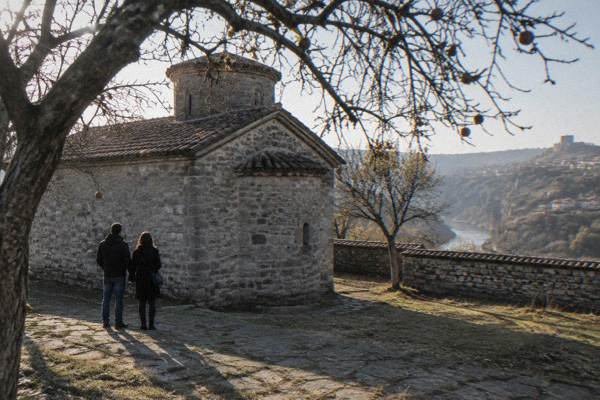
Rock-Hewn Churches Of Ivanovo
The Rock-Hewn Churches of Ivanovo, inscribed by UNESCO in 1979, lie about 128 km by road from Veliko Tarnovo on the way toward Ruse, and they are the closest World Heritage Site to the medieval capital.
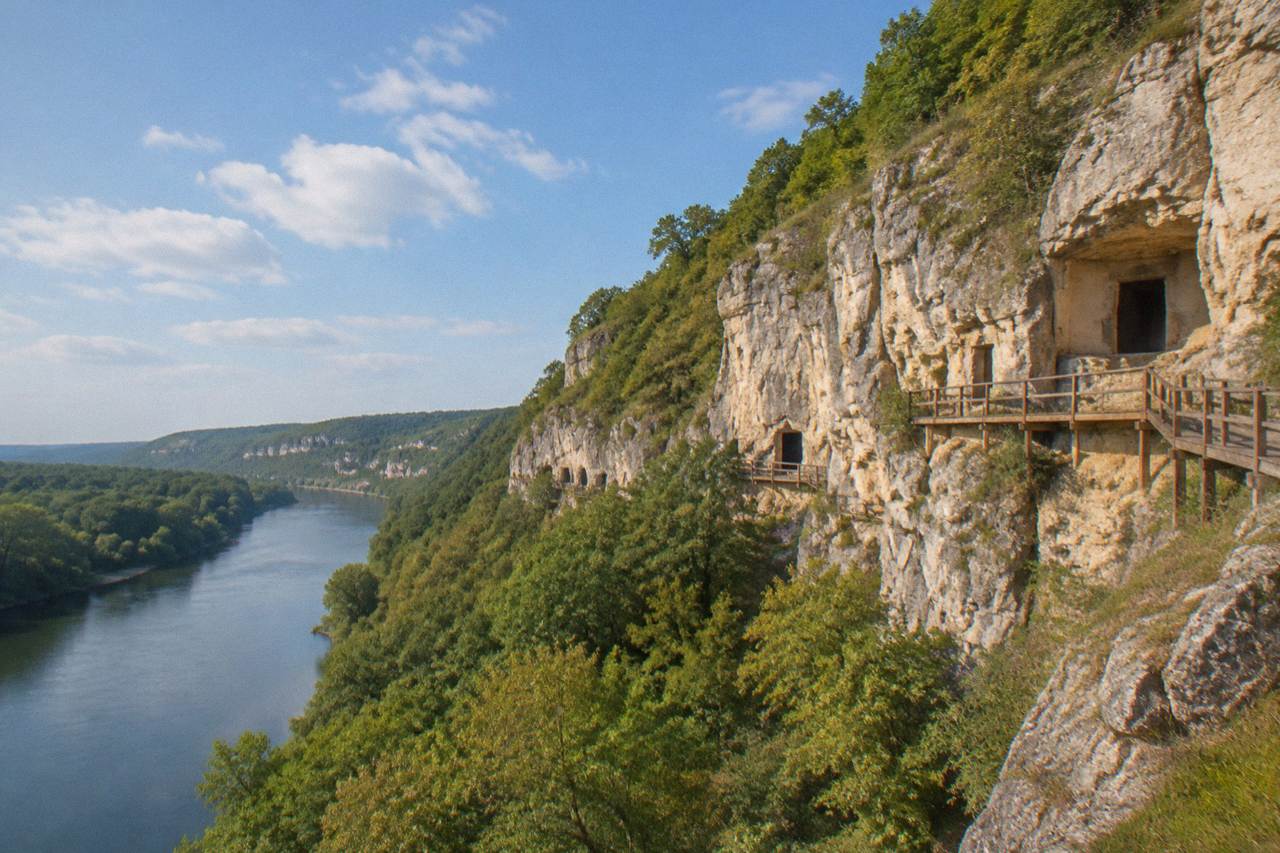
The Rock-Hewn Churches of Ivanovo are a UNESCO World Heritage Site inscribed in 1979, about 128 km by road from Veliko Tarnovo, reached via Ruse (105 km), where a direct train from Veliko Tarnovo takes 2 h 25 min.
The Rock-Hewn Churches of Ivanovo are the nearest inscribed UNESCO World Heritage Site to Veliko Tarnovo, lying about 128 km by road to the northeast in the valley of the Rusenski Lom, and they were placed on the World Heritage List in 1979 under criteria ii and iii. Nothing in Veliko Tarnovo itself is inscribed or on Bulgaria's Tentative List, which is why this day trip is the one to make when the question is World Heritage. The churches are chambers and chapels cut directly into the cliff rock, and the frescoes inside them include notable 14th-century work.
What Are The Rock-Hewn Churches Of Ivanovo Near Veliko Tarnovo?
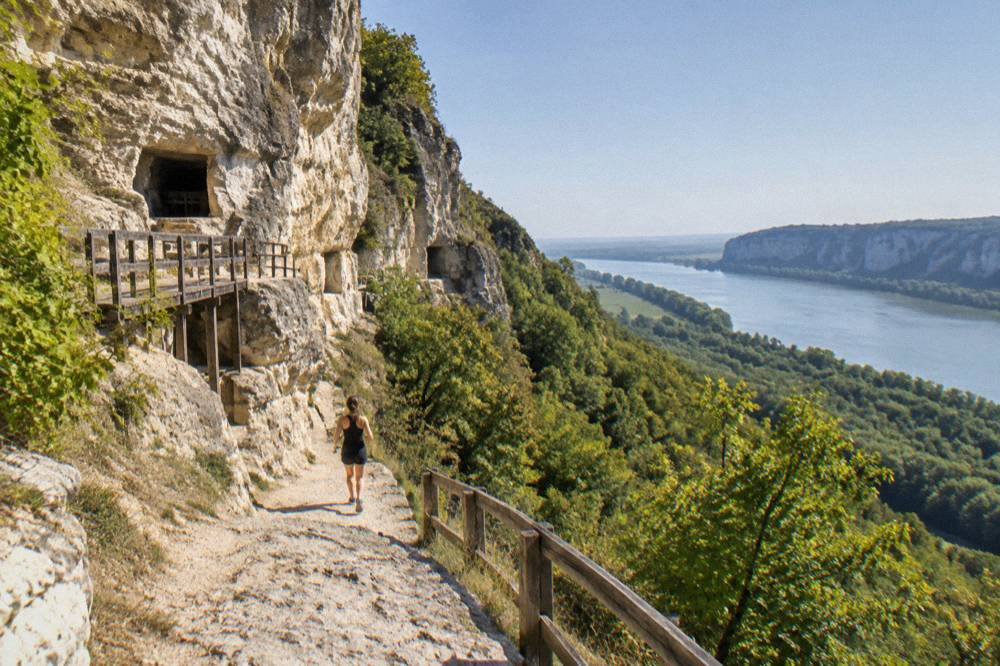
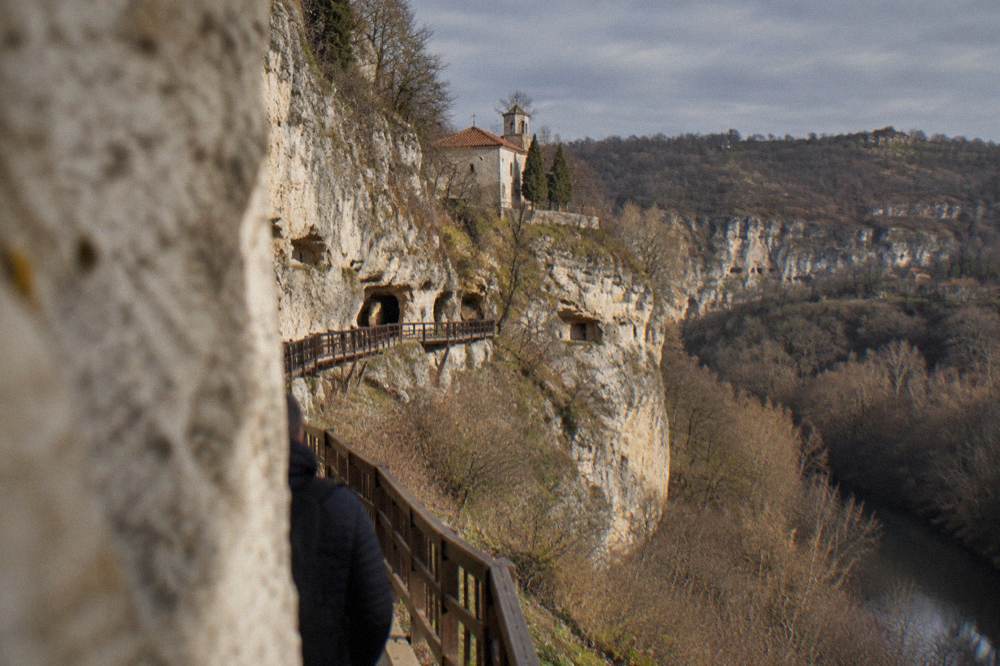
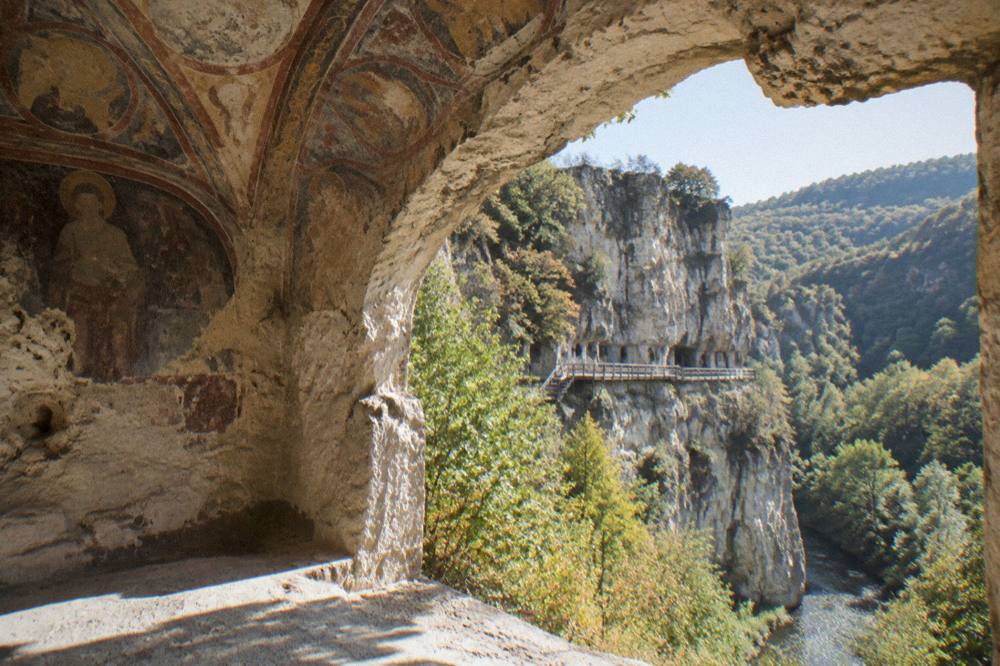
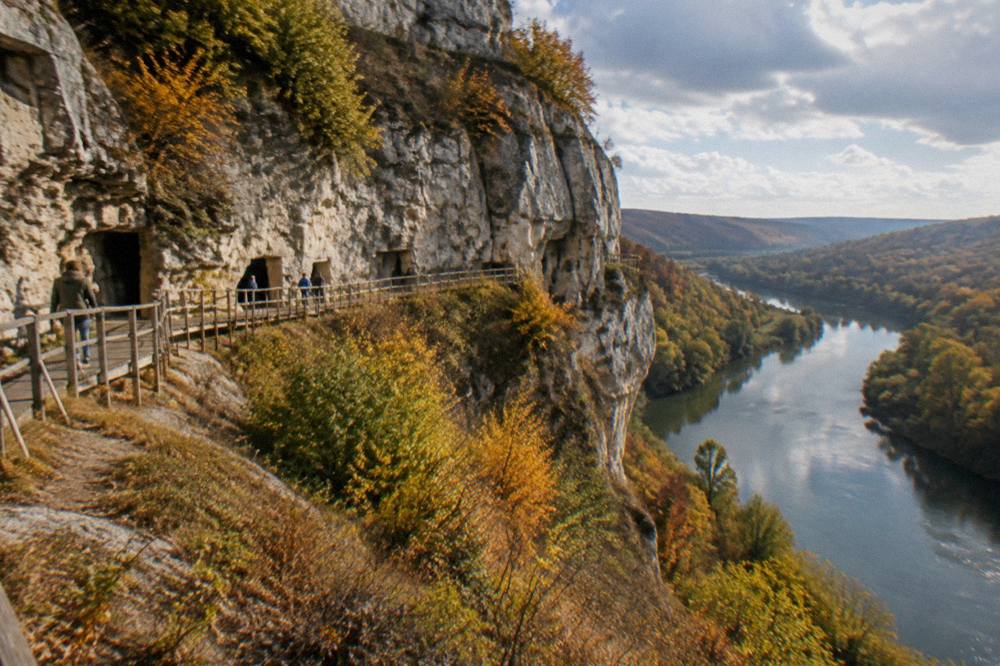
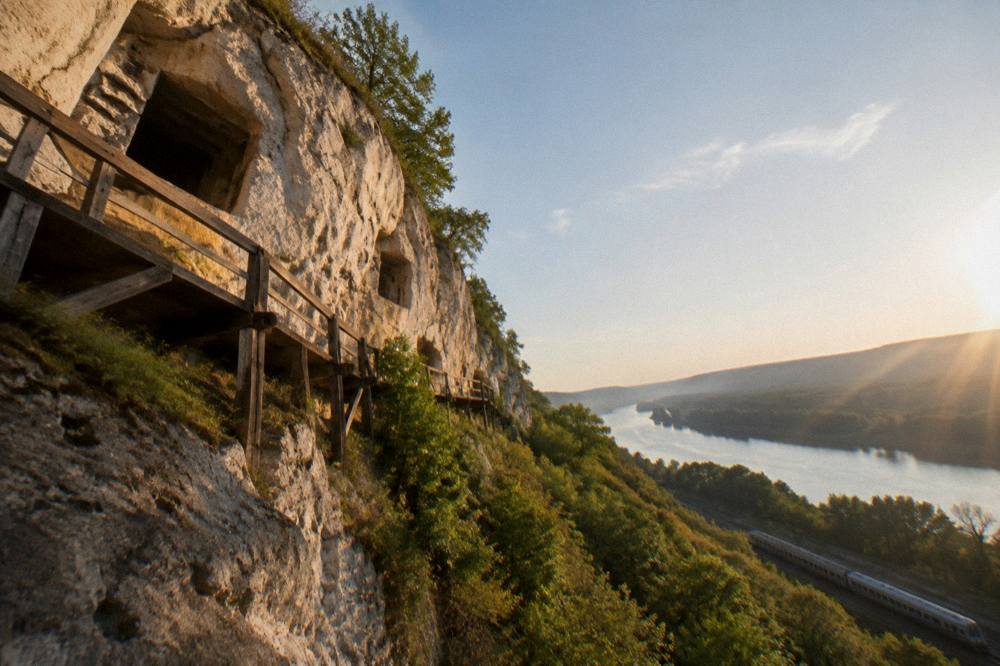
The Rock-Hewn Churches of Ivanovo are a complex of churches, chapels and monastic cells carved into the cliffs of the Rusenski Lom valley, active from the 12th to the 14th century, with notable 14th-century frescoes surviving on their walls. UNESCO inscribed the property in 1979 under criteria ii and iii, which recognise its influence on medieval wall painting and its testimony to a hermit monastic tradition. The site sits about 128 km by road from Veliko Tarnovo.
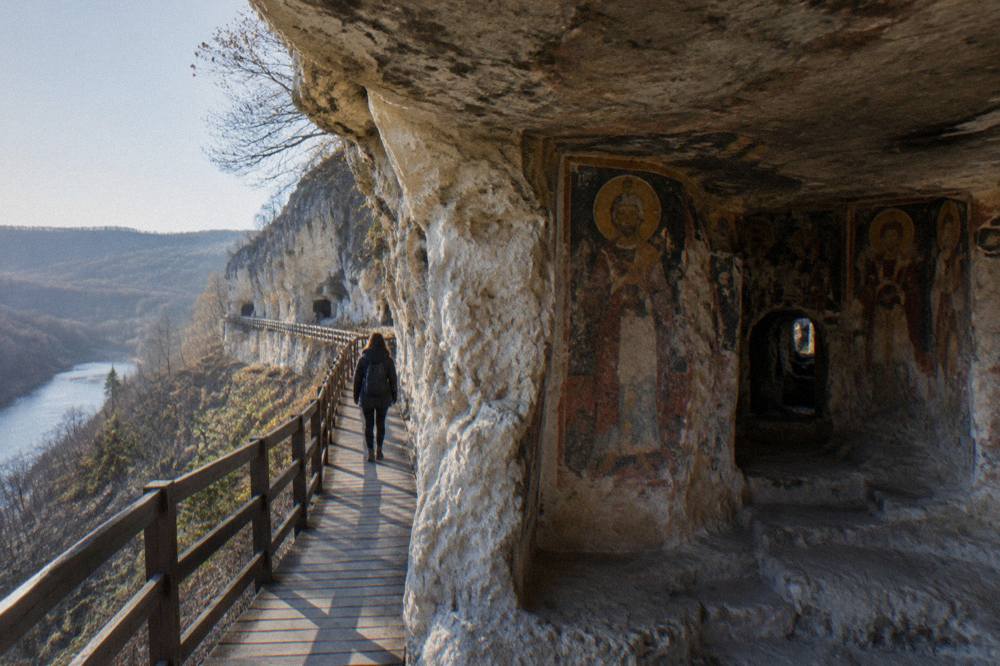
The monasteries here were cut into the rock rather than built on top of it. Monks hollowed out chambers at various heights in the canyon walls, and the interiors were then painted. The 14th-century frescoes are the reason the property carries outstanding universal value in UNESCO's framing, and they are what a visitor comes to see alongside the raw architecture of the chambers themselves. The Bulgarian National Radio's heritage coverage and the UNESCO listing describe the churches as a centre of hesychasm and of the Tarnovo school of painting, tied to the Second Bulgarian Kingdom whose capital was Veliko Tarnovo.
That connection matters for anyone based in the city. Veliko Tarnovo was the capital of the Second Bulgarian Kingdom for more than two centuries from the late 12th century, and the Ivanovo complex belongs to that same cultural orbit, which is why the two are so often paired in one itinerary. The frescoes show the painting tradition that flourished under the Tarnovo patriarchate, and the site's presence on the World Heritage List since 1979 is the formal recognition of it.
For context, the Rock-Hewn Churches of Ivanovo and the Thracian Tomb of Kazanlak, both inscribed in 1979, are Bulgaria's earliest World Heritage entries and the two nearest inscribed properties to Veliko Tarnovo. Nicopolis ad Istrum, about 20 km north of the city by road, has been on the Tentative List since 1984, which is a waiting list rather than an inscription. The table below sets out the three.
| Site | Status | Year | Relation to Veliko Tarnovo |
|---|---|---|---|
| Rock-Hewn Churches of Ivanovo | Inscribed, criteria ii and iii | 1979 | About 128 km by road, northeast toward Ruse |
| Thracian Tomb of Kazanlak | Inscribed | 1979 | About 98 km by road, south in the Rose Valley |
| Nicopolis ad Istrum | Tentative List | 1984 | About 20 km by road north, museum ticket 5.11 euro |
If the day trip is being built around churches and monasteries in general rather than World Heritage alone, the churches and monasteries near Veliko Tarnovo guide gathers the sites closer to the city, including Preobrazhenski Monastery at 6 km and the Holy Trinity Monastery at 7 km.
How Far Are The Ivanovo Churches From Veliko Tarnovo?
The Rock-Hewn Churches of Ivanovo lie about 128 km by road from the centre of Veliko Tarnovo, measured along the route toward Ruse, which itself is about 105 km away. The figure is a computed road distance from the Open Street Map routing network, so it is stated with "about" and can shift slightly with the exact start point and the road chosen.
The route runs northeast out of the Yantra valley and across the Danubian plain toward Ruse, with Ivanovo village lying inland from the Danube in the Rusenski Lom valley. Ruse, at about 105 km, is the natural staging point: it is the largest city on the way, it has the region's rail junction, and from there the remaining distance to Ivanovo is the balance of the roughly 128 km total. Anyone planning the return leg can treat Ruse as the place to refuel, eat and rejoin the main road.
Every figure is an "about" road distance from the centre of Veliko Tarnovo.
| Destination from Veliko Tarnovo | Road distance |
|---|---|
| Buzludzha monument | About 73 km |
| Shipka church | About 79 km |
| Kazanlak tomb | About 98 km |
| Ruse | About 105 km |
| Rock-Hewn Churches of Ivanovo | About 128 km |
Read together, the numbers make a point that shapes the whole plan: Ivanovo is the farthest of the regular day trips from the city, farther than the Rose Valley and farther than Ruse itself. That does not make it a two-day trip, but it does mean a single day combining Ivanovo with anything else needs the distances to stack up honestly, which the section on combinations below addresses. For the fullest picture of the city's own sightseeing before or after the drive, the things to do in Veliko Tarnovo page is the root guide.
How Do You Get From Veliko Tarnovo To The Ivanovo Churches?
There is no direct rail line to Ivanovo village, so the practical public-transport route runs through Ruse: a direct train from Veliko Tarnovo to Ruse takes 2 h 25 min, or 2 h 33 min with a change at Gorna Oryahovitsa, and from Ruse the remaining distance to Ivanovo is covered by local transport or a tour. By road, the whole journey is the about 128 km described above. Check the BDZ timetable before travelling, because times change.
The BDZ timetable shows a direct Ruse service departing Veliko Tarnovo at 04:49 and arriving after 2 h 25 min, plus a connection via Gorna Oryahovitsa at 06:20 taking 2 h 33 min. Those are the two fastest trains of the day on the timetable read, and both are morning departures, which suits a day trip. Buses also run toward Ruse from the Yug bus station at 74 Hristo Botev Blvd in the centre, and the Ruse day-trip guide covers the city at the other end in detail.
| Train from Veliko Tarnovo toward Ruse | Departure | Journey time |
|---|---|---|
| Direct service | 04:49 | 2 h 25 min |
| Via Gorna Oryahovitsa | 06:20 | 2 h 33 min |
Anyone driving takes the road distance above as the planning figure. Bulgaria uses the euro since 1 January 2026, at the fixed conversion of 1.95583 lev per euro, and it has been a full Schengen member since 1 January 2025, so there are no border formalities anywhere on this route.
Two bookable products from the city roster also fit an Ivanovo-centred plan, though neither goes to the churches themselves. The Check availability link beside the self-guided audio tour of Veliko Tarnovo and Tsarevets covers the medieval capital at your own pace on the day before the drive, and the eco tour covers a full day in the countryside around the city.
What Can You See Inside The Ivanovo Churches?
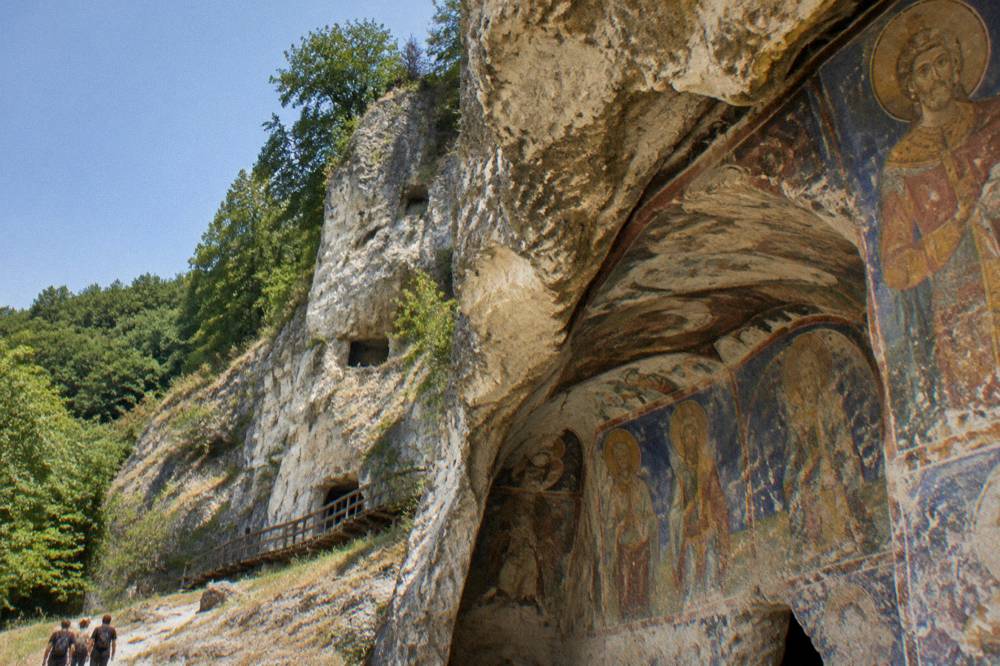
Inside the Rock-Hewn Churches of Ivanovo the sight is the rock-cut architecture and the frescoes, with the notable 14th-century wall paintings the centrepiece, described by UNESCO's listing as work of the Tarnovo school of painting from the period of the Second Bulgarian Kingdom. The chambers include churches, chapels, cells and refectories hollowed into the cliff at different levels. Opening arrangements are limited and seasonal, so check locally before setting out.
The frescoes are the reason for the inscription. The 14th-century scenes and figures survive on the rock walls of the main church, and the UNESCO documentation for criteria ii and iii points to their artistic influence and to the eremitic monasticism they document. Beyond the painted church, the complex extends through the canyon, with chambers cut at heights that required ladders and paths in the monastic period. The setting above the Rusenski Lom is part of the visit: the valley is a protected landscape, and the cliffs give the complex its dramatic form.
The workable approach is to check the current price and opening arrangements on the official page or at the Ruse tourist information office before booking anything non-refundable around the visit. Photography rules, guided-entry requirements and seasonal closures at the site are all best confirmed the same way.
Why Is Ivanovo On The UNESCO List When Veliko Tarnovo Is Not?
Ivanovo is inscribed because its rock-cut churches and 14th-century frescoes met UNESCO's criteria ii and iii as a discrete property in 1979, while nothing in Veliko Tarnovo, not Tsarevets, not the Old Town and not the city as a whole, appears on the World Heritage List or even on Bulgaria's Tentative List. The nearest Tentative List entry to the city is Nicopolis ad Istrum, listed since 1984. The distinction is between an inscription and a waiting list.
This is one of the most common misconceptions about the medieval capital, and it is worth stating plainly because so many guides blur it. The UNESCO World Heritage List contains, for this region, the Rock-Hewn Churches of Ivanovo and the Thracian Tomb of Kazanlak, both from 1979. The Tentative List, which is the queue of properties a state party proposes for future nomination, contains Nicopolis ad Istrum, the Roman city ruins about 20 km north of Veliko Tarnovo, and it has been there since 1984 with no inscription following. More of these guides are collected on Veliko Tarnovo Travel Guide.
The practical consequence for a traveller is positive rather than negative. Tsarevets Fortress, at 7.67 euro for an adult ticket per the Regional Museum of History's ticket page, with a family ticket at 10.23 euro, is visited on the museum's own terms, without the framing that World Heritage status gives a site. And the Ivanovo day trip becomes the route to the genuine article: an inscribed property within reach of the city. The Tsarevets guide covers the fortress in full for the city half of the trip.
Can You Combine Ivanovo With Other Day Trips From Veliko Tarnovo?
The two combinations that fit the distances are Ivanovo with Ruse, at about 105 km and 128 km respectively from Veliko Tarnovo, and Ivanovo with the city's own sights on separate days, while the southern cluster of Shipka at about 79 km, the Kazanlak tomb at about 98 km and Buzludzha at about 73 km points in the opposite direction and does not stack with Ivanovo in one day. Plan one axis per day.
Ruse is the natural partner. It lies on the way, the train times in the table above serve it directly, and the city deserves its own afternoon after a morning at the churches. The Shipka Memorial and Shipka Pass and Kazanlak and the Rose Valley guides cover the southern axis, and the Buzludzha monument sits on that same southern side; pairing any of them with Ivanovo means crossing the whole region twice in a day. The Nicopolis ad Istrum ruins, at about 20 km, sit on the northern side and are the one short detour that genuinely shares a direction with the road north, if a stop on the way back is wanted.
Prefer to set out from Bucharest instead? Book a private day tour.
| Day-trip pairing from Veliko Tarnovo | Distances involved | How it stacks |
|---|---|---|
| Ivanovo and Ruse | About 128 km and 105 km | Same road, natural pairing |
| Ivanovo and Nicopolis ad Istrum | About 128 km and 20 km | Short stop on the northern axis |
| Shipka and Kazanlak tomb | About 79 km and 98 km | Southern axis, its own day |
| Shipka and Buzludzha | About 79 km and 73 km | Southern axis, its own day |
Two products from the roster work as city-and-countryside companions to a day built around Ivanovo. The Mini Bulgaria park product below pairs an entry ticket with an e-guide for a low-effort half day near the city, and the private eco tour covers a full day outdoors around Veliko Tarnovo when the Ivanovo trip has satisfied the heritage quota.
When Is The Best Time Of Year To Visit The Ivanovo Churches From Veliko Tarnovo?
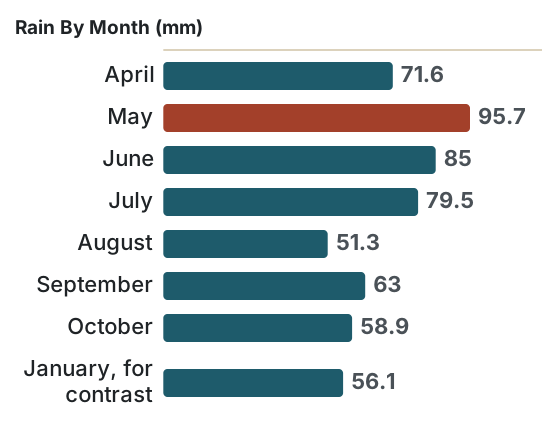
The warm half of the year, from April to October, is the practical window: ERA5 reanalysis for Veliko Tarnovo, 1991 to 2020, shows mean daily highs rising from 16.9 C in April to 28.1 C in August and falling back to 17.6 C in October, against winter highs of 4.9 C in January, and the site's limited opening arrangements favour the visitor season.
The climate figures are modelled normals from the ERA5 reanalysis grid cell over the city, and the drive northeast toward Ivanovo shares the same continental regime. Rain is worth reading closely: May carries the highest monthly total in the table at 95.7 mm, June follows at 85.0 mm, and August the lowest at 51.3 mm. The monthly picture for the planning window:
| Month | Mean daily high C | Mean daily low C | Rain mm |
|---|---|---|---|
| April | 16.9 | 6.0 | 71.6 |
| May | 21.7 | 11.1 | 95.7 |
| June | 25.4 | 15.1 | 85.0 |
| July | 27.6 | 17.2 | 79.5 |
| August | 28.1 | 17.1 | 51.3 |
| September | 23.3 | 12.9 | 63.0 |
| October | 17.6 | 8.0 | 58.9 |
| January, for contrast | 4.9 | -3.8 | 56.1 |
October deserves a specific note for anyone combining the trip with the city's museum sites, because winter hours at the Regional Museum of History's sites start on 25 October 2026. Trapezitsa closes to visitors entirely from 30 November 2026 to 31 March 2027, its funicular stops for the season on 31 October 2026, and Konstantsalieva House in Arbanasi goes to Friday-to-Sunday opening from 30 November 2026 to 20 March 2027. None of that affects Ivanovo directly, but a late-season itinerary that banks on Trapezitsa in the afternoon after the drive will not work.
What Should You Budget For The Ivanovo Day Trip From Veliko Tarnovo?
The transport budget is the euro cost of a train ticket to Ruse plus the local connection to Ivanovo, so the only hard figures are the city's museum prices you might combine with the trip: Tsarevets at 7.67 euro, the Archaeological Museum at 5.11 euro, and the two-day, ten-site museum pass at 20.45 euro valid 1 April to 30 November.
Check the current price on the official ticket page before booking.
What can be stated exactly is the museum pricing in Veliko Tarnovo, because the Regional Museum of History prints it in euro. The table below gives the entries most relevant to a day-trip-plus-city itinerary:
| Ticket | Price | Notes |
|---|---|---|
| Tsarevets Fortress, adult | 7.67 euro | Open daily, no day off |
| Tsarevets family ticket | 10.23 euro | Parents plus up to 3 children aged 7 to 18 |
| Archaeological Museum, adult | 5.11 euro | Monday maintenance 09:00 to 11:00 |
| Nicopolis ad Istrum, adult | 5.11 euro | On the northern axis toward Ivanovo |
| Two-day pass, 10 sites | 20.45 euro | Valid 1 April to 30 November |
Children under 7 enter the museum sites free, as do people with permanent disabilities with an assistant. Nicopolis ad Istrum is the value-row standout for this page specifically, since it shares the road north with Ivanovo and carries a Tentative List pedigree of its own dating to 1984.
Common Questions About The Ivanovo Rock-Hewn Churches
Are the Rock-Hewn Churches of Ivanovo a UNESCO World Heritage Site?
Yes. They were inscribed on the UNESCO World Heritage List in 1979 under criteria ii and iii. They are, together with the Thracian Tomb of Kazanlak, also 1979, the nearest inscribed World Heritage property to Veliko Tarnovo.
How far are the Ivanovo churches from Veliko Tarnovo?
About 128 km by road, measured from the city centre along the route toward Ruse, which lies about 105 km away.
Is there a train from Veliko Tarnovo to the Ivanovo churches?
Not to the site itself. The practical rail route runs to Ruse, with a direct train taking 2 h 25 min and a connection via Gorna Oryahovitsa taking 2 h 33 min, followed by local transport or a tour for the final leg. Check the BDZ timetable before travelling.
Why is Ivanovo UNESCO-listed but Veliko Tarnovo is not?
Nothing in Veliko Tarnovo appears on the World Heritage List or on Bulgaria's Tentative List. Ivanovo was inscribed as a discrete property in 1979 for its rock-cut churches and 14th-century frescoes. Nicopolis ad Istrum, about 20 km from the city, has been on the Tentative List since 1984.
Can you visit Ivanovo and Ruse in one day from Veliko Tarnovo?
Yes, the two sit on the same road, at about 128 km and 105 km respectively, and the morning trains to Ruse arrive in under two and a half hours. The southern sights, Shipka at about 79 km and the Kazanlak tomb at about 98 km, point the opposite way and belong to a separate day.
What do the Ivanovo frescoes show?
The notable 14th-century wall paintings in the rock-cut churches are described in the UNESCO documentation as work of the Tarnovo school of painting from the era of the Second Bulgarian Kingdom, covering scenes and figures of the monastic and court tradition of the period.