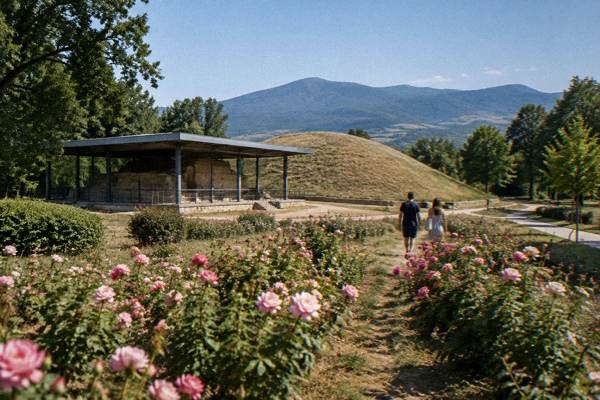
Kazanlak: The Thracian Tomb And The Rose Valley
The Thracian Tomb of Kazanlak, inscribed by UNESCO in 1979, sits about 98 road km from Veliko Tarnovo in the middle of Bulgaria's Rose Valley, and the two together make one of the fullest day trips out of the medieval capital.
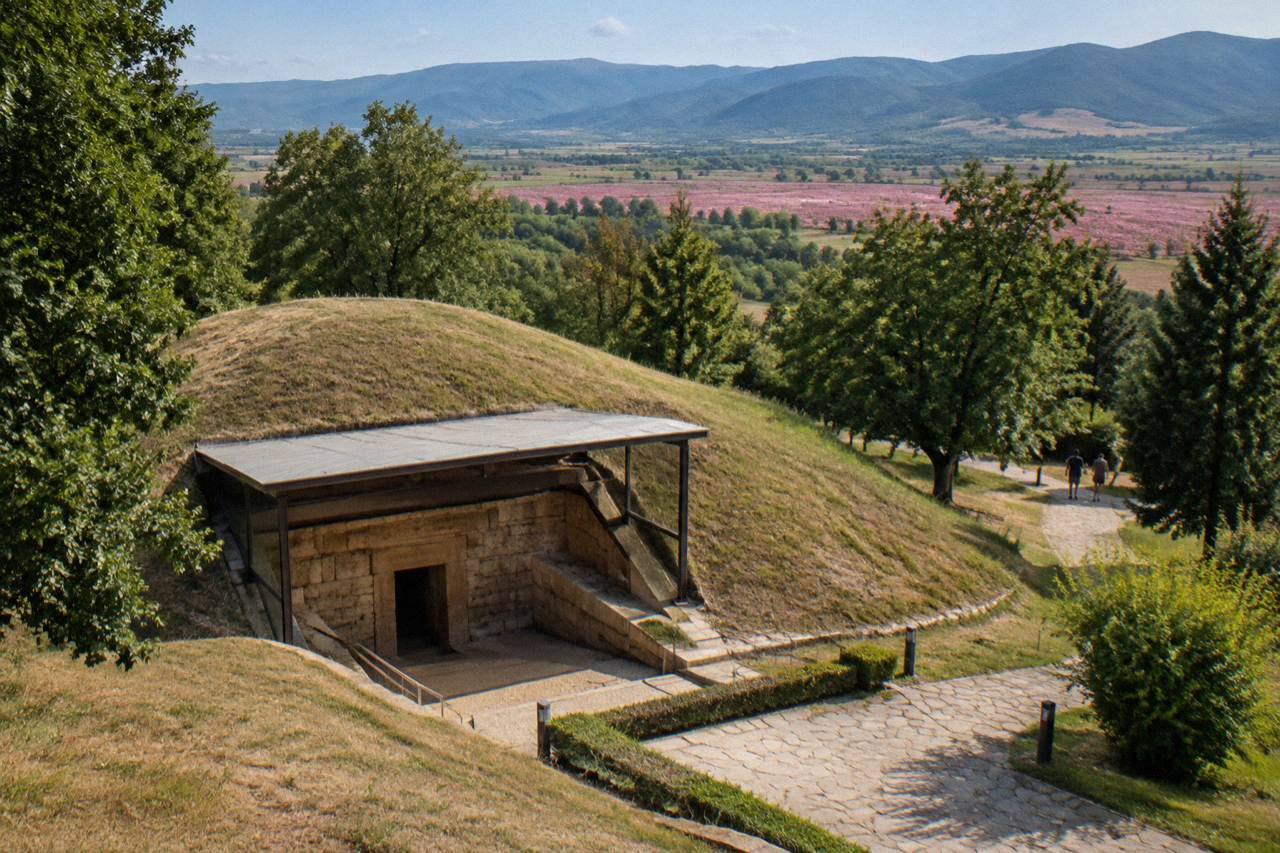
The Thracian Tomb of Kazanlak lies about 98 km by road from Veliko Tarnovo and has been on the UNESCO World Heritage List since 1979. It was discovered in 1944 and dates from the end of the 4th century BC. The Rose Festival culmination in Kazanlak is announced for 4 to 6 June 2027.
Veliko Tarnovo, the medieval capital on the Yantra river in northern Bulgaria, sits close to one of the two UNESCO World Heritage Sites within a day-trip radius: the Thracian Tomb of Kazanlak, inscribed in 1979, about 98 km by road to the south. The same valley grows the oil-bearing rose that Bulgaria is known for, and each June the town of Kazanlak marks the harvest with a festival whose 2027 culmination is announced for 4 to 6 June. This page covers the tomb, the valley and the journey, and how the trip compares with the other day trips out of the city described across Veliko Tarnovo Travel Guide.
What Is The Thracian Tomb Of Kazanlak And Why Does It Matter?
The Thracian Tomb of Kazanlak is a brick-built vaulted tomb from the end of the 4th century BC, discovered in 1944 and inscribed on the UNESCO World Heritage List in 1979, one of only two inscribed sites anywhere near Veliko Tarnovo. Its painted interior, described on the UNESCO listing as Hellenistic frescoes of the period, is the reason for the inscription. Nothing inside Veliko Tarnovo itself is inscribed or on the Tentative List; the Rock-Hewn Churches of Ivanovo, also from 1979, are the other nearby property, and Nicopolis ad Istrum has waited on the Tentative List since 1984.
The Thracians were the people who inhabited these lands before the Roman era, and the Kazanlak region holds a concentration of their burial mounds. The tomb entered the list in 1979 together with the Ivanovo churches, in the same year Bulgaria's World Heritage portfolio began. The UNESCO listing records the tomb's discovery in 1944 and dates the monument to the end of the 4th century BC, which places it in the Hellenistic period after Alexander's time.
For a visitor based in Veliko Tarnovo, the significance is practical as much as historical. The tomb is the single inscribed UNESCO property reachable as a day trip from the city, and the road south to it runs through Shipka and Gabrovo territory that the site's other day-trip pages cover: the Shipka Memorial and pass and Buzludzha both sit on the same southern corridor.
How Far Is Kazanlak From Veliko Tarnovo And How Do You Get There?
Kazanlak lies about 98 road km south of Veliko Tarnovo by the route measured over the public road network, with the Shipka church area at about 79 km and the Buzludzha monument at about 73 km along the same corridor, so the drive is a day trip of roughly two hundred km round trip.
The corridor matters when planning. Leaving Veliko Tarnovo southbound, the route passes the turn-offs the site's other pages describe: Dryanovo Monastery and Bacho Kiro cave and Tryavna sit on a more easterly branch toward Gabrovo, while the direct southern route climbs to the Shipka pass before dropping into the valley. A car lets you chain Shipka, Buzludzha and Kazanlak in one day; without one, an organised tour is the realistic option.
| Destination from Veliko Tarnovo centre | About, by road | What it is |
|---|---|---|
| Buzludzha monument | 73 km | Hilltop monument, interior reported closed |
| Shipka Memorial Church | 79 km | Memorial church at the southern edge of the valley |
| Kazanlak, Thracian Tomb | 98 km | UNESCO World Heritage Site, inscribed 1979 |
| Plovdiv | 208 km | City to the south, beyond the valley |
| Sofia | 223 km | Capital, via the western route |
The distances above are computed over the public road network and carry "about" deliberately: they describe the routed kilometres, not a straight line. The same computation puts Gabrovo at about 45 km and Etar at about 53 km, which is why the Etar open-air museum page treats that complex as the nearer half-day option.
If driving yourself does not appeal, the tour below runs the valley and the tomb region from Veliko Tarnovo as a booked seat:
Can You Go Inside The Original Thracian Tomb?
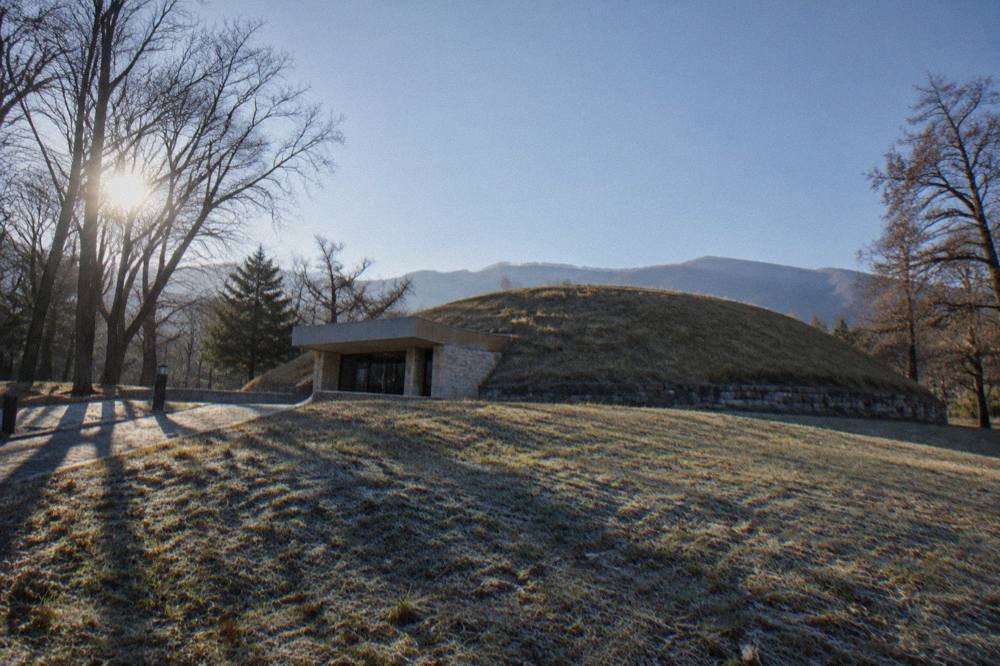
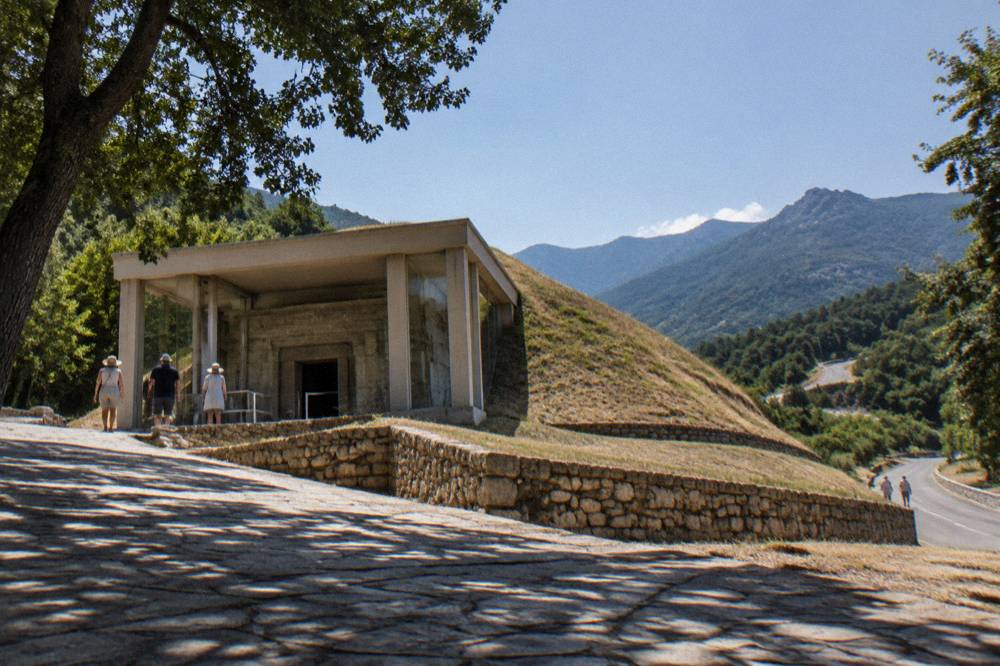
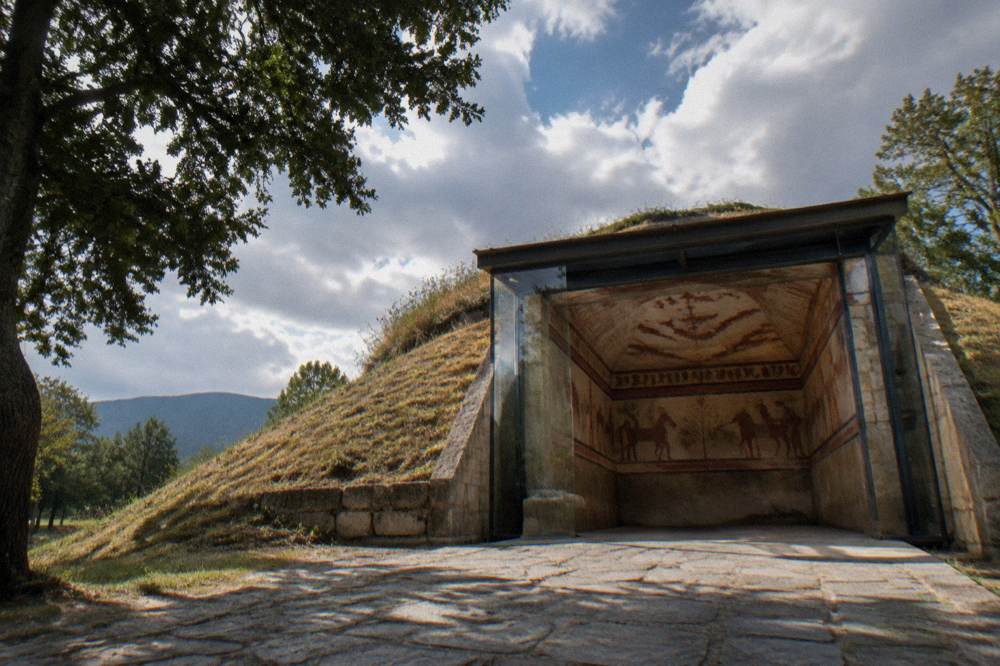
The 1979-inscribed original tomb is a fragile painted monument, and the practical arrangement in Kazanlak has long been a replica that visitors tour while the original is protected, so plan on seeing the copy and treat the original mound itself as the historic landmark rather than a walk-in sight. The UNESCO listing describes the original's frescoes, and the site's facts do not carry current hours, ticket prices or booking rules for the Kazanlak museums, so check the current price and visiting arrangements on the official pages before you travel.
This is the pattern recorded across the region's protected interiors. The Kazanlak tomb's listing with UNESCO rests entirely on the painted chamber, and a monument of that age with paint on brick does not admit unlimited foot traffic. What the listing does confirm is the date of discovery, 1944, and the period, the end of the 4th century BC, both of which appear on the World Heritage page for the site.
The rule that applies to Bozhentsi and the Shipka exhibits applies equally in Kazanlak: check the current price on the official ticket page before booking, and expect seasonal variation.
A booked tour absorbs this uncertainty into one transaction. The Valley of Roses and Kings day tour from Veliko Tarnovo covers the tomb region and the valley in a single itinerary, and its tour page lists what is included; the tour page shows the current from-price and the cancellation terms. Check availability
What Else Is There To See In Kazanlak And The Rose Valley?
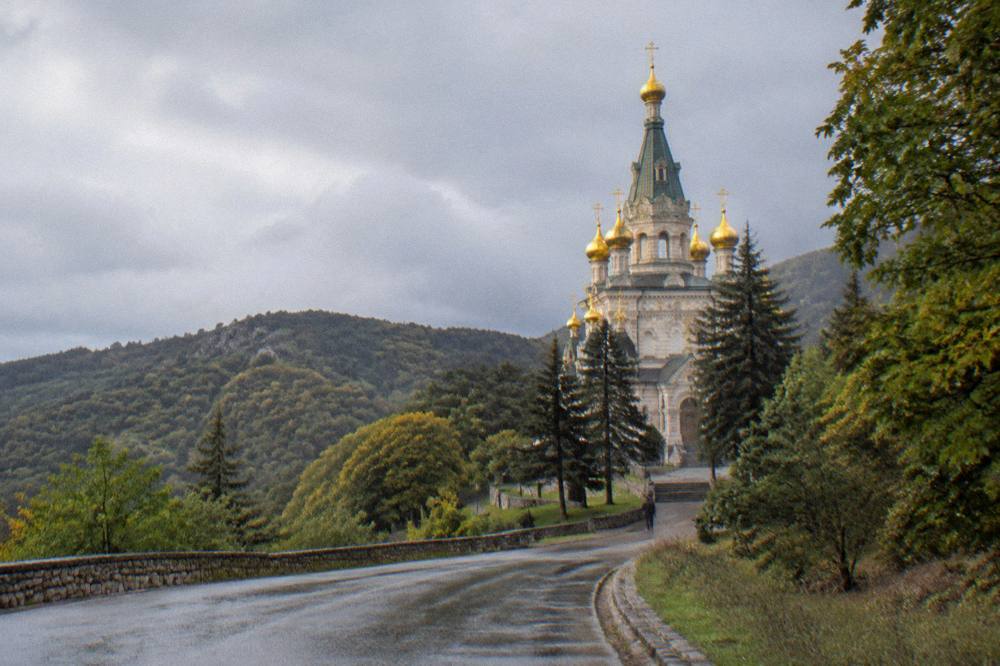
The valley around Kazanlak combines the tomb, a belt of rose fields harvested in late spring and early summer, the Shipka Memorial Church at about 79 km from Veliko Tarnovo and the Buzludzha monument at about 73 km, all of which chain naturally into a single southern day trip. The Shipka church is a memorial built to honour those who fell at the Shipka pass battles, and the Buzludzha monument on the peak above it is a structure whose interior is reported closed, so it is viewed from outside.
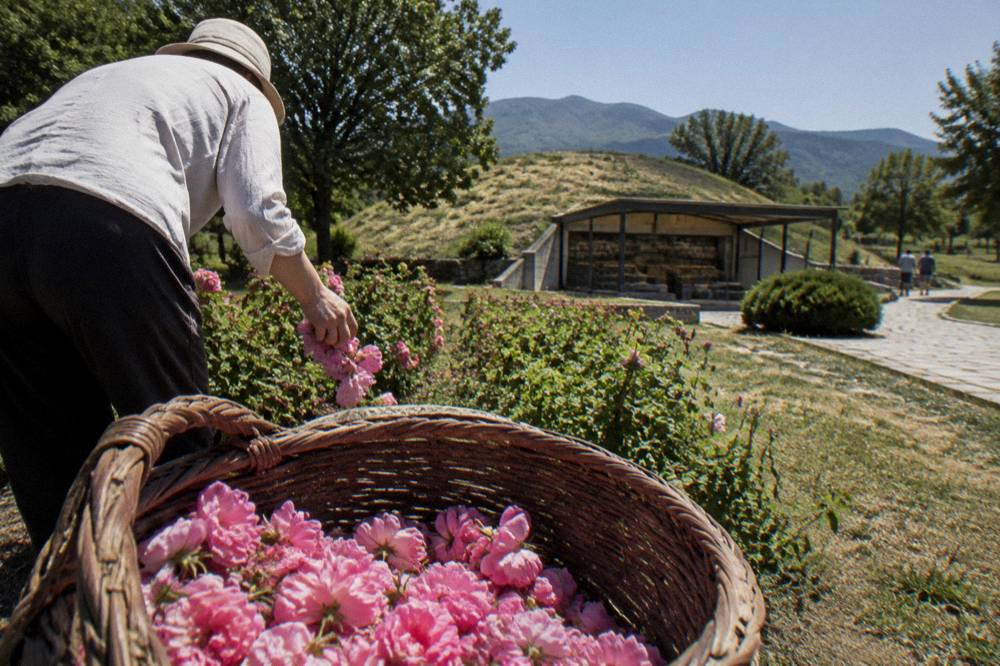
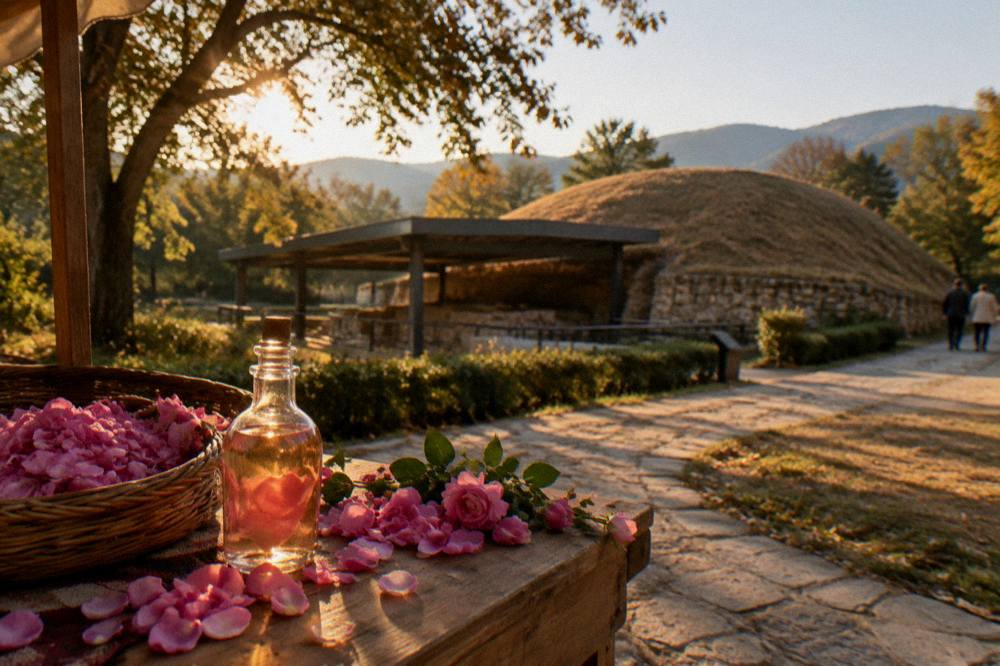
The rose fields themselves are agricultural land. Bulgaria's oil-bearing rose is grown for rose oil, and the Kazanlak valley is the centre of that cultivation; the harvest period falls in the weeks around the festival, which is why the culmination is set for early June.
Beyond the flowers and the tomb, the valley holds Thracian heritage in depth: the region's burial mounds extend beyond the single inscribed tomb, and Kazanlak town serves as the base for visiting them. The details of individual museums, exhibits and opening arrangements are best checked on official pages, since this site's research carries none for them.
When Is The Rose Festival And When Do Roses Bloom?
The Rose Festival culmination in Kazanlak is announced for 4 to 6 June 2027, and the festival programme in a normal year extends over several weeks from mid-May, with rose-picking rituals, a parade and the crowning of the Rose Queen around the culmination weekend. The announcement comes from the organising sources in Kazanlak and carries the usual caveat of a locally set programme: peripheral events can shift by a day or two around the confirmed core dates.
The climate shapes the timing. The ERA5 reanalysis for Veliko Tarnovo, 1991 to 2020, shows the mean daily high climbing from 21.7 C in May to 25.4 C in June and 27.6 C in July, with rainfall at 95.7 mm in May, the year's highest monthly total in the modelled series, easing to 85.0 mm in June. Kazanlak's valley floor runs its own numbers, but the same continental rhythm applies: warm, showery late spring giving way to a hotter, drier midsummer. Other pages covering the same trip are gathered on Veliko Tarnovo Travel Guide.
| Month | Mean daily high, C | Mean daily low, C | Rain, mm |
|---|---|---|---|
| April | 16.9 | 6.0 | 71.6 |
| May | 21.7 | 11.1 | 95.7 |
| June | 25.4 | 15.1 | 85.0 |
| July | 27.6 | 17.2 | 79.5 |
All four rows are ERA5 reanalysis values, 1991 to 2020, for the grid cell near Veliko Tarnovo, and they describe the departure climate, not the valley itself. For the festival itself, the confirmed calendar entries the site carries are these:
| Event | Dates | Status |
|---|---|---|
| Rose Festival culmination, Kazanlak | 4 to 6 June 2027 | Announced culmination dates |
| Veliko Tarnovo Day | 22 March, every year | City holiday |
| International Folklore Festival, Veliko Tarnovo | 18 to 25 July 2026 | 28th edition |
| Etar International Fair of Traditional Crafts | 4 to 6 September 2027 | Announced fair dates |
A June trip built around the festival can also catch the valley at its greenest. The 95.7 mm May rainfall total in the modelled normals means the fields enter June well watered, and the harvest follows the flowers, not the calendar, by a few days either way in any given year.
What Does A Kazanlak And Shipka Day From Veliko Tarnovo Look Like?
A realistic one-day route runs Veliko Tarnovo south about 73 km to the Buzludzha monument exterior, on to the Shipka Memorial Church at about 79 km, then down into the valley to Kazanlak at about 98 km for the tomb region and the town, returning the same corridor, roughly two hundred km round trip. The order can be reversed so the tomb comes first and the pass crossing lands on the way home; the physics of the corridor do not change, only the light and the timing.
Want that loop without the driving? Book a Buzludzha and Shipka day trip.
Two practical notes carry real weight. First, Buzludzha's interior is reported closed, so the monument is a photo stop at the peak, and its dedicated page keeps the current state of access.
For travellers without a car, the tour below runs this exact territory from Veliko Tarnovo, and its listing carries the current price, the duration and the cancellation terms:
The self-drive alternative leaves room for detours. The Gabrovo page's Etar complex sits about 53 km out on the eastern branch, and a two-day southern loop could pair the Rose Valley with Etar and Tryavna, sleeping in Kazanlak or Gabrovo. Bulgaria has used the euro since 1 January 2026, at the fixed rate of 1.95583 lev per euro, so there is no currency exchange to plan between the two towns.
How Does Kazanlak Compare With Other Veliko Tarnovo Day Trips?
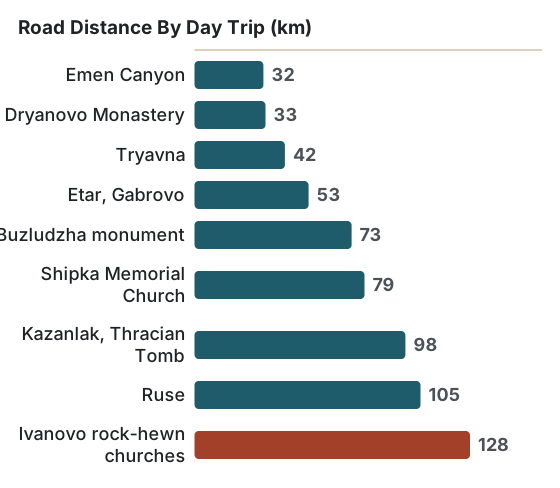
Kazanlak at about 98 km is one of the longer standard day trips from Veliko Tarnovo, exceeded by Plovdiv at about 208 km and Sofia at about 223 km, while the northern options like Emen Canyon at about 32 km and the Dryanovo Monastery at about 33 km sit far closer. The table below sets out the full range the site's distance research carries, all computed over the public road network from the city centre.
| Day trip from Veliko Tarnovo | About, by road | Character |
|---|---|---|
| Emen Canyon | 32 km | Gorge with 90 m sheer cliffs at Lower Boaz |
| Dryanovo Monastery | 33 km | Monastery and cave area |
| Tryavna | 42 km | Revival-period town |
| Etar, Gabrovo | 53 km | Open-air architectural and ethnographic complex |
| Buzludzha monument | 73 km | Hilltop monument, exterior viewing |
| Shipka Memorial Church | 79 km | Memorial church above the valley |
| Kazanlak, Thracian Tomb | 98 km | UNESCO site, inscribed 1979, plus rose fields |
| Ruse | 105 km | Danube city |
| Ivanovo rock-hewn churches | 128 km | UNESCO site, inscribed 1979 |
Only two entries in that table carry a World Heritage inscription, and Kazanlak is the nearer of them, which is the strongest single argument for the longer drive. Against that, the nearer options reward repeat visits from a Veliko Tarnovo base: the Krushuna Falls, Devetashka Cave and Prohodna Cave cluster to the northwest at 79, 89 and the cave belt beyond, and Lovech at about 86 km anchors that direction.
Season is the tiebreaker. June belongs to Kazanlak, because the festival and the flowers only exist then; the cave and waterfall country to the northwest is at its fullest in spring, and the coastal pull of Varna belongs to high summer, from a city that has no sea coast of its own. Travellers combining the whole country can continue south from the valley to Plovdiv or loop back north through Ruse toward Bucharest.
Where Does Kazanlak Fit In A Longer Bulgaria Itinerary?
Kazanlak works as the southern anchor of a two or three day loop out of Veliko Tarnovo, pairing naturally with Shipka and Buzludzha on day one, Gabrovo's Etar complex and Tryavna on day two, and a return through the city before the onward leg to Plovdiv at about 208 km or Sofia at about 223 km. The city's own itinerary pages, from one day in Veliko Tarnovo through three days in Veliko Tarnovo, assume the fortress, the old quarters and Arbanasi fill the in-town time, and the valley trip slots in front of or behind them.
The western variant, via the Ivanovo rock-hewn churches at about 128 km and Ruse at about 105 km, suits travellers heading toward Bucharest, which lies about 179 km out on that axis. The southern variant through Kazanlak suits travellers heading for Plovdiv or, further, the Greek border. Both corridors carry one of the country's two nearby inscribed UNESCO properties, so the choice between them is a choice of which 1979 inscription to see.
Bulgaria is a full Schengen member since 1 January 2025 and uses the euro since 1 January 2026, so a loop through the valley involves no border or currency friction for most European itineraries.
Common Questions About Kazanlak And The Rose Valley
Is the Thracian Tomb of Kazanlak a UNESCO site?
The Thracian Tomb of Kazanlak was inscribed on the UNESCO World Heritage List in 1979. Nothing in Veliko Tarnovo itself is inscribed or on the Tentative List; the other nearby property is the Rock-Hewn Churches of Ivanovo, also 1979.
How far is Kazanlak from Veliko Tarnovo?
About 98 km by road from the centre of Veliko Tarnovo, on the southern corridor past the Shipka pass. The Shipka Memorial Church area is about 79 km and the Buzludzha monument about 73 km along the same route.
Can you go inside the original Kazanlak tomb?
The visiting arrangement centres on a replica, with the fragile 1944-discovered original protected. Check the current arrangements on the official pages before travelling, as this site's research carries no hours or prices for the Kazanlak museums.
When is the Rose Festival in Kazanlak?
The 2027 culmination is announced for 4 to 6 June, with a broader programme running from mid-May in a normal year. The bloom and harvest shift by days with the spring weather.
Is Kazanlak worth it without a car?
It is harder.
Whether the draw is a 1979 World Heritage inscription, the announced 4 to 6 June 2027 festival culmination, or the simple pleasure of a pass crossing into flower country, Kazanlak gives the longer day out of Veliko Tarnovo its strongest single reason, and the valley rewards the drive most in the weeks when the roses come in.