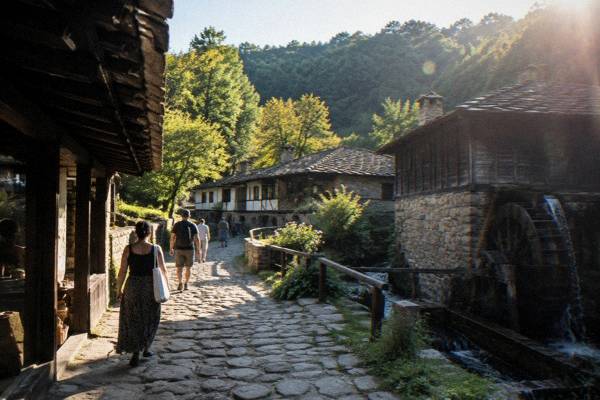
Bozhentsi: A Preserved Revival Village Near Veliko Tarnovo
Bozhentsi is a small architectural reserve of preserved Revival-period houses in the hills about 46 km from Veliko Tarnovo, usually visited together with Tryavna, Gabrovo or Etar on a day loop through north-central Bulgaria.
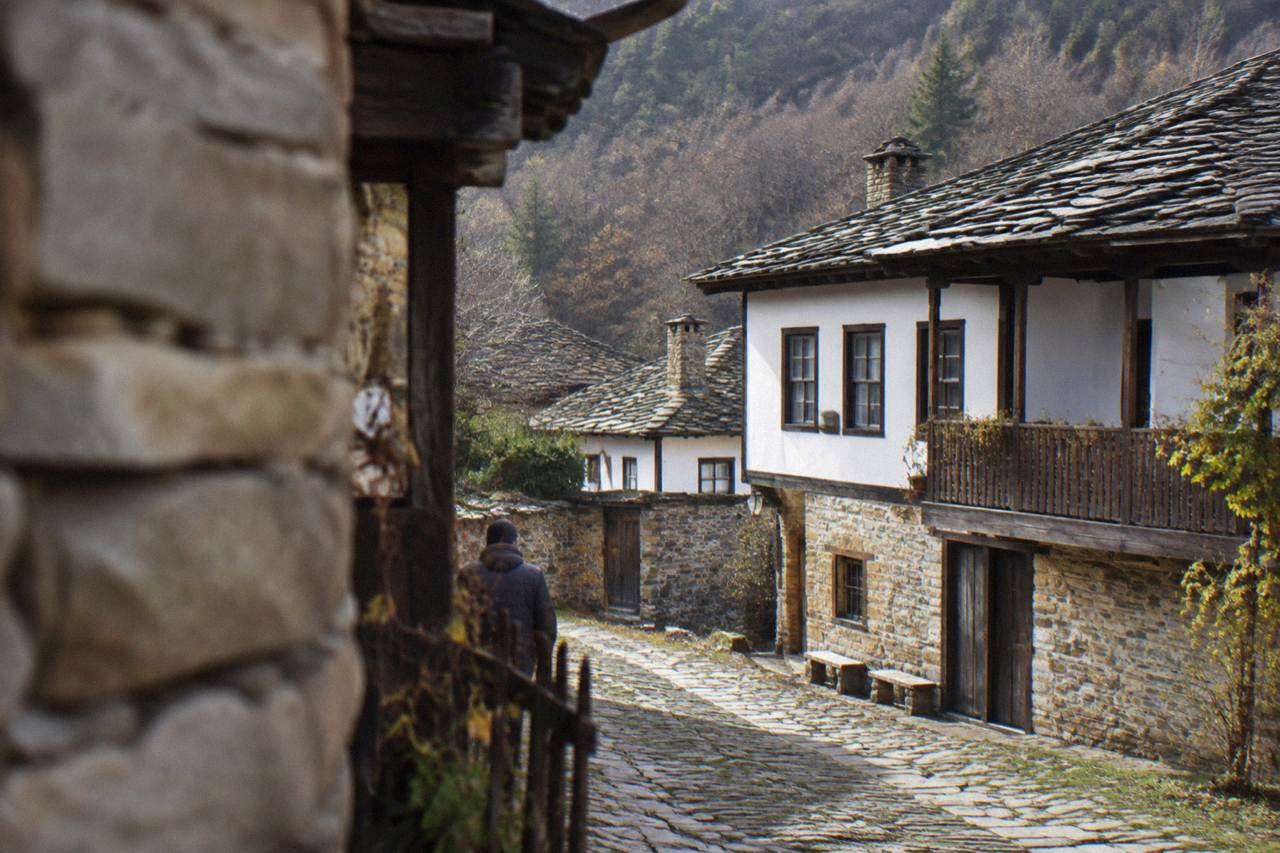
Bozhentsi lies about 46 km by road from central Veliko Tarnovo, an architectural reserve of preserved Revival-period houses set in wooded hills between Gabrovo and Tryavna. There is no train station, and no museum hours or ticket prices are confirmed for the village itself, so it works best as a half-day stop on a driving loop that can also take in Tryavna at 42 km and Etar at 53 km.
Bozhentsi is an architectural reserve of preserved Revival-period houses in the hills of north-central Bulgaria, about 46 km by road from central Veliko Tarnovo, and it is almost always visited as one stop on a driving loop rather than a destination in itself. The village sits between Gabrovo and Tryavna, two other Revival-town anchors of the region, which makes it natural to string all three into a single day out of Veliko Tarnovo. The village's hours and ticket arrangements are not published on a primary page, so the practical planning sits in the driving distances, the confirmed prices at nearby Etar, and the seasonal rhythms of the region, all of which this guide sets out.
What Is Bozhentsi And Why Visit From Veliko Tarnovo?
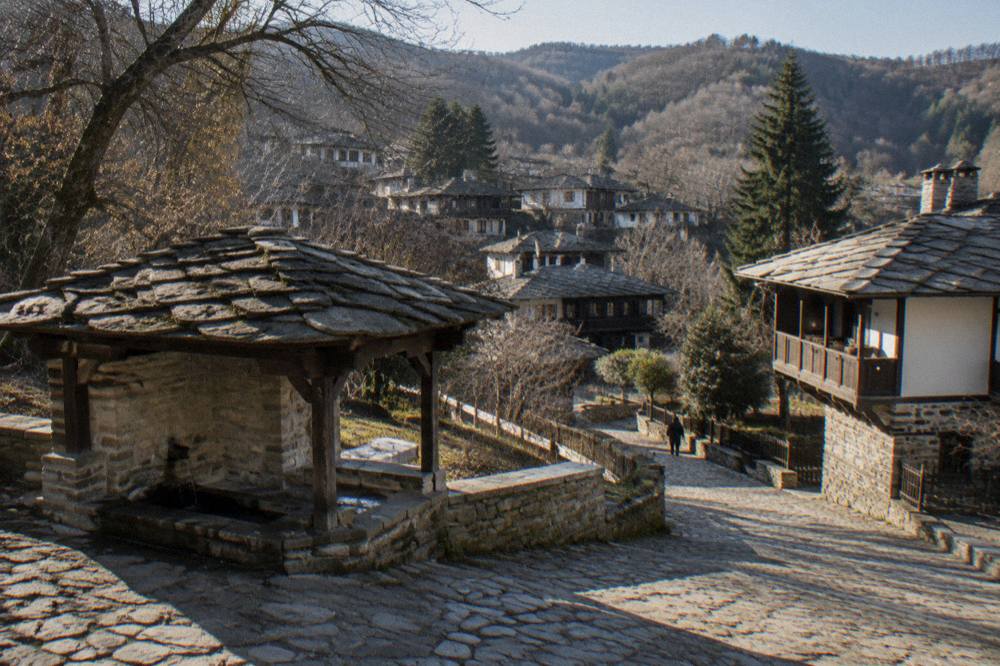
Bozhentsi is a village of preserved Revival-period houses in the wooded hills of north-central Bulgaria, protected as an architectural reserve, and it sits about 46 km by road from central Veliko Tarnovo, which makes it a realistic half-day or full-day stop on a driving circuit of the region's old towns. Unlike Veliko Tarnovo, a city of about 77,000 municipality residents on the Yantra river, Bozhentsi is a small settlement, and its interest lies entirely in the historic fabric of the village itself.
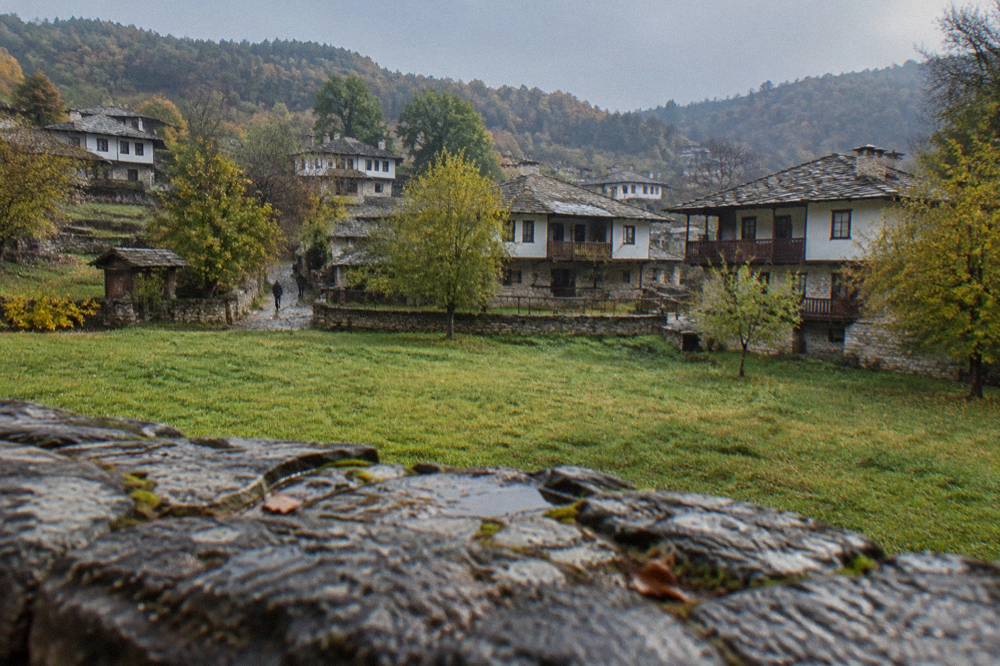
The reserve belongs to the same family of Revival-architecture towns as Tryavna, Gabrovo and the Etar open-air museum, all of them within roughly an hour's drive of Veliko Tarnovo. Where the Etar complex reassembles craft buildings in a museum setting, Bozhentsi is a living village: houses stand where they were built, and the reserve status protects the ensemble rather than reconstructing it in a park. That distinction is the reason to see both, and the reason the two are so often paired on one route.
The region's connection to the Revival period is the thread that ties these places together. Veliko Tarnovo's own Revival legacy is documented at sites such as Sarafkina House, built in 1861, and the Konak of 1872 by master Kolyu Ficheto, and Bozhentsi extends that story into the countryside. Bulgarian independence was declared on 22 September 1908 at the Church of the Holy Forty Martyrs in Veliko Tarnovo, and the villages of this region preserve the built world of the decades before that moment.
How Do You Get To Bozhentsi From Veliko Tarnovo?
Bozhentsi lies about 46 km by road from central Veliko Tarnovo, reached by driving toward Gabrovo and Tryavna, and there is no train line to the village, so a car, a taxi or an organised day trip is the practical way in. Tryavna is about 42 km from the centre and Etar about 53 km, so the three stops form a compact loop through the same hills.
Public transport to the village itself is limited, with connections running through Gabrovo or Tryavna rather than directly. A traveller relying on buses should expect a change in one of those towns and a short onward leg by taxi or local service, and timetables are best confirmed at the Veliko Tarnovo bus stations before committing to a day. For travellers without a car, the booked day-trip products on the roster solve the problem neatly: the Etar and Veliko Tarnovo combination tour covers the open-air museum and the city in one guided day. For everyone else, the table below gives the confirmed road distances from the centre of Veliko Tarnovo for every stop that makes sense on a Bozhentsi loop.
| Destination | Road distance from Veliko Tarnovo centre |
|---|---|
| Tryavna | about 42 km |
| Bozhentsi | about 46 km |
| Etar | about 53 km |
| Dryanovo Monastery | about 33 km |
| Shipka church | about 79 km |
| Krushuna Falls | about 79 km |
One route that works well is Dryanovo Monastery at about 33 km, then Tryavna at 42 km, then Bozhentsi, then Etar at 53 km on the way back toward the main road. The Dryanovo Monastery and Bacho Kiro cave guide covers the first leg, and the Tryavna guide covers the second. No drive times are quoted here because none are confirmed; the distances are computed on the public OpenStreetMap router, so treat each as "about".
A guided day trip removes the driving question entirely. The Etar combination tour pairs the open-air museum with Veliko Tarnovo's own monuments, and the city monuments walking tour is a separate product for the day before or after, covering the central sights of Veliko Tarnovo on foot.
What Can You Actually See In Bozhentsi?
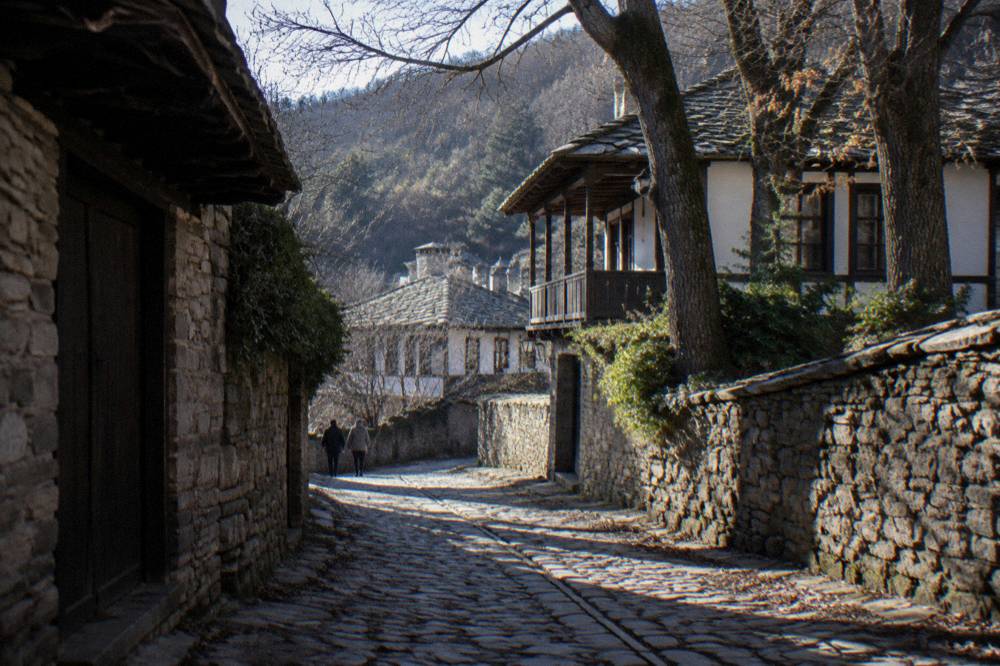
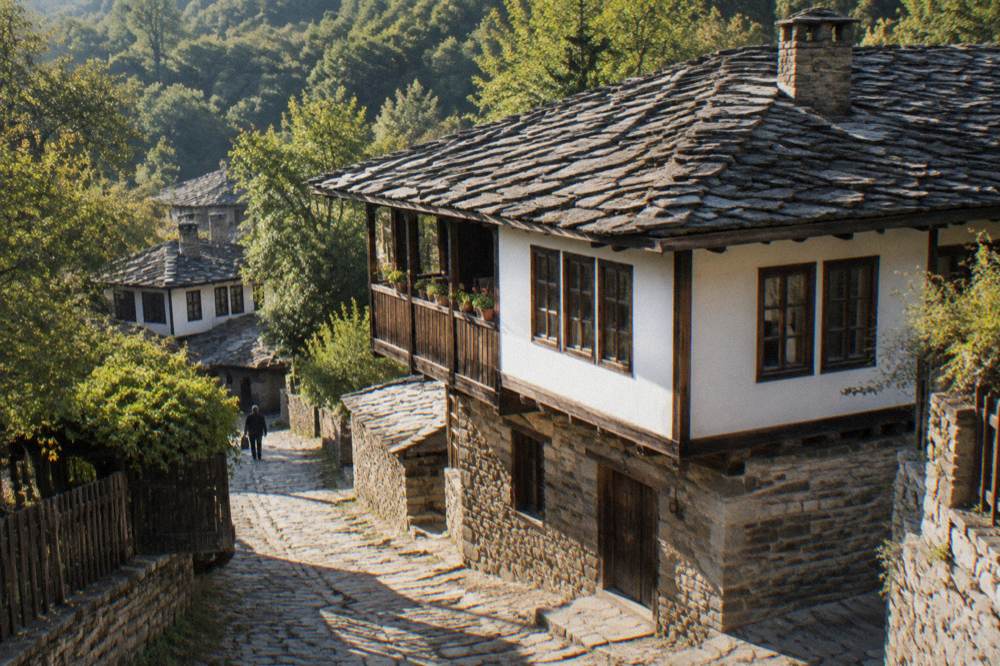
Bozhentsi's sight is the village itself: an architectural reserve of preserved Revival houses set along lanes in wooded hills, protected as an ensemble rather than as a single monument. No opening hours or admission prices for the village are confirmed on a primary page, so plan to check locally or through your accommodation before setting out, and treat the drive and the scenery as part of the visit.
What the record supports is simple: Bozhentsi is an architectural reserve with preserved houses, and descriptions of the village rest on that status. The houses are the draw, seen from the lanes between them, and the reserve sits in hilly wooded country between Gabrovo and Tryavna. Anything more specific, room layouts, named museums inside particular houses, or guided-tour schedules inside the reserve, is not something this guide can state, and the village information point or a local host will know what is open on the day.
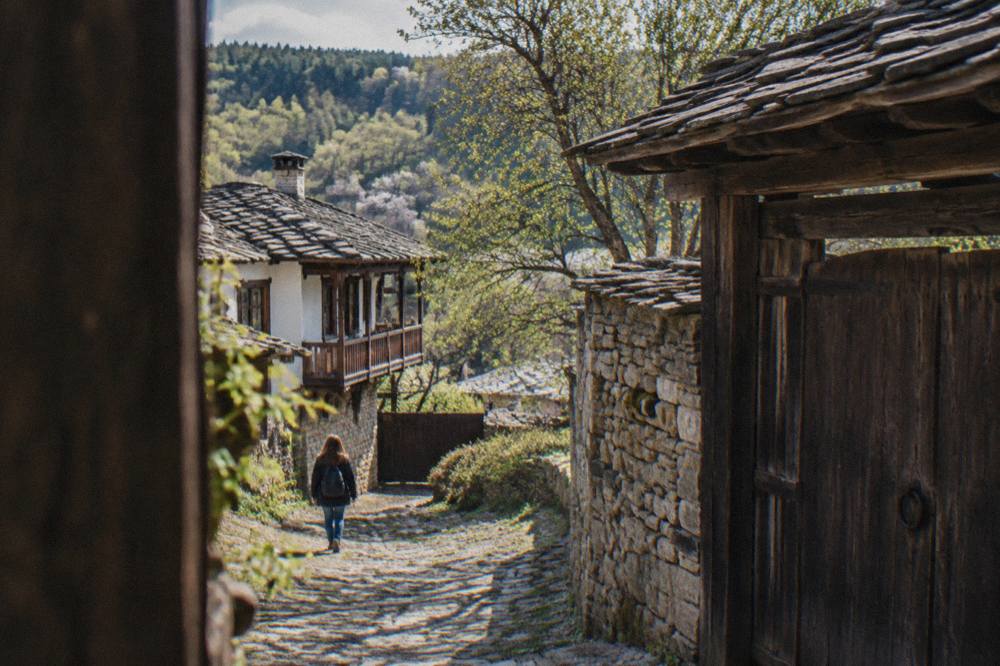
This is also why Bozhentsi rewards a slow loop rather than a dash. The village is small. The pleasure of the place is the walk between the houses, the quiet of the hills, and the contrast with the busier craft atmosphere of Etar, where the museum sells a dated ticket and runs a posted programme. There is no fortress hill here and no river meander, nothing that needs a ticket or a queue, and that is precisely the point of the stop: it slows the day down between two museum-grade visits and gives the region's building culture its rural context. Visitors with an interest in how the houses sit in the landscape should plan their stop for late morning or mid-afternoon, when the light moves across the slopes, and leave the guided portions of the day to Etar and Veliko Tarnovo, where programmes are published.
For visitors who want structure on the Veliko Tarnovo end of the day, the city monuments walking tour covers the principal sights of the old capital with a guide, and it can be booked alongside the village day: read about it on the city monuments walking tour page or Check availability on the operator's listing.
How Does Bozhentsi Compare With Etar And Tryavna?
Bozhentsi is the quiet, protected village of the three; Tryavna, about 42 km from Veliko Tarnovo, is a living Revival town with a woodcarving museum; and Etar, about 53 km away, is a purpose-built open-air museum with posted hours and printed ticket prices, the only one of the three with fully confirmed admission figures. Together they give three different lenses on the same Revival building culture.
Etar is the anchor for confirmed facts. The Architectural-Ethnographic Complex in Gabrovo publishes its admission on its own page: an adult ticket at 7.16 euro, a pupil or student ticket at 3.07 euro and a pensioner ticket at 4.09 euro, with children under 7 free.
| Site | Distance from Veliko Tarnovo | Entry situation |
|---|---|---|
| Bozhentsi | about 46 km | reserve of preserved houses; hours and tickets not published on a primary page, check locally |
| Tryavna | about 42 km | town museums with seasonal hours; check the local museum site before visiting |
| Etar | about 53 km | adult 7.16 euro, pensioner 4.09 euro, pupil or student 3.07 euro, per the museum's admission page |
The Etar guide on this site covers the open-air museum in detail, and the Tryavna guide does the same for the town. A sensible day takes one of the three as the main stop and one as the pause: Etar for the programme and the crafts, Tryavna for the town square and the woodcarving tradition, Bozhentsi for the silence and the houses. Families weighing the three against each other should note that Etar is the only one with a printed admission page, which makes it the easiest to budget in advance, while the other two reward a more improvising temperament and a willingness to confirm arrangements on the spot.
What Does A Bozhentsi Day Trip Cost From Veliko Tarnovo?
The only fully confirmed admission figures on a Bozhentsi loop belong to Etar, at 7.16 euro for an adult per the museum's own admission page; Bozhentsi and Tryavna have no primary-page prices, so the honest budget is the Etar tickets, your fuel or transfer, and meals, with the advice to check current prices locally or at booking.
Add nothing to those figures and invent no band. What can be stated is the paid-versus-open structure of the wider day: in Veliko Tarnovo itself, the public spaces that cost nothing are the Asenevtsi Monument, Samovodska Charshiya, General Gurko Street and the Varosha quarter, while the museum sites carry printed euro prices, Tsarevets at 7.67 euro for an adult and 10.23 euro for a family ticket per the Regional Museum of History's ticket page. The two-day museum pass for ten city sites is 20.45 euro individual, valid 1 April to 30 November, or 25.56 euro family. None of these city figures buys anything in Bozhentsi; they simply frame the day's spending before and after the drive. The rest of the planning pages sit on Veliko Tarnovo Travel Guide.
| Item | Figure | Where it comes from |
|---|---|---|
| Etar adult ticket | 7.16 euro | the museum's admission page |
| Etar pensioner ticket | 4.09 euro | the museum's admission page |
| Etar pupil or student ticket | 3.07 euro | the museum's admission page |
| Tsarevets adult ticket, for the city end of the trip | 7.67 euro | the Regional Museum of History's ticket page |
| Tsarevets family ticket, for the city end of the trip | 10.23 euro | the Regional Museum of History's ticket page |
| Two-day pass, ten museum sites, individual | 20.45 euro | the museum's price list |
Bulgaria has used the euro since 1 January 2026, at a fixed rate of 1.95583 lev per euro, so no currency arithmetic is needed anywhere on this route. For anything in Bozhentsi or Tryavna itself, check the current price on the official page or locally before booking.
When Is The Best Time Of Year To Visit Bozhentsi?
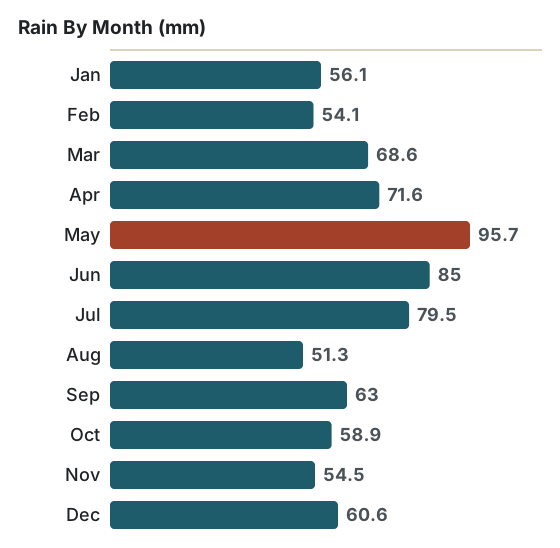
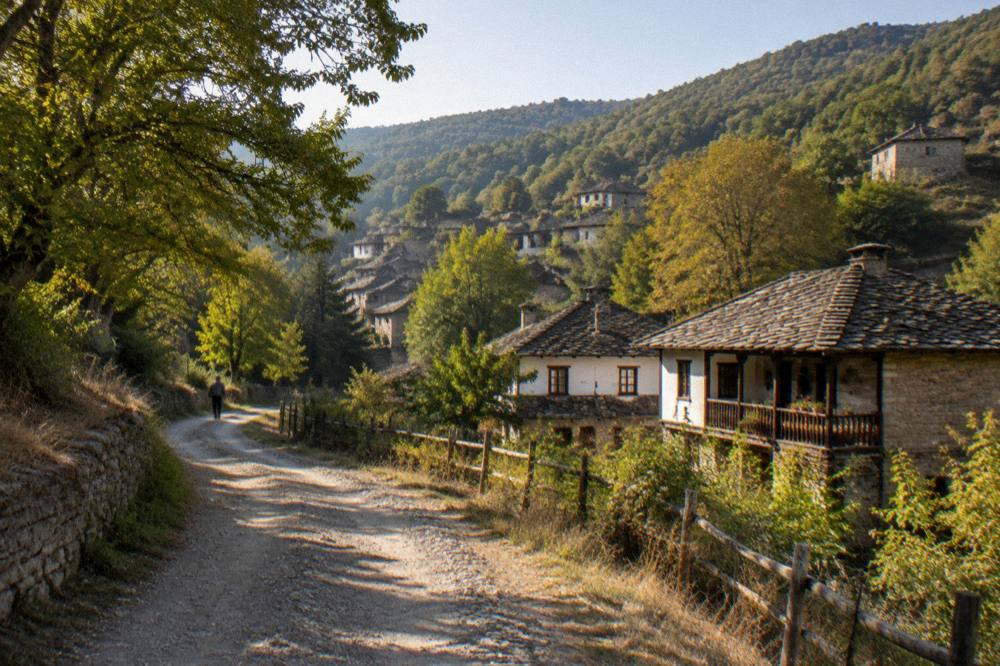
The climate of the region, per the ERA5 reanalysis for 1991-2020, gives mean daily highs of 28.1 C in August and 4.9 C in January with a mean daily low of -3.8 C in January, so late spring through early autumn is the comfortable window for a village walk, and May and June carry the highest monthly rainfall, 95.7 mm and 85.0 mm respectively, which matters on unpaved village lanes.
The full monthly picture for Veliko Tarnovo, the reference point for the whole region, is below. These are modelled normals from a reanalysis grid cell, not a station record, so treat them as planning figures rather than forecasts.
| Month | Mean daily high | Mean daily low | Rain |
|---|---|---|---|
| Jan | 4.9 C | -3.8 C | 56.1 mm |
| Feb | 7.2 C | -2.3 C | 54.1 mm |
| Mar | 11.5 C | 1.4 C | 68.6 mm |
| Apr | 16.9 C | 6.0 C | 71.6 mm |
| May | 21.7 C | 11.1 C | 95.7 mm |
| Jun | 25.4 C | 15.1 C | 85.0 mm |
| Jul | 27.6 C | 17.2 C | 79.5 mm |
| Aug | 28.1 C | 17.1 C | 51.3 mm |
| Sep | 23.3 C | 12.9 C | 63.0 mm |
| Oct | 17.6 C | 8.0 C | 58.9 mm |
| Nov | 11.8 C | 3.1 C | 54.5 mm |
| Dec | 6.1 C | -1.7 C | 60.6 mm |
Two seasonal notes anchor the wider region. The Etar International Fair of Traditional Crafts is reported for 4 to 6 September 2027, its twentieth edition with a focus on blacksmithing, so an early-September trip that includes Etar can coincide with the fair; confirm dates with the museum before planning around it. And winter hours at the Veliko Tarnovo museum sites start on 25 October 2026, which shapes the city end of any cold-weather day. A village walk itself is a fair-weather activity in the hills, and the table above gives the numbers to judge it by: autumn brings 17.6 C mean highs in October against 58.9 mm of rain, while July and August sit above 27 C with the lowest monthly rainfall of the year.
Can You Combine Bozhentsi With Dryanovo Monastery, Gabrovo Or Shipka?
Yes, and the distances make it straightforward: Dryanovo Monastery is about 33 km from Veliko Tarnovo, Tryavna about 42 km, Bozhentsi about 46 km, Etar about 53 km and the Shipka church about 79 km, a chain of stops that rises steadily southward through the same valley system, so a single driving day can reasonably carry three of them and an ambitious day four.
The classic short loop is Dryanovo, Tryavna and Bozhentsi. The longer version continues past Gabrovo and Etar to the Shipka Pass, whose memorial and church guide covers the mountain leg, and the truly long day pushes on toward Buzludzha, about 73 km out, whose monument interior is reported as generally closed to the public, so confirm locally if the building itself matters to you. A Northern Bulgaria road trip guide gathers the full set of options.
| Loop option | Stops in order | Rough scale |
|---|---|---|
| Short loop | Dryanovo Monastery, Tryavna, Bozhentsi | three stops, about 33 to 46 km out |
| Classic loop | Tryavna, Bozhentsi, Etar | three stops, about 42 to 53 km out |
| Long loop | Dryanovo, Tryavna, Bozhentsi, Etar, Shipka | five stops, out to about 79 km |
Westward alternatives exist too: Emen Canyon, the gorge of the Negovanka river with 90 m sheer cliffs at Lower Boaz, lies about 20 km west of the city per the municipal tourism site, and Krushuna Falls about 79 km out. Those belong to a different loop, covered in the Emen Canyon guide, and do not pair naturally with the Gabrovo-direction villages.
Is Bozhentsi Worth It If You Have Already Seen Veliko Tarnovo's Old Town?
Bozhentsi offers something the city cannot: a protected village ensemble in quiet hills rather than an urban old town on a river meander, and at about 46 km it is close enough to justify as a contrast even after days spent in Varosha and on Gurko Street. Whether it beats a second museum in the city depends on appetite for rural silence over curated exhibits, and the honest answer is that the two experiences do not substitute for each other.
Veliko Tarnovo's own Revival quarter is covered in the Varosha old town guide and the Arbanasi guide, and the museum-grade version of the period sits in the city's house museums, Sarafkina House of 1861 among them, at 5.11 euro adult per the museum's price list. Bozhentsi is the countryside counterpart: no meander, no fortress hill, just houses and hills.
For travellers who like a structured city day, the Regional Museum of History and the Hadzhi Nikoli Inn fill an afternoon, and the Illusions museum admission ticket is a family-friendly booked option in the centre. The village day and the museum day are simply different products; a two-night stay fits one of each.
Common Questions About Bozhentsi
How far is Bozhentsi from Veliko Tarnovo?
Bozhentsi is about 46 km by road from central Veliko Tarnovo, computed on the public OpenStreetMap router, reached via the Gabrovo and Tryavna direction.
Can you reach Bozhentsi by public transport?
There is no train line to the village. Buses run from Veliko Tarnovo toward Gabrovo and Tryavna, and connections onward are limited, so a car, a taxi or an organised day trip is the practical option.
Does Bozhentsi charge admission?
No ticket price for the village is published on a primary page. Check locally or with your accommodation before visiting; the confirmed paid attraction on the same loop is Etar, at 7.16 euro adult per its admission page.
What is the best combination with Bozhentsi?
Tryavna at about 42 km and Etar at about 53 km sit on the same loop, and Dryanovo Monastery at about 33 km makes a natural first stop coming out of Veliko Tarnovo.
When is the Etar crafts fair?
The International Fair of Traditional Crafts at Etar is reported for 4 to 6 September 2027, its twentieth edition, with a focus on blacksmithing. Confirm the dates with the museum closer to the time.
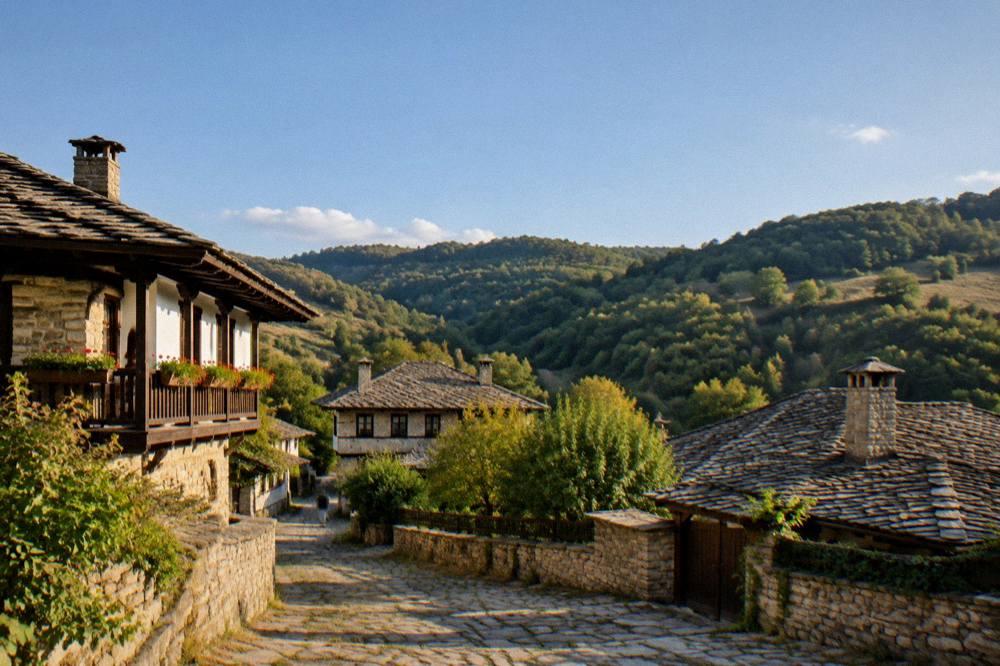
A day built around Bozhentsi ends where it began, in the hills between Gabrovo and Tryavna, with the houses of the reserve doing the work that a museum does elsewhere on the loop. Pair it with Etar for the printed programme and the crafts, keep Tryavna for the town atmosphere, and leave Veliko Tarnovo's fortress and churches for a separate morning: the region rewards spreading its Revival architecture across more than one day.