Bucharest And Veliko Tarnovo: Crossing The Danube At Ruse
Bucharest sits about 179 road km from Veliko Tarnovo, and the crossing at Ruse turns the two cities into one of the easiest international pairings in the region. This page lays out the transport, the sights and the seasons.
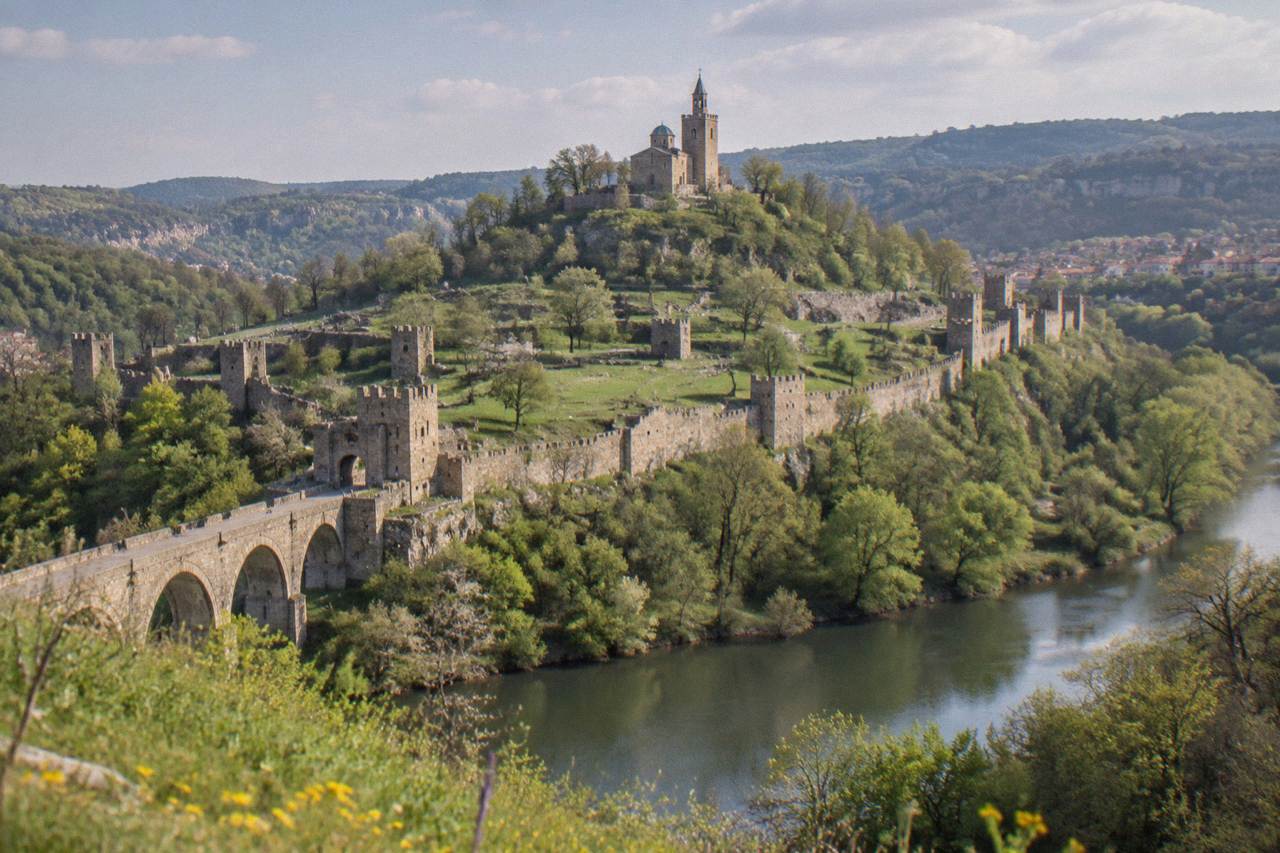
Bucharest lies about 179 road km from Veliko Tarnovo, with direct buses taking about 3 h 50 min to 4 h 15 min and organised day trips covering the whole route. Veliko Tarnovo is an inland city on the Yantra river in Bulgaria, the capital of the Second Bulgarian Kingdom for more than two centuries, and its core sights are Tsarevets Fortress, Trapezitsa and the village of Arbanasi.
Bucharest and Veliko Tarnovo sit about 179 road km apart, close enough that the Romanian capital works as a base for a day in Bulgaria's medieval capital. The route runs south across the Danube at Ruse, then climbs into the Balkan range foothills to a city built in the meanders of the Yantra river. Veliko Tarnovo has no airport with scheduled flights, so every traveller from Bucharest arrives by road or by rail, and the choice between a direct bus, a train with changes and an organised day trip shapes the whole outing. This page sets out the distances, the transport options, the sights that fit a single day and the seasons, in the order a planner needs them.
How Far Is Bucharest From Veliko Tarnovo?
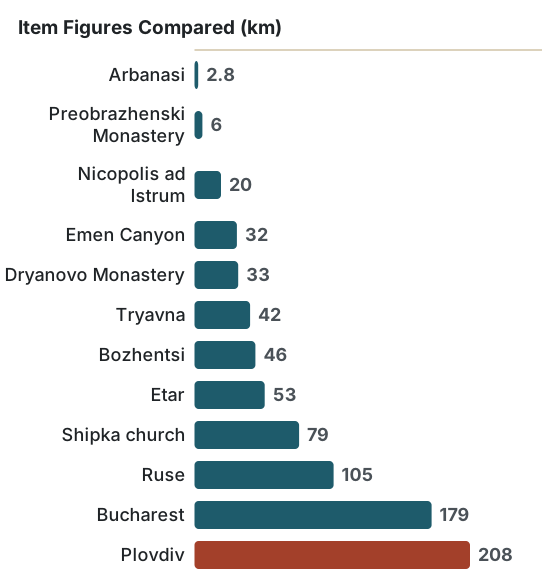
Bucharest lies about 179 road km from the centre of Veliko Tarnovo, measured on the road network through the Danube crossing at Ruse, and the same route places Ruse itself about 105 km from the city. Sofia is about 223 km away and Plovdiv about 208 km, which makes Bucharest the closest of the three big-city bases. Veliko Tarnovo is an inland city in Bulgaria on the Yantra river, with no sea coast, and it was the capital of the Second Bulgarian Kingdom for more than two centuries.
Those figures come from route computation on the Open-Meteo mapped road network, so treat each one as "about" and expect the border crossing to add time of its own. The geography rewards the trip in both directions. Romania and Bulgaria have both been full Schengen members since 1 January 2025, so the Danube bridge at Ruse is an internal Schengen crossing, though the Entry/Exit System has run at all external Schengen borders since 10 April 2026 and border procedure anywhere in the region can change.
The distances matter for planning because they decide what fits in a day. A round trip from Bucharest to Veliko Tarnovo and back is a full-day commitment, and the organised trips on the roster are built around that reality. Add-ons inside Bulgaria, from Arbanasi at 2.8 km straight-line to the Etar museum at 53 km, stack on top only when the itinerary allows.
| From Veliko Tarnovo centre | Road distance |
|---|---|
| Arbanasi | 2.8 km straight-line |
| Preobrazhenski Monastery | about 6 km |
| Nicopolis ad Istrum | about 20 km |
| Emen Canyon | about 32 km |
| Dryanovo Monastery | about 33 km |
| Tryavna | about 42 km |
| Bozhentsi | about 46 km |
| Etar | about 53 km |
| Shipka church | about 79 km |
| Ruse | about 105 km |
| Bucharest | about 179 km |
| Plovdiv | about 208 km |
| Sofia | about 223 km |
For context on what awaits after the crossing, the Ruse day-trip guide covers the Bulgarian side of the bridge, and the answer page Is Ruse Bulgaria Worth Visiting? weighs a stop there on its own merits.
How Do You Travel From Bucharest To Veliko Tarnovo Without A Car?
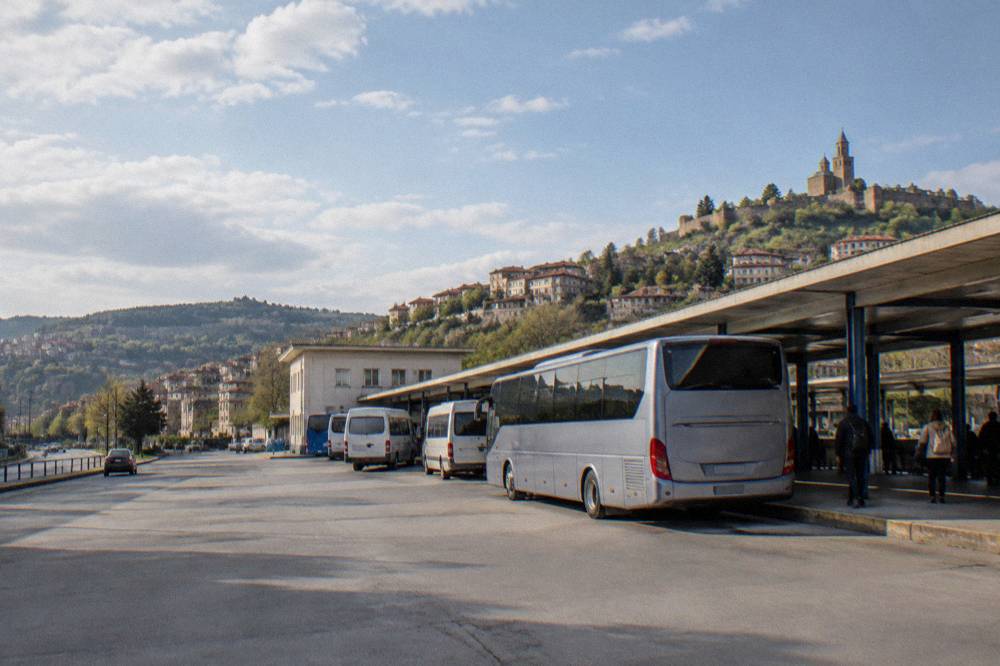
Direct buses run from Bucharest to Veliko Tarnovo in about 3 h 50 min to 4 h 15 min, arriving at the Yug bus station at 74 Hristo Botev Blvd in the centre, and there is no useful direct train: the rail route runs through the Gorna Oryahovitsa junction about 10 km from the centre. The direct Ruse to Veliko Tarnovo train takes 2 h 25 min, plus a 2 h 33 min connection via Gorna Oryahovitsa.
The bus is the practical choice for the international leg. Several operators run the direct service, and times of 3 h 50 min to 4 h 15 min are reported for the route. Fares move with operator and date, so check the current price when you book. The train alternative from Bucharest means crossing into Bulgaria first, reaching Ruse, and then using the Bulgarian domestic service, whose early departure times make a day return from Bucharest awkward. Rail times change with each timetable revision, so treat the figures above as the current read rather than a fixed schedule.
Comparing the ways to cover the international leg? Book a transfer from Bucharest.
Once in the city, everything in the core sits close together. The Asenevtsi Monument, Samovodska Charshiya, General Gurko Street and the Varosha quarter are public spaces, free and open at all hours, and the walking tours on the roster are paid products. Bulgaria has used the euro since 1 January 2026, at the fixed rate of 1.95583 lev per euro, so there is no currency exchange to plan between Romania and Bulgaria only if you hold lei, which you will still need in Bucharest.
| Route | Service | Time | Note |
|---|---|---|---|
| Bucharest to Veliko Tarnovo | direct bus | about 3 h 50 min to 4 h 15 min | arrives at Yug station, 74 Hristo Botev Blvd |
| Ruse to Veliko Tarnovo | direct train | 2 h 25 min (04:49 departure) | times change with the timetable |
| Ruse to Veliko Tarnovo | train via Gorna Oryahovitsa | 2 h 33 min (06:20 departure) | junction about 10 km from the centre |
| Sofia to Veliko Tarnovo | train with changes | fastest 4 h 33 min | no direct train exists |
| Varna to Veliko Tarnovo | direct train | 3 h 53 min (05:00 departure) | others change at Gorna Oryahovitsa |
The domestic rail detail matters for anyone stringing cities together. There is no direct train from Sofia to Veliko Tarnovo at all: every trip changes, usually at Gorna Oryahovitsa, with the fastest connections at 4 h 33 min and 4 h 51 min and the rest taking 6 to 10 hours. The Bucharest to Sofia via Veliko Tarnovo itinerary pieces the whole corridor together, and the nearest airport guide explains why Otopeni, at about 205 road km, is one of the three realistic gateways to the city.
Should You Book A Bucharest To Veliko Tarnovo Day Trip?
An organised day trip is the only way to see Veliko Tarnovo from Bucharest without either an overnight stay or a rigid bus schedule, and the roster carries more than a dozen of them, shared and private, all built as full-day outings. The featured option on this page is the shared full-day trip that covers the drive, the border and the city in one booking. Anyone preferring a private car with a dedicated driver-guide has several products at higher per-person fares.
The shared full-day trip suits a first visit: it handles the crossing, parks close to the old town and leaves the day free for the fortress and the viewpoints. Private versions add flexibility on timing and stops, and some extend the route to Arbanasi or the Basarabovo rock monastery. Product prices, ratings and durations render on each listing rather than on this page, so compare the live listings for the current figures. The day-trip tours category gathers the Bucharest departures in one place.
The featured trip runs as a shared full-day outing from Bucharest.
If you would rather assemble the day yourself, the pieces are simple: a direct bus each way, a fortress ticket bought on arrival at the museum's ticket office or online, and a pair of comfortable shoes for the hill. The trade is time at the border and at the station against the freedom to linger past the last departure. For the full list of paid guided options, see things to do in Veliko Tarnovo, and for the shared full-day trip itself, Check availability on the tour page.
What Do You See In Veliko Tarnovo On A Day From Bucharest?
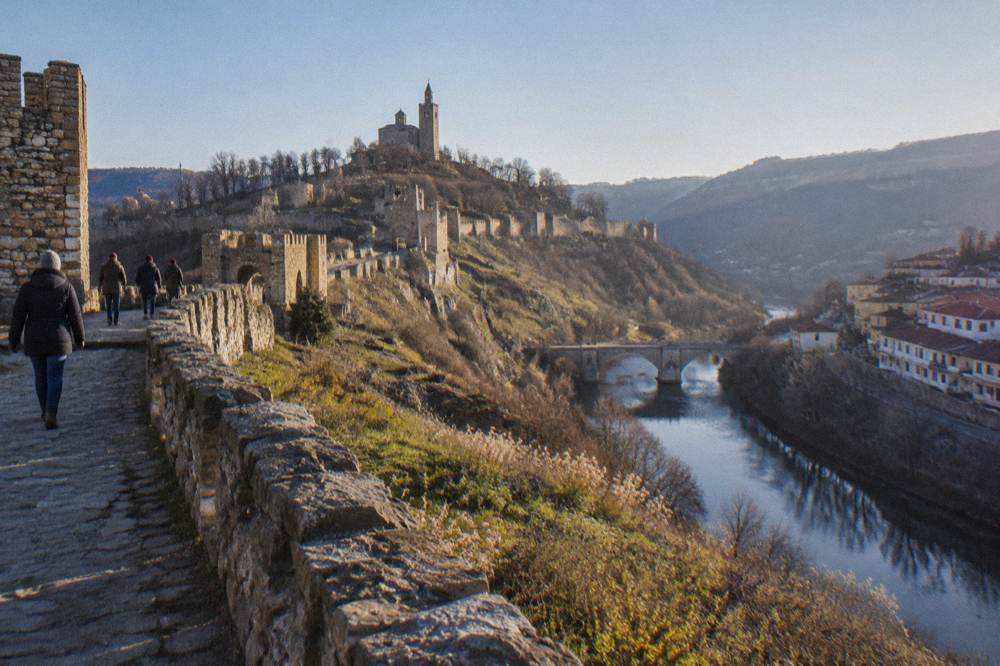
Tsarevets Fortress is the anchor sight, open daily with an adult ticket of 7.67 euro and a family ticket of 10.23 euro for parents with up to three children aged 7 to 18, per the Regional Museum of History's ticket page. The Patriarchal Cathedral of the Holy Ascension on the hill is inside the same ticket. Below the fortress, the Asenevtsi Monument, Samovodska Charshiya and the Varosha quarter are free public spaces, and Arbanasi lies 2.8 km from the centre.
The fortress hours follow the museum's seasonal blocks. From April to September it opens at 08:00 and closes at 20:00 with last entry at 19:00; in October it runs 09:00 to 18:00 with last entry at 17:00; and winter hours start on 25 October 2026 with entry 09:00 to 16:00 and closing at 17:00. There is no closing day, but a Tuesday maintenance slot from 09:10 to 11:00 is listed on the ticket page, worth knowing if your day trip lands on a Tuesday. The cathedral keeps its own hours inside the season, 09:00 to 19:00 in summer, 09:15 to 17:30 in October and 09:15 to 16:45 in winter. Everything else covered here is indexed on Veliko Tarnovo Travel Guide.
Beyond the hill, the museum network spreads across the centre. The Church of the Holy Forty Martyrs, where Bulgaria's independence was declared on 22 September 1908, charges 5.11 euro with a family ticket at 7.67 euro, and holds the marble victory column of Ivan Asen II from 1230, raised after the Battle of Klokotnitsa. The Archaeological Museum, the Konak museum of 1872, the Prison Museum and Sarafkina House of 1861 each charge 5.11 euro. A two-day pass covering ten museum sites costs 20.45 euro for an individual, valid 1 April to 30 November, with a family version at 25.56 euro.
| Site | Adult ticket | Family ticket |
|---|---|---|
| Tsarevets Fortress | 7.67 euro | 10.23 euro |
| Church of the Holy Forty Martyrs | 5.11 euro | 7.67 euro |
| Archaeological Museum | 5.11 euro | 7.67 euro |
| Trapezitsa | 5.11 euro | 7.67 euro |
| Church of the Nativity, Arbanasi | 7.67 euro | 12.78 euro |
| Konstantsalieva House, Arbanasi | 7.67 euro | 12.78 euro |
| Nicopolis ad Istrum | 5.11 euro | Not published |
Two season traps bite hard on a day trip. Trapezitsa, the second fortress hill, closes to visitors entirely from 30 November 2026 to 31 March 2027, and its funicular stops for the season on 31 October 2026, reopening 1 May. The Museum of New and Newest History is temporarily not accepting visitors. If your Bucharest outing falls between late October and late March, build the day around Tsarevets, the Forty Martyrs church and the free streets, and leave Trapezitsa for another visit.
The evening question is the Sound and Light show on Tsarevets. It runs on announced evenings only, with no fixed schedule, and watching from Tsar Asen I Square in front of the fortress is free, while paid tickets buy a seat on the panoramic platform. Because the dates are announced rather than fixed, a day trip cannot promise it: check the show's calendar before committing to a late bus back to Bucharest.
What Does A Day Trip From Veliko Tarnovo Itself Add?
Once you are based in Veliko Tarnovo rather than day-tripping in from Bucharest, the surrounding country opens up: Nicopolis ad Istrum, a Roman site on the UNESCO Tentative List since 1984, lies 20 km out with a 5.11 euro ticket, Emen Canyon with its 90 m sheer cliffs at Lower Boaz lies about 20 km west, and the Revival-era towns of Tryavna at 42 km and Bozhentsi at 46 km stack into a second day.
The pattern works outward. Nearest come the monasteries, Preobrazhenski at about 6 km and the Holy Trinity Monastery at about 7 km, then Kilifarevo Monastery at 17 km. The Kilifarevo history museum, 11 km south, opens by prior request on working days and is closed 30 November 2026 to 30 March 2027. Further afield lie Bacho Kiro cave at 31 km, Dryanovo Monastery at 33 km and, on the far side of the Shipka pass at 73 km, the Buzludzha monument, whose interior is reported as generally closed, so confirm locally before planning an inside visit.
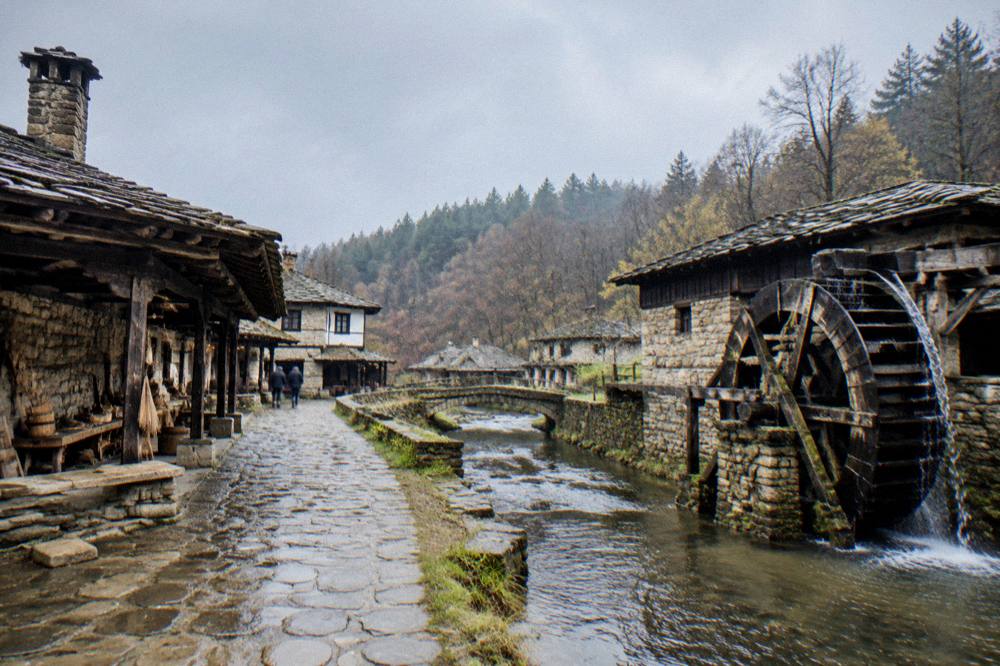
Opening hours and ticket prices for the secondary day-trip sights, including Bacho Kiro, Krushuna Falls, Devetashka Cave, Tryavna, Bozhentsi, Shipka and the Kazanlak museums, are not printed on this page: check the current price on the official ticket page before booking. Etar charges 7.16 euro adult, 3.07 euro for pupils and students, 4.09 euro for pensioners, with children under 7 free, and it opens all year with no days off. The Etar guide, the Tryavna guide and the Dryanovo Monastery and Bacho Kiro guide carry the detail for each.
| Day-trip sight from Veliko Tarnovo | Distance | Entry |
|---|---|---|
| Nicopolis ad Istrum | about 20 km | 5.11 euro |
| Emen Canyon | about 20 km west | check locally |
| Etar | about 53 km | 7.16 euro adult |
| Ivanovo rock churches | over 100 km | check locally |
| Kazanlak Thracian Tomb | about 98 km | check locally |
Can You Combine Bucharest, Veliko Tarnovo And Sofia In One Trip?
Yes, and the corridor makes it natural: Bucharest at one end, Sofia at about 223 km from Veliko Tarnovo at the other, and the medieval capital in between. The rail wrinkle is that the Sofia leg has no direct train, so buses, about 3 to 3.5 hours with several operators from the Yug station side, carry that segment. The full itinerary guide on this site covers the whole sequence end to end.
Travellers who fly into Otopeni and out of Sofia avoid backtracking entirely. The same logic works in reverse for Bucharest-bound itineraries, and Ruse at 105 km makes a natural midway stop on the road leg. On the Bulgarian side the pairing extends south to Plovdiv at about 208 km and east to Varna on the coast, which has 16 direct buses a day and one direct train to Veliko Tarnovo. The Bucharest to Sofia via Veliko Tarnovo itinerary covers the whole route, and the Sofia guide and the Plovdiv guide detail both ends.
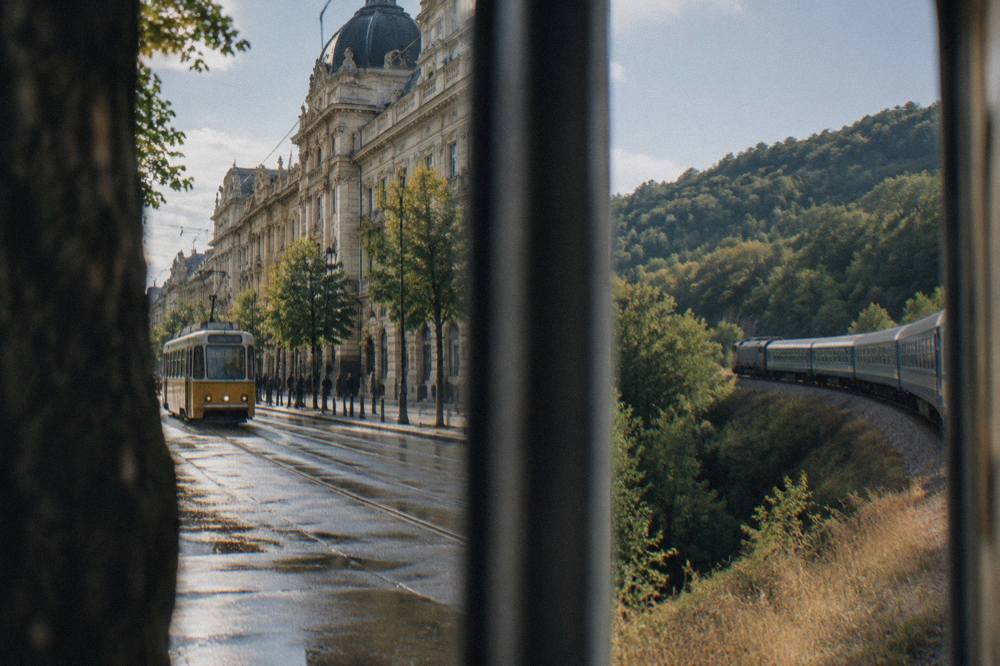
For anyone combining the UNESCO list with the trip, the nearest inscribed sites to Veliko Tarnovo are the Rock-Hewn Churches of Ivanovo, over 100 km away, and the Thracian Tomb of Kazanlak at about 98 km, both inscribed in 1979. Nothing in Veliko Tarnovo itself is inscribed or on the Tentative List, though Nicopolis ad Istrum, 20 km out, has been on the Tentative List since 1984. The Ivanovo rock churches guide covers the detour.
When Is The Best Season For The Bucharest To Veliko Tarnovo Crossing?
The climate is continental, with an ERA5 reanalysis, 1991-2020, mean daily high of 28.1 C in August and 4.9 C in January, a mean daily low of -3.8 C in January, and the highest monthly rainfall total in May at 95.7 mm against the lowest in August at 51.3 mm.
Summer brings long, warm days and the full 08:00 to 20:00 fortress hours from April to September; winter shortens the hours from 25 October 2026 and closes Trapezitsa entirely from 30 November 2026.
The summer numbers favour the crossing. July averages a 27.6 C mean daily high and June 25.4 C, with rainfall of 79.5 mm and 85.0 mm respectively, so May, at 95.7 mm, is the month with the highest rain total in the table and August, at 51.3 mm, the lowest. Autumn stays workable, 17.6 C mean daily high in October with 58.9 mm of rain, but the 25 October 2026 switch to winter hours, entry 09:00 to 16:00 at the fortress, trims a day trip's margins. Winter itself, 6.1 C mean daily high in December and 4.9 C in January, suits the indoor museums and the Christmas-season streets.
| Month | Mean daily high | Mean daily low | Rain |
|---|---|---|---|
| January | 4.9 C | -3.8 C | 56.1 mm |
| April | 16.9 C | 6.0 C | 71.6 mm |
| May | 21.7 C | 11.1 C | 95.7 mm |
| July | 27.6 C | 17.2 C | 79.5 mm |
| August | 28.1 C | 17.1 C | 51.3 mm |
| October | 17.6 C | 8.0 C | 58.9 mm |
| December | 6.1 C | -1.7 C | 60.6 mm |
The events calendar adds reasons to time the trip. The city holiday falls on 22 March, the International Folklore Festival ran 18 to 25 July in 2026, and Arbanasi Summer Music ran 15 to 25 July 2026 in the village churches. Independence Day on 22 September brings a liturgy at the Forty Martyrs church, a reenactment and a flag ritual on Tsarevets, with Sound and Light performances around the date. Nothing in the city is timed to a fixed nightly schedule, so treat each as an announced date and check the calendar.
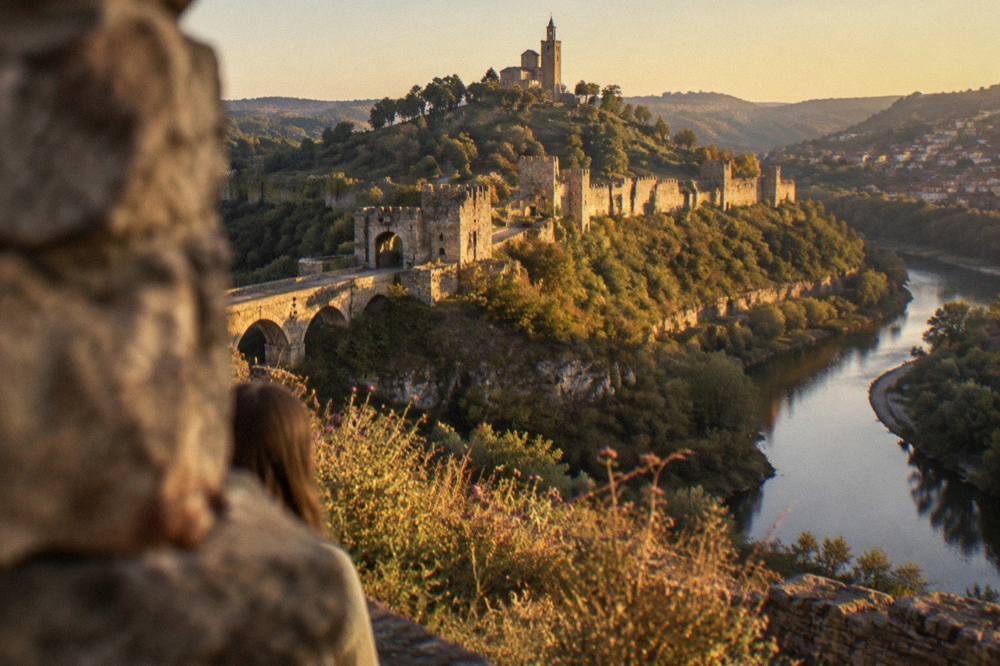
For travellers who decide to stay a night instead of rushing back, a second day unlocks the paid museums, Arbanasi and the day-trip ring, and the self-guided options below cover the city at your own pace. Whatever the season, the pairing of a European capital with a medieval one, separated by one river crossing, holds up as one of the more practical two-country outings in the region.
Common Questions About Travelling From Bucharest To Veliko Tarnovo
How far is Bucharest from Veliko Tarnovo?
About 179 road km through the Danube crossing at Ruse, which itself lies about 105 km from Veliko Tarnovo.
Is there a direct bus from Bucharest to Veliko Tarnovo?
Yes, direct buses take about 3 h 50 min to 4 h 15 min and arrive at the Yug bus station at 74 Hristo Botev Blvd in the centre. Check the current fare when booking.
Is there a direct train from Bucharest to Veliko Tarnovo?
There is no useful direct train. The rail route passes through Ruse and the Gorna Oryahovitsa junction about 10 km from the centre; the direct Ruse to Veliko Tarnovo train takes 2 h 25 min.
Do I need a different currency in Bulgaria?
Yes. Romania uses the leu, while Bulgaria has used the euro since 1 January 2026, at the fixed rate of 1.95583 lev per euro.
How much does Tsarevets Fortress cost?
7.67 euro for an adult and 10.23 euro for a family ticket covering parents and up to three children aged 7 to 18, per the Regional Museum of History's ticket page.
Can I watch the Sound and Light show on a day trip?
Only if an announced evening performance falls on your date, since there is no fixed schedule. Watching from Tsar Asen I Square is free; check the show's calendar before planning a late return to Bucharest.