Nikopolis Ad Istrum: The Roman City Of Trajan
Nicopolis ad Istrum sits about 20 km north of Veliko Tarnovo, a Roman city founded under Trajan that is now an archaeological reserve with a 5.11 euro ticket and a place on Bulgaria's UNESCO Tentative List since 1984.
Nicopolis ad Istrum is a Regional Museum of History site about 20 km north of Veliko Tarnovo, open April to September 09:00 to 18:00, October 09:00 to 17:00 and November to March 09:00 to 16:30, with an adult ticket at 5.11 euro and winter visits by appointment only.
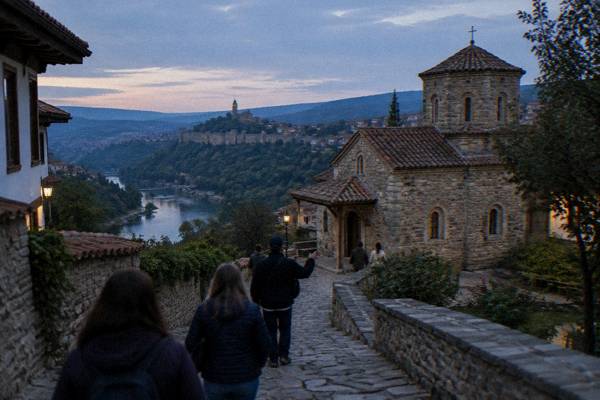
Nikopolis ad Istrum is a Roman archaeological reserve about 20 km north of Veliko Tarnovo, the inland Bulgarian city on the Yantra river that was the capital of the Second Bulgarian Kingdom for more than two centuries from the late 12th century. The ruins sit near the village of Nikyup and are run by the Regional Museum of History, the same operator that runs Tsarevets Fortress and the other museum sites in the city. The adult ticket is 5.11 euro, and the site has been on Bulgaria's UNESCO Tentative List since 1984, which is a waiting list and not an inscription. For travellers building a day out of Veliko Tarnovo, it pairs naturally with the caves, monasteries and river gorges scattered across the same stretch of northern Bulgaria, several of which are covered on the site's things to do in Veliko Tarnovo page.
What Is Nikopolis Ad Istrum?
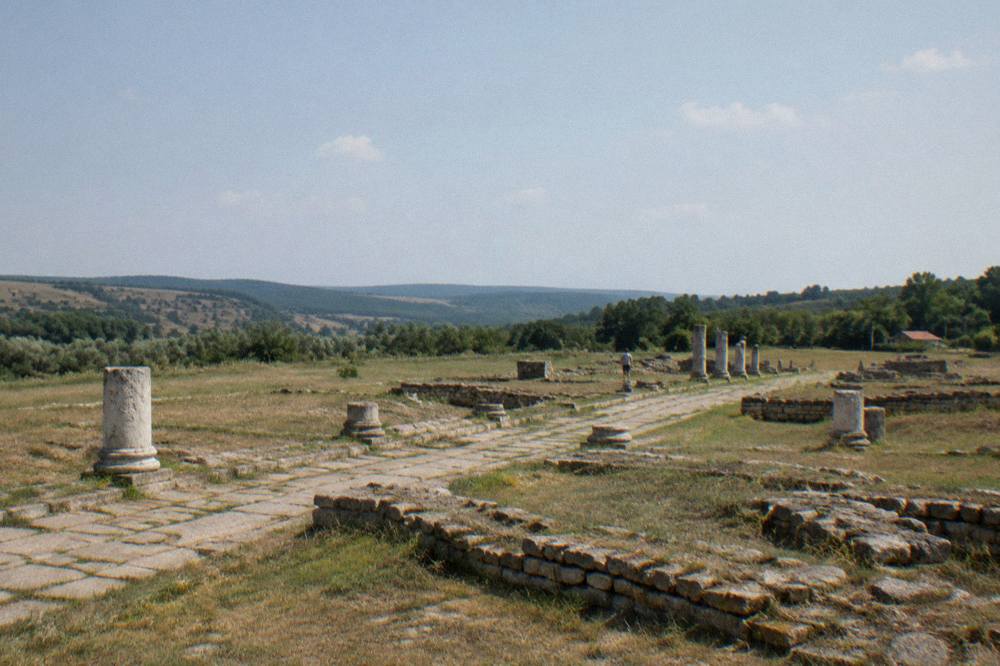
Nikopolis ad Istrum is a ruined Roman city near the village of Nikyup, about 20 km north by road from central Veliko Tarnovo, built as a planned urban settlement in the Roman province of Thrace and named for a victory, "city of victory on the Istrum", the ancient name of the Danube. The site is now an architectural and archaeological reserve operated by the Regional Museum of History in Veliko Tarnovo, and it has stood on Bulgaria's UNESCO Tentative List since 1984.
The name follows a Roman convention: Nicopolis cities were founded to mark military victories, and the "ad Istrum" suffix ties this one to the Danube, the great river north of the site. The Rositsa river runs through the area around Nikyup, and the site sits in open, gently rolling country, a landscape very different from the hill-and-gorge topography of Veliko Tarnovo itself. The Regional Museum of History's catalogue lists the reserve among its sites alongside Tsarevets, Trapezitsa and the city's medieval churches, which is the practical connection for visitors: one operator, one ticketing system, and one set of seasonal opening blocks.
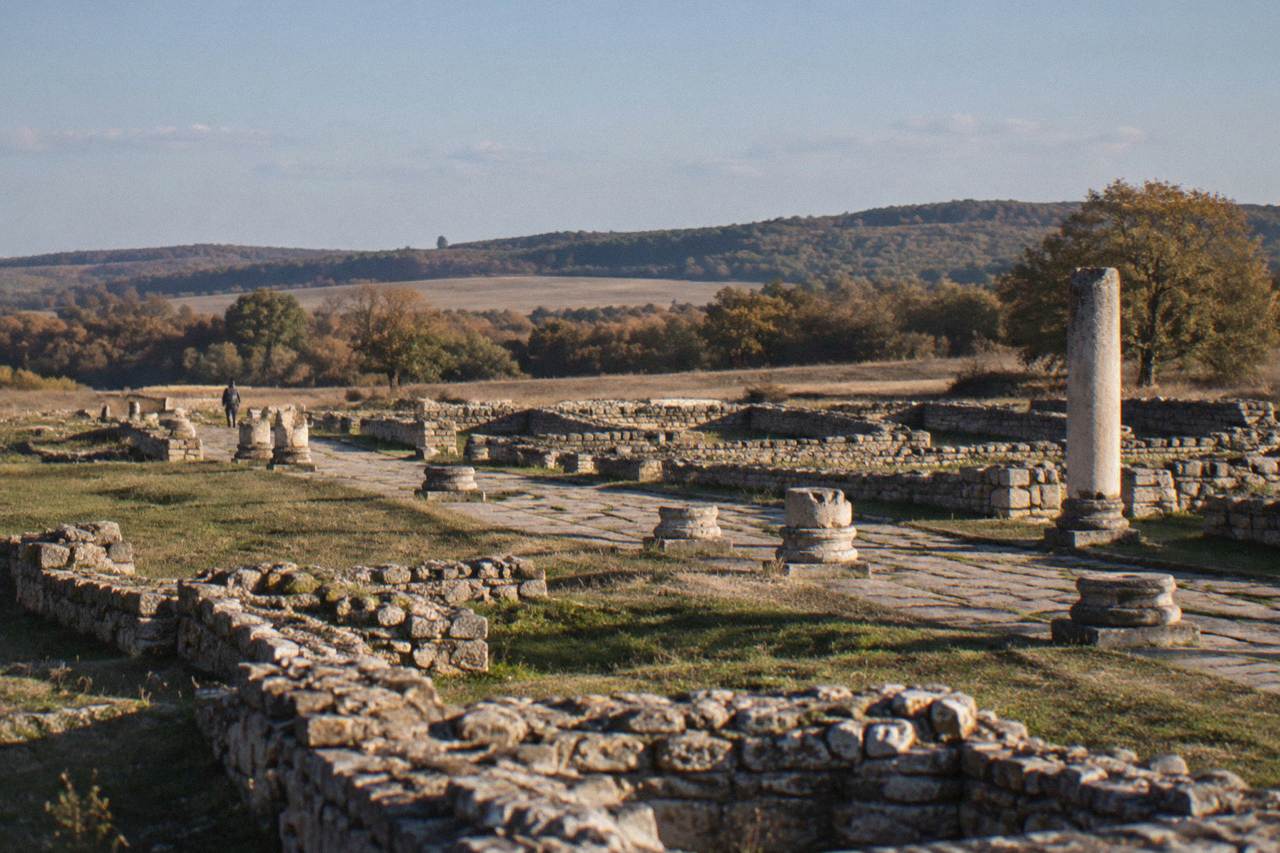
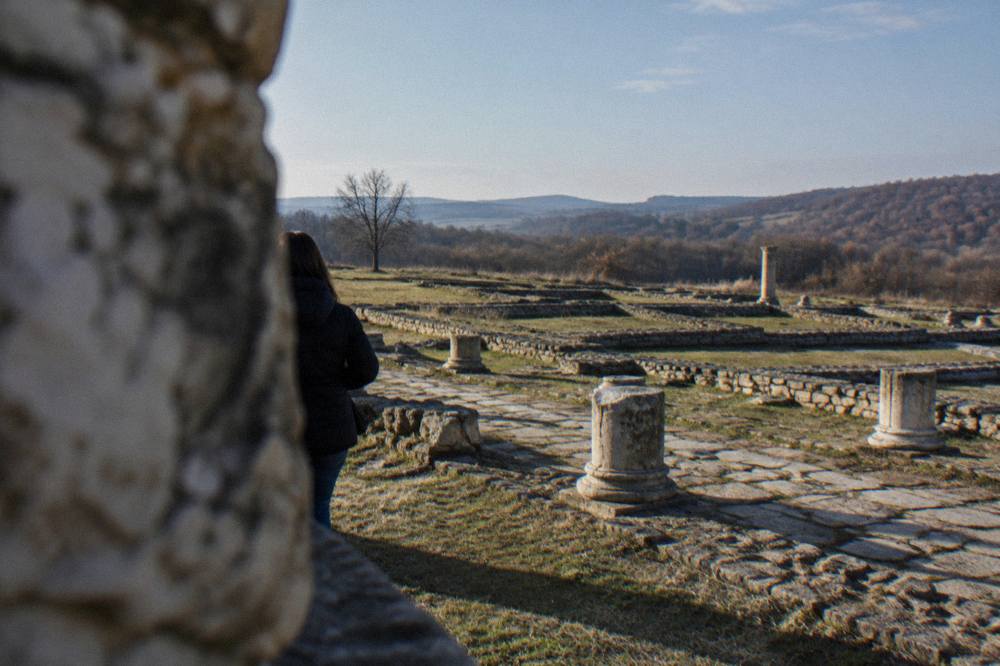
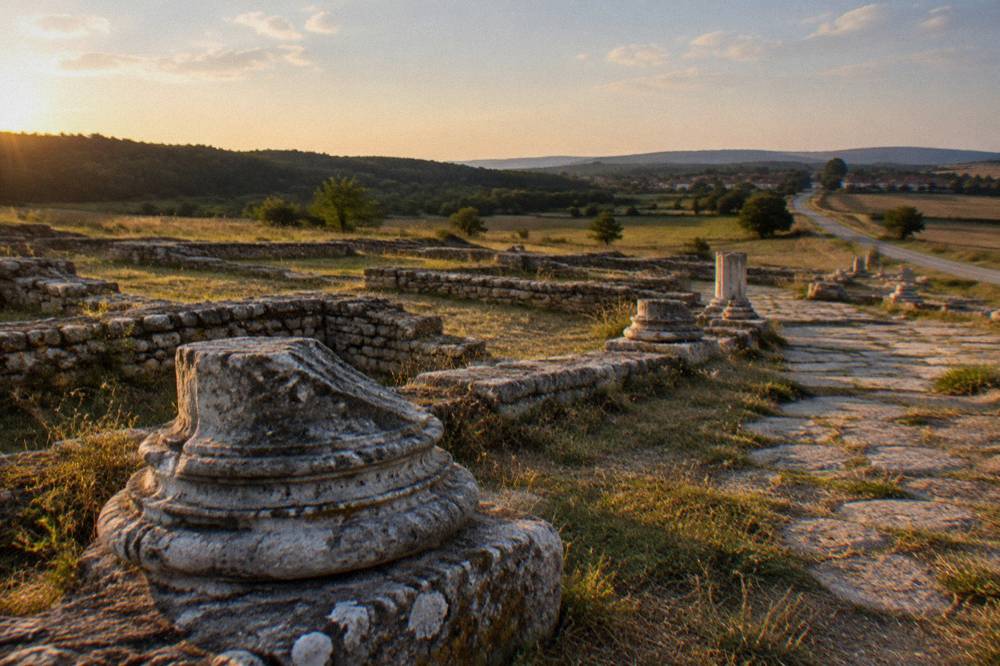
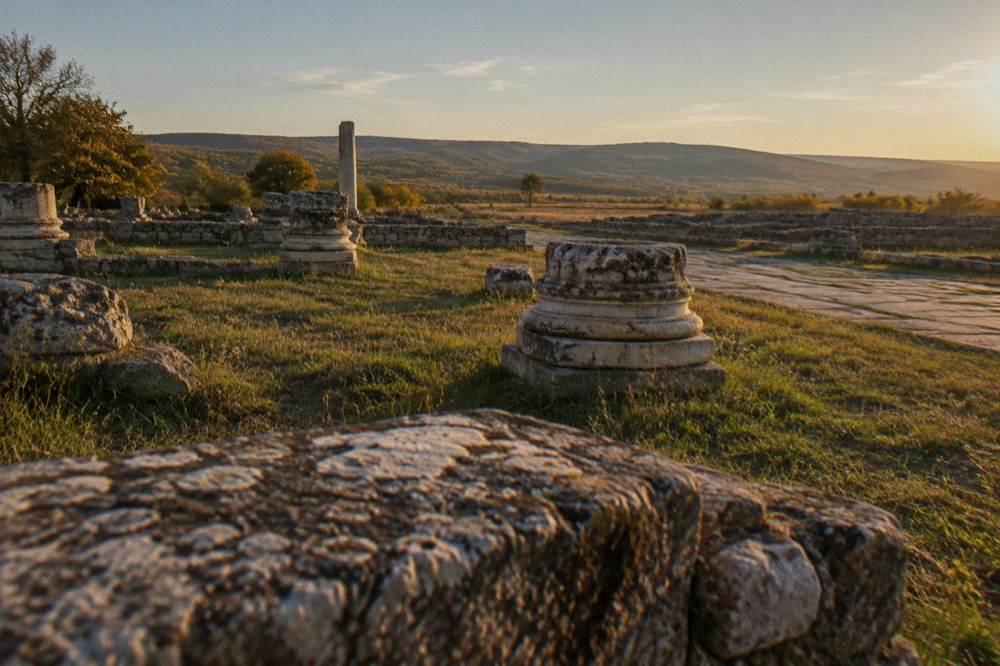
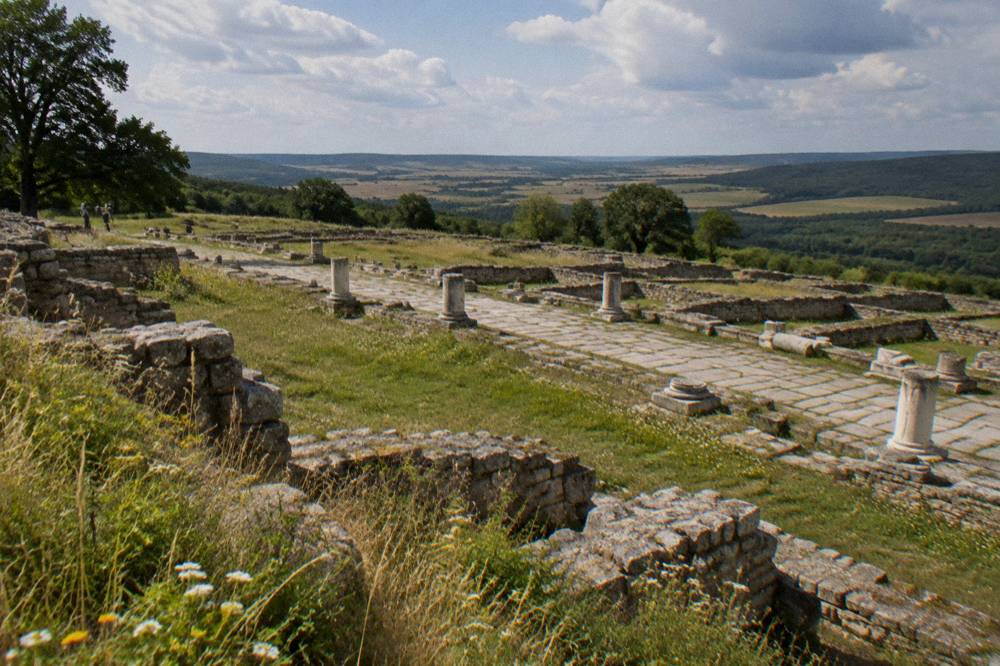
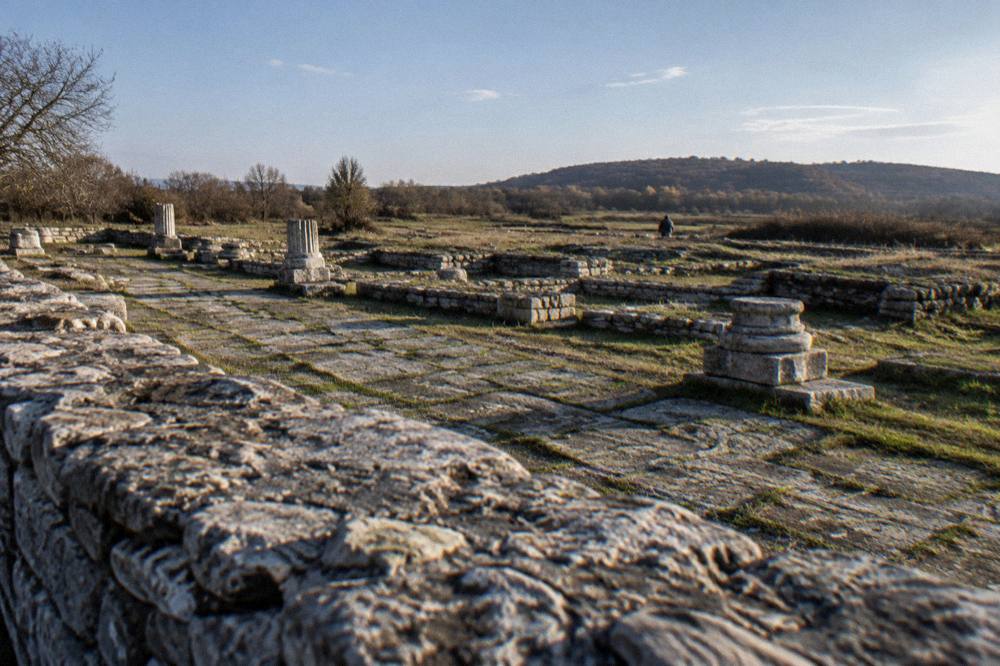
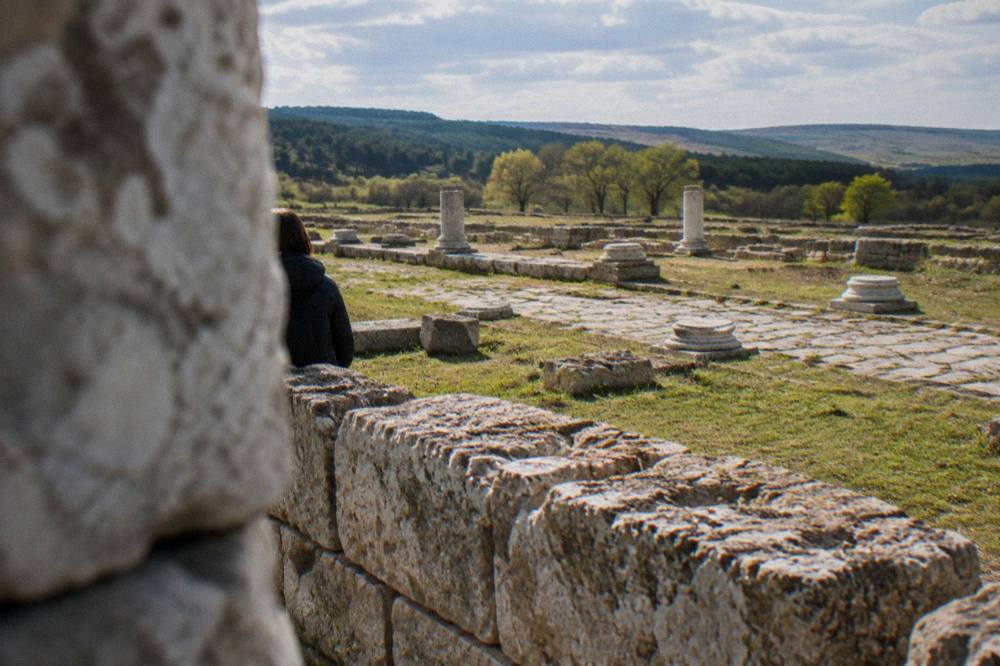
What survives at ground level is the outline of a Roman city: street grids, foundation walls and the footprints of public buildings. The museum does not publish a room-by-room or building-by-building description on its ticket page, so the honest approach is to go expecting foundations and open ground rather than standing monuments. Photography of exposed stone in low morning or late afternoon light rewards the trip. Nothing in the city of Veliko Tarnovo itself is on the UNESCO World Heritage List or the Tentative List; Nicopolis ad Istrum is the nearby property on the Tentative List, and the nearest inscribed sites are the Rock-Hewn Churches of Ivanovo (1979) and the Thracian Tomb of Kazanlak (1979).
What Are The Opening Hours And Ticket Prices At Nikopolis Ad Istrum?
Per the Regional Museum of History's catalogue, Nicopolis ad Istrum is open April to September from 09:00 to 18:00, in October from 09:00 to 17:00, and from November to March from 09:00 to 16:30, with winter 2025/26 visits by appointment only. The adult ticket is 5.11 euro, printed in euro exactly as the museum sells it since Bulgaria adopted the currency on 1 January 2026.
The three season blocks mirror the museum's city sites, which makes planning easier if Tsarevets is also on the itinerary: the fortress runs April to September 08:00 to 20:00, October 09:00 to 18:00, and winter entry 09:00 to 16:00 with closing at 17:00, with winter hours starting on 25 October 2026. The by-appointment rule for winter visits at Nicopolis ad Istrum is the one detail that changes the shape of a cold-season trip: an unannounced winter arrival risks finding the gate shut, so a call ahead is part of the plan from November to March.
| Season | Hours | Notes |
|---|---|---|
| April to September | 09:00 to 18:00 | Standard season block |
| October | 09:00 to 17:00 | Shorter autumn hours |
| November to March | 09:00 to 16:30 | Winter 2025/26 by appointment only |
For comparison within the same operator's network: Trapezitsa charges 5.11 euro adult with a 7.67 euro family ticket, and Tsarevets charges 7.67 euro adult with a 10.23 euro family ticket. Children under 7 enter free across the museum's sites, and people with permanent disabilities plus an assistant enter free as well.
| Regional Museum of History site | Adult ticket | Family ticket |
|---|---|---|
| Tsarevets Architectural-Museum Reserve | 7.67 euro | 10.23 euro |
| Trapezitsa Architectural-Museum Reserve | 5.11 euro | 7.67 euro |
| Church of the Holy Forty Martyrs | 5.11 euro | 7.67 euro |
| Archaeological Museum | 5.11 euro | 7.67 euro |
| Nicopolis ad Istrum | 5.11 euro | check the ticket page |
Bulgaria has used the euro since 1 January 2026 at a fixed rate of 1.95583 lev per euro, and the museum sells in euro only. The country has been a full Schengen member since 1 January 2025.
How Do You Get To Nikopolis Ad Istrum From Veliko Tarnovo?
Nikopolis ad Istrum lies about 20 road km north of central Veliko Tarnovo, near the village of Nikyup, and the distance is the only travel figure that can be stated with confidence: no drive time, bus frequency or walking time for this exact journey is published in a form that can be quoted. A car, a taxi arranged locally or a guided day trip are the realistic options, and winter visits need an appointment anyway.
The route north from the city crosses the plain toward Nikyup, the same general direction as Gorna Oryahovitsa, whose station is about 10 km from the centre. Public transport to the village level is thin across this part of northern Bulgaria, and the museum's appointment-only winter rule pushes the balance further toward driving or a tour. For visitors without a car, the guided products on this site's roster cover the wider region: the full day waterfalls and caves tour around Veliko Tarnovo reaches the natural sites scattered across the region, and its tour page carries current dates and availability. The simplest complement is the Check availability link beside that tour's own page.
Visitors driving their own car can string the site into a northern loop. Emen Canyon, about 20 km west of Veliko Tarnovo per the municipal tourism site, and the Dryanovo Monastery area, about 33 km away, sit on different arms of the same region, while the Etar Architectural-Ethnographic Complex lies about 53 km to the south and needs its own half of the day. No parking tariff for any of these sites is confirmed, so check locally on arrival.
Want the freedom to run that loop yourself? Book a rental car.
Why Is Nikopolis Ad Istrum On The UNESCO Tentative List?
Nicopolis ad Istrum has been on Bulgaria's UNESCO Tentative List since 1984, which means the state has proposed it for possible World Heritage inscription but the World Heritage Committee has never inscribed it; the nearest inscribed properties in the region are the Rock-Hewn Churches of Ivanovo (1979) and the Thracian Tomb of Kazanlak (1979). Tentative listing brings no funding guarantee and no protection change, only a place in the queue.
The distinction matters in Bulgaria, where casual travel writing often blurs "UNESCO-listed" into "on the list". Nothing in Veliko Tarnovo itself, not Tsarevets, not the Old Town, is inscribed or on the Tentative List. Nicopolis ad Istrum is the candidate in this region, and its 1984 placement makes it one of the older entries on the country's list. For a visitor deciding between the Roman reserve and an inscribed site, the Ivanovo rock-hewn churches (about 128 km away) carry the actual World Heritage badge, while the Kazanlak and Rose Valley trip reaches the 1979-inscribed Thracian tomb about 98 km to the south.
Tentative-list status has no visible effect on the visitor experience at the gate: the ticket is the museum's standard 5.11 euro, the hours follow the museum's season blocks, and the site is presented like any other reserve in the network. The listing is a state-level ambition, not a visitor-facing label.
How Does Nikopolis Ad Istrum Compare With The Other Ruins And Sights Around Veliko Tarnovo?
Around Veliko Tarnovo the museum network offers three tiers: the medieval hilltop reserves in the city itself (Tsarevets at 7.67 euro, Trapezitsa at 5.11 euro), the smaller churches and house museums at 5.11 to 7.67 euro, and the outlying reserves such as Nicopolis ad Istrum at 5.11 euro, while the natural day trips, the caves, canyons and waterfalls, are separate destinations entirely with their own access rules.
The comparison that matters is not quality but context. Nicopolis ad Istrum is the quieter counterpart a short drive north, Roman rather than medieval, open ground rather than a hill fortress. Trapezitsa sits between the two worlds in the city and carries its own calendar quirk: it is closed to visitors from 30 November 2026 to 31 March 2027, and its funicular stops for the season on 31 October 2026. Other pages covering the same trip are gathered on Veliko Tarnovo Travel Guide.
| Site | Period | Adult ticket | Season note |
|---|---|---|---|
| Tsarevets | Medieval, 12th to 14th century capital | 7.67 euro | Winter hours from 25 October 2026 |
| Nicopolis ad Istrum | Roman | 5.11 euro | Winter by appointment only |
| Trapezitsa | Medieval | 5.11 euro | Closed 30 Nov 2026 to 31 Mar 2027 |
| Etar (Gabrovo) | Revival-era open-air museum | 7.16 euro | Open all year, no days off |
The natural sites complete the picture. Emen Canyon, about 20 km west of the city, is a gorge of the Negovanka river with 90 m sheer cliffs at Lower Boaz, per the municipal tourism site. The Dryanovo Monastery and Bacho Kiro cave area lies about 33 km away.
What Is The Best Time Of Year To Visit Nikopolis Ad Istrum?
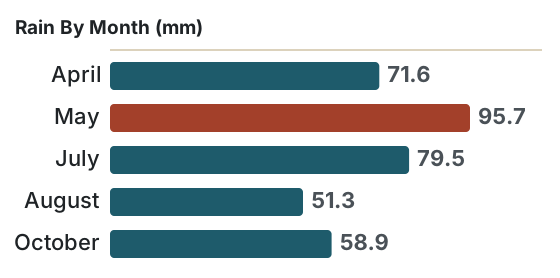
The most practical window is April through September, when the site runs its full 09:00 to 18:00 hours without an appointment, and the climate data supports it: the ERA5 reanalysis for Veliko Tarnovo, 1991 to 2020, puts the mean daily high at 16.9 C in April, 21.7 C in May and 28.1 C in August, with the year's heaviest rain in May at 95.7 mm and the lightest in August at 51.3 mm.
The site is an open field, which makes weather the whole experience. There is no shelter at a Roman street grid, so the rain column of the climate normals deserves as much attention as the temperature column. May is the wettest month in the modelled record at 95.7 mm, June follows at 85.0 mm, and August is the lightest at 51.3 mm. The mean daily high peaks at 28.1 C in August against 4.9 C in January, when the mean daily low drops to -3.8 C. These are modelled grid-cell normals, not a station record, so treat them as a planning range rather than a forecast.
| Month (ERA5 1991-2020) | Mean daily high | Mean daily low | Rain |
|---|---|---|---|
| April | 16.9 C | 6.0 C | 71.6 mm |
| May | 21.7 C | 11.1 C | 95.7 mm |
| July | 27.6 C | 17.2 C | 79.5 mm |
| August | 28.1 C | 17.1 C | 51.3 mm |
| October | 17.6 C | 8.0 C | 58.9 mm |
Autumn compresses the day: October hours drop to 09:00 to 17:00, and from November the appointment rule applies with a 09:00 to 16:30 window. Spring and autumn also align with the city's own calendar, which this site covers in detail on the best time to visit Veliko Tarnovo page.
Can You Combine Nikopolis Ad Istrum With Other Day Trips From Veliko Tarnovo?
Yes, and the geography encourages it: Nikopolis ad Istrum sits about 20 km north of Veliko Tarnovo on a plain that also holds Gorna Oryahovitsa station about 10 km out, while the region's other headline day trips fan out in every direction, Emen Canyon about 20 km west, Dryanovo Monastery about 33 km south, Tryavna about 42 km, Etar about 53 km and the Shipka church about 79 km, each with its own opening pattern.
A one-car day that pairs the Roman city with Emen Canyon in the morning keeps the driving tight, since both sit within about 20 km of the centre on opposite sides of it. A longer loop south takes in Tryavna and the Etar complex near Gabrovo, though Etar's own hours and prices belong on its page. Travellers relying on trains should note that Veliko Tarnovo's rail connections run through Gorna Oryahovitsa: there is no direct train from Sofia, and the fastest journeys on the current timetable take 4 h 33 min, while Ruse has a direct train at 2 h 25 min and Varna one at 3 h 53 min.
The walking option inside the city itself is a different animal: the Veliko Tarnovo walking tour products on this site's roster are paid guided walks, and the open public spaces, Samovodska Charshiya, General Gurko Street, the Varosha quarter and the Asenevtsi Monument, are free to walk on your own at any time.
What Should You Know Before Arriving At Nikopolis Ad Istrum?
Bring the practical basics: the 5.11 euro adult ticket in cash-friendly form, water and sun protection for an open site with no shade, and in the November to March window a prior appointment, since the museum runs winter visits by request only; the emergency number in Bulgaria is 112, the euro is the currency, and no airport with scheduled flights serves this region.
A few specifics settle most questions before the drive out. First, the currency: Bulgaria adopted the euro on 1 January 2026 and the museum sells its tickets in euro, so no lev conversion is needed anywhere in the country now. Second, the border picture: Bulgaria is a full Schengen member since 1 January 2025, and the Entry/Exit System has run at all external borders since 10 April 2026. Third, arrival logistics: the realistic airports are Sofia (about 216 road km), Varna (about 214) and Bucharest Otopeni (about 205), all followed by road or rail into the city, details covered on the how to get to Veliko Tarnovo page.
The site itself asks little of the visitor beyond sturdy shoes. There is no confirmed information about step-free access, lifts or ramps at the reserve, so anyone with mobility needs should raise the question when arranging the visit. Likewise, no on-site facilities are described in the museum's materials, so plan food and water from Veliko Tarnovo or Nikyup rather than assuming a kiosk.
Is Nikopolis Ad Istrum Worth The Trip From Veliko Tarnovo?
For a visitor with a car and an interest in Roman history, the answer leans yes on the site's own terms: it is a genuine planned Roman city on Bulgaria's Tentative List since 1984, reachable in a short drive, with a 5.11 euro ticket and a landscape of foundations that rewards an unhurried hour; for a visitor without transport or without that interest, the city's medieval reserves and the region's caves and canyons offer more per hour of travel.
The decision usually comes down to transport and season. In the April to September window, with a car, the site slots easily into a northern loop and costs less than a cinema ticket. In winter, the appointment rule plus the 09:00 to 16:30 hours plus the continental cold (a January mean daily low of -3.8 C in the modelled normals) thin the case considerably. Travellers staying only one or two nights in the city may prefer to spend that time on Tsarevets, the Sound and Light show on its announced evenings (free to watch from Tsar Asen I Square) and the streets of the old quarters, leaving the Roman reserve for a return trip.
That last pick suits exactly this itinerary: a small-group sweep of North Bulgaria with the driving handled, which is the part of a Nikopolis ad Istrum visit that rewards delegation most.
Common Questions About Nikopolis Ad Istrum
How far is Nikopolis ad Istrum from Veliko Tarnovo?
About 20 km north by road from the centre of Veliko Tarnovo, near the village of Nikyup. No drive time is confirmed for the journey, so allow a generous margin when planning.
What does Nikopolis ad Istrum cost?
The adult ticket is 5.11 euro, per the Regional Museum of History's price list. Children under 7 enter free across the museum's sites, and people with permanent disabilities plus an assistant enter free as well.
Is Nikopolis ad Istrum a UNESCO World Heritage Site?
No. It has been on Bulgaria's Tentative List since 1984, which is a waiting list for possible inscription, not an inscription. The nearest inscribed sites are the Rock-Hewn Churches of Ivanovo and the Thracian Tomb of Kazanlak, both 1979.
When is Nikopolis ad Istrum open?
April to September 09:00 to 18:00, October 09:00 to 17:00, and November to March 09:00 to 16:30, with winter 2025/26 visits by appointment only, per the museum's catalogue.
Can you reach Nikopolis ad Istrum by public transport?
No confirmed bus route serves the village from the city in the figures available. A car, a locally arranged taxi or a guided day trip are the realistic options; the guided products on this site's roster cover the wider region.
What was Nikopolis ad Istrum?
A planned Roman city near the village of Nikyup, named for a victory and tied to the Istrum, the ancient name of the Danube. Today it is an architectural and archaeological reserve run by the Regional Museum of History in Veliko Tarnovo.
The Roman reserve rounds out a Veliko Tarnovo itinerary with a layer of history the medieval capital cannot supply, and the short drive north puts it within reach of any day built around the region's caves, canyons and monasteries.