How To Get To Veliko Tarnovo By Train, Bus And Car
Veliko Tarnovo has no airport of its own, so every arrival runs through Sofia, Varna or Bucharest Otopeni by air, then onward by train, bus or car. Here is what the timetables, station pages and road distances actually say.
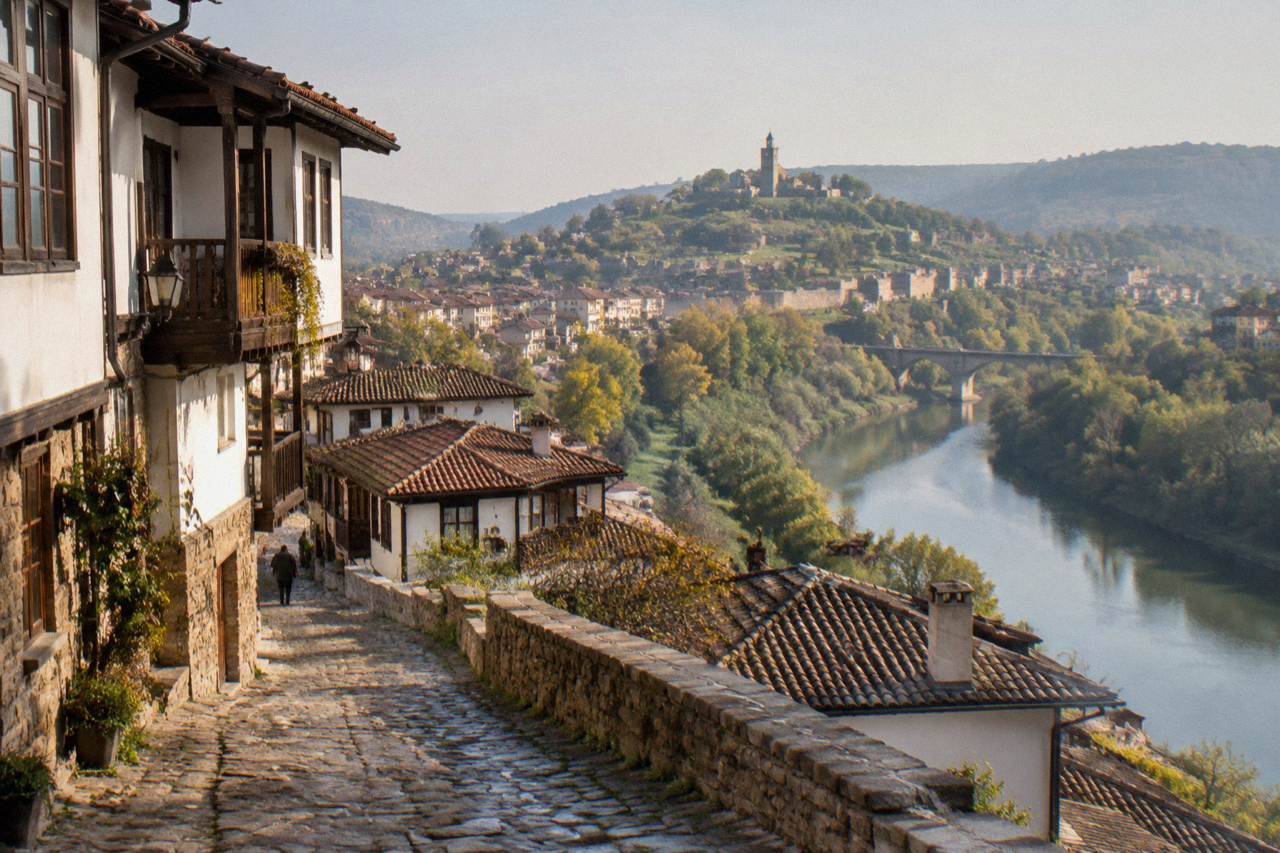
Fly to Sofia, Varna or Bucharest Otopeni, then take a bus or train to Veliko Tarnovo: buses from Sofia run about 3 to 3.5 hours, trains from Sofia change at Gorna Oryahovitsa with the fastest at 4 h 33 min, and driving covers about 216 km from Sofia, 214 km from Varna or 205 km from Bucharest.
Veliko Tarnovo sits inland on the Yantra river in Bulgaria, with no sea coast and no airport of its own, and that shapes every journey in. The city was the capital of the Second Bulgarian Kingdom from the late 12th century to the 14th, and the municipality had an estimated 77,067 residents on 31 December 2025. Arrivals happen through Sofia, Varna or Bucharest Otopeni by air, then onward by train, bus or car, and the differences between those three onward legs are bigger than they look: the rail route from Sofia involves a change, while the bus runs direct. This page lays out what the BDZ timetable, the bus station records and the computed road distances say, route by route, with the winter season traps that change opening hours from late October 2026 folded in. For the sightseeing side of the trip, the things to do in Veliko Tarnovo overview picks up where the arrival logistics end.
How Do You Get To Veliko Tarnovo Without An Airport?
No airport with scheduled flights serves Veliko Tarnovo itself, so every itinerary starts at Sofia (SOF, about 216 road km away), Varna (VAR, about 214 road km) or Bucharest Otopeni (OTP, about 205 road km), followed by a train, bus or car leg. The distances are computed on the OSM road network from the city centre. The airfield at Gorna Oryahovitsa, about 10 km away, has no regular scheduled flights, so flying into it is not a workable option.
That trio of gateways defines the whole planning exercise. Sofia suits arrivals from western and central Europe, Varna serves the Black Sea coast connections, and Bucharest Otopeni works well for travellers already in Romania, with direct buses covering the final stretch in about 3 h 50 min to 4 h 15 min. The choice between them usually comes down to where the flight itself is cheapest and simplest, not to the onward leg, since all three approaches are well within a half-day journey once landed.
The full airport comparison, including transfer options once on the ground, sits on the nearest airport to Veliko Tarnovo guide. What follows here is the route-by-route detail for each onward mode.
Which Airport Should You Fly Into For Veliko Tarnovo?
Sofia is the standard gateway at about 216 road km, Bucharest Otopeni is the shortest drive at about 205 road km, and Varna sits at about 214 road km, so the choice is really about flight price, onward mode and border convenience rather than distance, which differs by barely 11 km across all three. From Otopeni the bus leg is direct; from Sofia both bus and train compete; from Varna the coast connections decide.
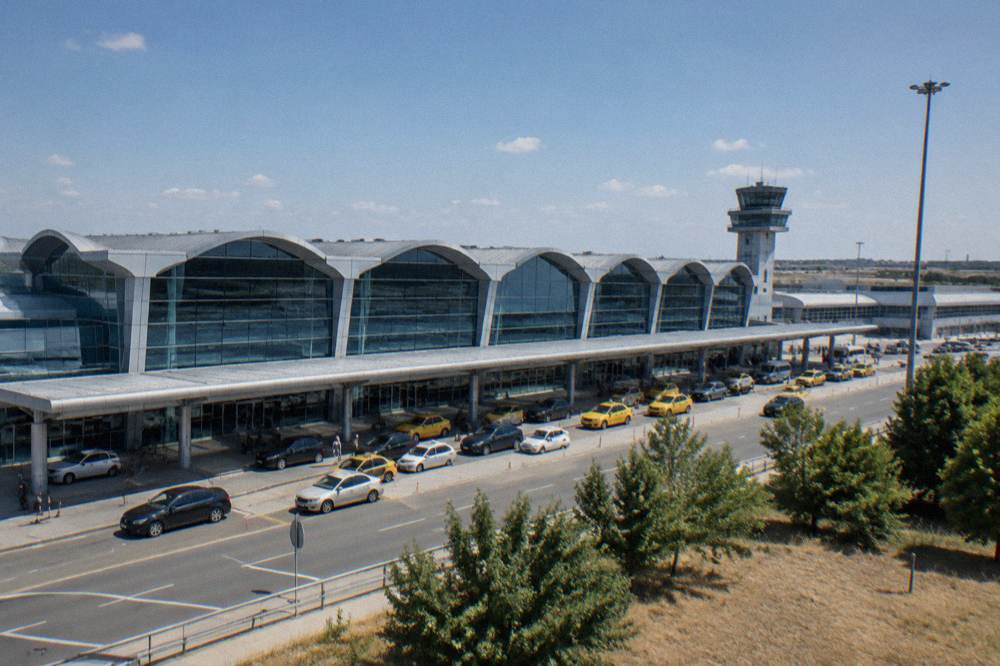
Three practical notes sharpen the comparison. Bulgaria has been a full Schengen member since 1 January 2025, which matters for anyone crossing from Romania by land, and the single European emergency number is 112. Bucharest Otopeni arrivals clear no further border on the drive or bus ride into Bulgaria. Sofia and Varna arrivals stay domestic the whole way, which simplifies car hire, since picking up and dropping off in the same country avoids one-way fees altogether.
| Gateway | Road distance to Veliko Tarnovo | Onward modes from the city |
|---|---|---|
| Sofia (SOF) | about 216 km | direct bus, train with a change, car |
| Varna (VAR) | about 214 km | direct bus, direct train, car |
| Bucharest Otopeni (OTP) | about 205 km | direct bus, car |
The distances above are computed route kilometres from the centre, so treat them as planning figures rather than promises for a specific departure time. No drive time is worth printing here, because road conditions, border flow and stops vary too much for a single number to mean anything.
Once the flight lands, the real decision is between rail and road, and that split is what the rest of this page covers.
The arrival sorted, plenty of visitors hand the city itself over to a guided product: a private or self-guided walk of the kind the Discover Veliko Tarnovo at Your Pace tour offers covers the ground without adding navigation to the day, and Check availability shows the current dates before anything is committed.
How Do You Get To Veliko Tarnovo By Train From Sofia?
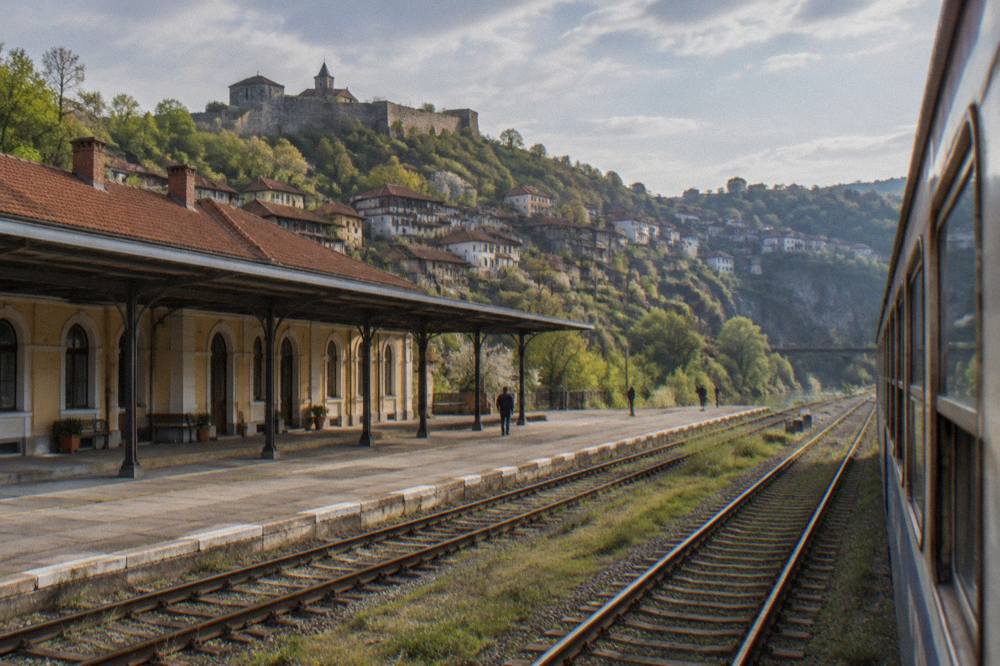
There is no direct train from Sofia to Veliko Tarnovo: every rail trip changes, usually at the Gorna Oryahovitsa junction about 10 km from the centre, and on the 17 October 2026 BDZ timetable the fastest journeys take 4 h 33 min from the 10:10 departure and 4 h 51 min from the 07:00, while other connections run 6 to 10 hours. Times change with the timetable, so the BDZ schedule itself is the reference before booking.
The change at Gorna Oryahovitsa is the single most important rail fact for this route. The junction handles the Sofia-side and Varna-side legs of the journey, and the quality of a connection depends on the wait there more than on anything else. Some departures pair into the 4 h 33 min and 4 h 51 min fast combinations; others leave a long gap at the junction and stretch the day out considerably, which is why the spread runs up to 10 hours across the schedule.
One worked example of a second-class Sofia fare came to about 9.82 euro, and BDZ pricing moves with demand, so treat that as an indication rather than a fixed price. The practical alternative is the bus, which runs direct from Sofia in about 3 to 3.5 hours and skips the junction change entirely, a comparison worth weighing when a rail connection is slow. The station-side detail, including what the Veliko Tarnovo station area offers, sits on the Veliko Tarnovo train station guide.
| Rail route | Direct? | Fastest journey on the 17 Oct 2026 timetable |
|---|---|---|
| Sofia to Veliko Tarnovo | no, changes at Gorna Oryahovitsa | 4 h 33 min (10:10 departure) |
| Sofia to Veliko Tarnovo | no | 4 h 51 min (07:00 departure) |
| Varna to Veliko Tarnovo | yes, one direct train | 3 h 53 min (05:00 departure) |
| Ruse to Veliko Tarnovo | yes | 2 h 25 min (04:49 departure) |
How Do You Get To Veliko Tarnovo By Train From Varna And Ruse?
Varna has exactly one direct train to Veliko Tarnovo, taking 3 h 53 min from the 05:00 departure, while the remaining services change at Gorna Oryahovitsa and take 4 h 36 min or longer; Ruse has a direct train of 2 h 25 min from the 04:49 departure, with a Gorna Oryahovitsa alternative at 2 h 33 min from 06:20. Both routes read straight off the same BDZ timetable of 17 October 2026.
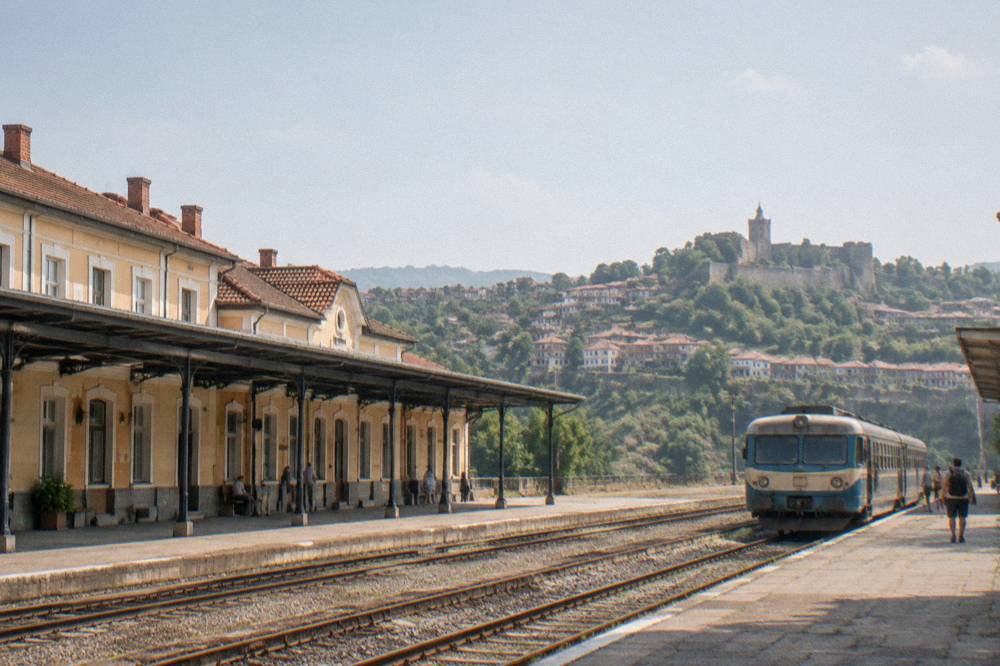
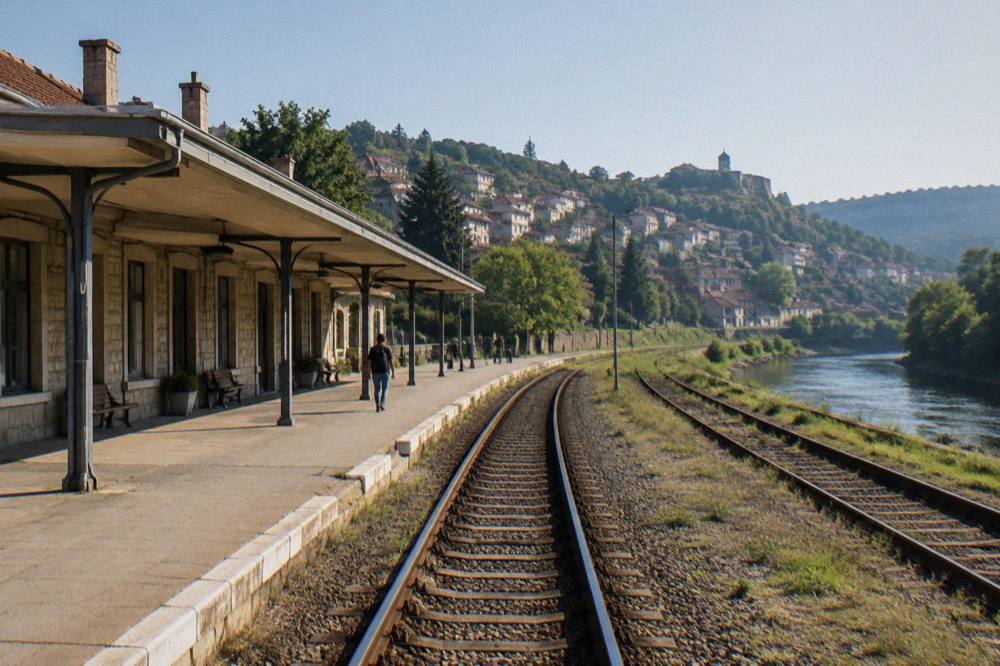
For anyone combining the Black Sea coast with the old capital, the Varna direct train is the tidy option, one seat for the whole run, though the 05:00 start is an early one. The Ruse route suits arrivals over the Danube crossing from Romania, and at 2 h 25 min it is the shortest rail approach to the city on the timetable. Both routes land at the same small Veliko Tarnovo station, with the Gorna Oryahovitsa junction about 10 km from the centre acting as the region's rail hub.
The morning departure times on the direct trains are worth planning around: they reward an overnight stay in Varna or Ruse the night before, and turn the journey itself into a half-day move rather than a full-day haul. Anyone sensitive to summer heat should know the ERA5 reanalysis, 1991-2020, puts the modelled mean daily high at 28.1 C in August, so an early train also avoids the warmest hours of a summer day.
How Do You Get To Veliko Tarnovo By Bus?
Buses run direct where trains do not: Sofia to Veliko Tarnovo takes about 3 to 3.5 hours with several operators departing from the Yug bus station side, Bucharest to Veliko Tarnovo runs direct in about 3 h 50 min to 4 h 15 min, and the Varna route page lists 16 direct buses a day plus the one direct train. Yug at 74 Hristo Botev Blvd, in the centre, handles Sofia, Varna and international departures, while Zapad on Nikola Gabrovski Blvd serves regional routes.
The bus is the mode that removes the Gorna Oryahovitsa change from the equation, and that is its whole selling point from Sofia. Several operators run the corridor, with journeys clustered around 3 to 3.5 hours, and departures are spread across the day. From Bucharest, the direct coaches of about 3 h 50 min to 4 h 15 min pair neatly with Otopeni's flight schedule, turning a Romania arrival into a same-day transfer into Bulgaria. The station-by-station picture, including the address detail for both terminals, is on the Veliko Tarnovo bus station guide.
Fares are deliberately not quoted here: they move with operator and date, and the booking pages are the live reference. What is stable is the structure, two stations with clean roles, and a corridor density that makes same-day plans realistic from all three gateway cities. The rest of the planning pages sit on Veliko Tarnovo Travel Guide.
| Bus route | Direct journey time | Departure point in Veliko Tarnovo |
|---|---|---|
| Sofia to Veliko Tarnovo | about 3 to 3.5 hours | Yug, 74 Hristo Botev Blvd |
| Bucharest to Veliko Tarnovo | about 3 h 50 min to 4 h 15 min | Yug |
| Varna to Veliko Tarnovo | 16 direct buses a day | Yug |
| Regional routes | varies | Zapad, Nikola Gabrovski Blvd |
How Do You Get To Veliko Tarnovo By Car?
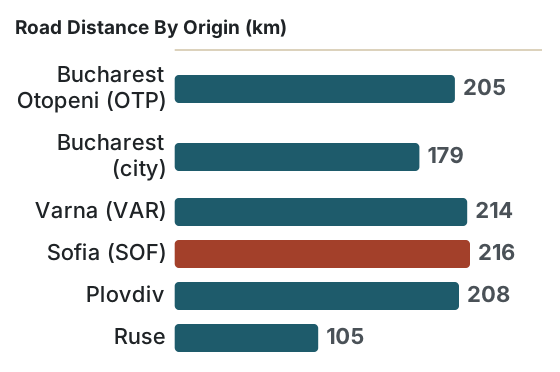
Driving to Veliko Tarnovo means about 216 road km from Sofia, about 214 km from Varna, about 205 km from Bucharest Otopeni, about 179 km from central Bucharest or about 208 km from Plovdiv, all computed on the OSM road network from the centre, and no drive time is printed because road conditions vary too much for one number to hold; the city sits at about 220 m elevation on the Yantra river, inland with no sea coast.
The car wins on flexibility once the city is reached, because the day-trip ring around Veliko Tarnovo is wide: Arbanasi sits about 2.8 km straight-line from the centre, the Preobrazhenski Monastery about 6 km, Nicopolis ad Istrum about 20 km, Emen Canyon about 32 km by road, Tryavna about 42 km and Etar about 53 km, all distances computed on the road network. Rail covers almost none of that ring, and bus coverage thins fast outside the Sofia and Varna corridors, so a car earns its place on an itinerary that leans on the surrounding region. The Veliko Tarnovo car rental guide and the parking guide carry the details on hiring and leaving a car in the city.
Want the flexibility for trips beyond the city? Book a rental car.
Two cautions apply to the drive itself. Bulgaria is a full Schengen member since 1 January 2025, so the crossing from Romania is border-free, but parking tariffs, zones and old-town vehicle restrictions are all local rules that need checking on arrival rather than assuming. Fuel, toll and vignette costs should be checked on arrival.
| Origin | Road distance to Veliko Tarnovo |
|---|---|
| Bucharest Otopeni (OTP) | about 205 km |
| Bucharest (city) | about 179 km |
| Varna (VAR) | about 214 km |
| Sofia (SOF) | about 216 km |
| Plovdiv | about 208 km |
| Ruse | about 105 km |
When Is The Best Season To Arrive In Veliko Tarnovo?
The ERA5 reanalysis, 1991-2020, shows a modelled mean daily high of 27.6 C in July and 28.1 C in August against 4.9 C in January, with a mean daily low of -3.8 C in January, and monthly rainfall ranging from 51.3 mm in August up to 95.7 mm in May, so late spring through September pairs the warmest modelled highs with moderate rain, while winter arrivals trade cold for shorter sightseeing days.
The season matters beyond the thermometer, because the museum sites run on a calendar. Winter hours at the Regional Museum of History's sites start on 25 October 2026, and the season traps follow quickly: the Trapezitsa funicular stops for the season on 31 October 2026, Trapezitsa itself closes to visitors from 30 November 2026 to 31 March 2027, and the two-day museum pass is valid only from 1 April to 30 November. Anyone arriving between late October and April should plan around those dates before locking in travel. The month-by-month detail sits on the best time to visit Veliko Tarnovo guide and the weather guide.
| Month | Mean daily high | Mean daily low | Rainfall |
|---|---|---|---|
| January | 4.9 C | -3.8 C | 56.1 mm |
| April | 16.9 C | 6.0 C | 71.6 mm |
| May | 21.7 C | 11.1 C | 95.7 mm |
| July | 27.6 C | 17.2 C | 79.5 mm |
| August | 28.1 C | 17.1 C | 51.3 mm |
| October | 17.6 C | 8.0 C | 58.9 mm |
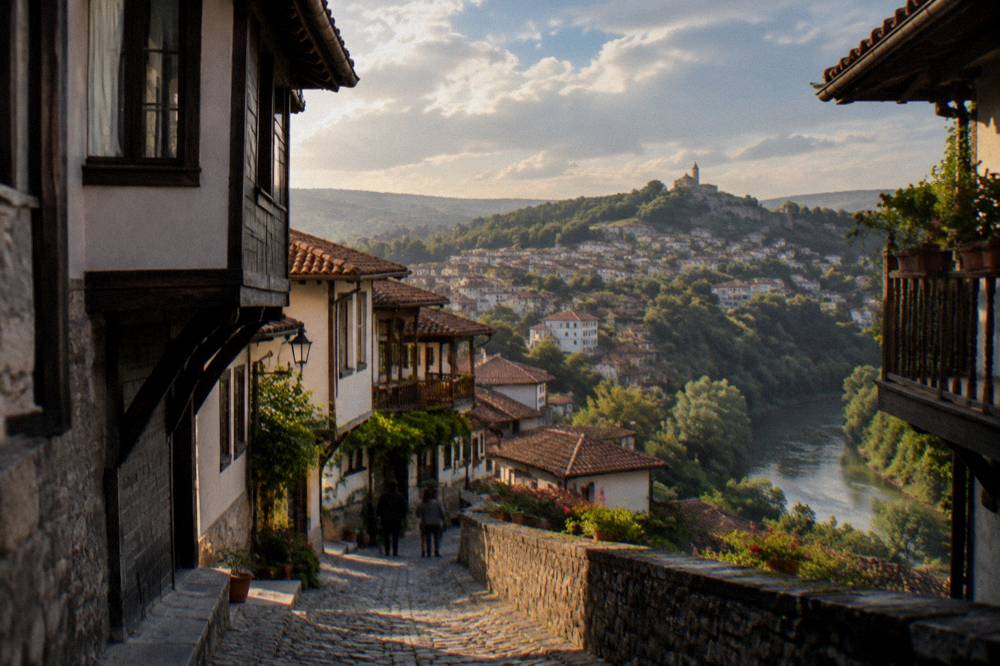
Figures above are modelled normals from the ERA5 reanalysis, 1991-2020, for a grid cell near the city centre, not a station record, and they describe climate, not a forecast for any given week. The shoulder months, with highs in the teens and moderate rainfall, are the window the museum season and the outdoor walking city both reward, a balance the spring and autumn guide unpacks in full.
What Should You Know About Money And Entry Before Travelling?
Bulgaria has used the euro since 1 January 2026, at a fixed rate of 1.95583 lev per euro, and has been a full Schengen member since 1 January 2025, so arrivals from Romania cross with no land border checks and US, UK, Canadian and Australian citizens stay visa-free for 90 days in any 180; the Entry/Exit System has run at all external Schengen borders since 10 April 2026.
Practically, this means the old advice about changing lev is obsolete: every price in the city, from the Tsarevets entry at 7.67 euro printed by the Regional Museum of History to museum tickets at 5.11 euro, is quoted in euro, and no lev notes circulate as currency. The money-side detail, including cards and cash habits, sits on the Bulgaria euro and money guide. For documents, borders and the practicalities of crossing into Bulgaria by bus or car from Romania, the Bulgaria travel tips guide covers the entry picture in one place.
What Comes After The Arrival In Veliko Tarnovo?
Once in the city, the logistics shrink to walking scale: the Asenevtsi Monument, Samovodska Charshiya, General Gurko Street and the Varosha quarter are free public spaces open at all hours, the museums run seasonal hours with winter changes from 25 October 2026, and the Sound and Light show on Tsarevets runs on announced evenings only, free to watch from Tsar Asen I Square.
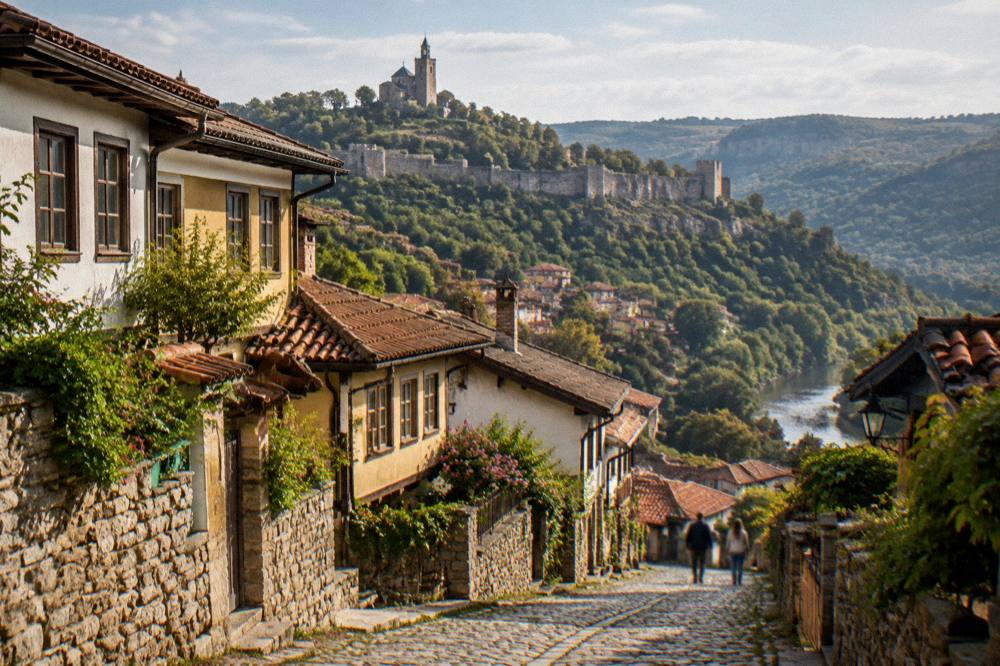
The getting-around picture, city buses and taxi basics included, sits on the getting around Veliko Tarnovo guide, and the first-night question is answered on where to stay in Veliko Tarnovo. Between the two, an arrival day turns into a working itinerary fast, because the city rewards being on foot more than being behind a wheel. For orientation on the ground rather than the approach to it, the Veliko Tarnovo walking tour guide lays out the route that ties the arrival points to the sights.
Common Questions About Getting To Veliko Tarnovo
Is there an airport in Veliko Tarnovo?
No airport with scheduled flights serves the city. Visitors arrive through Sofia (about 216 road km), Varna (about 214 road km) or Bucharest Otopeni (about 205 road km) and continue by train, bus or car. The Gorna Oryahovitsa airfield, about 10 km away, has no regular scheduled flights.
Is there a direct train from Sofia to Veliko Tarnovo?
No. Every rail trip changes, usually at the Gorna Oryahovitsa junction about 10 km from the centre. On the 17 October 2026 BDZ timetable the fastest journeys take 4 h 33 min and 4 h 51 min, and other connections run 6 to 10 hours.
How long is the bus from Sofia to Veliko Tarnovo?
About 3 to 3.5 hours, with several operators running from the Yug bus station side at 74 Hristo Botev Blvd in the centre. The bus runs direct, which is its advantage over the train's junction change.
Can you take a bus from Bucharest to Veliko Tarnovo?
Yes, direct buses cover the route in about 3 h 50 min to 4 h 15 min. Bulgaria has been a full Schengen member since 1 January 2025, so the land crossing involves no border checks.
What currency do you need in Veliko Tarnovo?
The euro. Bulgaria adopted it on 1 January 2026 at a fixed rate of 1.95583 lev per euro, and every listed price in the city, including museum tickets, is quoted in euro.
When do winter hours affect travel plans?
Winter hours at the museum sites start on 25 October 2026, the Trapezitsa funicular stops on 31 October 2026, and Trapezitsa closes to visitors from 30 November 2026 to 31 March 2027, so arrivals in that window should plan sightseeing around those dates.