Veliko Tarnovo Weather And Climate By Month
Veliko Tarnovo sits inland on the Yantra river in Bulgaria, and its weather runs on a fully continental cycle: modelled January highs about 4.9 C, July highs about 27.6 C, and May the month with the highest rainfall in the table. Here is what that means month by month.
Veliko Tarnovo has a continental climate: modelled daily highs range from about 4.9 C in January to 28.1 C in August, with the highest monthly rainfall in May (95.7 mm) and the lowest in August (51.3 mm), per the ERA5 reanalysis, 1991-2020.
Veliko Tarnovo is an inland city in Bulgaria on the Yantra river, with no sea coast to soften the seasons, and its weather behaves accordingly. The climate here is continental, with a wide gap between winter and summer: the ERA5 reanalysis, 1991-2020, puts the mean daily high at about 4.9 C in January and about 27.6 C in July, and the mean daily low in January at about -3.8 C. Rainfall is spread across the year but is not even: May carries the highest monthly total in the table at 95.7 mm, and August the lowest at 51.3 mm. The municipality stands at 220 m elevation, the hills of Tsarevets and Trapezitsa rise over the river bend, and the weather you get depends heavily on which month you choose. This page from the Veliko Tarnovo Travel Guide walks through every month, what each season does to opening hours at the fortress and the museums, and how to read the numbers when planning a trip; for the wider timing question, see the companion pages on the best time to visit Veliko Tarnovo and spring and autumn in the city.
What Is The Weather Like In Veliko Tarnovo?
Veliko Tarnovo has a continental climate with four distinct seasons: modelled mean daily highs climb from about 4.9 C in January to about 28.1 C in August, mean daily lows fall to about -3.8 C in January, and annual rainfall totals about 798.7 mm, with the highest monthly total in May at 95.7 mm and the lowest in August at 51.3 mm, per the ERA5 reanalysis, 1991-2020. These are modelled figures for a grid cell near 43.08 N 25.64 E, not a weather-station record, and they describe the 1991-2020 average rather than any single year.
Because the city is inland, nothing moderates the swing between winter and summer. July and August both sit around 28 C for the mean daily high, while December, January and February all have mean daily lows below zero in the modelled table. Spring and autumn are the transition zones: April averages a high of about 16.9 C, October about 17.6 C, and both carry meaningful rainfall, with March at 68.6 mm and April at 71.6 mm.
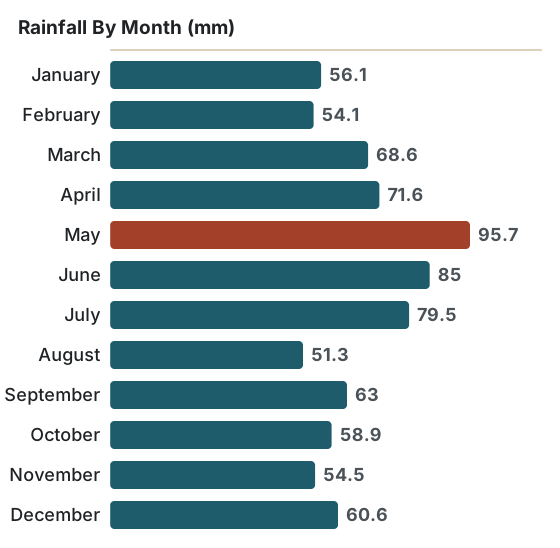
The rainfall pattern matters more than the temperature pattern for planning. The two months with the highest totals in the table are May (95.7 mm) and June (85.0 mm), which is a summer-peak pattern rather than a winter one. August, at 51.3 mm, has the lowest monthly total of the year. Winter months sit in the middle of the range, between about 54.1 and 60.6 mm each.
Veliko Tarnovo Weather By Month
Month by month, the modelled picture runs like this: January highs about 4.9 C with lows about -3.8 C, April about 16.9 C, July about 27.6 C, August about 28.1 C, and October about 17.6 C, with rainfall peaking at 95.7 mm in May and dropping to 51.3 mm in August, all per the ERA5 reanalysis, 1991-2020. The full table below carries every month, and every figure in it is a 30-year modelled normal rather than a forecast.
| Month | Mean daily high | Mean daily low | Rainfall |
|---|---|---|---|
| January | 4.9 C | -3.8 C | 56.1 mm |
| February | 7.2 C | -2.3 C | 54.1 mm |
| March | 11.5 C | 1.4 C | 68.6 mm |
| April | 16.9 C | 6.0 C | 71.6 mm |
| May | 21.7 C | 11.1 C | 95.7 mm |
| June | 25.4 C | 15.1 C | 85.0 mm |
| July | 27.6 C | 17.2 C | 79.5 mm |
| August | 28.1 C | 17.1 C | 51.3 mm |
| September | 23.3 C | 12.9 C | 63.0 mm |
| October | 17.6 C | 8.0 C | 58.9 mm |
| November | 11.8 C | 3.1 C | 54.5 mm |
| December | 6.1 C | -1.7 C | 60.6 mm |
Reading the table, three stretches stand out. Winter, December through February, keeps mean daily highs between about 4.9 and 7.2 C and mean lows below zero. Summer, June through August, holds highs between about 25.4 and 28.1 C. The shoulder months, April, May, September and October, cover the middle ground, from about 16.9 to 23.3 C for the high.
Rainfall tells a slightly different story than temperature. The modelled totals rise steadily from February (54.1 mm) to the May peak of 95.7 mm, then fall through summer to the August low of 51.3 mm, before settling between about 54.5 and 63.0 mm across autumn and winter. No month in the table is dry in absolute terms.
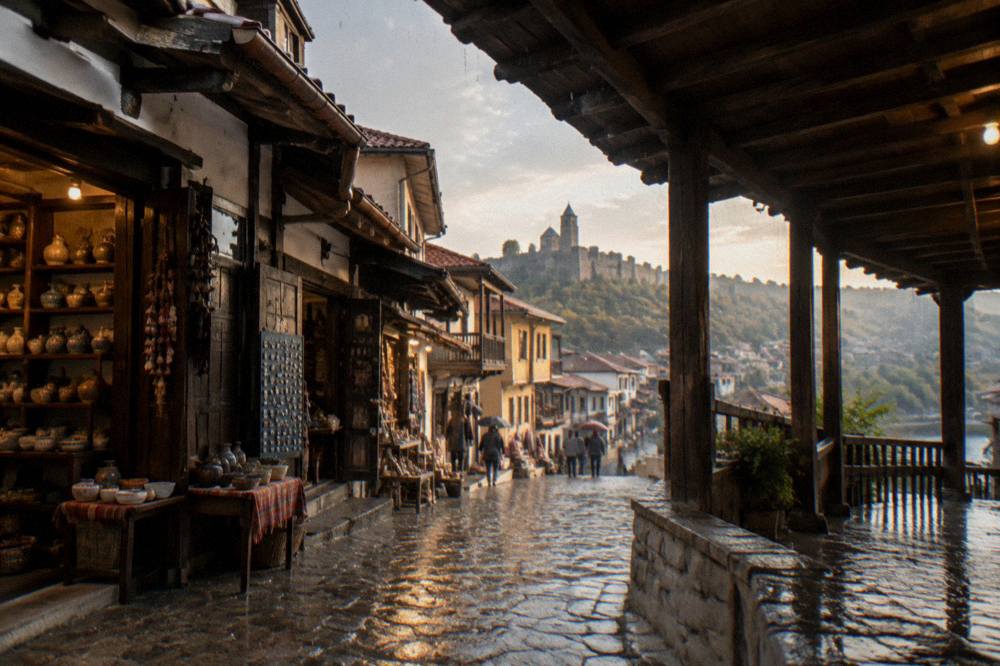
Weather shapes what a day in Veliko Tarnovo can hold. Clear, warm days belong to the fortress hill, the riverside, and the walk between Samovodska Charshiya and Gurko Street. Wet or cold days shift toward the indoor options, and a month like May, with its high modelled rainfall, argues for having both planned. The self-guided audio tour of the city and Tsarevets works in any weather you are willing to walk in, and the indoor presentations run regardless.
When Is The Best Weather For Visiting Veliko Tarnovo?
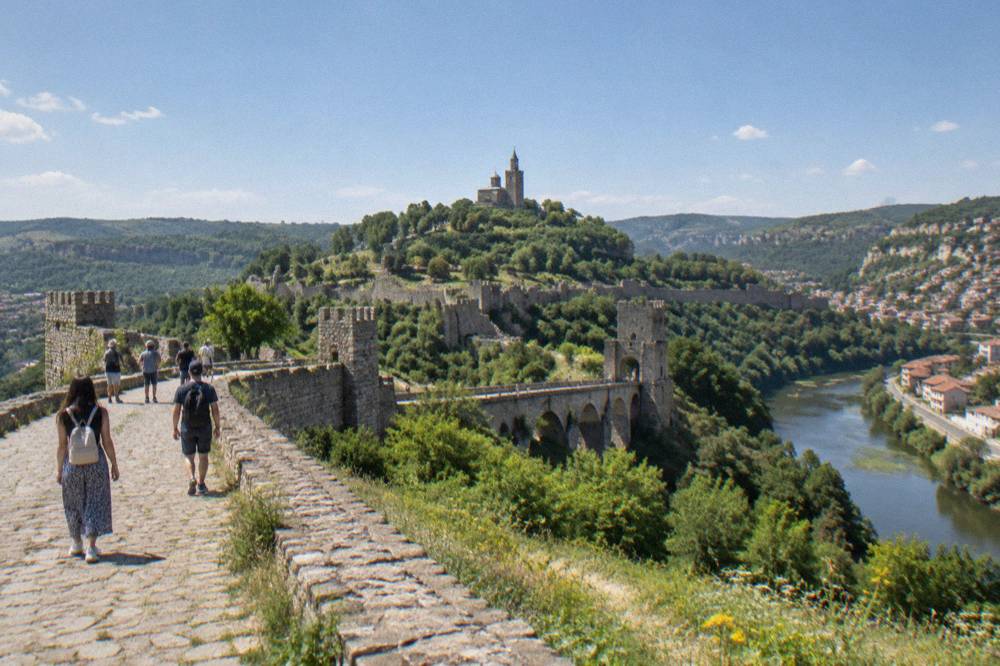
For weather alone, the modelled numbers favour September, with a mean daily high of about 23.3 C and 63.0 mm of rain, and October, at about 17.6 C and 58.9 mm, while April through June is warmer but wetter, with May carrying the highest rainfall total in the table at 95.7 mm, per the ERA5 reanalysis, 1991-2020. July and August are the warmest months on paper but also the peak of the summer season, and from late October the winter hours at the museum sites begin.
September is the month where the two curves, temperature and rainfall, move in a visitor's favour at the same time. The modelled high of about 23.3 C is barely below July's, yet rainfall drops to 63.0 mm from the 79.5 mm of July and 85.0 mm of June. October cools to about 17.6 C, still a comfortable walking temperature, with rainfall nearly unchanged at 58.9 mm.
April and May warm up quickly, from about 16.9 C to 21.7 C for the mean daily high, but the rainfall column climbs faster, to 71.6 mm and then the annual peak of 95.7 mm. June, at about 25.4 C and 85.0 mm, sits in the same pattern. That does not make spring a poor choice, only one where a rain plan earns its place.
The museum season is worth lining up with the weather. The Regional Museum of History's hours run April to September at the long summer schedule, October at an intermediate one, and winter hours from 25 October 2026. A warm late-October day can therefore coincide with shorter sightseeing hours, so the calendar and the thermometer need reading together.
| Stretch | Mean daily high | Rainfall in the period | Character |
|---|---|---|---|
| December to February | 4.9 to 7.2 C | 54.1 to 60.6 mm per month | Sub-zero mean lows, short daylight |
| March to May | 11.5 to 21.7 C | 68.6 to 95.7 mm per month | Fast warming, rising rain |
| June to August | 25.4 to 28.1 C | 51.3 to 85.0 mm per month | Warm, with a dry August |
| September to November | 11.8 to 23.3 C | 54.5 to 63.0 mm per month | Gradual cooling, steady rain |
For the wider question of which month suits Bulgaria as a whole, the best month to visit Bulgaria is covered separately, and the month-by-month timing logic on the best time to visit page lines these same figures up against the events calendar.
How Much Does It Rain In Veliko Tarnovo?
The modelled annual rainfall total is about 798.7 mm, with the highest monthly figure in May at 95.7 mm and the lowest in August at 51.3 mm, and no month in the ERA5 reanalysis, 1991-2020 table falls below 51 mm, so rain is possible in every season rather than concentrated in one. The wettest stretch of the year is late spring, not winter: May, June and July carry 95.7, 85.0 and 79.5 mm respectively in the modelled normals.
That distribution is practical knowledge for a visit. A trip built around the May daylight or the July warmth should carry a rain layer, because those months hold the top three rainfall totals in the table. August flips the picture: it has the highest mean daily high of the year, about 28.1 C, together with the lowest monthly rainfall, 51.3 mm.
Autumn and winter run flat. September through December sit between about 54.5 and 63.0 mm per month, and January and February between 54.1 and 56.1 mm. Nothing in the modelled table suggests a dry season; there are only wetter and less wet months.
| Rank | Month | Modelled rainfall |
|---|---|---|
| 1 | May | 95.7 mm |
| 2 | June | 85.0 mm |
| 3 | July | 79.5 mm |
| 4 | April | 71.6 mm |
| 5 | March | 68.6 mm |
| 6 | September | 63.0 mm |
| 7 | December | 60.6 mm |
| 8 | October | 58.9 mm |
| 9 | January | 56.1 mm |
| 10 | November | 54.5 mm |
| 11 | February | 54.1 mm |
| 12 | August | 51.3 mm |
How Cold Do Veliko Tarnovo Winters Get?
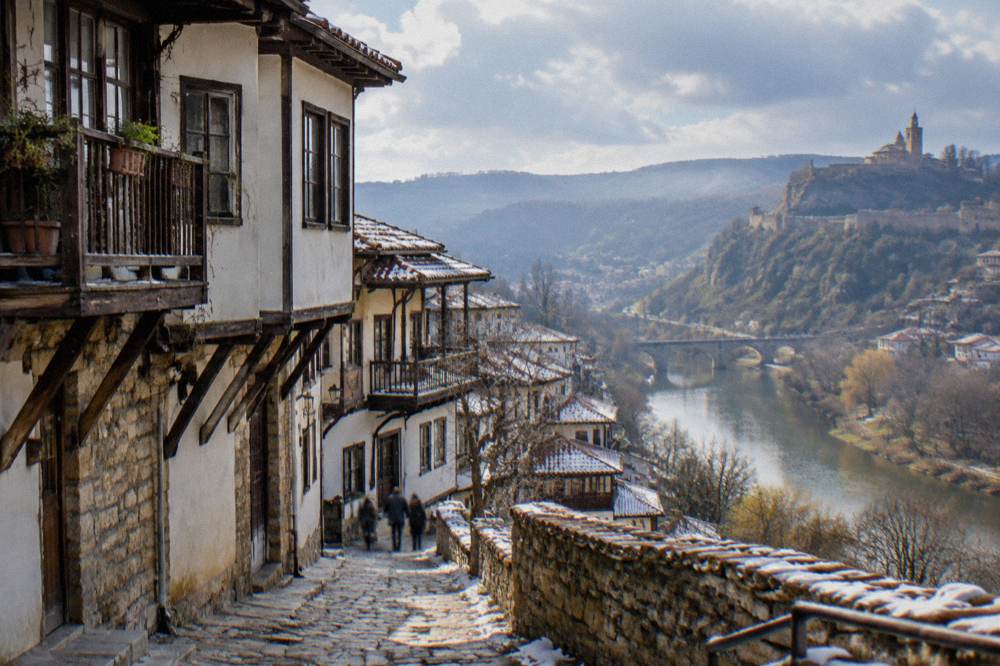
Winter in Veliko Tarnovo is genuinely cold: the modelled mean daily low is about -3.8 C in January, with -2.3 C in February and -1.7 C in December, and mean daily highs hold between about 4.9 and 7.2 C across the three months, per the ERA5 reanalysis, 1991-2020. Daylight is short too, with modelled sunshine of about 5.5 hours a day in December, against about 13.0 hours in July.
Those are averages, and averages smooth over the extremes on both sides. A January thaw at 10 C and a cold snap well below zero both fit inside a month whose mean low is about -3.8 C. What the normals do establish is that winter here is a real season, not a mild one, and that packing for it means proper insulation rather than a token jacket.
Winter also changes the sightseeing calendar, and this is where the weather page meets the museum's schedule. Winter hours at the Regional Museum of History's sites start on 25 October 2026. Trapezitsa closes to visitors entirely from 30 November 2026 to 31 March 2027, and its funicular stops for the season on 31 October 2026, reopening 1 May. Konstantsalieva House in Arbanasi goes to a Friday-to-Sunday schedule from 30 November 2026 to 20 March 2027.
None of that empties the city. Tsarevets keeps winter hours with entry 09:00 to 16:00, closing 17:00, with no day off, and the public spaces, the Asenevtsi Monument, Samovodska Charshiya, Gurko Street and the Varosha quarter, are open spaces that cost nothing to walk. The winter in Veliko Tarnovo pattern, cold mornings and early darkness, rewards a late start and an indoor afternoon.
How Hot Are Veliko Tarnovo Summers?
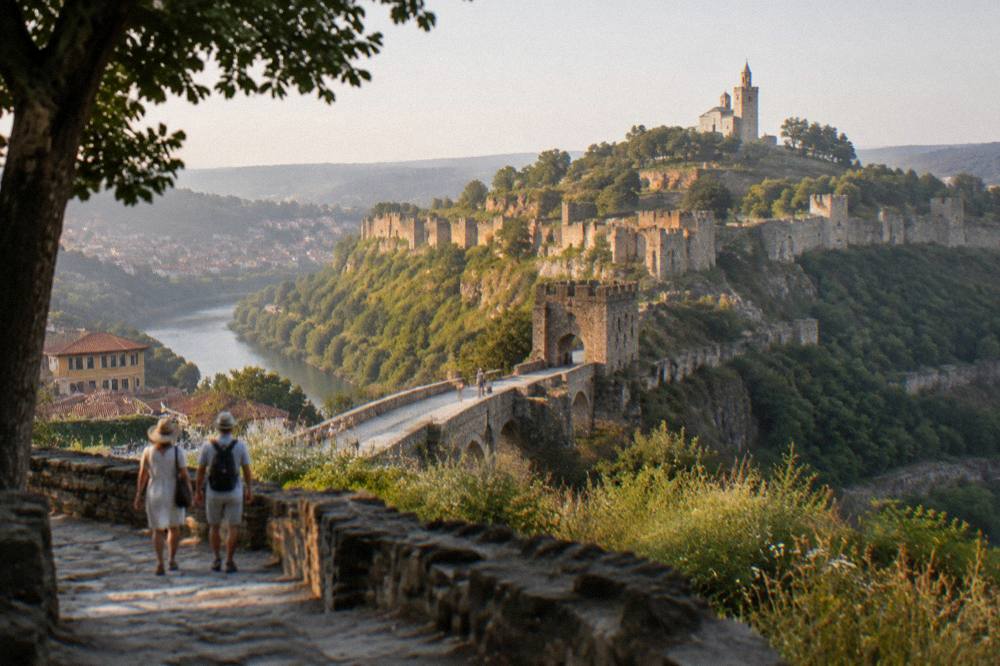
Summer is warm but not extreme on the modelled numbers: mean daily highs run about 25.4 C in June, 27.6 C in July and 28.1 C in August, with mean daily lows between about 15.1 and 17.2 C, and rainfall falling through the season from 85.0 mm in June to 51.3 mm in August, per the ERA5 reanalysis, 1991-2020. August pairs the highest mean daily high of the year with the lowest monthly rainfall.
The shape of a summer day matters as much as the average. With mean lows around 17 C, evenings stay pleasant, and the hills and river bend give the city walking routes that avoid long exposed stretches. Daylight is at its longest, with modelled sunshine of about 13.0 hours a day in July.
Summer is also the museum network's main season. From April to September, Tsarevets is open daily 08:00 to 20:00 with last entry at 19:00, and the Patriarchal Cathedral on the hill runs 09:00 to 19:00 over the same stretch. That evening window lines up neatly with the cooling part of a summer day: a fortress walk after 18:00 uses the hours when the modelled daily high has passed.
The Sound and Light audio-visual show on Tsarevets runs on announced evenings only, with no fixed nightly schedule, and watching from Tsar Asen I Square is free. Summer's late sunsets push those announced start times into the evening, which is worth knowing when a show evening lands mid-visit.
What Should You Pack For Veliko Tarnovo Weather?
Pack for the season you land in: a proper winter kit, insulation included, for December to February when modelled mean lows sit below zero; a rain layer and light layers for March to June when rainfall runs 68.6 to 95.7 mm a month; sun protection and breathable clothing for July and August when mean daily highs reach about 27.6 to 28.1 C; and a warm jacket plus waterproof for the shoulder months of September to November. The one constant across the year is footwear built for hills and cobbled lanes.
Veliko Tarnovo is a city of slopes. The fortress hill, the river bend and the old quarters all involve walking on uneven ground, and in winter that ground can hold frost or snow given the sub-zero mean lows. Footwear with real grip is a year-round answer here, not a seasonal one.
| Season | Mean daily high | What the numbers say to bring |
|---|---|---|
| Winter (Dec to Feb) | 4.9 to 7.2 C | Insulated coat, warm layers, gripped boots, hat and gloves |
| Spring (Mar to May) | 11.5 to 21.7 C | Layered clothing, rain jacket, umbrella for the May peak |
| Summer (Jun to Aug) | 25.4 to 28.1 C | Light clothing, sun protection, water bottle, evening layer |
| Autumn (Sep to Nov) | 11.8 to 23.3 C | Jacket, layered tops, waterproof for steady monthly rain |
One packing note that follows from the climate rather than the calendar: the transition between a warm afternoon and a cold evening is sharpest in spring and autumn, when the gap between mean daily high and low runs about 10 to 11 degrees. A daypack layer covers it.
How Does The Weather Change The Sights And Day Trips?
The weather interacts with the sightseeing calendar at fixed points: winter hours at the museum sites start on 25 October 2026, Trapezitsa closes 30 November 2026 to 31 March 2027, the funicular stops 31 October 2026, and the modelled numbers say the warm, drier stretch for outdoor sightseeing is July to September, with August pairing about 28.1 C highs with the year's lowest monthly rainfall at 51.3 mm. Reading the two together turns a weather table into a plan.
| Period | Modelled high | Key sight calendar |
|---|---|---|
| April to September | 16.9 to 28.1 C | Tsarevets daily 08:00 to 20:00, last entry 19:00; Trapezitsa 09:00 to 19:00 |
| October | about 17.6 C | Tsarevets 09:00 to 18:00, last entry 17:00; funicular runs to 31 October |
| 25 October to 30 November 2026 | cooling toward 11.8 C | Winter hours begin 25 October; Trapezitsa open until 30 November |
| 30 November 2026 to 31 March 2027 | 4.9 to 11.8 C | Trapezitsa closed; Tsarevets winter entry 09:00 to 16:00 |
Day trips follow the same logic. The open-air options, from the Emen Canyon gorge west of the city to the Krushuna Falls area, are warm-season outings on these numbers, while the indoor runs, such as the Etar architectural museum, hold up in any weather. The Archaeological Museum and the other museum sites carry their own hours pages.
Rain in Veliko Tarnovo does not end a sightseeing day, it redirects it. The multimedia visitor centre, the churches with museum tickets, and the indoor presentations all continue through the wet months of May and June, and the operators' cancellation terms mean a downpour need not strand a booking. One indoor option that suits a rainy hour in the centre is the interactive presentation on Bulgarian poets, an indoor talk that runs regardless of the sky; Check availability if a wet afternoon lands mid-trip.
Does It Snow In Veliko Tarnovo?
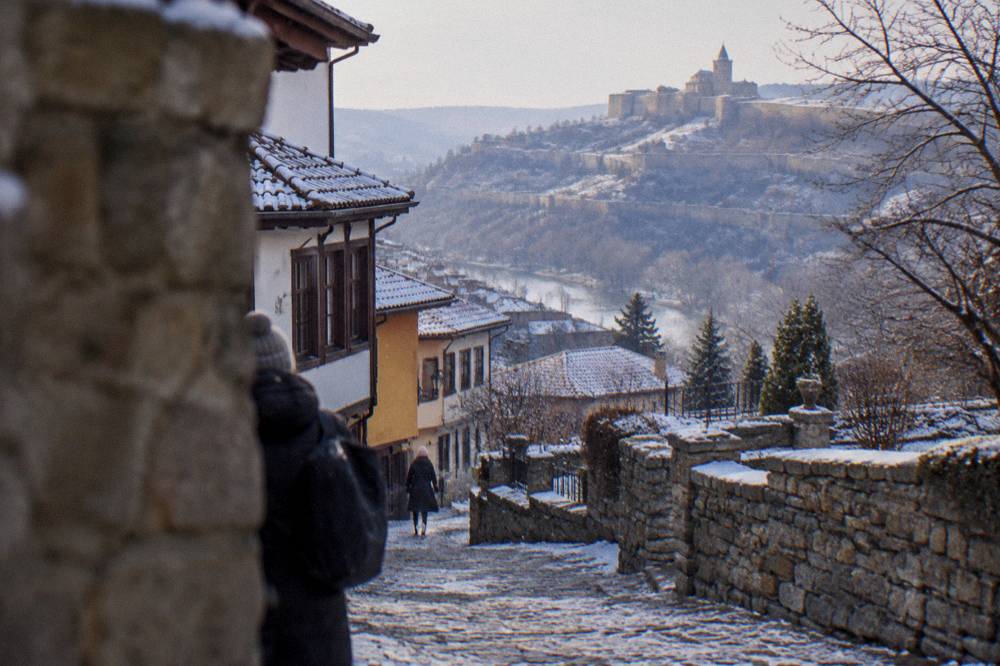
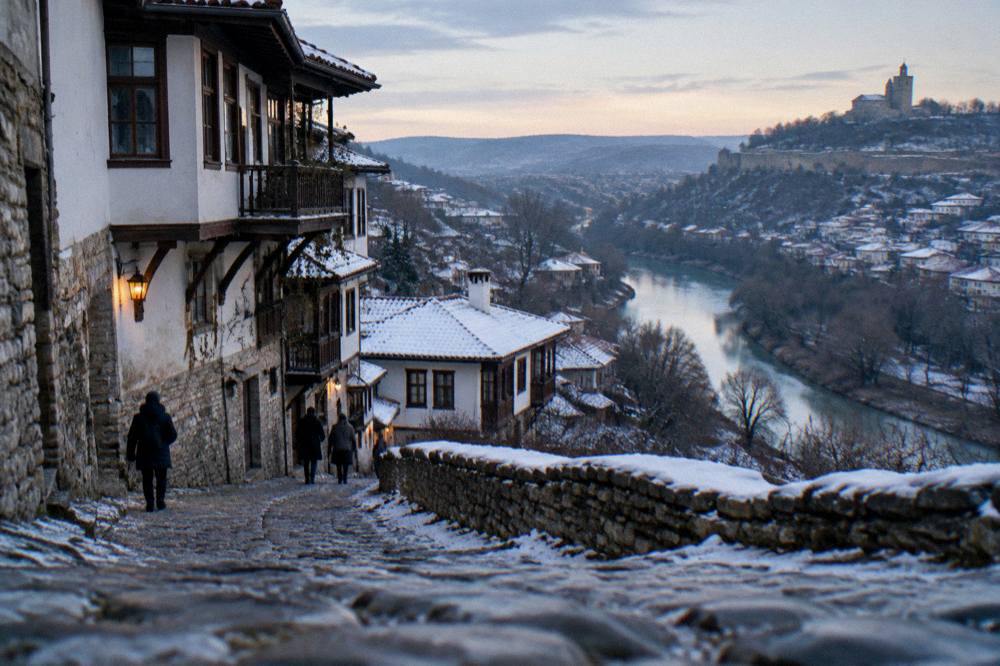
On a frosty or snowy morning the city's form works in its favour. The viewpoints over the river bend, the Asenevtsi Monument and the terraces of the Varosha quarter all read well under snow, and the Christmas market pattern in Marno Pole park runs from late November toward 1 January in its recent editions, with 2026 dates announced by the municipality closer to the season.
The practical cautions for a snowy visit are the cobbles and the slopes. Sub-zero mean lows mean ice is possible on the old lanes through the winter months, and the footwear advice from the packing section doubles in weight. The fortress hill in winter keeps its 09:00 to 16:00 entry window with no day off, so short daylight, not closure, is the constraint.
Common Questions About Veliko Tarnovo Weather
What is the Veliko Tarnovo weather like in summer?
Modelled mean daily highs reach about 25.4 C in June, 27.6 C in July and 28.1 C in August, with mean daily lows between about 15.1 and 17.2 C, per the ERA5 reanalysis, 1991-2020. August also has the lowest monthly rainfall of the year at 51.3 mm.
What is the Veliko Tarnovo weather like in winter?
Winter is cold and continental. Modelled mean daily highs run 4.9 to 7.2 C from December to February, and mean daily lows fall below zero in all three months, reaching about -3.8 C in January. Modelled sunshine drops to about 5.5 hours a day in December.
What is the rainiest month in Veliko Tarnovo?
May, with a modelled 95.7 mm, followed by June at 85.0 mm and July at 79.5 mm, per the ERA5 reanalysis, 1991-2020. August has the lowest monthly total at 51.3 mm, and the modelled annual sum is about 798.7 mm.
When is the best weather for visiting Veliko Tarnovo?
On the modelled numbers, September offers about 23.3 C mean daily highs with 63.0 mm of rain, and October about 17.6 C with 58.9 mm. April to June is warmer but wetter, and from 25 October 2026 the winter hours at the museum sites begin.
Are the climate figures from a weather station?
No. The figures on this page are ERA5 reanalysis values for a modelled grid cell near 43.08 N 25.64 E covering 1991-2020, not a station record. They describe 30-year modelled normals, so any single day or year can differ from them.
The weather in Veliko Tarnovo is a continental story told in advance: cold, sub-zero-average winters, warm summers that dry out by August, and a wet peak in May that rewards a rain plan. Match the month to the sightseeing calendar, with the 25 October 2026 winter-hours switch and the Trapezitsa closure in mind, and the modelled normals become the most useful planning tool a visitor can carry.