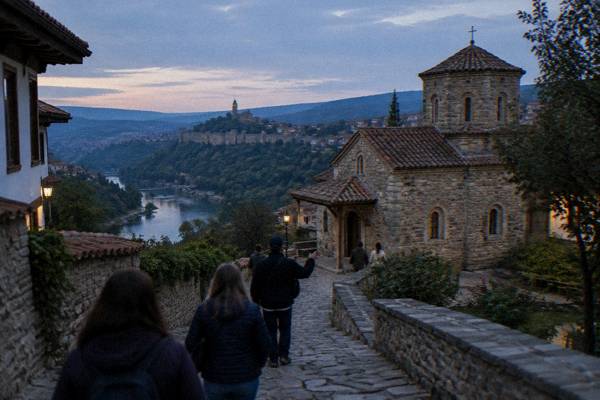
Asenevtsi Monument: The Four Horsemen On The Yantra Bend
The Asenevtsi Monument stands free and open at all hours above the Yantra river in Veliko Tarnovo, honouring the dynasty that restored the Bulgarian state in the late 12th century.
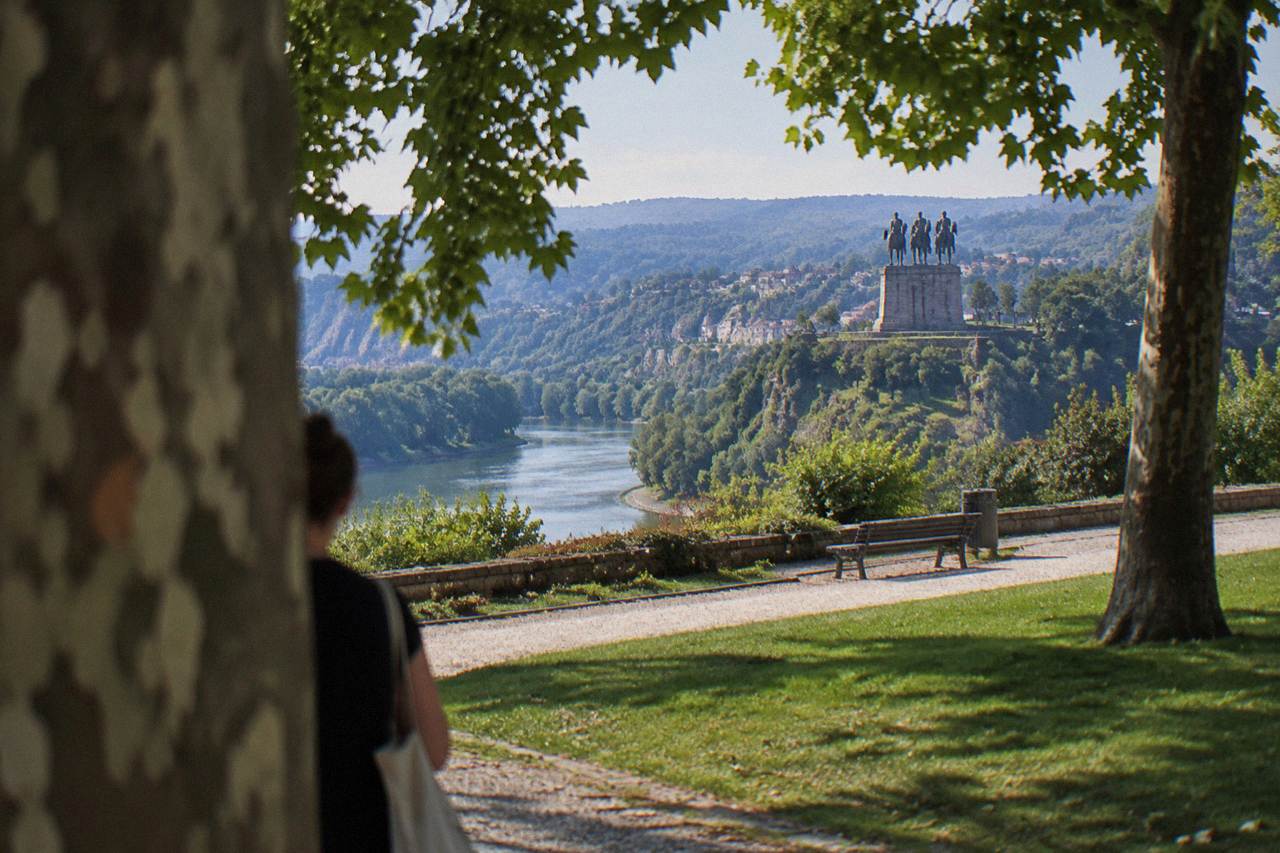
The Asenevtsi Monument in Veliko Tarnovo is a public monument honouring the Asen dynasty. It is free to visit, has no opening hours, and stands on the bend of the Yantra river in the inland city that was the capital of the Second Bulgarian Kingdom for more than two centuries.
The Asenevtsi Monument in Veliko Tarnovo, an inland city on the Yantra river in Bulgaria with no sea coast, is a public monument honouring the Asen dynasty, the family whose uprising of 1185 to 1186 restored the Bulgarian state and made this city the capital of the Second Bulgarian Kingdom for more than two centuries. The monument is one of the city's free public spaces: no ticket, no gate and no opening hours, open at all hours like Samovodska Charshiya, General Gurko Street and the Varosha old quarter. This guide covers the monument, the rulers it honours, the seasonal realities of visiting, and how it fits into a wider stay, with tables of the prices, hours and distances that shape a trip.
What Is The Asenevtsi Monument In Veliko Tarnovo?
The Asenevtsi Monument is a free public monument in Veliko Tarnovo, Bulgaria, that honours the Asen dynasty, the ruling family behind the 1185 to 1186 uprising of Asen and Peter that restored the Bulgarian state and elevated the city to capital of the Second Bulgarian Kingdom for more than two centuries, from the late 12th century to the 14th. It is an open public space with no ticket, no gate and no scheduled hours, and it takes its place on the bend of the Yantra river.
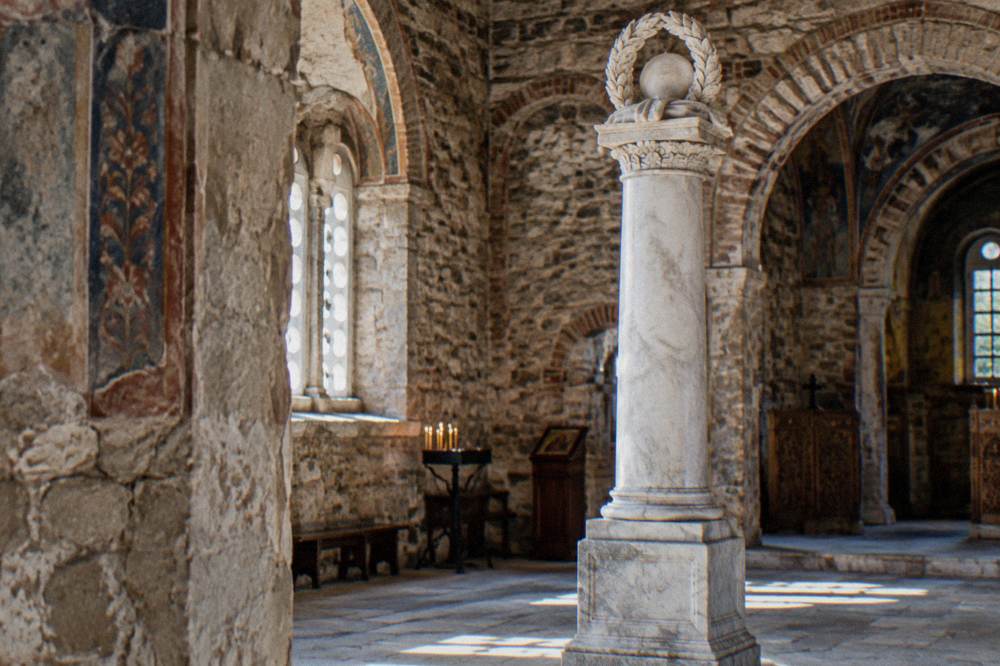
The name covers both the monument and the family. "Asenevtsi" is the Bulgarian term for the Asen dynasty, the rulers who emerged from the uprising of Asen and Peter and whose line included Ivan Asen II, whose marble victory column of 1230, commemorating the Battle of Klokotnitsa, stands in the Church of the Holy Forty Martyrs in the same city. The city's museum describes Veliko Tarnovo as a metropolitan centre after the state was restored in 1186, which is the wording this site follows.
What the monument offers a visitor is simple and free. It is a public space open at all hours, one of exactly four such listed open spaces in the city centre alongside Samovodska Charshiya, General Gurko Street and Varosha, plus the free viewing of the Sound and Light show from Tsar Asen I Square. There is no ticket office, no closing time and no booking step. A visit costs nothing and can be folded into any walk through the old quarters.
The monument also anchors the city's calendar in a small way. Veliko Tarnovo marks its city holiday on 22 March every year, tied to the Holy Forty Martyrs and the Battle of Klokotnitsa, and the Asen legacy sits at the centre of that commemoration. Visitors in late March will find the city's medieval history foregrounded in the programme.
Where Does The Asenevtsi Monument Stand In Veliko Tarnovo?
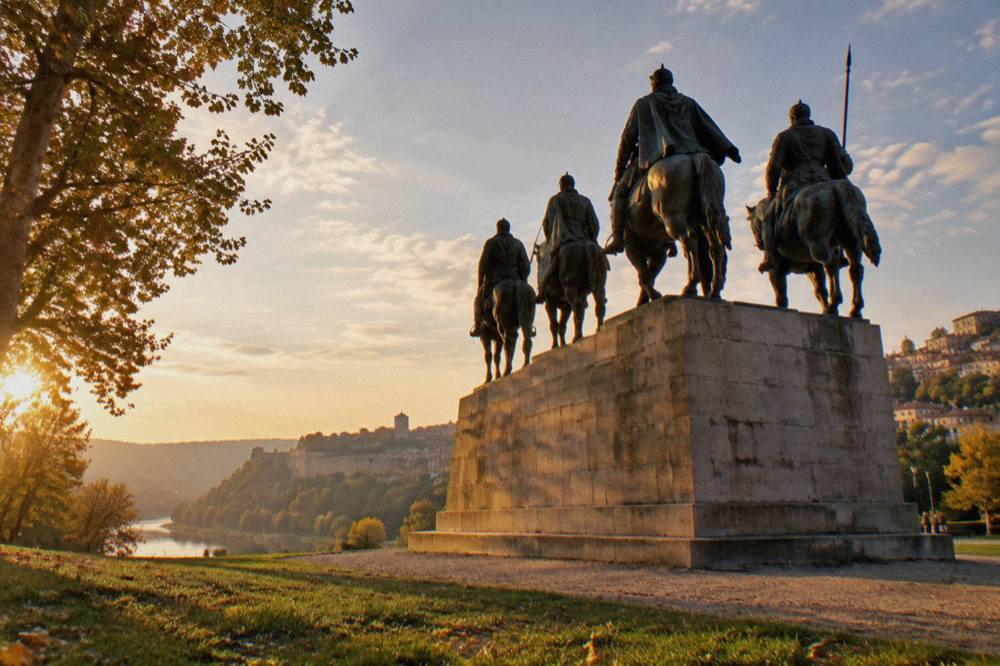
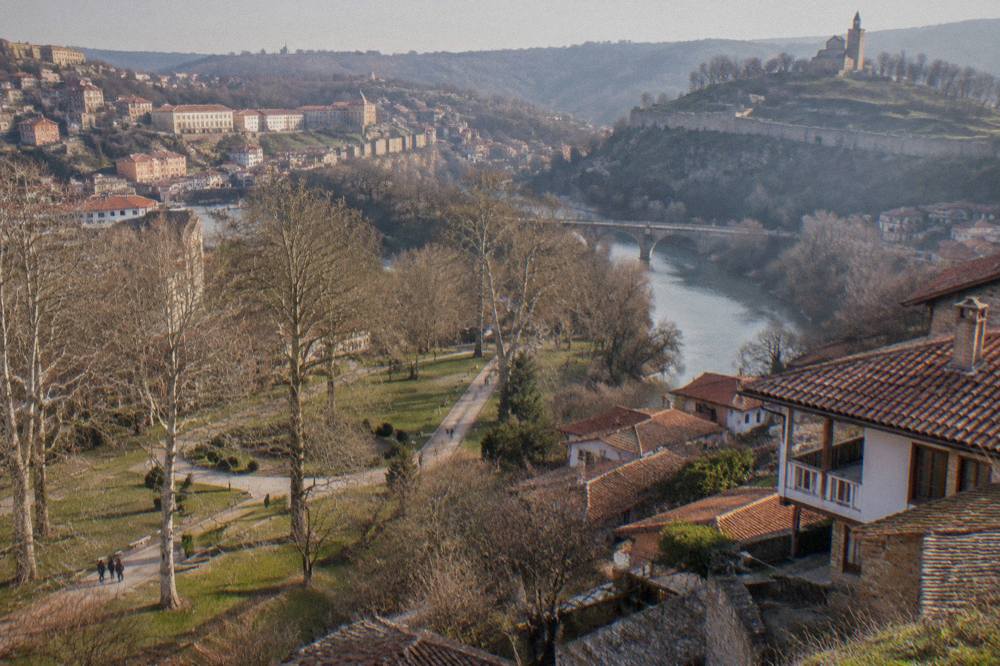
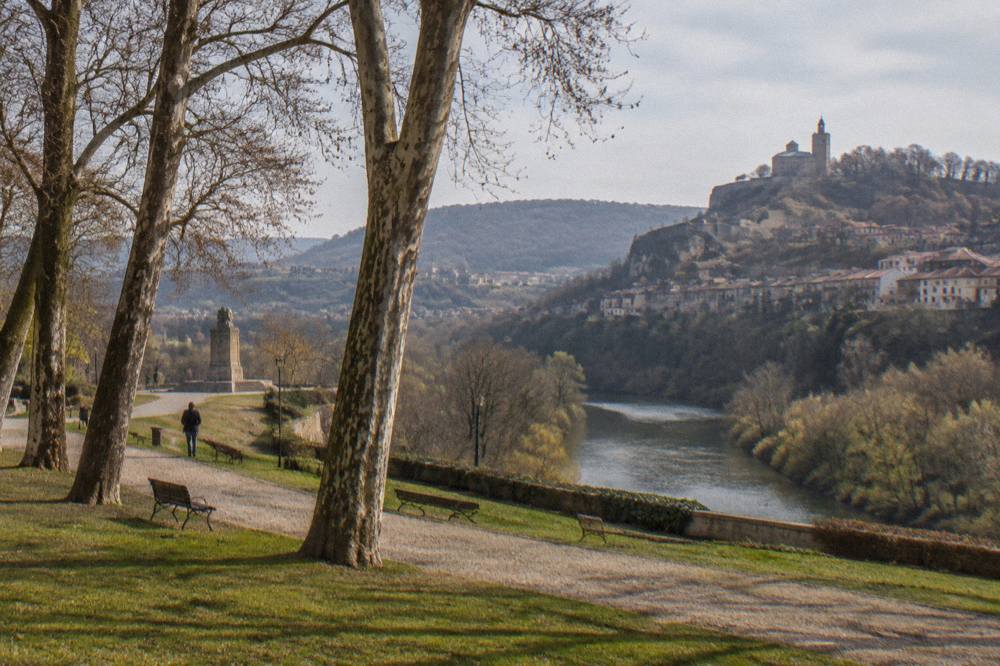
The Asenevtsi Monument stands on the bend of the Yantra river in Veliko Tarnovo, the river that loops around the city's hills and separates the ridges on which the old quarters sit. The approved description of the site is exactly that: the four horsemen on the Yantra bend. The monument is an open public space, reachable on foot through the old town streets, and it sits within the network of free walking areas that includes Gurko Street and the Varosha quarter.
The Yantra river defines the city's shape. Veliko Tarnovo occupies a set of ridges above the river's meanders, and the monument takes its position above one of those bends, which is why its approved page title calls it the four horsemen on the Yantra bend. The city stands at an elevation of 220 m for the municipality seat, and the municipality counted an estimated 77,067 residents on 31 December 2025.
Because the monument is a public space with no hours, planning a visit is a matter of route rather than tickets. A walk that takes in the monument can continue along Gurko Street, through the Varosha old quarter, or up towards the paid sights of the hilltops. Walkers who want structure can compare the options on the Veliko Tarnovo walking tour roster, where the guided products on this site's roster are paid tours, while the public spaces themselves are free to walk on your own.
Nearby paid sights give the walk a destination. Tsarevets Fortress and Trapezitsa sit on their own hills, and the Church of the Holy Forty Martyrs holds the Ivan Asen II column of 1230, the dynasty's own carved record. The viewpoints around the city round out a circuit, though the free list on this site stays exactly at the four open public spaces plus the Sound and Light viewing square.
For visitors who want to cover more ground around the city after seeing the monument, an off-road option exists in the hills above Veliko Tarnovo and Arbanasi: Check availability for the ATV and buggy adventure, which pairs with the river-level walk as a second, faster way to see the terrain.
How Much Does The Asenevtsi Monument Cost And When Is It Open?
The Asenevtsi Monument costs nothing to visit and has no opening hours at all: it is a public space open at all hours, in the same category as Samovodska Charshiya, General Gurko Street and the Varosha quarter. There is no ticket, no booking and no seasonal closure attached to the monument itself. The paid sights nearby follow the Regional Museum of History's seasonal hours instead, with winter hours starting on 25 October 2026.
The free list on this site is exact, and the monument sits on it. The open public spaces free at all hours are the Asenevtsi Monument, Samovodska Charshiya, General Gurko Street and the Varosha old quarter. Watching the Sound and Light show from Tsar Asen I Square is also free, on the announced evenings when it runs; there is no fixed nightly schedule, so check the show's own announcements for dates. The Church of the Nativity in Arbanasi is free on its feast day, 25 December 2026.
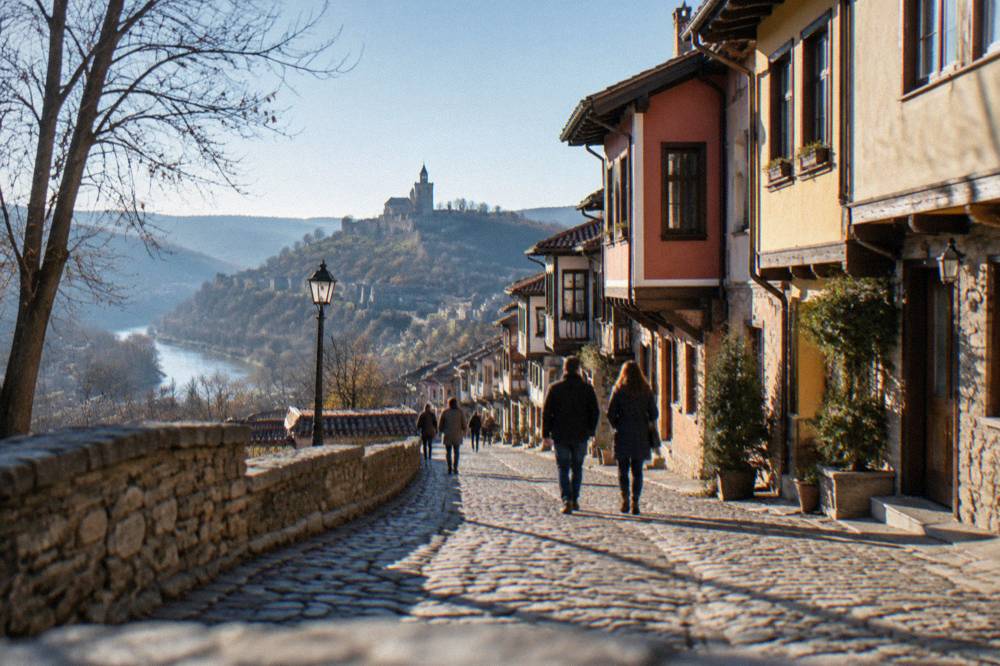
The contrast matters because the paid sights around the monument do keep hours and prices, and those come from the Regional Museum of History's ticket pages. The table below shows what the museum itself prints for the sites closest to a monument-centred walk. Prices are quoted exactly as the museum lists them, in euro, the currency Bulgaria has used since 1 January 2026.
| Sight | Adult ticket | Family ticket | Hours (April to September) |
|---|---|---|---|
| Tsarevets Architectural-Museum Reserve | 7.67 euro | 10.23 euro | Daily 08:00 to 20:00, last entry 19:00 |
| Trapezitsa Architectural-Museum Reserve | 5.11 euro | 7.67 euro | Daily 09:00 to 19:00, last entry 18:00 |
| Church of the Holy Forty Martyrs | 5.11 euro | 7.67 euro | 09:00 to 18:00, last entry 17:30 |
| Archaeological Museum | 5.11 euro | 7.67 euro | 09:00 to 18:00, last entry 17:00 |
| Tsarevgrad Tarnov multimedia visitor centre | 7.67 euro | 15.34 euro | 09:00 to 19:00, last entry 18:00 |
| Museum "Revival and Constituent Assembly" (the Konak) | 5.11 euro | not listed | 09:00 to 18:00 |
Children under 7 enter the museum sites free, as do people with permanent disabilities travelling with an assistant, and organised school groups from the municipality by written request. A two-day pass covering 10 museum sites costs 20.45 euro for an individual, valid 1 April to 30 November, or 25.56 euro for a family. The pass covers only museum sites; the monument and the other open public spaces need no pass at all.
The seasonal clock is the one thing to plan around. Winter hours at the museum sites start on 25 October 2026, and several closures follow: Trapezitsa closes to visitors from 30 November 2026 to 31 March 2027, the Trapezitsa funicular stops for the season on 31 October 2026, and the Museum of New and Newest History is temporarily not accepting visitors. None of that touches the monument, which is why a winter visit built around the free public spaces plus the fortress holds together well.
Who Were The Asenevtsi The Monument Honours?
The Asenevtsi were the Asen dynasty, the ruling family that rose with the uprising of Asen and Peter in 1185 to 1186, restored the Bulgarian state, and made Veliko Tarnovo the capital of the Second Bulgarian Kingdom for more than two centuries, from the late 12th century to the 14th. The museum's own page dates the restoration of the state to 1186, so the uprising is written here as spanning 1185 to 1186 rather than a single confident year.
The dynasty's paper trail in the city is physical as well as monumental. Ivan Asen II, of the same line, raised a marble victory column in 1230 to commemorate the Battle of Klokotnitsa, and that column stands today in the Church of the Holy Forty Martyrs by the river. The city holiday on 22 March marks the Holy Forty Martyrs and the Klokotnitsa battle together, which ties the dynasty's memory directly into the municipal calendar. The wider set of guides lives on Veliko Tarnovo Travel Guide.
The later history the monument overlooks is also dated precisely. Veliko Tarnovo fell to the Ottomans in 1393, ending its run as capital, and the Tarnovo Constitution was adopted here in 1879. Bulgaria's independence was declared on 22 September 1908, with the Manifesto read at the Church of the Holy Forty Martyrs, not on Tsarevets. The history of the wider medieval city is displayed in the museum sites the dynasty's story runs through.
A note on status, because it is often muddled: nothing in Veliko Tarnovo is a UNESCO World Heritage Site or on the Tentative List. The nearest inscribed sites are the Rock-Hewn Churches of Ivanovo and the Thracian Tomb of Kazanlak, both inscribed in 1979, and Nicopolis ad Istrum, about 20 road km away, has been on the Tentative List since 1984. The monument and the fortress are national sights, not World Heritage.
When Is The Best Time To Visit The Asenevtsi Monument In Veliko Tarnovo?
The monument itself can be visited at any hour in any month, since it is free public space with no gate, so the timing question is really about the weather and the paid sights around it. The ERA5 reanalysis for Veliko Tarnovo, 1991 to 2020, shows a continental pattern: mean daily highs of 27.6 C in July and 4.9 C in January, with a mean daily low of -3.8 C in January and May the wettest month at 95.7 mm.
Those modelled normals shape what a comfortable visit looks like. Summer days are warm and long; winter days sit around freezing overnight, which suits a brisk walk between the free spaces and shorter visits to the fortress under winter hours. The table below gives the full monthly picture from the ERA5 reanalysis, 1991 to 2020, the figures this site uses for all climate statements.
| Month | Mean daily high | Mean daily low | Rain |
|---|---|---|---|
| January | 4.9 C | -3.8 C | 56.1 mm |
| February | 7.2 C | -2.3 C | 54.1 mm |
| March | 11.5 C | 1.4 C | 68.6 mm |
| April | 16.9 C | 6.0 C | 71.6 mm |
| May | 21.7 C | 11.1 C | 95.7 mm |
| June | 25.4 C | 15.1 C | 85.0 mm |
| July | 27.6 C | 17.2 C | 79.5 mm |
| August | 28.1 C | 17.1 C | 51.3 mm |
| September | 23.3 C | 12.9 C | 63.0 mm |
| October | 17.6 C | 8.0 C | 58.9 mm |
| November | 11.8 C | 3.1 C | 54.5 mm |
| December | 6.1 C | -1.7 C | 60.6 mm |
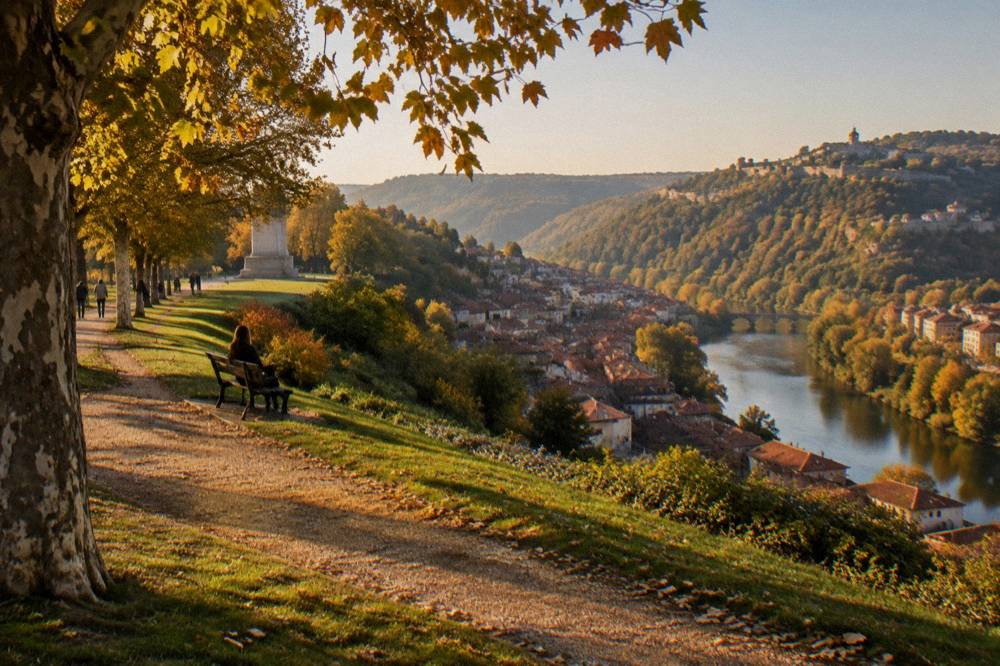
The event calendar gives certain dates something extra. The International Folklore Festival ran 18 to 25 July in 2026 in its 28th edition, the Arbanasi Summer Music chamber festival ran 15 to 25 July 2026 in the Arbanasi churches, and the Unification Day programme fell on 5 to 6 September 2026. Independence Day on 22 September brings a liturgy at the Forty Martyrs church, a reenactment and a flag ritual, and on those evenings the Sound and Light show on Tsarevets often follows, watched free from Tsar Asen I Square.
| Event | Date |
|---|---|
| Veliko Tarnovo Day | 22 March every year |
| International Folklore Festival | 18 to 25 July 2026 |
| Arbanasi Summer Music | 15 to 25 July 2026 |
| Unification Day programme | 5 to 6 September 2026 |
| Independence Day celebrations | 22 September, liturgy at the Forty Martyrs |
| Sound and Light show | Announced evenings only, free from Tsar Asen I Square |
What Can You See Around The Asenevtsi Monument In Veliko Tarnovo?
A walk built around the monument can continue through the free public spaces, Samovodska Charshiya, Gurko Street and Varosha, and then take in the paid hilltop sights: Tsarevets with the Patriarchal Cathedral, Trapezitsa, the Forty Martyrs church, the Archaeological Museum and the Tsarevgrad Tarnov multimedia centre. The Sound and Light show on Tsarevets rounds out an evening on announced dates, free from Tsar Asen I Square.
The free half of the walk needs no planning. Samovodska Charshiya is the historic street of the old town, Gurko Street and Varosha are the quarters around it, and all four spaces, including the monument, are open at all hours. The state of the art gallery and other smaller sights fill gaps, though hours for some of them should be confirmed on the official pages before a visit.
The paid half follows the museum's seasonal schedule. The Patriarchal Cathedral on Tsarevets is within the fortress ticket, the Church of St Dimitar opens by prior request in season, and the Church of Sts Peter and Paul joins a combined ticket with the Tsarevgrad Tarnov centre at 10.23 euro. Sarafkina House, built 1861, opens Tuesday to Saturday 09:30 to 17:30, and the Prison Museum keeps the same days. The table below collects the winter 2026 to 2027 changes that matter for planning.
| Sight | Winter 2026 to 2027 status |
|---|---|
| Museum sites generally | Winter hours start 25 October 2026 |
| Tsarevets | Winter entry 09:00 to 16:00, closes 17:00, no day off, Tuesday maintenance 09:10 to 11:00 |
| Trapezitsa | Closed 30 November 2026 to 31 March 2027 |
| Trapezitsa funicular | Stops for the season on 31 October 2026 |
| Konstantsalieva House, Arbanasi | Friday to Sunday only, 10:00 to 16:00, from 30 November 2026 to 20 March 2027 |
| Museum of New and Newest History | Temporarily not accepting visitors |
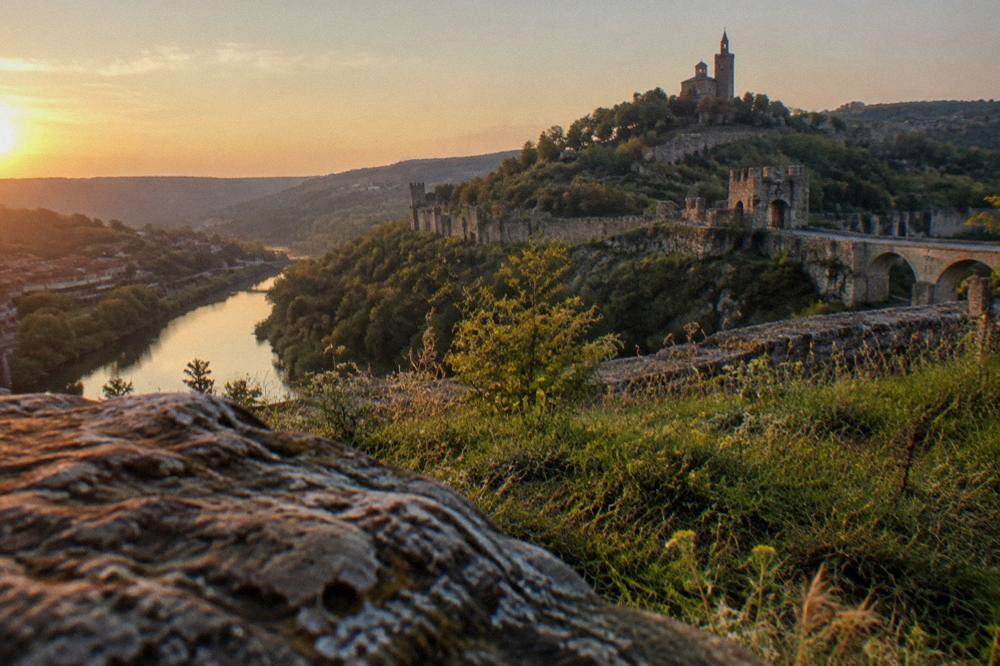
For visitors basing themselves in the city, the hotels with a view of the river bends put the monument within easy reach of the morning walk, and the Sound and Light show page tracks how the free viewing from Tsar Asen I Square works on announced evenings.
How Does The Asenevtsi Monument Fit Into A Wider Veliko Tarnovo Trip?
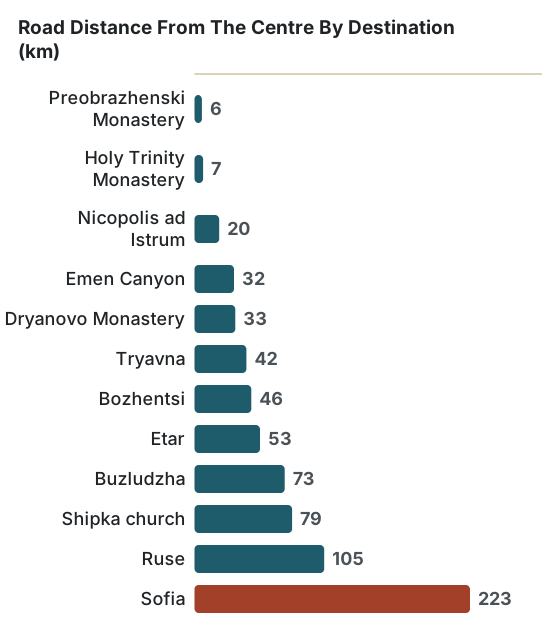
The monument works as a free anchor on any length of stay, from a single day built around the fortress and the old quarters to a multi-day base for day trips across northern Bulgaria. Road distances from the centre stand at about 6 km for Preobrazhenski Monastery, about 32 km for Emen Canyon, about 42 km for Tryavna, about 53 km for Etar, about 73 km for Buzludzha and about 79 km for the Shipka church, all reached by car, tour or bus.
Day trips from the city fan out in every direction, and the road distances below are the computed "about" figures this site uses. The monasteries near the city are the nearest paid-adjacent sights, and the national monuments further out, Shipka and Buzludzha, make a full day on their own; Buzludzha's interior is reported as generally closed, so confirm locally before counting on going inside.
| Destination | Road distance from the centre |
|---|---|
| Preobrazhenski Monastery | about 6 km |
| Holy Trinity Monastery | about 7 km |
| Nicopolis ad Istrum | about 20 km |
| Emen Canyon | about 32 km |
| Dryanovo Monastery | about 33 km |
| Tryavna | about 42 km |
| Bozhentsi | about 46 km |
| Etar | about 53 km |
| Buzludzha | about 73 km |
| Shipka church | about 79 km |
| Ruse | about 105 km |
| Sofia | about 223 km |
Emen Canyon, the gorge of the Negovanka river, lies about 20 km west of Veliko Tarnovo and 8 km off the Sofia road, and its Lower Boaz has 90 m sheer cliffs per the municipal tourism site. The Buzludzha monument and Shipka combine on one long loop, and a guided day tour from Sofia runs the reverse direction for visitors based in the capital.
Getting to the city in the first place sets the frame. No airport with scheduled flights serves Veliko Tarnovo; visitors arrive through Sofia, about 216 road km, Varna, about 214, or Bucharest Otopeni, about 205, and by train or bus. There is no direct train from Sofia: trains change, usually at Gorna Oryahovitsa, with the fastest journeys on the current timetable at 4 h 33 min and 4 h 51 min. Varna has one direct train at 3 h 53 min, and Ruse a direct one at 2 h 25 min. Bulgaria is a full Schengen member since 1 January 2025 and has used the euro since 1 January 2026, at a fixed rate of 1.95583 lev per euro, so the lev survives only as that conversion note.
Common Questions About The Asenevtsi Monument
The questions visitors ask about the Asenevtsi Monument in Veliko Tarnovo come down to five things: what it costs, when it is open, who it honours, where it stands and how it fits a wider trip. The answers are short because the sight is simple: it is free, always open, dedicated to the Asen dynasty, positioned on the Yantra bend, and best combined with the paid fortress sights and the free old quarters around it.
Is the Asenevtsi Monument free to visit?
Yes. The monument is a public space with no ticket and no gate, open at all hours, in the same category as Samovodska Charshiya, General Gurko Street and the Varosha quarter.
Does the Asenevtsi Monument have opening hours?
No. As a public space it is open at all hours, year round. The paid sights around it follow the Regional Museum of History's seasonal hours, with winter hours starting on 25 October 2026.
Who does the Asenevtsi Monument honour?
It honours the Asen dynasty, the rulers behind the uprising of Asen and Peter of 1185 to 1186 that restored the Bulgarian state and made Veliko Tarnovo the capital of the Second Bulgarian Kingdom for more than two centuries. Ivan Asen II, of the same line, raised the marble victory column of 1230 now in the Church of the Holy Forty Martyrs.
Is Veliko Tarnovo a UNESCO World Heritage Site?
No. Nothing in the city is inscribed or on the Tentative List. The nearest inscribed sites are the Rock-Hewn Churches of Ivanovo and the Thracian Tomb of Kazanlak, both 1979, and Nicopolis ad Istrum is on the Tentative List since 1984.
What else can you see near the Asenevtsi Monument?
The free public spaces of Gurko Street, Varosha and Samovodska Charshiya surround it, and the paid sights of Tsarevets Fortress with the Patriarchal Cathedral, Trapezitsa, the Forty Martyrs church and the Archaeological Museum sit on the hills above, all reachable on foot through the old town streets.
When is the best time of year to visit?
The monument is reachable in any month. The ERA5 reanalysis for Veliko Tarnovo, 1991 to 2020, shows mean daily highs of 27.6 C in July and 4.9 C in January, with a mean daily low of -3.8 C in January, so summer walks are warm and winter ones cold; the paid sights shift to winter hours from 25 October 2026.
A visit to the Asenevtsi Monument asks nothing of your itinerary except a detour: walk out onto the Yantra bend at whatever hour suits, read the dynasty's story against the river below, then carry on up the hills to the fortress or down through Varosha, with the whole free half of Veliko Tarnovo stitched together in between.