Bulgaria Travel Tips: Scams, Etiquette And Tipping
Bulgaria changed more in two years than in the two decades before it, and the old advice online is now wrong in places that matter. This guide covers what has actually changed, the euro, border rules, tipping and etiquette, and the practical details of visiting Veliko Tarnovo.
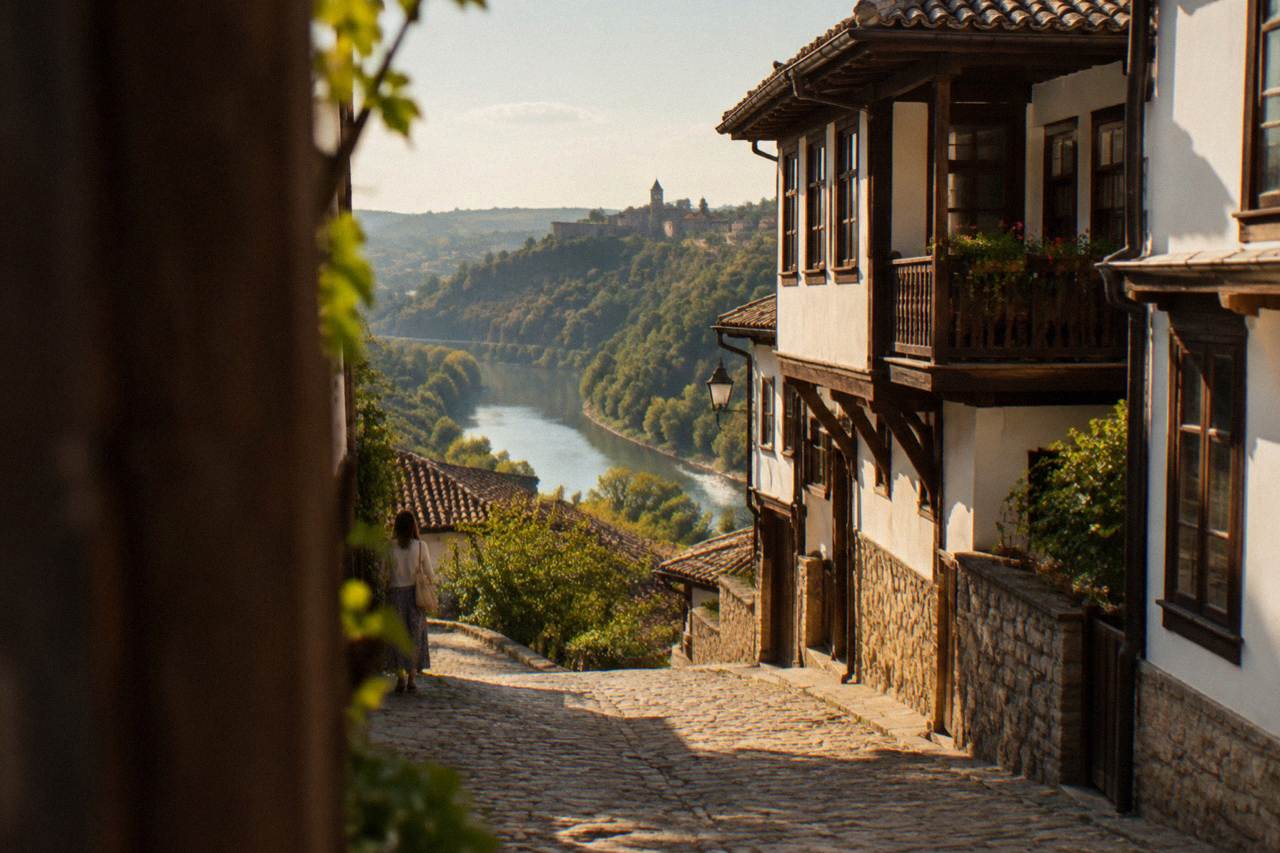
Bulgaria is a full Schengen member since 1 January 2025 and has used the euro since 1 January 2026, so no lev and no border stamps at internal crossings. Veliko Tarnovo, the medieval capital on the Yantra river, is visited on foot: the fortress costs 7.67 euro, tipping is voluntary, and the emergency number is 112.
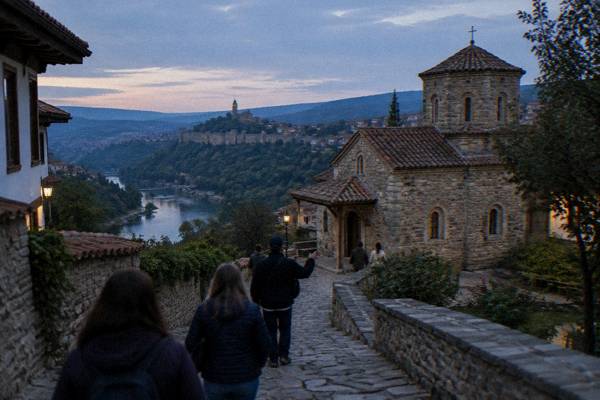
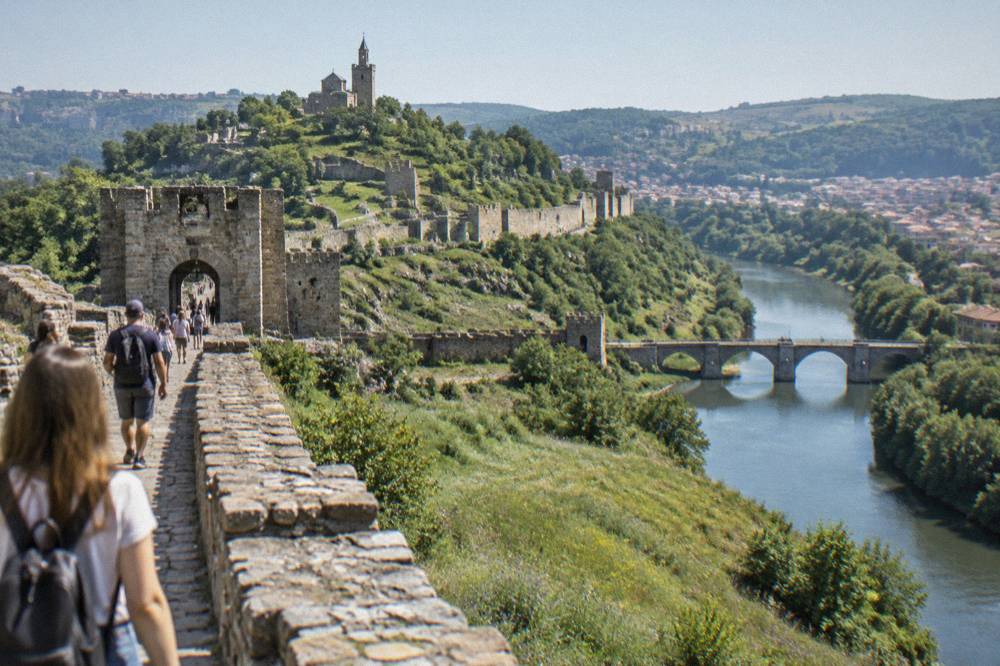
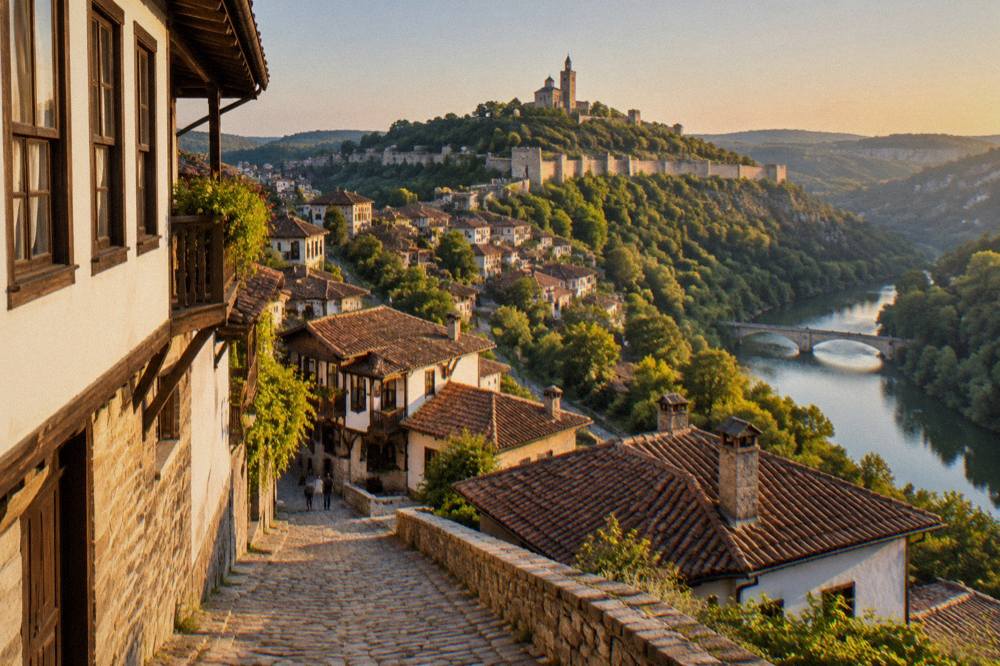
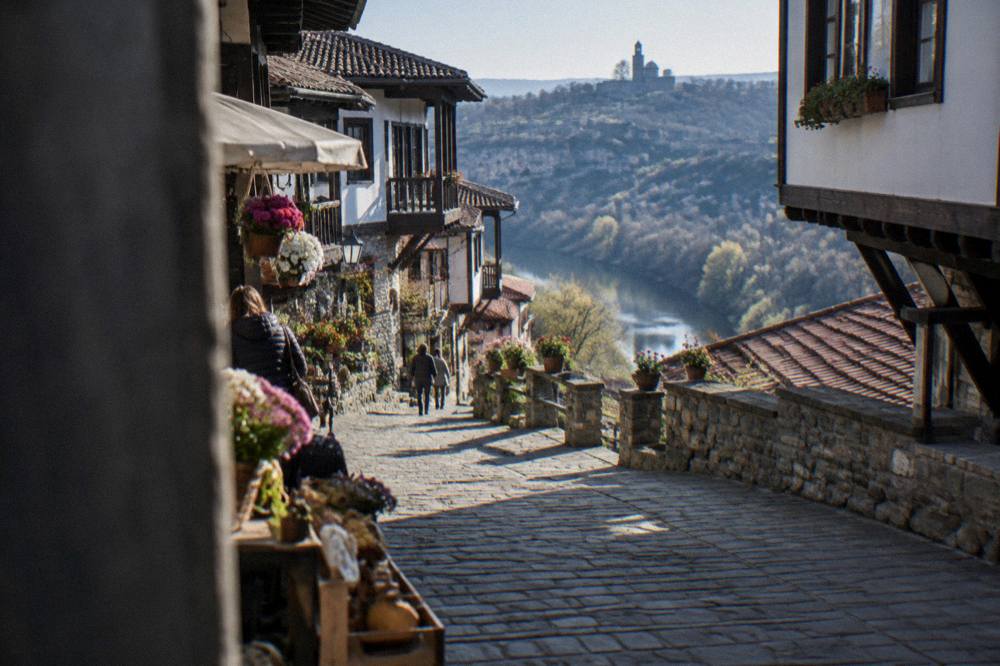
Veliko Tarnovo sits on a bend of the Yantra river in northern Bulgaria, an inland city of about 77,000 municipality residents that served as the capital of the Second Bulgarian Kingdom for more than two centuries from the late 12th century. Travellers arrive for Tsarevets Fortress, Trapezitsa, the Samovodska Charshiya craft street and the village of Arbanasi on the plateau above. What trips people up is rarely the city itself. It is the practical layer: a currency that changed on 1 January 2026, a border regime that changed in 2025, and a season calendar that closes half the museum network every winter. This guide collects the travel tips that actually apply to a visit now, from the euro in your pocket to how the museum week is structured. More on the essentials is on Veliko Tarnovo Travel Guide, and for a full sight plan start with things to do in Veliko Tarnovo.
What Changed In Bulgaria Recently That Affects Your Trip?
Two changes matter more than everything else combined: Bulgaria became a full Schengen member on 1 January 2025, ending routine border checks at internal crossings, and it adopted the euro on 1 January 2026 as the 21st euro area member, retiring the lev after decades of use. The fixed conversion rate was 1.95583 lev per euro. A third change, the Entry/Exit System, has registered biometrics at all Schengen external borders since 10 April 2026.
The lev question comes up constantly because almost every guide published before 2026 tells you to withdraw lev. Do not plan around that. Prices in Veliko Tarnovo are quoted in euro, the Regional Museum of History prints its tickets in euro, and the fixed rate of 1.95583 lev per euro explains why figures like 7.67 euro appear: they are clean lev amounts carried over at the official conversion. The euro and money guide covers cash points, cards and the changeover in more depth.
The Schengen change alters the border experience at the airport and on arrival from Romania. Air and sea checks between Bulgaria, Romania and the older Schengen states were already lifted on 31 March 2024, and full membership followed on 1 January 2025. If you fly into Bucharest Otopeni, about 205 road km from Veliko Tarnovo, and cross into Bulgaria by road, there is no routine passport control on that internal Schengen border. Arrivals from outside Schengen, including flights from the United Kingdom, register through the Entry/Exit System instead of receiving stamps.
Do You Need A Visa For Bulgaria, And What Documents Are Checked?
Bulgaria applies Schengen entry rules: citizens of the United States, the United Kingdom, Canada and Australia are reported to enter visa-free for up to 90 days in any 180, and should confirm current rules with official sources before travelling. Since 10 April 2026 the Entry/Exit System registers fingerprints and a facial image at external borders, replacing passport stamps. Bulgaria's currency and border systems are now fully aligned with the euro area.
ETIAS, the visa-waiver screening system often mentioned in older articles, is not operational, and no start date for it may responsibly be given. If a website tells you ETIAS is required "from next year", treat that as unconfirmed and check the official European Commission pages instead. For a UK or US passport holder the practical sequence at Sofia, Varna or Bucharest Otopeni is: passport check, EES biometric registration, then nothing further until departure.
Carry your passport rather than leaving it at the hotel, since Bulgarian law expects visitors to be able to identify themselves. The single European emergency number is 112, free from any phone, and it connects police, fire and medical services in English as well as Bulgarian. More on arrival logistics is in the getting to Veliko Tarnovo guide, and the nearest airport question is answered there too: no scheduled-flight airport serves the city itself.
How Much Should You Tip In Bulgaria?
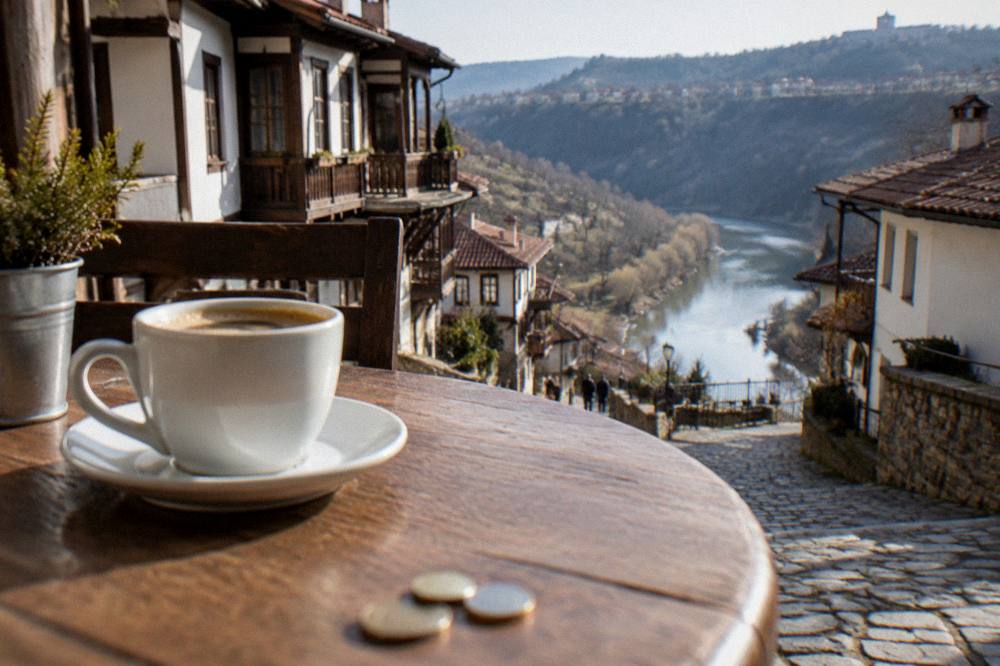
Tipping in Bulgaria is voluntary rather than obligatory, and there is no fixed percentage a server expects as of right: rounding a bill up, leaving the coins from the change, or adding a modest amount by card are all normal approaches, and nobody will chase you for more. What matters practically is that you decide the amount before the card terminal asks, because the machine prompts you to add a tip before you enter your PIN.
The etiquette around money in Bulgaria is otherwise light. A few habits help. Hand over cash rather than leaving it on the table in smaller establishments, since giving it directly is the standard courtesy. Say "dobro utro" for good morning and "blagodarya" for thank you: Bulgarian is written in the Cyrillic alphabet, and a word or two of it is received warmly, but English works in the tourist layer of Veliko Tarnovo without much friction. For the food itself, the Bulgarian food guide and the breakfast and banitsa page explain what to order; rakia, the fruit brandy that opens a proper Bulgarian table, has its own guide to rakia and wine.
On the "scams" half of this page's promise, honesty is the best tip of all: there is no specific, sourced scam pattern for Veliko Tarnovo that this page can responsibly print. The universal city rules apply everywhere and here too. Watch your belongings in crowds, agree a taxi fare or check the meter before the ride since taxi tariffs are not published in any pack this site holds, and book tours and tickets through channels you can cancel. The Is it safe for Americans to travel to Bulgaria right now? answer page covers the country-level question. The walking tours on this site's roster are paid products with published cancellation terms, and the open public spaces of the old town, the Asenevtsi Monument, Samovodska Charshiya, General Gurko Street and the Varosha quarter, are free to walk on your own at any hour.
What Are The Basic Bulgarian Etiquette Rules?
Bulgarian etiquette follows Balkan norms: a greeting when entering a shop, a handshake in formal settings, and shoes removed when invited into a home, with the head shake and nod occasionally reversed in ways that amuse locals and confuse everyone else. Dress modestly inside churches, with shoulders covered, since monasteries and medieval churches are active places of worship, and photograph people only with permission. Hospitality is offered generously and refusing it outright is the one real faux pas.
Churches deserve the longest note because Veliko Tarnovo is full of them. The Church of the Holy Forty Martyrs by the Yantra, the Church of Sts Peter and Paul and the Arbanasi churches are museum-run sites with tickets, while working monasteries such as Preobrazhenski Monastery, 6 km out, and the Holy Trinity Monastery, 7 km out, receive visitors during the day. Speak quietly, stand aside during a service, and ask before photographing icons or frescoes. The churches and monasteries near Veliko Tarnovo guide lists what is open when.
Two further habits save awkwardness. First, name days are celebrated in Bulgaria almost as much as birthdays, and if your host mentions theirs, a small gift or a bottle of wine fits. Second, when a Bulgarian pours you rakia, it is drunk in company and toasted with "nazdrave". Refusing food outright at an invitation is the discourtesy; a small portion accepted graciously is not.
What Does It Cost To Visit Veliko Tarnovo's Main Sights?
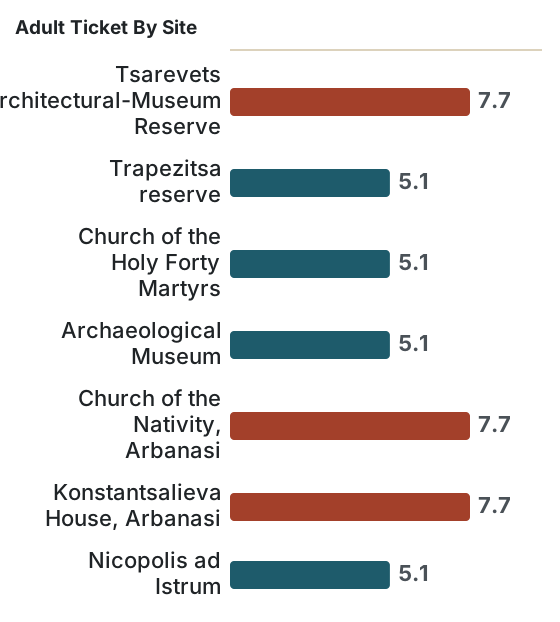
The headline figures are these: Tsarevets Fortress costs 7.67 euro for an adult, with a family ticket at 10.23 euro covering parents and up to three children aged 7 to 18, per the Regional Museum of History's ticket page, while the other major in-town sites each cost 5.11 euro, and the Arbanasi church and house tickets are 7.67 euro with families at 12.78 euro. Children under 7 enter free everywhere in the museum network.
Here is the full ticket picture for the sites the museum publishes:
| Site | Adult ticket | Family ticket |
|---|---|---|
| Tsarevets Architectural-Museum Reserve | 7.67 euro | 10.23 euro |
| Trapezitsa reserve | 5.11 euro | 7.67 euro |
| Church of the Holy Forty Martyrs | 5.11 euro | 7.67 euro |
| Archaeological Museum | 5.11 euro | 7.67 euro |
| Church of the Nativity, Arbanasi | 7.67 euro | 12.78 euro |
| Konstantsalieva House, Arbanasi | 7.67 euro | 12.78 euro |
| Nicopolis ad Istrum | 5.11 euro | no family ticket listed |
The Tsarevgrad Tarnov multimedia visitor centre charges 7.67 euro, with a combined ticket at 10.23 euro covering it together with the churches of Sts Peter and Paul and St Ivan Rilski. A two-day pass covering ten museum sites exists at 20.45 euro for an individual, valid 1 April to 30 November, with a family version at 25.56 euro. Reduced rates are published for students and, at Trapezitsa, for Bulgarian citizens over 60 at 2.56 euro. The cost of a Veliko Tarnovo trip is broken down day by day elsewhere on this site.
The season traps deserve their own table, because a winter arrival changes what is possible:
| Seasonal change | Dates |
|---|---|
| Winter hours begin at museum sites | from 25 October 2026 |
| Trapezitsa funicular stops for the season | 31 October 2026 |
| Trapezitsa reserve closed entirely | 30 November 2026 to 31 March 2027 |
| Konstantsalieva House open Fri to Sun only | 30 November 2026 to 20 March 2027 |
| Kilifarevo museum closed | 30 November 2026 to 30 March 2027 |
| Museum of New and Newest History | temporarily not accepting visitors |
In the peak season the fortress runs 08:00 to 20:00 from April to September, with the last entry an hour before closing. Every site in the network has one maintenance morning a week, listed on its ticket page, so a Tuesday or Wednesday arrival will brush against one of them. The Tsarevets guide carries the full hours detail.
How Do You Get To Veliko Tarnovo?
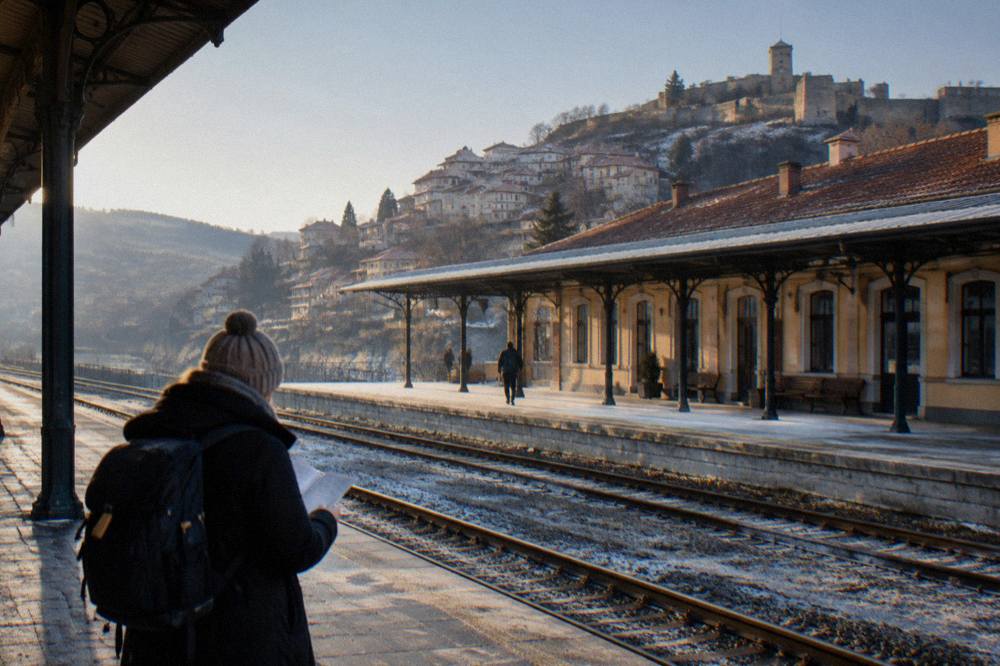
There is no airport with scheduled flights at Veliko Tarnovo, so arrivals go through Sofia, about 216 road km away, Varna at about 214 road km, or Bucharest Otopeni at about 205 road km. By train there is no direct service from Sofia: every connection changes, usually at Gorna Oryahovitsa, with the fastest journeys at 4 h 33 min and 4 h 51 min on the October 2026 timetable. Varna has one direct train at 3 h 53 min, and Ruse a direct one at 2 h 25 min.
Buses fill the gap that the rail network leaves. Sofia to Veliko Tarnovo by coach takes about 3 to 3.5 hours with several operators, arriving at the Yug bus station on Hristo Botev Boulevard near the centre, while direct buses from Bucharest take about 3 h 50 min to 4 h 15 min. The train station guide and the bus station guide cover timetables, and the BDZ journey planner should be checked for the day you travel, since times move with the season.
| Route | Best option | Time |
|---|---|---|
| Sofia to Veliko Tarnovo | train, change at Gorna Oryahovitsa | 4 h 33 min fastest |
| Varna to Veliko Tarnovo | direct train | 3 h 53 min |
| Ruse to Veliko Tarnovo | direct train | 2 h 25 min |
| Sofia to Veliko Tarnovo | direct coach | about 3 to 3.5 h |
| Bucharest to Veliko Tarnovo | direct coach | about 3 h 50 min to 4 h 15 min |
Once in the city, everything worth seeing sits within walking distance of the centre, and the getting around guide explains the on-foot geography. A car is only worth having for the day trips, and the car rental and parking pages cover that decision. Distances to the classic day trips, all by road from the centre: Arbanasi 2.8 km straight-line, Emen Canyon about 32 km, Tryavna about 42 km, Etar about 53 km, and Ruse about 105 km.
When Is The Best Time To Visit Veliko Tarnovo?
The climate is continental, with an ERA5 reanalysis 1991-2020 mean daily high of 27.6 C in July and 4.9 C in January, and a mean daily low of -3.8 C in January; May carries the heaviest rainfall at 95.7 mm and August the lightest at 51.3 mm. Practically, April to October keeps every museum site open at full hours, while winter closes Trapezitsa and shortens everything else from 25 October 2026.
The full monthly picture from the same ERA5 reanalysis:
| Month | Mean daily high | Mean daily low | Rain |
|---|---|---|---|
| January | 4.9 C | -3.8 C | 56.1 mm |
| April | 16.9 C | 6.0 C | 71.6 mm |
| July | 27.6 C | 17.2 C | 79.5 mm |
| August | 28.1 C | 17.1 C | 51.3 mm |
| October | 17.6 C | 8.0 C | 58.9 mm |
| December | 6.1 C | -1.7 C | 60.6 mm |
The shoulder months carry the calendar's interest. The city holiday falls on 22 March, the International Folklore Festival ran 18 to 25 July in 2026, and Arbanasi Summer Music filled the village churches from 15 to 25 July 2026. The Sound and Light audio-visual show on Tsarevets runs on announced evenings only, with no fixed schedule, and watching it from Tsar Asen I Square is free. The best time to visit guide and the spring and autumn page work through the seasons, the weather guide holds the full climate table, and the winter guide explains what stays open when the museum network narrows.
What Should You Pack For Veliko Tarnovo?
Pack for hills and seasons: stout shoes with grip for the cobbles and fortress paths, layers for a continental swing that runs from a January mean low of -3.8 C to an August mean high of 28.1 C, modest shoulder-covering layers for church visits, and a light rain layer for May's 95.7 mm monthly rainfall in the ERA5 reanalysis 1991-2020. Cash in euro remains useful for small museums and craft stalls.
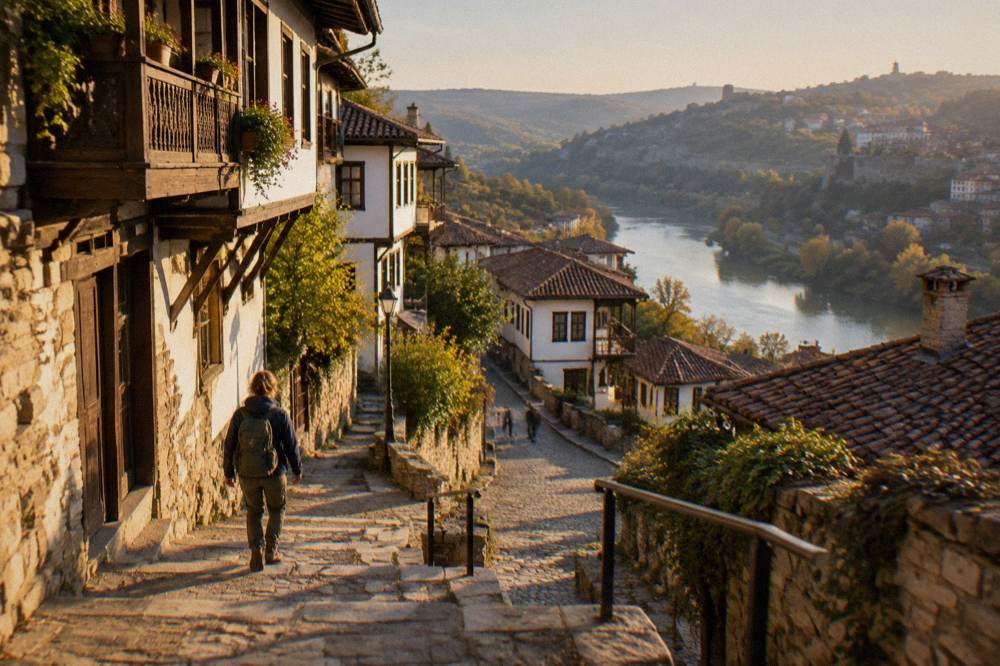
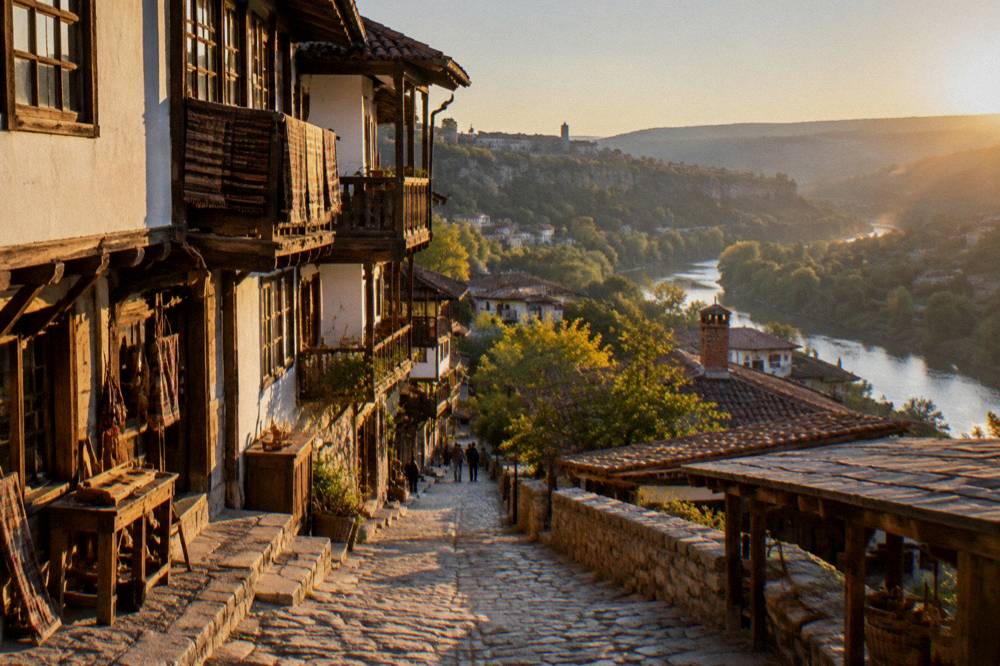
The city is built on slopes. Tsarevets and Trapezitsa are hills, Samovodska Charshiya and the Varosha quarter sit on inclined lanes, and the riverside walk between them descends stairways. Footwear matters more here than in a flat capital. A reusable bottle and sun protection earn their place from June to August, and a warm layer for evenings carries through the shoulder months even when afternoons feel warm.
Practical extras worth ten seconds of packing thought: a plug adapter for the European two-pin socket, offline maps downloaded before arrival, and a small day bag for monastery and church visits where modest dress is expected. The where to stay guide and the hotels with a view page handle the bed, and the restaurant guide handles the table.
What Day Trips Work From Veliko Tarnovo?
The classic day trips sit in a 40 to 100 km ring: Tryavna at about 42 road km, Bozhentsi about 46 km, the Etar open-air museum about 53 km, Emen Canyon about 32 km by road, and, further out, Ruse about 105 km and the Kazanlak tomb about 98 km. Etar's entry is confirmed at 7.16 euro for an adult, with reduced rates for pupils, students and pensioners, and free entry for children under 7. It is open year-round with no days off.
Etar deserves its place at the top of the list for craftwork alone: the architectural-ethnographic complex preserves workshops in operation, and its International Fair of Traditional Crafts is reported for 4 to 6 September 2027 as a 20th, jubilee edition. The Etar guide covers it in depth, alongside the Tryavna and Bozhentsi pages. For the natural side, the Emen Canyon page covers the gorge of the Negovanka river, 20 km west of the city, where the Lower Boaz has 90 m sheer cliffs.
Two UNESCO notes prevent disappointment. Nothing in Veliko Tarnovo itself is inscribed or on the Tentative List. The nearest World Heritage Sites are the Rock-Hewn Churches of Ivanovo and the Thracian Tomb of Kazanlak, both inscribed in 1979, and the Roman city of Nicopolis ad Istrum, about 20 road km north, has sat on the Tentative List since 1984 with a 5.11 euro entry ticket. The history guide explains the medieval capital story that frames all of it.
How Do You Handle Money, Cards And The Euro Day To Day?
Bulgaria uses the euro and nothing else since 1 January 2026, so no currency exchange is needed if you already hold euro, and any remaining lev reference you meet is historical. Cards are accepted in hotels, restaurants and the museum ticket system, which sells online in euro, while coins matter for small purchases, craft stalls and market stands. The fixed conversion rate of 1.95583 lev per euro explains every odd-looking price you will see.
That rate is why a fortress ticket costs 7.67 euro rather than a round figure: it is the old 15 lev converted exactly, and the museum prints the euro figure as the only price. Prices in shops and menus are displayed in euro. Tipping by card is straightforward because the terminal itself offers the option before the PIN, and the amount you choose is your own decision rather than an expected percentage.
For budgeting, the confirmed sight prices above are the reliable anchors: 7.67 euro for Tsarevets, 5.11 euro for the other city museums, 7.16 euro at Etar. What this site will not do is invent a restaurant-price band or a hotel rate, because no sourced figure exists for them; check the current price on the official page before booking anything beyond the tickets listed above. The euro and money guide and the cost guide carry the practical detail.
Is It Easy To Communicate In English In Veliko Tarnovo?
Bulgarian is the official language, written in the Cyrillic alphabet, and English functions in the tourist layer of Veliko Tarnovo: museum signage, ticket pages in English, hotels and the walking tours on this site's roster. Beyond that layer a few Cyrillic letters and a handful of spoken phrases carry you a long way, and the emergency line 112 operates in English.
Learning to read Cyrillic takes an evening and repays the effort immediately, because bus destinations, street names and shop signs open up. Five words do real work: "zdraveyte" for hello, "blagodarya" for thank you, "molya" for please, "da" and "ne" for yes and no. The nod-shake reversal is real enough to be worth knowing: Bulgarians can indicate yes with a head shake and no with a nod in traditional usage, though in tourist settings people adapt.
For pronunciation help and a longer phrase list, the Bulgarian phrases for travellers page is the reference on this site. For a deeper introduction to what the city is and why it matters, the what Veliko Tarnovo is famous for article covers the medieval capital story in full.
What Practical Habits Make A Veliko Tarnovo Visit Smooth?
Check the museum week before you plan a day: every site has one two-hour maintenance morning, Tsarevets on Tuesday from 09:10, and the seasonal calendar switches on 25 October 2026. Keep 112 in your phone, hold some euro cash alongside your card, and treat the Sound and Light show as a bonus rather than a scheduled event, since it runs on announced evenings only and is free to watch from Tsar Asen I Square.
A sample of how the pieces fit together. Arrive midweek, walk the fortress in the morning before the day heats up in summer, spend the afternoon in Samovodska Charshiya and the Varosha quarter, which cost nothing, and check the Sound and Light calendar for your dates on the chance an evening show is announced. On a second day, take the funicular up to Trapezitsa before 31 October if your visit is in autumn, or the Church of the Holy Forty Martyrs and the Archaeological Museum in any season. From there, day trips fan out to Etar, Tryavna and Arbanasi.
If a guided introduction appeals, the private or self-guided tour of the city at your own pace is the product this site features for exactly that job, and it can be checked for your dates here: Check availability.
Common Questions About Bulgaria Travel Tips
Is Bulgaria cheap or expensive for visitors?
No sourced price comparison against other countries can responsibly be given. What is confirmed: Tsarevets costs 7.67 euro, the other city museums 5.11 euro, and a two-day pass covering ten museum sites is 20.45 euro. The rest of a budget depends on your choices, and the cost guide on this site works through it.
Do I need cash in Bulgaria now that it uses the euro?
Cards work in hotels, restaurants and the museum online ticket system. Coins and small notes are useful at craft stalls, market stands and small sites. The euro has been the only currency since 1 January 2026, at a fixed rate of 1.95583 lev per euro.
Is tipping expected in Bulgaria?
Tipping is voluntary, not an obligatory service charge. Rounding up a bill, leaving the change, or adding a tip at the card terminal before entering your PIN are all normal. The amount is your own decision.
Do Bulgarians shake their heads for yes?
In traditional usage a head shake can mean yes and a nod can mean no, which is a known source of confusion. In tourist settings people adapt, and a spoken "da" or "ne" removes all doubt.
What is the emergency number in Bulgaria?
112, the single European emergency number, free from any phone, connecting police, fire and medical services in English as well as Bulgarian.
Can I visit Veliko Tarnovo without a tour?
Yes. The public spaces of the old town, including the Asenevtsi Monument, Samovodska Charshiya, General Gurko Street and the Varosha quarter, are free and open at all hours, and the museum sites sell individual tickets. The walking tours on this site's roster are paid products, available for those who prefer a guide.
The short version of every tip on this page: the country changed on 1 January 2025 and again on 1 January 2026, the medieval city on the Yantra did not, and a visit planned around the museum calendar, the announced-evening Sound and Light shows and a pair of comfortable shoes will run without friction.