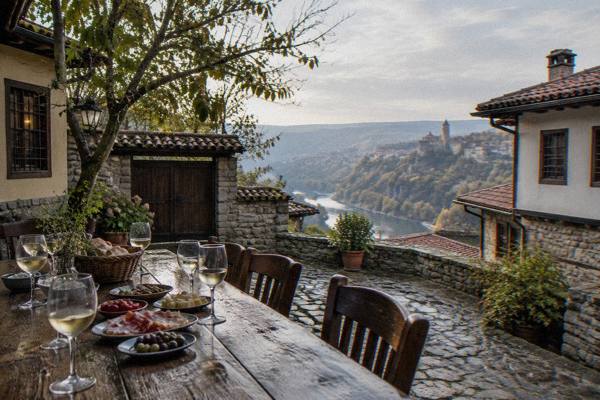
Bulgarian Food: What To Eat In Veliko Tarnovo
Bulgarian food in Veliko Tarnovo runs on grilled meats, cheese pastries, cold salads and rakia, eaten in mehana dining rooms a short walk from Tsarevets and the Varosha quarter. This guide sets out the dishes to know, how breakfast works, what to drink, and how to plan meals around the city's sights.
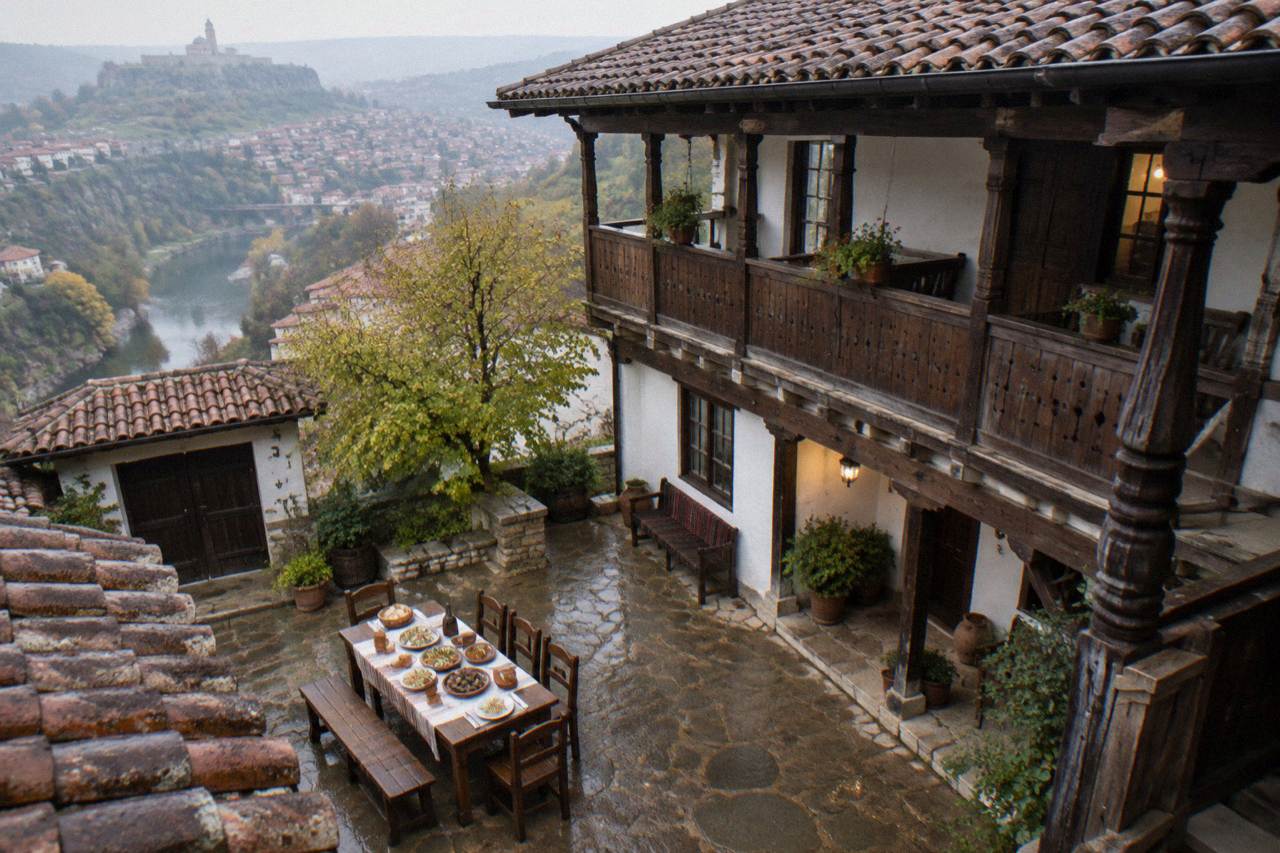
Order shopska salad, kebapche and a banitsa, drink rakia or a Bulgarian red, and eat in a mehana. Veliko Tarnovo serves the national table, not a separate regional cuisine.
Bulgarian food reaches Veliko Tarnovo the same way it reaches every Bulgarian table: through grilled meat, brined cheese, yoghurt, bread and seasonal vegetables, served in mehana dining rooms that keep long hours. This is an inland city on the Yantra river with no sea coast, so the cooking here is the continental national repertoire rather than a coastal one. The municipal tourism site frames the old quarters, Samovodska Charshiya among them, as the places where that table meets the visitor, and the Veliko Tarnovo Travel Guide covers the sights those meals sit between. What follows is the vocabulary: the dishes, the breakfast, the drinks, and the habits that shape a day of eating in the former medieval capital.
What Is Bulgarian Food Like In Veliko Tarnovo?
Bulgarian food is a continental, vegetable-and-grill cuisine built on brined white cheese, yoghurt, peppers, tomatoes, bread and charcoal-grilled minced meat, served in generous shared plates rather than rigid courses. In Veliko Tarnovo that repertoire arrives unchanged from the national table: this is an inland city with no sea coast, so the mehana menus lean on salads, stews and grills rather than fish. Meals are long, bread comes first, and rakia opens the table.
Three things shape the plate here. First, the climate: the ERA5 reanalysis, 1991-2020, puts the mean daily high at 28.1 C in August and 4.9 C in January, with May the wettest month at 95.7 mm, and that continental swing is exactly what a cuisine of summer tomatoes and winter stews answers. Second, the yoghurt: Bulgarian cooking treats soured milk as an ingredient, not a breakfast side, and it lands in cold soups, on hot dishes and beside grilled meat. Third, the sharing format: a Bulgarian table typically opens with salads and rakia, moves to a shared hot dish or grills, and treats dessert as an afterthought rather than a right.
None of this needs a museum ticket to understand, though the city's own history sits close by. The history of Veliko Tarnovo runs from the late 12th century restoration of the Bulgarian state through the 1393 fall and the 1879 Tarnovo Constitution, and the food culture that survives is the village and small-town cooking of that later world, not a palace cuisine. Practicalities are simple too: Bulgaria has used the euro since 1 January 2026, and the money guide covers the changeover from the lev at the fixed rate of 1.95583.
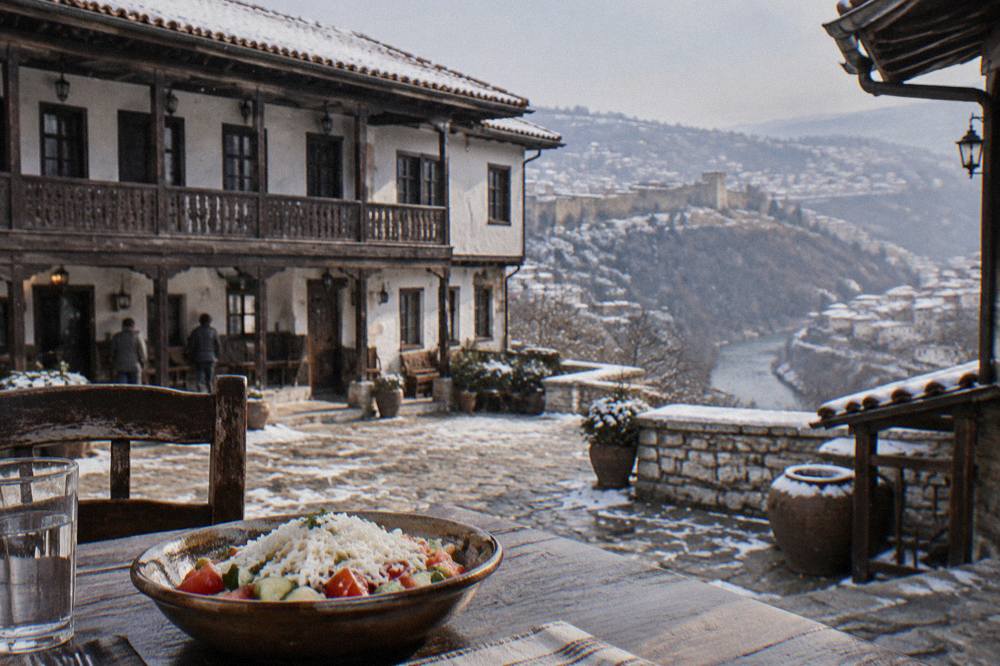
Which Bulgarian Dishes Should You Try First In Veliko Tarnovo?
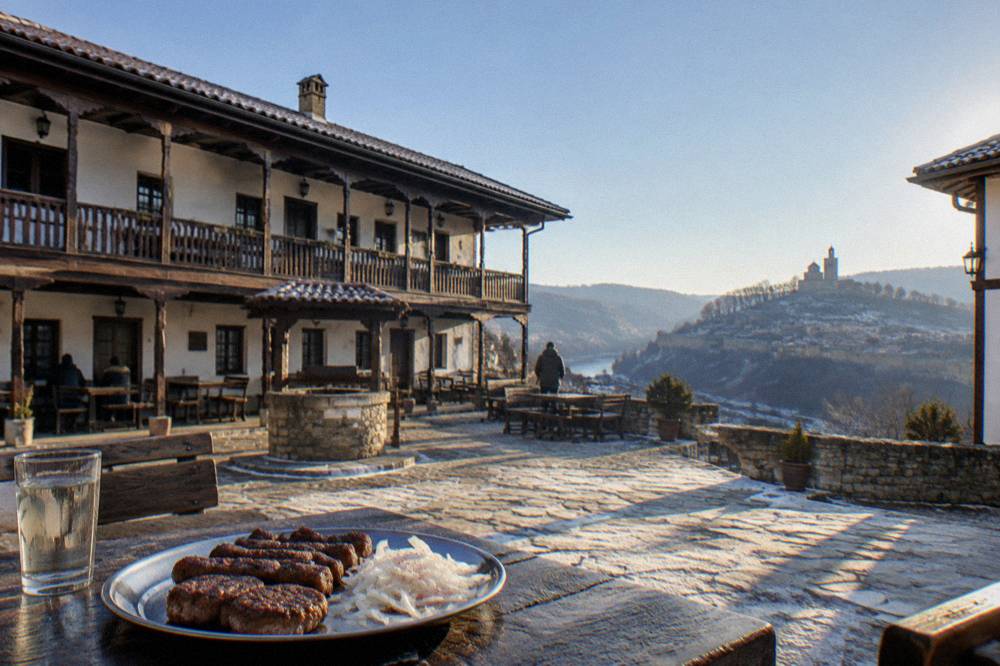
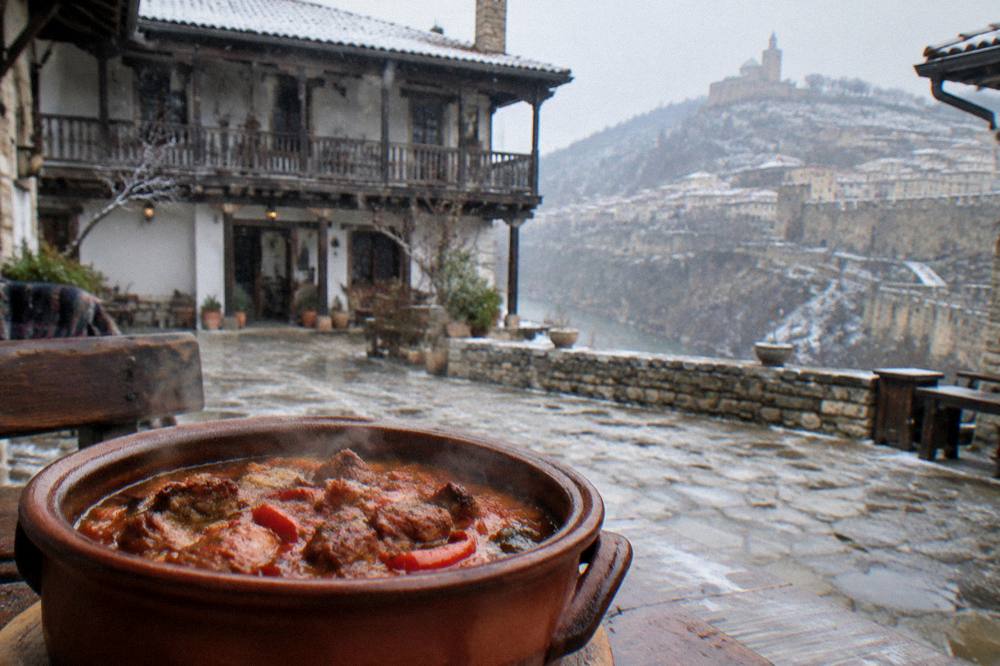
Start with shopska salad, kebapche and kavarma, and work outward from there. Shopska is diced tomato, cucumber, pepper and onion under a heap of grated brined white cheese; kebapche is a charcoal-grilled minced-meat roll served with raw onion or lyutenitsa; kavarma is a clay-pot pork or chicken stew with peppers and onion. Add tarator, the cold yoghurt and cucumber soup, in the warm months. Together they cover the Bulgarian table's three registers: raw, grilled and stewed.
The fuller list is long, but the core is compact. Below is the working vocabulary, described as general Bulgarian custom rather than as any single kitchen's version, because no restaurant in this city has had its menu, hours or prices checked for this page. What each dish is, is national custom; where to eat it is a choice the restaurant guide treats separately.
| Dish | What it is | How it arrives |
|---|---|---|
| Shopska salad | Diced tomato, cucumber, roasted or raw pepper, onion, grated white cheese | Cold, as the opening plate |
| Tarator | Cold yoghurt soup with cucumber, walnut, dill, oil | Chilled, summer standard |
| Kebapche | Charcoal-grilled minced-meat roll, spiced | Hot, in pairs or threes |
| Kyufte | Grilled flattened meatball of the same spiced mince | Hot, beside kebapche |
| Kavarma | Pork or chicken stewed with onion and pepper in a clay pot | Bubbling, individual pot |
| Gyuvech | Slow-baked vegetable and meat casserole | Hot, shared or single |
| Musaka | Potato and minced-meat bake topped with yoghurt and egg | Cut in squares, hot |
| Banitsa | Filo pastry with white cheese and egg filling | Warm, any hour |
| Mekitsi | Fried dough squares, dusted with cheese or jam | Warm, breakfast |
| Lyutenitsa | Roasted pepper and tomato relish | Cold, as a spread or side |
Two ordering habits are worth knowing. Bread arrives at the table without being asked and is treated as part of the meal, not a charged extra to refuse. And the salad course is not a diet course: it comes with rakia, it comes first, and it can last an hour, which is the point.
What Does A Bulgarian Breakfast Look Like In Veliko Tarnovo?
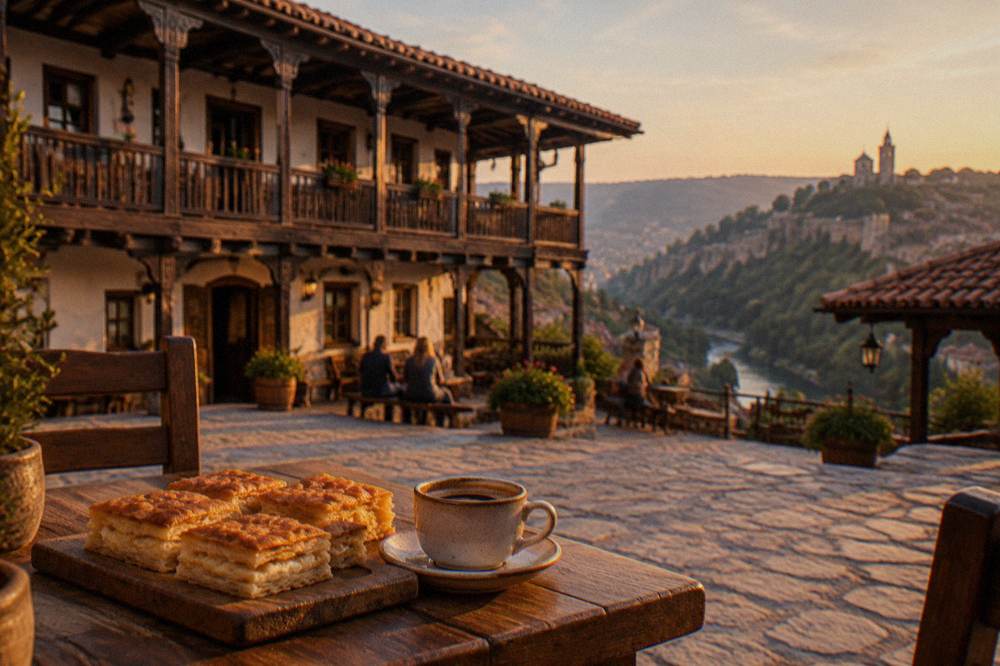
A Bulgarian breakfast is built around banitsa, the filo-and-cheese pastry, alongside mekitsi fried dough, yoghurt with honey or jam, and strong coffee, with ayran, the salted yoghurt drink, as the savoury alternative to anything sweet. It is a bakery and dairy breakfast, not an egg-and-bacon one, and in Veliko Tarnovo it is eaten before a morning at Tsarevets Fortress or a walk down to the river bends.
The pastry case deserves its own page, and has one: the breakfast and banitsa guide covers the fillings, the cheese, the sweet versions and the coffee that goes with them. The short version is that banitsa is a whole category, not a single item, and that mekitsi, the fried dough alternative, are the weekend register of the same table.
| Breakfast item | What it is | When it fits |
|---|---|---|
| Banitsa with cheese | Filo layers, brined cheese, egg | Every morning |
| Banitsa with pumpkin | Sweet filo version, sugar-dusted | Autumn and winter baking |
| Mekitsi | Fried yeast dough, cheese or jam on top | A slower morning |
| Yoghurt with fruit | Soured milk, honey, walnuts | The light start |
| Ayran | Yoghurt, water, salt, blended | The savoury drink |
| Boza | Fermented grain drink, thick and sweet | With mekitsi, by custom |
A morning that pairs breakfast with the fortress works well with the timetable the museum publishes. Tsarevets is open April to September from 08:00 to 20:00 with last entry at 19:00, and in October from 09:00 to 18:00 with last entry at 17:00, per the Regional Museum of History's ticket page, with winter hours from 25 October 2026 running 09:00 to 16:00 entry. An 08:00 start in the warm season leaves the middle of the day free for a long lunch, which is the meal Bulgarians themselves give the most room to.
Where Should You Eat In Veliko Tarnovo?
Eat in a mehana, the Bulgarian tavern format, for the full grill-and-salad repertoire, and in the bakeries and market streets for the quick daytime food: banitsa by the square, coffee on Tsar Asen I Square, and the crafts street Samovodska Charshiya for a slower stop. The public spaces of the old town, including General Gurko Street and the Varosha quarter, are free to walk at any hour and put the dining rooms and the views in one loop.
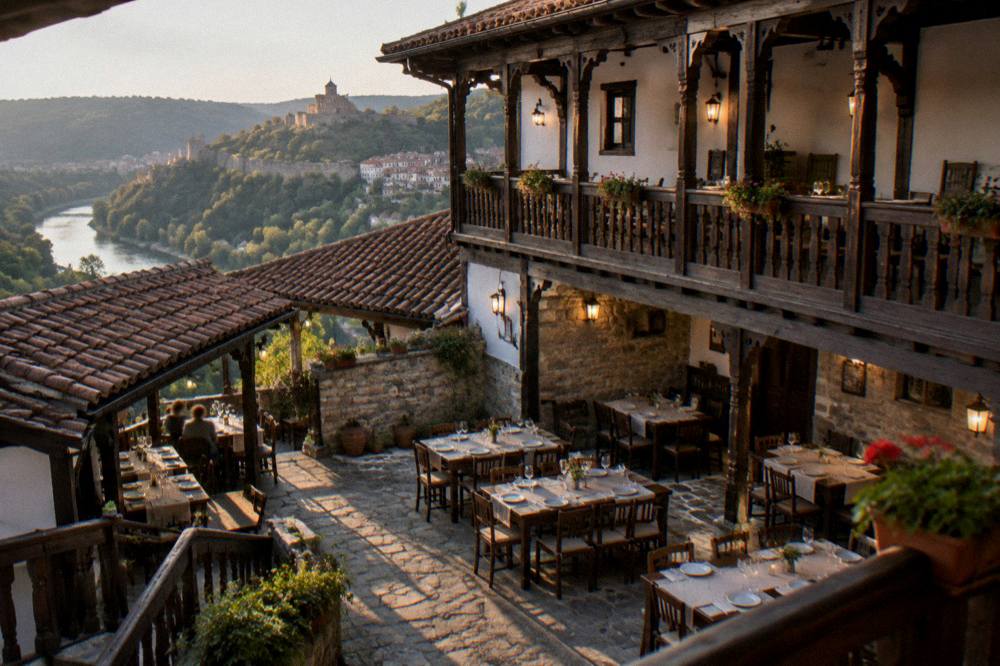
The honest division of labour on this page is that the food guide describes the dishes and the customs, while the question of which specific kitchens to book belongs to the dedicated restaurants page. What can be said in general terms is the geography. The old quarters sit on foot of one another: Samovodska Charshiya is the revived crafts street, General Gurko Street runs with the river below it, and the Varosha quarter holds the church of Sts Peter and Paul, open April to September 09:00 to 18:00 with winter visits by prior request. A walk that strings these together passes every kind of eating place the city has.
Two customs are worth carrying into any mehana. The first is the shared table: dishes arrive when they are ready, not in strict courses, and the salad and rakia phase is expected to run long. The second is the mixed grill, which solves the choice problem by bringing kebapche, kyufte and sometimes a skewer together on one plate. Ordering one salad, one clay-pot dish and one mixed grill for two people is the standard play, and it needs no menu expertise.
The city's walking tours are paid products, and the open squares and streets cost nothing to explore alone; either way, a guided city monuments walk ends somewhere central enough that lunch follows it naturally.
What Should You Know About Rakia And Bulgarian Wine In Veliko Tarnovo?
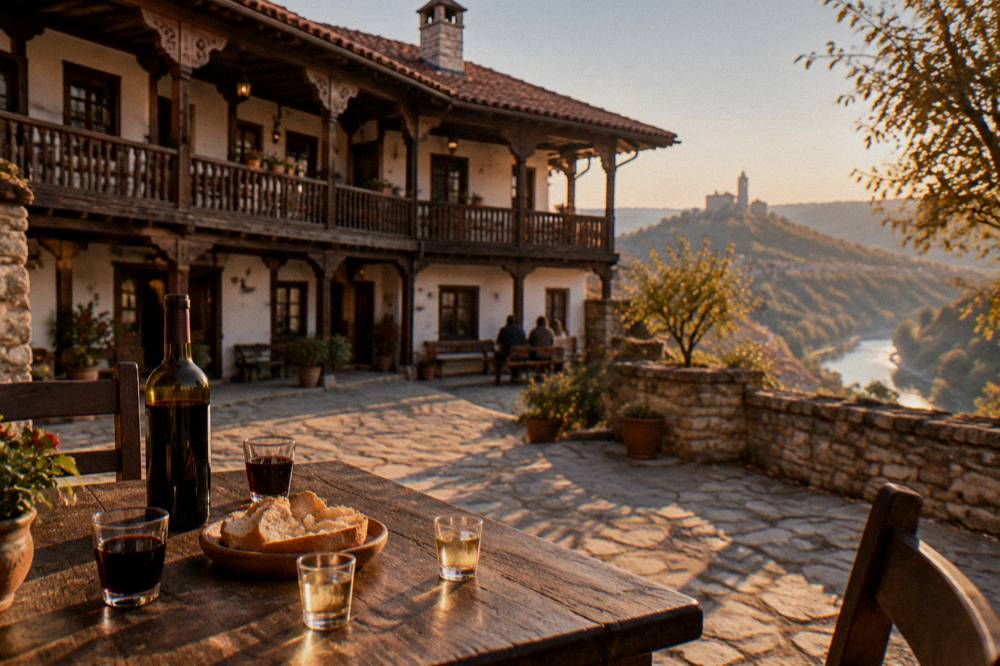
Rakia is the national fruit brandy, made most often from grapes or apricots, drunk neat in small glasses before the meal, and treated as the table's opening ritual rather than a quick shot; Bulgarian wine leans on a red called Mavrud, a local white variety Misket, and the wide international plantings of Merlot and Cabernet Sauvignon. Melnik, from the southwest, is the named red to meet first. Together rakia and wine frame every Bulgarian dinner.
The full picture, including how rakia is served, what the grape varieties are and how the wine regions map out, sits on the rakia and Bulgarian wine page. The short etiquette is simple: rakia opens the table, wine carries the main course, and a toast is made eye to eye. Salata first, rakia beside it, and no rush.
| Drink | What it is | How it is served |
|---|---|---|
| Rakia | Fruit brandy, grape or apricot | Small glass, neat, before eating |
| Melnik red | Dry red from the Melnik grape | With grills and stews |
| Mavrud | Full-bodied red variety | With heavy meat dishes |
| Misket | Aromatic local white | With salads and lighter plates |
| Ayran | Salted yoghurt drink | Any hour, savoury |
| Boza | Fermented grain drink | Sweet, with breakfast pastry |
For travellers who want the tasting without the dinner, a structured wine tasting experience runs in the city as a bookable product, and the listing carries its own price, duration and rating. Bulgaria's euro-era pricing makes the arithmetic plain at the till since 1 January 2026, with the lev retired at the fixed rate of 1.95583 to the euro.
How Does Food Fit Into A Day Of Sights In Veliko Tarnovo?
The shape of the day is breakfast near the centre, a long late lunch after the fortress or Trapezitsa, and dinner late in a mehana in the Varosha or Gurko Street area, because the museum sights keep fixed seasonal hours while the eating places run around them. Tsarevets opens 08:00 in the April to September season and the Sound and Light show runs on announced evenings, free to watch from Tsar Asen I Square, which makes dinner the natural end of a sightseeing day.
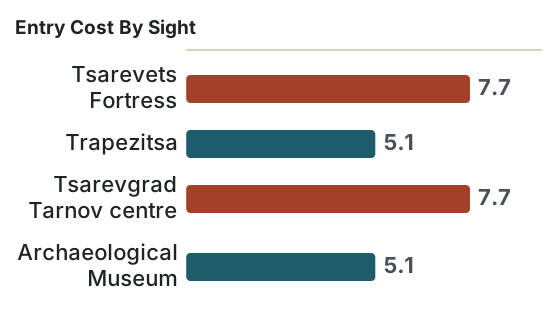
The seasonal timetable decides the rhythm. In the warm months an early fortress start, entry 7.67 euro for an adult with a family ticket at 10.23 euro per the museum's ticket page, leaves the afternoon open. Trapezitsa charges 5.11 euro and is closed 30 November 2026 to 31 March 2027, and its funicular stops for the season on 31 October 2026, so an autumn visit that wants both hills should plan the second one before that date. The multimedia visitor centre Tsarevgrad Tarnov, at 7.67 euro, and the Archaeological Museum, at 5.11 euro, fill the middle hours. A one-day plan is on the one day in Veliko Tarnovo page, and longer versions at two days and three days.
| Sight stop | Entry cost | Hours that shape the meal plan |
|---|---|---|
| Tsarevets Fortress | 7.67 euro | April to September 08:00 to 20:00 |
| Trapezitsa | 5.11 euro | April to September 09:00 to 19:00 |
| Tsarevgrad Tarnov centre | 7.67 euro | April to September 09:00 to 19:00 |
| Archaeological Museum | 5.11 euro | April to October 09:00 to 18:00 |
| Sound and Light from the square | Free | Announced evenings only |
None of this requires a car inside the city, and the getting around guide covers the options. Arriving from further afield changes the plan only slightly: the day trip from Sofia and the day trip from Bucharest pages cover the journeys in, and both leave room for one proper sit-down meal.
What Should Vegetarians Know About Bulgarian Food In Veliko Tarnovo?
A vegetarian eats well on the Bulgarian table, because its opening act is entirely meatless: shopska and the other cheese-and-vegetable salads, tarator in summer, grilled peppers, stuffed peppers with rice and cheese, banitsa, and the bean stew called grav chorba give a full day of food with no grill in sight. The catch is the cooking liquid and the garnishes, where a small amount of meat or its fat can appear in an otherwise vegetable dish, so the phrase bez meso, without meat, is the one worth knowing.
The strong positions are the dairy and vegetable ones. Stuffed peppers and stuffed vine leaves come in meatless versions by default in many kitchens, and the potato-and-mince musaka has vegetarian cousins built on mushrooms or plain potato. Lent, kept in the Orthodox calendar, produces a whole parallel menu of vegan dishes, and those appear on menus in the weeks before Easter. Grilled vegetables, kesmet bread, brined cheese and honey make a full meze-style meal without touching the charcoal.
The churches and monasteries guide covers the calendar context, including Preobrazhenski Monastery about 6 km out and the Arbanasi churches, and the fasting menus track that calendar. Within the city, the Church of the Holy Forty Martyrs, 5.11 euro to enter, sits at the foot of Tsarevets and is the church where Bulgarian independence was declared on 22 September 1908, so a food walk and a history walk share the same ground.
Can You Take Bulgarian Food Home From Veliko Tarnovo?
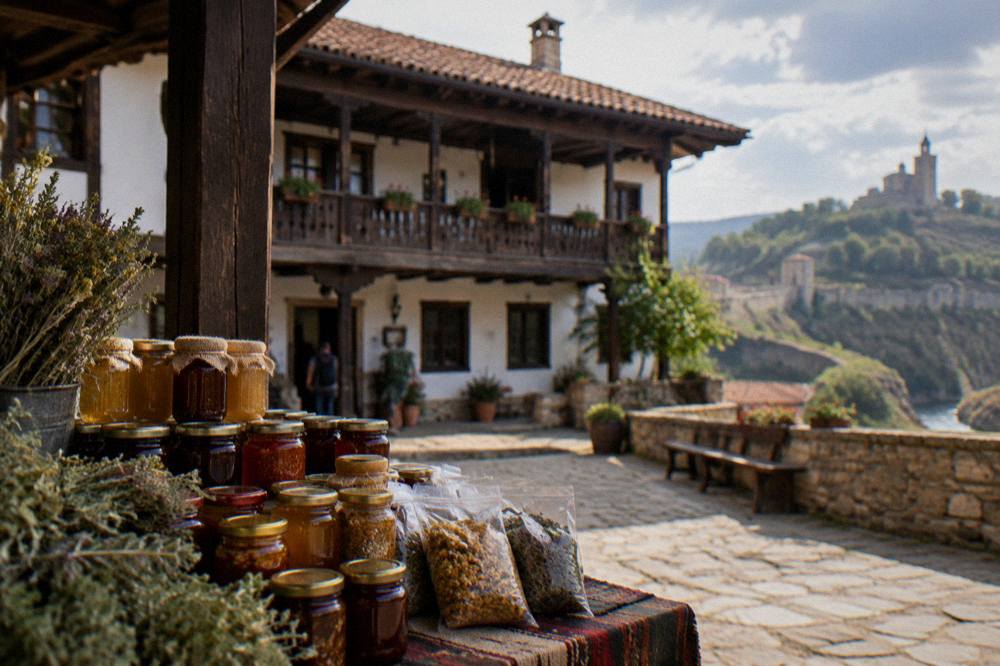
The take-home foods are the shelf-stable ones: rose oil and rose products, jars of lyutenitsa and honey, spice mixes, and the herb teas sold on the crafts street, and the practical limit is liquid rakia in hand luggage, which airport rules rather than Bulgarian ones constrain. Samovodska Charshiya is the crafts-and-souvenirs street where the food gifts sit alongside the pottery, and the shopping and souvenirs guide maps it out.
What travels well is what keeps. Lyutenitsa in sealed jars, honey, dried herbs, rose jam and rose water from the Rose Valley, and packets of the spice mix for shopska or kavarma all survive a journey and carry the flavours of the table home. Cheese does not travel well and neither does banitsa, which is a dish for eating where it is baked. Rakia travels in a checked bag or a sealed duty-free-style purchase, and the amounts depend on the destination's customs rules rather than on anything Bulgarian.
| Take-home item | What it is | How it travels |
|---|---|---|
| Lyutenitsa | Roasted pepper and tomato relish | Sealed jar, suitcase |
| Rose jam | Petal preserve from the Rose Valley | Sealed jar |
| Honey | Local wildflower or herb honey | Sealed jar |
| Herb tea | Mountain herbs, dried | Paper packet |
| Chubritsa | Savory, the Bulgarian herb mix | Dry packet |
| Rose water | Distilled rose product | Sealed bottle |
A lighter souvenir of the same idea is the Mini Bulgaria park, a bookable entry ticket that walks visitors past miniature versions of the country's landmarks, a fitting close to a food trip that has toured the country by plate. The Mini Bulgaria entry ticket page carries the details, or Check availability directly.
When Is The Best Season For Bulgarian Food In Veliko Tarnovo?
Late summer is the strongest eating season, because the tomato-and-pepper repertoire behind shopska, tarator and lyutenitsa depends on field-ripened vegetables, and the ERA5 reanalysis, 1991-2020, puts the warm months at a mean daily high of 27.6 C in July and 28.1 C in August, while autumn brings the pumpkin banitsa and the clay-pot stews as the mean high falls to 17.6 C in October. Winter is the season of grills, stews and the Christmas market table.
The best time to visit guide and the weather page carry the month-by-month detail, including the May rainfall peak of 95.7 mm and the August low of 51.3 mm, and the food calendar tracks it closely. Spring means lamb at Easter, green salads returning and the herbs coming back to the market. The spring and autumn guide covers both shoulder seasons.
The winter kitchen is its own argument for a cold-weather visit. The grills keep going, kavarma improves with the drop in temperature, and the Christmas market in Marno Pole park follows its late-November-to-1-January pattern, with 2026 dates to be confirmed closer to the season on the municipal channels. The Christmas market page collects what is known. Museum hours shorten from 25 October 2026, which pushes the day's weight towards the long indoor lunch, and that is no hardship in this cuisine.
Common Questions About Bulgarian Food In Veliko Tarnovo
What food is Veliko Tarnovo known for?
Veliko Tarnovo serves the national Bulgarian repertoire: shopska salad, kebapche and kyufte from the grill, kavarma in clay pots, banitsa from the bakeries, tarator in summer and rakia to open the table. As an inland city with no sea coast it has no distinct coastal fish tradition of its own.
What is the most popular Bulgarian food?
The shopska salad is the national signature: diced tomato, cucumber, pepper and onion under grated brined white cheese. Banitsa runs it close as the everyday food, eaten at breakfast and any hour from a bakery.
What do Bulgarians eat for breakfast?
Breakfast is banitsa or mekitsi, yoghurt with honey or jam, ayran or boza to drink, and strong coffee. It is a bakery and dairy meal rather than a cooked egg one. The breakfast and banitsa guide on this site covers it in full.
What drink goes with a Bulgarian meal?
Rakia, the fruit brandy, opens the table in small glasses before the salad course; Bulgarian wine, red or white, carries the main course; ayran is the non-alcoholic yoghurt alternative at any hour.
Is Bulgarian food good for vegetarians?
Yes. Salads, tarator, stuffed peppers with rice, banitsa, bean stew and grilled vegetables give a full day of meatless eating. The one caution is that vegetable dishes can be cooked with meat fat, so the phrase bez meso, without meat, is worth knowing.
Can I pay by card in Veliko Tarnovo restaurants?
Bulgaria has used the euro since 1 January 2026 and card acceptance is normal in city dining rooms, though a small cash float is useful at market stalls and bakeries. The euro and money guide on this site covers the changeover and the old lev rate.
A food day in Veliko Tarnovo ends where it began, with bread on the table and the fortress lit above the river: eat the salad slowly, let the clay pot arrive when it arrives, and leave room for one more piece of banitsa in the morning.