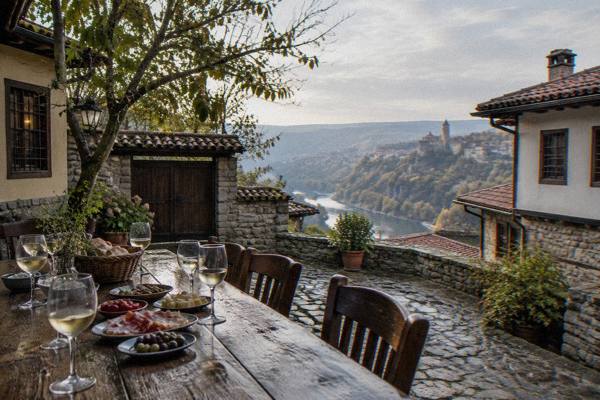
Best Restaurants In Veliko Tarnovo
A practical guide to eating in Veliko Tarnovo: what Bulgarian mehana dining actually is, which dishes and drinks to look for, how to structure a meal, and how food fits around the fortress, the old town and the day trips.
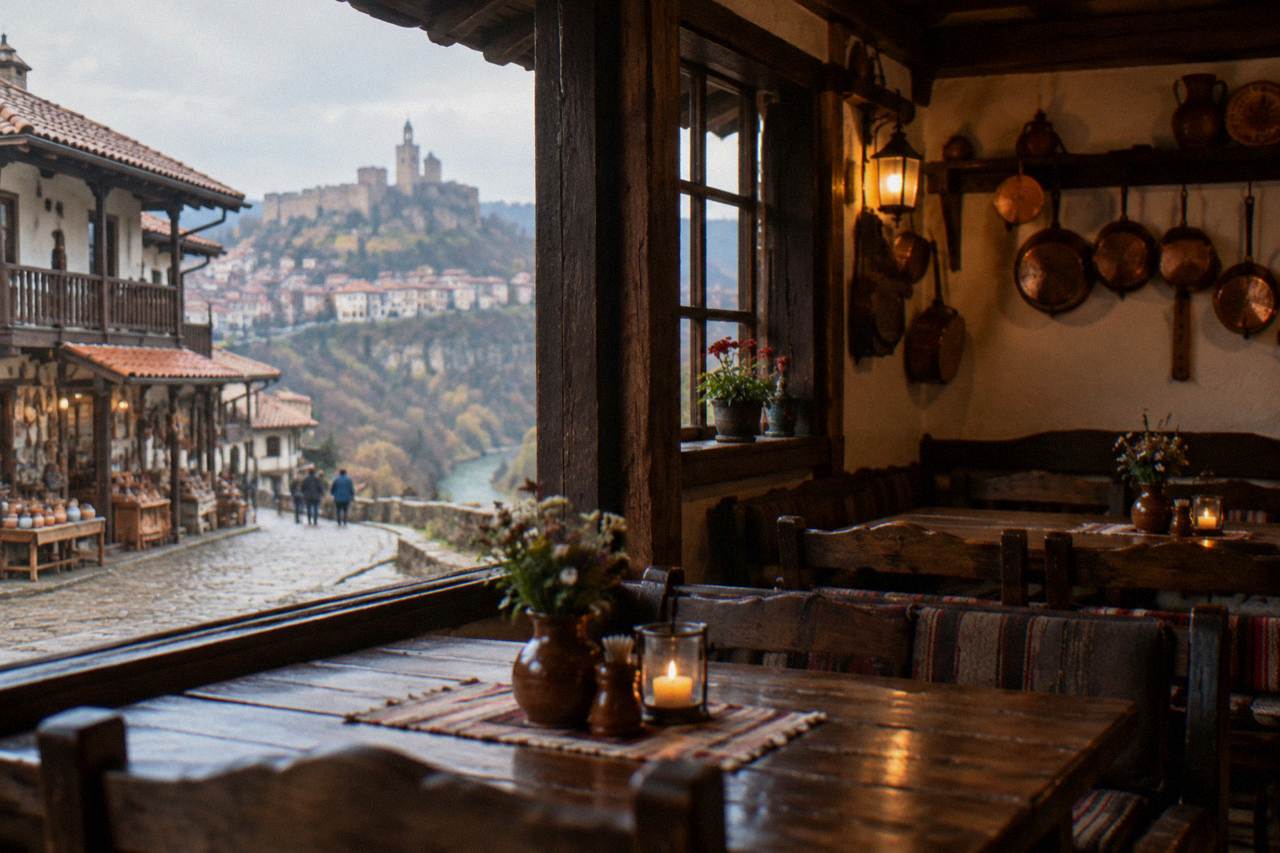
Eating in Veliko Tarnovo means the Bulgarian mehana: a salad-first meal with grilled meats, rakia or wine, and no fixed courses. Hours and prices vary from restaurant to restaurant in the city, so this guide covers the dishes, customs, drinks and food-adjacent planning that hold true wherever you sit down.
Eating out in Veliko Tarnovo is eating out in Bulgaria, and Bulgaria does that in a particular way: the mehana, a tavern-style restaurant built around salads, grilled meats, slow stews and rakia, where a meal unfolds in rounds rather than rigid courses. The city sits on the Yantra river, inland, with the fortress hills of a medieval capital rising over the tables. This guide takes a different approach from a ranked venue list. No restaurant, mehana, cafe or bar in Veliko Tarnovo has had its address, opening hours or prices checked against a primary source, so this page names none of them as recommendations and prints no meal prices. Instead it covers what holds true wherever you eat: the dishes, the customs, the drinks, breakfast, self-catering, and how meals fit around the sights and the day trips. For the wider picture of the cuisine, start with the companion Bulgarian Food Guide and the things to do in Veliko Tarnovo overview.
What Kind Of Food Is Veliko Tarnovo Known For?
The food of Veliko Tarnovo is the food of the Bulgarian interior: yogurt and cheese at the centre, vegetables served cold as salads, grilled and stewed meats, and bread with nearly everything. The dishes are pan-Bulgarian classics such as shopska salad, kebapche, kavarma and banitsa rather than city-specific inventions, and the characteristic venue is the mehana, a tavern in the national revival style where the meal is long and unordered by strict courses. The city was the capital of the Second Bulgarian Kingdom for more than two centuries, from the late 12th to the 14th century, and its visitor economy grew up around that old core: the tables cluster in and below the Varosha quarter, along the streets that serve the fortress traffic, and up in Arbanasi village. The cooking itself belongs to the continental tradition of the Danubian plain and the Balkan valleys: heavy on peppers, tomatoes, cucumber, white brine cheese, pork and lamb, light on seafood, because there is no coast here. Eating well in this city is less about finding one famous address and more about knowing the vocabulary of the menu, which is what the rest of this page teaches.
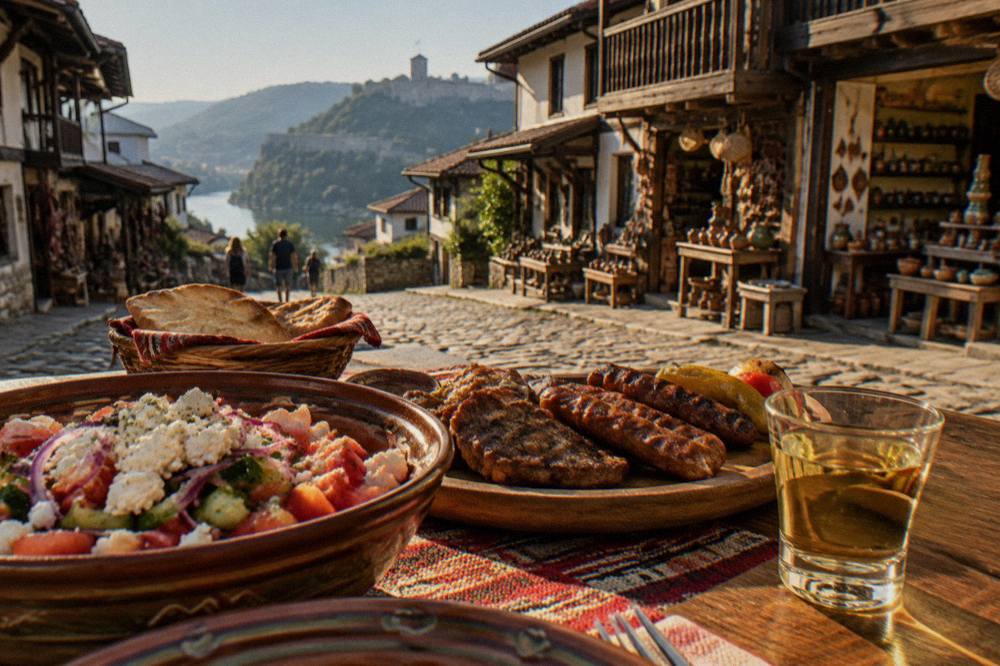
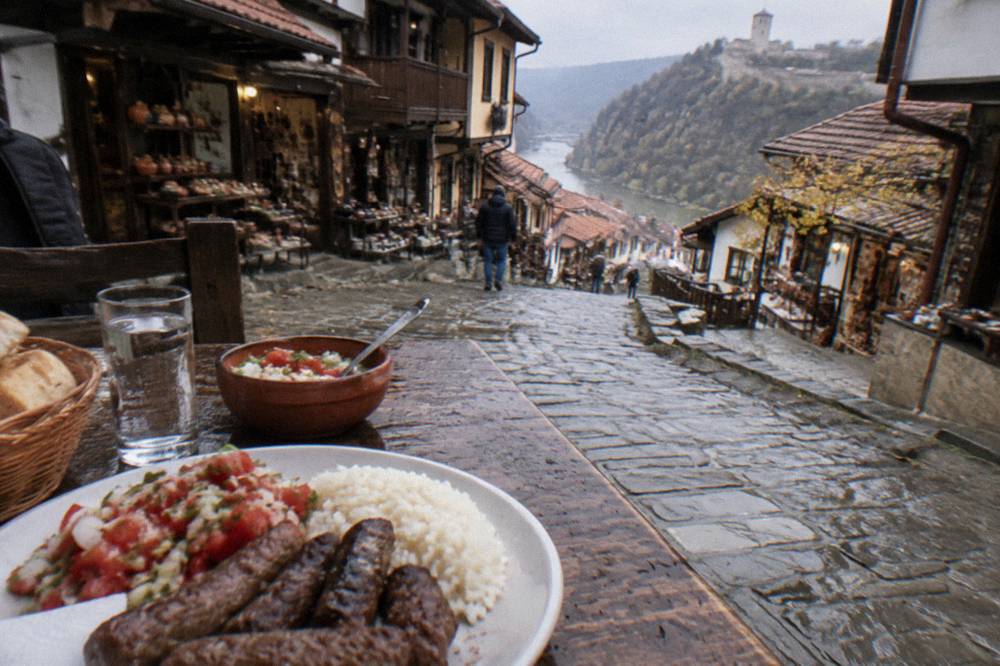
The building blocks are stable across the country. Yogurt appears at breakfast, in cold tarator soup in summer, and as a side. White brine cheese, sirene, tops the salads and fills the filo pastries. Grills run on pork and lamb: kebapche, the skinless minced sausage; kyufte, its flat meatball cousin; karnache, a coarser sausage. Slow dishes include kavarma, a meat and vegetable stew finished in a clay pot, and sarmi, cabbage or vine leaves rolled around rice and meat. Desserts are modest: baklava, sweet pancakes with rose jam, or simply fruit in season.
| Dish | What it is | When it is eaten |
|---|---|---|
| Shopska salad | Tomatoes, cucumber, peppers, onion, white brine cheese, parsley | The default starter, any season |
| Tarator | Cold yogurt soup with cucumber, garlic, walnut, dill | Summer |
| Kebapche | Skinless grilled minced-meat sausage with spices | Main course, with sides |
| Kyufte | Grilled flattened meatball | Main course |
| Kavarma | Pork or lamb stewed with vegetables, served in a clay pot | Main course, colder months |
| Banitsa | Filo pastry with cheese (or pumpkin or spinach filling) | Breakfast, all-day snack |
| Sarmi | Cabbage or vine leaves rolled around rice and meat | Main course, winter tradition |
| Moussaka | Potato and minced-meat bake with egg and yogurt topping | Main course |
What Is A Bulgarian Mehana And How Does The Meal Work?
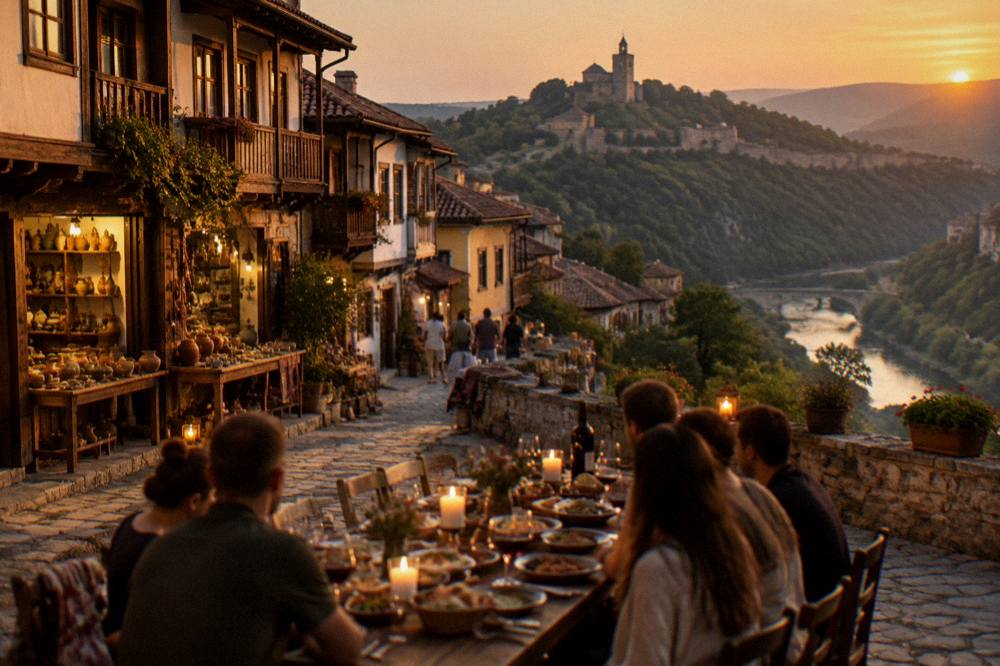
A mehana is a Bulgarian tavern restaurant, and the meal it serves has a recognizable order: a salad arrives first with rakia or wine, grilled or stewed mains follow, and the pace is slow, with dishes landing to share rather than in plated courses for one. Ordering typically starts with a salad big enough for the table and a bottle or a round of rakia; bread comes automatically; the mains can arrive together or staggered, and nobody hurries you out. The word itself comes from the Turkish meyhane, and the format spread through the Ottoman-era Balkans, but the modern mehana is a deliberately Bulgarian institution: many are decorated in the national revival style, with heavy wood, copper and woven textiles, and menus that read like a national songbook of dishes. In Veliko Tarnovo the format fits the town, because the evenings here are long and the old quarters are compact; a mehana dinner after a day on Tsarevets is the standard rhythm of a visit. Two customs are worth knowing before you sit down. First, the salad course is not optional garnish, it is the anchor of the meal, and choosing it well matters more than choosing the grill. Second, rakia, the fruit brandy, is drunk in small glasses, slowly, before and alongside the food, never as a shot race; a toast, nazdrave, precedes the first sip.
| Stage of the meal | What is ordered | The custom around it |
|---|---|---|
| Opening | Salad for the table, bread, rakia or wine | A toast before the first drink |
| Meze middle | Grilled peppers, cheese, cured meat, dips | Shared plates, refilled as needed |
| Mains | Grills or stews, one per person or shared clay pots | Sides ordered separately, rice or potatoes |
| Finish | Fruit, baklava or sweet pancakes | Coffee or herbal tea, no rush to leave |
A practical note on the city itself: the walking tours on the roster in Veliko Tarnovo are paid products, and there is no free guided walk to build a meal around, but the open public spaces, Samovodska Charshiya, General Gurko Street, the Varosha quarter and the Asenevtsi Monument, are free to wander at any hour and are where much of the old-quarter dining life sits. If you want the layout before dinner, the Veliko Tarnovo walking tour guide covers the quarters street by street.
How Do You Plan Eating Around The Sights In Veliko Tarnovo?
Plan the day around the fortress schedule and let meals follow it: Tsarevets is open from 08:00 to 20:00 between April and September with last entry at 19:00, October runs 09:00 to 18:00, and winter hours from 25 October 2026 run 09:00 to 16:00 with closing at 17:00.
A full fortress morning therefore leaves the afternoon and evening free for a long mehana dinner, and the Sound and Light show on its announced evenings, free to watch from Tsar Asen I Square, gives the night a fixed end point. The museum sites that charge admission cost 7.67 euro at Tsarevets and 5.11 euro at the smaller museum sites, per the Regional Museum of History's ticket pages, so a sightseeing day is a walking day, and eating becomes about timing rather than distance: breakfast before the fortress, a light lunch in the old quarters between museums, and dinner after the evening show or instead of it. The compact geography helps. The Varosha quarter, Samovodska Charshiya and Gurko Street are all free public spaces that sit between the fortress hill and the river, which means lunch stops suggest themselves along the walking routes rather than requiring a trip across town. In winter the calculus changes: with entry at the museum sites ending at 16:00 from late October, dinner becomes the main event of the short day, and the Christmas market pattern in Marno Pole park, late November into January in its recent editions, adds an outdoor food-and-crafts layer, though its 2026 dates had not been announced. The wider set of guides lives on Veliko Tarnovo Travel Guide.
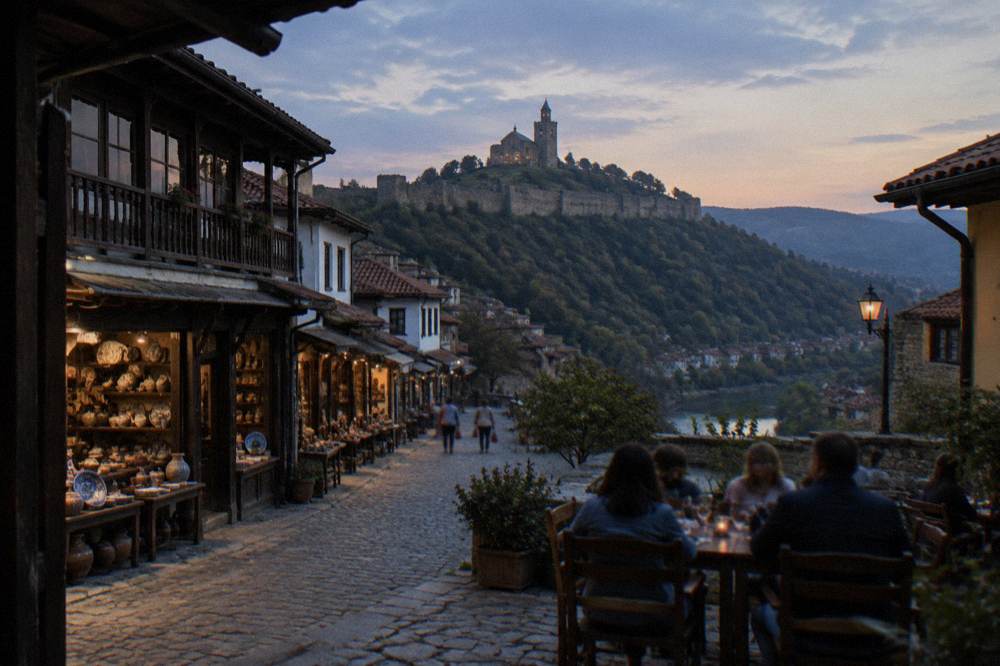
The seasonal rhythm matters for what is on the plate. The ERA5 reanalysis, 1991-2020, puts the mean daily high at 28.1 C in August and 4.9 C in January, with a mean daily low of -3.8 C in January, which is the difference between tarator and cold salad evenings and kavarma-in-a-clay-pot evenings. The best-time-to-visit question and the what-to-eat question answer each other.
| Season | ERA5 reanalysis, 1991-2020, mean daily high | What the menu leans toward |
|---|---|---|
| March to May | 11.5 C rising to 21.7 C | Spring lamb, green salads, the first grilled peppers |
| June to August | 25.4 C to 28.1 C | Tarator, shopska, cold meze, lighter grills |
| September to October | 23.3 C falling to 17.6 C | Full mehana dinners, clay-pot stews return |
| November to February | 6.1 C to 11.8 C | Kavarma, sarmi, slow pork dishes, hot rakia infusions |
If the fortress and the old town fill day one, the second day can pair food culture with something off the hill. The Mini Bulgaria park near the city can be booked with entry and an e-guide included: Check availability on the tour page. It is the featured experience on this page because it slots neatly into a morning or afternoon without eating the whole day, leaving the evening mehana intact.
What Should You Know About Breakfast In Veliko Tarnovo?
Breakfast in Bulgaria is a carbohydrate and dairy affair built around banitsa, the filo-and-cheese pastry, eaten warm with ayran, a salted yogurt drink, or boza, a sweet fermented grain drink, and in Veliko Tarnovo the same items are on offer everywhere from bakeries to hotel tables, with eggs, yogurt, honey and walnuts filling out the plate. There is no separate Bulgarian brunch culture to master; the morning meal is quick, cheap by habit, and often standing. The full background, including the banitsa variants by filling and the boza question, is in the dedicated breakfast and banitsa guide. What matters for planning is timing: the fortress opens at 08:00 in the summer season, so breakfast is either early or becomes a mid-morning pastry stop, and in winter, with museum entry starting at 09:00, the bakery-first routine fits naturally.
| Breakfast item | What it is | The drink that goes with it |
|---|---|---|
| Banitsa with sirene | Filo pastry, white brine cheese, butter | Ayran or boza |
| Banitsa with tikvenik filling | Pumpkin and walnut filo roll | Tea or boza |
| Mekitsi | Fried dough squares, sugar or jam | Ayran, coffee |
| Yogurt with honey and walnuts | Strained Bulgarian yogurt | Coffee |
| Katino meze | Fried eggs with sirene, yogurt, chili | Rakia, on festive mornings |
What Should You Drink With Dinner In Veliko Tarnovo?
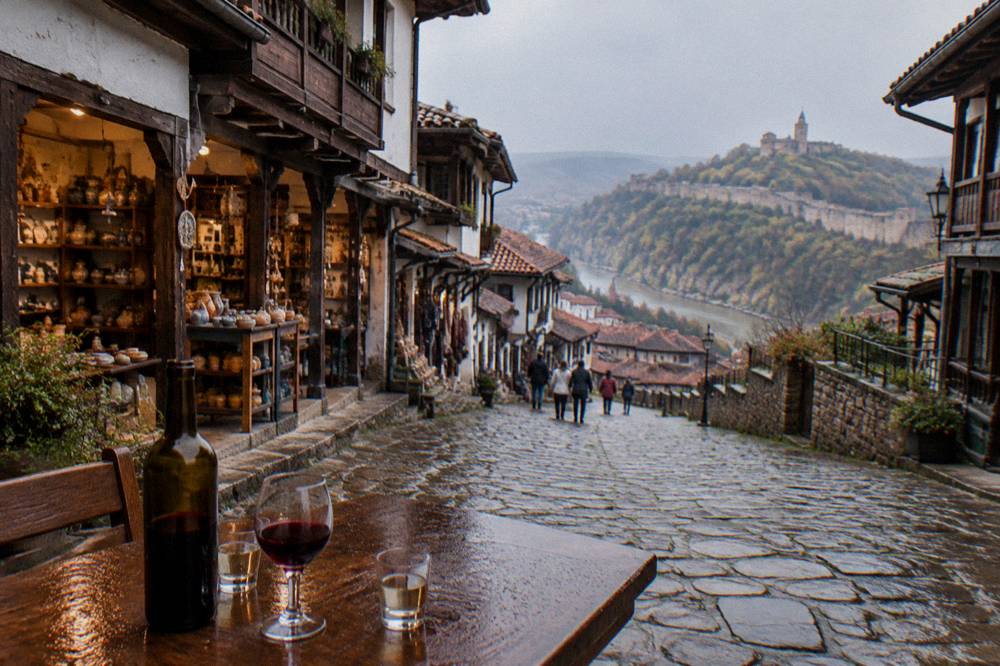
The two drinks that define a Bulgarian table are rakia, the fruit brandy drunk in small glasses with the salad course, and Bulgarian wine, red and white, from native varieties, and both belong to the mehana ritual rather than to a separate bar culture. Rakia is made from grapes, apricots, plums or quince, is toasted with nazdrave before the first sip, and in winter it arrives warmed with honey and spices. Wine is the other pillar: Bulgaria grows native reds and whites that rarely leave the country, and a mehana wine list is the easiest place to try them by the bottle or the glass. A dedicated tasting in the city walks through a set of Bulgarian wines with a guide to what you are drinking, which is the most efficient way to learn the labels before you order blind at dinner. The full background on rakia styles, wine regions and what to look for on a label is in the rakia and Bulgarian wine guide. Beyond the two pillars, the table drinks are simple: ayran with grilled food, mineral water everywhere, beer as a default, and mastika, the anise spirit, as an end-of-meal digestif. Coffee after dinner is Turkish-style or espresso depending on the room, and herbal teas, mountain herbs especially, are standard in the winter months.
| Drink | What it is | When it is served |
|---|---|---|
| Rakia | Fruit brandy, grape or orchard fruit | Salad course, sipped slowly |
| Warm rakia with honey | Heated, spiced winter version | Cold months |
| Bulgarian red wine | Native and international varieties | With grills and stews |
| Bulgarian white wine | Native and international varieties | With salads and fish-free lighter dishes |
| Ayran | Salted thin yogurt drink | With grills, at breakfast |
| Boza | Sweet fermented grain drink | Breakfast, with banitsa |
| Mastika | Anise-flavoured spirit | After the meal |
Can You Self-Cater In Veliko Tarnovo?
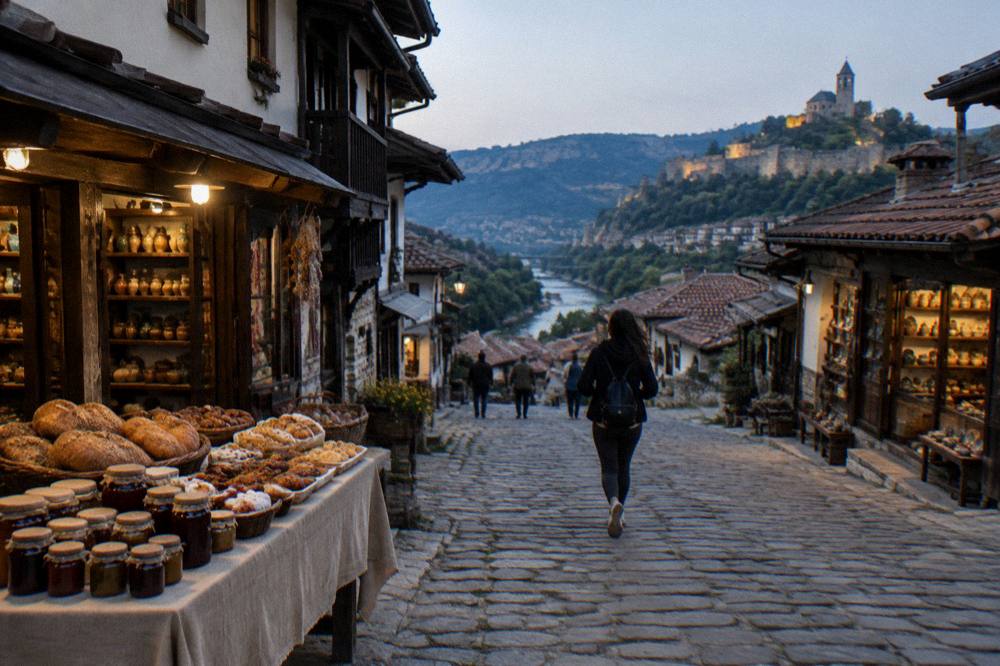
Yes, and the city supports it well: Samovodska Charshiya, the revived old-market street in the Varosha quarter, is lined with small workshops selling breads, sweets, preserves and crafts, and it is a free public space open at all hours, so a picnic lunch of banitsa, cheese, fruit and pastries can be assembled between sights without a restaurant at all. The street is the historical market of the town, and its free-to-wander status makes it the natural provisioning stop: bakers and sweet shops there cover the carbohydrate needs of a walking day. For the standard grocery run, the city's shops carry the national staples, yogurt, sirene, cured meats, fruit and vegetables, and the continental climate of the region, ERA5 reanalysis 1991-2020 puts May as the month with the highest rainfall at 95.7 mm and August the lowest at 51.3 mm, means summer picnics are usually dry affairs. The self-catering option matters for two kinds of visitor: families pacing a fortress-heavy day around children's appetites, and anyone on the longer itineraries, two or three days in the city, where one restaurant meal a day plus assembled food keeps the rhythm sustainable. Where to base yourself for that mix of old-quarter restaurants and self-catering access is covered in the where to stay in Veliko Tarnovo guide.
How Does Eating Fit Into Day Trips From Veliko Tarnovo?
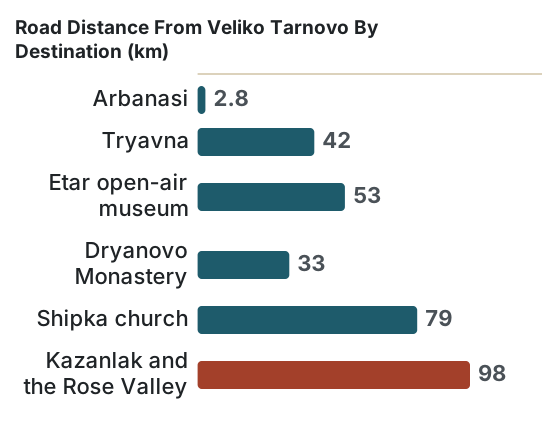
Day trips from Veliko Tarnovo are eating opportunities as much as sightseeing ones: the mehana format repeats in every town within range, Arbanasi village sits about 2.8 km straight-line from the centre, Tryavna about 42 km by road, Etar about 53 km, and the Rose Valley towns about 98 km, so lunch in a revival-era village tavern is the standard midday stop on nearly every route. The difference is regional accent rather than a different cuisine: the Gabrovo and Tryavna area leans on mountain dishes and its own grilling style, Arbanasi's village tables serve the same national repertoire in a heritage setting, and the Rose Valley adds rose-preserve sweets to the dessert list in season. Timing food to the trips works the same way in each case: leave after breakfast, lunch at the destination, dinner back in the city. The distances, all "about" figures by road from the centre, are worth knowing because they decide whether a trip is a lunch trip or a dinner trip.
| Destination | Distance from central Veliko Tarnovo | The eating angle |
|---|---|---|
| Arbanasi | About 2.8 km straight-line | Village mehana tables in a heritage setting |
| Tryavna | About 42 km by road | Revival-era town, mountain grills |
| Etar open-air museum | About 53 km by road | Craft-fair food stalls; entry 7.16 euro per the Etar site |
| Dryanovo Monastery | About 33 km by road | Monastery-adjacent tavern stops |
| Shipka church | About 79 km by road | Plain cafe fare around the memorial stops |
| Kazanlak and the Rose Valley | About 98 km by road | Rose sweets in season, Rose Festival culmination 4 to 6 June 2027 (reported) |
One food-adjacent date is worth building a trip around: the Etar International Fair of Traditional Crafts is reported for 4 to 6 September 2027, a jubilee edition focused on blacksmithing, and craft fairs of that kind bring food demonstrations and stalls with them. Etar itself is open year-round with adult entry at 7.16 euro per its admission page, with a pensioner rate at 4.09 euro.
For a full-day outing in the opposite direction, a private Ruse trip covers the Danube city and its surroundings and returns in time for dinner in the old quarter. The practical logistics of getting to and from the city for any of this, trains, buses and airports, are in the how to get to Veliko Tarnovo guide, and the money side of a trip, the euro changeover of 1 January 2026 included, is in the Bulgaria euro and money guide.
What Food Events Frame A Visit To Veliko Tarnovo?
Food events that frame a visit to Veliko Tarnovo include the July festival fortnight and the early-September holiday window, when the old quarters are at their fullest, plus the Christmas market in Marno Pole park, a wooden-chalet market of crafts, food and concerts that follows a late-November-to-1-January pattern in its recent editions, though its 2026 dates had not been announced. The honest way to use this calendar is as a timing tool: if eating well in a lively town matters to your visit, the July festival fortnight and the early-September holiday window are the moments when the old quarters are at their fullest, and the best time to visit guide works through the same trade-offs from the weather side.
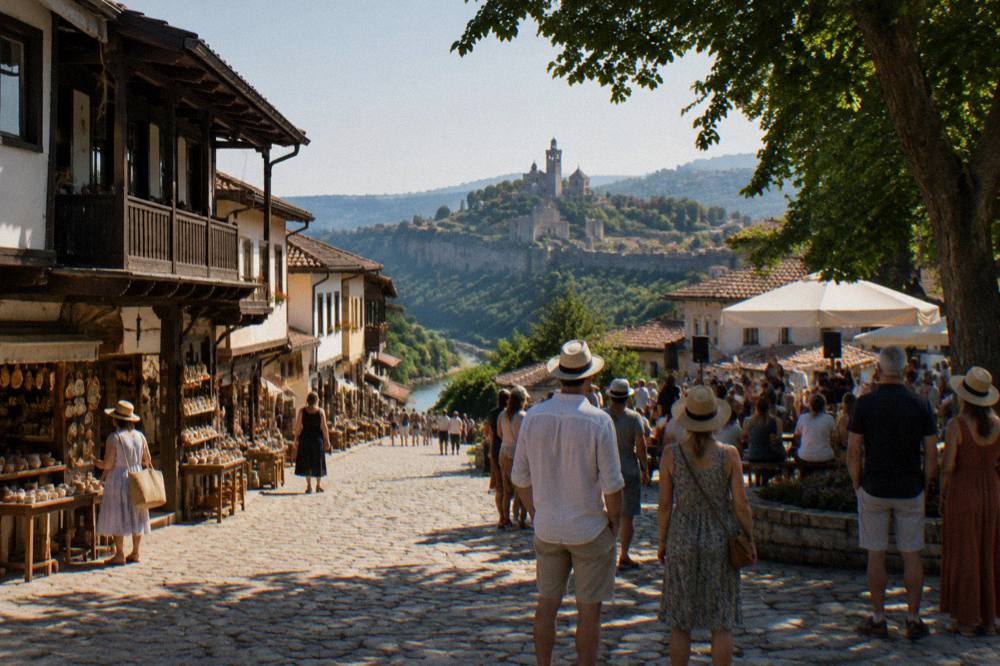
How Do You Order Confidently Without Speaking Bulgarian?
Order with three words and the pointing menu: nazdrave for the toast, smetkata for the bill, and blagodarya for thank you carry a whole meal, because mehana menus in a tourist town like Veliko Tarnovo are printed with English on the front or brought bilingually on request, and the dish names in this guide, shopska, kebapche, kavarma, banitsa, are the same words on every menu in the country. The national dish vocabulary is standardized in a way that helps you: a shopska salad is the same salad everywhere, so a menu needs only a glance, not a translation session. A small phrase list, greetings, please, the bill, does much of the remaining work, and the Bulgarian phrases for travellers guide covers more if you want it. Two ordering customs differ from some neighbouring traditions and are worth internalizing. Bread and cutlery arrive without being ordered and are part of the table. And the bill is asked for, not delivered automatically, because the mehana table is yours until you ask for it, which is the whole point of the format.
| Bulgarian phrase | What it means | When you use it |
|---|---|---|
| Nazdrave | Cheers, to your health | Before the first rakia |
| Smetkata, molya | The bill, please | When you are ready to leave |
| Blagodarya | Thank you | Constantly |
| Dobre | Good, fine | Answering the is-everything-okay question |
| Dobur den | Good day | Entering any room |
What Should Your Food Plan For Veliko Tarnovo Actually Look Like?
A sound food plan for the city is four decisions, not forty: pick a base inside walking reach of the Varosha and Gurko Street quarter so dinner never needs a vehicle, commit to one long mehana dinner per day with the salad-rakia-mains arc, keep breakfast to the bakery rhythm of banitsa and ayran, and hand the remaining meals to self-catering from Samovodska Charshiya and lunch stops on the day trips, which together cover every eating situation a visit produces. That plan survives every season, because the mehana repertoire shifts with the thermometer rather than with fashion: cold soups and salad evenings under a 28.1 C August mean high, clay-pot stews against a -3.8 C January mean low, per the ERA5 reanalysis, 1991-2020. It also survives every itinerary shape, from a single fortress day to a week that adds Arbanasi, the monasteries and the Rose Valley. The final piece is attitude: the mehana is a slow room by design, the bill comes when you ask for it, and the evening show on Tsarevets, on its announced evenings, free from Tsar Asen I Square, gives the night its punctuation mark. Eat the way the city does, in rounds, with a toast at the start, and the restaurant question answers itself wherever you sit down.
Common Questions About Restaurants In Veliko Tarnovo
Do I need to book restaurants in Veliko Tarnovo in advance?
No booking system for any individual restaurant in the city has been checked against a primary source, so no reliable rule can be given. The practical approach is to ask at your accommodation, whose front desks deal with the local tables every day, and to check the current arrangements at the door before a festival-week dinner.
What is the most typical dish to order in Veliko Tarnovo?
Shopska salad followed by grilled kebapche or a clay-pot kavarma is the most typical arc of a Bulgarian meal, and it is the same in Veliko Tarnovo as in the rest of the country. The menu vocabulary is standardized nationally, so those names work at any mehana in the city.
Is dinner in Veliko Tarnovo suitable for vegetarians?
Largely yes: the salad and meze half of the menu is vegetable and cheese based, banitsa is a filo pastry with cheese, and grilled peppers, stuffed peppers and sarmi with rice give the mains vegetarian options. Vegan diners have fewer options because white brine cheese and yogurt run through the cuisine.
What do Bulgarians drink with dinner?
Rakia with the salad course and wine with the mains is the traditional pairing, with ayran alongside grilled food and mastika as a digestif. The rakia is sipped slowly in small glasses with a toast, never raced.
Are restaurant prices in Veliko Tarnovo printed in euro?
Yes: Bulgaria adopted the euro on 1 January 2026 at a fixed rate of 1.95583 lev per euro, so menus and cards are in euro. The changeover is covered in the Bulgaria euro and money guide on this site.
Can I eat near the Sound and Light show?
The show runs on announced evenings only and is free to watch from Tsar Asen I Square, which sits in front of Tsarevets in the central area where the old-quarter dining rooms are. Dinner before the show or after it both work, since the mehana format does not rush tables; check the announced start time for the evening you are there.