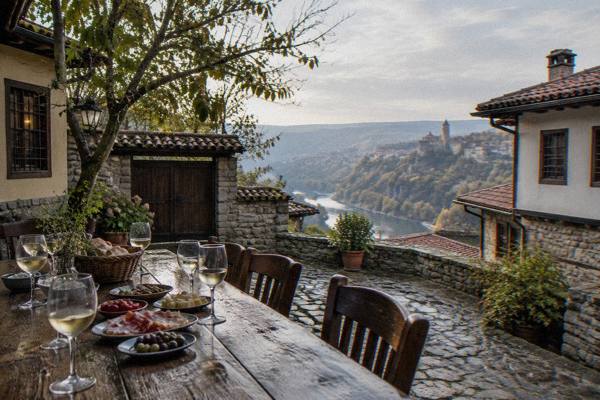
Rakia And Bulgarian Wine Around Veliko Tarnovo
Rakia and Bulgarian wine reach visitors in Veliko Tarnovo through tasting rooms, tavern menus and the country's euro-priced shops. This guide covers what each drink is, how a tasting works and how to fit both into a visit to the old capital on the Yantra river.
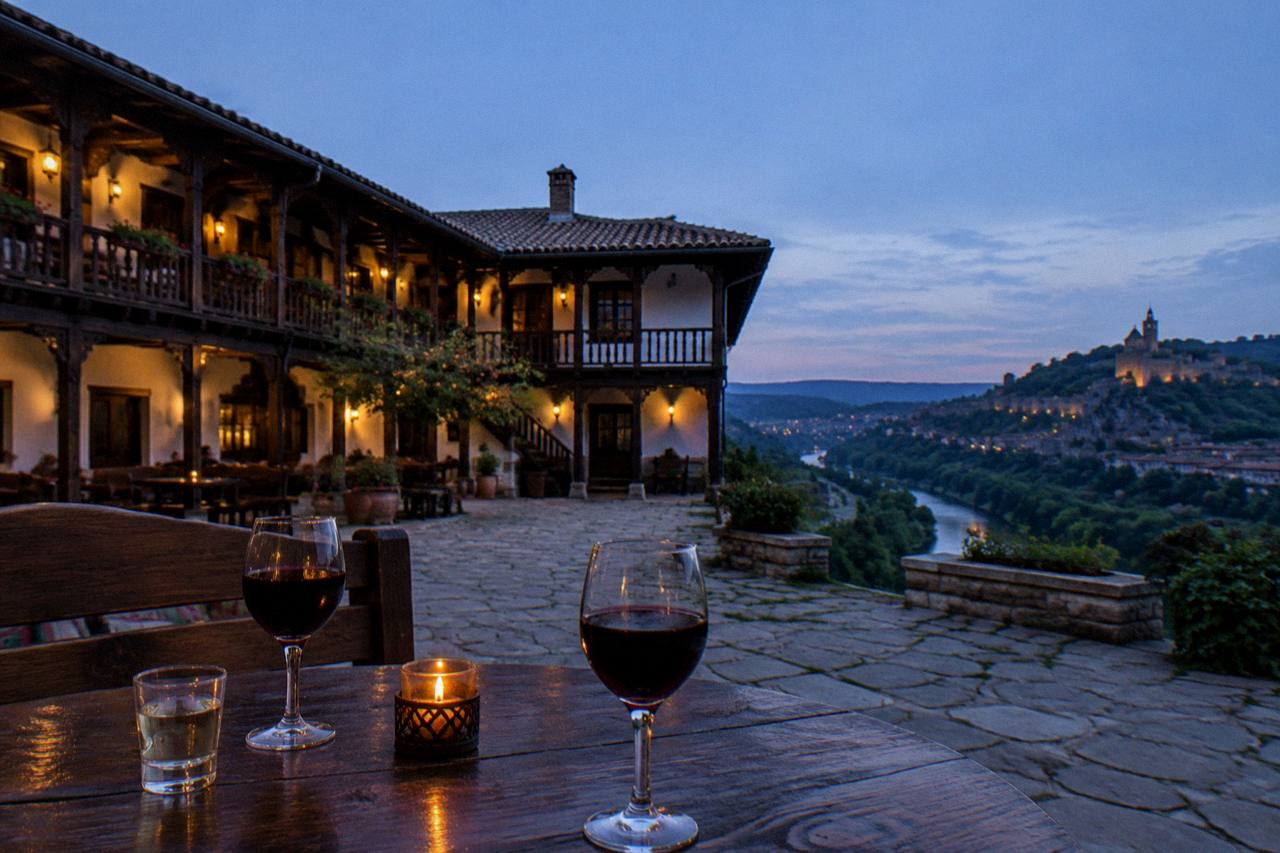
Rakia is Bulgaria's fruit brandy and wine is the country's other table staple. In Veliko Tarnovo the practical way to taste both is a bookable tasting experience in the city or a tavern meal, since no bar or producer recommendation is here.
Veliko Tarnovo, the old capital of the Second Bulgarian Kingdom on the Yantra river, is a city people visit for Tsarevets Fortress and the Sound and Light show, and it is also a city where two drinks matter at the table: rakia and Bulgarian wine. Rakia is the fruit brandy poured at the start of a Bulgarian meal, and Bulgarian wine is what follows it, and both reach visitors here through tavern menus, shop shelves and a small number of bookable tasting experiences. This guide explains what each drink is, how a tasting in the city works, what to eat alongside and how to fit a drink-focused day into a visit that also takes in the fortress, Arbanasi and the old quarters.
The practical starting point for planning is the things to do in the city overview, because drink sits inside a bigger day, and the Veliko Tarnovo cost guide covers how the euro changeover on 1 January 2026 changed what you see on price tags. Bulgaria uses the euro at a fixed rate of 1.95583 lev per euro, so every shelf price in the city is now in euro. What no page can honestly do is name a specific bar, tavern or wine producer here: none has been checked for hours, prices or addresses, so this guide describes the drinks, the customs and the bookable experiences, and leaves venue choice to your own eyes on the ground.
What Is Rakia And Where Does It Sit At A Bulgarian Table?
Rakia is a fruit brandy, distilled most often from grapes but also from apricots, plums, pears or cherries, and it opens the Bulgarian meal rather than closing it. It arrives in small glasses before the salad course, is sipped slowly, and is treated as the table's greeting drink rather than a quick shot.
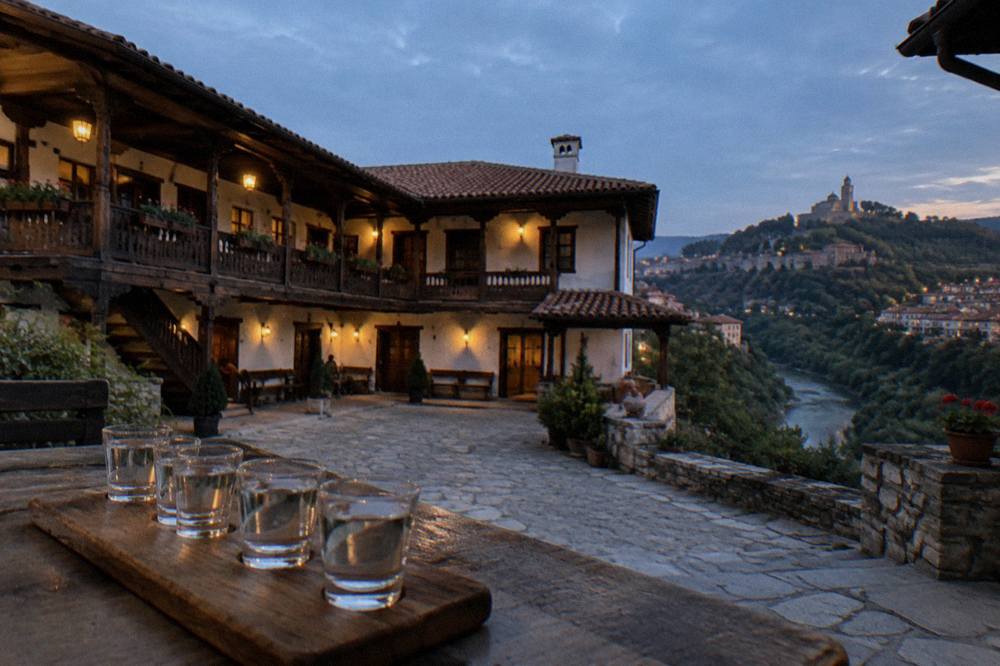
The drink works the way aperitifs work elsewhere in Europe: a little, taken slowly, while the table settles. Bulgarian custom pairs it with the salad course, and the classic salads of the country, shopska, ovcharska and the roasted-pepper mixes, all belong in that first stretch of a meal. The food side of that pairing is covered in the Bulgarian food guide, and the morning equivalent, banitsa with its own drink customs, sits in the banitsa and Bulgarian breakfast guide.
Second, vintage, producer and regional claims about rakia belong to marketing copy, and nothing in this city's sources pins a name to a shelf, so the description stays at the level of the drink itself. What can be said firmly is cultural: rakia is the greeting drink of the Bulgarian table, and refusing one entirely is a quieter gesture than joining in with a small pour.
The word extends across the Balkans, and Bulgaria's version follows the same broad logic: fruit, fermentation, distillation, then rest. Home distillation is a village tradition in much of the country, and legal retail rakia in Veliko Tarnovo's shops is sold in euro under the currency that replaced the lev on 1 January 2026. A traveller who wants to understand the drink before ordering one can read the ritual in any mehana: poured small, raised, sipped, and followed by salad and conversation rather than by a second round in a hurry.
What Should You Know About Bulgarian Wine Before A Tasting In Veliko Tarnovo?
Bulgarian wine is the country's second table staple, red and white both, and in Veliko Tarnovo the practical way to taste it is a guided tasting experience booked in the city, where the pours are chosen for you and the grape names are explained as you go. The bookable tasting on this site's roster covers a flight of Bulgarian wines with a guide, and beyond it, wine reaches visitors through restaurant lists and shop shelves priced in euro.
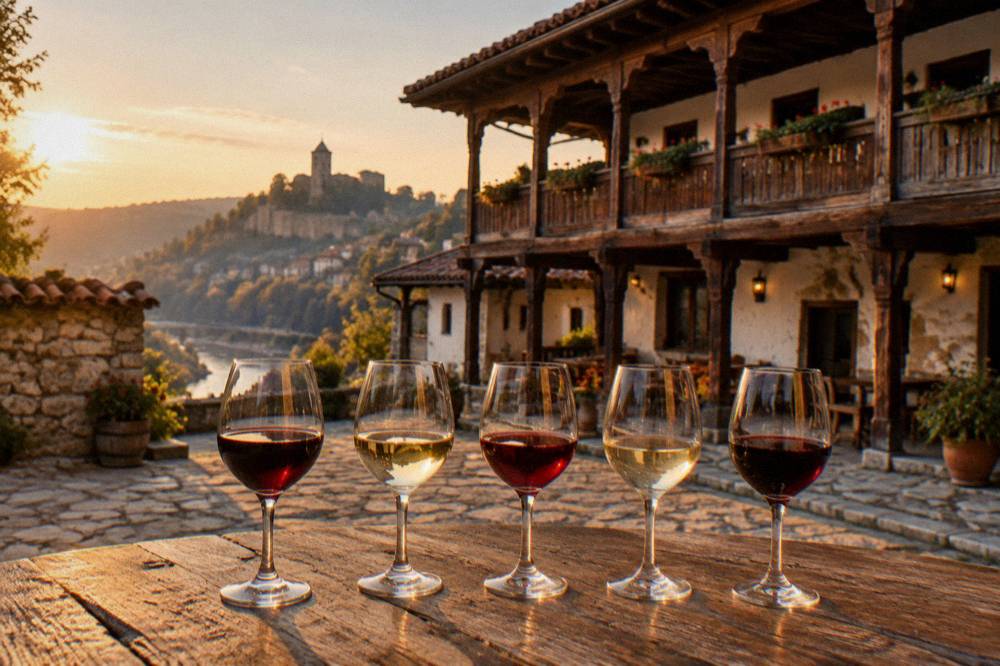
A structured tasting solves a real problem for a visitor: Bulgarian wine labels carry grape names and regions that are unfamiliar to people who know only the western European list, and a guided flight turns that unfamiliarity into the point of the hour. The Bulgarian wine tasting experience in Veliko Tarnovo is the city's dedicated option on this site's roster, described by the operator as a seated tasting of Bulgarian wines; current price, rating and timing show on the booking page. If it fits your dates, Check availability.
Beyond a tasting, wine is simply part of eating out. Mehanas pour by the glass and the bottle, and shops sell by the shelf, all in euro since the changeover. The euro and money guide explains the fixed 1.95583 rate and what it means for cash and cards. What the honest version of this section avoids is the trap almost every other page falls into: naming a specific Bulgarian producer or vintage as "the one to try". Nothing in this city's sources verifies a producer recommendation for Veliko Tarnovo, so the grape education happens at the tasting table, not on this page.
Wine and rakia also sit inside the city's calendar rather than outside it. The events that shape a visit, the folklore festival that ran 18 to 25 July in 2026, the Arbanasi Summer Music chamber series that ran 15 to 25 July 2026 in the village's churches, and the Independence Day programme on 22 September, are listed in the events coverage, and a drink-focused evening slots most naturally into the late afternoon after a fortress morning.
Where Can You Taste Rakia And Bulgarian Wine In Veliko Tarnovo?
The two reliable routes are a bookable tasting experience, where a guide pours a flight of Bulgarian wines in a seated setting, and the city's mehanas and restaurants, where rakia and wine arrive as part of a normal meal. Tastings are paid products; walking the public quarters costs nothing and pairs well with either.
The geography of a drink day in Veliko Tarnovo is compact. The old quarters, Samovodska Charshiya, Gurko Street and Varosha, are free public streets to wander with a glass or a coffee at either end, and the fortress and Arbanasi sit a short drive or a steep walk from the centre. The Varosha old town guide and the Arbanasi guide cover those quarters in detail. A tasting booked for late afternoon leaves the morning for Tsarevets, whose hours and ticket prices, 7.67 euro adult and 10.23 euro family per the Regional Museum of History's ticket page, are set out in the Tsarevets Fortress guide.
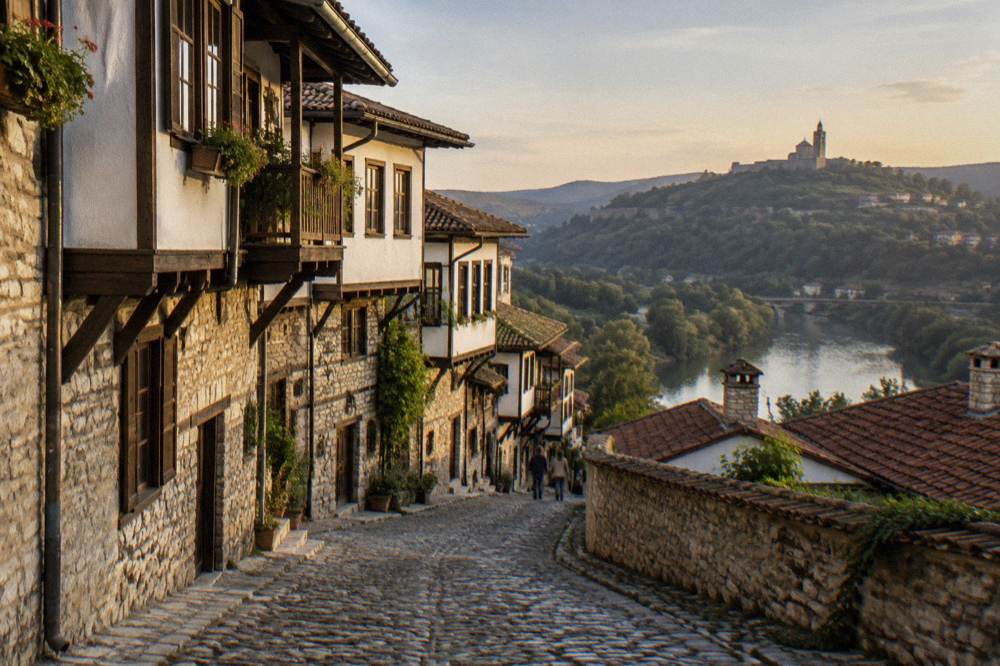
For a self-guided spine to the city, the audio tour covers the fortress and the city at your own pace, and a monuments walk with a guide is another way to earn the evening pour. The paid experiences sit beside free walking in a city whose public quarters need no ticket: the free list here is the Asenevtsi Monument, Samovodska Charshiya, Gurko Street, Varosha, the Sound and Light show watched from Tsar Asen I Square on an announced evening, and the Church of the Nativity in Arbanasi on 25 December 2026.
One seasonal note matters for planning: winter hours at the museum sites start on 25 October 2026, and Trapezitsa closes to visitors from 30 November 2026 to 31 March 2027, so a late-autumn drink-focused visit works best anchored on the fortress and the old streets, with the Sound and Light show checked on its announced-evening schedule.
How Do Rakia And Wine Fit Into A Day Around The Old Town?
A workable shape is fortress in the morning, old quarters after lunch, tasting or mehana in the late afternoon, and the Sound and Light show from Tsar Asen I Square on an evening it runs. The show has no fixed nightly schedule, and watching it from the square is free, per the official tourist information feed, with paid seats on the panoramic platform. That combination costs one fortress ticket plus whatever you spend on drink and food, with the old streets themselves free to walk.
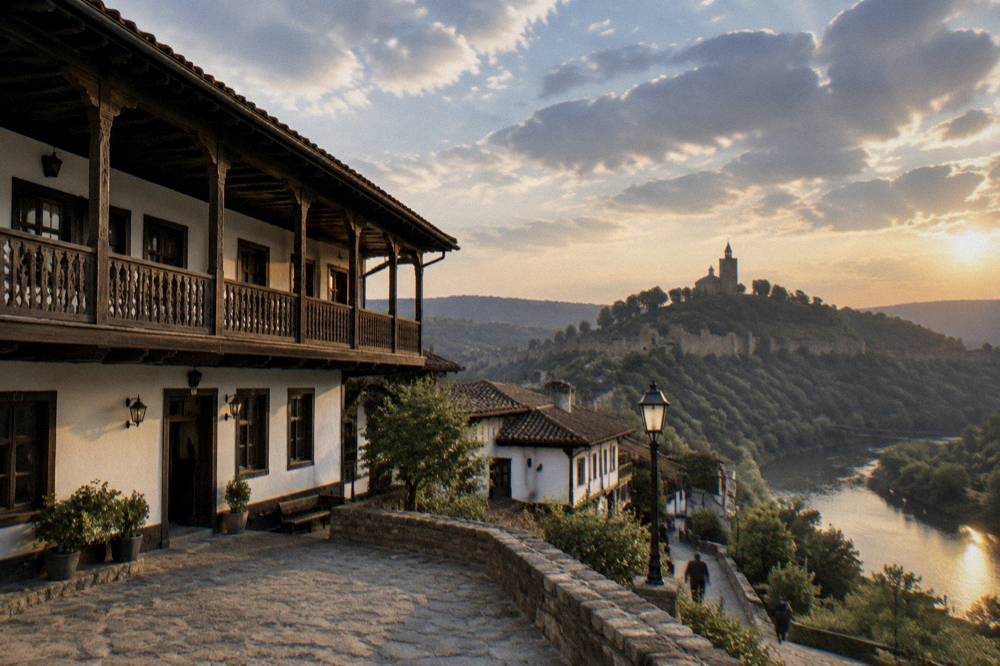
The fortress anchor is worth the morning because it is the city's core sight. Tsarevets is open daily, April to September 08:00 to 20:00 with last entry 19:00, and October 09:00 to 18:00 with last entry 17:00, per the museum's ticket page. From 25 October 2026 the winter block runs entry 09:00 to 16:00, closing 17:00. A Tuesday maintenance slot, 09:10 to 11:00, is listed on the same page. None of this touches the evening, which is when the drinks and the show happen, so the two halves of the day do not compete. The rest of the planning pages sit on Veliko Tarnovo Travel Guide.
The middle of the day belongs to the quarters and the food. The restaurant landscape is covered from a planning angle in the restaurants guide, and the pairing logic is simple: salad and rakia to open, a main with wine, and the evening free for the show or the viewpoints. The Veliko Tarnovo viewpoints guide lists where the city opens up over the Yantra river bends, and the nightlife guide covers what the evenings hold beyond dinner.
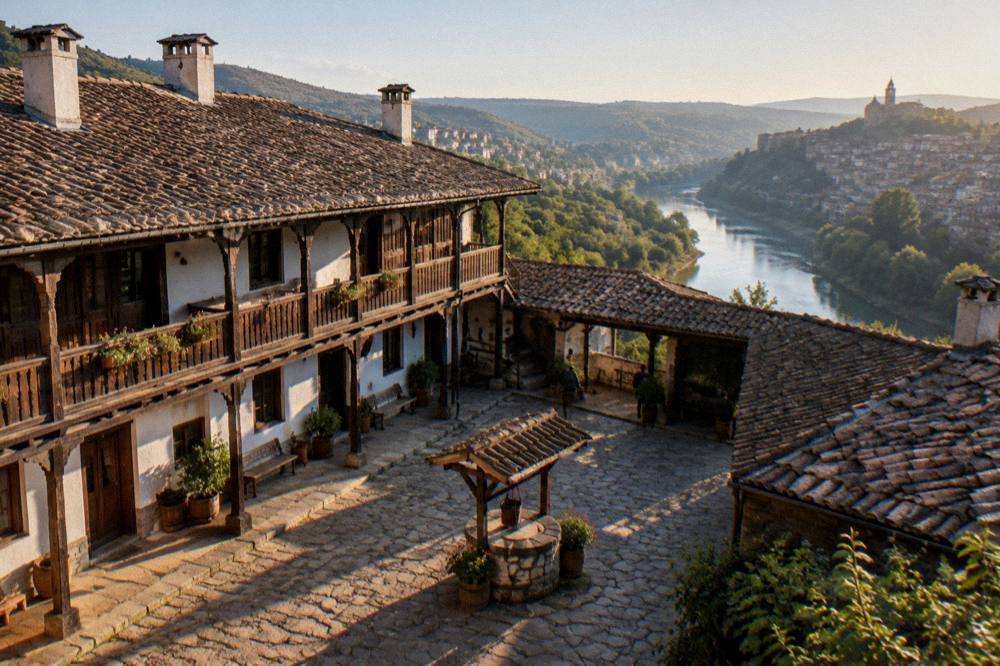
For travellers who want the day organised end to end, the itinerary guides set out the same shape at one, two and three days, and the itinerary pages are the place to weigh whether a tasting deserves an evening slot or an afternoon one. The tasting is a short, seated experience by its description, so it slots after a walk rather than replacing one.
What Should You Eat Alongside Rakia And Bulgarian Wine?
The classic Bulgarian order is rakia with the salad course, then wine with the main, and the dishes that carry both are the country's standards: shopska salad, grilled meats such as kebapche and kufte, stews and the banitsa family at breakfast. The pairing rule of thumb is fruit brandy with cold plates, wine with hot ones.
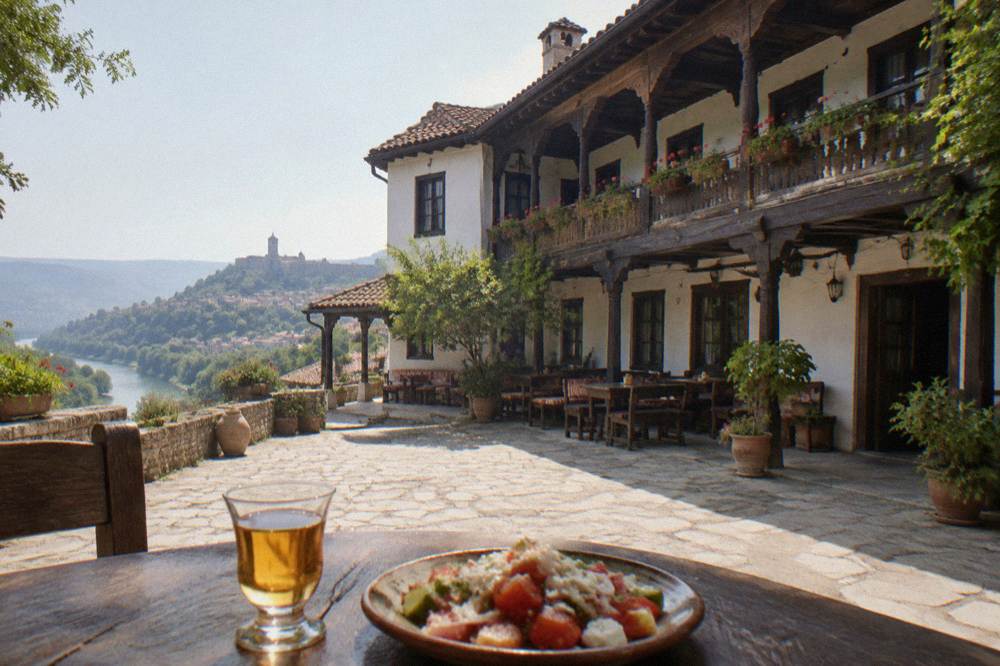
The salads matter more than visitors expect, because they are the rakia course. Shopska, tomatoes, cucumber and grated white cheese, is the recognised national salad, and the roasted pepper and aubergine mixes sit beside it. Grilled minced meats, kebapche and kufte, arrive with the main course, and stews and clay-pot dishes fill the cold months. The Bulgarian food guide walks the whole menu, and the breakfast end of the day, banitsa and its drinks, has its own page.
| Course | Typical dishes | The drink that goes with it |
|---|---|---|
| Opening | Shopska salad, roasted pepper mixes, bread | Rakia, poured in small glasses |
| Main | Kebapche, kufte, grilled meats, stews | Bulgarian wine, red or white |
| Breakfast | Banitsa, yoghurt, coffee | Boza or coffee, not rakia |
The table above is custom, not a menu from a named kitchen, and it is the honest limit of what can be said: no Veliko Tarnovo venue's menu, price or address has been checked. What is safe to add is the season's effect on appetite: the best time to visit guide and the weather page carry the climate detail, and the ERA5 reanalysis, 1991 to 2020, gives the numbers a long hot stretch in summer and a genuinely cold winter, both of which steer the table toward salads or stews.
| Season | ERA5 mean daily high | ERA5 mean daily low | Monthly rain |
|---|---|---|---|
| July | 27.6 C | 17.2 C | 79.5 mm |
| August | 28.1 C | 17.1 C | 51.3 mm |
| January | 4.9 C | -3.8 C | 56.1 mm |
| October | 17.6 C | 8.0 C | 58.9 mm |
May carries the highest monthly rain total in the ERA5 normals at 95.7 mm, and August the lowest at 51.3 mm. The figures are modelled reanalysis values, 1991 to 2020, not a station record. None of this changes the drinks, but it changes the walk to the tavern, and the spring and autumn pages, spring and autumn in the city and the winter guide, pick up the seasonal detail.
What Day Trips From Veliko Tarnovo Pair Well With A Wine Or Rakia Theme?
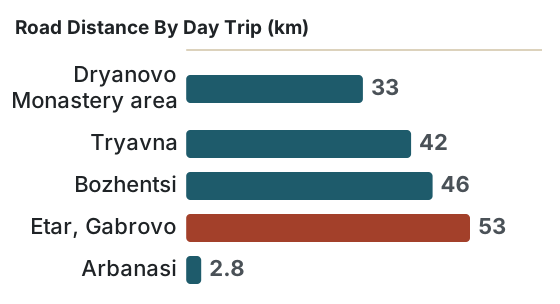
The strongest pairings are the craft and monastery circuits within about an hour's road travel: Etar's architectural and ethnographic complex at about 53 km, the Dryanovo Monastery area at about 33 km, Tryavna at about 42 km and Bozhentsi at about 46 km, each of which ends naturally back in Veliko Tarnovo for dinner.
| Day trip | About distance by road | What it is |
|---|---|---|
| Dryanovo Monastery area | 33 km | Monastery and cave country |
| Tryavna | 42 km | Revival-period town |
| Bozhentsi | 46 km | Architectural reserve village |
| Etar, Gabrovo | 53 km | Open-air craft museum, entry 7.16 euro per its site |
| Arbanasi | 2.8 km straight-line | Village quarter of the city itself |
The monastery landscape around the city, Preobrazhenski at about 6 km and the Kilifarevo and Dryanovo houses further out, is mapped in the churches and monasteries guide.
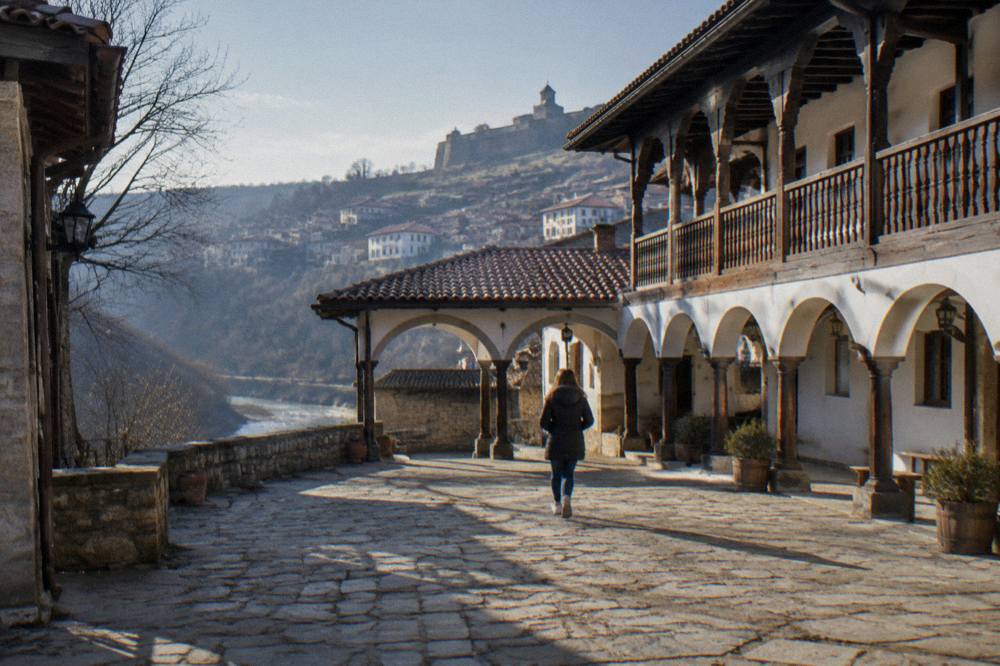
Booked day trips are the other route, and two on the roster fit a food-and-drink-anchored stay. The waterfalls and caves tour spends a day in the country around the city and returns in time for dinner, and the Etar and city combo pairs the craft museum with the old capital. Both are paid products with prices and ratings shown on the booking pages.
Getting out and back is straightforward by road, and the car rental guide and the getting around guide cover the practicalities, including the parking rules summary in the parking guide. For arrivals, the train station guide and the bus station guide cover the two stations, and the how to get here guide explains why no scheduled-flight airport serves the city, with Sofia about 216 road km, Varna about 214 and Bucharest Otopeni about 205.
What Should A Rakia And Wine Visitor Know About Money, Entry And Timing?
Bulgaria uses the euro since 1 January 2026 and is a full Schengen member since 1 January 2025, so a drink-focused trip from elsewhere in the EU or from visa-free countries such as the US, UK, Canada and Australia, 90 days in any 180, needs no currency exchange and no visa.
| Practical fact | Detail |
|---|---|
| Currency | Euro since 1 January 2026, fixed rate 1.95583 lev per euro |
| Borders | Full Schengen member since 1 January 2025 |
| Visa-free stay | 90 days in any 180 for US, UK, Canadian and Australian citizens |
| Emergency number | 112 |
What the euro changeover means in practice is simple: the 7.67 euro fortress ticket and the tavern bill share one currency, and the lev survives only as the fixed conversion rate behind the scenes.
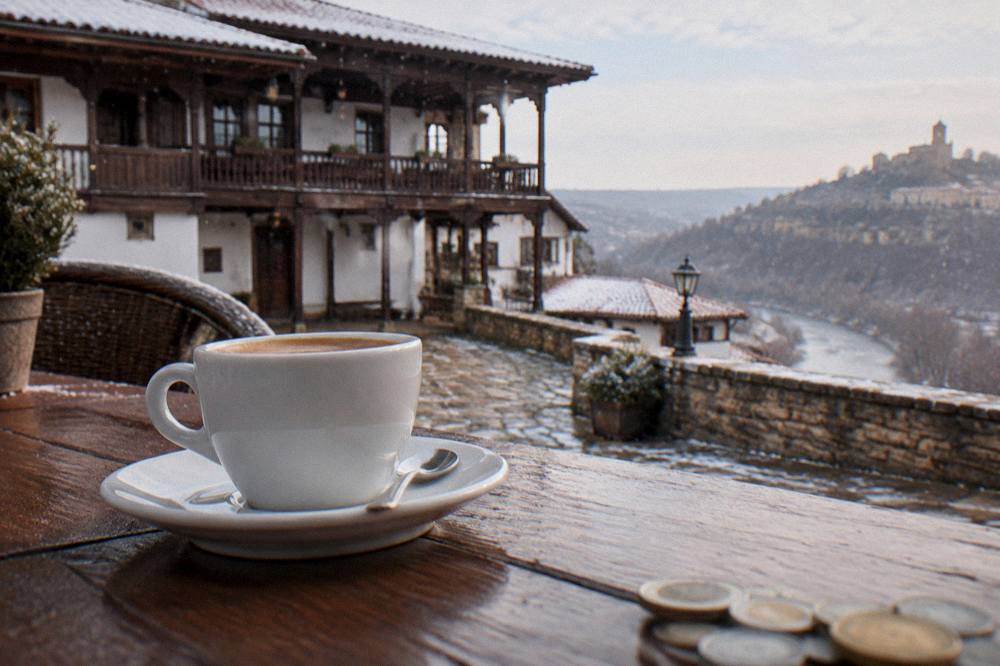
Timing, finally, is about the calendar more than the weather. The city's drink-friendly events cluster in summer: the folklore festival ran 18 to 25 July in 2026, Arbanasi Summer Music ran 15 to 25 July 2026, and the Independence Day programme on 22 September, with its liturgy at the Church of the Holy Forty Martyrs and the Sound and Light show, marks the autumn. The city holiday on 22 March opens the season. Christmas-market evenings follow the late-November pattern, with 2026 dates unannounced, and a winter visit pairs mulled alternatives with the fortress's short winter hours from 25 October 2026.
Common Questions About Rakia And Bulgarian Wine In Veliko Tarnovo
What is rakia?
A fruit brandy, distilled most often from grapes but also from apricots, plums, pears or cherries, served in small glasses at the start of a Bulgarian meal and sipped slowly alongside the salad course.
How is rakia served in Bulgaria?
Poured small before the food arrives, raised with the table, and taken slowly. It is the greeting drink of the Bulgarian table rather than a shot, and it sits with salads and conversation rather than with a second round in a hurry.
Where can I taste Bulgarian wine in Veliko Tarnovo?
The bookable route is a guided tasting experience in the city, on this site's roster, where a flight of Bulgarian wines is poured and explained. Beyond that, mehanas and restaurants pour Bulgarian wine by the glass and bottle as part of a normal meal.
Is rakia expensive in Veliko Tarnovo?
Bulgaria has used the euro since 1 January 2026, and every menu price you meet will be in euro; check the menu in the room before ordering.
Can I buy rakia or Bulgarian wine to take home?
Shops in the city sell both, priced in euro since the changeover.
What food goes with rakia and Bulgarian wine?
Custom pairs rakia with the cold opening course, salads above all, and wine with the hot main, grilled meats and stews. Banitsa belongs to breakfast with coffee or boza rather than to the evening table.
A last word on shape: rakia and Bulgarian wine are the two constant drinks of the Bulgarian table, and in Veliko Tarnovo they arrive inside a visit built around a fortress, free old quarters and an evening show, with a guided tasting as the one bookable experience dedicated entirely to the glass. Pair the tasting with a fortress morning, order by custom rather than by borrowed recommendation, and let the menus in front of you settle the rest.