Three Days In Veliko Tarnovo And The Balkan Villages
Three days give Veliko Tarnovo room to breathe: the fortress and the old quarters on day one, the museums and Arbanasi on day two, and the Balkan villages and monasteries on day three.
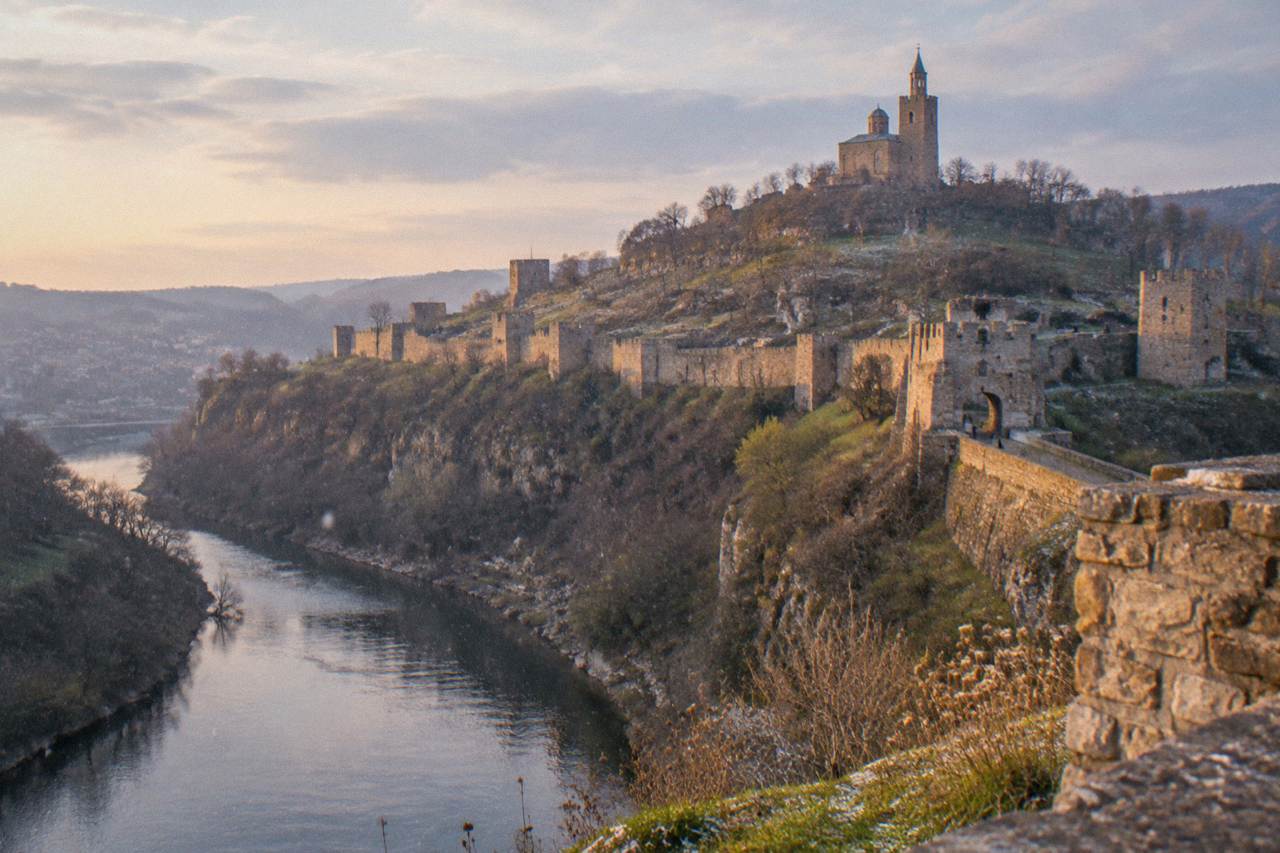
Spend day one on Tsarevets Fortress and the Varosha quarter, day two on the museums, Samovodska Charshiya and Arbanasi, and day three on a day trip to Tryavna, Etar, Dryanovo Monastery or Emen Canyon. A museum adult ticket costs 7.67 euro at Tsarevets and 5.11 euro at most branch museums, and the city sits on the Yantra river in inland Bulgaria with no sea coast.
Veliko Tarnovo is an inland city in Bulgaria on the Yantra river, with no sea coast, and three days is the span in which the city itself, the village of Arbanasi and at least one corner of the Central Balkan range all fit without rushing. The city was the capital of the Second Bulgarian Kingdom for more than two centuries, from the late 12th century to the 14th, and that past is concentrated into a walkable core: the Tsarevets hill, the Trapezitsa hill across the river, the Varosha quarter and the streets around Samovodska Charshiya. This itinerary spreads those sights across three days, prices everything the museum network publishes in euro, and ends with a day of villages, monasteries and caves within about an hour's radius of the centre.
What Can You Realistically See In Veliko Tarnovo In Three Days?
Three days cover the fortress, the old quarters, the branch museums, Arbanasi and one day trip into the Balkan villages, with time left for the Sound and Light show on an evening it runs. The core sights sit within walking distance of one another on and around the Tsarevets and Trapezitsa hills, and the museum network prices a standard adult ticket at 7.67 euro for Tsarevets and 5.11 euro for the branch sites, per the Regional Museum of History's ticket pages.
The city's geography does a lot of the planning for you. The Yantra river wraps around the Tsarevets hill, where the Architectural-Museum Reserve and the Patriarchal Cathedral of the Holy Ascension sit inside one ticket, and the Trapezitsa reserve faces it across the water. Between and below them lie the Varosha quarter, General Gurko Street and Samovodska Charshiya, all public streets with no ticket and no closing time. Arbanasi village sits about 2.8 km straight-line northeast of the centre, close enough for a half day on foot or a short drive.
The season changes the arithmetic more than the map does. Winter hours at the museum sites start on 25 October 2026, Trapezitsa closes to visitors entirely from 30 November 2026 to 31 March 2027, and its funicular stops for the season on 31 October 2026, so a winter three-day plan leans harder on the fortress, the churches that stay open and the villages. From April to September, when Tsarevets opens at 08:00 and takes its last visitor at 19:00, the days stretch further.
Here is the shape of the three days at a glance, with the ticket figures the museum publishes:
| Day | Core | Adult ticket | Hours (Apr to Sep) |
|---|---|---|---|
| Day 1 | Tsarevets reserve and Patriarchal Cathedral, Varosha, Gurko Street, Sound and Light in the evening | 7.67 euro, family 10.23 euro | 08:00 to 20:00, last entry 19:00 |
| Day 2 | Trapezitsa reserve, Archaeological Museum, Samovodska Charshiya, Arbanasi churches | 5.11 euro each site, Arbanasi churches 7.67 euro | Trapezitsa 09:00 to 19:00, Archaeological Museum 09:00 to 18:00 |
| Day 3 | One day trip: Tryavna and Bozhentsi, Etar, Dryanovo Monastery and Bacho Kiro, or Emen Canyon | Etar adult 7.16 euro | Etar 09:00 to 19:00, reported |
A shorter two-day version of this plan exists on the two days in Veliko Tarnovo itinerary, and the question of how many days the city really needs is weighed separately in how many days do you need in Veliko Tarnovo. Three is the first count at which the Balkan villages stop being a squeeze.
How Should You Spend Day One In Veliko Tarnovo?
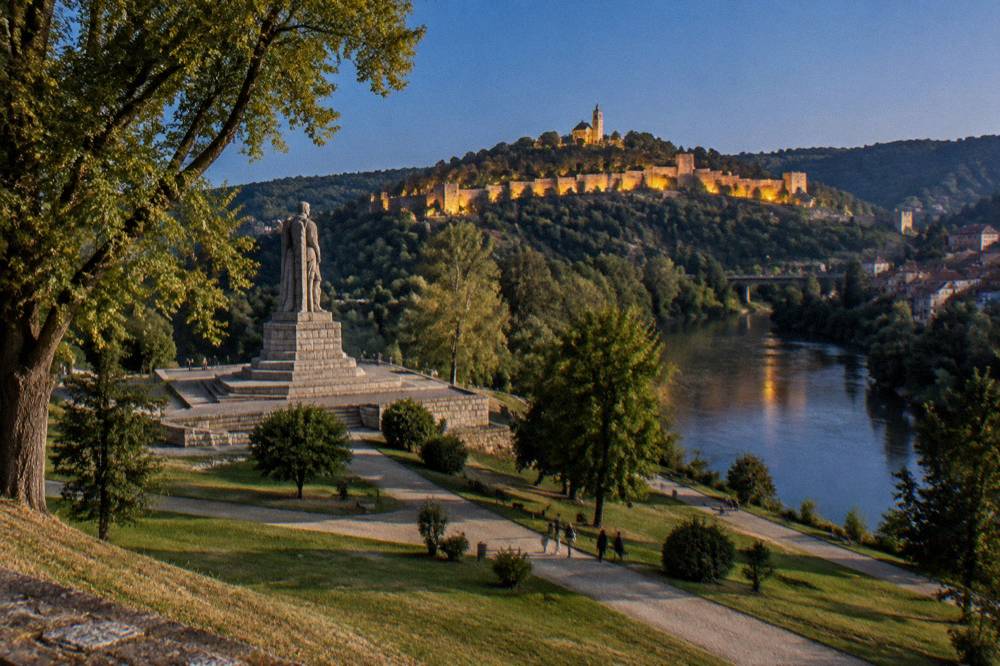
Day one belongs to Tsarevets Fortress in the morning, the Varosha quarter and General Gurko Street in the afternoon, and the Sound and Light show in the evening if it is running, since watching it from Tsar Asen I Square is free and needs no ticket. The fortress charges 7.67 euro for a standard adult and 10.23 euro for a family ticket covering parents and up to three children aged 7 to 18, per the Regional Museum of History's ticket page.
Tsarevets is the hill on which the restored state made its capital after the 1185 to 1186 uprising of Asen and Peter, and the museum's reserve on it includes the Patriarchal Cathedral of the Holy Ascension within the same ticket. From April to September the site opens daily at 08:00 and takes its last visitor at 19:00; in October it runs 09:00 to 18:00, and from 25 October 2026 the winter entry window is 09:00 to 16:00 with the site closing at 17:00. There is no closing day, though a two-hour Tuesday maintenance slot from 09:10 to 11:00 appears on the ticket page. The cathedral inside keeps its own hours, 09:00 to 19:00 in the summer season. The fortress in detail, including the guided-talk prices, is covered on the Tsarevets Fortress page.
Afternoon light suits the far bank better. The Varosha quarter and General Gurko Street are public streets, free to walk at any hour, and the Varosha old town page maps the lanes and the churches within them. The Asenevtsi Monument, also free and always open, stands by the river below the fortress approach and commemorates the medieval rulers of the dynasty the uprising founded.
The evening is the reason day one should not be swapped. The Sound and Light audio-visual show on Tsarevets runs on announced evenings only, with no fixed nightly schedule, and watching from Tsar Asen I Square in front of the fortress is free. When a performance is billed, the square goes dark and the fortress walls carry the projection. The Sound and Light show page explains the viewing options.
For the museum sites that recur across all three days, the full price list the Regional Museum of History publishes:
| Site | Adult | Family | Apr to Sep hours |
|---|---|---|---|
| Tsarevets reserve | 7.67 euro | 10.23 euro | 08:00 to 20:00, last entry 19:00 |
| Trapezitsa reserve | 5.11 euro | 7.67 euro | 09:00 to 19:00, last entry 18:00 |
| Trapezitsa funicular (return) | 5.11 euro | 10.23 euro | 1 May to 31 Oct, 09:00 to 16:00 |
| Church of the Holy Forty Martyrs | 5.11 euro | 7.67 euro | 09:00 to 18:00, last entry 17:30 |
| Archaeological Museum | 5.11 euro | 7.67 euro | 09:00 to 18:00, last entry 17:00 |
| Church of the Nativity, Arbanasi | 7.67 euro | 12.78 euro | 09:00 to 18:00 |
| Konstantsalieva House, Arbanasi | 7.67 euro | 12.78 euro | 09:00 to 18:00 |
| Etar (day trip) | 7.16 euro | 16.87 euro | 09:00 to 19:00, reported |
Children under 7 enter free at the museum sites, and the network also sells a two-day pass for 10 sites at 20.45 euro for an individual, valid 1 April to 30 November, with a family version at 25.56 euro. If days one and two together will take in more than a handful of branch museums, the pass is worth pricing against the individual tickets before buying anything.
What Should Day Two In Veliko Tarnovo Include?
Day two crosses the river: Trapezitsa reserve in the morning with its funicular if the season allows, the Archaeological Museum and the Holy Forty Martyrs church around midday, Samovodska Charshiya in the afternoon, and Arbanasi village to close. Trapezitsa charges 5.11 euro adult and 7.67 euro family, the Archaeological Museum and the Forty Martyrs church each charge 5.11 euro, and the two Arbanasi museum sites charge 7.67 euro each, per the museum's ticket pages.
Trapezitsa is the second fortress hill, and it is the one with a seasonal catch: it closes to visitors from 30 November 2026 to 31 March 2027, and its funicular runs only from 1 May to 31 October, daily 09:00 to 16:00 with a lunch break from 12:00 to 13:00 and stops in bad weather. A return funicular ride is 5.11 euro, one way 2.56 euro, family return 10.23 euro. In the April to September season the reserve itself is open 09:00 to 19:00. The Trapezitsa Fortress page carries the full detail, including the reduced rates the site lists for students and for Bulgarian citizens over 60.
Midday belongs to the flat ground by the river. The Church of the Holy Forty Martyrs is where Bulgaria's independence was declared on 22 September 1908, and it holds the marble victory column of Ivan Asen II from 1230, commemorating the Battle of Klokotnitsa; the church's own page covers both. The Archaeological Museum on Sylvester Penov Street opens 09:00 to 18:00 from April to October with a Monday-morning maintenance slot, and its collection fills the medieval gap between the two fortress hills.
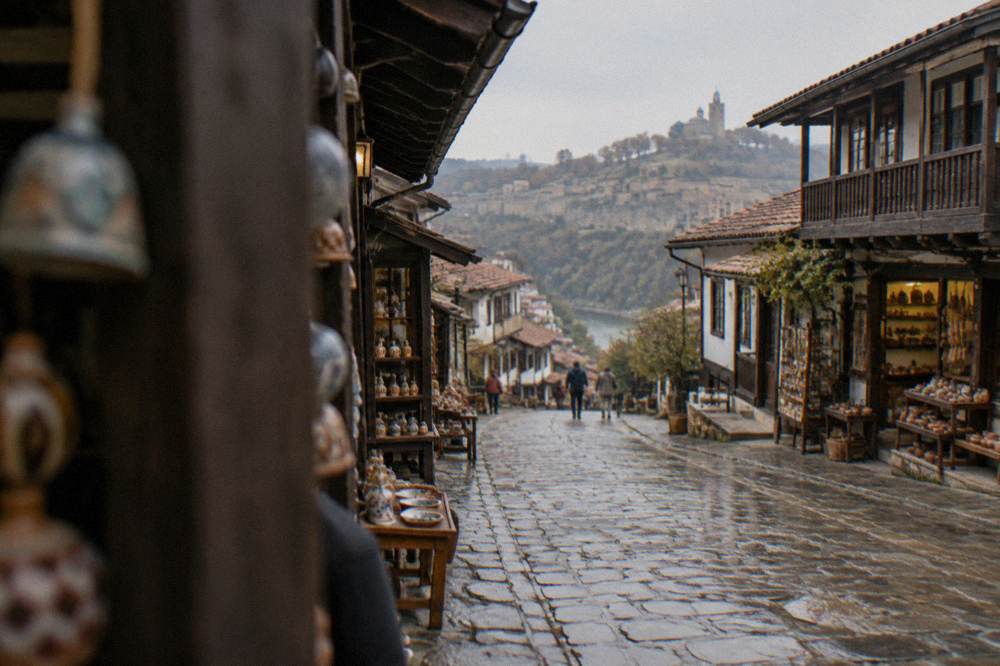
The afternoon slows down on purpose. Samovodska Charshiya is the old market street, public and free, with the Samovodska Charshiya page describing the character of the street and what it sells. The Tsarevgrad Tarnov multimedia visitor centre nearby, at 7.67 euro adult, is the museum network's wax-figure reconstruction of the medieval city and works well as a rainy-hour substitute. The Prison Museum and Sarafkina House, both 5.11 euro, open Tuesday to Saturday and close Sunday and Monday, so check the day of the week before counting on them. The Museum of New and Newest History is temporarily not accepting visitors.
Late afternoon is the moment for Arbanasi. The village sits about 2.8 km straight-line northeast of the centre, and its two museum sites, the Church of the Nativity and the Konstantsalieva House, charge 7.67 euro each with family tickets at 12.78 euro. Both open 09:00 to 18:00 in the summer season; the church is free on its feast day, 25 December 2026, and the house drops to Friday-to-Sunday opening from 30 November 2026 to 20 March 2027. The Arbanasi page rounds up the village.
If a guided structure for any of these days appeals, the roster's paid options include the walks and day trips on the site's tour listings, from the day trip from Sofia tour page to in-city experiences; the open public spaces are free to walk on your own, and the walking tours on the roster are paid products.
What Does Day Three Around Veliko Tarnovo Look Like?
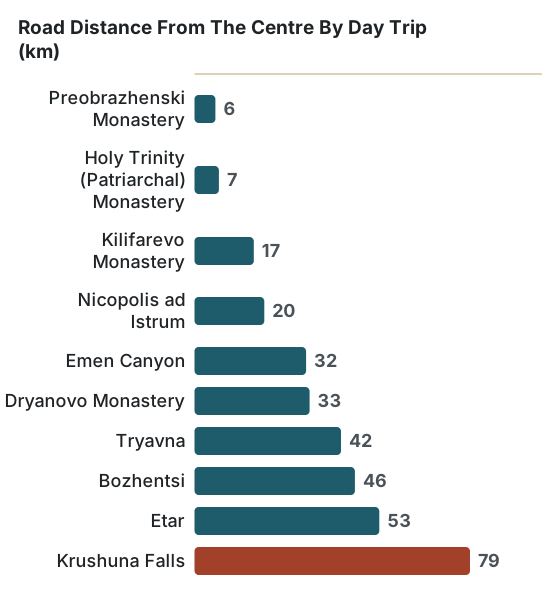
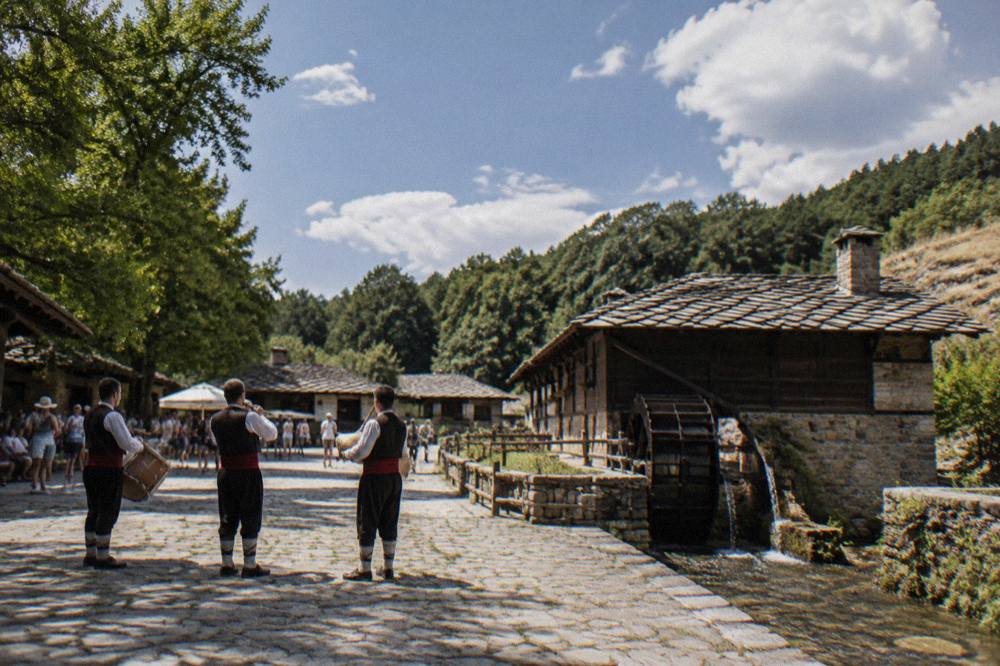
Day three leaves the city for the Balkan villages and monasteries within a 30 to 55 km radius: Tryavna at about 42 km, Bozhentsi at about 46 km, Etar at about 53 km, Dryanovo Monastery and Bacho Kiro cave at about 31 and 33 km, or Emen Canyon about 20 km west. Etar, the open-air museum near Gabrovo, charges 7.16 euro for an adult, per its own admission page, and is open daily year-round.
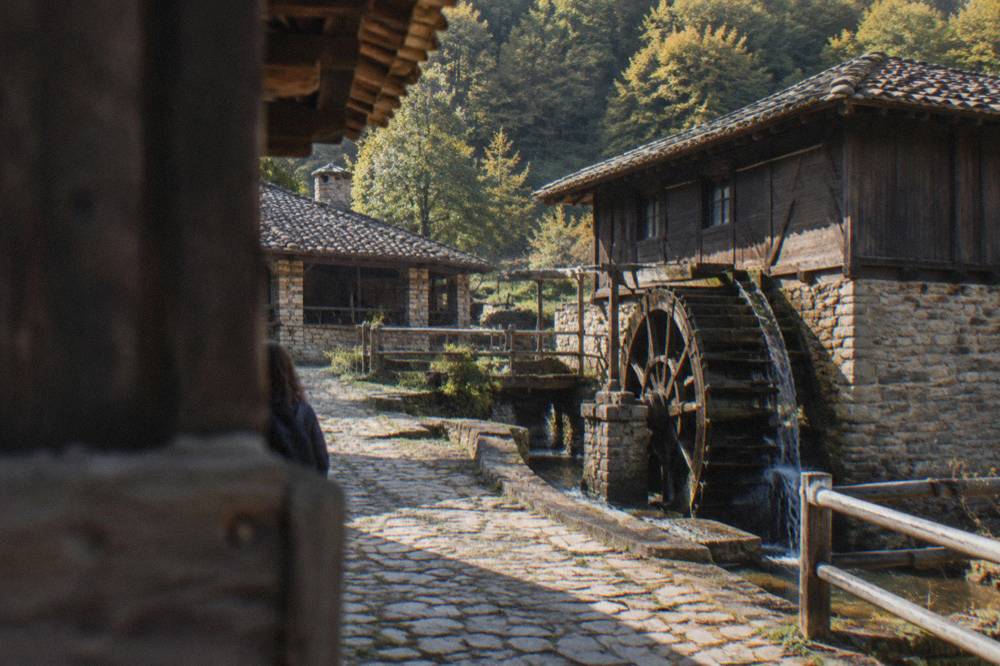
Etar is the anchor of the classic village loop. The Architectural-Ethnographic Complex is open every day of the year. Its ticket page lists 7.16 euro for adults, 3.07 euro for pupils and students, 4.09 euro for pensioners and free entry for children under 7, plus separately priced craft experiences and a family ticket on the same page. The Etar page covers the complex in full.
If you would rather not drive the village loop yourself, book a day trip to Etar.
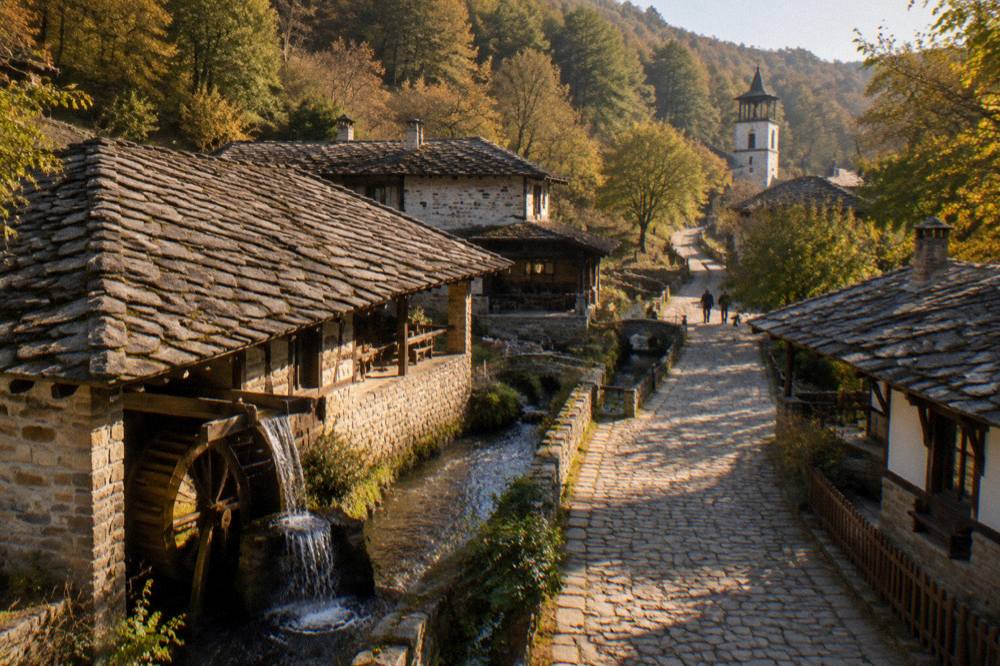
Tryavna and Bozhentsi string onto the same road. Tryavna lies about 42 km from the centre and Bozhentsi about 46 km, both preserved revival-era villages; their individual museum hours and prices are not carried by this site's sources, so check locally before setting an itinerary around interiors. The Tryavna page holds what is confirmed. The alternative direction runs to Dryanovo Monastery and Bacho Kiro cave, about 31 and 33 km respectively, on the Dryanovo Monastery page, or to Emen Canyon, the gorge of the Negovanka river about 20 km west of the city, where Lower Boaz has 90 m sheer cliffs, on the Emen Canyon page.
The distances from the centre, computed over the road network, for weighing the options:
| Day-trip destination | Road distance from the centre |
|---|---|
| Preobrazhenski Monastery | about 6 km |
| Holy Trinity (Patriarchal) Monastery | about 7 km |
| Kilifarevo Monastery | about 17 km |
| Nicopolis ad Istrum | about 20 km |
| Emen Canyon | about 32 km |
| Dryanovo Monastery | about 33 km |
| Tryavna | about 42 km |
| Bozhentsi | about 46 km |
| Etar | about 53 km |
| Krushuna Falls | about 79 km |
Nicopolis ad Istrum, the Roman and early Byzantine city about 20 km north in the village of Nikyup, is the quiet option: it is a Regional Museum of History site at 5.11 euro, open 09:00 to 18:00 from April to September, and it has been on UNESCO's Tentative List since 1984, one of the few heritage designments anywhere near the city. Nothing in Veliko Tarnovo itself is inscribed or tentative; the nearest World Heritage Sites are the Rock-Hewn Churches of Ivanovo and the Thracian Tomb of Kazanlak, both inscribed in 1979. Other pages covering the same trip are gathered on Veliko Tarnovo Travel Guide.
A guided version of the third day is the one many travellers book rather than drive. The site's featured tour for this itinerary is a private day trip to Ruse and its surroundings from Veliko Tarnovo, with the full description on its tour page; Ruse sits about 105 km from the centre, at the far end of the day-trip scale. Check availability if a driver-guided day sounds like the right fit.
What Will Three Days In Veliko Tarnovo Cost In Tickets?
Individual tickets across the three days run 7.67 euro at Tsarevets, Tsarevgrad Tarnov and the two Arbanasi sites, 7.16 euro at Etar and 5.11 euro at the branch museums, before any day-trip transport, food or lodging, and the two-day pass at 20.45 euro covers ten museum sites valid 1 April to 30 November. The table above lists every individual and family figure the museum publishes for this itinerary.
The per-site prices are the whole story; summing them adds nothing the reader cannot do with the table. Reductions matter more than arithmetic: students pay 2.56 euro at Trapezitsa and the Archaeological Museum, Bulgarian citizens over 60 pay the same at Trapezitsa, children under 7 enter free everywhere in the network, and people with permanent disabilities enter free with an assistant. The two-day pass changes the maths only if the itinerary includes several branch museums, and against a fortress-heavy plan it can lose. The wider cost picture, including what else a stay in the city involves, sits on the main things to do in Veliko Tarnovo page.
Two practical notes on paying. Bulgaria has used the euro since 1 January 2026, at the fixed rate of 1.95583 lev per euro, and the museum's euro figures are the converted old lev prices, so pay in euro without converting. Bulgaria is also a full Schengen member since 1 January 2025, and the Entry/Exit System has run at all external Schengen borders since 10 April 2026, which matters for visitors arriving from outside the zone.
When Is The Best Season For Three Days In Veliko Tarnovo?
Late April through September is the season in which every site on this itinerary is open, with a mean daily high of 21.7 C in May rising to 28.1 C in August, per the ERA5 reanalysis for Veliko Tarnovo, 1991 to 2020, while winter limits the plan: Trapezitsa closes from 30 November 2026 to 31 March 2027, the funicular stops on 31 October 2026, and January's mean daily low is -3.8 C.
The climate table below is modelled, from the ERA5 reanalysis grid cell over the city rather than a weather-station record, and it is the fairest basis for choosing weeks. May carries the highest monthly rainfall total at 95.7 mm and August the lowest at 51.3 mm, with the mean daily high peaking at 28.1 C in August.
| Month | Mean daily high | Mean daily low | Rain |
|---|---|---|---|
| April | 16.9 C | 6.0 C | 71.6 mm |
| May | 21.7 C | 11.1 C | 95.7 mm |
| June | 25.4 C | 15.1 C | 85.0 mm |
| July | 27.6 C | 17.2 C | 79.5 mm |
| August | 28.1 C | 17.1 C | 51.3 mm |
| September | 23.3 C | 12.9 C | 63.0 mm |
| October | 17.6 C | 8.0 C | 58.9 mm |
| November | 11.8 C | 3.1 C | 54.5 mm |
The seasonal closures are the hard edges. Winter hours across the museum sites start on 25 October 2026, cutting the evening out of fortress visits; the Trapezitsa funicular stops for the season on 31 October 2026 and reopens 1 May; Trapezitsa itself shuts from 30 November 2026 to 31 March 2027; Konstantsalieva House in Arbanasi drops to Friday-to-Sunday opening from 30 November 2026 to 20 March 2027; and the Kilifarevo history museum closes 30 November 2026 to 30 March 2027. The winter itinerary rebuilds the plan around what stays open, and the spring and autumn guide covers the shoulder months.
The events calendar can anchor the choice of week. The International Folklore Festival ran 18 to 25 July in its 28th edition in 2026, the Arbanasi Summer Music chamber festival ran 15 to 25 July 2026 in the village's churches, and the city holiday falls on 22 March. Independence Day on 22 September brings a liturgy at the Forty Martyrs church and a ceremony on Tsarevets, with the Sound and Light show in the evening programme.
Should Any Of The Three Days Be A Guided Tour?
Yes, day three is the natural candidate for a guided or driven day, because the villages and monasteries sit 20 to 55 km apart on mountain roads while the in-city sights do not, and a private day trip with pickup in Veliko Tarnovo removes the need to plan that leg. Days one and two work as self-guided walks, since the fortress, the old quarters and the museums sit close together.
Beyond that split, the museum itself sells guided talks at Tsarevets, priced in Bulgarian, translated and in a foreign language on the ticket page, so even the self-guided days can borrow expertise for the fortress hour. The paid options on the roster then divide by day. For a city-based half day, the walking tours and in-city experiences cover the core sights with a guide; for the third day, the day trips from the city run to the monasteries and waterfalls, the Buzludzha monument and Shipka, and the Etar combo, all listed with their covers on their tour pages. The Buzludzha interior is reported as generally closed, so a tour there is an exterior visit; confirm access locally before booking around it.
Travellers arriving from farther away can also fold the city into a longer route. The one day in Veliko Tarnovo itinerary shows what a single day carries, and the northern Bulgaria road trip itinerary and the Bucharest to Sofia via Veliko Tarnovo route place the city inside a multi-stop drive. Getting to the city at all involves Sofia, Varna or Bucharest Otopeni airports, at about 223 km, 214 km and 205 km by road respectively, or train and bus connections with a change at Gorna Oryahovitsa on the Sofia rail route.
Common Questions About Three Days In Veliko Tarnovo
Is 3 days in Veliko Tarnovo enough?
Three days cover the fortress, both old quarters, the branch museums, Arbanasi and one full day trip to the Balkan villages or monasteries, which is the complete programme for the city itself. A single day covers the fortress and the Varosha quarter, and two days add the museums and Arbanasi.
What is the best order for the three days?
Tsarevets first, while the legs are fresh, then the river-crossing day with Trapezitsa, the Archaeological Museum and Arbanasi, then the day trip. If the Sound and Light show is announced for one specific evening of the stay, build day one around that evening.
How much do the tickets cost for three days?
Individual museum tickets run 5.11 euro at the branch museums, 7.67 euro at Tsarevets, Tsarevgrad Tarnov and the Arbanasi sites, and 7.16 euro at Etar. A two-day pass covering ten museum sites costs 20.45 euro for an individual, valid 1 April to 30 November.
Does anything close in winter?
Yes. Winter hours at the museum sites start on 25 October 2026, Trapezitsa closes from 30 November 2026 to 31 March 2027, its funicular stops on 31 October 2026, Konstantsalieva House goes to weekend-only opening in winter, and the Museum of New and Newest History is temporarily closed.
Can the third day be done without a car?
The day trips on the site's roster are paid products with transport included, and the nearest options, Preobrazhenski Monastery at about 6 km and Holy Trinity Monastery at about 7 km, are within reach of the city. Public transport detail for the villages is not carried by this site's sources, so confirm locally.
What is the best month for the three-day itinerary?
The ERA5 reanalysis, 1991 to 2020, puts the mean daily high at 21.7 C in May, 25.4 C in June and 23.3 C in September, with May the wettest month at 95.7 mm and August the driest at 51.3 mm. Every site on the itinerary is open from late April to late October.
Three days in Veliko Tarnovo, spent this way, leave the city with its fortress walked, its villages visited and one evening given over to the lights on the walls above the square.