Veliko Tarnovo Day Trip From Sofia: Which Tour To Book
Sofia sits about 223 road km from Veliko Tarnovo, and the medieval capital of the Second Bulgarian Kingdom works as a long but rewarding day trip by bus, train or guided tour.
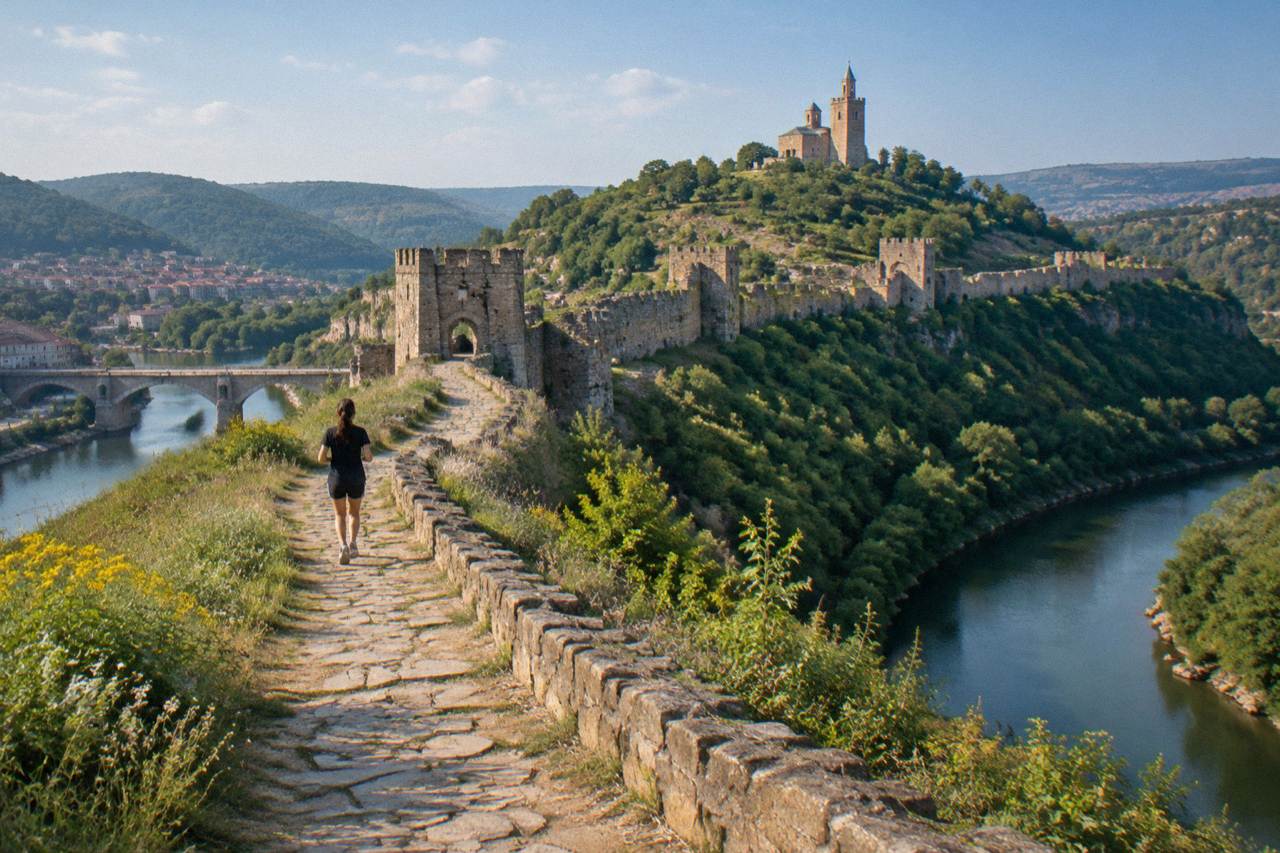
A Veliko Tarnovo day trip from Sofia takes about 3 to 3.5 hours each way by bus, or 4 h 33 min at best by train with a change at Gorna Oryahovitsa. Guided small-group and private tours from Sofia cover Veliko Tarnovo and Arbanasi in one booked day, and Tsarevets Fortress entry is 7.67 euro per adult.
Sofia and Veliko Tarnovo sit about 223 road km apart in Bulgaria, and the distance shapes every version of this trip. Veliko Tarnovo is an inland city on the Yantra river with no sea coast, the capital of the Second Bulgarian Kingdom for more than two centuries from the late 12th century, and the home of Tsarevets Fortress, the Patriarchal Cathedral, Trapezitsa, Samovodska Charshiya, General Gurko Street and the village of Arbanasi. A day trip from Sofia is entirely practical: buses run the route in about 3 to 3.5 hours, trains connect with a change, and a strong roster of guided tours from Sofia covers the city and Arbanasi in one booked day. This guide lays out each option, the ticket prices you will pay on the ground, and the seasonal closures that decide whether your chosen date works.
How Far Is Veliko Tarnovo From Sofia, And What Are The Ways To Get There?
Veliko Tarnovo lies about 223 road km from Sofia's centre, reached by intercity bus in about 3 to 3.5 hours, by train with a change at Gorna Oryahovitsa in 4 h 33 min at the fastest, or by guided tour with hotel-area pickup. There is no airport with scheduled flights at the Veliko Tarnovo end, so for a day trip from Sofia the road is the whole story. Buses arrive at the Yug station, at 74 Hristo Botev Boulevard, in the centre.
Three practical modes compete for this route. The intercity bus is the fastest scheduled option, with several operators running Sofia to Veliko Tarnovo in about 3 to 3.5 hours and arriving at the Yug station. The train involves no direct service at all: every Sofia to Veliko Tarnovo rail journey changes, usually at the Gorna Oryahovitsa junction about 10 km from the centre, and the fastest journeys on the current BDZ timetable run 4 h 33 min and 4 h 51 min, with slower connections taking 6 to 10 hours. A guided tour removes the timetable question entirely, because the vehicle and the schedule come with the booking.
The trade-offs are simple. An independent bus trip costs a bus fare and nothing else, and leaves you free to spend the day as you like, but you carry the return-time discipline yourself. The train is the slow option and the connections are not generous. A tour bundles transport with a fixed itinerary, which suits a single-day visit where the hours are already tight. More detail on each mode, and on what a day in the city can hold, is in the site's Sofia day trip overview.
For travellers combining Bulgaria with Romania, the same logic runs in reverse from Bucharest, covered separately in the Bucharest day trip guide, and the two-capital routing through the city has its own itinerary page.
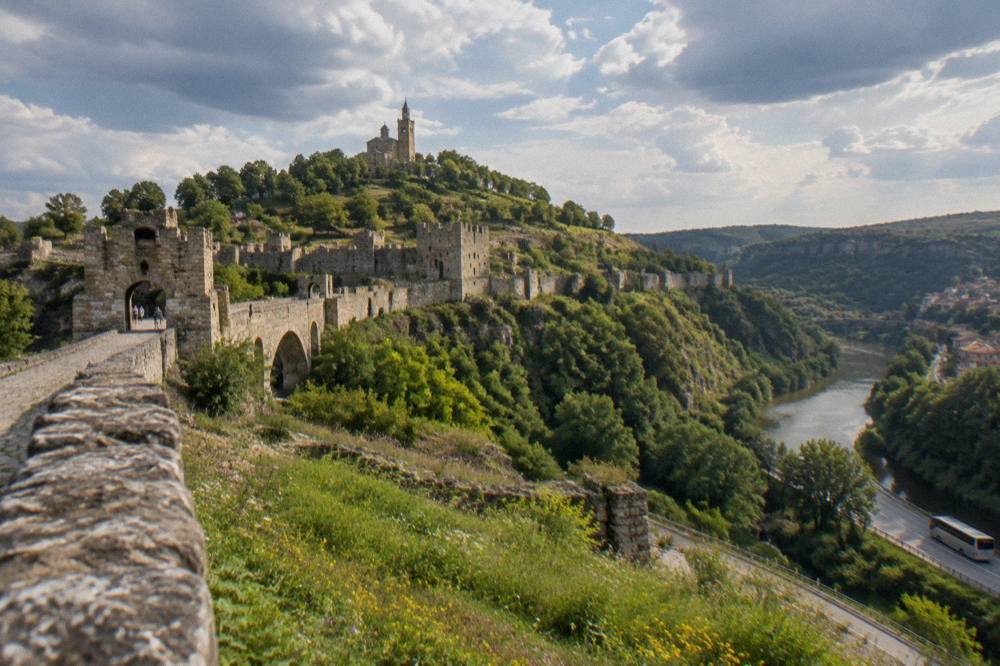
Bus Or Train From Sofia: Which Is Faster And What Does Each Cost?
The bus is the faster scheduled option, at about 3 to 3.5 hours from Sofia to the Yug bus station, against a best-case train time of 4 h 33 min with a change at Gorna Oryahovitsa; slower trains take 6 to 10 hours. One published second-class rail example for the route is about 9.82 euro, and bus fares vary by operator, so check the current price when booking. Neither mode runs at every hour, so the timetable decides the day as much as the wheels do.
The rail route's weakness is the junction. Veliko Tarnovo's own station is a stop on a secondary line, and the Gorna Oryahovitsa junction about 10 km from the centre is where the main Sofia services pass through. The two fastest journeys on the timetable read, the 10:10 departure at 4 h 33 min and the 07:00 departure at 4 h 51 min, both depend on the connection working; the remainder of the day's combinations run 6 to 10 hours, which erases a day trip. Times change with each timetable revision, so the BDZ timetable page is the reference to check before committing a day to the rails.
The bus is the mode that makes an independent day trip realistic. Several operators run the corridor, journey time is about 3 to 3.5 hours, and arrivals land at Yug in the centre, which keeps the sightseeing walkable from the start. The site's getting around overview covers the arrival logistics in more depth for travellers building a longer route.
| Mode | Journey time | Change | Arrival point |
|---|---|---|---|
| Intercity bus | about 3 to 3.5 hours | direct | Yug station, 74 Hristo Botev Blvd |
| Fastest trains | 4 h 33 min and 4 h 51 min | at Gorna Oryahovitsa | Veliko Tarnovo station |
| Slower trains | 6 to 10 hours | one or more | Veliko Tarnovo station |
| Guided tour | door-to-door by itinerary | none | itinerary pickup and drop-off |
One caution that is easy to miss: a day trip on the slower train combinations is not really a day trip, because 6 to 10 hours each way leaves almost nothing in the middle. If the two fast trains do not fit your dates, the bus or a booked tour is the better use of a single day.
Which Guided Tours From Sofia Cover Veliko Tarnovo, And What Do You Get?
Guided day trips from Sofia deliver transport, a guide and a fixed itinerary built around Veliko Tarnovo and usually Arbanasi, with small-group and private formats on the roster; prices, ratings and durations render on each tour page rather than in this text. The featured option on this site is a small-group day trip from Sofia covering Veliko Tarnovo and Arbanasi, and the roster also includes private full-day tours and flexible variants.
The small-group format suits a first visit. The featured small-group day trip from Sofia pairs the city with Arbanasi and runs as a shared departure, which keeps the per-person price down and the day structured. It is the tour this page links first, and you can Check availability on the tour page.
Other Sofia departures on the roster cover the same corridor with different emphasis. A full-day Veliko Tarnovo and Arbanasi tour from Sofia is the closest sibling, so the relevant alternatives are the private formats, including a dedicated private tour and a pickup-inclusive shared option, each described on its own listing page.
The third tour in that band is a different animal: a Buzludzha and Shipka trip that starts in Veliko Tarnovo rather than Sofia, useful for travellers who stay a second night and want the Balkan monuments north of the city. The Bucharest entry covers the same fortress corridor from Romania's capital. If the small-group format appeals but you want the decision settled now, the box below goes straight to the featured departure.
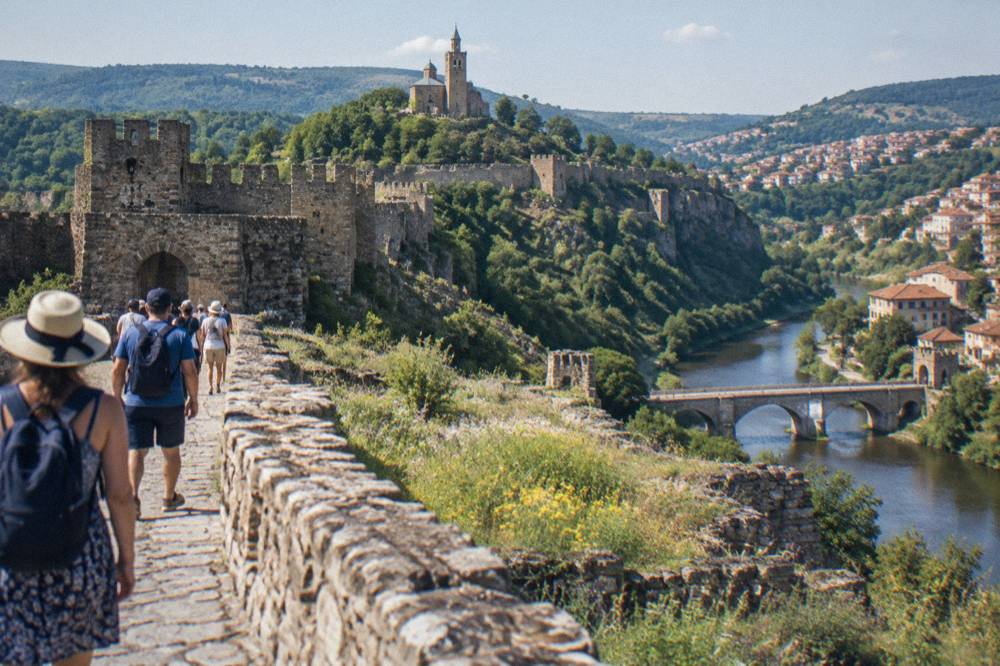
What Should A One-Day Itinerary In Veliko Tarnovo Actually Include?
A realistic one-day plan puts Tsarevets Fortress first, since the reserve needs the largest block of time and carries a 7.67 euro adult ticket, then the Patriarchal Cathedral on the hill, then the walk down through Varosha, General Gurko Street and Samovodska Charshiya, all free public spaces, with the Sound and Light show from Tsar Asen I Square only if your return transfer is late. The Church of the Holy Forty Martyrs, where Bulgarian independence was declared on 22 September 1908, costs 5.11 euro.
The fortress anchors the day. Tsarevets is open daily with no closing weekday, April to September 08:00 to 20:00 with last entry at 19:00, October 09:00 to 18:00 with last entry at 17:00, and winter entry 09:00 to 16:00 from 25 October 2026. A Tuesday maintenance slot, 09:10 to 11:00, is listed on the ticket page, which matters if your day trip lands on a Tuesday morning. The site's Tsarevets guide and the Patriarchal Cathedral page carry the full detail; the cathedral's hours run inside the fortress ticket.
Below the hill, the free public spaces are the reward of a walking day. The Varosha old town, Samovodska Charshiya and General Gurko Street cost nothing to walk, as does the Asenevtsi Monument, and the Sound and Light show is free to watch from Tsar Asen I Square on its announced evenings. Note the word announced: the show runs on set dates only, with no fixed nightly schedule, so a day trip cannot count on it unless the date is one of the announced ones.
If the day runs long, the one-day itinerary sequences all of this hour by hour, and the walking tour overview describes the paid guided walks on the roster. There is no free guided walk product on the roster here; the public spaces are free to walk on your own, and the guided walks are paid products.
| Sight | Adult ticket | Hours (April to September) |
|---|---|---|
| Tsarevets Fortress | 7.67 euro | daily 08:00 to 20:00, last entry 19:00 |
| Church of the Holy Forty Martyrs | 5.11 euro | daily 09:00 to 18:00, last entry 17:30 |
| Tsarevgrad Tarnov multimedia centre | 7.67 euro | daily 09:00 to 19:00, last entry 18:00 |
| Trapezitsa | 5.11 euro | daily 09:00 to 19:00, last entry 18:00 |
| Church of the Nativity, Arbanasi | 7.67 euro | daily 09:00 to 18:00 |
| Asenevtsi Monument, Varosha, Gurko Street | free | public spaces, open at all hours |
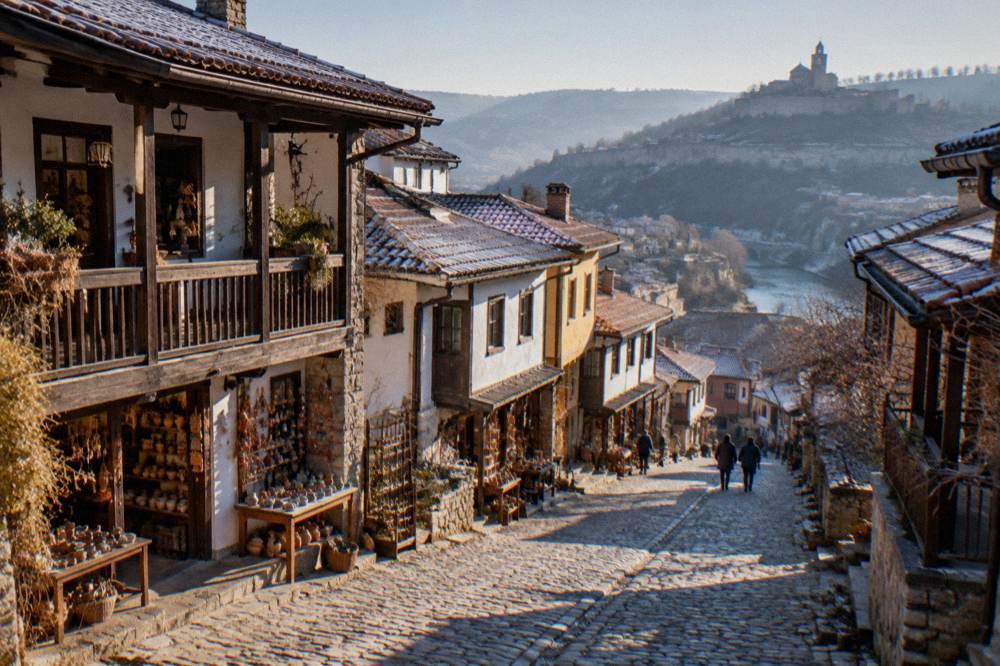
How Much Does A Day In Veliko Tarnovo Cost In Tickets?
The core sightseeing spend is 7.67 euro for Tsarevets (family ticket 10.23 euro for parents and up to three children aged 7 to 18), 5.11 euro for the Church of the Holy Forty Martyrs or Trapezitsa, and 7.67 euro for the Arbanasi churches, with a two-day museum pass at 20.45 euro individual that is only useful if you stay overnight. Children under 7 enter free, as do people with permanent disabilities with an assistant. The walking streets and the Asenevtsi Monument cost nothing.
The museum's own ticket page is the reference for these figures, and every one of them is printed in euro since Bulgaria adopted the currency on 1 January 2026 at a fixed rate of 1.95583 lev per euro. The family tickets are the quiet bargain: 10.23 euro at Tsarevets covers parents and up to three children aged 7 to 18, and the Arbanasi churches list a family ticket at 12.78 euro. Everything else covered here is indexed on Veliko Tarnovo Travel Guide.
The two-day pass, 20.45 euro individual and 25.56 euro family, valid 1 April to 30 November, only earns its price across a two-day stay, which is the argument the two-day itinerary makes for sleeping over rather than racing back to Sofia. A fuller cost breakdown, including what a day trip does and does not spend, sits in the cost guide.
| Ticket | Individual | Family |
|---|---|---|
| Tsarevets Fortress | 7.67 euro | 10.23 euro |
| Church of the Holy Forty Martyrs | 5.11 euro | 7.67 euro |
| Trapezitsa | 5.11 euro | 7.67 euro |
| Church of the Nativity, Arbanasi | 7.67 euro | 12.78 euro |
| Two-day pass, 10 museum sites | 20.45 euro | 25.56 euro |
Do not add these figures up in your head and call it a budget: which tickets you actually need depends on the itinerary, and a fortress-plus-streets day buys far fewer tickets than a museum day. Quote the rows you need and leave the rest.
Should You Add Arbanasi To The Sofia Day Trip?
Arbanasi lies about 2.8 km straight-line from Veliko Tarnovo's centre, and every guided tour from Sofia that covers both places builds it into the day; independent travellers reach it by taxi or on foot as their legs allow, since no printed bus fare or schedule for the village is in this site's data. The Church of the Nativity costs 7.67 euro (family 12.78 euro) and Konstantsalieva House the same, with the house open Friday to Sunday only from 30 November 2026 to 20 March 2027.
The village is the standard second act of the Sofia day trips on the roster, and the featured small-group tour names it in its title. For independent visitors, the Arbanasi area guide covers the churches and houses, with the seasonal caveat that matters most: Konstantsalieva House drops to weekends only for the winter window from 30 November 2026 to 20 March 2027, and the Church of the Nativity runs winter entry hours of 10:00 to 15:30, free on the church feast on 25 December 2026.
The timing question is the real one. A day trip that arrives at midday has room for the fortress and Arbanasi only if the return transfer is evening-scheduled, which is exactly the calculation a booked tour makes for you. Travellers who want the village at leisure are better served by the three-day itinerary and a night in the city.
What Can You Stop At Between Sofia And Veliko Tarnovo?
The road corridor between Sofia and Veliko Tarnovo passes the Etar open-air museum at about 53 km from the city, Tryavna at about 42 km and Bozhentsi at about 46 km, all reachable as add-ons by car or on tours that string them together; Emen Canyon lies about 32 km by road west of the city, and the Dryanovo Monastery area about 33 km. Buzludzha sits about 73 km away and the Shipka church about 79 km, both in the direction of the Stara Planina passes.
Etar is the one stop with a printed price in this site's data: the architectural-ethnographic complex charges 7.16 euro per adult, open all year with no days off. The Etar guide covers it fully. For Tryavna and Bozhentsi, no hours or prices from primary sources are carried on this site, so check the current price on the official ticket page before booking or arriving; the same applies to Buzludzha, whose interior is reported as generally closed, with the exterior the visible part.
| Place | Distance from Veliko Tarnovo centre |
|---|---|
| Tryavna | about 42 km |
| Bozhentsi | about 46 km |
| Etar | about 53 km |
| Buzludzha | about 73 km |
| Shipka church | about 79 km |
| Emen Canyon | about 32 km |
| Dryanovo Monastery | about 33 km |
A tour that chains Sofia, Veliko Tarnovo, Arbanasi and one Revival-era town is the efficient shape for this, and the roster carries an Etar and Veliko Tarnovo combination for exactly that pattern.
When Is The Best Time Of Year For A Veliko Tarnovo Day Trip From Sofia?
The ERA5 reanalysis for Veliko Tarnovo, 1991 to 2020, puts the mean daily high at 16.9 C in April, 21.7 C in May and 23.3 C in September against 28.1 C in August and 4.9 C in January, with May the wettest month at 95.7 mm and August the least rainy at 51.3 mm, so spring and early autumn combine workable temperatures with the fortress's full 08:00 to 20:00 summer hours.
The seasonal boundary that actually bites is 25 October 2026, when winter hours start across the museum sites: fortress entry drops to 09:00 to 16:00, closing 17:00, and a string of closures follows, Trapezitsa from 30 November 2026 to 31 March 2027, its funicular from 31 October 2026, and the Konstantsalieva House reduced to weekends. A late-autumn or winter day trip still works for the fortress and the free streets, but the daylight window is shorter and the itinerary must be tighter.
| Month | Mean daily high | Mean daily low | Rain |
|---|---|---|---|
| April | 16.9 C | 6.0 C | 71.6 mm |
| May | 21.7 C | 11.1 C | 95.7 mm |
| June | 25.4 C | 15.1 C | 85.0 mm |
| July | 27.6 C | 17.2 C | 79.5 mm |
| August | 28.1 C | 17.1 C | 51.3 mm |
| September | 23.3 C | 12.9 C | 63.0 mm |
| October | 17.6 C | 8.0 C | 58.9 mm |
The event calendar adds a few fixed anchors worth planning around. The city holiday falls on 22 March every year, and the Independence Day programme on 22 September centres on the Church of the Holy Forty Martyrs, where the independence declaration was read in 1908, with reenactments and a flag ritual on Tsarevets. The Sound and Light show tends to appear on such dates, on announced evenings only, free from Tsar Asen I Square.
Guided Or Independent: Which Booking Suits Which Traveller?
Independent travel by bus suits confident travellers who want to control the clock and spend only on the sights themselves, roughly a bus fare plus 7.67 euro at the fortress, while a guided tour from Sofia suits anyone who values the transfer, the narration and a guaranteed Arbanasi stop over that control, with prices and ratings rendered on each tour page. The deciding factors are the season, the day of the week and whether the evening return matters for the Sound and Light show.
The independent route rewards early starts. The first buses of the morning out of Sofia put you at the Yug station by late morning, and the fortress's 08:00 summer opening means an early arrival can beat the day's heat into the hill. The costs are arithmetic you control: bus fare, sight tickets, food you choose. The risks are the return-time discipline and the fact that no direct train exists, so a missed evening bus means a slow rail combination or a night in the city.
The guided route trades that for certainty, and the roster's Sofia departures are built around exactly this day. Besides the featured small-group tour, a full-day option from Sofia covers Veliko Tarnovo and Arbanasi in a single booked itinerary.
For travellers basing themselves in the city rather than day-tripping in, the flexible options multiply. One variant adds pickup from Sofia, bundling the hotel-side start into the same corridor:
A second flexible departure from Sofia runs the Veliko Tarnovo and Arbanasi pairing with a transfer built in, which suits visitors connecting onward rather than returning to the capital the same night:
What Can Go Wrong With A Sofia Day Trip, And How Do You Avoid It?
The four realistic failure points are the train connection at Gorna Oryahovitsa, which turns a 4 h 33 min journey into a 6 to 10 hour one if missed; the Tuesday maintenance slot at Tsarevets, 09:10 to 11:00; the winter hours that start on 25 October 2026 and squeeze the fortress day to a 09:00 to 16:00 window; and assuming the Sound and Light show runs nightly, when it plays announced evenings only.
Each has a plain workaround: take the bus, arrive after 11:00 on Tuesdays, travel before late October, and check the announced dates.
The maintenance slots are the detail nobody else warns you about. The fortress carries a listed Tuesday slot of 09:10 to 11:00, the Archaeological Museum a Monday slot of 09:00 to 11:00, and the Forty Martyrs church also a Monday morning slot, so a day trip that lands on the wrong weekday morning finds its first stop shut for two hours. Plan the fortress for the afternoon on those days, or simply start on the free streets and end on the hill.
Winter is the second structural issue. After 25 October 2026 the museum day contracts, Trapezitsa's funicular has already stopped on 31 October, and by 30 November Trapezitsa itself closes until 31 March 2027. The winter guide covers what remains open and rewarding in the cold months, and the fortress itself stays open daily through the winter with the shorter hours.
Finally, money and phones are simpler than they were: Bulgaria has used the euro since 1 January 2026, is a full Schengen member since 1 January 2025, and the single European emergency number 112 works everywhere. Carry a card and a little cash, and keep the museum ticket page handy for the current prices on the day.
Common Questions About Day Trips From Sofia To Veliko Tarnovo
Is a Veliko Tarnovo day trip from Sofia worth it?
For travellers based in Sofia who want the medieval capital, Tsarevets Fortress and Arbanasi in one booked day, the trip is the standard way to see them, with buses covering the corridor in about 3 to 3.5 hours and guided tours handling the whole day. The trade is the road time, about 223 km each way, which a tour converts into narration and a fixed itinerary.
Is there a direct train from Sofia to Veliko Tarnovo?
No. Every rail journey changes, usually at the Gorna Oryahovitsa junction about 10 km from the centre, and the fastest journeys on the current BDZ timetable run 4 h 33 min and 4 h 51 min, with slower combinations taking 6 to 10 hours. The bus, at about 3 to 3.5 hours, is the faster scheduled option.
How much does it cost to visit Tsarevets Fortress?
The adult ticket is 7.67 euro, with a family ticket at 10.23 euro covering parents and up to three children aged 7 to 18, per the Regional Museum of History's ticket page. Children under 7 enter free, and the fortress is open daily with April to September hours of 08:00 to 20:00.
Can you visit Arbanasi on a day trip from Sofia?
Yes, and the guided tours from Sofia include it in their itineraries. The Church of the Nativity costs 7.67 euro (family 12.78 euro), and Konstantsalieva House the same, though the house is open Friday to Sunday only from 30 November 2026 to 20 March 2027.
What is the best time of year for the trip?
April to September combines the fortress's full 08:00 to 20:00 hours with mean daily highs of 16.9 C to 28.1 C in the ERA5 reanalysis for Veliko Tarnovo, 1991 to 2020. Winter hours from 25 October 2026 shorten the day, and several sites close fully from late November.
Does the Sound and Light show run every night?
No. The show runs on announced evenings only, with no fixed schedule, and watching from Tsar Asen I Square is free. A day trip can only catch it if the return transfer is late and the date happens to be an announced one.
A day trip from Sofia to Veliko Tarnovo is a long day that repays the early start: one fortress hill, one riverside old town and one hillside village, all inside about 223 km of road, with a booked tour or a well-timed bus bringing you back to the capital the same night.