Getting Around Veliko Tarnovo: Hills, Buses And Taxis
Veliko Tarnovo is compact, hilly and built around a river bend, and nearly everything worth seeing sits within walking distance of everything else once the climbs are accounted for. This guide covers trains, buses, taxis, the two bus stations, the funicular, and how the hills shape a visit.
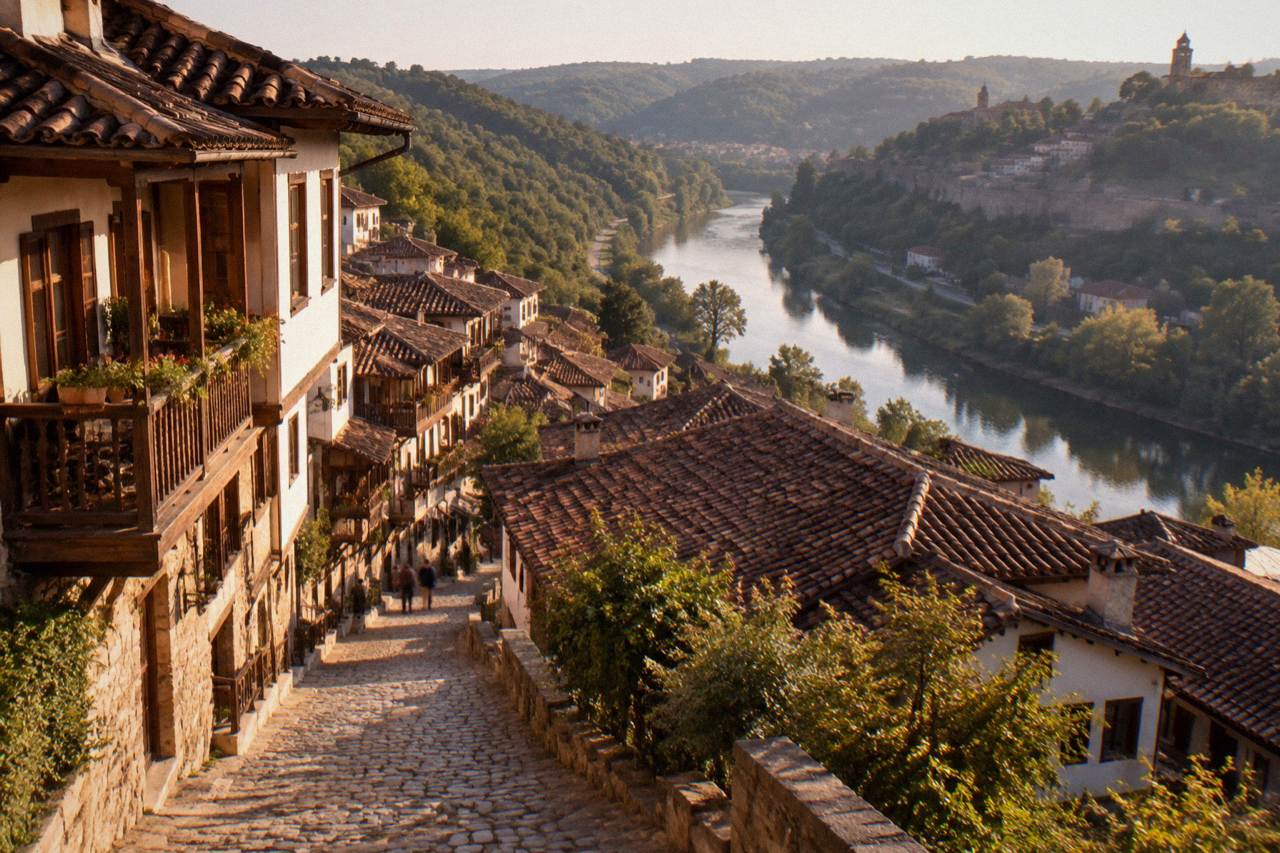
Veliko Tarnovo is best explored on foot: the old quarters, Tsarevets, Samovodska Charshiya and Gurko Street cluster around the river bend. Trains arrive at the city station (about 10 km from Gorna Oryahovitsa junction), buses use the Yug and Zapad stations, and taxis fill the gaps. Ticket prices for sights and train times come from official pages.
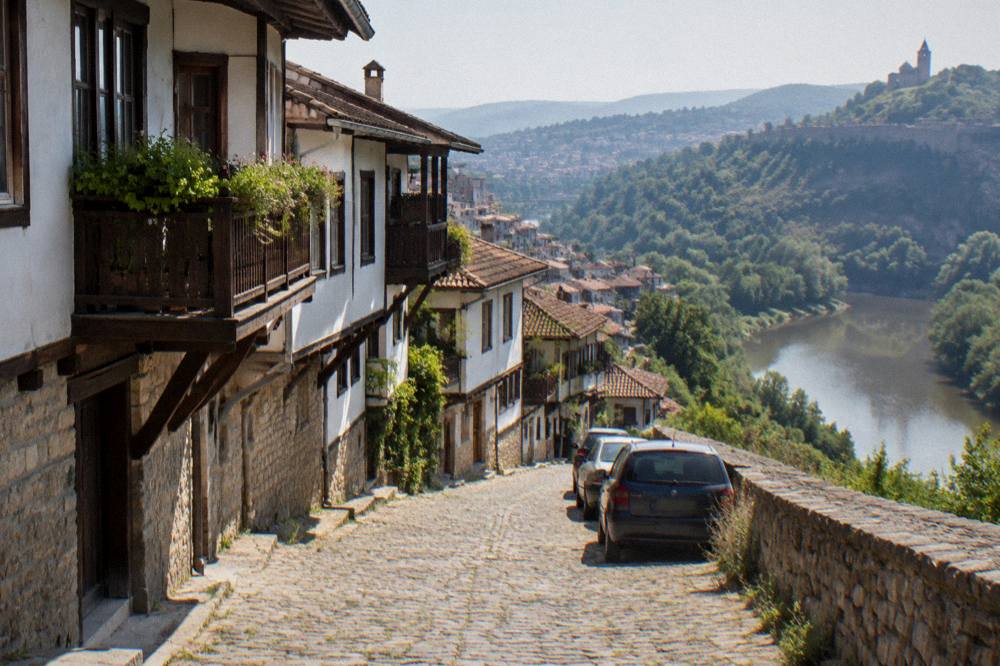
Veliko Tarnovo is an inland city in Bulgaria on the Yantra river, and its geography decides how anyone moves through it. The municipality held an estimated 77,067 residents on 31 December 2025, and the city itself spills over several hills around a tight river bend, so the distance between two sights on a map is rarely the distance a pair of legs will actually cover. The centre is compact. The climbs between the quarters are not.
The practical picture breaks into four layers. First, arriving: trains, the two bus stations, and the airports nobody can fly directly into. Second, the city itself, which is a walking city with steep old quarters. Third, the paid mechanical aid, meaning the Trapezitsa funicular, which runs only in summer. Fourth, the day trips outward, where distances matter more than schedules. Each layer is covered below with the times and prices the official pages print, and the Veliko Tarnovo Travel Guide covers the sights themselves in separate pages.
How Walkable Is Veliko Tarnovo, Really?
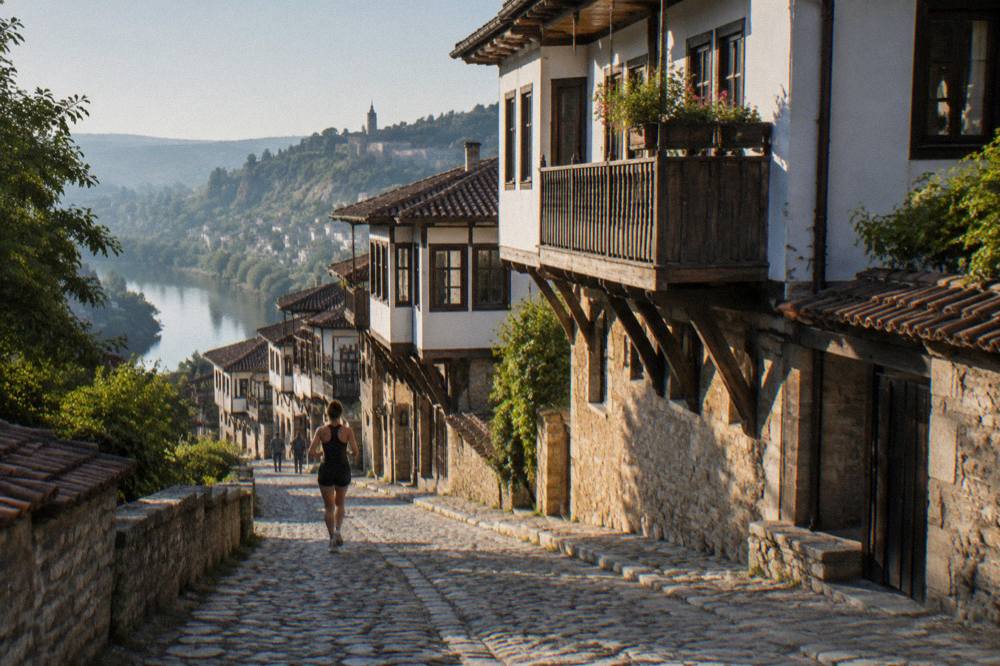
The centre of Veliko Tarnovo is a walking city: Tsar Asen I Square, Samovodska Charshiya, Gurko Street, the Varosha quarter and the Asenevtsi Monument are all public spaces open at all hours and free to enter, and they cluster around the river bend within a short walk of one another. The work is vertical. The old quarters sit on hills above the Yantra, so flat distance on a map understates the effort, and no walking-time figure is given here beyond what the geography itself implies.
That is the honest framing. The list of open, free, always-accessible public spaces in the city is short and specific: the Asenevtsi Monument, Samovodska Charshiya, General Gurko Street, the Varosha quarter, and watching the Sound and Light show from Tsar Asen I Square. Those five, plus the Church of the Nativity in Arbanasi on 25 December 2026, are the free items on the site's free list. Everything else with a gate has a ticket.
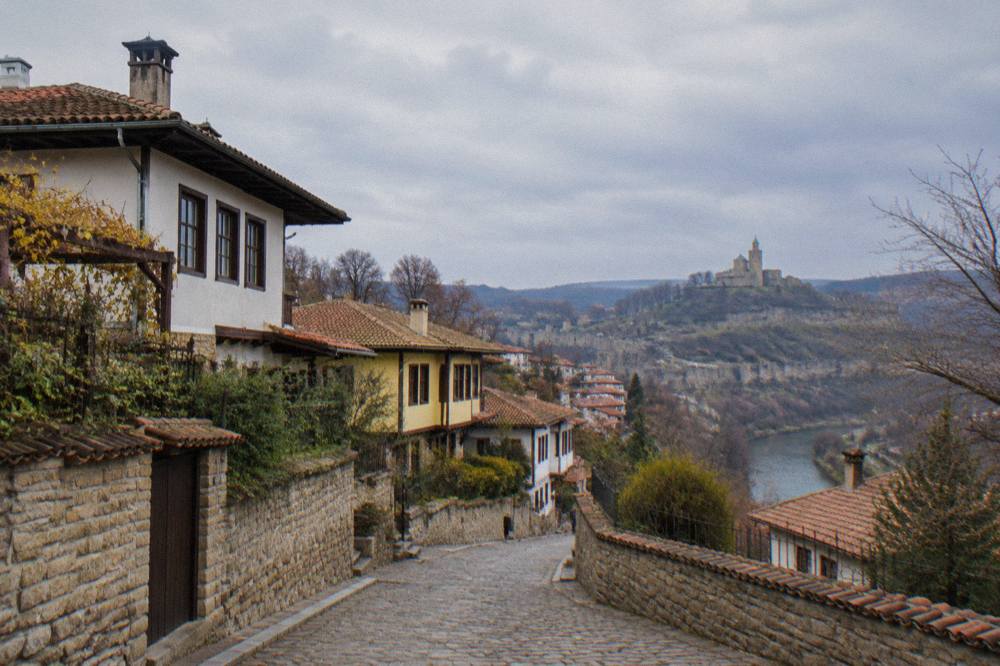
Tsarevets Fortress sits at one end of this cluster and the ticketed museums sit at the other, so a visit usually resolves into walking loops punctuated by climbs. The Sound and Light show is watched from Tsar Asen I Square for free on its announced evenings, and it runs on announced dates only, with no fixed nightly schedule. The walking tours on the roster are paid products; there is no free guided walk in the city, and the open public spaces are free to walk on your own.
For anyone who wants a structured walk rather than a self-directed one, the paid options include a guided city walk and a monuments walk, both covered on the Veliko Tarnovo walking tour page. For what the walks actually pass, the things to do overview lists the sights by quarter.
To get the stories behind the streets, book a guided walking tour.
How Do Trains Reach Veliko Tarnovo?
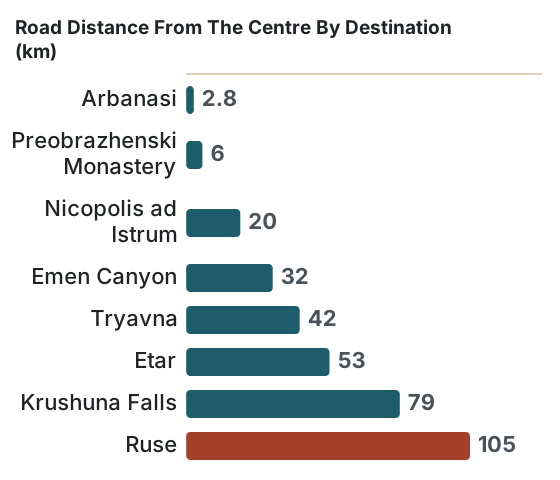
There is no direct train from Sofia to Veliko Tarnovo: every trip changes, usually at the Gorna Oryahovitsa junction about 10 km from the centre, and the fastest journeys on the BDZ timetable read take 4 h 33 min and 4 h 51 min, with slower connections of 6 to 10 hours. From Varna there is one direct train taking 3 h 53 min, and from Ruse a direct train takes 2 h 25 min. The BDZ timetable is the live authority, and times change.
Those four figures are the rail spine of any Veliko Tarnovo trip. The Varna direct train departs at 05:00, the Ruse direct at 04:49, and the two fastest Sofia departures leave at 10:10 and 07:00, all per the 17 October 2026 timetable read, which is why no departure list is printed beyond those headline times. A second-class fare from Sofia was listed at about 9.82 euro in one example; treat it as an example, not a tariff.
| Route | Best connection | Time | Notes |
|---|---|---|---|
| Sofia to Veliko Tarnovo | Change at Gorna Oryahovitsa | 4 h 33 min fastest | No direct train exists |
| Sofia to Veliko Tarnovo | Alternative change | 4 h 51 min | Other trips 6 to 10 h |
| Varna to Veliko Tarnovo | Direct train, 05:00 | 3 h 53 min | Others change, 4 h 36 min or longer |
| Ruse to Veliko Tarnovo | Direct train, 04:49 | 2 h 25 min | Via Gorna Oryahovitsa: 2 h 33 min |
The station itself and the arrival logistics are covered in detail on the Veliko Tarnovo train station guide, and the wider question of routes, airports and the nearest flight options sits on how to get to Veliko Tarnovo. Gorna Oryahovitsa is the junction where long-distance trains meet the branch down into the city, and the two stations are about 10 km apart.
Which Bus Station Do You Need In Veliko Tarnovo?
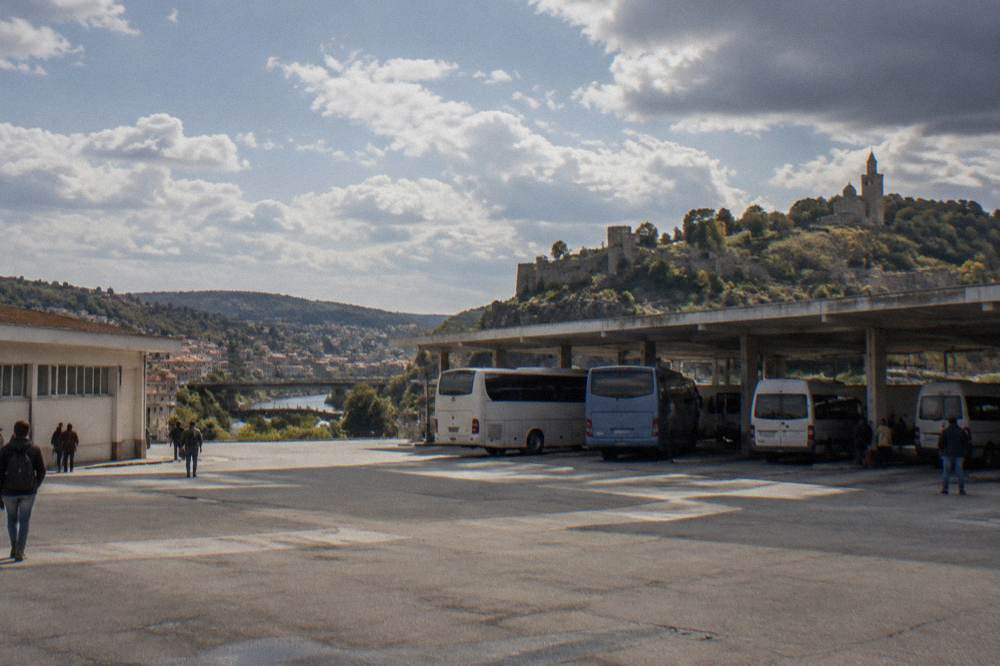
Veliko Tarnovo has two bus stations, and the one that matters depends on the direction: Yug, at 74 Hristo Botev Boulevard in the centre, handles Sofia, Varna and international services, while Zapad, on Nikola Gabrovski Boulevard, handles regional routes. Sofia buses take about 3 to 3.5 hours with several operators, Bucharest buses take about 3 h 50 min to 4 h 15 min direct, and the Varna route page lists 16 direct buses a day.
That is the whole station map. Yug sits centrally enough that arriving there puts a visitor a short walk from the river bend and the old quarters. Zapad is the regional arm, and for the day-trip destinations in the Gabrovo direction it is the place to check departures locally, since no regional schedule is reproduced here.
| Station | Address | Serves |
|---|---|---|
| Yug | 74 Hristo Botev Blvd | Sofia, Varna, international routes |
| Zapad | Nikola Gabrovski Blvd | Regional routes |
Bus fares vary by route. The full arrival picture, including the bus-versus-train trade-off from the capital, sits on the bus station guide, and the capital-side logistics on the Sofia day trip page.
For travellers who would rather not assemble a bus-plus-train chain from Sofia, the related tour for this page is a Sofia pickup day tour covering Veliko Tarnovo and Arbanasi: Check availability. It exists precisely because the public-transport chain from Sofia, while workable, is a half-day project in each direction on the slower connections.
What About Taxis And City Buses?
What is confirmed is the wider frame: Bulgaria has used the euro since 1 January 2026 at the fixed rate of 1.95583 lev per euro, so any quoted price should be in euro.
The euro changeover matters for every negotiation at a taxi window, because the lev is not the current currency and has not been since the start of 2026. The money mechanics, card use and the changeover are covered on the euro and money page.
For the hills, the honest advice is structural: the city is small enough that walking covers the centre, and steep enough that a taxi saves a climb. Where a taxi helps most is luggage on arrival and the return to the train station or bus station with bags.
Does The Funicular Help With The Hills?
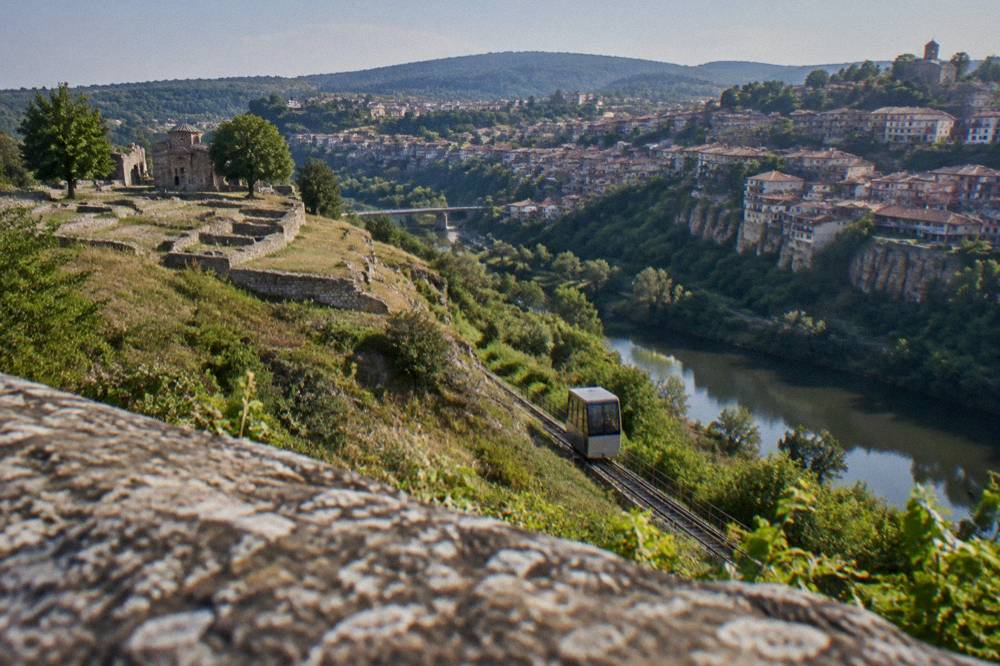
The Trapezitsa funicular is the one mechanical climb aid inside the city, and it runs only from 1 May to 31 October, daily 09:00 to 16:00 with a lunch break from 12:00 to 13:00, stopping in bad weather and stopping for the season on 31 October 2026. A return ticket costs 5.11 euro, one way 2.56 euro, and the family return is 10.23 euro, per the museum's price page.
It serves Trapezitsa, the fortress reserve across the river from Tsarevets, and it is a seasonal machine with a fixed calendar. Anyone visiting from November has no funicular, and anyone visiting from late November into early spring has no Trapezitsa at all: the reserve is closed to visitors from 30 November 2026 to 31 March 2027, a winter shutdown printed in the museum's own winter notice.
| Season trap | What happens | Date |
|---|---|---|
| Winter hours begin | Museum sites switch to winter opening | 25 October 2026 |
| Trapezitsa funicular stops | No service until 1 May | 31 October 2026 |
| Trapezitsa reserve closes | Closed to visitors entirely | 30 Nov 2026 to 31 Mar 2027 |
| Konstantsalieva House reduced | Open Friday to Sunday only, 10:00 to 16:00 | 30 Nov 2026 to 20 Mar 2027 |
| Kilifarevo museum closes | Closed until 30 March | 30 Nov 2026 to 30 Mar 2027 |
Entry to Trapezitsa itself is separate from the funicular: 5.11 euro adult, 2.56 euro for students and for Bulgarian citizens over 60, and 7.67 euro family, per the museum's listings. The sight itself is covered on the Trapezitsa guide.
How Do The Sights Cluster For A Walking Route?
The walkable core of Veliko Tarnovo groups into a tight sequence: Tsarevets Fortress with the Patriarchal Cathedral on its hill, the Asenevtsi Monument and the Church of the Holy Forty Martyrs below it, then the Varosha quarter, Gurko Street and Samovodska Charshiya on the facing slopes, with Tsar Asen I Square as the free viewing point for the Sound and Light show on its announced evenings. Arbanasi village sits about 2.8 km straight-line from the centre, outside comfortable walking range for a round trip.
That clustering is why a one-day visit works, and the one day in Veliko Tarnovo itinerary sequences it. The ticket prices for the gates along the way are the museum's own euro figures, printed exactly as the museum prints them.
| Sight | Adult ticket | Family ticket |
|---|---|---|
| Tsarevets Fortress | 7.67 euro | 10.23 euro |
| Trapezitsa reserve | 5.11 euro | 7.67 euro |
| Church of the Holy Forty Martyrs | 5.11 euro | 7.67 euro |
| Archaeological Museum | 5.11 euro | 7.67 euro |
| Church of the Nativity, Arbanasi | 7.67 euro | 12.78 euro |
| Konstantsalieva House, Arbanasi | 7.67 euro | 12.78 euro |
The Tsarevgrad Tarnov multimedia visitor centre charges 7.67 euro adult per the museum's ticket page, and a combined ticket with the Sts Peter and Paul and St Ivan Rilski churches costs 10.23 euro. There is also a two-day pass covering 10 museum sites: 20.45 euro individual, valid 1 April to 30 November, and 25.56 euro family, per the museum's price page. No arithmetic is offered on when it pays back; that depends on the itinerary. Children under 7 enter free, as do people with permanent disabilities with an assistant.
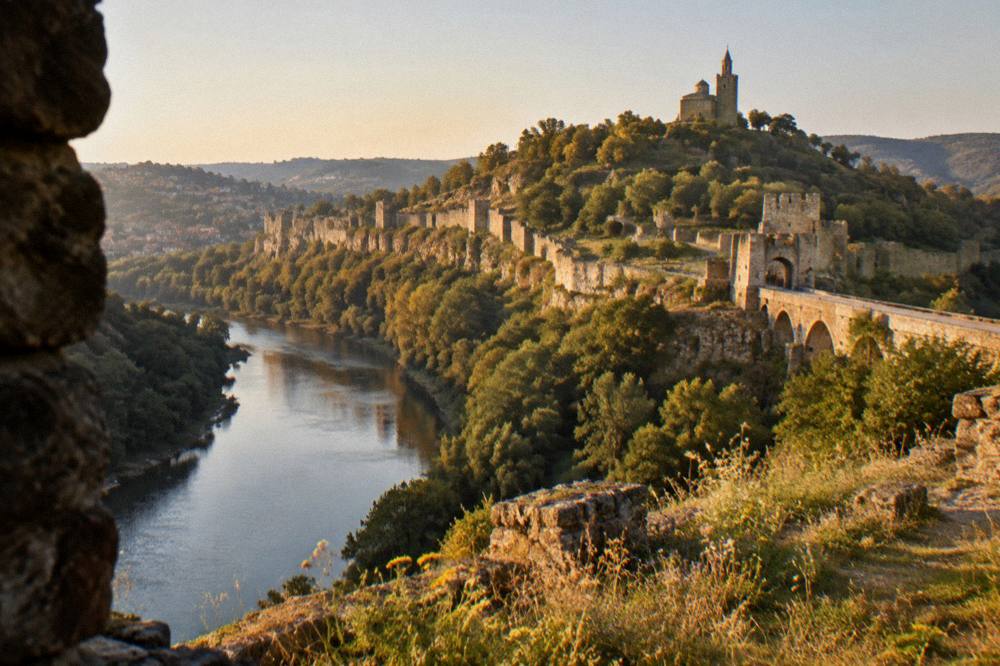
Step-free access, lifts and ramps at the fortress, the churches and the museums are a matter to confirm with each site directly. The fortress itself has no closing day, though a Tuesday maintenance slot from 09:10 to 11:00 is listed on the ticket page, and winter hours from 25 October 2026 run entry 09:00 to 16:00, closing 17:00.
How Far Are The Day Trips From Veliko Tarnovo?
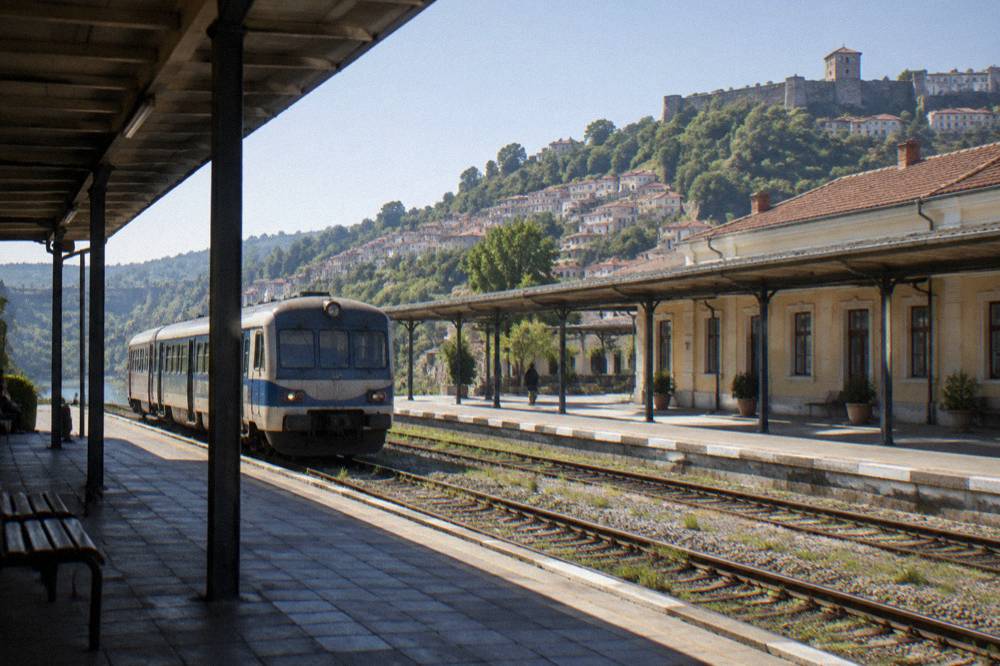
Day-trip distances from the centre run from trivial to half-day: Arbanasi about 2.8 km straight-line, Preobrazhenski Monastery about 6 km, Nicopolis ad Istrum about 20 km, Emen Canyon about 32 km by road, Tryavna about 42 km, Etar about 53 km, Buzludzha about 73 km, Krushuna Falls and the Shipka church about 79 km each, and Ruse about 105 km. No drive times are printed.
The kilometres are the planning currency. What they buy varies: Etar is an open-air museum with a printed entry price, the Ivanovo rock-hewn churches and the Kazanlak tomb are the region's two inscribed UNESCO sites from 1979, and Nicopolis ad Istrum, about 20 km north, has been on the Tentative List since 1984. Nothing in Veliko Tarnovo itself is inscribed or tentative.
| Destination | Distance from the centre | Entry price |
|---|---|---|
| Arbanasi | about 2.8 km straight-line | 7.67 euro per church site |
| Preobrazhenski Monastery | about 6 km | none printed |
| Nicopolis ad Istrum | about 20 km | 5.11 euro |
| Emen Canyon | about 32 km by road | none printed |
| Tryavna | about 42 km | none printed |
| Etar | about 53 km | 7.16 euro adult |
| Krushuna Falls | about 79 km | none printed |
| Ruse | about 105 km | none printed |
For the monasteries and churches around the city, the churches and monasteries guide covers what is open and when; for the waterfalls and caves ring, the caves and waterfalls guide does the same. Hours and prices for Bacho Kiro, Krushuna, Devetashka, Tryavna, Bozhentsi, Shipka and Buzludzha are not printed anywhere on this site from secondary sources; check locally or with a tour operator before setting out.
Organised day tours from the city cover several of these rings, and they sidestep the thin regional bus network entirely:
For monastery country in the same spirit, there is also.
Do You Need A Car In Veliko Tarnovo?
A car is not needed for the city itself, where the core sights are a walking cluster, but it changes the day trips: the regional network toward Emen Canyon, Krushuna, Devetashka and Bozhentsi is thin enough that a car or an organised tour is the practical way to reach them, and no parking tariff, zone or old-town vehicle restriction is confirmed on a primary page, so parking arrangements need local confirmation.
That is the whole decision. Inside the city, a car adds hillside parking questions the parking guide frames in detail, and the rental side sits on the car rental page. Outward, the distances in the table above become short drives rather than bus chains.
Two rules of the road are fixed regardless: the single European emergency number is 112, free to call, and Bulgaria has been a full Schengen member since 1 January 2025, with the Entry/Exit System running at all external borders since 10 April 2026. Travel-document basics sit on the Bulgaria entry requirements page.
When Does The Weather Shape Getting Around?
The continental climate decides the walking season more than any timetable: the ERA5 reanalysis for Veliko Tarnovo, 1991 to 2020, shows a mean daily high of 28.1 C in August against 4.9 C in January, a mean daily low of -3.8 C in January, and monthly rainfall ranging from 51.3 mm in August up to 95.7 mm in May, so the hill climbs feel different by season and the funicular only exists between May and October.
Those numbers come from a modelled grid cell, not a weather station, and they carry no superlatives: they are the means, and the reader can compare them. May carries the highest monthly rain total at 95.7 mm and August the lowest at 51.3 mm, which is worth knowing when the plan is built around walking loops between hills.
| Month | Mean daily high | Mean daily low | Rain |
|---|---|---|---|
| January | 4.9 C | -3.8 C | 56.1 mm |
| April | 16.9 C | 6.0 C | 71.6 mm |
| July | 27.6 C | 17.2 C | 79.5 mm |
| August | 28.1 C | 17.1 C | 51.3 mm |
| October | 17.6 C | 8.0 C | 58.9 mm |
| December | 6.1 C | -1.7 C | 60.6 mm |
The seasonal planning pages carry this further: best time to visit Veliko Tarnovo for the calendar view, Veliko Tarnovo weather for the full monthly table, and the spring and autumn guide for the shoulder seasons, when the hills are cooler and the museum sites run their long summer hours from April.
Common Questions About Getting Around Veliko Tarnovo
Is Veliko Tarnovo walkable?
The centre is a walking city: the Asenevtsi Monument, Samovodska Charshiya, Gurko Street, Varosha and Tsar Asen I Square are public spaces open at all hours, and Tsarevets sits at one end of the cluster. The old quarters sit on hills, so climbs are part of every route, and no walking-time figure is stated beyond that.
How do I get from Sofia to Veliko Tarnovo without a car?
By train with a change, usually at Gorna Oryahovitsa: the fastest trips take 4 h 33 min and 4 h 51 min, with slower connections of 6 to 10 hours. By bus, about 3 to 3.5 hours from the Yug station side with several operators. An organised day tour with pickup is the third option.
Which bus station should I arrive at?
Yug, at 74 Hristo Botev Boulevard in the centre, for Sofia, Varna and international services. Zapad, on Nikola Gabrovski Boulevard, handles regional routes.
Does the funicular run all year?
No. It runs from 1 May to 31 October, 09:00 to 16:00 with a lunch break from 12:00 to 13:00, stops in bad weather, and stops for the season on 31 October 2026. A return ticket is 5.11 euro per the museum's price page.
Do I need a car for the day trips?
The city core needs no car. For Emen Canyon, Krushuna, Devetashka, Bozhentsi and similar regional destinations, public transport is thin, and either a car or an organised tour is the practical choice. No parking tariff or vehicle restriction for the old town is confirmed on a primary page.
Can I pay in lev in Veliko Tarnovo?
No. Bulgaria adopted the euro on 1 January 2026 at the fixed rate of 1.95583 lev per euro, and every quoted price, from the 7.67 euro Tsarevets ticket to taxi negotiations, is in euro.
The final shape of any visit is simple: walk the centre, use the train or Yug bus station to arrive, take the funicular only inside its May-to-October window, and pick either a car or a tour for the ring of monasteries, caves and revival towns that sits beyond the hills. Plan the rest of the trip with the where to stay guide and the two days itinerary.