Veliko Tarnovo Bus Stations: South, West And Etap
Veliko Tarnovo in Bulgaria is served by two bus stations, Yug in the centre and Zapad on the western edge, plus central Hotel Etar stops used by some long-distance operators. This guide sets out which station handles which route, how buses compare with the trains, and what to plan for on arrival.
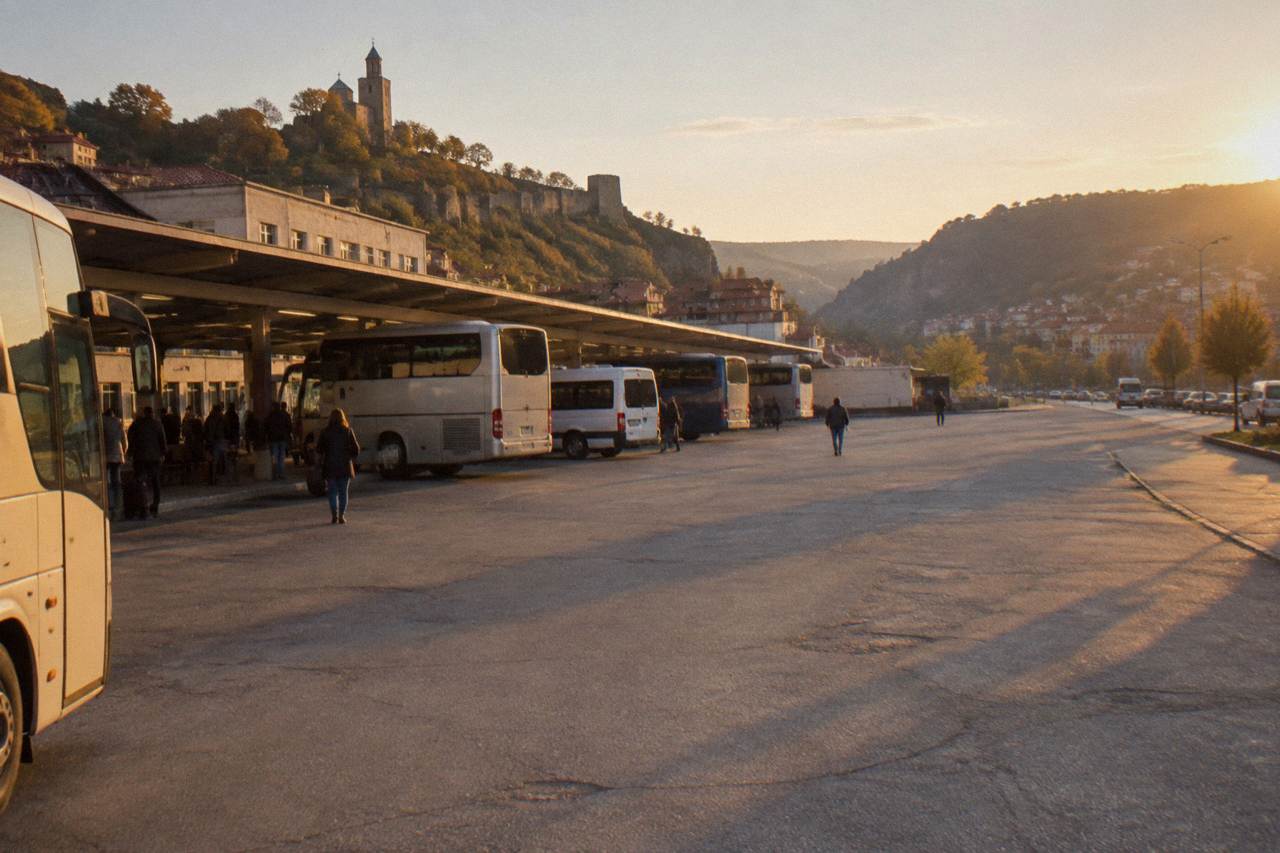
Veliko Tarnovo has two bus stations: Yug (South) at 74 Hristo Botev Blvd in the centre, serving Sofia, Varna and international routes, and Zapad (West) on Nikola Gabrovski Blvd, serving regional routes. Some operators also stop at or near Hotel Etar in the centre. Buses from Sofia take about 3 to 3.5 hours; there is no direct train from Sofia, so the bus is the simplest link to the capital.
Veliko Tarnovo, an inland city on the Yantra river in northern Bulgaria, handles its long-distance coach traffic through two named stations and a handful of central kerbside stops. The Yug, or South, station at 74 Hristo Botev Blvd carries the Sofia, Varna and international services; the Zapad, or West, station on Nikola Gabrovski Blvd carries regional routes; and some operators, including Etap and Group Plus services, stop at or near Hotel Etar in the centre. Which one matters to you depends entirely on where your bus started, so this guide works through the routes station by station, compares the buses with the trains on the same corridors, and covers the arrival basics: money, season and the road into the Old Town. The wider context, including flights and rail, is in the guide to reaching Veliko Tarnovo.
What Are The Bus Stations In Veliko Tarnovo?
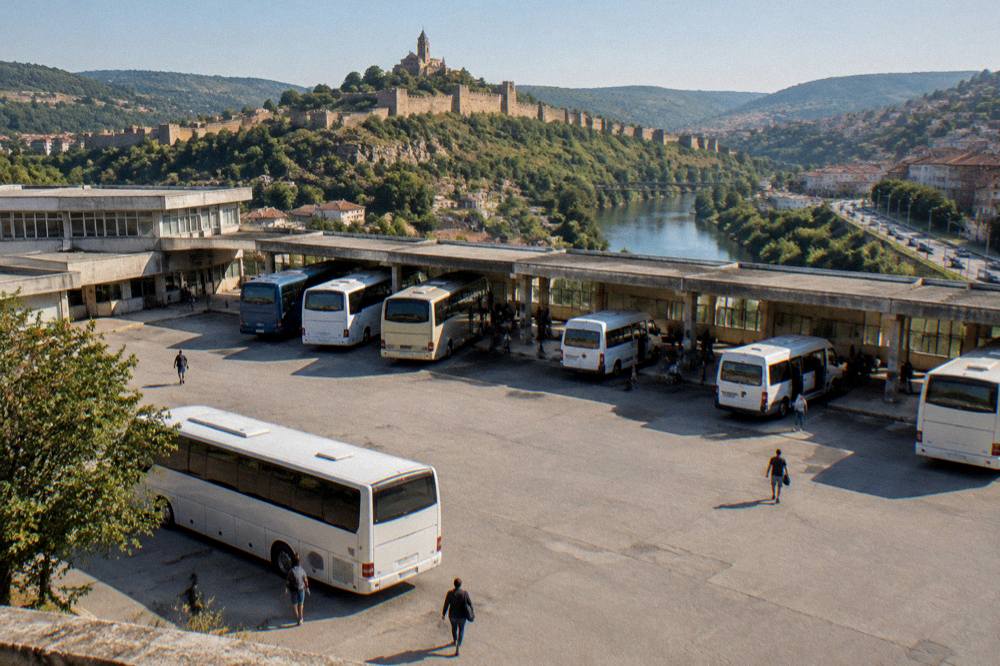
Veliko Tarnovo has two formal bus stations, Yug and Zapad, plus central stops used by some long-distance operators. Yug (South) stands at 74 Hristo Botev Blvd in the centre and serves Sofia, Varna and international routes; Zapad (West) stands on Nikola Gabrovski Blvd and serves regional and local routes. Some Etap and Group Plus services instead stop at or near Hotel Etar, which is also central, so the stop depends on the operator rather than on the destination alone.
The split matters more than in a city with one hub, because arriving at the wrong assumption can mean a longer last leg into the Old Town. Both named stations are on the city's transport map, and the regional character of Zapad means that day trips to smaller towns in the area generally start there, while the trunk routes to the capital and the coast start from the Yug side. For the full picture of movement inside the city once you have arrived, the getting around Veliko Tarnovo guide picks up where this one ends.
Where Is The Yug Bus Station And Which Routes Leave From It?
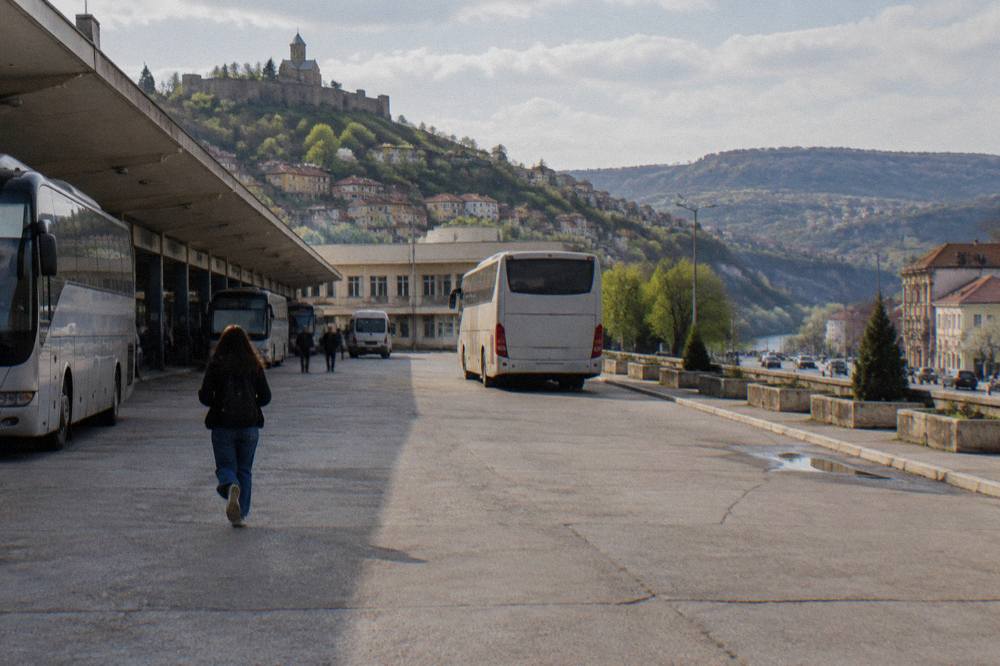
The Yug (South) bus station is at 74 Hristo Botev Blvd, in the centre of Veliko Tarnovo, and it is the station for the long-distance routes: Sofia, Varna and international services including the direct buses from Bucharest. Sofia services take about 3 to 3.5 hours with several operators, among them Etap-Address and Group Plus, Union Ivkoni and Biomet, and the Bucharest direct buses run about 3 h 50 min to 4 h 15 min.
Omio's route page for Varna lists 16 direct buses a day alongside one direct train.
The Sofia corridor is the busiest single link, and the bus holds a clear structural advantage over the rail alternative on paper: the train cannot run direct, because there is no direct rail line from Sofia to Veliko Tarnovo, and every rail journey changes, usually at the Gorna Oryahovitsa junction about 10 km from the centre. The bus simply drives in. Operators on the Sofia route run from the Yug side, and a same-day return is workable in principle, though times and fares move with the operator and the date, so the live listing is the reference.
For Varna, the Omio route page read for this site's transport coverage lists 16 direct buses a day and one direct train, and states a route distance of about 186 km. The direct train from Varna takes 3 h 53 min on the timetable. Bucharest is served by direct buses of about 3 h 50 min to 4 h 15 min, which makes the Romanian capital a realistic arrival hub: Bucharest Otopeni airport is about 205 road km from Veliko Tarnovo, closer by road than either Bulgarian hub airport. The day trip from Bucharest guide covers that corridor for visitors based in Romania.
Where Is The Zapad Bus Station And What Is It For?
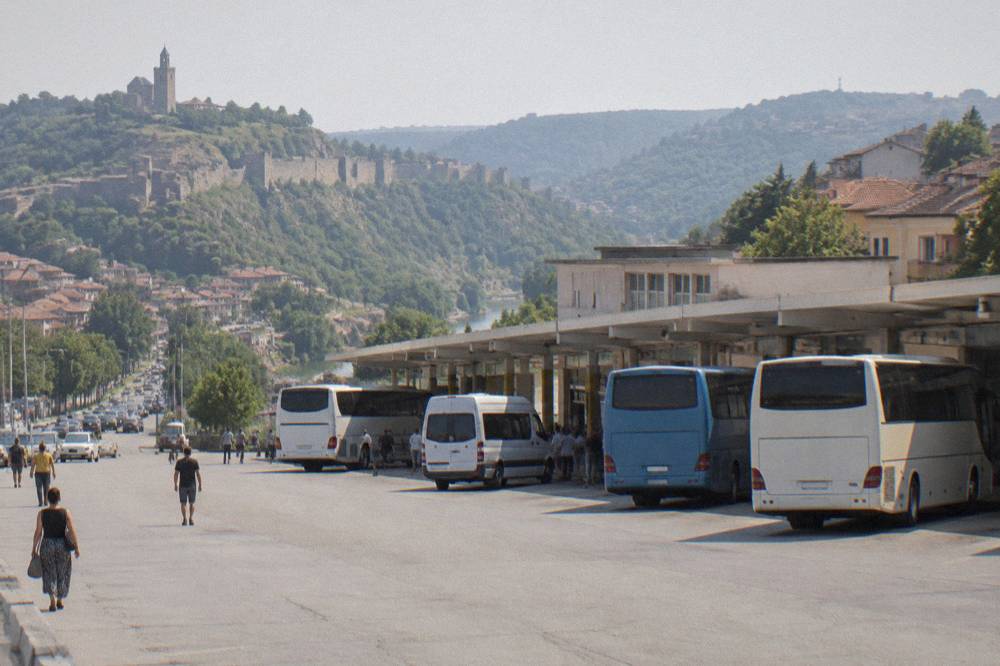
The Zapad (West) bus station stands on Nikola Gabrovski Blvd on the western side of Veliko Tarnovo, and it handles the regional and local routes rather than the trunk lines. While Yug carries Sofia, Varna and the international coaches, Zapad is the departure point for services to the smaller towns around the city. No exact route list is carried on a primary page, so the departure board on site is the reference for any given regional journey.
The practical consequence is that day trips by public transport towards Gabrovo, Dryanovo or other towns in the region generally begin at Zapad, not at Yug. Visitors planning self-guided trips to the monasteries and villages around the city should check which station their route leaves from before assuming the central one. The churches and monasteries near Veliko Tarnovo and the caves and waterfalls near Veliko Tarnovo guides describe the destinations themselves; this page only fixes the starting point on the city map.
A third element completes the picture: some Etap and Group Plus services stop at or near Hotel Etar in the centre rather than at either station. If your ticket or booking names Hotel Etar as the Veliko Tarnovo stop, the arrival point is central and neither station applies. Confirm the stop when booking, since it varies by operator.
How Do Buses From Sofia Reach Veliko Tarnovo?
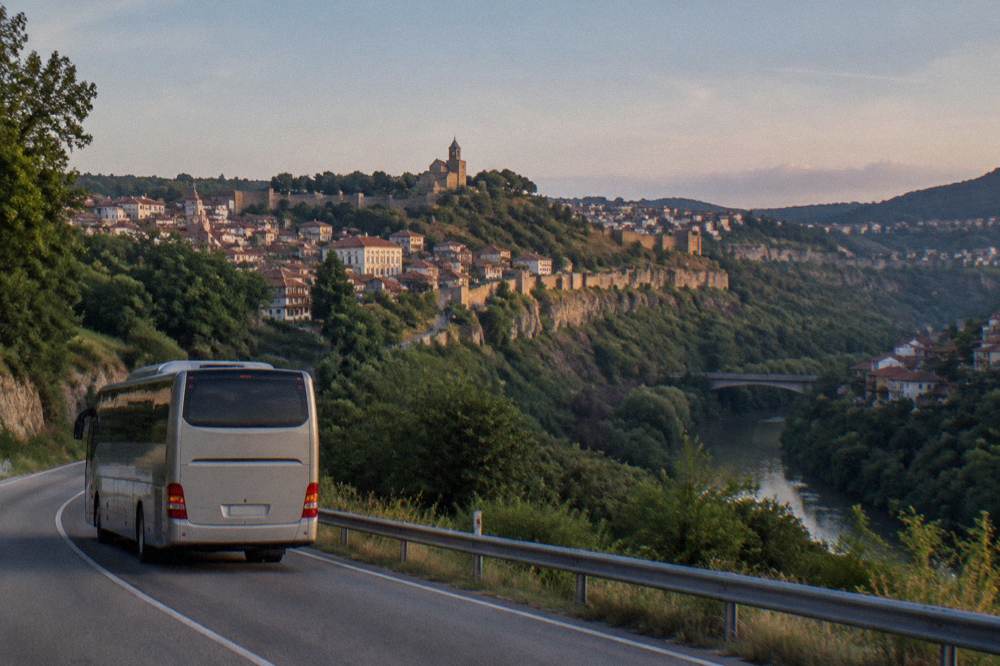
Buses from Sofia to Veliko Tarnovo take about 3 to 3.5 hours and depart from the Yug station side with several operators, among them Etap-Address and Group Plus, Union Ivkoni and Biomet. Omio's route listing shows about 19 buses a day on the corridor. The train alternative takes 4 h 33 min at fastest and always involves a change, so the bus is the quicker and simpler link between the capital and the city.
Sofia is about 223 road km from the centre of Veliko Tarnovo by the computed OpenStreetMap route, and the Sofia airports sit about 216 road km away. Visitors flying into Sofia (SOF) therefore face a choice: a direct coach of about three to three and a half hours, or a rail journey of 4 h 33 min at best, changing at Gorna Oryahovitsa. The rail option is covered in detail in the Veliko Tarnovo train station guide; the fastest trains on the 17 October 2026 timetable are the 10:10 departure at 4 h 33 min and the 07:00 at 4 h 51 min, with other connections taking 6 to 10 hours, and timetables change, so the BDZ planner is the live reference.
For a private ride in from the airport, book an airport transfer.
For travellers who would rather not manage the connection at all, a tour with transfer is one alternative that skips the station work entirely. The From Sofia: Veliko Tarnovo and Arbanasi Tour with Transfer covers the city and Arbanasi on a single itinerary out of the capital: Check availability. The day trip from Sofia guide compares the options on that corridor.
Do Buses Run Directly From Bucharest And Varna?
Yes, both corridors have direct buses into Veliko Tarnovo. Bucharest is served by direct coaches of about 3 h 50 min to 4 h 15 min, arriving on the Yug side or at named central stops, and Bucharest Otopeni airport is about 205 road km away. Varna has 16 direct buses a day on the Omio route page, alongside one direct train of 3 h 53 min, and Varna airport is about 214 road km from the centre.
The Bucharest link is the one that surprises visitors who assume Bulgaria's capital is the only sensible gateway. By road, Otopeni is the closest of the three hub airports to Veliko Tarnovo, and the direct coach corridor makes it usable without a change of country by train. Bulgaria has been a full Schengen member since 1 January 2025, so the land border with Romania carries no routine passport control, and the Entry/Exit System has run at all external Schengen borders since 10 April 2026. Entry rules, visa basics and the euro changeover are covered in the Bulgaria entry requirements and Bulgaria euro and money guides.
The Varna corridor serves the coast. Varna airport is about 214 road km from the centre, and the Omio route page for Varna to Veliko Tarnovo lists the 16 direct buses and the single direct train without quoting fares. The Varna guide describes the city at the other end of the route.
Bus Or Train: Which Is Better For Reaching Veliko Tarnovo?
On the Sofia corridor the bus wins on simplicity: coaches run direct in about 3 to 3.5 hours, while every train changes, usually at Gorna Oryahovitsa, and the fastest rail journeys take 4 h 33 min and 4 h 51 min. From Varna the positions are closer, with a direct train of 3 h 53 min against 16 direct buses a day, and from Ruse the direct train of 2 h 25 min makes rail the natural choice.
The right answer depends on where you start, not on any general rule.
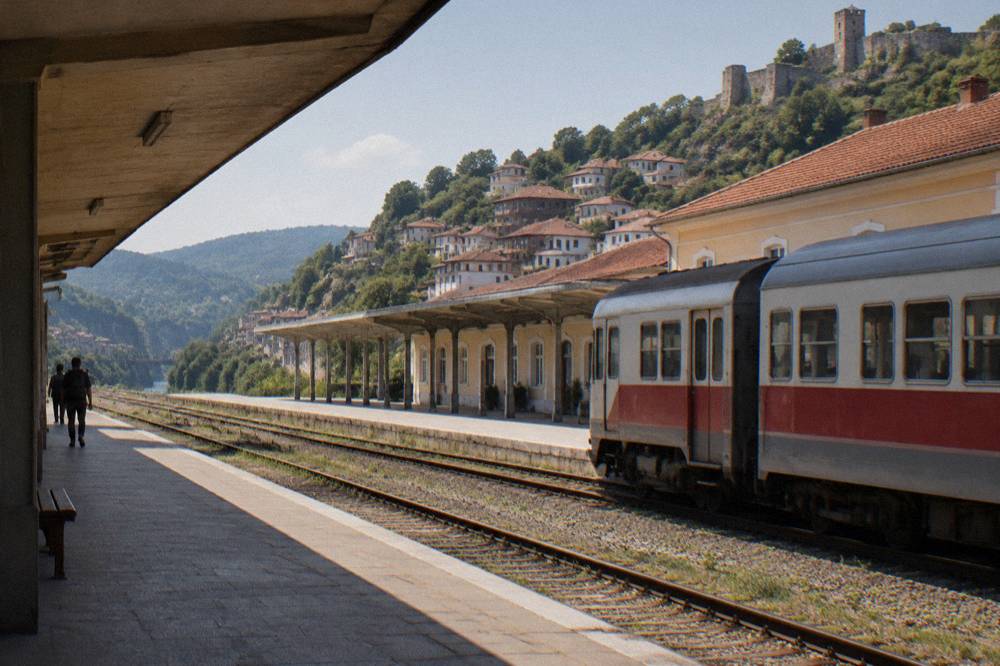
The rail geography explains the difference. Veliko Tarnovo's station sits on a line that funnels through the Gorna Oryahovitsa junction about 10 km from the centre, and Sofia's trains reach the city only through that junction or other changes. Ruse, by contrast, has a direct train of 2 h 25 min (04:49) and a connection of 2 h 33 min via Gorna Oryahovitsa. One BDZ second-class fare of about 9.82 euro for Sofia appears as a single example on the route, but fares are dynamic, so check the live price when booking. The table below puts the corridors side by side. The rest of the planning pages sit on Veliko Tarnovo Travel Guide.
| Route | By bus | By train |
|---|---|---|
| Sofia to Veliko Tarnovo | direct, about 3 to 3.5 hours, several operators | no direct train; changes at Gorna Oryahovitsa; fastest 4 h 33 min, then 4 h 51 min; others 6 to 10 hours |
| Varna to Veliko Tarnovo | 16 direct buses a day (Omio route page) | one direct train, 3 h 53 min; others change at Gorna Oryahovitsa from 4 h 36 min |
| Ruse to Veliko Tarnovo | regional services available | direct train 2 h 25 min; via Gorna Oryahovitsa 2 h 33 min |
| Bucharest to Veliko Tarnovo | direct buses, about 3 h 50 min to 4 h 15 min | no direct service stated; bus is the direct option |
How Do You Get From The Bus Station Into The Old Town?
Both the Yug station at 74 Hristo Botev Blvd and the Hotel Etar stops sit in the centre of Veliko Tarnovo, so the arrival leg into the Old Town is short by city standards; the Zapad station on Nikola Gabrovski Blvd is the one that adds distance, standing on the western side of the city for regional routes. The city's core sights, from Tsarevets Fortress to Samovodska Charshiya, sit within the central area the buses deliver you to.
What can be said is the shape of the destination: the city folds around the Yantra river, with the museum sites run by the Regional Museum of History operating seasonal hours, and winter hours across those sites starting on 25 October 2026. Arriving visitors heading straight for the fortress should know the Tsarevets ticket is 7.67 euro for an adult, with a family ticket at 10.23 euro for parents and up to three children aged 7 to 18, per the museum's ticket page. The Tsarevets Fortress guide carries the full hours and price detail.
For where to sleep on arrival, the where to stay in Veliko Tarnovo and hotels with a view guides cover the quarters of the city, and one day in Veliko Tarnovo sequences the sights for a short stay.
What Should You Know About Money, Season And Timing?
Bulgaria has used the euro since 1 January 2026, at the fixed rate of 1.95583 lev per euro, so no currency exchange is needed for the bus ticket or anything else in Veliko Tarnovo. The city has a continental climate, with an ERA5 modelled mean daily high of 27.6 C in July and 4.9 C in January, and a mean daily low of -3.8 C in January.
Winter hours at the museum sites start on 25 October 2026, which shifts what an arrival can see in the evening.
The euro point matters for anyone carrying older guidebook advice about the lev. The lev appears only as the fixed conversion rate behind the museum prices: the 7.67 euro Tsarevets ticket is the converted 15 lev figure, printed in euro since the changeover. All ticket prices on the museum's pages are euro-only now. No bus fare can be quoted here beyond the single BDZ rail example of about 9.82 euro, so check the current fare with the operator when booking.
The season shapes the arrival day more than the arrival itself. May carries the heaviest rain of the year in the modelled normals, at 95.7 mm, and August the lightest at 51.3 mm; the July and August mean daily highs reach 27.6 C and 28.1 C. The best time to visit Veliko Tarnovo and Veliko Tarnovo weather guides carry the month-by-month detail, and the spring and autumn guide covers the shoulder seasons.
| Month | Mean daily high | Mean daily low | Rain |
|---|---|---|---|
| January | 4.9 C | -3.8 C | 56.1 mm |
| April | 16.9 C | 6.0 C | 71.6 mm |
| July | 27.6 C | 17.2 C | 79.5 mm |
| August | 28.1 C | 17.1 C | 51.3 mm |
| October | 17.6 C | 8.0 C | 58.9 mm |
| December | 6.1 C | -1.7 C | 60.6 mm |
ERA5 reanalysis, 1991-2020, grid cell near central Veliko Tarnovo. Modelled normals, not a station record.
Winter travellers should also note the seasonal stops: Trapezitsa closes to visitors from 30 November 2026 to 31 March 2027, its funicular stops for the season on 31 October 2026, and the Konstantsalieva House in Arbanasi opens Friday to Sunday only from 30 November 2026 to 20 March 2027. None of this touches the bus stations, but it changes what the arrival day can hold.
Can You Day Trip From The Bus Stations Without A Car?
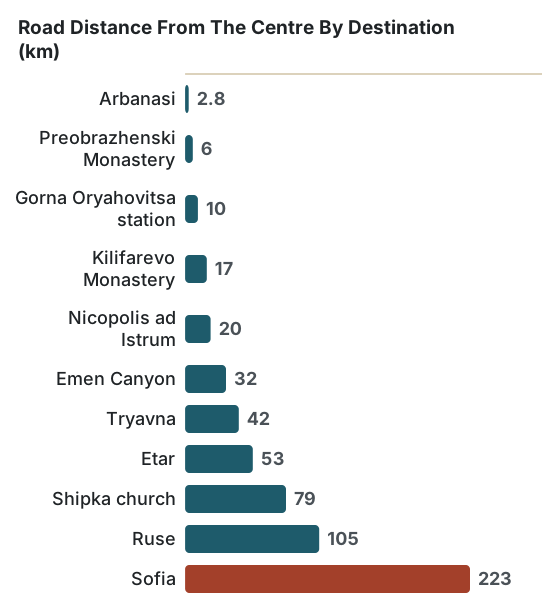
Yes, though the reach of public transport thins quickly outside the trunk routes. Zapad station carries the regional services to the towns around the city, and the computed road distances place Arbanasi 2.8 km straight-line from the centre, Preobrazhenski Monastery 6 km, Kilifarevo Monastery 17 km, Nicopolis ad Istrum 20 km and Tryavna 42 km. A car or an organised tour widens the radius considerably; the northern Bulgaria road trip guide covers the full circuit.
The distances below are the about-kilometre figures computed over the OpenStreetMap road network from the centre. They give a sense of which destinations sit within a short hop and which are a half-day commitment.
| Destination | Road distance from the centre |
|---|---|
| Arbanasi | about 2.8 km straight-line |
| Preobrazhenski Monastery | about 6 km |
| Gorna Oryahovitsa station | about 10 km |
| Kilifarevo Monastery | about 17 km |
| Nicopolis ad Istrum | about 20 km |
| Emen Canyon | about 32 km |
| Tryavna | about 42 km |
| Etar | about 53 km |
| Shipka church | about 79 km |
| Ruse | about 105 km |
| Sofia | about 223 km |
For visitors who would rather not read a rural bus timetable at all, organised day trips run from the city and from the hubs. The Monasteries and Waterfalls Tour from Veliko Tarnovo is one such product, and the Etar Open-Air Museum combo covers the Gabrovo architectural museum with the city in one itinerary. The Etar and Tryavna guides describe those destinations.
What Arrival Details Are Worth Knowing Before You Travel?
The essentials are few: Bulgaria is in the euro area and full Schengen, the single European emergency number is 112, the time zone is EET (UTC+2) with EEST (UTC+3) in summer, and the city sits at 220 m elevation on the Yantra river with a municipality population estimated at 77,067 on 31 December 2025. No scheduled-flight airport serves the city, so the bus and train network, or a road arrival via Sofia, Varna or Bucharest Otopeni, is the way in.
The airport picture is the one fact that most changes plans. Sofia airport is about 216 road km away, Varna about 214 and Bucharest Otopeni about 205, and the Gorna Oryahovitsa airfield has no regular scheduled flights. The nearest airport to Veliko Tarnovo guide compares the three hubs, and the car rental and parking guides cover the road-arrival alternative.
| Airport | Road distance from Veliko Tarnovo centre |
|---|---|
| Bucharest Otopeni (OTP) | about 205 km |
| Varna (VAR) | about 214 km |
| Sofia (SOF) | about 216 km |
One arrival-day event is worth timing around: the Sound and Light audiovisual show on Tsarevets runs on announced evenings only, with no fixed nightly schedule, and watching from Tsar Asen I Square is free. An announced example in the official tourist feed was 1 May 2026 at 21:15. The Sound and Light show guide explains how viewing works.
Common Questions About Veliko Tarnovo Bus Stations
How many bus stations does Veliko Tarnovo have?
Two formal stations: Yug (South) at 74 Hristo Botev Blvd in the centre, for Sofia, Varna and international routes, and Zapad (West) on Nikola Gabrovski Blvd, for regional routes. Some operators also stop at or near Hotel Etar in the centre.
Which bus station do buses from Sofia arrive at?
Sofia services arrive on the Yug side, with some Etap and Group Plus services stopping at or near Hotel Etar instead. Confirm the stop with the operator when booking, since it varies by company rather than by destination.
Is there a direct bus from Bucharest to Veliko Tarnovo?
Yes. Direct buses run the corridor in about 3 h 50 min to 4 h 15 min. Bucharest Otopeni airport is about 205 road km from the centre, the closest of the three hub airports by road.
Is the bus faster than the train from Sofia?
Yes, on this corridor. Buses run direct in about 3 to 3.5 hours, while every train changes, usually at Gorna Oryahovitsa, with the fastest rail journeys at 4 h 33 min and 4 h 51 min. From Ruse the positions reverse, with a direct train of 2 h 25 min.
Do I need Bulgarian lev for the bus ticket?
No. Bulgaria has used the euro since 1 January 2026, at the fixed rate of 1.95583 lev per euro. All prices in the city, from museum tickets to coach fares, are paid in euro.
Can I reach Arbanasi by public transport?
Arbanasi sits about 2.8 km straight-line from the centre, and regional services run from the Zapad station side, but no route or frequency detail is carried for the village link. An organised tour or a taxi covers the hop; the Arbanasi guide describes the village.
With the station map fixed, the rest of the visit falls into place: the Yug side for the trunk routes, Zapad for the region, the trains for Ruse and the one direct Varna service, and the museum sites in the centre holding to their seasonal hours through the winter switch on 25 October 2026.