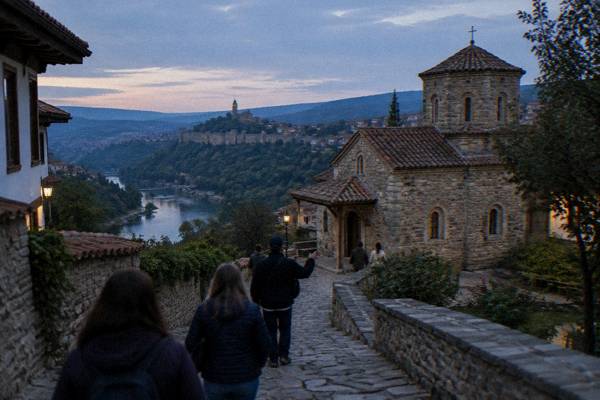
Is It Safe For Americans To Travel To Bulgaria Right Now?
Entry rules, the euro, emergency numbers and on-the-ground practicalities for Americans considering Veliko Tarnovo and Bulgaria in 2026, reported from official sources.
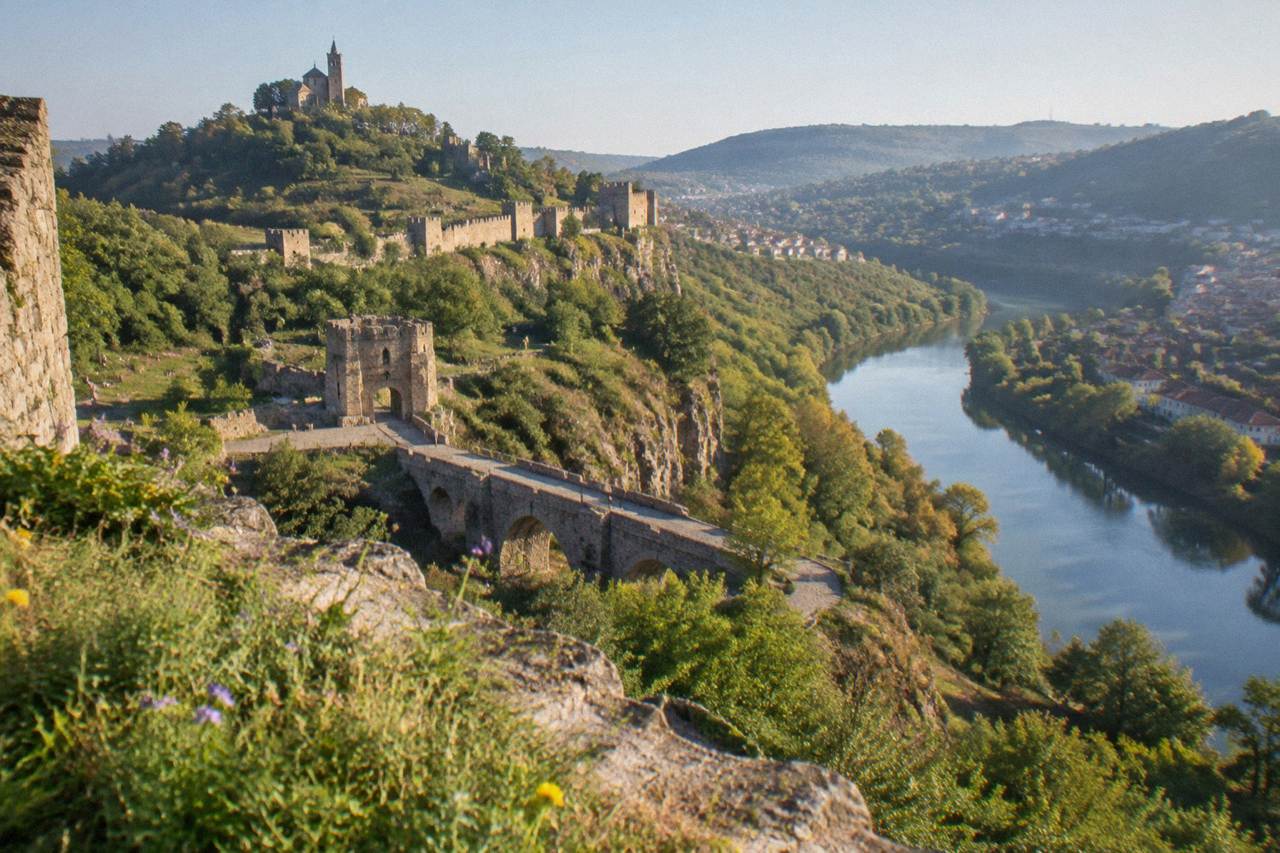
Bulgaria sits fully inside the Schengen area and inside the euro zone, two facts that answer a large part of the practical question Americans ask before booking. The city this site covers, Veliko Tarnovo, is an inland municipality of 77,067 residents on the Yantra river, the capital of the Second Bulgarian Kingdom for more than two centuries from the late 12th century. There is no sea coast and no airport with scheduled flights; the practical gateways are Sofia, Varna and Bucharest Otopeni. The single European emergency number is 112, free to call. What follows is what official pages and the city's own museum listings say about entry, money, getting around and the things that shape a visit.
What Americans Need To Enter Bulgaria In 2026?
Americans do not need a visa for Bulgaria: US citizens are reported to be visa-free for 90 days in any 180, Bulgaria has been a full Schengen member since 1 January 2025, and the euro has been the currency since 1 January 2026, so no currency exchange or separate Bulgarian visa process is involved. The Entry/Exit System, biometric registration that replaces passport stamping, has been deployed at all Schengen external borders since 10 April 2026.
Check your government's own travel pages before flying, as entry rules are theirs to state.
The Schengen point matters for how a trip is built. Because Bulgaria is inside the zone, a traveller flying into Bucharest Otopeni, about 205 road kilometres from Veliko Tarnovo, or into Sofia, about 216, crosses no additional internal border on the way. Bulgaria joined Schengen fully on 1 January 2025, after air and sea checks with the rest of the zone were lifted on 31 March 2024.
The 90-days-in-any-180 allowance is the reported rule for US, UK, Canadian and Australian citizens. The Entry/Exit System now registers travellers biometrically at external borders instead of stamping passports. ETIAS, the planned travel authorisation for visa-free nationals, is not operational and no start date has been announced; confirm with official sources rather than third-party pages selling early registrations.
| Question | The Rule | Since When |
|---|---|---|
| Visa for Americans | Reported visa-free, 90 days in any 180 | Applies in 2026 |
| Border regime | Full Schengen membership | 1 January 2025 |
| Currency | Euro, fixed rate 1.95583 lev per euro | 1 January 2026 |
| Entry/Exit System | Biometric registration at external borders | 10 April 2026 |
| Emergency number | 112, free | Current |
Is It Safe For Americans To Travel To Bulgaria Right Now?
There is no official advisory or rating this page can quote, and none should be invented: what can be stated is structural, that Bulgaria is a Schengen and EU country with a single free emergency number, 112, that Veliko Tarnovo is a municipality of 77,067 residents rather than a large metropolis, and that nothing in the city requires special permits, escorted access or closed zones. Practical caution is the ordinary kind, guarding documents and valuables, as anywhere in the zone.
For country-level guidance, read the US State Department's own page on Bulgaria before booking.
What the record does support is a stable, ordinary European administrative setting: a municipality that reported 77,067 residents on 31 December 2025, a functioning university, the St Cyril and St Methodius University of Veliko Tarnovo, and a Regional Museum of History that runs Tsarevets Fortress on a published schedule.
The practical risks worth planning for are not exotic. Winter hours at the museum sites start on 25 October 2026, and the Trapezitsa reserve closes to visitors entirely from 30 November 2026 to 31 March 2027, so a trip built around those sights needs dates, not bravery. For a wider framing of the city's appeal, read is Veliko Tarnovo worth visiting and the Bulgaria travel tips guide.
How Do Americans Get To Veliko Tarnovo?
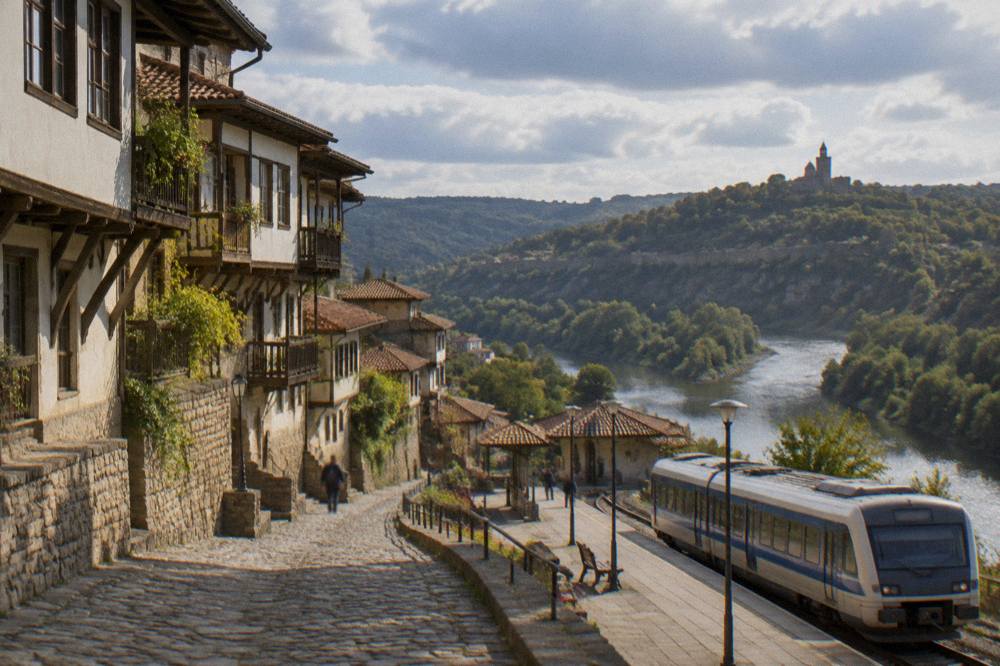
No airport with scheduled flights serves Veliko Tarnovo, so Americans arrive through Sofia, about 216 road kilometres away, Varna, about 214, or Bucharest Otopeni, about 205, and finish by train or bus; there is no direct train from Sofia, and the fastest connections on the BDZ timetable run 4 h 33 min and 4 h 51 min with a change, usually at Gorna Oryahovitsa. The Gorna Oryahovitsa airfield has no regular scheduled flights. Train times change, so the BDZ timetable is the reference.
The rail picture is specific. From Sofia, every train to Veliko Tarnovo involves a change, and the 17 October 2026 timetable shows the fastest journeys at 4 h 33 min and 4 h 51 min, with slower options taking 6 to 10 hours. From Varna there is one direct train at 3 h 53 min. From Ruse, useful after a Bucharest arrival, a direct train takes 2 h 25 min. The bus network fills the gaps: Sofia services take about 3 to 3.5 hours from the Yug station at 74 Hristo Botev Boulevard.
Bucharest is the gateway many Americans overlook. Direct buses from Bucharest run about 3 h 50 min to 4 h 15 min, and a day trip structure from the Romanian capital exists for travellers pairing the two countries. The city's own arrival and transport basics are covered elsewhere on this site in depth.
What Should Americans Know About Money In Bulgaria?
Bulgaria has used the euro since 1 January 2026, when it became the 21st euro area member at a fixed rate of 1.95583 lev per euro, so Americans exchange dollars for euros once and need no local currency at all; museum tickets are printed in euro, with Tsarevets Fortress at 7.67 euro for an adult and 5.11 euro at the smaller museum sites, per the Regional Museum of History's ticket pages. Prices in shops and restaurants are also in euro.
The changeover removed a classic traveller friction point. Before 2026 the lev was the currency; since 1 January 2026 the euro is the only one, and the fixed conversion explains why museum prices carry figures like 7.67 euro, the converted 15 lev. The two-day museum pass covering ten sites costs 20.45 euro for an individual, valid 1 April to 30 November, per the museum's listings. Everything else covered here is indexed on Veliko Tarnovo Travel Guide.
For budgeting questions beyond ticket prices, this site keeps a separate page on whether Bulgaria is cheap for Americans. What can be stated here is the arithmetic-free part: a family ticket to Tsarevets costs 10.23 euro for parents and up to three children aged 7 to 18, and children under 7 enter the museum sites free.
| Site | Adult Ticket | Hours (April To September) |
|---|---|---|
| Tsarevets Fortress | 7.67 euro | Daily 08:00 to 20:00 |
| Trapezitsa | 5.11 euro | Daily 09:00 to 19:00 |
| Church of the Holy Forty Martyrs | 5.11 euro | Daily 09:00 to 18:00 |
| Archaeological Museum | 5.11 euro | Daily 09:00 to 18:00 |
| Church of the Nativity, Arbanasi | 7.67 euro | Daily 09:00 to 18:00 |
What Is The Weather Like Around Veliko Tarnovo?
The climate is continental: the ERA5 reanalysis for Veliko Tarnovo, 1991 to 2020, shows a mean daily high of 27.6 C in July and 28.1 C in August against 4.9 C in January, with a mean daily low of minus 3.8 C in January, and rainfall peaking at 95.7 mm in May against 51.3 mm in August, so Americans should pack for the season they choose rather than a single default.
July and August are the warm months; December through February brings sub-zero nights.
The full picture from the modelled normals: spring highs climb from 11.5 C in March to 21.7 C in May, autumn falls from 23.3 C in September to 11.8 C in November, and the year totals 798.7 mm of rain.
Season shapes the trip in concrete ways beyond clothing. The Sound and Light show on Tsarevets runs on announced evenings only, with no fixed schedule, and it is free to watch from Tsar Asen I Square. The Trapezitsa funicular runs 1 May to 31 October and stops for the season on 31 October 2026. A deeper breakdown lives on the best time to visit Veliko Tarnovo page elsewhere on this site.
What Practical Details Should Americans Know On The Ground?
The emergency number is 112 and it is free; Bulgaria's language is Bulgarian, written in Cyrillic, so key street and museum signage is not in the Latin alphabet; the city's public spaces, including the Asenevtsi Monument, Samovodska Charshiya, General Gurko Street and the Varosha quarter, are free to walk at any hour; and the walking tours on the roster are paid products, with no free guided walk in the city. Planning around these facts is straightforward.
English coverage is a common worry, and it has its own page on this site, can you speak English in Bulgaria. On friendliness toward American visitors generally, the are Bulgarians friendly to American tourists page carries the qualitative side. What this page can add is structural: a small municipality, one university, an official tourist information operation behind the velikoturnovo.info events feed, and museum sites that publish their hours and prices in English on the ticketing pages.
A reasonable structure for a first visit is covered in how many days you need in Veliko Tarnovo. Travellers who prefer the framework of a paid product can look at Check availability on the private or self-guided city option, which covers the medieval core without inventing logistics.
Common Questions About Americans Travelling To Bulgaria
Is It Safe For Americans To Travel To Bulgaria Right Now?
No country-level rating is quoted on this page; the structural facts are that Bulgaria is a full Schengen member since 1 January 2025, an EU country using the euro since 1 January 2026, with the free European emergency number 112. Veliko Tarnovo is a municipality of 77,067 residents on the Yantra river. For official guidance, read the US State Department's page on Bulgaria before booking.
Do Americans need a visa for Bulgaria?
Reported rules give US citizens visa-free entry for 90 days in any 180. Confirm with official government sources before travel, as entry policy is set by governments and can change.
Is Bulgaria in the Schengen area?
Yes, since 1 January 2025, with air and sea checks against the rest of the zone lifted from 31 March 2024. The Entry/Exit System registers travellers biometrically at external borders since 10 April 2026.
What currency does Bulgaria use?
The euro, since 1 January 2026, at a fixed rate of 1.95583 lev per euro. Museum tickets are priced in euro, for example 7.67 euro for an adult at Tsarevets Fortress.
Can you fly directly to Veliko Tarnovo?
No. No airport with scheduled flights serves the city. Americans arrive through Sofia, about 216 road kilometres away, Varna, about 214, or Bucharest Otopeni, about 205, then continue by train or bus.
What is the emergency number in Bulgaria?
112, the single European emergency number, free to call.
The short version for an American reader: the entry system is the same one that governs the rest of Schengen, the money is the euro, the emergency number is 112, and the city at the end of the journey is a small inland municipality with a fortress on a hill. Check the State Department's own Bulgaria page for official travel guidance, and pick travel dates that keep the sights you want inside their published seasons.