Is Bulgaria Friendly To American Tourists?
Bulgaria is friendly to American tourists: visa-free entry, the euro since 2026, and a welcoming medieval capital, Veliko Tarnovo. Here is what US visitors should know before going.
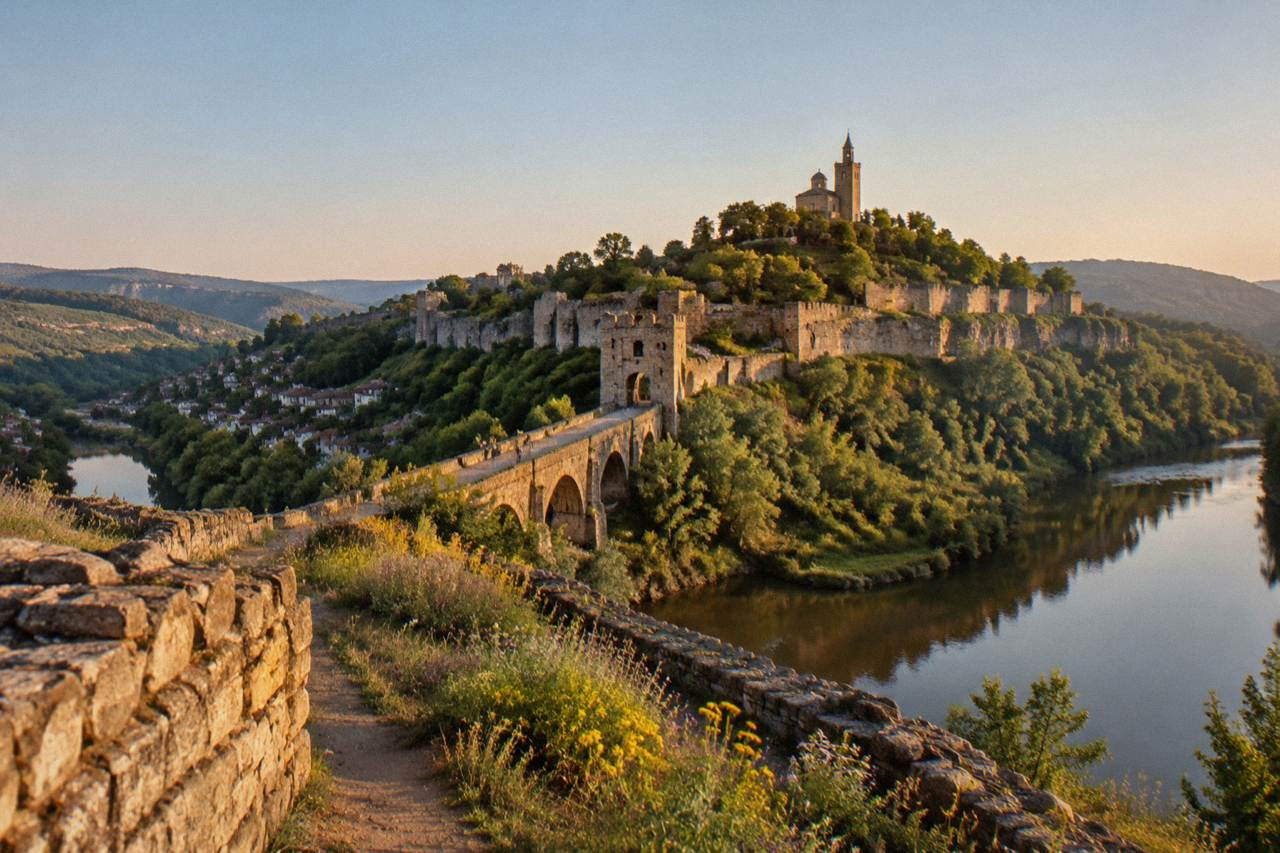
Veliko Tarnovo sits on the Yantra river in northern Bulgaria, an inland city of about 77,000 municipality residents that served as the capital of the Second Bulgarian Kingdom for more than two centuries from the late 12th century. For an American planning a trip, the practical picture has changed considerably in recent years: Bulgaria became a full Schengen member on 1 January 2025, adopted the euro on 1 January 2026 as the 21st euro area member, and now registers arriving US visitors through the Entry/Exit System deployed at all Schengen external borders as of 10 April 2026. The question of friendliness is harder to measure than a border rule, but the mechanics of visiting are documented, and they point one way.
What Should Americans Expect On Arrival In Bulgaria?
US citizens are reported to travel to Bulgaria visa-free for up to 90 days in any 180, and since 1 January 2025 Bulgaria has been a full Schengen member, so a US passport covers the whole stay without a separate Bulgarian visa. Since 10 April 2026 the Entry/Exit System registers biometric data at external borders in place of passport stamps. ETIAS is not operational, and no start date for it has been announced.
Because Bulgaria is inside Schengen, a flight from the United States lands at a Schengen external border, typically in another member state, and the onward leg to Sofia or another Bulgarian airport is a domestic-style connection. The single European emergency number is 112, free to call. The currency since 1 January 2026 is the euro, converted from the lev at the fixed rate of 1.95583 lev per euro, so the mental arithmetic Americans had to do with the lev is gone. ETIAS, the planned travel authorisation for visa-exempt visitors, is not in operation; the European authorities have not announced a start date, so the only entry steps today are a passport and the Entry/Exit System registration.
The Bulgaria entry requirements guide on this site goes through the paperwork in more detail, and the euro and money guide explains what the changeover means for cards and cash. Between them they cover everything an American needs to sort out before departure, from passport validity to how the euro changeover works at hotel desks and ticket counters.
Is Bulgaria Friendly To American Tourists?
Nothing in the documented entry rules, prices or city infrastructure singles Americans out: US citizens enter visa-free, pay the same museum prices in euro as everyone else, and reach Veliko Tarnovo the same way every other visitor does, through Sofia, Varna or Bucharest Otopeni airports, since no scheduled-flight airport serves the city itself. The regional museum's figures show a strong foreign presence at the main sight, which is the closest thing to a hospitality signal the numbers can give.
The friendliness question usually hides two worries. One is paperwork, and that is settled above: no visa, no travel authorisation, a currency Americans recognise. The other is whether an English-speaking visitor can function, and here the language question deserves its own section below. What the record does show is that Veliko Tarnovo, the medieval capital, attracts a wide international audience: the Regional Museum of History's figures, reported in January 2026, counted 209,875 visitors at Tsarevets Fortress in 2025, of whom 103,733 were foreign. A city that hosts that many foreign guests at a single fortress site has the habits of a host.
For a fuller argument on the city itself, see is Veliko Tarnovo worth visiting. The honest framing is this: Bulgaria is a country Americans can enter, pay and get around with little friction, and Veliko Tarnovo is a compact, walkable city where the main sights, Tsarevets Fortress, the Patriarchal Cathedral, Trapezitsa, Samovodska Charshiya, General Gurko Street and Arbanasi village, are concentrated close together.
How Do Tickets And Prices Work In Veliko Tarnovo?
Every museum ticket in the city is priced in euro since the 2026 changeover, and the Regional Museum of History prints the figures directly on its ticket pages: Tsarevets Fortress costs 7.67 euro for an adult and 10.23 euro for a family, while Trapezitsa costs 5.11 euro. Children under 7 enter free, as do people with permanent disabilities travelling with an assistant. The two-day pass covering 10 museum sites costs 20.45 euro for an individual.
Here is what the main sights cost, quoted exactly as the museum prints them:
| Sight | Adult ticket | Family ticket |
|---|---|---|
| Tsarevets Fortress | 7.67 euro | 10.23 euro |
| Trapezitsa | 5.11 euro | 7.67 euro |
| Church of the Holy Forty Martyrs | 5.11 euro | 7.67 euro |
| Tsarevgrad Tarnov multimedia centre | 7.67 euro | 15,34 euro |
| Archaeological Museum | 5.11 euro | 7.67 euro |
| Church of the Nativity, Arbanasi | 7.67 euro | 12.78 euro |
Two seasonal warnings matter for planning. Winter hours at the museum sites start on 25 October 2026, and Trapezitsa closes to visitors entirely from 30 November 2026 to 31 March 2027, so a winter visitor works with a shorter list of open sites. The Sound and Light audio-visual show on Tsarevets runs on announced evenings only, with no fixed schedule, and watching it from Tsar Asen I Square is free. The Tsarevets Fortress guide carries the full hours breakdown by season.
For Americans weighing overall costs, the is Veliko Tarnovo expensive page sets out what the documented prices add up to, and is Bulgaria cheap for Americans covers the country-wide picture. Neither page invents a restaurant bill or a hotel rate; both work from the figures the museums and operators publish themselves.
Do People In Veliko Tarnovo Speak English?
Bulgarian, written in the Cyrillic alphabet, is the official language, and no official statistic states how widely English is spoken in the city, so no share can be quoted here. What the documented infrastructure shows is a tourist-facing city: the Regional Museum of History sells tickets on an English-language site, the municipal tourism information runs an English events feed, and the fortress offers guided talks in foreign languages at 25.56 euro, with translated talks at 20.45 euro.
Museum signage and ticketing are the parts a visitor actually depends on, and those are published in English by the operator itself. Beyond that, the Bulgarian phrases for travellers guide lists what is useful to know, and the language question is treated on its own at can I speak English in Bulgaria. A Cyrillic alphabet is a genuine difference from Western Europe, but the sights an American visits in Veliko Tarnovo publish their prices, hours and news in English on the museum's own pages. Other pages covering the same trip are gathered on Veliko Tarnovo Travel Guide.
How Safe And Practical Is Veliko Tarnovo For US Visitors?
The single European emergency number is 112, free to call, and that is the documented safety infrastructure that applies to every visitor, American or otherwise. No safety statistics, safety ratings or scam claims can be quoted for the city, and none appear in the official material the museum and municipality publish. The practical safety answer is procedural: Bulgaria is a full Schengen member, the city is served by train and bus stations, and the documented seasonal closures are published in advance by the museum.
What can be said with figures is practical. The climate is continental: the ERA5 reanalysis for Veliko Tarnovo, 1991 to 2020, gives a mean daily high of 28.1 C in August and 4.9 C in January, with a mean daily low of -3.8 C in January, so packing follows the season. The city's elevation is about 220 m, and the Yantra river runs through it in meanders. For the month-by-month picture, the best time to visit guide and the weather guide carry the full table.
| Month | Mean daily high | Mean daily low | Rain |
|---|---|---|---|
| January | 4.9 C | -3.8 C | 56.1 mm |
| April | 16.9 C | 6.0 C | 71.6 mm |
| July | 27.6 C | 17.2 C | 79.5 mm |
| October | 17.6 C | 8.0 C | 58.9 mm |
The values above are ERA5 reanalysis figures for 1991 to 2020, a modelled grid cell rather than a weather-station record, and they are the same figures used across this site. May carries the highest monthly rainfall total in the table at 95.7 mm, and August the lowest at 51.3 mm, which is worth knowing when choosing between a spring and a late-summer arrival.
What Can Americans Book Ahead In Veliko Tarnovo?
The documented bookable options in the city are paid products: guided walking tours, a private Ruse day trip, and a Mini Bulgaria Park entry package with an e-guide, all sold through the tour page. There is no free or tip-based guided walk in the city, but the open public spaces, the Asenevtsi Monument, Samovodska Charshiya, General Gurko Street and the Varosha quarter, are free to walk on your own at any hour.
A guided walk is the product that answers the friendliness question most directly, because it pairs a local guide with the monuments a first-time visitor wants explained. The City Monuments Guided Walking Tour covers exactly that ground, and its live listing carries the current price and dates: Check availability.
Beyond the city, day trips to Ruse, the Mini Bulgaria Park and further afield are covered on the things to do in Veliko Tarnovo page, which is the full directory of the region's sights and tours. A visitor with a week can pair the city sights with Arbanasi village, about 2.8 km straight-line from the centre, and still have time for a day trip or two.
Common Questions About Bulgaria For American Tourists
Is Bulgaria Friendly To American Tourists?
Nothing in the entry rules, currency or ticket prices treats Americans differently: US citizens are reported to enter visa-free for 90 days in any 180, Bulgaria has used the euro since 1 January 2026, and museum tickets are printed in euro for everyone. In Veliko Tarnovo the fortress alone reported 103,733 foreign visitors among its 209,875 total in 2025, so the city is used to international guests.
Do Americans Need A Visa For Bulgaria?
US citizens are reported to travel visa-free for up to 90 days in any 180. Bulgaria has been a full Schengen member since 1 January 2025, and the Entry/Exit System has registered travellers at external borders since 10 April 2026. ETIAS is not operational and no start date has been announced.
Is Bulgaria In The Schengen Area?
Yes, since 1 January 2025, with air and sea checks lifted from 31 March 2024. A US passport therefore covers Bulgaria and the rest of Schengen on the same trip.
What Currency Does Bulgaria Use?
The euro, since 1 January 2026, when Bulgaria became the 21st euro area member. The old lev was converted at a fixed rate of 1.95583 lev per euro, and museum tickets are quoted in euro, for example 7.67 euro for an adult at Tsarevets Fortress.
How Do Americans Get To Veliko Tarnovo?
No scheduled-flight airport serves the city. Visitors arrive through Sofia, about 216 road km away, Varna, about 214, or Bucharest Otopeni, about 205, then continue by train or bus. There is no direct train from Sofia; connections change, usually at Gorna Oryahovitsa, with the fastest journeys at 4 h 33 min and 4 h 51 min on the current timetable.
A visit to Veliko Tarnovo asks very little of an American traveller beyond a passport and a season-appropriate jacket, and the medieval capital repays the journey with a fortress, a cathedral and a river gorge that need no translation at all.