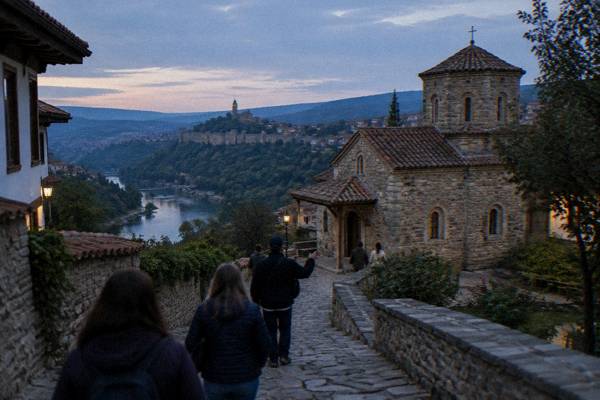
What Was The Old Capital Of Bulgaria?
The old capital of Bulgaria was Veliko Tarnovo, seat of the Second Bulgarian Kingdom from the late 12th century. Here is the history, the dates and what survives to visit today.
The old capital of Bulgaria was Veliko Tarnovo, an inland city on the Yantra river in the north of the country, with no sea coast. It served as the capital of the Second Bulgarian Kingdom for more than two centuries, from the late 12th century to the 14th, after the uprising of Asen and Peter in 1185 to 1186 restored the Bulgarian state. The Regional Museum of History's own page for Tsarevets describes the city as a metropolitan centre after that restoration in 1186. Today the municipality holds an estimated 77,067 residents, and the remains of the capital, above all Tsarevets Fortress, still shape the whole town. This page lays out the dates, the rulers and what a visitor can still walk through, with the details carried by Veliko Tarnovo Travel Guide across its attraction and itinerary pages.
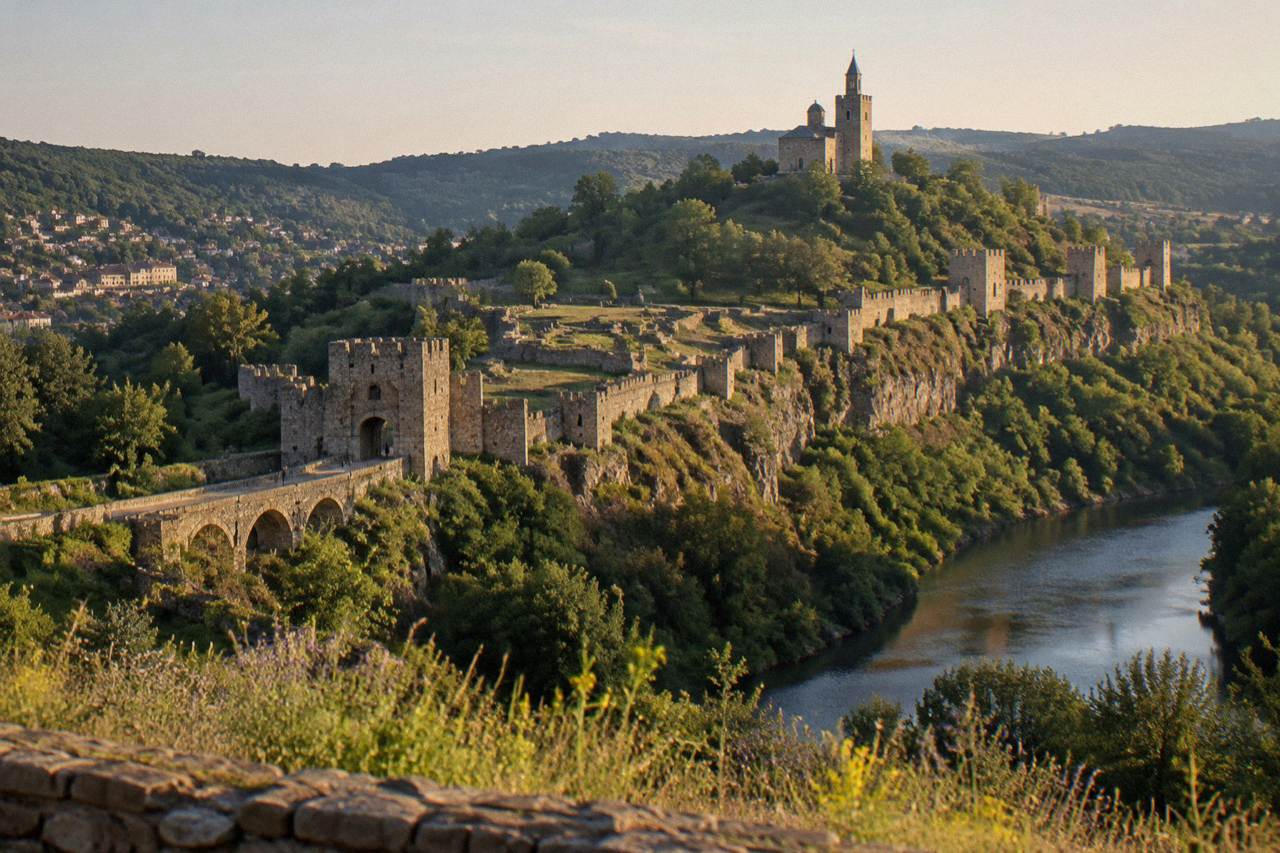
The old capital of Bulgaria was Veliko Tarnovo, the seat of the Second Bulgarian Kingdom from the late 12th century until the 14th. The uprising of Asen and Peter in 1185 to 1186 restored the Bulgarian state, and the museum's own ticket page for Tsarevets calls the city a metropolitan centre after the restoration of the state in 1186. It remained the capital for more than two centuries, until it fell to the Ottomans in 1393.
The phrase "old capital" points at two distinct things, and separating them helps. Bulgaria's earlier medieval state, the First Bulgarian Kingdom, had other seats, and modern Bulgaria proclaimed Sofia its capital after liberation, with the Tarnovo Constitution adopted in 1879 in the city. Veliko Tarnovo sits between those two eras: it is the capital of the Second Bulgarian Kingdom, the restored state of the late 12th century, and it held that role longer than any other city of that era. The Tarnovo Constitution of 1879 is one echo of how the place kept a symbolic weight long after the medieval kingdom ended.
The date details matter because sources phrase them differently. The uprising of Asen and Peter is dated 1185, while the Regional Museum of History's page says the state was restored in 1186, so the careful wording is "the 1185 to 1186 uprising" or simply "the late 12th century". The fall of the capital to the Ottomans in 1393 closed the era. The full story of the city across those centuries is laid out on the Veliko Tarnovo history guide.
Who Ruled From Veliko Tarnovo, And When?
The Asen dynasty and its successors ruled the Second Bulgarian Kingdom from Veliko Tarnovo, beginning with the brothers Asen and Peter after the 1185 to 1186 uprising. Two dated monuments anchor the era on the ground: the marble victory column of Ivan Asen II from 1230, in the Church of the Holy Forty Martyrs, commemorating the Battle of Klokotnitsa, and the city holiday on 22 March, which marks the same victory and the Holy Forty Martyrs.
The brothers Asen and Peter led the uprising that restored the Bulgarian state, and the city became its capital. Ivan Asen II's reign left behind the most tangible surviving artefact of the kingdom: a marble column raised in 1230 in the Church of the Holy Forty Martyrs to commemorate the Battle of Klokotnitsa. That church, at the foot of Tsarevets, carries a second national date as well: Bulgaria's independence was declared on 22 September 1908, and Prince Ferdinand read the Manifesto there. So the building ties the medieval kingdom and the modern state into one place.
The city holiday on 22 March each year marks the Holy Forty Martyrs and the Battle of Klokotnitsa, with a liturgy and a programme of events. For the medieval buildings themselves, the Tsarevets Fortress guide and the fortress's own pages carry the visiting details.
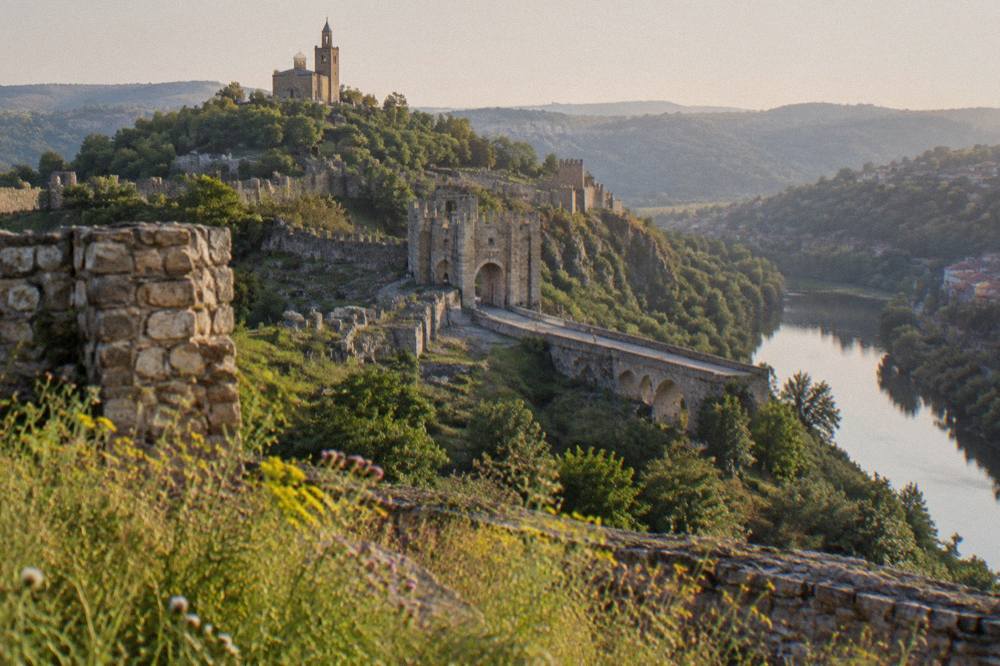
The kingdom's religious seat stood on the same hill as its royal one. The Patriarchal Cathedral of the Holy Ascension on Tsarevets is included in the fortress ticket, which the Regional Museum of History's ticket page lists at 7.67 euro for an adult, with a family ticket at 10.23 euro covering parents and up to three children aged 7 to 18. From April to September the fortress is open daily from 08:00 to 20:00 with last entry at 19:00, and winter hours start on 25 October 2026 with entry from 09:00 to 16:00.
What Happened To The Capital After 1393?
Veliko Tarnovo fell to the Ottomans in 1393, and the city ceased to be a capital. It kept its symbolic weight: the Tarnovo Constitution was adopted there in 1879, and Bulgaria's independence was declared on 22 September 1908 at the Church of the Holy Forty Martyrs, where Prince Ferdinand read the Manifesto. Sofia then became and remains the capital of modern Bulgaria.
Between the fall of 1393 and the Tarnovo Constitution of 1879, the city stayed an important regional centre without political primacy. The two dates that bookend its return to national significance are 1879, the Tarnovo Constitution, and 1908, the independence declaration. Both are tied to specific places a visitor can enter today: the constitution to the city's assembly tradition, and the independence to the Church of the Holy Forty Martyrs at the foot of Tsarevets, where the 1230 column of Ivan Asen II also stands.
A short table collects the dates in one place, since they recur across every account of the city:
| Year | Event in Veliko Tarnovo |
|---|---|
| 1185 to 1186 | Uprising of Asen and Peter; restoration of the Bulgarian state (the museum's page says 1186) |
| 1230 | Ivan Asen II's marble victory column raised after the Battle of Klokotnitsa |
| 1393 | The capital falls to the Ottomans |
| 1879 | The Tarnovo Constitution is adopted |
| 1908 | Independence declared on 22 September at the Church of the Holy Forty Martyrs |
What Can You Still See From The Capital Era In Veliko Tarnovo?
The main survivors of the capital era are Tsarevets Architectural-Museum Reserve with the Patriarchal Cathedral of the Holy Ascension on its hill, Trapezitsa on the opposite bank, and the Church of the Holy Forty Martyrs with the 1230 column of Ivan Asen II. Tsarevets recorded a reported 209,875 visitors in 2025, and its adult ticket is 7.67 euro per the Regional Museum of History's ticket page.
Tsarevets is the headline site. The museum's ticket page lists an adult ticket of 7.67 euro, a family ticket of 10.23 euro for parents and up to three children aged 7 to 18, and opening from 08:00 to 20:00 daily between April and September, with October hours of 09:00 to 18:00. Winter hours begin on 25 October 2026. The reserve has no closing day, though a Tuesday maintenance slot from 09:10 to 11:00 is listed on the ticket page.
Trapezitsa, the second fortress hill, is a separate reserve with its own ticket at 5.11 euro for an adult and 7.67 euro for a family, open from 09:00 to 19:00 in the April to September season. Two seasonal traps matter for planning: the Trapezitsa funicular stops for the season on 31 October 2026 and reopens on 1 May, and the reserve itself is closed to visitors from 30 November 2026 to 31 March 2027.
The Church of the Holy Forty Martyrs charges 5.11 euro for an adult ticket and 7.67 euro for a family ticket. Beyond the ticketed sites, the public spaces of the old city cost nothing: the Asenevtsi Monument, Samovodska Charshiya, General Gurko Street and the Varosha quarter are open at all hours, and the Sound and Light show on announced evenings is free to watch from Tsar Asen I Square. There is no free guided walk in the sense of a tip-based tour: the walking tours on the roster are paid products, and the open spaces are free to explore on your own. The one day in Veliko Tarnovo itinerary sequences these stops for a single visit.
How Do You Visit The Old Capital Today?
You reach Veliko Tarnovo by train, bus or road through Sofia, Varna or Bucharest Otopeni airports, since no scheduled-flight airport serves the city. Sofia is about 216 road km away, Varna about 214 and Bucharest Otopeni about 205. There is no direct train from Sofia; the fastest connections on the timetable involve a change, usually at Gorna Oryahovitsa, and take 4 h 33 min or 4 h 51 min.
Flying into Bucharest before continuing to the old capital. Book a private day trip from Bucharest.
Bulgaria has been a full Schengen member since 1 January 2025 and has used the euro since 1 January 2026, at a fixed rate of 1.95583 lev per euro, so museum tickets are printed in euro figures such as 7.67 and 5.11. The Entry/Exit System has run at all external Schengen borders since 10 April 2026. The single European emergency number is 112.
For the visit itself, the paid Check availability link beside the guided walking tour page covers the city's monuments with a guide. The climate, per the ERA5 reanalysis for 1991 to 2020, runs from a mean daily high of 4.9 C in January to 28.1 C in August, with May the wettest month at 95.7 mm of rain.
Why Does The Old Capital Still Matter To Bulgaria?
Veliko Tarnovo anchors the national story in one place: the restored state began there, the 1230 Klokotnitsa column stands there, the Tarnovo Constitution of 1879 was adopted there, and independence was declared there on 22 September 1908. The city holiday on 22 March and the Independence Day programme each year keep the dates in public view, with liturgy, processions and reenactments centred on the Forty Martyrs church and Tsarevets.
The Independence Day celebrations on 22 September include a liturgy at the Church of the Holy Forty Martyrs, a reenactment and a flag ritual on Tsarevets, and the Sound and Light show often features around those dates on announced evenings. Whether the city deserves a stop on a wider route is a fair question, and the is Veliko Tarnovo worth visiting page addresses it directly, alongside what Veliko Tarnovo is famous for.
A closing note on scale: the municipality holds an estimated 77,067 residents as of 31 December 2025, with 76,718 at the 2021 census. The medieval capital is now a university town, home to St Cyril and St Methodius University of Veliko Tarnovo, wrapped around the same river bend the kingdom built on.
Common Questions About The Old Capital Of Bulgaria
What Was The Old Capital Of Bulgaria?
The old capital of Bulgaria was Veliko Tarnovo, seat of the Second Bulgarian Kingdom for more than two centuries, from the late 12th century after the 1185 to 1186 uprising of Asen and Peter until the fall to the Ottomans in 1393.
Is Veliko Tarnovo A UNESCO World Heritage Site?
No. Nothing in the city is inscribed or on the Tentative List. The nearest inscribed sites are the Rock-Hewn Churches of Ivanovo and the Thracian Tomb of Kazanlak, both from 1979, and Nicopolis ad Istrum, about 20 road km away, has been on the Tentative List since 1984.
Where Was Bulgarian Independence Declared?
Bulgaria's independence was declared on 22 September 1908 at the Church of the Holy Forty Martyrs in Veliko Tarnovo, where Prince Ferdinand read the Manifesto. The same church holds the marble victory column of Ivan Asen II from 1230.
How Much Does Tsarevets Fortress Cost?
The Regional Museum of History's ticket page lists an adult ticket at 7.67 euro and a family ticket at 10.23 euro, covering parents and up to three children aged 7 to 18. Children under 7 enter free.
What Is The City Holiday Of Veliko Tarnovo?
The city holiday falls on 22 March each year, marking the Holy Forty Martyrs and the Battle of Klokotnitsa, with a liturgy, a procession and a public programme.
How Many Days Do You Need In Veliko Tarnovo?
Most of the medieval core can be covered in a full day, but two days allow Trapezitsa, Arbanasi and a day trip. The dedicated page on how many days you need in Veliko Tarnovo breaks the options down.