What Is The Womb Cave?
What the Womb Cave near Veliko Tarnovo is, what the map record says, and which caves in the region you can plan a visit around, with distances and practical notes.
Veliko Tarnovo, the inland medieval capital of Bulgaria on the Yantra river, sits in a folded landscape of hills, gorges and karst, and that landscape produces cave names the way coastal towns produce beach names. One of those names is the Womb Cave. It appears on maps of the area around the city as a place label, and it draws searches from travellers who have heard the name and want to know whether it belongs on a Veliko Tarnovo itinerary. The short version is honest and simple: the Womb Cave exists as a mapped place name in the region, not as a museum site with published hours, tickets or an operator, so a visit plan built around it needs care. What the region offers instead is a set of caves and canyons with documented distances from the city centre, from Emen Canyon about 32 km by road to the west, through Bacho Kiro cave about 31 km away near the Dryanovo Monastery, to Devetashka Cave about 89 km away and Prohodna Cave beyond it.
This page answers the question directly, then does the useful work a searcher actually needs: how the name fits onto the map, which caves near the city have documented status on this site's records, and how to build a day around the underground side of the region. For the wider city picture, the things to do in Veliko Tarnovo roundup covers the fortress, the old quarters and the day trips in one place, and the guide to what Veliko Tarnovo is famous for explains why this city of about 77,000 municipality residents carries a medieval capital's weight.
The Womb Cave is a named place on maps of the Veliko Tarnovo area, a cave label rather than a museum or ticketed attraction, and no published opening hours, admission price, guided tours or operator details attach to it in any official record this site holds. The name describes the shape that gives caves of this kind their nickname in several countries, a rounded chamber with a narrow entrance. It is reached through rough hill country, and any visit is self-organised rather than booked.
That answer is deliberately narrower than a guidebook blurb. Many cave names travel: formations called "womb caves" exist in Bulgaria and elsewhere, and the label alone does not tell a traveller what access looks like. The map entry near Veliko Tarnovo marks a point in the landscape. It does not mark a gate, a kiosk or a schedule, and nothing in the municipal tourism material or the Regional Museum of History's site list treats it as one of their objects. The museum's list covers Tsarevets, Trapezitsa, the Forty Martyrs church, the Arbanasi churches, Nicopolis ad Istrum and the rest, and the Womb Cave is not on it.
So the practical reading is this: if the name is on your list because you saw it on a map or in a social post, treat it as a wild place, not a sight with services. You reach it the way you reach any unmanaged karst feature, with your own transport, your own timing and a check on conditions before you set out. For travellers who want underground Bulgaria with structure around it, the region's documented caves, covered below, are the reliable alternative.
Your own wheels make that part easier. Book a rental car.
A second caveat belongs here too. Cave names of this kind carry folk and symbolic associations, and posts online often attach stories to them. Those stories are not part of any official record this site holds for the Veliko Tarnovo area, and repeating them would be guesswork dressed as history. The city's documented story is medieval and firm: capital of the Second Bulgarian Kingdom for more than two centuries from the late 12th century, with the restoration of the state dated 1185 to 1186 and the fall to the Ottomans in 1393. The history of Veliko Tarnovo carries that record, and it is a better use of an afternoon than an unverifiable cave legend.
Where Does The Name Fit On A Veliko Tarnovo Map?
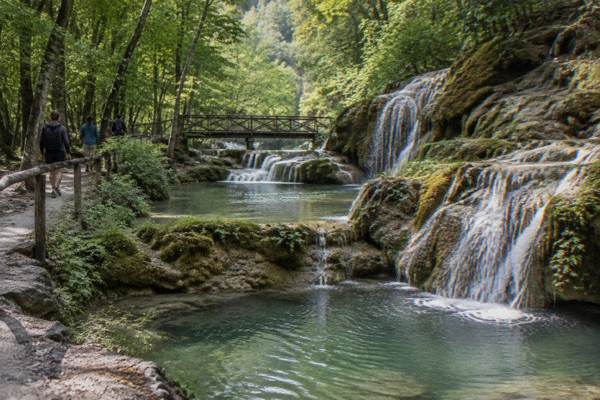
The Womb Cave sits in the hill and karst country of the wider Veliko Tarnovo region, outside the city itself and away from the developed sights, which is why it never appears on museum ticket pages or in the official sight list. The mapped caves and canyons of this region cluster along river valleys, the Yantra around the city and the Negovanka to the west, where Emen Canyon lies about 20 km west of Veliko Tarnovo with Lower Boaz showing 90 m sheer cliffs.
Distances in this landscape are short on the map and slow on the road.
That geography explains a lot of the confusion. Veliko Tarnovo's famous core is compact: Tsarevets, Trapezitsa, Samovodska Charshiya, General Gurko Street and the Varosha quarter sit within walking reach of each other, and the Asenevtsi Monument stands by the river below the fortress hills. The cave country is a different zone entirely, and travellers who mix the two in one day underestimate the driving. The road distances from the centre, computed over the OpenStreetMap network, tell the story plainly.
| Underground or canyon site | Road distance from central Veliko Tarnovo |
|---|---|
| Emen Canyon (Negovanka gorge) | about 32 km (about 20 km west as the municipal tourism site places it) |
| Bacho Kiro cave | about 31 km |
| Dryanovo Monastery (beside the cave valley) | about 33 km |
| Devetashka Cave | about 89 km |
| Krushuna Falls (karst springs) | about 79 km |
| Prohodna Cave | beyond Devetashka, further than 89 km |
Two of those names deserve a direct pointer. The Dryanovo Monastery and Bacho Kiro cave guide covers the most reachable of the real cave trips from the city, and the Devetashka Cave day-trip page covers the giant further north. Prohodna, the cave with the two famous skylights known as the "Eyes of God", has its own Prohodna Cave guide. For hours and tickets at those sites, check locally before travelling, because none of the secondary figures circulating online belong in a plan until the site itself confirms them.
Emen Canyon is the one with the firm official record. The municipal tourism site describes it as the gorge of the Negovanka river, about 20 km west of the city and 8 km off the Sofia road, with Lower Boaz showing 90 m sheer cliffs. It is walking country rather than a cave, and it makes a good pairing for anyone already heading west on the Sofia road.
If an off-road loop through the hills between the city and Arbanasi appeals, there is a booked way to do it: the operator's page for an ATV or buggy adventure lists Check availability, and the same hills continue toward the rough country where the mapped cave names sit.
Which Caves Near Veliko Tarnovo Can You Actually Visit?
The caves with a documented place in this site's records are Bacho Kiro cave about 31 km from the centre, beside the Dryanovo Monastery about 33 km away; Devetashka Cave about 89 km away; and Prohodna Cave beyond it, with Emen Canyon about 32 km west as the gorge companion to them all. The Womb Cave is not among them, because no operator, museum or municipality claims it. Access, hours and any fees at the caves themselves need local confirmation before the trip.
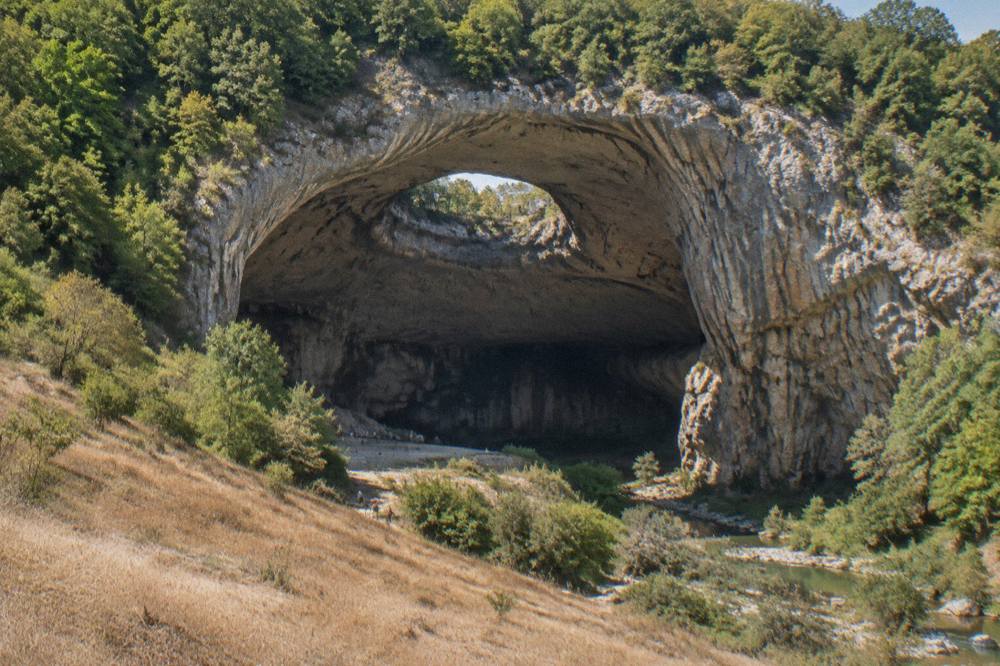
The distinction matters because cave visits fail quietly. A museum fortress posts its hours and you plan around them; a wild cave or a semi-managed one changes with the season, the weather and whoever is on site. Bacho Kiro sits in the Dryanovo valley, one of the classic excursions from Veliko Tarnovo, and the monastery beside it gives the day a second stop. Devetashka is a huge open cavern on the Osam river, and Prohodna's twin skylights make it the most photographed underground feature in northern Bulgaria. All three are described in the day-trip pages linked above, and all three sit far enough from the city that you either rent a car, join a trip or accept a long transit. More of these guides are collected on Veliko Tarnovo Travel Guide.
For travellers staying in the city itself, the underground pull is usually satisfied in a different order. First come the fortress sights, which are ticketed and firm: Tsarevets at 7.67 euro for an adult, per the Regional Museum of History's ticket page, with a family ticket at 10.23 euro for parents and up to three children aged 7 to 18. Then come the free public spaces, the Asenevtsi Monument, Samovodska Charshiya, General Gurko Street and the Varosha quarter. Only then does the cave country enter the plan, as a full-day excursion.
| Layer of a Veliko Tarnovo visit | What it covers | Standing of the figures |
|---|---|---|
| Ticketed museum sights | Tsarevets 7.67 euro adult, family 10.23 euro; Trapezitsa 5.11 euro adult | Regional Museum of History ticket pages |
| Free public spaces | Asenevtsi Monument, Samovodska Charshiya, Gurko Street, Varosha, Sound and Light viewing from Tsar Asen I Square | free, open at all hours |
| Cave and canyon country | Bacho Kiro about 31 km, Emen Canyon about 32 km, Dryanovo Monastery about 33 km, Devetashka about 89 km | distances computed over OSM; site details confirmed locally |
| The Womb Cave | a mapped place name in the region | no published hours, price or operator |
One seasonal warning belongs in any cave plan made for late autumn. The museum sites around Veliko Tarnovo switch to winter hours from 25 October 2026, Trapezitsa closes to visitors entirely from 30 November 2026 to 31 March 2027, and its funicular stops for the season on 31 October 2026. Wild caves have no such announcements, which is exactly why a check with the local tourist information centre before setting out is worthwhile.
How Do You Plan A Cave Day From Veliko Tarnovo?
A workable cave day from Veliko Tarnovo picks one direction and stays with it: the Dryanovo valley for Bacho Kiro cave and the monastery about 31 to 33 km out, the Emen Canyon country about 32 km west on the Sofia road, or the long run north to Devetashka Cave about 89 km away, usually paired with Prohodna and Krushuna Falls at about 79 km. Trying to combine directions turns the day into driving.
The city's own sightseeing belongs to a separate day, and the museum hours reward a morning start.
The arithmetic is unforgiving. Dryanovo is close enough that a half-day works with a car. Devetashka is not: about 89 km each way means the return leg lands in the evening, and the how many days you need in Veliko Tarnovo page works through how to split a stay between the city and the region. Anyone weighing the budget side, meanwhile, will find the is Veliko Tarnovo expensive answer useful, since Bulgaria has used the euro since 1 January 2026 and the museum prices print in euro exactly as the operator lists them.
For travellers without a car, the booked-products route is the realistic one for the far caves, and the roster includes full-day nature trips out of the city.
The do-it-yourself version needs three checks the night before: the weather, since karst paths and cave approaches degrade in rain; the season, since the light is short from late October and the museum sites around the city run winter hours from 25 October 2026; and the return plan, since rural bus coverage to cave villages is thin and a taxi back is not something to improvise after dark. The emergency number throughout Bulgaria is 112.
Is The Womb Cave Worth The Detour From Veliko Tarnovo?
For a traveller with one or two days in Veliko Tarnovo, the Womb Cave is not the detour to build a plan around: it is a mapped name with no services, no published access details and no place in the official sight records, while the city itself holds Tsarevets, the old quarters and the free riverside monument spaces. For a traveller with a car, extra days and a taste for unmanaged wild places, the hills that carry the name are real country worth exploring respectfully, on your own judgement.
That splits the audience honestly. The city-break traveller should spend the hours on what is documented and firm: the fortress, the Sound and Light show on its announced evenings, free to watch from Tsar Asen I Square, and the streets of the Varosha quarter. The is Veliko Tarnovo worth visiting page makes that case in full. The repeat visitor or the road-tripper, the kind already reading the northern Bulgaria road trip guide, can treat the Womb Cave as what the map says it is: a point of curiosity in a karst landscape that also holds Emen Canyon's 90 m cliffs and the Negovanka valley.
The wider region's cave and canyon set, with the distances that matter, condenses to this:
| Day direction from Veliko Tarnovo | Sights on that line | Distance anchor |
|---|---|---|
| West, Sofia road | Emen Canyon, Lower Boaz cliffs | about 20 km west of the city, about 32 km by road |
| South-east, Dryanovo valley | Bacho Kiro cave, Dryanovo Monastery | about 31 and 33 km |
| North, Osam valley | Devetashka Cave, Krushuna Falls, Prohodna Cave | about 89 and 79 km |
A closing thought on expectations. The reason the Womb Cave question keeps coming up is that cave names carry mystery, and Veliko Tarnovo's real selling point is that its mystery is documented: a capital city of the Second Bulgarian Kingdom, a fortress on a river bend, and a region of gorges and caverns around it. Chase the map name if the hills call you, but let the record carry the itinerary.
Common Questions About The Womb Cave And Veliko Tarnovo
What is the Womb Cave?
It is a named place on maps of the Veliko Tarnovo area, a cave label rather than a museum site, with no published hours, tickets or operator attached to it in any official record this site holds. Any visit is self-organised through rough hill country.
Is the Womb Cave a tourist attraction in Veliko Tarnovo?
No. The Regional Museum of History's site list, which covers Tsarevets, Trapezitsa, the Arbanasi churches, Nicopolis ad Istrum and the rest, does not include it, and the municipal tourism material does not treat it as a managed sight.
Which caves near Veliko Tarnovo can be visited?
The documented options on this site's records are Bacho Kiro cave about 31 km from the centre, beside the Dryanovo Monastery about 33 km away, Devetashka Cave about 89 km away, Prohodna Cave beyond it, and Emen Canyon about 32 km west by road as the walking alternative. Confirm hours and access locally before travelling.
How far is Emen Canyon from Veliko Tarnovo?
The municipal tourism site places it about 20 km west of the city, 8 km off the Sofia road, and the road route measures about 32 km. Lower Boaz, part of the gorge, has 90 m sheer cliffs.
Do I need a full day for a cave trip from Veliko Tarnovo?
The Dryanovo valley works as a half-day with a car, since it sits about 31 to 33 km out. Devetashka at about 89 km, often paired with Krushuna Falls at about 79 km and Prohodna, is a full-day commitment.
Is Veliko Tarnovo close to the sea?
No. Veliko Tarnovo is an inland city on the Yantra river in northern Bulgaria, with no sea coast. Varna on the Black Sea is about 214 road km away, and Sofia about 216 km in the other direction.