Which Is Better, Romania Or Bulgaria?
A level comparison of Romania and Bulgaria for travellers, anchored on Veliko Tarnovo: the former medieval capital's fortress, prices, transport links and which country suits which trip.
Romania and Bulgaria are neighbours, and travellers crossing between them have never had it easier: Bulgaria has been a full Schengen member since 1 January 2025, and the country across the border has long been one too, so a single border-free drive now links Bucharest with the Bulgarian interior. This comparison comes from a site dedicated to Veliko Tarnovo, the inland city on the Yantra river that was the capital of the Second Bulgarian Kingdom for more than two centuries from the late 12th century, so the Bulgarian side is argued in detail and the Romanian side is left to its own guides. The municipal tourism facts, the Regional Museum of History's ticket pages and the BDZ rail timetable supply every figure below, and the honest framing is not which country wins but which one suits which trip. A useful starting point for the Bulgarian case is the things to do in Veliko Tarnovo overview or the is Veliko Tarnovo worth visiting answer.
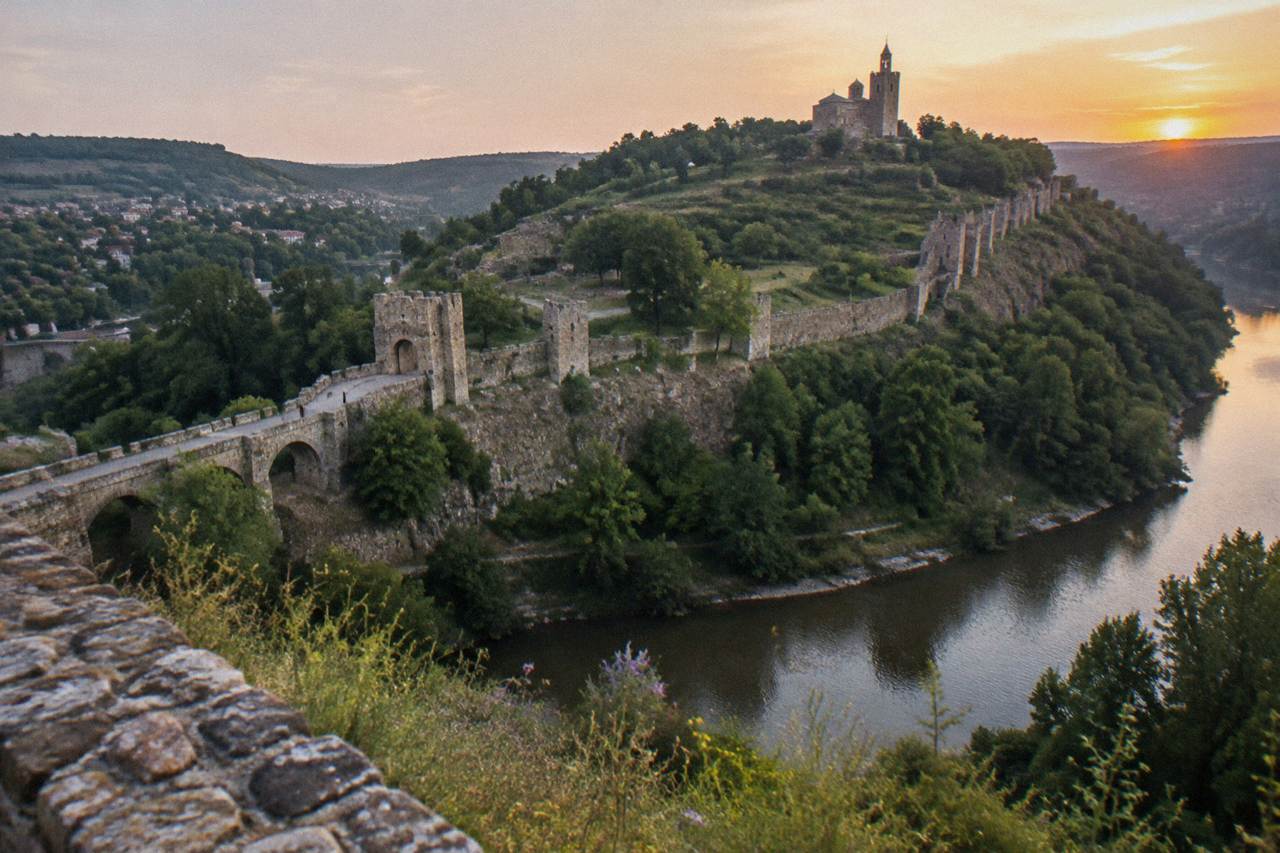
Neither country is simply better; the two suit different trips, and the deciding facts are practical ones. Bulgaria's case for a history-focused short break runs through Veliko Tarnovo: Tsarevets Fortress, the Patriarchal Cathedral on Tsarevets, the Sound and Light show, Trapezitsa, Samovodska Charshiya, General Gurko Street and Arbanasi village, all within an inland city the museum's own figures show drew a reported 209,875 visitors to the fortress in 2025. Romania suits travellers whose priorities lie elsewhere.
The comparison deserves one honest structural note: this page belongs to a Veliko Tarnovo guide, so it can argue the Bulgarian case with sourced figures, dates and ticket prices. What can be compared on the level are the links between the two: Bucharest Otopeni airport lies about 205 road km from Veliko Tarnovo, closer than Bulgaria's own Sofia airport at about 223 km, and direct buses run the Bucharest route in about 3 h 50 min to 4 h 15 min. In practice, many travellers fly into Romania and see Bulgaria's old capital on a day or two of the same ticket, which is exactly why the two countries compete for the same week of leave.
Bulgaria's practical entry position is now identical to Romania's on the essentials. It has used the euro since 1 January 2026, at the fixed rate of 1.95583 lev per euro, so the currency switch at the border disappeared along with the border checks. The Entry/Exit System has run at all Schengen external borders since 10 April 2026, applying to both countries alike for arrivals from outside the zone.
Why Veliko Tarnovo Anchors The Bulgarian Case
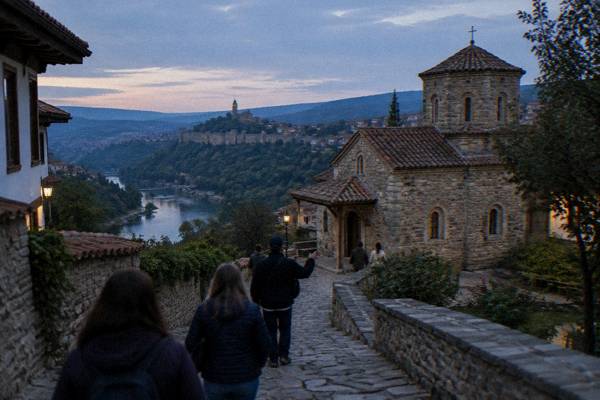
Veliko Tarnovo is the strongest single argument for choosing Bulgaria on a history trip, because it packs a medieval capital into a walkable city. The restoration of the Bulgarian state dates to the 1185 to 1186 uprising, the city fell to the Ottomans in 1393, and independence was declared on 22 September 1908 at the Church of the Holy Forty Martyrs, whose 1230 marble column of Ivan Asen II still commemorates the Battle of Klokotnitsa. Tsarevets, Trapezitsa and Arbanasi carry that whole arc.
The Regional Museum of History operates the main sites, and its ticket page prices the fortress at 7.67 euro for an adult, with a family ticket at 10.23 euro covering parents and up to three children aged 7 to 18. From April to September the fortress opens daily from 08:00 to 20:00, with last entry at 19:00, and winter hours start on 25 October 2026. Nothing in the city is a UNESCO World Heritage Site, which surprises readers who assume otherwise; the nearest inscribed sites are the Rock-Hewn Churches of Ivanovo and the Thracian Tomb of Kazanlak, both inscribed in 1979, and Nicopolis ad Istrum, about 20 road km north, has sat on the Tentative List since 1984.
The Sound and Light audio-visual show is the city's signature evening, projected onto Tsarevets. There is no fixed nightly schedule: performances run on announced dates, such as the run around Independence Day on 22 September 2026, and watching from Tsar Asen I Square is free. Travellers coming from Romania for a single evening sometimes build the whole trip around it, and the Sound and Light show guide on this site lists what is confirmed.
For a first sense of the city on foot, the guided options below cover the fortress hill, the old quarters and the monuments with a local guide, and there is a fuller Veliko Tarnovo walking tour guide for planning the route yourself.
How Easy Is It To Combine Romania And Bulgaria?
Very easy, and that is the practical answer to the whole question: the two countries now share open borders, one currency on the Bulgarian side since 1 January 2026, and direct transport. Bucharest Otopeni airport is about 205 road km from Veliko Tarnovo, Sofia is about 223 km and Varna about 214 km, and direct buses from Bucharest take about 3 h 50 min to 4 h 15 min. By rail, Ruse connects to Veliko Tarnovo with a direct train in 2 h 25 min.
The rail picture matters because there is no direct train from Sofia: services change, usually at Gorna Oryahovitsa, with the fastest connections on the current timetable at 4 h 33 min and 4 h 51 min, and slower options taking 6 to 10 hours. From Varna there is one direct train at 3 h 53 min. The Veliko Tarnovo Travel Guide carries the full how to get to Veliko Tarnovo breakdown, including the bus stations.
For travellers already in Romania, the natural plan is Bucharest for the arrival days, then the crossing. A dedicated Veliko Tarnovo day trip from Bucharest guide covers it.
The hike is one of several Bucharest-departure products on the roster; read more in the Bucharest to Sofia via Veliko Tarnovo guide, or check the tour page: Check availability.
What Does A Veliko Tarnovo Trip Cost In Tickets?
The headline sights are priced by the Regional Museum of History in euro, and the adult figures are modest and fixed: Tsarevets Fortress at 7.67 euro, Trapezitsa at 5.11 euro, the Church of the Holy Forty Martyrs at 5.11 euro, the Archaeological Museum at 5.11 euro and the Arbanasi church of the Nativity at 7.67 euro, per the museum's ticket pages. A two-day pass covering 10 museum sites costs 20.45 euro for an individual, valid 1 April to 30 November.
Here is what the ticket pages list for the core sites:
| Site | Adult ticket | Family ticket | Hours (April to September) |
|---|---|---|---|
| Tsarevets Fortress | 7.67 euro | 10.23 euro | daily 08:00 to 20:00, last entry 19:00 |
| Trapezitsa | 5.11 euro | 7.67 euro | daily 09:00 to 19:00, last entry 18:00 |
| Church of the Holy Forty Martyrs | 5.11 euro | 7.67 euro | 09:00 to 18:00, last entry 17:30 |
| Archaeological Museum | 5.11 euro | 7.67 euro | 09:00 to 18:00, last entry 17:00 |
| Church of the Nativity, Arbanasi | 7.67 euro | 12.78 euro | 09:00 to 18:00 |
Seasonal traps matter more than the prices. Winter hours at the museum sites start on 25 October 2026; Trapezitsa closes to visitors entirely from 30 November 2026 to 31 March 2027; its funicular stops on 31 October 2026; Konstantsalieva House in Arbanasi drops to Friday to Sunday only from 30 November 2026 to 20 March 2027; and the Museum of New and Newest History is temporarily closed. Children under 7 enter the museum sites free, as do people with permanent disabilities plus an assistant. The wider money picture, including the euro changeover, is in the is Veliko Tarnovo expensive answer.
Which Country Suits Which Trip?
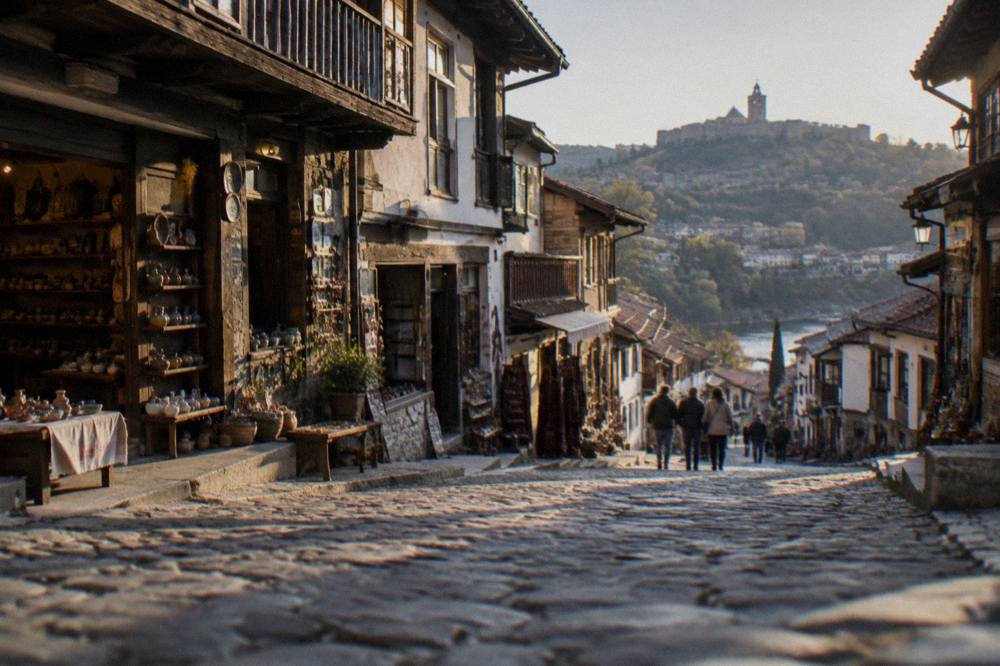
Choose Bulgaria around Veliko Tarnovo for a compact medieval-history trip built on one walkable city and short day-trip radii; choose Romania when the trip's centre of gravity is there and Bulgaria becomes a two-day detour. The Bulgarian case rests on density: Tsarevets, Trapezitsa, Arbanasi and the Sound and Light show sit inside roughly three kilometres of each other, with Arbanasi about 2.8 km straight-line from the centre.
Day-trip radii from the city, all road distances from the centre: Kilifarevo Monastery about 17 km, Nicopolis ad Istrum about 20 km, Emen Canyon about 32 km, Dryanovo Monastery about 33 km, Tryavna about 42 km, Etar about 53 km, Buzludzha about 73 km, Krushuna Falls about 79 km, the Kazanlak tomb about 98 km, Ruse about 105 km and the Ivanovo churches about 128 km. The Northern Bulgaria road trip guide strings the best of these together.
The climate, per the ERA5 reanalysis for Veliko Tarnovo, 1991 to 2020, is continental: a mean daily high of 27.6 C in July and 28.1 C in August against 4.9 C in January, with a mean daily low of -3.8 C in January and May the wettest month at 95.7 mm of rain. The best time to visit guide works through the seasons, including the city holiday on 22 March and the International Folklore Festival, which ran 18 to 25 July in its 28th edition in 2026.
Length of stay is the other practical divider. The how many days do you need in Veliko Tarnovo answer argues the case in detail, but the short version is that the city rewards at least a full day and a night, chiefly because the Sound and Light show is an evening event on announced dates.
Common Questions About Romania Or Bulgaria
Which Is Better, Romania Or Bulgaria?
Neither is simply better. Bulgaria suits a compact medieval-history trip centred on Veliko Tarnovo, the former capital of the Second Bulgarian Kingdom, while Romania suits trips whose main draws are Romanian. The two combine easily: open borders, direct buses from Bucharest in about 3 h 50 min to 4 h 15 min, and the euro on the Bulgarian side since 1 January 2026.
Can You Visit Veliko Tarnovo From Bucharest In A Day?
Yes. Bucharest Otopeni airport is about 205 road km away, direct buses take about 3 h 50 min to 4 h 15 min, and several day-trip products on this site's roster run the route with a guide. Overnight is better if you want the Sound and Light show, which runs on announced evenings only.
Is Bulgaria In The Euro And Schengen?
Bulgaria has used the euro since 1 January 2026, at the fixed rate of 1.95583 lev per euro, and has been a full Schengen member since 1 January 2025. Crossing from Romania by road involves no routine border checks.
Is Veliko Tarnovo A UNESCO Site?
No. Nothing in the city is inscribed or on the Tentative List. The nearest inscribed sites are the Rock-Hewn Churches of Ivanovo and the Thracian Tomb of Kazanlak, both from 1979, while Nicopolis ad Istrum, about 20 road km north, has been on the Tentative List since 1984.
How Much Do The Main Sights In Veliko Tarnovo Cost?
Per the Regional Museum of History's ticket pages: Tsarevets Fortress 7.67 euro adult and 10.23 euro family, Trapezitsa 5.11 euro, the Church of the Holy Forty Martyrs 5.11 euro, the Archaeological Museum 5.11 euro, and a two-day pass over 10 museum sites at 20.45 euro individual, valid 1 April to 30 November.
Is There A Direct Train From Sofia To Veliko Tarnovo?
No. Trains from Sofia change, usually at Gorna Oryahovitsa; the fastest connections on the current timetable take 4 h 33 min and 4 h 51 min. From Ruse there is a direct train at 2 h 25 min, which is the natural rail link from the Romanian border.
Whichever country anchors the trip, the practical edge belongs to travellers who treat the border as a formality and the old capital as the destination: two days in Veliko Tarnovo, the fortress at 7.67 euro, a free seat for the Sound and Light show in Tsar Asen I Square on an announced evening, and a borderless road back to Bucharest about 205 km away.