Which Part Of Bulgaria Is Best To Stay In?
Which part of Bulgaria is best to stay in? A region-by-region look at the north around Veliko Tarnovo, Sofia, Plovdiv and the coast, with ticket prices, distances and seasonal facts.
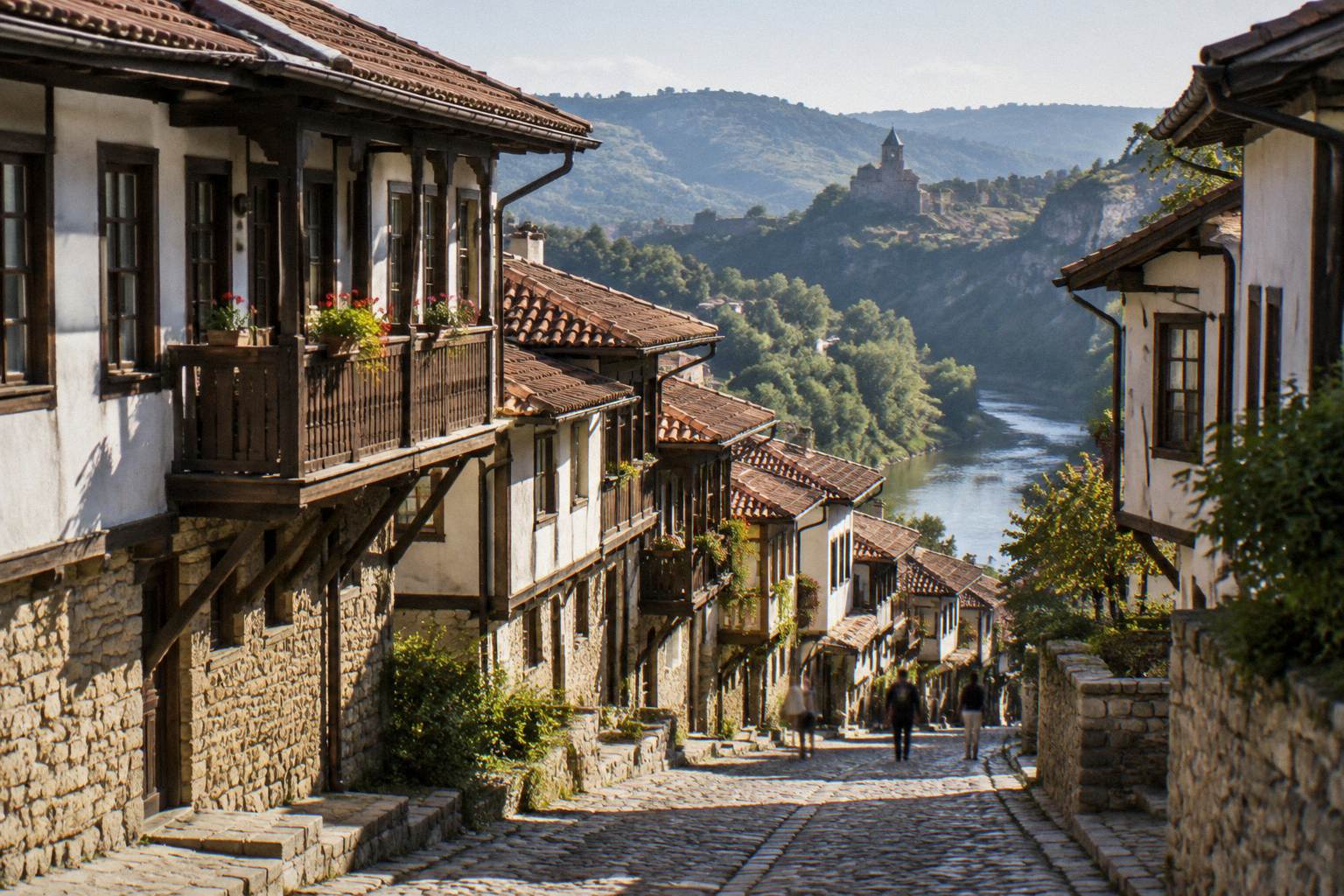
Bulgaria splits into three broad zones for a stay: the historic north around Veliko Tarnovo, an inland city of about 77,000 municipality residents on the Yantra river with no sea coast, the capital region around Sofia in the west, and the south with Plovdiv and the Thracian valley. The medieval capital of the Second Bulgarian Kingdom for more than two centuries from the late 12th century sits almost exactly between them, about 223 road km from Sofia, about 208 from Plovdiv and about 105 from Ruse on the Danube. The municipal tourism site and the Regional Museum of History publish the opening hours, ticket prices and winter schedules that make a northern base easy to plan, and this page compares the options on those figures.
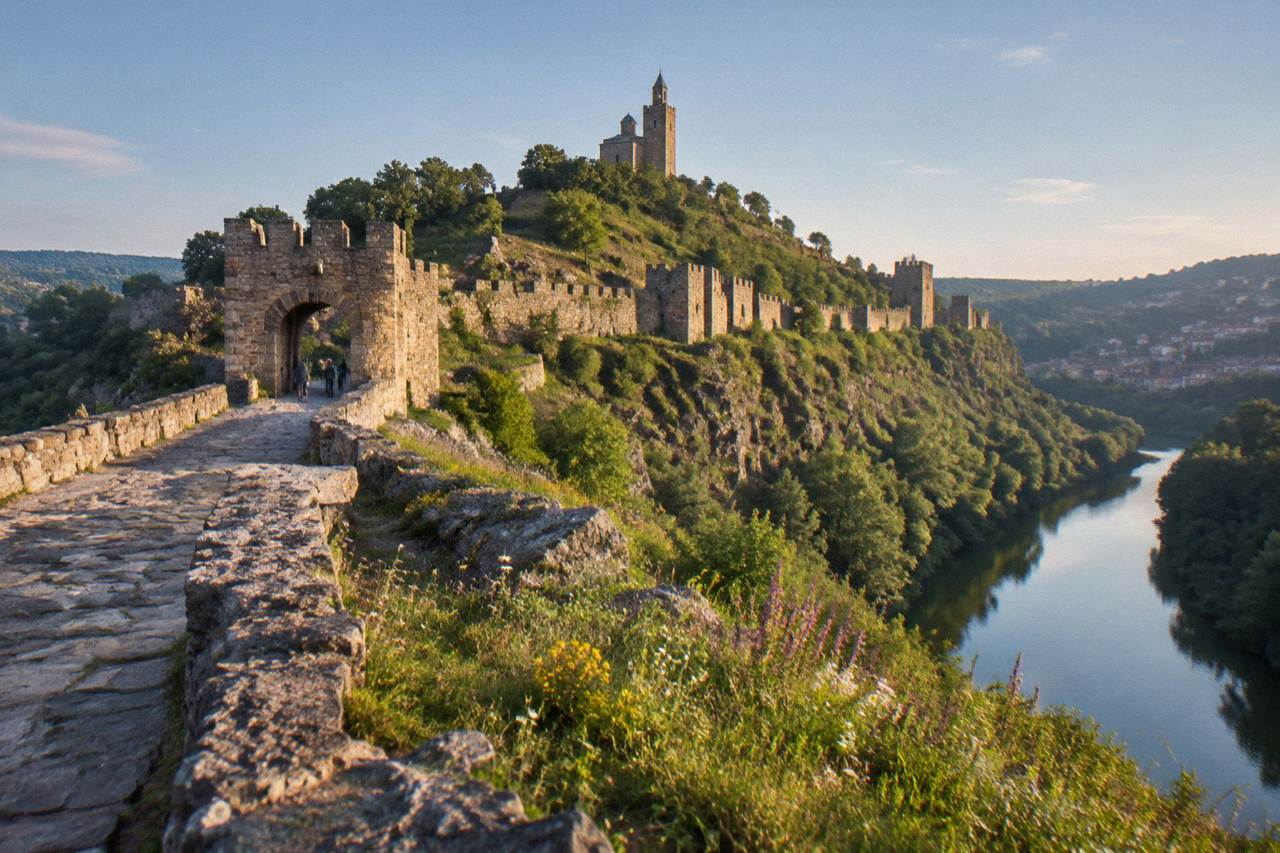
For a first trip built around history, small-town walks and day trips, the north around Veliko Tarnovo is the best part of Bulgaria to stay in: the city was the capital of the Second Bulgarian Kingdom for more than two centuries, Tsarevets Fortress charged 7.67 euro adult entry in 2026, and Arbanasi village sits about 2.8 km away. For a city-only break, Sofia works; for a mix of old town and south-bound day trips, Plovdiv. The north wins on concentration of medieval sights.
Nothing in Veliko Tarnovo itself is a UNESCO World Heritage Site, and nothing in the city is on the Tentative List either. The nearest inscribed sites are the Rock-Hewn Churches of Ivanovo and the Thracian Tomb of Kazanlak, both inscribed in 1979, and Nicopolis ad Istrum, about 20 road km north, has been on the Tentative List since 1984. That spread is the practical argument for a northern base: two inscribed World Heritage Sites, one tentative site, a fortress capital and a string of monasteries all sit within a day's drive of one another.
The region comparison looks like this, using the road distances computed from the centre of Veliko Tarnovo:
| Base | Road km from Veliko Tarnovo | What the region holds |
|---|---|---|
| Veliko Tarnovo (north) | 0 | Tsarevets, Trapezitsa, Arbanasi, Nicopolis ad Istrum (Tentative List, 1984) |
| Ruse (Danube) | about 105 | Danube city, gateway to the Ivanovo churches (inscribed 1979) at about 128 road km |
| Plovdiv (south) | about 208 | Old town, route to the Kazanlak tomb (inscribed 1979) at about 98 road km from Veliko Tarnovo |
| Sofia (west) | about 223 | Capital, main international airport (SOF) |
The south and the west each hold one of the 1979 inscriptions, and the north holds the medieval capital plus the tentative Roman site. A reader deciding between them should also weigh the reasons the city is considered worth visiting, which come down to density: fortress, churches, monasteries and an audiovisual show on one hillside, with the practical details collected on the Veliko Tarnovo Travel Guide homepage.
What Does The North Around Veliko Tarnovo Actually Give You?
The north gives a compact set of sights with published 2026 prices: Tsarevets at 7.67 euro adult and 10.23 euro family, Trapezitsa at 5.11 euro, the Church of the Holy Forty Martyrs at 5.11 euro, and Etar, about 53 road km away, at 7.16 euro adult with a family ticket also listed on its admission page. Arbanasi village is about 2.8 km straight-line from the centre, and its Church of the Nativity costs 7.67 euro.
Those figures come from the Regional Museum of History's ticket pages and the Etar admission page, and they are the euro prices the museum prints since Bulgaria adopted the currency on 1 January 2026 at a fixed rate of 1.95583 lev per euro. A northern base puts all of them within a day's reach without changing accommodation. The winter schedules matter too: museum winter hours start on 25 October 2026, the Trapezitsa funicular stops for the season on 31 October 2026, and Trapezitsa itself is closed to visitors from 30 November 2026 to 31 March 2027, so an autumn or spring stay catches the full set.
The sight prices, quoted exactly as the museum prints them:
| Sight | Adult ticket | Family ticket |
|---|---|---|
| Tsarevets Architectural-Museum Reserve | 7.67 euro | 10.23 euro |
| Trapezitsa | 5.11 euro | 7.67 euro |
| Church of the Holy Forty Martyrs | 5.11 euro | 7.67 euro |
| Archaeological Museum | 5.11 euro | 7.67 euro |
| Church of the Nativity, Arbanasi | 7.67 euro | 12.78 euro |
| Nicopolis ad Istrum | 5.11 euro | Not published |
| Etar (Gabrovo) | 7.16 euro | 16.87 euro |
Days here fill with the fortress, the Varosha quarter, Samovodska Charshiya and General Gurko Street, all free public spaces you can walk on your own, and the Sound and Light show, which runs on announced evenings only and is free to watch from Tsar Asen I Square. The walking tours on the roster are paid products, and there is no free guided walk. For travellers weighing length of stay, the day-count question has its own answer.
Want a local's route through those streets? Book a guided walking tour.
How Does Veliko Tarnovo Compare With Sofia, Plovdiv And The Danube?
Sofia is about 223 road km west and Plovdiv about 208 south, both reachable by train or bus from Veliko Tarnovo, while Ruse is about 105 km and has a direct train of 2 h 25 min on the BDZ timetable. No scheduled-flight airport serves Veliko Tarnovo itself: arrivals go through Sofia, Varna, about 214 road km, or Bucharest Otopeni, about 205. Each base therefore trades airport convenience against sight density.
The train facts are worth planning around. There is no direct train from Sofia to Veliko Tarnovo; the BDZ timetable of 17 October 2026 shows the fastest journeys at 4 h 33 min and 4 h 51 min with a change, usually at Gorna Oryahovitsa, and others at 6 to 10 hours. Varna has one direct train at 3 h 53 min, and Ruse a direct one at 2 h 25 min. Buses from Sofia take about 3 to 3.5 hours. A traveller who flies into Sofia can therefore base in the capital and visit on a day trip from Sofia, or move north and use the city as the hub, which is the option that puts Arbanasi, the monasteries and the Danube within range.
Neither base is objectively superior, and no ranking between Bulgarian cities is offered here because none has a source. What the figures do show is geometry: from Veliko Tarnovo the whole north is close, while Sofia suits a trip that starts and ends at an airport and Plovdiv suits one aimed at the south. The climate is another input: the ERA5 reanalysis, 1991-2020, for Veliko Tarnovo gives these modelled normals:
| Month | Mean daily high | Mean daily low | Rain |
|---|---|---|---|
| January | 4.9 C | -3.8 C | 56.1 mm |
| April | 16.9 C | 6.0 C | 71.6 mm |
| July | 27.6 C | 17.2 C | 79.5 mm |
| October | 17.6 C | 8.0 C | 58.9 mm |
May carries the highest monthly rain total in the table at 95.7 mm and August the lowest at 51.3 mm, with August's 28.1 C the highest mean daily high and January's -3.8 C the lowest mean daily low. Those are modelled grid-cell values, not a station record, but they frame the seasons for a northern stay.
Where To Stay Within Veliko Tarnovo Itself?
The stay options inside the city cluster in three areas: the old quarters on and around the hills, the modern centre around Tsar Asen I Square, and Arbanasi village, about 2.8 km straight-line northeast, which doubles as a sight in its own right. Accommodation may add a per-night tourist tax, so confirm the total at booking. No room rate, star rating or review score is quoted here.
Hotel listings in the Varosha quarter, near the fortress and in Arbanasi were checked for existence only, and none carries a rate that can be printed. The choice between them is about what the trip is for: the old quarters put the fortress, the Forty Martyrs church and Gurko Street within an evening's walk, the centre puts the Sound and Light viewing square and Samovodska Charshiya closest, and Arbanasi trades village quiet for a bus or taxi ride to the sights. The area-by-area breakdown for the city covers the quarters in detail.
Arbanasi deserves its own word even for day visitors: the Church of the Nativity is open April to September 09:00 to 18:00, October 09:00 to 17:00, with winter entry 10:00 to 15:30, and entry is free on the church feast day, 25 December 2026. Konstantsalieva House is open Friday to Sunday only, 10:00 to 16:00, from 30 November 2026 to 20 March 2027. Those winter limits shape where it makes sense to sleep if the trip falls in the cold half of the year, when the winter edition of a stay is the relevant planning page.
How Many Days Should A Bulgaria Stay Give To Veliko Tarnovo?
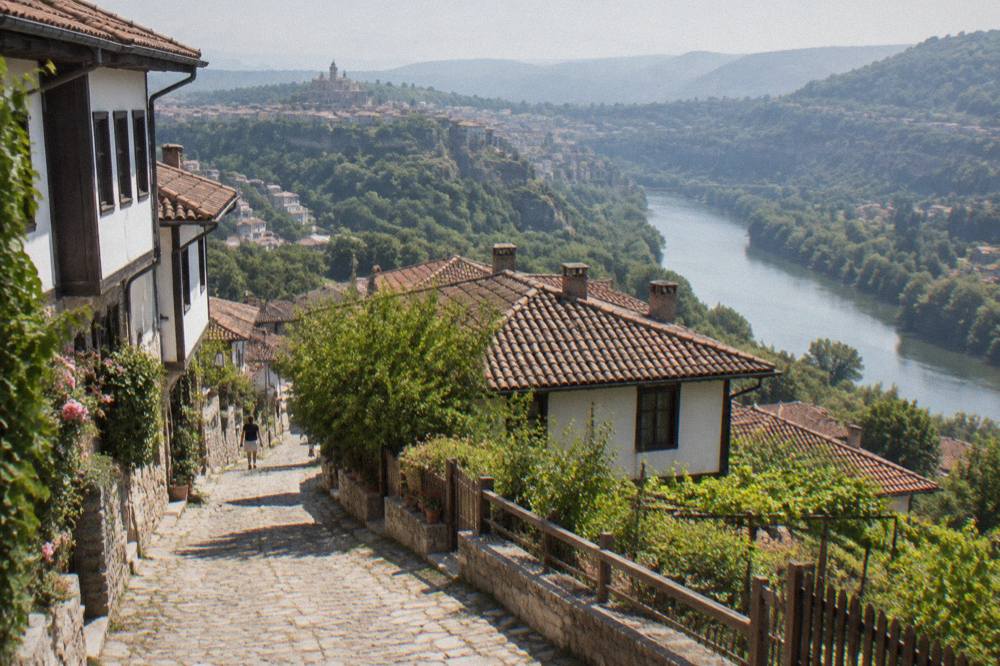
A stay that bases itself in the north should give Veliko Tarnovo at least two full days: one for Tsarevets, the Patriarchal Cathedral and the Varosha quarter, and one for Arbanasi plus a museum or the Sound and Light show on an announced evening. A third day covers Trapezitsa, the Archaeological Museum and a short trip such as Nicopolis ad Istrum at 5.11 euro.
The fortress ticket page lists adult entry at 7.67 euro with the family ticket at 10.23 euro for parents and up to three children aged 7 to 18, April to September opening 08:00 to 20:00 daily, October 09:00 to 18:00, and winter entry hours from 25 October 2026. Children under 7 enter free, as do people with permanent disabilities plus an assistant. A two-day museum pass costing 20.45 euro individual or 25.56 euro family, valid 1 April to 30 November, exists for the museum network's ten sites. Those are the numbers that decide how long the ticket money lasts, and the full fortress guide walks through the site itself.
For travellers who prefer to set their own pace rather than join a group, the self-guided audio option covers the city and the fortress with a full day of access, and it can be checked through Check availability on the tour page. Beyond the city, day trips reach Buzludzha and Shipka, the monasteries, or the Valley of the Roses toward Kazanlak, whose rose festival culmination is reported for 4 to 6 June 2027. Safety questions for the wider country have their own dedicated answer, and the emergency number throughout Bulgaria and the EU is 112.
Common Questions About Staying In Bulgaria
Which part of Bulgaria is best to stay in for a first visit?
The north around Veliko Tarnovo suits a first visit centred on history, with Tsarevets Fortress at 7.67 euro adult entry, Arbanasi 2.8 km away and the Ivanovo churches and Kazanlak tomb, both inscribed by UNESCO in 1979, reachable on day trips. Sofia suits an airport-to-airport city break.
Is Veliko Tarnovo close to Sofia and Plovdiv?
Sofia is about 223 road km and Plovdiv about 208. There is no direct train from Sofia; the fastest journeys on the BDZ timetable take 4 h 33 min with a change, while buses take about 3 to 3.5 hours.
Does Bulgaria use the euro?
Yes, since 1 January 2026, at a fixed rate of 1.95583 lev per euro. Bulgaria has also been a full Schengen member since 1 January 2025.
Can you fly into Veliko Tarnovo?
No scheduled-flight airport serves the city. Visitors arrive through Sofia, Varna or Bucharest Otopeni, about 216, 214 and 205 road km away respectively.
When do the winter closures affect a stay?
Winter hours at the Veliko Tarnovo museum sites start on 25 October 2026, the Trapezitsa funicular stops on 31 October 2026, and Trapezitsa is closed to visitors from 30 November 2026 to 31 March 2027. The Sound and Light show runs on announced evenings only, free to watch from Tsar Asen I Square.
Whichever region wins for a given trip, the north around Veliko Tarnovo is the part of Bulgaria where the medieval capital, two nearby World Heritage Sites and a tentative Roman city sit within a single day's drive of one another, and where every ticket price and seasonal closure that shapes the stay is published in advance on the museum's own pages.