Elena: A Balkan Revival Town East Of Veliko Tarnovo
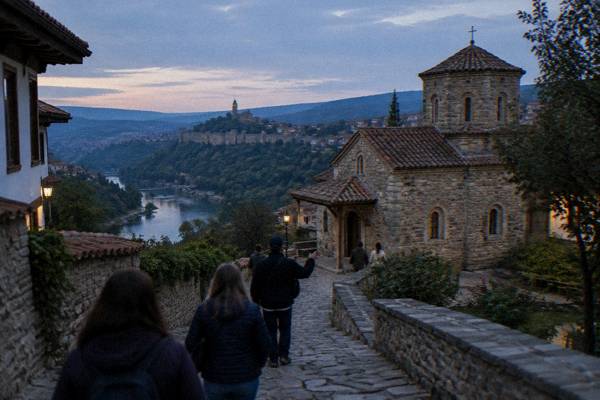
Elena is a small Revival-era town in the hills east of Veliko Tarnovo, in northern Bulgaria, and a quiet contrast to the fortress city on the Yantra river.
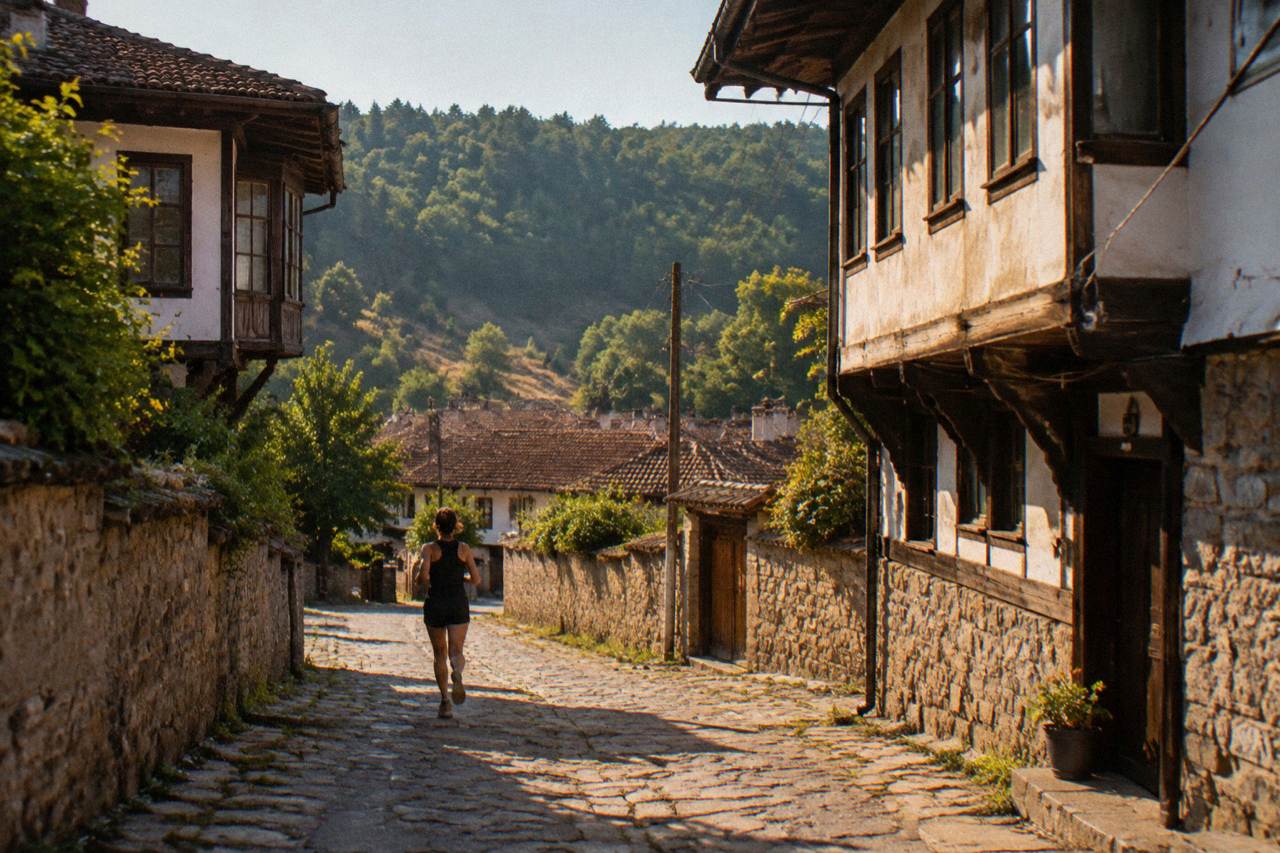
Elena is a Balkan Revival town east of Veliko Tarnovo in Bulgaria, known for its Revival-era houses and church architecture rather than fortresses or museums. There is no train line and no airport anywhere near it, so the day trip runs by road from the city, and it pairs naturally with the other Revival towns in the region.
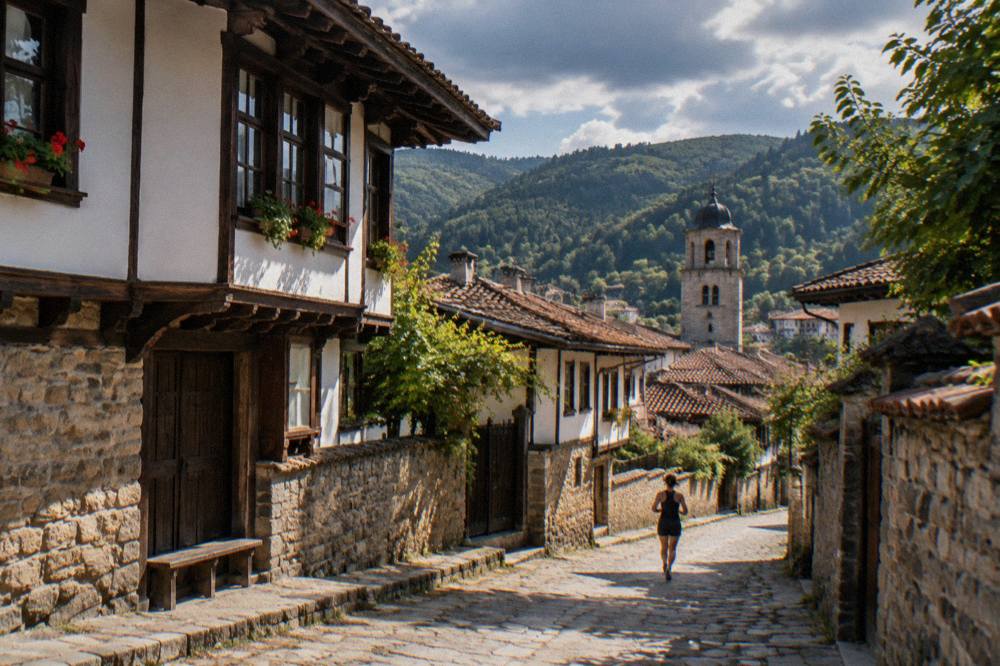
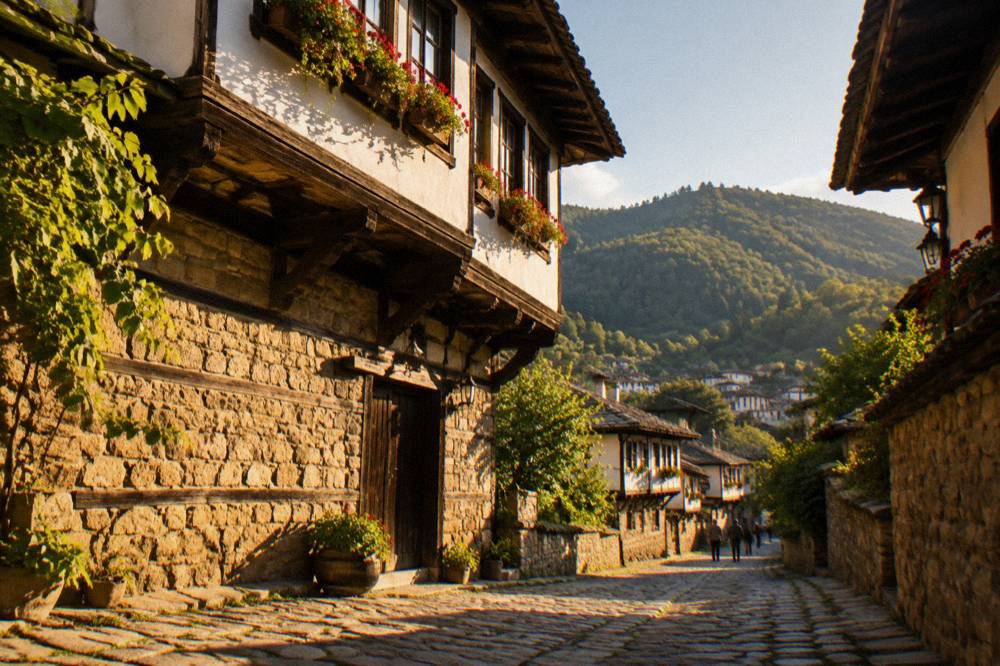
Elena sits in the wooded hills east of Veliko Tarnovo, an inland city on the Yantra river in northern Bulgaria with no sea coast, and the pairing of the two makes a natural day out: the fortress capital in the morning, a small Revival town in the afternoon. The town belongs to the same historical layer as the better-known craft settlements of the region, the National Revival towns of central northern Bulgaria, whose houses, churches and schools date from the decades before the liberation of 1879. Where Veliko Tarnovo climbed its hills and built walls, Elena's builders worked in timber and stone in a valley, and that contrast is the reason to go.
This guide lays out what the day trip involves: how the route works without a train, what a Revival town visit actually consists of, what the regional comparison with Tryavna, Bozhentsi and Etar looks like, and what the figures for the region's sights, seasons and transport say. The facts come from the same primary pages this site reports throughout: the Regional Museum of History's ticket pages for the Veliko Tarnovo sights, the BDZ timetable for trains, and the ERA5 reanalysis for the climate. Start with the overview of things to do in Veliko Tarnovo if the city itself is still unmapped in your plans.
What Is Elena And Why Day Trip There From Veliko Tarnovo?
Elena is a small town in the Balkan range east of Veliko Tarnovo, in Bulgaria, known for its National Revival architecture from the decades before 1879, and it makes a quiet half-day or full-day escape from the fortress city. There is no fortress, no audiovisual show and no major ticketed museum circuit on the scale of the city's, so the appeal is the streets, the churches and the hills, and the change of pace that comes with them.
The Revival period is the thread that ties the region together. Veliko Tarnovo itself keeps visible layers of it: Sarafkina House, built in 1861 and now a museum at 88 General Gurko Street, and the Konak of 1872, built by master Kolyu Ficheto, which houses the Museum "Revival and Constituent Assembly". Both sit in the Varosha quarter, and both charge 5.11 euro for an adult ticket per the museum's listings. Elena belongs to the same era of building and the same chapter of Bulgarian history, when towns across the northern Balkans grew wealthy enough to build in stone and send their sons to the new schools.
What the trip does not offer is a second Tsarevets. The city's great sights, the fortress with the Patriarchal Cathedral, Trapezitsa, the Sound and Light show on announced evenings, are the region's headline acts, and a day in Elena is deliberately not that. It suits a traveller with a third or fourth day in the area, someone who has already walked the fortress and wants the countryside version of the same history. If you are still building the core itinerary, the three days in Veliko Tarnovo plan puts the essentials in order first.
How Do You Get From Veliko Tarnovo To Elena?
Elena is reached by road east of Veliko Tarnovo, and there is no train option at all: the town has no rail line, and the city's own station, which itself requires a change at Gorna Oryahovitsa for most Sofia trains, serves the region but not the Elena valley. The practical choices are a hire car, a regional bus, or a private driver, and current bus times should be checked at the stations before committing to the day.
The bus context matters. Veliko Tarnovo has two stations: Yug at 74 Hristo Botev Boulevard, near the centre, which serves Sofia, Varna and international routes, and Zapad on Nikola Gabrovski Boulevard, which serves regional and local routes. A small hill town such as Elena, if a public service reaches it at all, is a Zapad-type route, and regional timetables change with the seasons. Check the current departure board before planning the day around it.
For context, the region's rail picture is thin by design. The BDZ timetable for 17 October 2026 shows no direct train from Sofia to Veliko Tarnovo at all: the fastest journeys run 4 h 33 min and 4 h 51 min with a change, usually at Gorna Oryahovitsa, and others take 6 to 10 hours. Varna has one direct train at 3 h 53 min, and Ruse a direct one at 2 h 25 min. None of this touches Elena. The town is a road destination, full stop, and a day trip there is a driving day, with the flexibility that implies: stops in villages, detours to viewpoints, no timetable anxiety.
If you would rather put the driving in a professional's hands, the tours below are the region's bookable options, starting with the city walking tour this site features alongside its day-trip pages.
What Do You Actually See And Do In Elena?
A day in Elena is built around its Revival-era centre: the old houses, the churches and the town's quiet streets, walked at a slow pace, with the surrounding wooded hills as the backdrop. There is no big fortress circuit to buy, so the visit is closer in spirit to wandering Samovodska Charshiya or Gurko Street in Veliko Tarnovo, the city's free public spaces, than to a ticketed museum day.
The comparison is worth spelling out. In Veliko Tarnovo, the free list is exactly this: the Asenevtsi Monument, Samovodska Charshiya, General Gurko Street, the Varosha quarter, watching the Sound and Light show from Tsar Asen I Square, and the Church of the Nativity in Arbanasi on 25 December 2026. A small Revival town like Elena works the same way: the streets themselves are the sight, and the pleasure is in the walking, the facades and the valley light. What the town does not have is the museum infrastructure of the city, where an adult can enter Tsarevets for 7.67 euro or the Archaeological Museum for 5.11 euro, prices quoted exactly as the Regional Museum of History prints them.
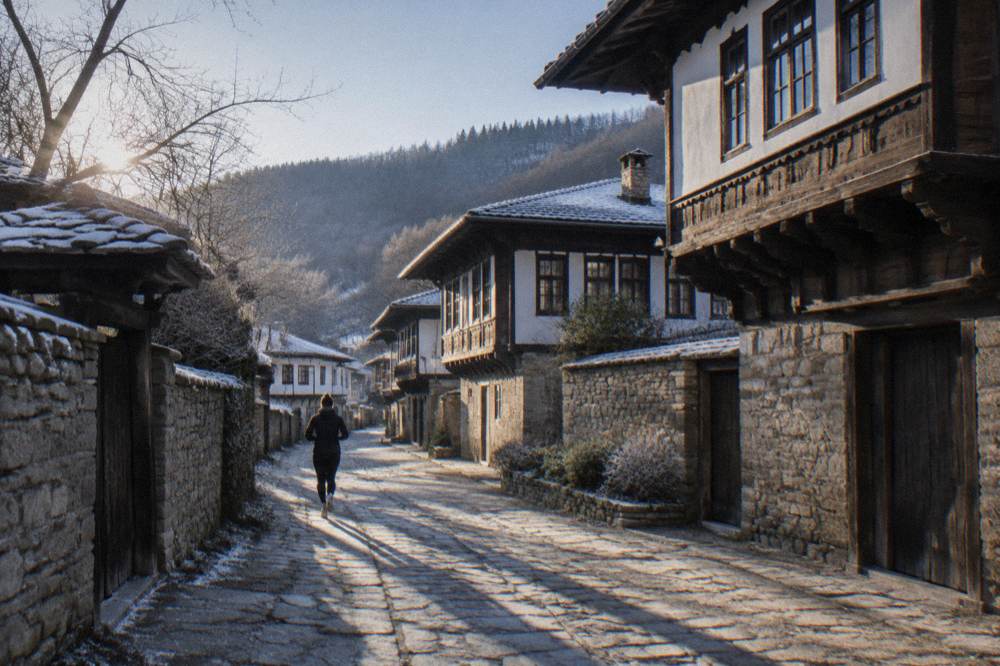
The honest way to plan it is as a slow day. Arrive, walk the centre, find the churches, sit somewhere with a view of the valley, and drive back through the hills. Travellers who want structure, commentary and a fixed itinerary on their Revival-architecture day should book a guided product rather than improvise one.
For the driving day itself, a rental car booked in Veliko Tarnovo is the other half of the equation, and it is the same car that opens every other road trip in this part of Bulgaria: the monasteries to the south, the caves and waterfalls to the west, and the Shipka pass to the southwest.
If that sounds like your kind of day trip, book a rental car.
How Does Elena Compare With Tryavna, Bozhentsi And Etar?
Elena is the eastern option among the Revival-town day trips from Veliko Tarnovo, while Tryavna sits about 42 road km south, Bozhentsi about 46 km and the Etar open-air museum about 53 km, so the western and southern clusters are closer to the city by road. Etar is the only one of the set with a fully priced admission page, and the museum prints its adult ticket in euro.
The table shows the road distances from the city centre alongside what is officially priced:
| Day trip | Road distance from Veliko Tarnovo | Ticket situation |
|---|---|---|
| Tryavna | about 42 km | hours and prices only from secondary sites |
| Bozhentsi | about 46 km | hours and prices only from secondary sites |
| Etar, Gabrovo | about 53 km | adult 7.16 euro per the museum page |
| Emen Canyon | about 32 km | free natural site, daylight access |
Etar deserves its own word because it is the anchor of the comparison. The Architectural-Ethnographic Complex at Gabrovo is open all year with no days off, and its admission page lists an adult ticket at 7.16 euro, pupil and student entry at 3.07 euro and pensioner entry at 4.09 euro, with children under 7 free. Those figures are printed in euro because Bulgaria adopted the euro on 1 January 2026 at the fixed rate of 1.95583 lev per euro, and the museum quotes them directly. Check the current price on the official admission page for the family rate and any craft-experience tickets before planning around them.
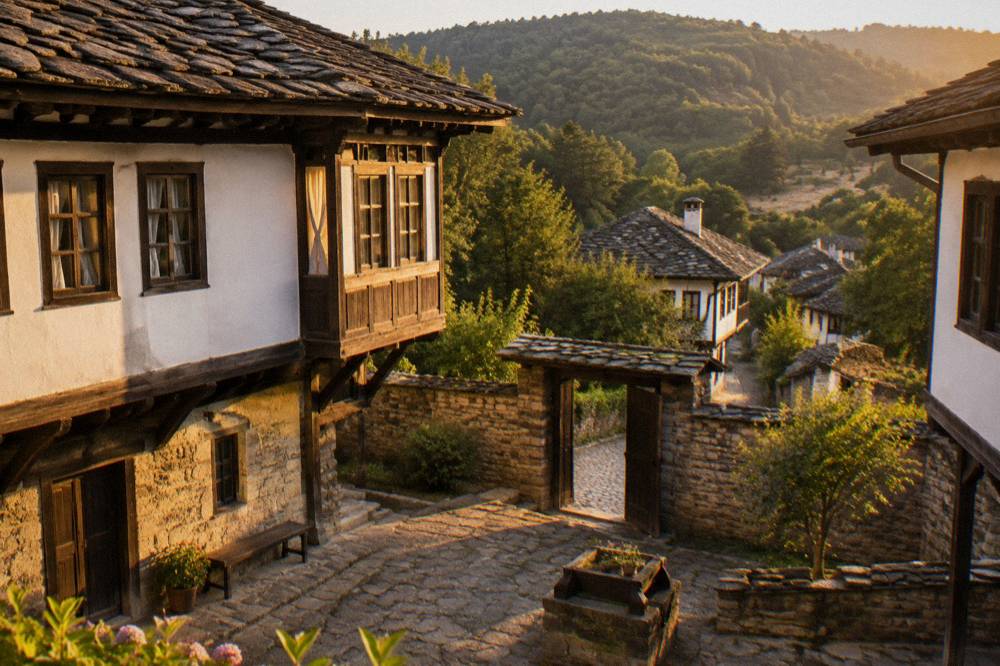
So the regional logic runs like this. Etar is the polished, priced, open-every-day option, and the Etar architectural and ethnographic complex guide covers it in full. Tryavna and Bozhentsi are the atmospheric craft-and-stone-towns option, covered at Tryavna and Bozhentsi. Elena is the quiet eastern alternative, the one that does not appear in every itinerary, and that is either its charm or its limitation depending on what the day is for.
What Does A Revival Region Day Trip Cost?
The priced part of a Revival-region day from Veliko Tarnovo sits mostly in the city itself: Tsarevets at 7.67 euro, Trapezitsa at 5.11 euro, the city's house museums at 5.11 euro each, and the two-day pass covering 10 museum sites at 20.45 euro individual or 25.56 euro family, valid 1 April to 30 November. In Elena the streets cost nothing, and any local church or museum entry should be confirmed on the spot.
Here is the city's price list, quoted exactly as the Regional Museum of History prints it, useful for the Veliko Tarnovo half of any regional day:
| Site in Veliko Tarnovo | Adult ticket | Family ticket |
|---|---|---|
| Tsarevets Architectural-Museum Reserve | 7.67 euro | 10.23 euro |
| Trapezitsa Reserve | 5.11 euro | 7.67 euro |
| Church of the Holy Forty Martyrs | 5.11 euro | 7.67 euro |
| Archaeological Museum | 5.11 euro | 7.67 euro |
| Museum "Revival and Constituent Assembly" (the Konak) | 5.11 euro | no family price listed |
| Sarafkina House | 5.11 euro | no family price listed |
| Church of the Nativity, Arbanasi | 7.67 euro | 12.78 euro |
| Etar, Gabrovo | 7.16 euro | no family price listed |
Note the season traps that wrap around these figures. Winter hours at the museum sites start on 25 October 2026. Trapezitsa is closed to visitors from 30 November 2026 to 31 March 2027, and its funicular stops for the season on 31 October 2026, reopening 1 May. Konstantsalieva House in Arbanasi goes to Friday-to-Sunday opening from 30 November 2026 to 20 March 2027. The two-day pass runs only 1 April to 30 November. A spring-to-autumn trip therefore lines up neatly with everything that is open; a winter trip needs the calendar read first.
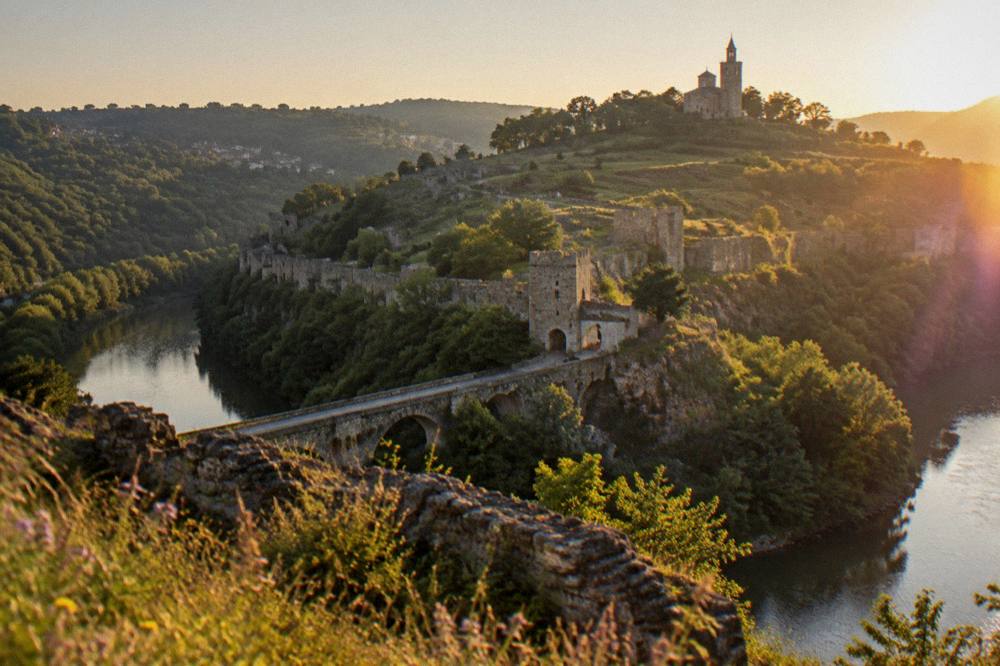
Add the free layer and the day fills out without spending: the Asenevtsi Monument, Samovodska Charshiya, Gurko Street and the Varosha quarter all cost nothing, and the Sound and Light show is free to watch from Tsar Asen I Square on the evenings it runs. The Sarafkina House and the Hadzhi Nikoli Inn pages cover two more Revival-layer buildings in the city, for the days when the weather keeps the trip closer to base.
When Is The Best Time Of Year For An Elena Day Trip?
The ERA5 reanalysis for Veliko Tarnovo, 1991 to 2020, puts the mean daily high at 28.1 C in August and 4.9 C in January, with the mean daily low in January at minus 3.8 C, and May carries the highest monthly rainfall at 95.7 mm against 51.3 mm in August, so late spring through early autumn gives the warmest, driest walking conditions for a hill-town visit, and winter days are short and cold but workable with layers.
The full picture, modelled normals for the region:
| Month | Mean daily high | Mean daily low | Rain |
|---|---|---|---|
| March | 11.5 C | 1.4 C | 68.6 mm |
| April | 16.9 C | 6.0 C | 71.6 mm |
| May | 21.7 C | 11.1 C | 95.7 mm |
| June | 25.4 C | 15.1 C | 85.0 mm |
| July | 27.6 C | 17.2 C | 79.5 mm |
| August | 28.1 C | 17.1 C | 51.3 mm |
| September | 23.3 C | 12.9 C | 63.0 mm |
| October | 17.6 C | 8.0 C | 58.9 mm |
A Revival-town day is a walking day, so the rainfall column matters more than the temperature column. August pairs the highest mean high with the lowest monthly rain in the table; May, for all its warmth, is the wettest month at 95.7 mm. September offers 23.3 C means with 63.0 mm of rain. None of this predicts a specific day, and the Balkan hills make their own weather, but the table is the honest regional baseline.
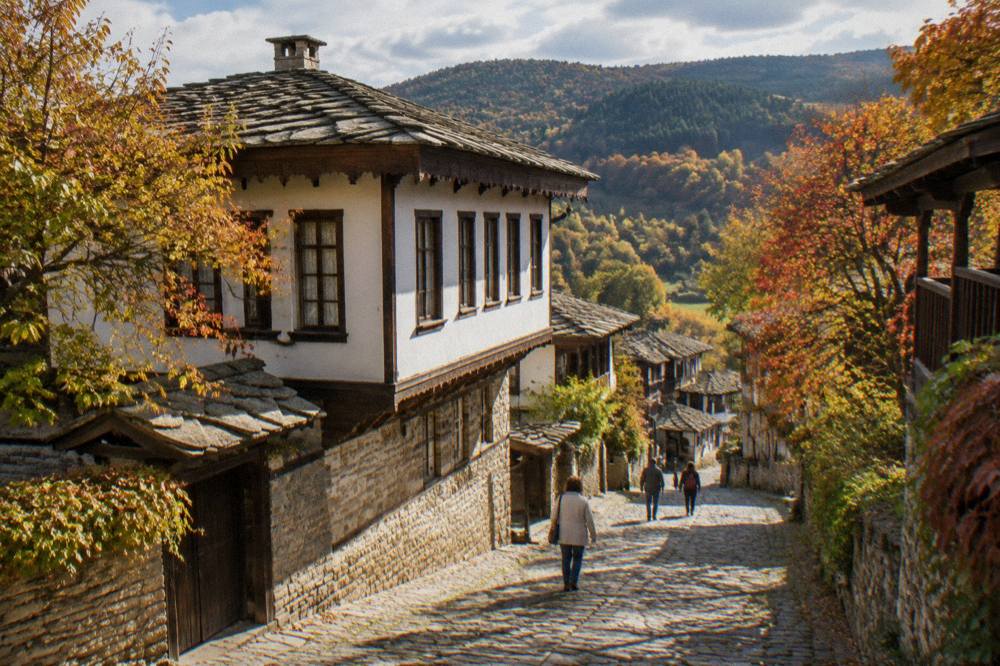
The season also decides what else is open. Between 1 April and 30 September, Tsarevets runs daily from 08:00 to 20:00 with last entry at 19:00, and the whole museum network is on summer hours. From 25 October 2026 the winter hours begin, entry at the fortress 09:00 to 16:00 with a 17:00 close. A hill-town walk in October, with the autumn colour on the slopes, falls inside the last weeks of the long hours, and that timing is one of the region's quiet advantages.
Can You Combine Elena With Other Stops On One Day Out?
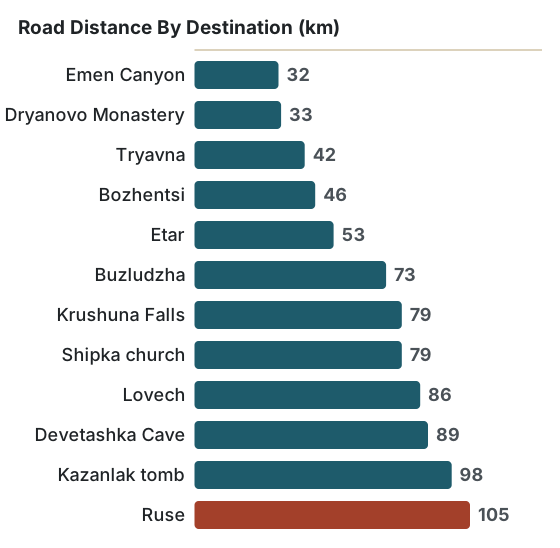
Yes, because the eastern and central day trips radiate from Veliko Tarnovo along separate road corridors, and a car day can chain two or three stops: the region's road distances run from Emen Canyon at about 32 km to Shipka church at about 79 km and Lovech at about 86 km, with Ivanovo's rock churches the far option at about 128 km, so the practical limit is daylight and appetite, not geography.
The distance table for the wider region:
| Destination from Veliko Tarnovo centre | About, by road |
|---|---|
| Emen Canyon | 32 km |
| Dryanovo Monastery | 33 km |
| Tryavna | 42 km |
| Bozhentsi | 46 km |
| Etar | 53 km |
| Buzludzha | 73 km |
| Krushuna Falls | 79 km |
| Shipka church | 79 km |
| Lovech | 86 km |
| Devetashka Cave | 89 km |
| Kazanlak tomb | 98 km |
| Ruse | 105 km |
Elena's own road distance is not among the computed figures in the site's distance set, so the honest planning rule is simple: it lies east of the city, outside the southern cluster of Tryavna, Bozhentsi and Etar, and it does not chain with them efficiently. Chain it instead with nothing, or with the countryside between the city and the town. A day that pairs Elena in the morning with the Emen Canyon eco-trail is a different loop entirely, west then east, and a greedy one.
What About Money, Borders And Practicalities In Bulgaria?
Bulgaria uses the euro, adopted on 1 January 2026 at the fixed rate of 1.95583 lev per euro, and it has been a full Schengen member since 1 January 2025, so a day trip from Veliko Tarnovo to Elena crosses no border and needs no currency exchange. The single European emergency number is 112, free to call, and the time zone is EET, two hours ahead of UTC.
The euro point is worth dwelling on because older guides still say lev. Every price in this article, from the 7.67 euro fortress ticket to the 7.16 euro Etar entry, is printed in euro because the museums themselves now price that way.
Border-wise there is nothing to plan. Bulgaria's full Schengen membership since 1 January 2025 means a visitor already in the Schengen area arrives without internal checks, and the Entry/Exit System has run at all external Schengen borders since 10 April 2026. Citizens of the United States, the United Kingdom, Canada and Australia travel visa-free for 90 days in any 180. No airport serves Veliko Tarnovo with scheduled flights: Sofia is about 216 road km away, Varna about 214 and Bucharest Otopeni about 205, and the Gorna Oryahovitsa airfield, about 10 km from the city, has no regular scheduled flights either.
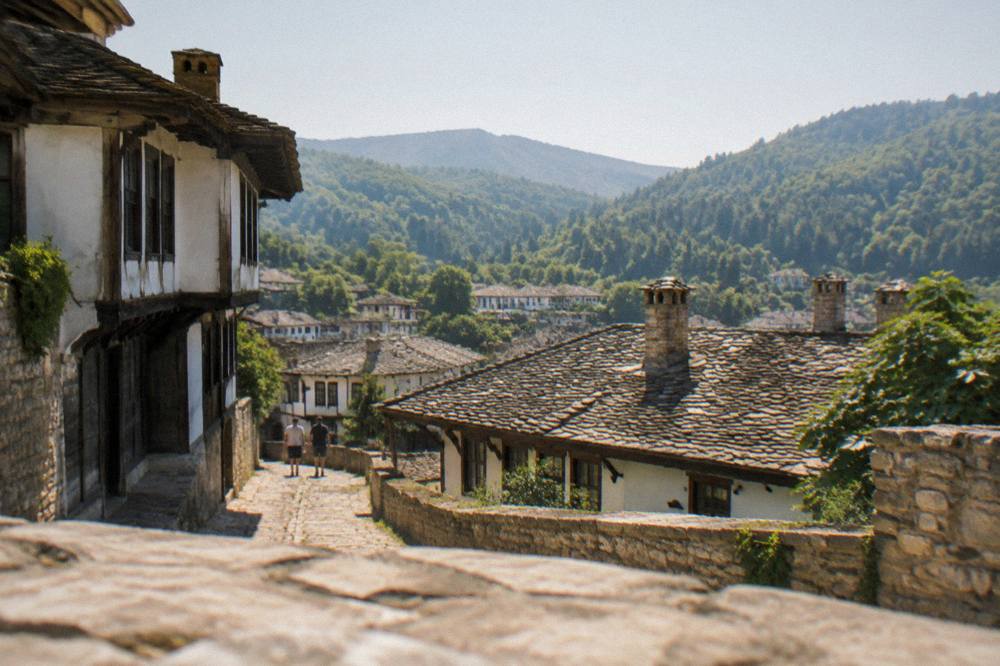
One more practical note for the walking part of the day: this site carries no ratings of paths, steps or accessibility for any sight in the region, so travellers with mobility constraints should ask locally before assuming a hill-town centre is manageable. The terrain in the Elena valley, like the gorges of the Yantra in the city, is genuinely steep in places, and that is a fact of the landscape rather than a review.
Where Does Elena Fit In A Longer Veliko Tarnovo Itinerary?
Elena belongs on day three or day four of a Veliko Tarnovo stay: after Tsarevets, the Patriarchal Cathedral and Trapezitsa on the first days, and after the old quarters of Varosha and Samovodska Charshiya, it serves as the countryside chapter of the same Revival story the city tells in stone, best slotted either as a half-day add-on to a quiet afternoon or as the destination of a full unhurried loop.
The city's core needs its full allocation first. The fortress circuit alone, with the Patriarchal Cathedral of the Holy Ascension inside the same ticket, runs on summer hours of 08:00 to 20:00 from April to September, and the cathedral keeps its own slightly shorter day within that. Trapezitsa, across the river, adds 5.11 euro and its funicular, 5.11 euro return, but only until 31 October 2026, after which the lift stops for the season and the site itself closes from 30 November 2026 to 31 March 2027. A spring or early autumn trip gets everything at once.
Then the region opens. The monastery circuit to the south, the caves and waterfalls to the west, and the Revival towns in their arc from Tryavna to Bozhentsi to Etar all compete for the same surplus days, and Elena is the choice when the preference is quiet over spectacle. Travellers assembling the full regional picture can start from the Dryanovo Monastery and Bacho Kiro cave page or the museum of the Second Bulgarian State for the city end, and this Veliko Tarnovo Travel Guide hub carries the rest.
Common Questions About Elena And Day Trips From Veliko Tarnovo
Is there a train from Veliko Tarnovo to Elena?
No. Elena has no railway, and the day trip runs by road. Even the city's own rail links are limited: there is no direct train from Sofia, with the fastest connections changing at Gorna Oryahovitsa in 4 h 33 min, and the town is reachable by car, taxi or regional bus, with current bus departures best checked at the Zapad station on Nikola Gabrovski Boulevard.
How far is Elena from Veliko Tarnovo?
The town lies east of the city in the Balkan hills. No road distance for this exact route appears in this site's computed distance set, so the honest answer is a directional one, east, outside the southern Revival-town cluster of Tryavna at about 42 km and Bozhentsi at about 46 km, and it is best treated as a half-day to full-day driving outing.
What is a Revival town in Bulgaria?
The National Revival is the period of Bulgarian cultural and building flowering before the liberation era, and its towns are marked by stone-and-timber houses, churches and schools from the decades before 1879, the year of the Tarnovo Constitution. Veliko Tarnovo keeps its own Revival layer in the Varosha quarter, at Sarafkina House of 1861 and at the Konak of 1872.
Is Elena or Etar the better day trip from Veliko Tarnovo?
They serve different days. Etar, about 53 km away at Gabrovo, is the fully priced and scheduled open-air museum, open all year with an adult ticket at 7.16 euro per its admission page. Elena is the quiet, street-level alternative with no ticket circuit. Families wanting structure choose Etar; travellers wanting quiet choose the eastern valley.
Do you need a car for a day trip to Elena?
A car or a hired driver is the practical answer, since there is no train and any bus service is regional and seasonal. The same car then opens the wider region, from Emen Canyon at about 32 km to the Shipka church at about 79 km, which is why the Revival-town loop and the nature loop both assume driving.
What does it cost to visit the sights around Veliko Tarnovo on the same trip?
The city's prices, per the Regional Museum of History, run from 5.11 euro at the house museums to 7.67 euro at Tsarevets, with the family fortress ticket at 10.23 euro and the two-day, 10-site pass at 20.45 euro individual, valid 1 April to 30 November. The public spaces, including Samovodska Charshiya and Gurko Street, are free, and the Sound and Light show is free to watch from Tsar Asen I Square on its announced evenings.
A day in Elena is the quiet coda to a Veliko Tarnovo stay: the same Revival era, moved out of the fortress city and into a wooded valley, reached by road, walked slowly, and best taken between April and October while every museum in the region is still on summer hours. Check the current price on the official ticket page before booking anything sight-specific, and enjoy the drive east.