What Is The Prettiest City In Bulgaria?
The case for Veliko Tarnovo as the prettiest city in Bulgaria: the Yantra river meanders, Tsarevets Fortress, Arbanasi, and what to know about visiting.
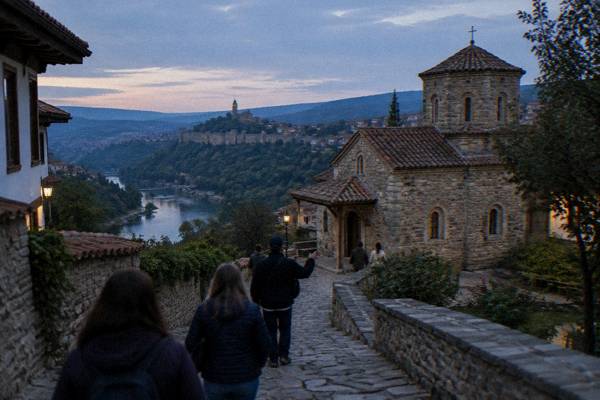
Ask which city in Bulgaria is the prettiest and the honest answer starts with geography, not adjectives. Veliko Tarnovo is an inland city on the Yantra river, with no sea coast, and it was the capital of the Second Bulgarian Kingdom for more than two centuries from the late 12th century. The municipality counted an estimated 77,067 residents on 31 December 2025. Its silhouette, a fortress hill wrapped by a river bend and rows of houses stacked on the slopes, is the image that anchors the argument, and the rest of this page sets out the case for it.
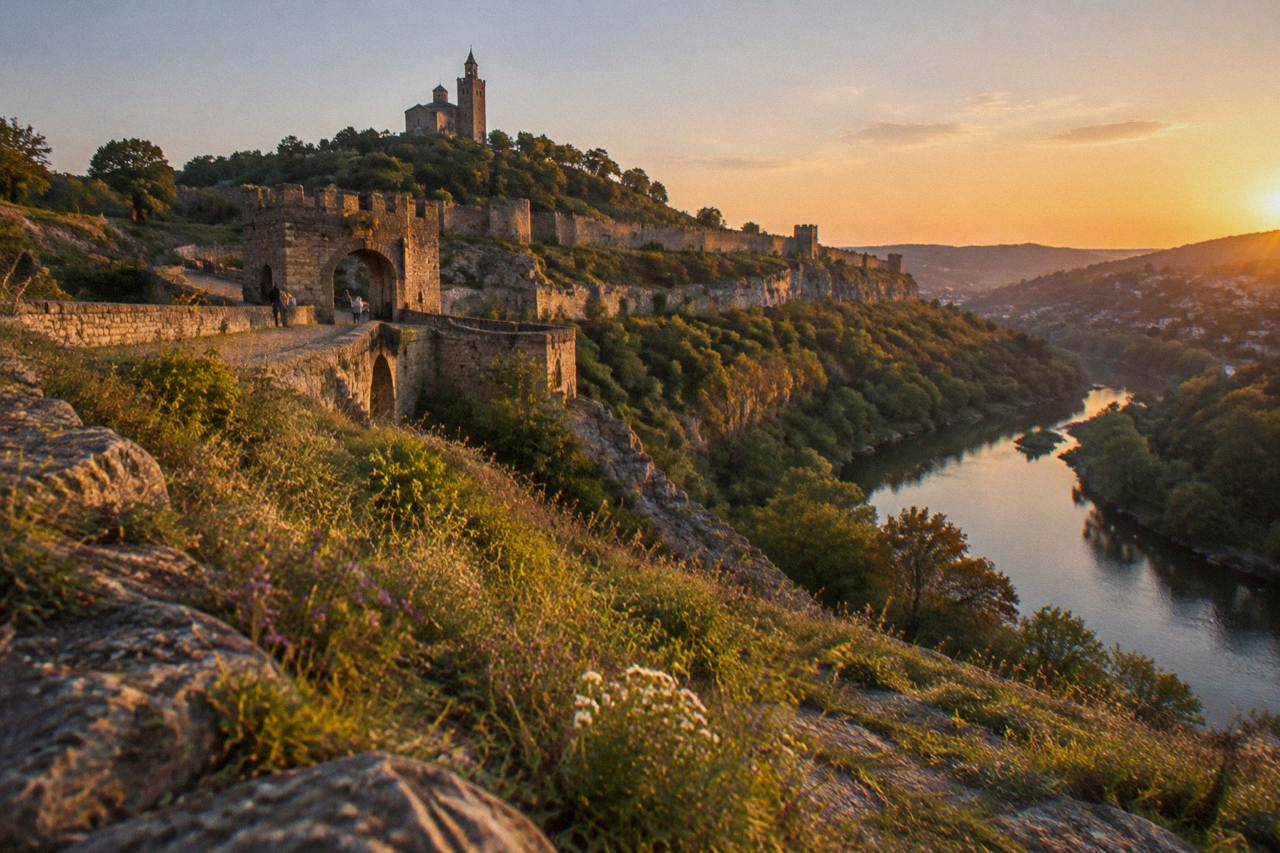
No official body ranks Bulgarian cities by appearance, so any answer is a judgement rather than a statistic. The case that comes up again and again is Veliko Tarnovo: a former medieval capital on the Yantra river, where Tsarevets Fortress, the Trapezitsa hill, the Varosha quarter and the village of Arbanasi about 2.8 km away form a single river-gorge setting that no other Bulgarian city repeats. Sofia, Plovdiv and Ruse each have their own assets, and this page lays out which suits which trip.
That is the whole answer in one paragraph, but the reasons deserve room. Veliko Tarnovo was the capital of the Second Bulgarian Kingdom from the late 12th century until the fall to the Ottomans in 1393, and the city's holiday on 22 March still marks the Battle of Klokotnitsa of 1230, commemorated by the marble victory column of Ivan Asen II in the Church of the Holy Forty Martyrs. Bulgaria's independence was declared on 22 September 1908 at that same church, per the Bulgarian Telegraph Agency's report on the anniversary celebrations. A city with that many layers of national history compressed into a river bend is the strongest single candidate for the title.
The prettiness is not a museum diorama, it is a working city. Samovodska Charshiya and General Gurko Street are public spaces, free and open at all hours, and the Asenevtsi Monument stands in the open too. The Sound and Light audiovisual show on Tsarevets runs on announced evenings only, with no fixed nightly schedule, and watching it from Tsar Asen I Square is free, per the official Tourist Information Centre listing. For a fuller rundown of the sights, see things to do in Veliko Tarnovo and the companion answer on what Veliko Tarnovo is famous for.
Why The Setting Of Veliko Tarnovo Is The Strongest Case
Veliko Tarnovo sits amid the meanders and gorges of the Yantra river at about 220 m elevation, with the fortress hill of Tsarevets at its centre and the Trapezitsa reserve across the water. Entry to Tsarevets is 7.67 euro for an adult, or 10.23 euro for a family of parents with up to three children aged 7 to 18, per the Regional Museum of History's ticket page. April to September the reserve is open daily from 08:00 to 20:00.
Those are the two halves of the argument: a landscape the city did not have to build, and a monument charge that costs less than a cinema ticket in much of Europe. The museum prices are printed in euro since Bulgaria adopted the currency on 1 January 2026 at a fixed rate of 1.95583 lev per euro, and the lev is no longer the current currency. The fortress has no closing day, though a Tuesday maintenance slot from 09:10 to 11:00 is listed on the ticket page.
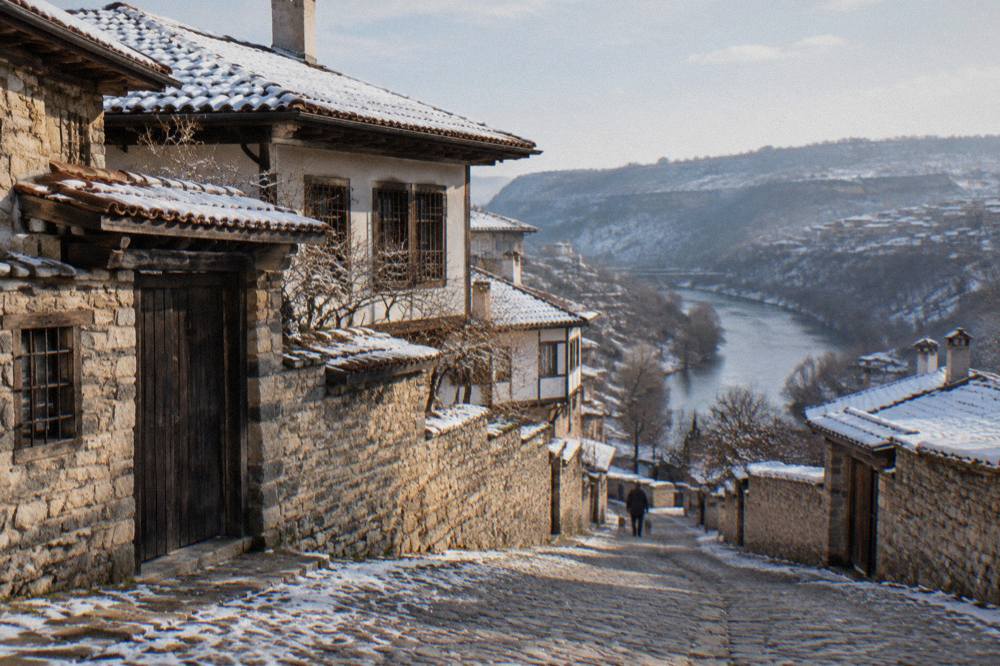
The surrounding day trips deepen the case. Arbanasi lies about 2.8 km straight-line from the centre and holds two ticketed churches and the Konstantsalieva House, each 7.67 euro for an adult. Emen Canyon, the gorge of the Negovanka river with 90 m sheer cliffs at Lower Boaz, lies about 20 km west of the city, per the municipal tourism site. The Etar architectural open-air museum near Gabrovo is about 53 road km away and charges 7.16 euro for an adult, per its own admission page. A pretty city with a pretty hinterland is a different proposition from a pretty square alone.
| Ticketed sight | Adult price | Family price |
|---|---|---|
| Tsarevets Architectural-Museum Reserve | 7.67 euro | 10.23 euro |
| Trapezitsa Architectural-Museum Reserve | 5.11 euro | 7.67 euro |
| Church of the Holy Forty Martyrs | 5.11 euro | 7.67 euro |
| Church of the Nativity, Arbanasi | 7.67 euro | 12.78 euro |
| Konstantsalieva House, Arbanasi | 7.67 euro | 12.78 euro |
For anyone weighing a longer stay, the answer on how many days you need in Veliko Tarnovo breaks the itinerary down, and the question is Veliko Tarnovo worth visiting takes the opposite side honestly.
How Veliko Tarnovo Compares With Sofia, Plovdiv, Ruse And Bucharest
Only Veliko Tarnovo's side of the comparison has a source here, so this section states the facts the record carries and leaves each traveller to weigh them. By road, Sofia is about 223 km away, Plovdiv about 208 km, Bucharest about 179 km and Ruse about 105 km. There is no direct train from Sofia: the fastest connections take 4 h 33 min with a change, while Ruse has a direct train of 2 h 25 min.
What the distances mean in practice is that the prettiest-city question and the arrival-city question are separate. Sofia and Bucharest are the airports (about 216 and 205 road km respectively), Varna a third at about 214 km, since no scheduled-flight airport serves Veliko Tarnovo itself. Bulgaria has been a full Schengen member since 1 January 2025, so crossing from Romania is border-check-free, and the Entry/Exit System has run at all external Schengen borders since 10 April 2026. The wider set of guides lives on Veliko Tarnovo Travel Guide.
| City | About road km from Veliko Tarnovo | Rail link |
|---|---|---|
| Ruse | 105 km | direct train, 2 h 25 min |
| Bucharest | 179 km | change of train, bus about 3 h 50 min to 4 h 15 min |
| Plovdiv | 208 km | change of train |
| Sofia | 223 km | change of train, fastest 4 h 33 min |
Which suits which trip is a matter of pace. A traveller with two weeks and a car can take in several candidates and judge for themselves. A traveller with a long weekend from Bucharest reaches Veliko Tarnovo in under four hours by direct bus, per the FlixBus route listing, and spends the weekend inside a single river bend rather than crossing a capital. The sister answer on which part of Bulgaria is best to stay in extends the same logic to the coast and the mountains.
What The Weather And The Seasons Do To The Argument
The ERA5 reanalysis for Veliko Tarnovo, 1991 to 2020, shows a continental pattern: a mean daily high of 28.1 C in August against 4.9 C in January, and a mean daily low of -3.8 C in January. May carries the highest monthly rainfall total at 95.7 mm and August the lowest at 51.3 mm. The city's look changes with those numbers, from green riverbanks in late spring to snow on the fortress slopes in winter.
| Month | Mean daily high | Mean daily low | Rain |
|---|---|---|---|
| January | 4.9 C | -3.8 C | 56.1 mm |
| April | 16.9 C | 6.0 C | 71.6 mm |
| July | 27.6 C | 17.2 C | 79.5 mm |
| October | 17.6 C | 8.0 C | 58.9 mm |
The seasonal calendar matters for timing. The 28th International Folklore Festival ran 18 to 25 July in 2026, and Arbanasi Summer Music, a chamber festival in the village churches, ran 15 to 25 July in 2026. Independence Day on 22 September brings a liturgy at the Church of the Holy Forty Martyrs, a reenactment and a flag ritual on Tsarevets. Winter has its own trapdoors: museum winter hours start on 25 October 2026, the Trapezitsa funicular stops for the season on 31 October 2026, and Trapezitsa itself closes to visitors from 30 November 2026 to 31 March 2027. Anyone asking the prettiest-city question for a December trip should read the winter guide first.
Beyond the city itself, the monastery ring makes an easy half-day of the pretty-hinterland argument. The Monastery of the Holy Transfiguration of God lies about 6 km from the centre and can be visited on the Holy Transfiguration self-guided tour, with live dates on the operator's listing: Check availability. Kilifarevo Monastery sits about 17 km out.
What The Prettiest City In Bulgaria Means For Your Trip Length
A verdict on prettiness is worth little without time to see it, and the practical answer is that Veliko Tarnovo rewards at least two full days: one for Tsarevets, the Patriarchal Cathedral and the Varosha quarter, one for Arbanasi, the monasteries and a day trip such as Emen Canyon or Etar. The two-day museum pass costs 20.45 euro for an individual and is valid 1 April to 30 November; the family version is 25.56 euro.
If the city earns its place on your trip, book a hotel room.
Cost shapes the decision too. The companion page on whether Veliko Tarnovo is expensive works through the ticket prices in euro, and the history answer on the old capital of Bulgaria explains why the city looks the way it does. The shortest version: the state was restored by the 1185 to 1186 uprising of Asen and Peter, the Tarnovo Constitution followed in 1879, and the independence manifesto was read in 1908. The free layer of the city, from the Asenevtsi Monument to Gurko Street, needs no ticket at all and stretches any budget further.
Common Questions About The Prettiest City In Bulgaria
What Is The Prettiest City In Bulgaria?
There is no official ranking, but the case made most often is Veliko Tarnovo, the former medieval capital on the Yantra river, with Tsarevets Fortress, Trapezitsa, the Varosha quarter and Arbanasi within a single river-gorge setting.
Is Veliko Tarnovo A UNESCO World Heritage Site?
No. Nothing in the city is inscribed or on the Tentative List. The nearest inscribed sites are the Rock-Hewn Churches of Ivanovo and the Thracian Tomb of Kazanlak, both from 1979, and Nicopolis ad Istrum, about 20 road km north, has been on the Tentative List since 1984.
How Do You Reach Veliko Tarnovo?
No scheduled-flight airport serves the city. Visitors arrive through Sofia, Varna or Bucharest Otopeni by road, or by train and bus; there is no direct train from Sofia, and the fastest connections take 4 h 33 min with a change. Ruse has a direct train of 2 h 25 min.
What Currency Does Bulgaria Use?
Bulgaria has used the euro since 1 January 2026, at a fixed rate of 1.95583 lev per euro. The lev is no longer the current currency.
Does The Sound And Light Show Run Every Night?
No. It runs on announced evenings only, with no fixed schedule, and watching from Tsar Asen I Square in front of Tsarevets is free. Check the show's own page for dates before planning an evening around it.
Whichever city wins your personal verdict, the practical facts above, from the 7.67 euro fortress ticket to the October seasonal cutoffs, are what turn a pretty photograph into a booked trip.