Is There Anything Worth Seeing In Bulgaria?
Yes: Bulgaria has Tsarevets Fortress in Veliko Tarnovo, UNESCO sites at Ivanovo and Kazanlak, monasteries, caves and the Rose Valley. A plain answer with opening hours, euro prices and day trips.
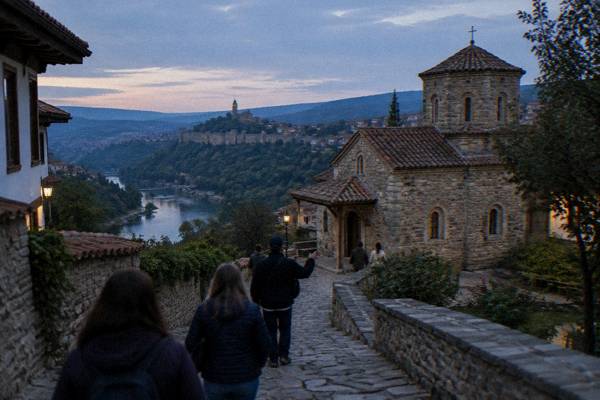
Yes, there is a great deal worth seeing in Bulgaria, and Veliko Tarnovo is a good place to start proving it. This is an inland city of about 77,000 municipality residents (31 December 2025 estimate: 77,067) on the Yantra river, the capital of the Second Bulgarian Kingdom for more than two centuries from the late 12th century, and the country around it holds two inscribed UNESCO World Heritage Sites within day-trip range, a Tentative List Roman city, monasteries, caves and the Rose Valley. Bulgaria has used the euro since 1 January 2026 and has been a full Schengen member since 1 January 2025, so the practical side of moving around is simpler than the country's low profile suggests.
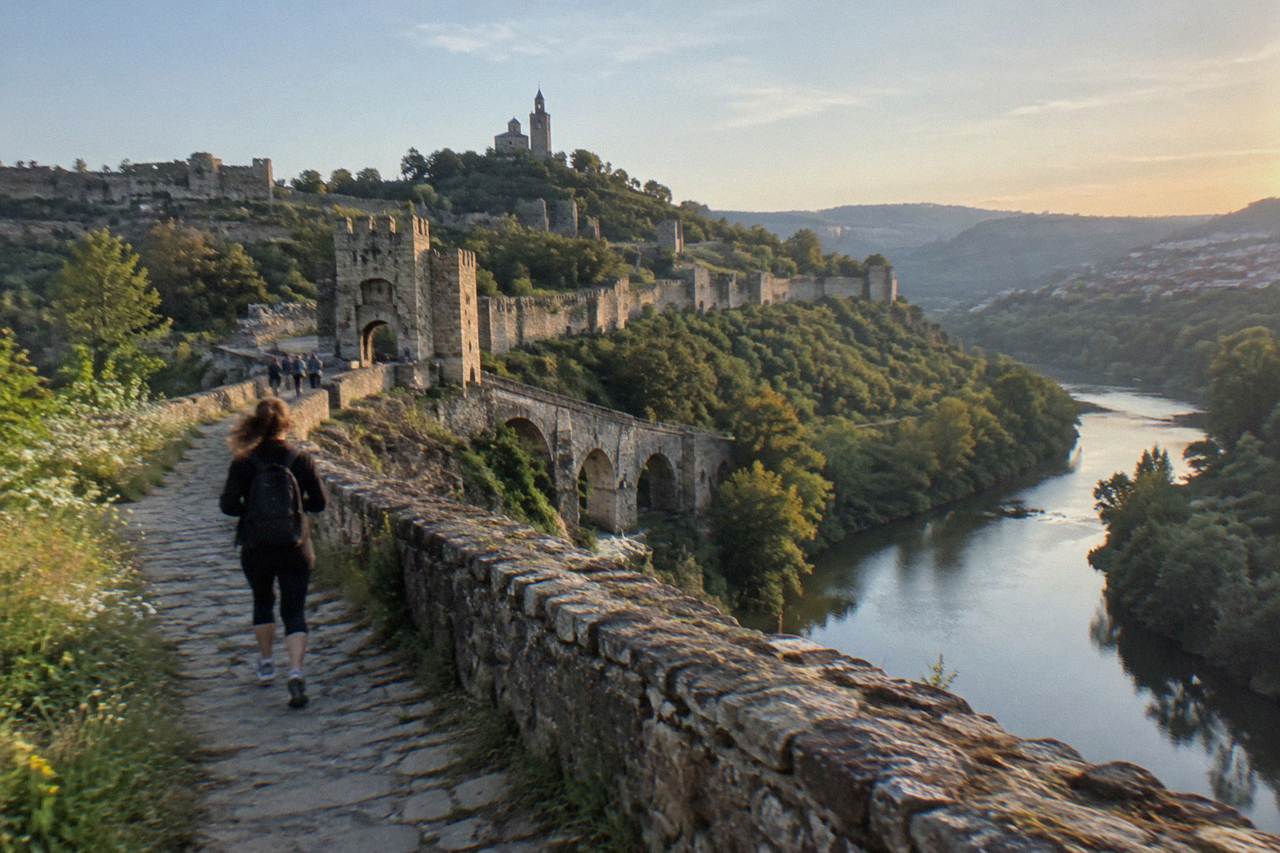
The honest framing for the question is a numbers game. The Regional Museum of History in Veliko Tarnovo reported 209,875 visitors at Tsarevets in 2025, of whom 103,733 were foreign. That is a single museum site in a country of a dozen or so comparable historical cores, and it is the reason this site exists at all. What follows is a plain inventory of what is actually there, with the hours and euro prices the operators publish, starting in the medieval capital and working outward through the day trips.
Yes. The core answer is Tsarevets Fortress and the Patriarchal Cathedral in Veliko Tarnovo, the Sound and Light show on announced evenings, Trapezitsa, the Varosha quarter, Samovodska Charshiya, General Gurko Street and Arbanasi village, all in or beside one city, plus the UNESCO Rock-Hewn Churches of Ivanovo and the Thracian Tomb of Kazanlak, both inscribed in 1979, and the Roman ruins of Nicopolis ad Istrum, on the Tentative List since 1984.
That is a full itinerary before leaving the surrounding region. Note one correction that travels badly: nothing in Veliko Tarnovo itself is inscribed by UNESCO or on the Tentative List. The fortress is the draw regardless, a hill that carried the palace and cathedral of a kingdom whose restoration is dated 1185 to 1186, with the Ottomans taking the city in 1393.
The city's later history is just as visible. Bulgaria's independence was declared on 22 September 1908 at the Church of the Holy Forty Martyrs, not on Tsarevets, and the church also holds the marble victory column of Ivan Asen II from 1230, commemorating the Battle of Klokotnitsa. The Tarnovo Constitution was adopted in 1879. A visitor walking the old quarters moves through three layers of national history in an afternoon.
For the shape of a visit, how many days you need in Veliko Tarnovo is the practical companion question, and whether Veliko Tarnovo is worth visiting is the narrower version of the question this page answers.
What Does Tsarevets Fortress In Veliko Tarnovo Cost And When Is It Open?
Entry to Tsarevets is 7.67 euro for an adult, with a family ticket at 10.23 euro for parents and up to three children aged 7 to 18, per the Regional Museum of History's ticket page. From April to September the fortress is open daily from 08:00 to 20:00 with last entry at 19:00, October runs 09:00 to 18:00, and winter hours from 25 October 2026 run 09:00 to 16:00, closing at 17:00.
There is no weekly closing day, though a Tuesday maintenance slot from 09:10 to 11:00 is listed on the ticket page. The Patriarchal Cathedral of the Holy Ascension on the hill is inside the same ticket, with its own hours: 09:00 to 19:00 from April to September, 09:15 to 17:30 in October, and 09:15 to 16:45 in winter. Guided talks cost extra and the rates are listed on the museum's ticket page alongside the entry prices.
The neighbouring Trapezitsa reserve costs 5.11 euro (family 7.67 euro, students and Bulgarian citizens over 60 at 2.56 euro) and is open 09:00 to 19:00 from April to September. Two seasonal traps matter here: Trapezitsa is closed to visitors from 30 November 2026 to 31 March 2027, and its funicular stops for the season on 31 October 2026, reopening 1 May, running 09:00 to 16:00 with a lunch break from 12:00 to 13:00 when it does operate.
A two-day museum pass covering 10 sites exists at 20.45 euro for an individual, valid 1 April to 30 November, with a family version at 25.56 euro. Children under 7 and visitors with permanent disabilities plus an assistant enter free.
What Else Is Worth Seeing In Veliko Tarnovo Itself?
The free list in the city is real: the Asenevtsi Monument, Samovodska Charshiya, General Gurko Street and the Varosha quarter are public spaces open at all hours, and the Sound and Light show is free to watch from Tsar Asen I Square on the evenings it runs, with paid seats on the panoramic platform for those who want one.
The Sound and Light audiovisual show on Tsarevets is the item a first visit is built around, and the detail that matters is scheduling: it runs on announced evenings only, with no fixed nightly calendar, so the dates need checking before the trip. The municipal tourism feed lists an example performance on 1 May 2026 at 21:15. Paid viewing gives a seat on the panoramic platform; the price is on the operator's page and should be confirmed there before booking.
Beyond the fortress hill, the museum network spreads across the centre. The Archaeological Museum charges 5.11 euro (family 7.67 euro) and runs 09:00 to 18:00 from April to October, 09:00 to 17:30 in winter, with a Monday morning maintenance slot. The Church of the Holy Forty Martyrs is 5.11 euro, family 7.67 euro.
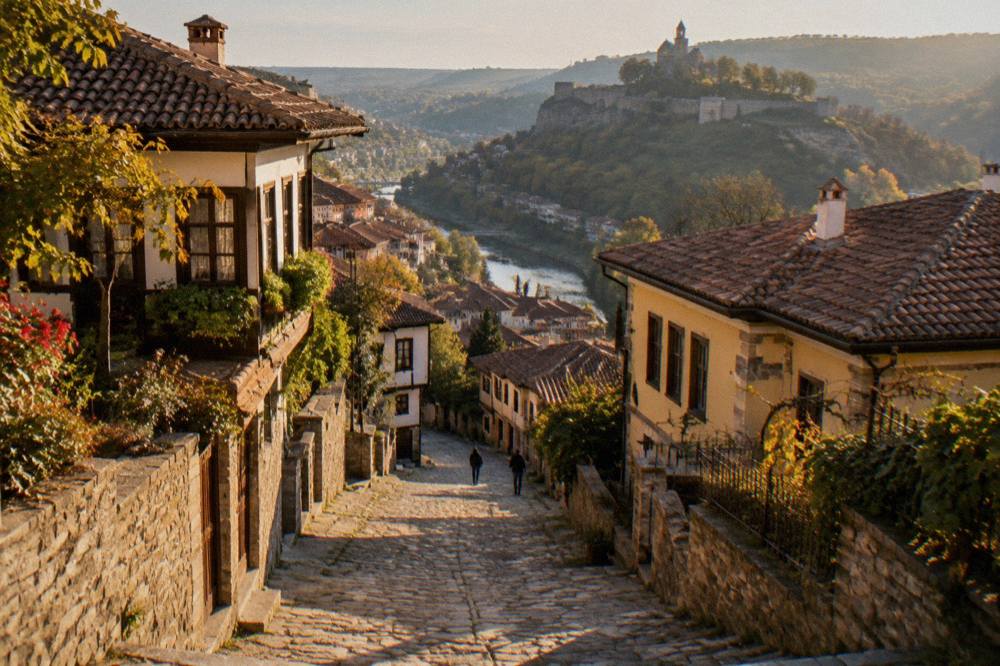
Arbanasi village, about 2.8 km straight-line from the centre, adds two more ticketed sights: the Church of the Nativity (7.67 euro, family 12.78 euro, free on the church feast on 25 December 2026) and Konstantsalieva House at the same prices, the latter open Friday to Sunday only from 30 November 2026 to 20 March 2027. For a city overview before committing, the things to do in Veliko Tarnovo overview lists the full sight set, and what Veliko Tarnovo is famous for covers the fame question directly.
The city's own calendar gives three fixed anchors a year: the city holiday on 22 March, the Independence Day programme on 22 September with a liturgy at the Forty Martyrs church and a flag ritual on Tsarevets, and the International Folklore Festival, whose 28th edition ran 18 to 25 July 2026.
Which Day Trips From Veliko Tarnovo Are Worth The Road?
The strongest day trips are Etar, about 53 road km away, an open-air architectural museum open all year at 7.16 euro adult entry; Nicopolis ad Istrum, about 20 road km, a Roman city on the UNESCO Tentative List since 1984 at 5.11 euro; the Rock-Hewn Churches of Ivanovo, about 128 road km, inscribed by UNESCO in 1979; and the Thracian Tomb of Kazanlak, about 98 road km, also inscribed in 1979.
Those two UNESCO sites are the country's headline ancient and medieval entries outside the capital region. The Kazanlak tomb is Hellenistic, from the end of the 4th century BC, with the replica visitable in the town; the Rose Valley around it holds its festival culmination on 4 to 6 June 2027 (dates reported by the organisers). The Ivanovo churches sit in the Rusenski Lom valley, their frescoes from the 14th century. Other pages covering the same trip are gathered on Veliko Tarnovo Travel Guide.
Closer in, the monastery circuit works as a half-day loop: Preobrazhenski Monastery about 6 km out, the Holy Trinity Monastery about 7 km, and Kilifarevo Monastery about 17 km, with the Kilifarevo history museum closed 30 November 2026 to 30 March 2027. Nature options include Emen Canyon, about 20 km west of the city, where the Negovanka river gorge has 90 m sheer cliffs at Lower Boaz, and the cave and waterfall cluster at Bacho Kiro (about 31 km), Krushuna (about 79 km) and Devetashka (about 89 km), whose hours and prices should be confirmed on site or at booking.
A trip built around the Buzludzha monument and Shipka can be booked as a guided day trip from the city, alongside the other options below.
Want to see the Buzludzha monument and Shipka? Book a Buzludzha and Shipka day trip.
Is Bulgaria Worth Seeing Beyond Veliko Tarnovo?
Yes, and the wider circuit is short: Ruse is about 105 road km north, Plovdiv about 208 km south-west, Sofia about 223 km west and Bucharest about 179 km away, so the medieval capital slots naturally into a two or three city route through Bulgaria and into Romania.
Train times frame the distances. From Sofia there is no direct train to Veliko Tarnovo; services change, usually at Gorna Oryahovitsa, with the fastest journeys at 4 h 33 min and 4 h 51 min on the timetable. Varna has one direct train at 3 h 53 min, and Ruse a direct one at 2 h 25 min. Buses from Sofia take about 3 to 3.5 hours; the city has no airport with scheduled flights, so arrivals go through Sofia (SOF), Varna (VAR) or Bucharest Otopeni (OTP).
On where to base, which part of Bulgaria is best to stay in and the comparison between Veliko Tarnovo and Plovdiv cover the trade-offs, and what was the old capital of Bulgaria answers the history question this page keeps circling. Anyone curious about the country's broader image should read what Bulgaria is most famous for.
How Much Does Seeing Bulgaria Actually Cost?
A day of museum sightseeing in Veliko Tarnovo costs 7.67 euro at Tsarevets, 5.11 euro each at Trapezitsa, the Archaeological Museum, the Forty Martyrs church and Nicopolis ad Istrum, and 7.16 euro at Etar, with the two-day 10-site pass at 20.45 euro valid 1 April to 30 November; children under 7 enter the museum sites free.
The table below is the at-a-glance version for the main ticketed sights, all figures per the operators' own pages.
| Sight | Adult ticket | Family ticket | Season to note |
|---|---|---|---|
| Tsarevets Fortress | 7.67 euro | 10.23 euro | Winter hours from 25 Oct 2026 |
| Trapezitsa reserve | 5.11 euro | 7.67 euro | Closed 30 Nov 2026 to 31 Mar 2027 |
| Church of the Holy Forty Martyrs | 5.11 euro | 7.67 euro | Open year round |
| Archaeological Museum | 5.11 euro | 7.67 euro | Monday morning maintenance |
| Church of the Nativity, Arbanasi | 7.67 euro | 12.78 euro | Free on 25 Dec 2026 |
| Nicopolis ad Istrum | 5.11 euro | Not published | Winter by appointment |
| Etar open-air museum | 7.16 euro | 16.87 euro | Open all year |
Food, wine and activities add the rest. For the general money picture, whether Veliko Tarnovo is expensive and whether Bulgaria is cheap for Americans give the honest answer with the figures that exist.
The climate sets the rhythm. The ERA5 reanalysis, 1991-2020, gives Veliko Tarnovo a mean daily high of 28.1 C in August against 4.9 C in January, with May the wettest month at 95.7 mm of rain and August the driest at 51.3 mm. The best-month question has its own page, but spring through early autumn covers everything above comfortably, and the winter closures in the table are the main scheduling constraint once late November arrives.
Common Questions About Worth Seeing In Bulgaria
Is There Anything Worth Seeing In Bulgaria?
Yes: Veliko Tarnovo with Tsarevets Fortress and the Patriarchal Cathedral, the UNESCO Rock-Hewn Churches of Ivanovo and Thracian Tomb of Kazanlak from 1979, the Roman site of Nicopolis ad Istrum, Etar, the monasteries and the Rose Valley, all within a day-trip radius of one city.
Is Veliko Tarnovo a UNESCO site?
No. Nothing in the city is inscribed by UNESCO or on the Tentative List. The nearest inscribed sites are the Rock-Hewn Churches of Ivanovo and the Thracian Tomb of Kazanlak, both from 1979; Nicopolis ad Istrum, about 20 road km away, has been on the Tentative List since 1984.
What is the single most famous sight in Bulgaria?
Within this region, Tsarevets Fortress in Veliko Tarnovo: the Regional Museum of History reported 209,875 visitors there in 2025, 103,733 of them foreign.
How many days does Bulgaria need?
Veliko Tarnovo itself rewards two to three days, and the day trips add three or four more; a route taking in Ruse, Plovdiv or Sofia extends the trip further.
Is it easy to reach Veliko Tarnovo?
There is no airport with scheduled flights in the city. Visitors arrive through Sofia, Varna or Bucharest Otopeni by road, or by train with a change, usually at Gorna Oryahovitsa; the fastest Sofia trains take 4 h 33 min.
What money does Bulgaria use?
The euro, since 1 January 2026, at a fixed rate of 1.95583 lev per euro. Bulgaria has been a full Schengen member since 1 January 2025.
The final word on the original question: yes, and the proof is concrete rather than sentimental. A fortress that drew a reported 209,875 visitors in 2025, two UNESCO inscriptions from 1979 within reach, a Tentative List Roman city at 5.11 euro, an open-air museum at 7.16 euro open all year, and a free light show on the evenings it runs, all inside one corner of one country. Start in Veliko Tarnovo and let the day trips do the rest.