Veliko Tarnovo Vs Plovdiv: Which To Choose
An inland medieval capital on the Yantra river against Bulgaria's second city on the Maritsa plain: what each choice means for sights, costs, transport and season.
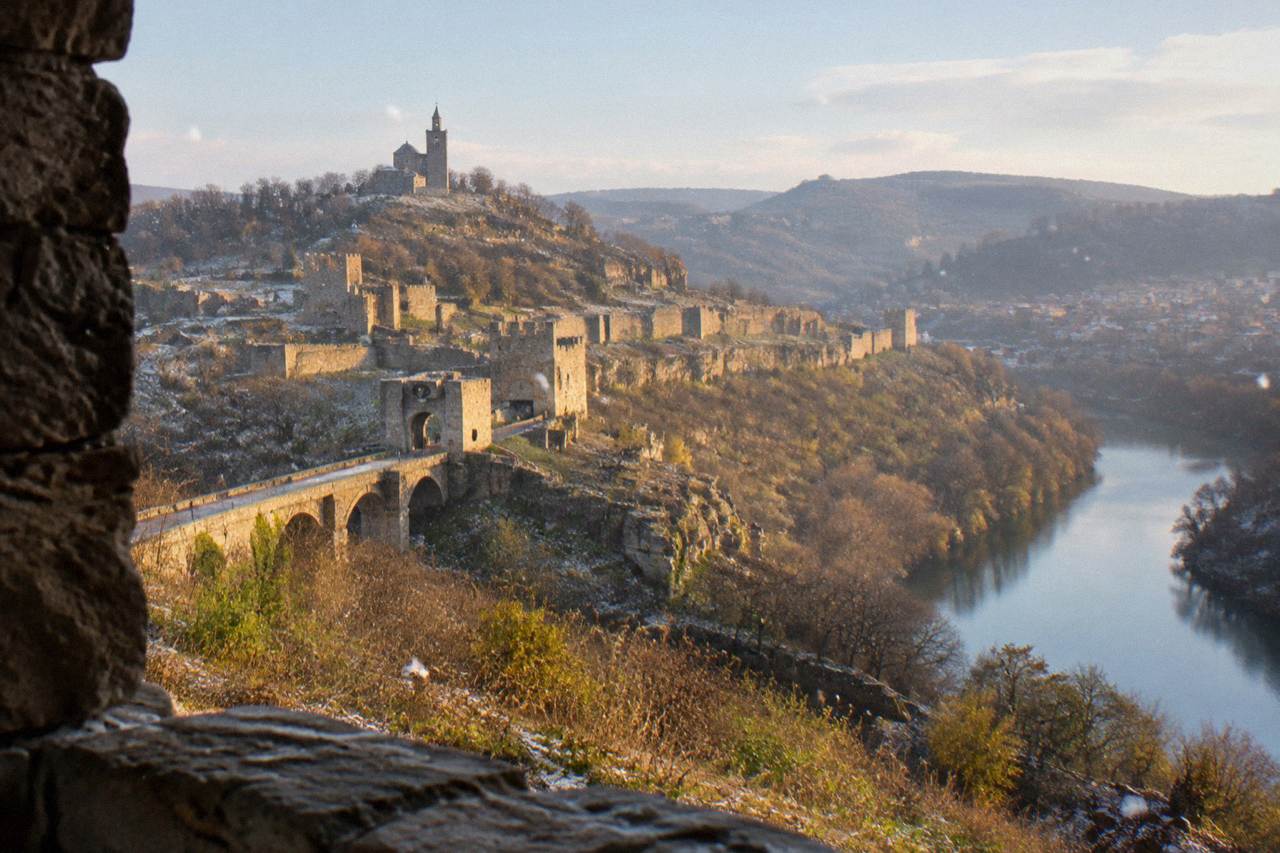
Veliko Tarnovo suits a trip built around a medieval fortress city, river gorge scenery and Arbanasi; Plovdiv suits a different kind of city break. This page sets out what Veliko Tarnovo offers so the choice can be made on figures, not slogans.
Veliko Tarnovo is an inland city in Bulgaria on the Yantra river, with no sea coast, and it was the capital of the Second Bulgarian Kingdom for more than two centuries, from the late 12th century to the 14th. Set against Plovdiv, some 208 road kilometres away by the routes computed from the centre, the choice between the two comes down to what kind of trip is being planned: a hill-and-gorge fortress city, or a plain-city break on the Maritsa. This page builds the Veliko Tarnovo side of that comparison from what the primary sources state, ticket prices, opening seasons, train times and climate normals, so the decision rests on figures rather than slogans. Nothing in Veliko Tarnovo is a UNESCO World Heritage Site or on the Tentative List, and that fact alone shapes part of the comparison with a city whose old town is often discussed in those terms elsewhere.
Which City Suits Which Trip: Veliko Tarnovo Or Plovdiv?
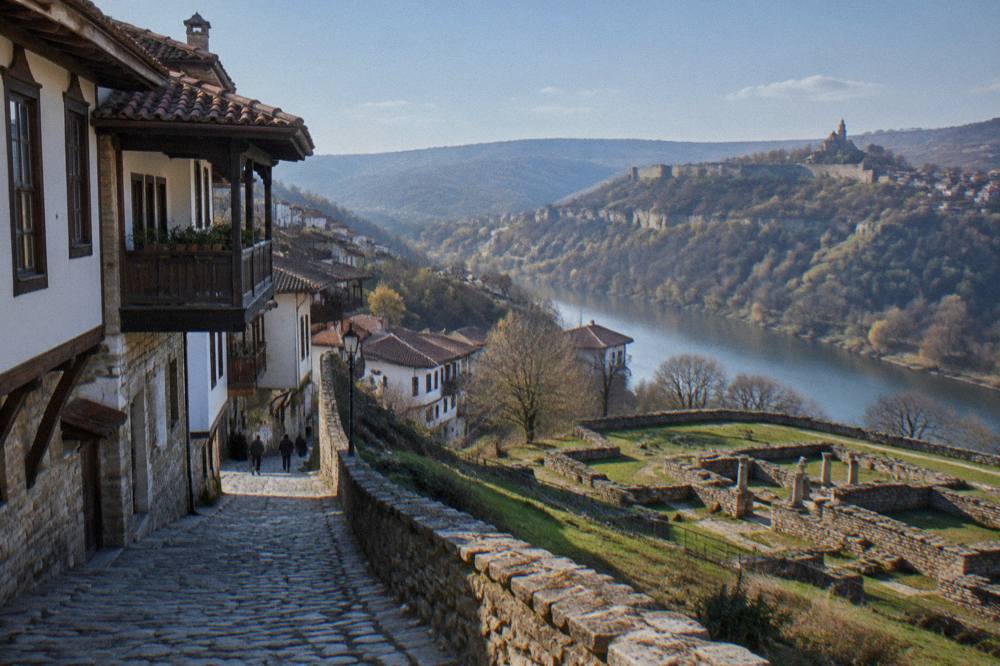
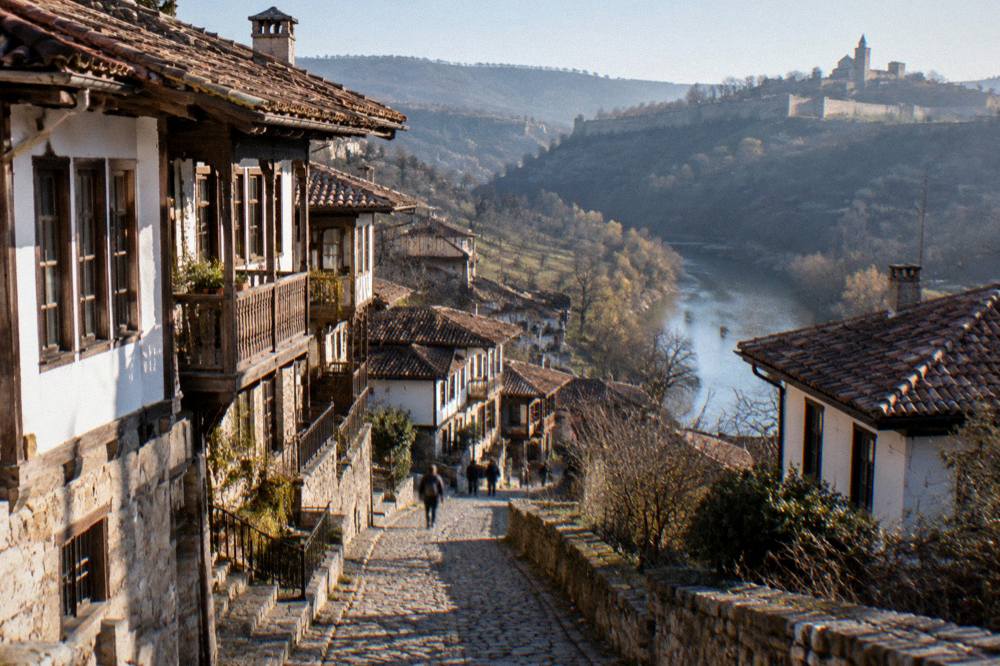
Veliko Tarnovo suits a trip built around a medieval capital: Tsarevets Fortress with the Patriarchal Cathedral, Trapezitsa, the Sound and Light show on announced evenings, the Varosha quarter, Samovodska Charshiya, General Gurko Street and the village of Arbanasi about 2.8 km straight-line from the centre. Plovdiv suits a plain-city itinerary of a different kind, and this site has no sourced figures for it, so the comparison here is about which suits which trip, not which city wins.
The two questions to ask are practical ones. First, what is the trip anchored on: a fortress hill above a river gorge, or an old town on a plain? Second, how will the journey be made? Veliko Tarnovo has no airport with scheduled flights; visitors arrive through Sofia, about 223 road km away, Varna, about 214, or Bucharest Otopeni, about 205, then by train or bus. The municipality had an estimated 77,067 residents on 31 December 2025, so this is a small regional centre, and the sightseeing core sits on the Yantra's meanders.
For the depth of background on the fortress capital, the history of Veliko Tarnovo traces the 1185 to 1186 uprising of Asen and Peter, the fall to the Ottomans in 1393 and the Tarnovo Constitution of 1879, and the main things-to-do overview lists the full set of sights with their ticket pages.
How Do The Two Cities Compare On Sights And Setting?
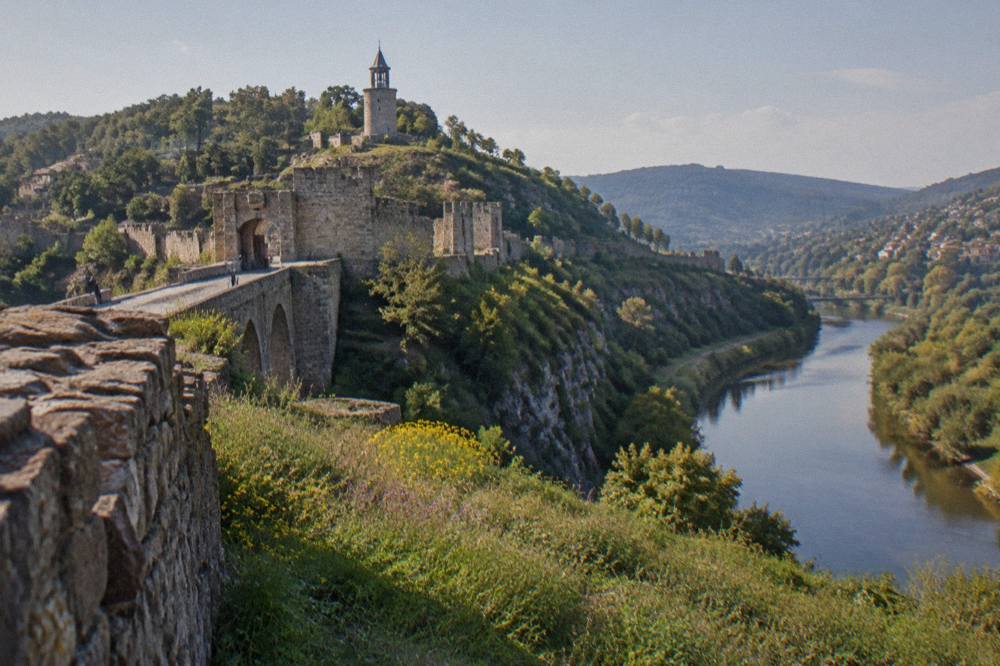
Veliko Tarnovo's core is a museum-run fortress landscape: Tsarevets Architectural-Museum Reserve at 7.67 euro adult entry, the Patriarchal Cathedral of the Holy Ascension within that ticket, Trapezitsa at 5.11 euro, the Church of the Holy Forty Martyrs at 5.11 euro, and a two-day pass covering ten museum sites at 20.45 euro for an individual. The setting is a river gorge: the city sits at 220 m elevation on the Yantra's meanders, with Arbanasi on a plateau about 2.8 km straight-line northeast.
That is a compact, walkable core of medieval and revival sites, nearly all operated by the Regional Museum of History with a single price list. The Tsarevets Fortress guide covers the reserve in detail, and the Varosha old town and Samovodska Charshiya pages cover the free public quarters. On the free side, the Asenevtsi Monument, Samovodska Charshiya, General Gurko Street, the Varosha quarter and watching the Sound and Light show from Tsar Asen I Square all need no ticket at all.
To walk that core with a guide, book a guided walking tour.
The Sound and Light show deserves its own note in any comparison, because it is an attraction no other Bulgarian city runs on this scale. It plays on announced evenings only, with no fixed nightly schedule, and the free viewing point is Tsar Asen I Square in front of Tsarevets. The official example in the tourism feed lists 1 May 2026 at 21:15, and the 2026 Independence Day programme around 22 September tied performances to the celebrations. Paid seats on the panoramic platform exist, and the price is best confirmed at booking.
What Does A Sightseeing Budget Look Like In Veliko Tarnovo?
A day of paid sights in Veliko Tarnovo costs 7.67 euro for Tsarevets, 5.11 euro for the Church of the Holy Forty Martyrs and 5.11 euro for the Archaeological Museum per adult, per the museum's ticket pages, with a two-day pass at 20.45 euro covering ten museum sites and valid 1 April to 30 November. Children under 7 enter free across the museum network, and organised school groups from the municipality enter free by written request.
Here is the full priced list the museum prints, in euro, exactly as converted at the 1.95583 fixed rate that applied when Bulgaria adopted the currency on 1 January 2026.
| Site | Adult | Family |
|---|---|---|
| Tsarevets Architectural-Museum Reserve | 7.67 euro | 10.23 euro |
| Trapezitsa Architectural-Museum Reserve | 5.11 euro | 7.67 euro |
| Church of the Holy Forty Martyrs | 5.11 euro | 7.67 euro |
| Archaeological Museum | 5.11 euro | 7.67 euro |
| Church of the Nativity, Arbanasi | 7.67 euro | 12.78 euro |
| Konstantsalieva House, Arbanasi | 7.67 euro | 12.78 euro |
The family ticket at Tsarevets covers parents and up to three children aged 7 to 18. Trapezitsa lists reduced rates of 2.56 euro for students and for Bulgarian citizens over 60. The Tsarevgrad Tarnov multimedia centre sells a 7.67 euro adult ticket and a combined 10.23 euro ticket with the churches of Sts Peter and Paul and St Ivan Rilski. These are the museum's own figures, and they are the whole priced universe of the city core; everything else in the centre, the monument, the streets and the square, is public space. For meal and market costs, the cost overview and the Bulgarian food guide cover what a food budget looks like, and the euro and money page explains the 1 January 2026 changeover.
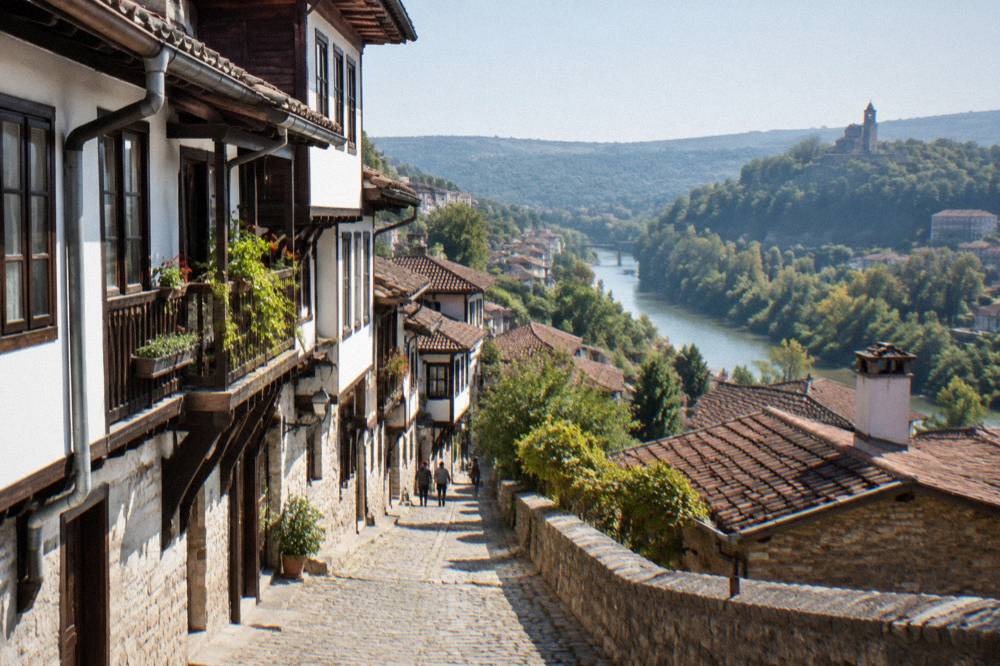
For visitors who prefer a structured day rather than self-guided wandering, the paid options on this site's roster include city walks and regional day trips. Three of them cover the most common comparison-trip shapes:
How Easy Is It To Reach Veliko Tarnovo Compared With Plovdiv?
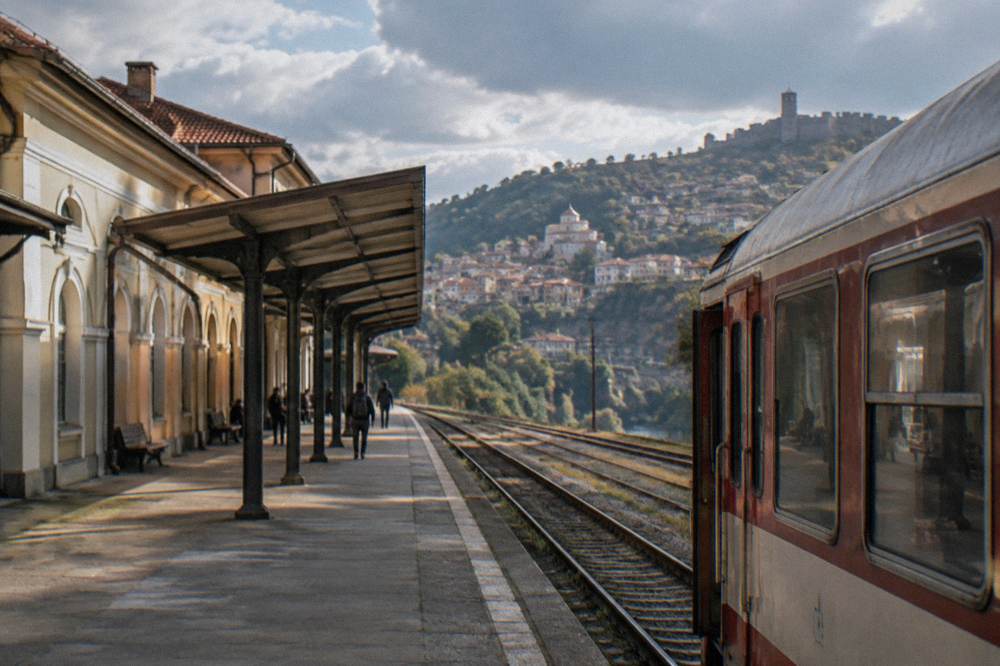
Veliko Tarnovo is reached by train with a change at Gorna Oryahovitsa from Sofia, the fastest runs taking 4 h 33 min and 4 h 51 min on the 17 October 2026 timetable; from Varna there is one direct train at 3 h 53 min, and from Ruse a direct one at 2 h 25 min. Plovdiv lies about 208 road km from Veliko Tarnovo's centre by the computed route, and buses from the Yug station at 74 Hristo Botev Blvd run to Sofia, Varna and international destinations.
No airport with scheduled flights serves Veliko Tarnovo. Sofia Airport is about 223 road km away, Varna about 214 and Bucharest Otopeni about 205, and the Gorna Oryahovitsa airfield, about 10 km from the station, has no regular scheduled flights. That makes the arrival question a genuine part of the comparison: the city rewards travellers already moving overland, whether by train through the Gorna Oryahovitsa junction or by bus into the Yug station from Sofia, roughly 3 to 3.5 hours away with several operators.
| Route to Veliko Tarnovo | Fastest option on the current timetable |
|---|---|
| From Sofia by train | 4 h 33 min, change at Gorna Oryahovitsa |
| From Varna by train | 3 h 53 min, one direct train daily |
| From Ruse by train | 2 h 25 min, direct |
| From Sofia by bus | about 3 to 3.5 h, Yug station |
| From Bucharest by bus | about 3 h 50 min to 4 h 15 min direct |
| By air | no scheduled flights; Sofia, Varna or Bucharest Otopeni then overland |
The full practical detail sits on the getting here guide, with the nearest airport, the train station and the bus station pages breaking down each arrival route. Once in the city, the getting around guide covers movement between the centre, Tsarevets and Arbanasi.
For anyone weighing the two cities as bases for a longer trip, the reachability question runs the other way too: from a Veliko Tarnovo base, Ruse is about 105 road km, Bucharest about 179, and the day-trip ring includes Etar at about 53 km, Tryavna at about 42 and the Shipka church at about 79. A trip that starts in Plovdiv and continues north can be run as a single day, and there is a private option that does exactly that.
When Is The Best Time To Visit Veliko Tarnovo?
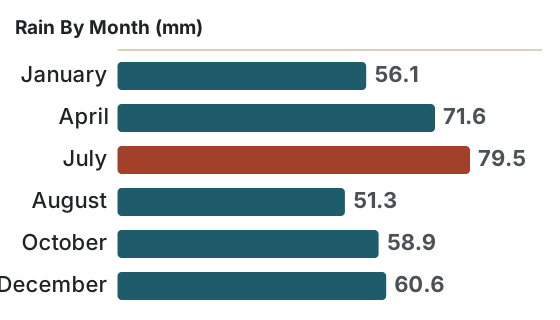
The ERA5 reanalysis for Veliko Tarnovo, 1991 to 2020, puts the mean daily high at 28.1 C in August and 27.6 C in July, with January's mean daily low at -3.8 C and the year's rain totalling 798.7 mm, of which May carries 95.7 mm and August 51.3 mm; museum hours also shift, with summer opening 08:00 to 20:00 at Tsarevets from April to September and winter hours starting on 25 October 2026.
Those normals describe a continental pattern: warm summers, cold winters with below-freezing mean lows, and a late-spring rainfall peak. The best time to visit guide and the weather page work through the months in detail, and the spring and autumn guide covers the shoulder seasons that align with the museum's April-to-September long hours.
| Month | Mean daily high | Mean daily low | Rain |
|---|---|---|---|
| January | 4.9 C | -3.8 C | 56.1 mm |
| April | 16.9 C | 6.0 C | 71.6 mm |
| July | 27.6 C | 17.2 C | 79.5 mm |
| August | 28.1 C | 17.1 C | 51.3 mm |
| October | 17.6 C | 8.0 C | 58.9 mm |
| December | 6.1 C | -1.7 C | 60.6 mm |
The calendar matters as much as the climate. The city holiday falls on 22 March, the International Folklore Festival ran 18 to 25 July in 2026 in its 28th edition, Arbanasi Summer Music ran 15 to 25 July 2026 in the village churches, and the Independence Day programme on 22 September includes a liturgy at the Church of the Holy Forty Martyrs, where Bulgaria's independence was declared on 22 September 1908. The festivals and events guide tracks the announcements. Everything else covered here is indexed on Veliko Tarnovo Travel Guide.
What Closes In Winter In Veliko Tarnovo?
Winter hours at the museum sites start on 25 October 2026, and the seasonal stops are specific: Trapezitsa is closed to visitors from 30 November 2026 to 31 March 2027, its funicular stops for the season on 31 October 2026, the Museum of New and Newest History is temporarily not accepting visitors, and Konstantsalieva House in Arbanasi opens Friday to Sunday only from 30 November 2026 to 20 March 2027.
A winter comparison therefore needs the closure list in front of the traveller, not a vague sense that "everything slows down". Tsarevets itself has no day off, though the ticket page lists a Tuesday maintenance slot from 09:10 to 11:00, and winter entry runs 09:00 to 16:00 with closing at 17:00. The Patriarchal Cathedral shifts to 09:15 to 16:45. The Forty Martyrs church and the Archaeological Museum keep winter hours with morning maintenance slots on Monday.
| Site | Winter status 2026 to 2027 |
|---|---|
| Tsarevets | open daily, entry 09:00 to 16:00 from 25 October 2026 |
| Patriarchal Cathedral | 09:15 to 16:45, Tuesday maintenance 09:15 to 11:00 |
| Trapezitsa | closed 30 November 2026 to 31 March 2027 |
| Trapezitsa funicular | stops 31 October 2026, reopens 1 May |
| Konstantsalieva House, Arbanasi | Friday to Sunday only, 30 November 2026 to 20 March 2027 |
| Museum of New and Newest History | temporarily not accepting visitors |
| Church of St Dimitar | by prior request in season, closed in winter |
The winter visits that do work are covered on the winter guide, and the Christmas market page tracks the Marno Pole park market, whose 2026 dates had not been announced; the pattern in recent seasons ran from late November to 1 January. For travellers choosing between the two cities for a December trip, these closures are the hard edge of the decision.
Can You Combine Veliko Tarnovo And Plovdiv On One Trip?
Yes, and the geography makes it straightforward: the computed road distance between the two centres is about 208 km, Plovdiv sits on the route between Sofia, about 223 road km from Veliko Tarnovo, and the south of the country, and a northbound traveller can run Plovdiv, the Shipka church at about 79 road km from Veliko Tarnovo, Arbanasi and the fortress city in a single long day with a private driver, or split it across two days on the trains through Gorna Oryahovitsa.
The most common combined shapes are three. A south-to-north trip starts in Plovdiv, crosses the Balkan range past Shipka and arrives in Veliko Tarnovo for the fortress and an evening show. A capital loop takes in Sofia, Veliko Tarnovo and Plovdiv overland, using the Sofia trains that change at Gorna Oryahovitsa. And a Bucharest entry, about 205 road km from Otopeni, pairs the fortress city with a Romanian start or finish; the Bucharest to Sofia route covers that corridor, and the Plovdiv day-trip page lists the options in that direction.
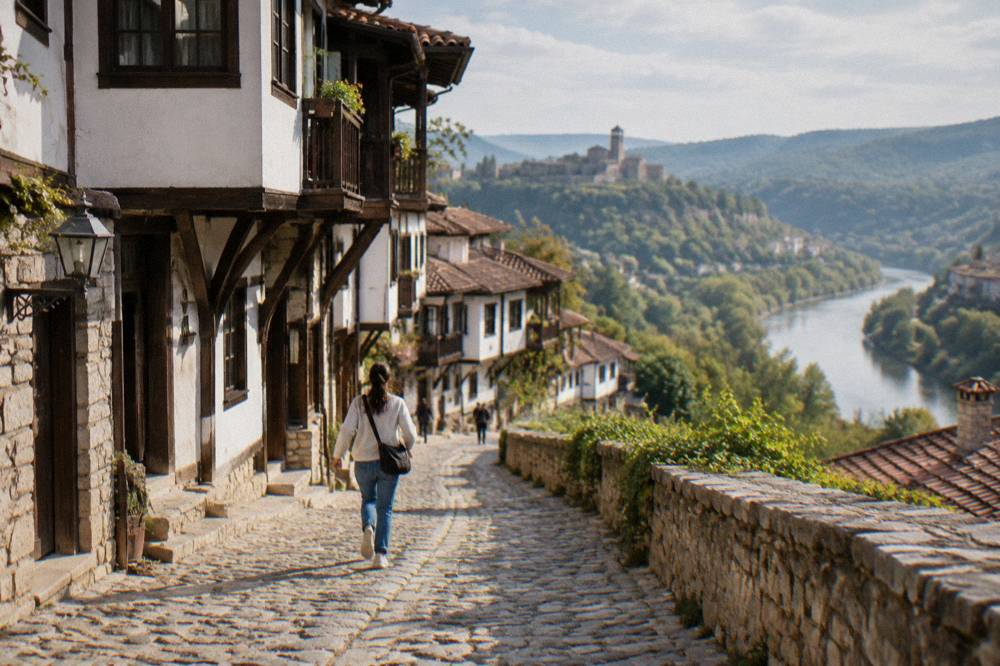
For the south-to-north shape, the private tour from Plovdiv is the product built exactly for it, covering Veliko Tarnovo, Arbanasi and the Shipka Memorial Church in one day. The internal page with the full itinerary is the private Plovdiv, Arbanasi and Shipka tour, and live dates and the from-price are on the operator's listing: Check availability.
Where Should You Stay In Veliko Tarnovo?
The sourced hotel set clusters in three areas: below Tsarevets in the historic centre, in the Varosha quarter on the west side of the Yantra bend, and up in Arbanasi itself, where Arbanashki Han and Arbanashko Selo sit in the village; listings include Tsarevets Boutique Hotel & SPA, Bey House Royal Hotel, Family Hotel Varosha 2, Gurko Hotel, Bridges Residence, Grand Hotel & Therme and Hotel Bolyari, though no rates are quoted anywhere on this site.
The choice mirrors the trip's centre of gravity. A stay below the fortress puts the Sound and Light viewing square and the city centre within reach on foot; a Varosha or Gurko Street address trades that for the revival-quarter atmosphere on the gorge's west wall, with the viewpoints guide and the hotels with a view pages explaining what each position offers; an Arbanasi base puts the village churches, including the Church of the Nativity at 7.67 euro, next door and the fortress city a short drive away. The where to stay guide works through all three areas, and for a shorter visit the one day and two days itineraries show how each base changes the plan.
Which Day Trips Work From A Veliko Tarnovo Base?
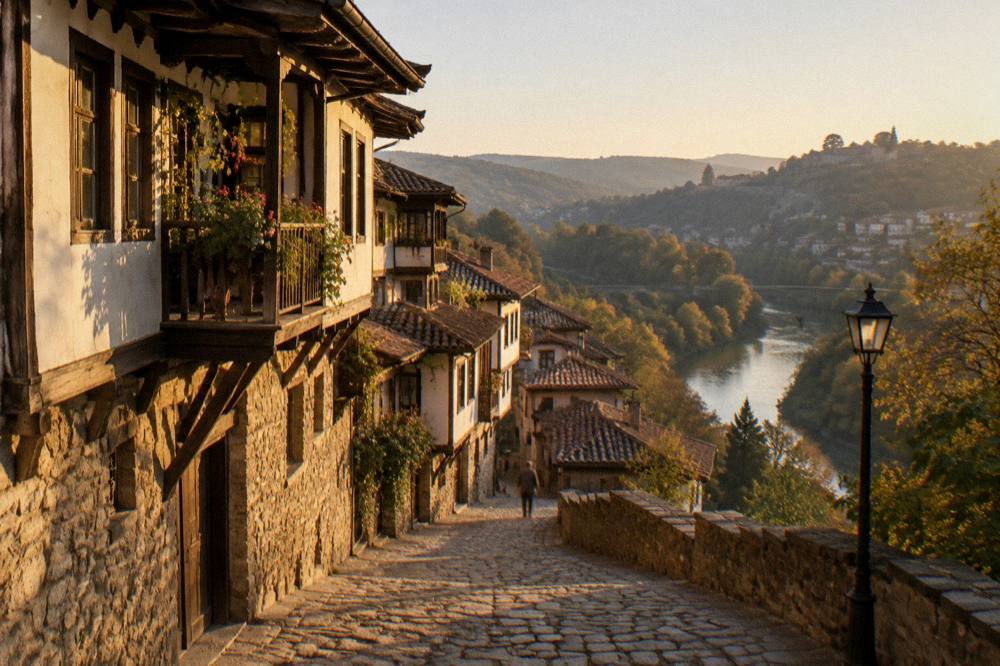
The day-trip ring runs from close-in Arbanasi at about 2.8 km straight-line, through the Preobrazhenski Monastery at about 6 km, Nicopolis ad Istrum at about 20 km, Emen Canyon at about 32 km by road, Tryavna at about 42 km and Etar at about 53 km, out to the Shipka church at about 79 km, Lovech at about 86 and Ruse at about 105, with Etar's own ticket page listing an adult entry of 7.16 euro.
That ring is a genuine point of comparison: a Veliko Tarnovo base puts monasteries, a canyon, an architectural open-air museum and a tentative-list Roman city within a day's movement. Nicopolis ad Istrum has been on UNESCO's Tentative List since 1984 and charges 5.11 euro at the museum's price. The churches and monasteries guide, the caves and waterfalls guide and the northern Bulgaria road trip page map the full ring, with individual pages for Etar, Tryavna and the Shipka memorial.
| Day trip from Veliko Tarnovo | About, road km | Entry figure |
|---|---|---|
| Arbanasi churches | 2.8 km straight-line | 7.67 euro per church |
| Nicopolis ad Istrum | 20 km | 5.11 euro |
| Etar, Gabrovo | 53 km | 7.16 euro adult |
| Shipka church | 79 km | not in the sourced set |
| Ruse | 105 km | city, no single entry |
Two structured options cover the outer ring for travellers without a car. One runs north to Ruse and its surroundings as a private day trip, the other is the small-group Sofia departure that brings the capital-based traveller in for the fortress and Arbanasi.
So Which Should You Choose: Veliko Tarnovo Or Plovdiv?
Choose Veliko Tarnovo if the trip is built around a medieval fortress capital, a river-gorge setting, the Sound and Light show on its announced evenings and a day-trip ring of monasteries and revival towns, all on a museum price list that tops out at 7.67 euro per site. Choose Plovdiv if the itinerary belongs to the plain and the south, using it as the start or end of a route that crosses the Balkan range to reach the fortress city about 208 road km away.
The two answers are not in competition; they are different trips. A traveller with three days can take both, as the three days in Veliko Tarnovo itinerary shows, pairing the city with Arbanasi and one outer day trip. A traveller with one day chooses by arrival point: the train times, 4 h 33 min at fastest from Sofia, 3 h 53 min from Varna and 2 h 25 min from Ruse, make the fortress city a realistic target from any of the three arrival cities, and the small-group day trip from the capital is the structured version of that move.
For the practical layer, the Bulgaria travel tips page collects the entry basics: the country has been a full Schengen member since 1 January 2025, the euro has been the currency since 1 January 2026, and the single European emergency number is 112. Whatever the final choice, the fortress city rewards a plan that respects its calendar, the 25 October 2026 winter-hours switch, the announced show evenings and the 22 March city holiday included.
Common Questions About Veliko Tarnovo Vs Plovdiv
Is Veliko Tarnovo better than Plovdiv?
This site has sourced figures for Veliko Tarnovo only, so it makes no ranking. Veliko Tarnovo suits a medieval fortress trip on the Yantra river; Plovdiv suits an itinerary on the Maritsa plain. The two lie about 208 road km apart and can be combined in one trip.
Can you visit both Veliko Tarnovo and Plovdiv on one trip?
Yes. The computed road distance is about 208 km, and a private day trip from Plovdiv covers Veliko Tarnovo, Arbanasi and the Shipka Memorial Church in a single day. Trains from the Plovdiv direction run to Veliko Tarnovo with changes, and the fastest Sofia services take 4 h 33 min.
Which is cheaper, Veliko Tarnovo or Plovdiv?
No comparable price set for Plovdiv exists on this site. In Veliko Tarnovo the museum's own price list runs 5.11 euro to 7.67 euro per adult site, the two-day pass covering ten museum sites costs 20.45 euro, and children under 7 enter free.
Does Veliko Tarnovo have a UNESCO site?
No. Nothing in the city is inscribed or on the Tentative List. The nearest inscribed sites are the Rock-Hewn Churches of Ivanovo and the Thracian Tomb of Kazanlak, both from 1979, and Nicopolis ad Istrum, about 20 road km away, has been on the Tentative List since 1984.
How many days do you need in Veliko Tarnovo?
The core fortress sights, the old quarters and Arbanasi fit into two full days; the day-trip ring, from Nicopolis ad Istrum to Etar, adds a third. The site's one-day, two-day and three-day itineraries lay out each version hour by hour.
When is the Sound and Light show on?
On announced evenings only, with no fixed schedule. Watching from Tsar Asen I Square is free, and an official example in the tourism feed lists 1 May 2026 at 21:15. Check the current dates before planning an evening around it.