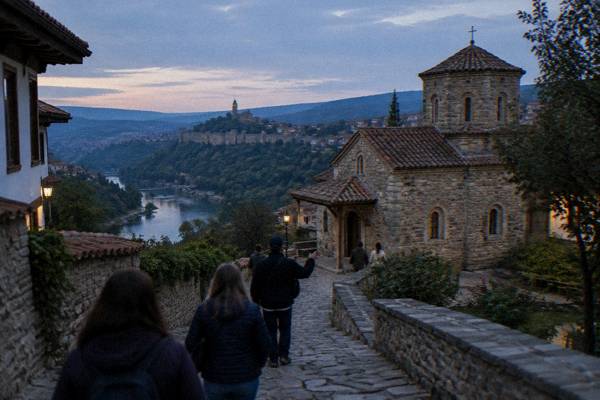
What Is The Prettiest Place To Visit In Bulgaria?
The case for Veliko Tarnovo as the prettiest place to visit in Bulgaria, with fortress hours and prices, climate normals, distances and travel links.
Prettiness is a matter of taste, and no official body ranks Bulgarian towns by it. But if the question is which single place rewards the eye for the least effort, the strongest case is Veliko Tarnovo, an inland city on the Yantra river with no sea coast, which served as the capital of the Second Bulgarian Kingdom for more than two centuries from the late 12th century. The municipality counted an estimated 77,067 residents on 31 December 2025, and the city's core sights, Tsarevets Fortress with the Patriarchal Cathedral, Trapezitsa, the Varosha quarter, General Gurko Street, Samovodska Charshiya and the village of Arbanasi about 2.8 km away, sit packed into a river landscape that photographs at every hour. This page sets out the case with the hours, prices and travel figures the primary sources publish, so the verdict stays yours. The same question with a city rather than a place in mind is covered in Veliko Tarnovo Travel Guide's companion piece on Bulgaria's prettiest city.
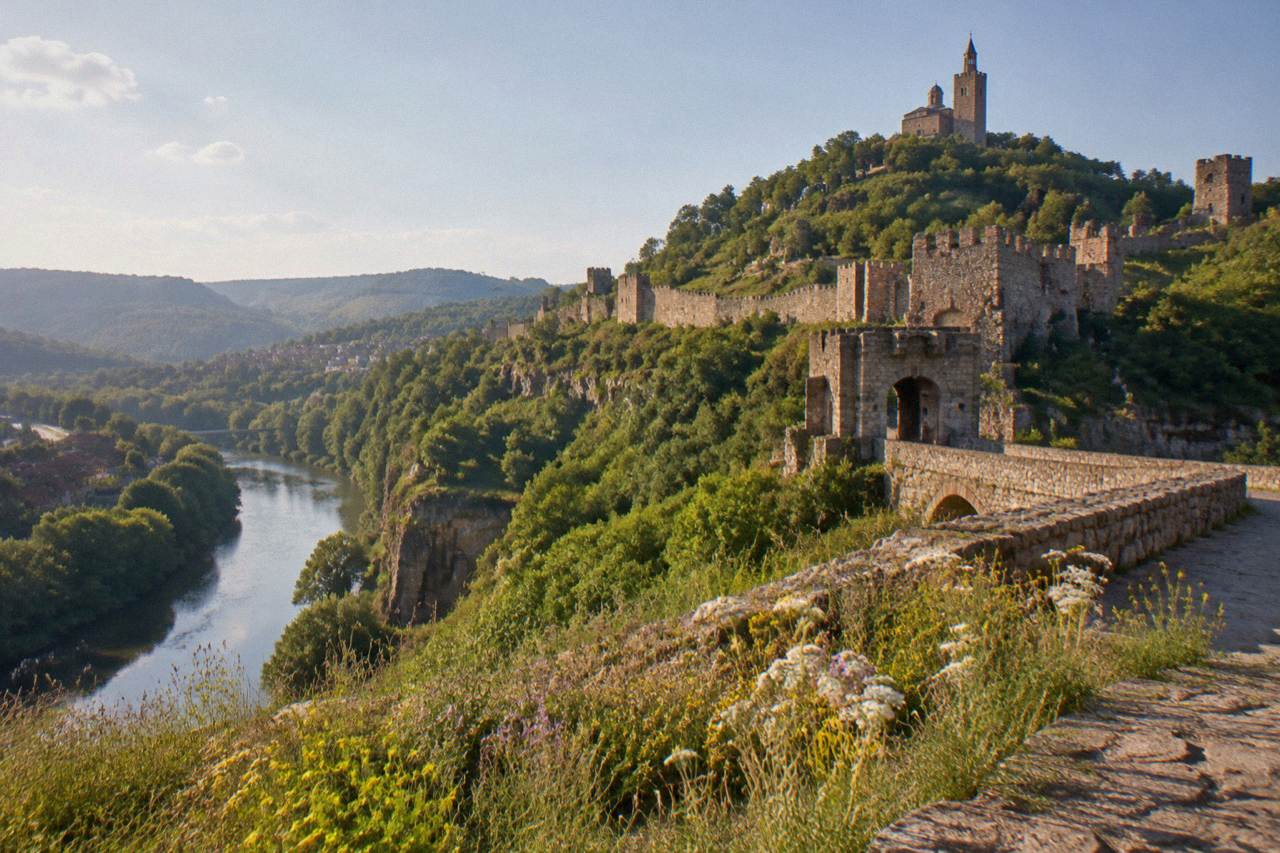
No ranking exists, and any honest answer names one place and argues from evidence, so the argument here is for Veliko Tarnovo: a medieval capital on a bend of the Yantra river where a fortress hill, an old quarter and a village of Arbanasi sit within a few kilometres of each other. Tsarevets Fortress reported 209,875 visitors in 2025, and the museum's ticket page still lists an adult entry of 7.67 euro. The case rests on concentration, not size.
Beauty claims cannot be sourced, so build the case on what can be. Veliko Tarnovo was the capital of the Second Bulgarian Kingdom from the late 12th century until the fall to the Ottomans in 1393, and the restoration of the state is dated 1185 to 1186. That history left a fortress hill, a second fortified hill at Trapezitsa, churches at the river's foot and a revival-era quarter, all folded into the meanders of the Yantra. Bulgaria's independence was declared on 22 September 1908 at the Church of the Holy Forty Martyrs, and the marble victory column of Ivan Asen II, dating from 1230, stands in the same church. Few places in the country carry that many dated, physical anchors of national history inside one walkable landscape.
One boundary worth stating plainly: nothing in Veliko Tarnovo is a UNESCO World Heritage Site or on the Tentative List. The nearest inscribed sites are the Rock-Hewn Churches of Ivanovo, about 128 road km away, and the Thracian Tomb of Kazanlak, about 98 km, both inscribed in 1979. Nicopolis ad Istrum, about 20 road km north, has been on the Tentative List since 1984. Whether that matters to a "prettiest place" verdict is up to the traveller; the landscape is the argument, not a plaque.
For travellers weighing the city against the rest of the country, the deeper questions of value and time are covered in is Veliko Tarnovo worth visiting and how many days you need in Veliko Tarnovo.
Why Veliko Tarnovo Is The Strongest Single Answer
Veliko Tarnovo combines a fortress hill, a river gorge and a preserved old quarter within walking distance of each other, and the public spaces that carry the view, the Asenevtsi Monument, Samovodska Charshiya, General Gurko Street and the Varosha quarter, are free and open at all hours. The Sound and Light show on Tsarevets runs on announced evenings and is free to watch from Tsar Asen I Square. Paid sights cost 5.11 to 7.67 euro.
The economics matter because prettiness should not cost a week's budget. The Regional Museum of History's ticket page lists Tsarevets at 7.67 euro for an adult, with a family ticket at 10.23 euro covering parents and up to three children aged 7 to 18. Trapezitsa is 5.11 euro, the Church of the Holy Forty Martyrs is 5.11 euro, and the Archaeological Museum is 5.11 euro. Children under 7 enter free. A two-day pass covering 10 museum sites costs 20.45 euro for an individual, valid 1 April to 30 November, with a family version at 25.56 euro. Confirm before you go, because prices and hours are seasonal. Bulgaria has used the euro since 1 January 2026, fixed at 1.95583 lev per euro, so there is no lev conversion to do on arrival.
Where you sleep counts toward that budget too. Book a hotel.
Here is what the paid core costs and when it opens, per the museum's ticket pages:
| Sight | Hours | Adult ticket |
|---|---|---|
| Tsarevets Fortress | April to September 08:00 to 20:00, last entry 19:00; October 09:00 to 18:00 | 7.67 euro |
| Patriarchal Cathedral (on Tsarevets) | April to September 09:00 to 19:00; October 09:15 to 17:30 | within the Tsarevets ticket |
| Trapezitsa | April to September 09:00 to 19:00; October 09:00 to 18:00 | 5.11 euro |
| Church of the Holy Forty Martyrs | April to September 09:00 to 18:00; October 09:00 to 17:00 | 5.11 euro |
| Archaeological Museum | April to October 09:00 to 18:00 | 5.11 euro |
The seasonal traps are the fine print. Winter hours across the museum sites start on 25 October 2026, when Tsarevets entry runs 09:00 to 16:00 with closing at 17:00. Trapezitsa is closed to visitors from 30 November 2026 to 31 March 2027, its funicular stops for the season on 31 October 2026, and the Church of the Nativity in Arbanasi is free on its feast day, 25 December 2026. The Sound and Light show has no fixed nightly schedule; the announced evenings appear on the operator's page, and watching from Tsar Asen I Square costs nothing. Check the current price on the official ticket page before booking anything beyond entry.
A guided walk holds the scenery together, and the city monuments walking tour covers exactly that ground, Check availability if a guide beats a map for you.
When Veliko Tarnovo Looks Its Best
The ERA5 reanalysis, 1991-2020, gives Veliko Tarnovo a mean daily high of 28.1 C in August and 4.9 C in January, with May the rainiest month at 95.7 mm and August the least rainy at 51.3 mm. Sight hours reward spring through autumn: Tsarevets runs 08:00 to 20:00 from April to September, and winter hours from 25 October 2026 cut entry to 09:00 to 16:00.
No month is objectively "best", and no superlative is being claimed here; the numbers let each traveller pick their own trade-off. The modelled normals look like this:
| Month | Mean high C | Mean low C | Rain mm |
|---|---|---|---|
| April | 16.9 | 6.0 | 71.6 |
| May | 21.7 | 11.1 | 95.7 |
| June | 25.4 | 15.1 | 85.0 |
| July | 27.6 | 17.2 | 79.5 |
| August | 28.1 | 17.1 | 51.3 |
| September | 23.3 | 12.9 | 63.0 |
| October | 17.6 | 8.0 | 58.9 |
| January | 4.9 | -3.8 | 56.1 |
Two event dates are worth aligning a visit with if the calendar allows. The 28th International Folklore Festival ran 18 to 25 July 2026, and Arbanasi Summer Music, a chamber music festival in the medieval churches, ran 15 to 25 July 2026. The city holiday falls on 22 March every year, tied to the Holy Forty Martyrs and the Battle of Klokotnitsa, and Independence Day ceremonies on 22 September include a liturgy at the Forty Martyrs church and a flag ritual on Tsarevets. Christmas-market dates for 2026 had not been announced, so check locally before planning a December trip around them.
How Veliko Tarnovo Compares With Other Bulgarian Places
Only the travel links can be stated with sources: Sofia is about 223 road km away, Plovdiv about 208, Bucharest about 179 and Ruse about 105, and the fastest trains from Sofia take 4 h 33 min with a change, usually at Gorna Oryahovitsa. There is no direct train from Sofia. Varna has one direct train at 3 h 53 min and Ruse a direct one at 2 h 25 min. Which place suits which trip depends on the trip.
No airport with scheduled flights serves Veliko Tarnovo itself; visitors arrive through Sofia, Varna or Bucharest Otopeni by road, or by train and bus. The bus from Sofia takes about 3 to 3.5 hours from the Yug station at 74 Hristo Botev Blvd, and direct buses from Bucharest take about 3 h 50 min to 4 h 15 min. Bulgaria has been a full Schengen member since 1 January 2025, so there are no internal border checks on the road from Romania, and the Entry/Exit System has run at all external Schengen borders since 10 April 2026.
| Route | Fastest rail link | Road distance |
|---|---|---|
| Sofia to Veliko Tarnovo | 4 h 33 min, one change | about 223 km |
| Plovdiv to Veliko Tarnovo | changes at Stara Zagora or the Tulovo line | about 208 km |
| Ruse to Veliko Tarnovo | direct, 2 h 25 min | about 105 km |
| Varna to Veliko Tarnovo | direct, 3 h 53 min | about 214 km via road network |
| Bucharest to Veliko Tarnovo | direct buses, about 3 h 50 min to 4 h 15 min | about 205 km to Otopeni, 179 km to the centre |
The day-trip ring adds weight to the base. Arbanasi sits about 2.8 km away, Nicopolis ad Istrum about 20 km, Emen Canyon about 32 km by road west of the city, Tryavna about 42 km, Etar about 53 km and the Kazanlak tomb about 98 km. The Thracian Tomb of Kazanlak and the Rock-Hewn Churches of Ivanovo are both UNESCO-inscribed since 1979, so a stay in Veliko Tarnovo can combine the medieval capital with two inscribed sites inside a day's drive. Safety and cost questions for the wider country are handled in is Bulgaria safe for Americans right now and is Bulgaria cheap for Americans.
Which Sights Carry The View In Veliko Tarnovo
The free set is the Asenevtsi Monument, Samovodska Charshiya, General Gurko Street, the Varosha quarter and watching the Sound and Light show from Tsar Asen I Square, plus the Church of the Nativity in Arbanasi on 25 December 2026. The paid set is led by Tsarevets at 7.67 euro, including the Patriarchal Cathedral, with the Archaeological Museum and the Forty Martyrs church at 5.11 euro each.
Tsarevets is the hill, the museum's reserve and the Patriarchal Cathedral of the Holy Ascension on it, open daily with no day off; a Tuesday maintenance slot of 09:10 to 11:00 is listed on the ticket page. The cathedral's own hours run 09:00 to 19:00 from April to September and 09:15 to 16:45 in winter. Trapezitsa, across the river, is 5.11 euro with a family ticket at 7.67 euro, but its closure from 30 November 2026 to 31 March 2027 makes a spring or autumn visit the safer plan for that hill. Its funicular runs 1 May to 31 October, 09:00 to 16:00 with a lunch break from 12:00 to 13:00, and a return ride costs 5.11 euro.
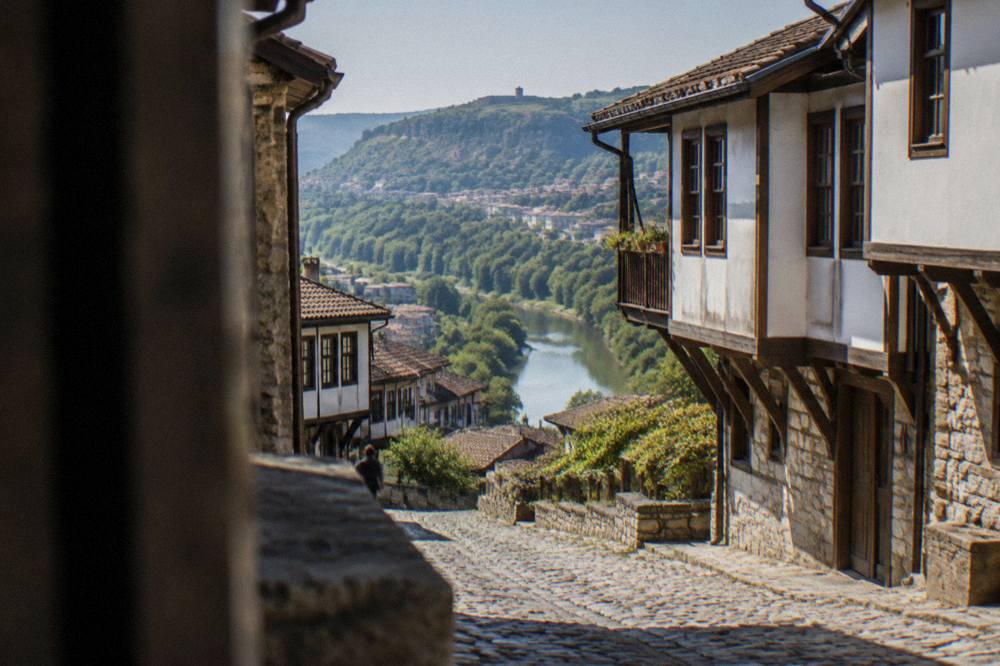
The old quarter costs nothing to walk. Samovodska Charshiya and General Gurko Street are public streets with no hours and no ticket, and the Varosha quarter is the same. The Asenevtsi Monument, a public monument, needs no ticket and has no scheduled hours. That combination, a paid medieval core and a free streetscape around it, is what makes the city work for a short stay: the money goes to the fortress and the museums, while the scenery between them is open to anyone. The walking tours on the roster are paid products; the public spaces themselves are free to walk on your own.
Beyond the city, the Monasteries and Waterfalls tour and the Mini Bulgaria Park ticket extend the same landscape outward.
Common Questions About The Prettiest Place To Visit In Bulgaria
What Is The Prettiest Place To Visit In Bulgaria?
No official ranking exists, but the strongest single case is Veliko Tarnovo, the medieval capital on the Yantra river, where Tsarevets Fortress, Trapezitsa, the Varosha quarter and Arbanasi sit close together and the free public spaces carry the view.
Is Veliko Tarnovo a UNESCO World Heritage Site?
No. Nothing in the city is inscribed or on the Tentative List. The nearest inscribed sites are the Rock-Hewn Churches of Ivanovo and the Thracian Tomb of Kazanlak, both from 1979; Nicopolis ad Istrum, about 20 road km north, has been on the Tentative List since 1984.
How much does it cost to see Tsarevets Fortress?
The museum's ticket page lists 7.67 euro for an adult and 10.23 euro for a family ticket covering parents plus up to three children aged 7 to 18. Children under 7 enter free. Confirm before you go, as prices are seasonal.
When is the Sound and Light show on?
On announced evenings only; there is no fixed nightly schedule. Watching from Tsar Asen I Square is free, and paid seats face the panoramic platform. Check the operator's page for upcoming dates.
Does Veliko Tarnovo have an airport?
No airport with scheduled flights serves the city. Visitors arrive through Sofia, about 216 road km, Varna, about 214, or Bucharest Otopeni, about 205, then continue by road, train or bus.
What currency does Bulgaria use?
The euro, since 1 January 2026, at a fixed rate of 1.95583 lev per euro. Bulgaria is also a full Schengen member since 1 January 2025.
Everything scenic in between, the river bend, the fortress hill and the old streets, is there whenever you arrive.