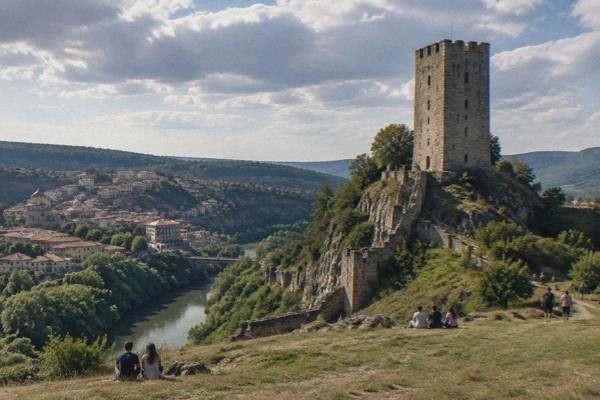
What Are Some Medieval Towns In Bulgaria?
Medieval towns in Bulgaria, led by Veliko Tarnovo, the capital of the Second Bulgarian Kingdom, with Tsarevets Fortress hours, tickets and day-trip distances.
Bulgaria's medieval towns begin with Veliko Tarnovo, the inland city on the Yantra river that served as the capital of the Second Bulgarian Kingdom for more than two centuries, from the late 12th century to the 14th. Around it sit the fortified hill of Tsarevets, the reserve of Trapezitsa, the village of Arbanasi and, further out, the old towns of Tryavna and Bozhentsi and the ruins of Nicopolis ad Istrum. This page sets out which towns carry genuinely medieval fabric, what the museum's ticket page lists for each sight, and how far each one sits from the old capital by road.
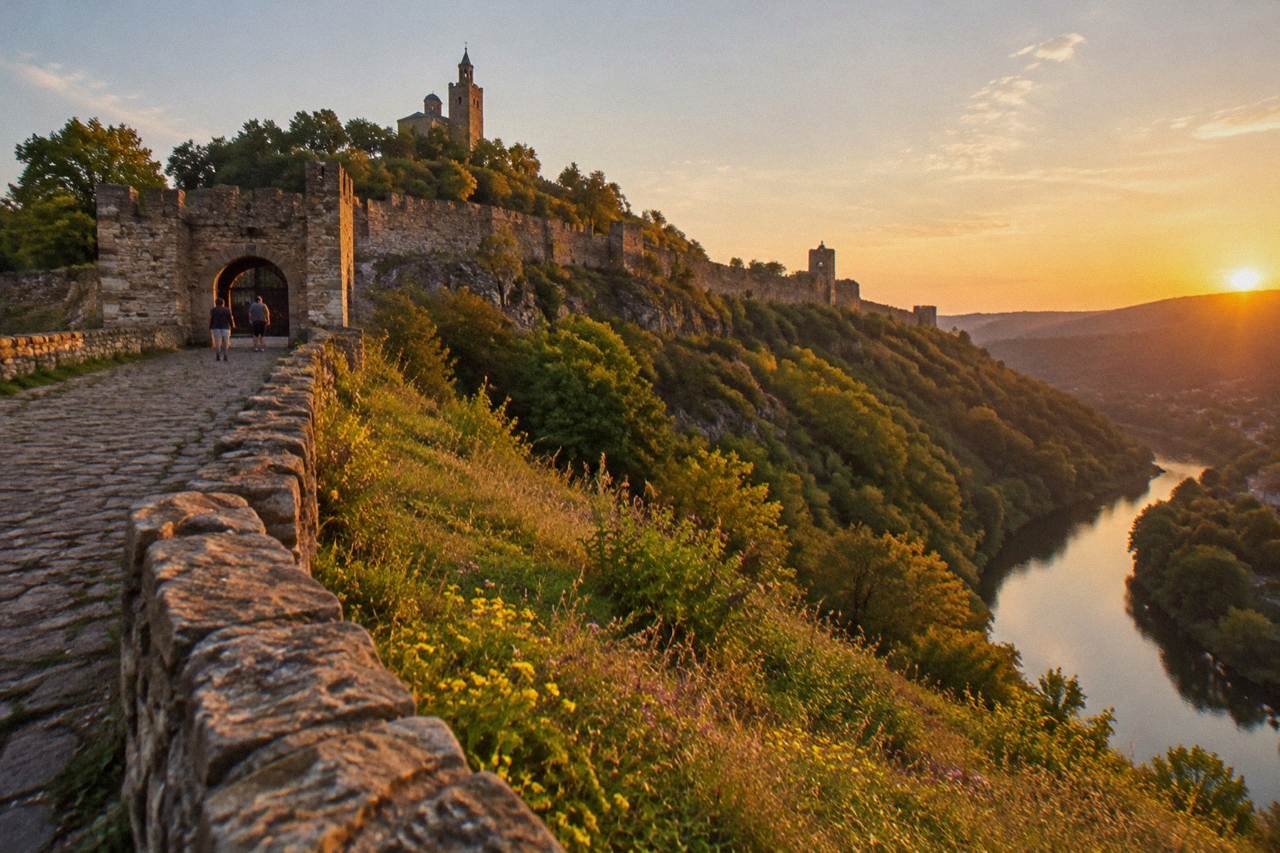
The medieval towns and sites to name are Veliko Tarnovo itself, with Tsarevets Fortress and Trapezitsa, the village of Arbanasi beside it, the ruins of Nicopolis ad Istrum about 20 road km north, and, from a later period, the Revival-era towns of Tryavna and Bozhentsi in the Balkan range. Veliko Tarnovo was the capital of the Second Bulgarian Kingdom from the late 12th century to the 14th, which makes it the anchor of any medieval itinerary in the country.
That list deserves a careful split. Veliko Tarnovo, Trapezitsa, Arbanasi's churches and Nicopolis ad Istrum carry the medieval story directly: the uprising of 1185 to 1186 restored the Bulgarian state with its centre here, the museum's own page dates the restoration of the state to 1186, and the city fell to the Ottomans in 1393. Tryavna and Bozhentsi are different: they are architectural reserves of the National Revival period, later than the medieval kingdom, but they sit on the same road network and fill out a route through northern Bulgaria's old towns. A traveller asking about "medieval towns" will want both groups, clearly separated.
Nothing in Veliko Tarnovo is a UNESCO World Heritage Site or on the Tentative List. The nearest inscribed sites are the Rock-Hewn Churches of Ivanovo and the Thracian Tomb of Kazanlak, both inscribed in 1979, and Nicopolis ad Istrum has been on the Tentative List since 1984. The medieval capital's standing comes from the museum's reserve and the preserved quarters, not from a UNESCO inscription.
For the practical layer, Tsarevets Fortress explained in full covers the flagship site, and how many days you need in Veliko Tarnovo helps with pacing a route that takes in the smaller towns.
Why Is Veliko Tarnovo The Main Medieval Town To Visit?
Veliko Tarnovo is the main medieval town because it was the capital of the Second Bulgarian Kingdom for more than two centuries, and its core sights, Tsarevets Fortress with the Patriarchal Cathedral, Trapezitsa and the churches of the old quarters, are run today by the Regional Museum of History with published hours and euro ticket prices. The fortress alone reported 209,875 visitors in 2025, 103,733 of them foreign.
If a guide sounds like a good companion for the hills, book a guided walking tour.
The state was restored by the uprising of Asen and Peter in 1185 to 1186, and the museum's page places the restoration in 1186. The city then held the kingdom's throne and church until the fall to the Ottomans in 1393. Two later dates anchor the modern town's memory: the Tarnovo Constitution of 1879 and the declaration of Bulgarian independence on 22 September 1908, read at the Church of the Holy Forty Martyrs, where the marble victory column of Ivan Asen II from 1230 also stands.
The museum's ticket page lists Tsarevets at 7.67 euro for an adult, with a family ticket at 10.23 euro covering parents and up to three children aged 7 to 18, and children under 7 free. Hours are April to September 08:00 to 20:00, October 09:00 to 18:00, and winter hours from 25 October 2026 with entry 09:00 to 16:00. A Tuesday maintenance slot of 09:10 to 11:00 is listed on the ticket page. Confirm before you go, since seasonal changeovers move the times.
Trapezitsa, the second fortified hill, is 5.11 euro, with students and Bulgarian citizens over 60 at 2.56 euro and a family ticket at 7.67 euro per the museum's price list. It is open April to September 09:00 to 19:00 and October 09:00 to 18:00, but note the seasonal trap: Trapezitsa is closed to visitors from 30 November 2026 to 31 March 2027, and its funicular stops for the season on 31 October 2026 and reopens on 1 May.
| Medieval sight in Veliko Tarnovo | Adult ticket | Hours (April to September) | Winter note |
|---|---|---|---|
| Tsarevets Architectural-Museum Reserve | 7.67 euro | 08:00 to 20:00 daily | Entry 09:00 to 16:00 from 25 Oct 2026 |
| Trapezitsa Architectural-Museum Reserve | 5.11 euro | 09:00 to 19:00 daily | Closed 30 Nov 2026 to 31 Mar 2027 |
| Church of the Holy Forty Martyrs | 5.11 euro | 09:00 to 18:00 | 09:00 to 17:00 |
| Tsarevgrad Tarnov multimedia centre | 7.67 euro | 09:00 to 19:00 | 09:00 to 17:30 |
| Archaeological Museum | 5.11 euro | 09:00 to 18:00 | 09:00 to 17:30 |
The Old capital question answered goes deeper into the kingdom's history, and what Veliko Tarnovo is famous for summarises the modern reputation.
What Medieval Sits Within Reach Of Veliko Tarnovo?
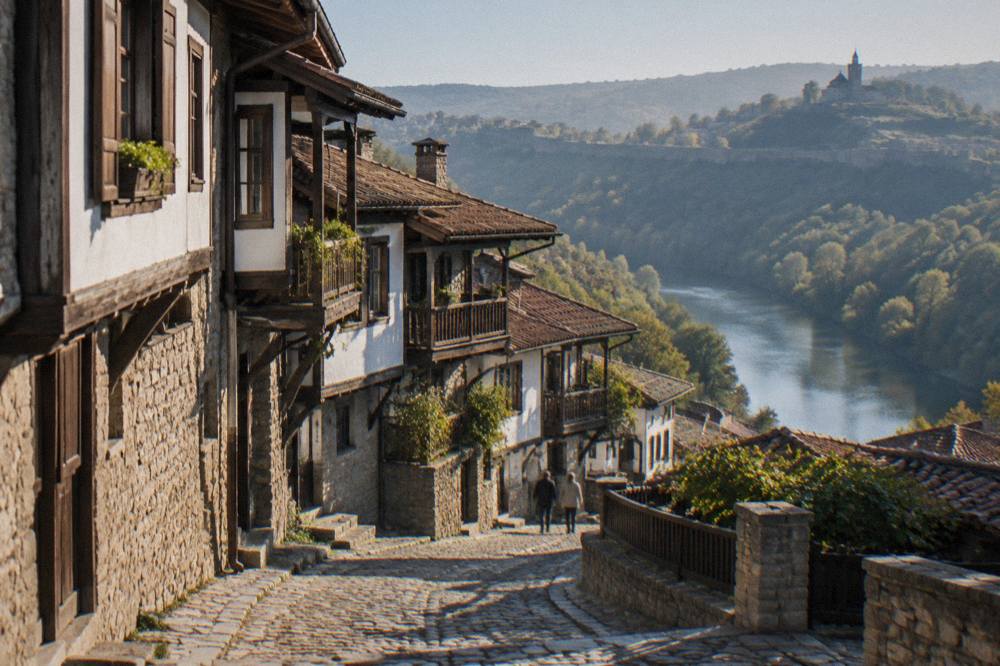
Arbanasi lies about 2.8 km straight-line northeast of the centre, Nicopolis ad Istrum about 20 road km north, and the Revival-era towns of Tryavna and Bozhentsi about 42 and 46 road km south in the Balkan range, with the Etar open-air museum near Gabrovo at about 53 road km. All of these are day-trip distance from the old capital, and each is run or reachable on the same road corridor.
Arbanasi is the closest and the most medieval in character among the villages: its Church of the Nativity and the Church of Sts Archangels Michael and Gabriel are museum sites with wall surfaces from the period of Ottoman-era Christian art, and both are ticketed at 7.67 euro with a family ticket at 12.78 euro, April to September 09:00 to 18:00. Konstantsalieva House in the same village, a museum house, shares those hours and that family price, with a winter note: from 30 November 2026 to 20 March 2027 it opens Friday to Sunday only, 10:00 to 16:00.
Nicopolis ad Istrum is the genuinely Roman-to-medieval ruin in the set, on the Tentative List since 1984, with a 5.11 euro ticket and April to September hours of 09:00 to 18:00. It lies near the village of Nikyup, and its winter visiting is by appointment. For anyone building a medieval-themed route, it is the site that pre-dates the kingdom and shows the layer the Second Bulgarian Kingdom was built over.
What the card gives is distance: Tryavna about 42 road km from Veliko Tarnovo's centre, Bozhentsi about 46, Etar about 53. Their hours and tickets are not in the card, so check the current price on the official ticket page before booking or setting out.
| Town or site | Distance from Veliko Tarnovo centre | Period | Entry |
|---|---|---|---|
| Arbanasi | about 2.8 km straight-line | Medieval churches, Revival houses | Church of the Nativity 7.67 euro |
| Nicopolis ad Istrum | about 20 road km | Roman to medieval ruins | 5.11 euro |
| Tryavna | about 42 road km | National Revival town | Check locally |
| Bozhentsi | about 46 road km | Architectural reserve | Check locally |
| Etar (near Gabrovo) | about 53 road km | Open-air museum | 7.16 euro adult |
Etar's adult price of 7.16 euro, with children under 7 free, comes from the museum's own admission page; the rest of the distances are computed road figures and should be read with "about".
For a structured day covering the monastic side of the medieval kingdom, the Monastery of the Holy Transfiguration, also called Preobrazhenski Monastery, sits about 6 road km out and can be explored with the operator's own product: Check availability.
When Should You Visit The Medieval Towns Of Bulgaria?
The museum sites run their full summer hours from April to September, with Tsarevets open 08:00 to 20:00 daily, so late spring through September is the window in which every site on a medieval route is open at once. The ERA5 reanalysis for Veliko Tarnovo, 1991 to 2020, puts the July mean daily high at 27.6 C and the January mean daily low at -3.8 C, with May the rainiest month at 95.7 mm and August the least rainy at 51.3 mm.
The climate table matters for route planning more than for sightseeing itself. March carries the city holiday on 22 March, marked with a liturgy and programme tied to the Holy Forty Martyrs, and September carries the independence celebrations of 22 September, with the liturgy at the Forty Martyrs church and a flag ritual on Tsarevets. The Sound and Light audiovisual show on Tsarevets runs on announced evenings only, with no fixed schedule, and watching it from Tsar Asen I Square is free; the official feed example lists 1 May 2026 at 21:15.
The folklore festival is another fixed point: the 28th International Folklore Festival ran 18 to 25 July in 2026, and Arbanasi Summer Music, a chamber festival in the village's churches, ran 15 to 25 July in 2026. These are annual events with their 2026 editions as the latest examples.
Winter travel needs the closure list read closely. Winter hours at the museum sites start on 25 October 2026. Trapezitsa closes 30 November 2026 to 31 March 2027, the funicular stops 31 October 2026, the Kilifarevo museum closes 30 November 2026 to 30 March 2027, and the Museum of New and Newest History is temporarily not accepting visitors. Bulgaria has used the euro since 1 January 2026 at the fixed rate of 1.95583 lev per euro, so every price above is a euro price as the museum prints it.
For timing a first visit, whether Veliko Tarnovo is worth visiting and the best month to go to Bulgaria cover the decision from both ends.
How Do You Build A Medieval Route Around Veliko Tarnovo?
A workable route is two or three nights in Veliko Tarnovo covering Tsarevets, Trapezitsa and the Forty Martyrs church, one half-day in Arbanasi for the Church of the Nativity and Konstantsalieva House, one day for Nicopolis ad Istrum, and one further day south for Tryavna, Bozhentsi and Etar, using the Sofia and Gabrovo road corridor and staying flexible around the winter closures listed above.
The order matters less than the season. Between April and September every museum site on the list is open daily, Arbanasi's churches run to 18:00, and the evening option of the Sound and Light show, on its announced dates, sits at the end of a fortress day. From late October the hours compress, and from the end of November Trapezitsa drops out entirely until 1 April 2027, which reshapes any fortress-plus-Trapezitsa plan into a Tsarevets-centred one.
Budgeting is straightforward because the museum prints euro prices for everything on the core route. The two-day museum pass, at 20.45 euro individual and 25.56 euro family, valid 1 April to 30 November, covers ten museum sites, and its price comes from the museum's own price list. Quoting individual tickets: Tsarevets 7.67 euro, Trapezitsa 5.11 euro, the Forty Martyrs church 5.11 euro, Arbanasi's churches 7.67 euro each and Nicopolis ad Istrum 5.11 euro. There is no arithmetic to do beyond that; the reader can add what a chosen route costs.
Getting in is covered elsewhere on this site, but the short version from the card: no airport with scheduled flights serves the city, so arrivals run through Sofia about 216 road km, Varna about 214, or Bucharest Otopeni about 205. There is no direct train from Sofia; the fastest connections on the current timetable change at Gorna Oryahovitsa and take 4 h 33 min. A fuller treatment is in the guide to reaching Veliko Tarnovo, and the site's home at Veliko Tarnovo Travel Guide carries the full sight list.
Common Questions About Medieval Towns In Bulgaria
What are some medieval towns in Bulgaria?
Veliko Tarnovo is the headline medieval town as the capital of the Second Bulgarian Kingdom from the late 12th century to the 14th, joined by the village of Arbanasi, the ruins of Nicopolis ad Istrum on the Tentative List since 1984, and, from the later Revival period, Tryavna and Bozhentsi.
Is Veliko Tarnovo a UNESCO World Heritage Site?
No. Nothing in the city is inscribed or on the Tentative List. The nearest inscribed sites are the Rock-Hewn Churches of Ivanovo and the Thracian Tomb of Kazanlak, both from 1979.
How much does Tsarevets Fortress cost?
The museum's ticket page lists 7.67 euro for an adult, with a family ticket at 10.23 euro for parents and up to three children aged 7 to 18, and children under 7 free.
Is Trapezitsa open in winter?
Trapezitsa is closed to visitors from 30 November 2026 to 31 March 2027. In season it opens April to September 09:00 to 19:00, and its funicular runs 1 May to 31 October.
How far is Arbanasi from Veliko Tarnovo?
Arbanasi lies about 2.8 km straight-line northeast of the centre. Its Church of the Nativity is 7.67 euro to visit and is free on 25 December 2026, the church's feast day.
What currency do the medieval towns use?
Bulgaria has used the euro since 1 January 2026, at a fixed rate of 1.95583 lev per euro, and every museum ticket in these towns is priced in euro.