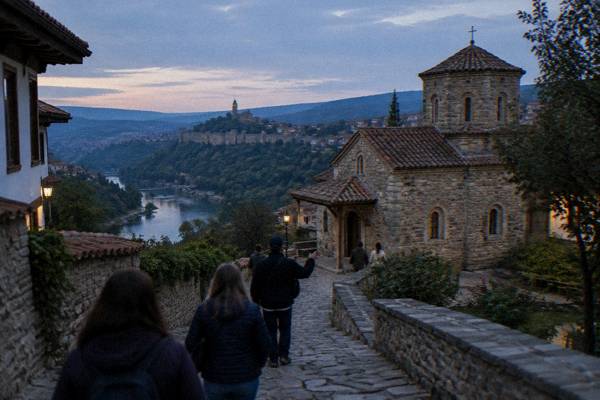
What To Buy In Veliko Tarnovo: Crafts, Rose Oil And Pottery
Veliko Tarnovo, the former medieval capital on the Yantra river, is one of the few Bulgarian cities where the souvenir shopping and the sightseeing happen in the same streets: Samovodska Charshiya, General Gurko Street and the museum network cover crafts, rose oil, pottery and Bulgarian wine in a walkable core.
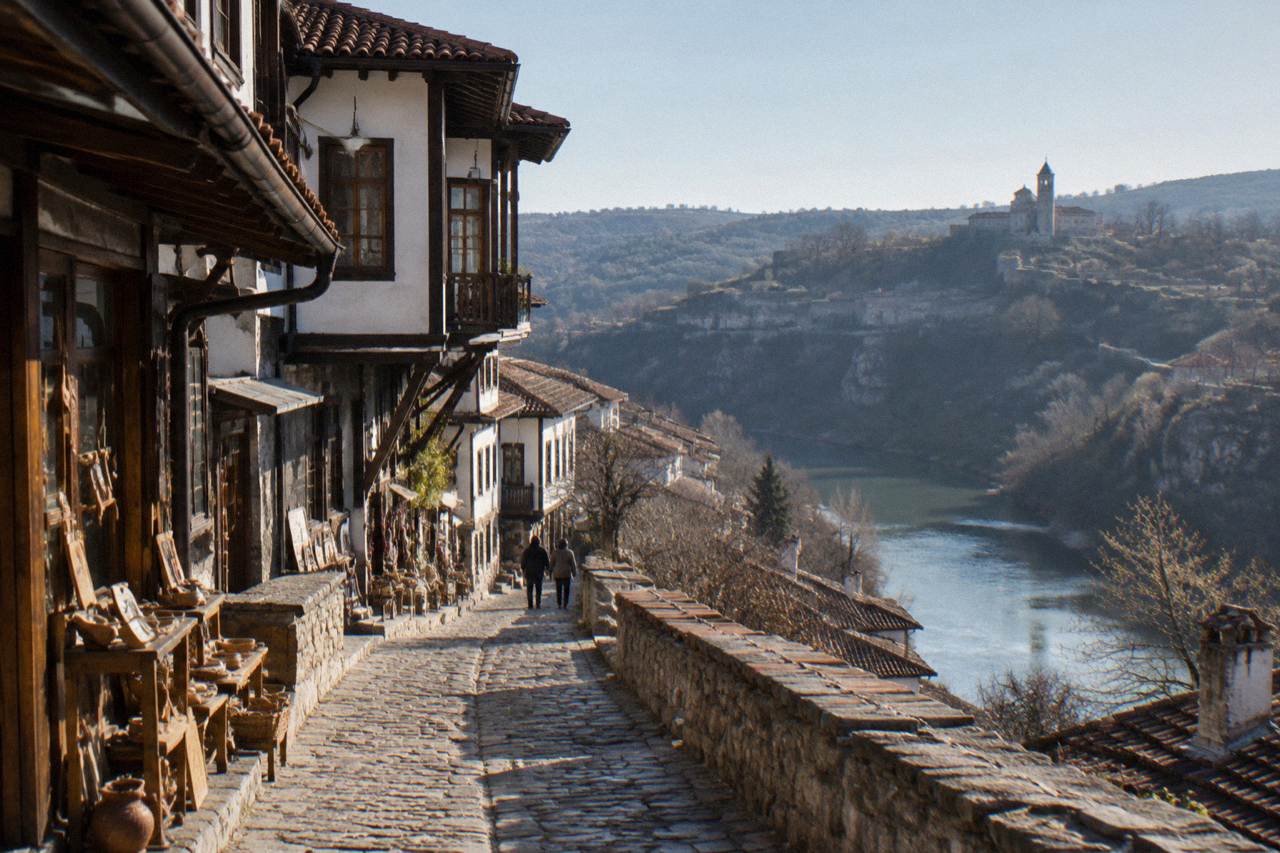
Buy hand-thrown pottery, rose-oil cosmetics, copper and woodwork on Samovodska Charshiya and Gurko Street, both free public streets in the old quarters; add Bulgarian wine at a tasting in the centre, and plan a day trip to Etar or the Rose Valley for crafts and rose products. Bulgaria uses the euro since 1 January 2026.
Veliko Tarnovo, the medieval capital of Bulgaria on the Yantra river, is a city where the shopping list and the sightseeing list overlap almost completely. Samovodska Charshiya, General Gurko Street and the Varosha quarter are the free public streets of the old town, and they are also where the coppersmiths, potters, weavers and icon painters work within a few minutes of Tsarevets Fortress. This guide sets out what is actually worth buying here, where the crafts streets sit in relation to the paid museum sites, what rose oil and Bulgarian wine have to do with the wider region, and what the season and the euro changeover mean for a shopping trip. For the broader picture of the city itself, start with the Veliko Tarnovo Travel Guide homepage and the things to do around Veliko Tarnovo overview.
What To Buy In Veliko Tarnovo: The Short Answer
The buys that make sense in Veliko Tarnovo are hand-thrown pottery, rose-oil cosmetics, copper and woodwork from the craft streets, icons and prints from the museum counters, and Bulgarian wine tasted in the city before it is packed. Samovodska Charshiya and General Gurko Street are free public streets where the workshops cluster; the paid sights around them, from Tsarevets at 7.67 euro to the Archaeological Museum at 5.11 euro, sit on the same walking circuit. Bulgaria has used the euro since 1 January 2026, fixed at 1.95583 lev per euro, so every price below is in euro.
The shopping argument for this city is density. The municipality had an estimated 77,067 residents on 31 December 2025, and the historic core is compact: a visitor can cover the fortress, two craft streets and a wine tasting between the museum opening hours of 09:00 and the evening. Nothing in the city is a UNESCO World Heritage Site, which matters for expectations: what you are buying into is a living craft quarter, not a curated monument.
Two seasonal notes shape any plan. Winter hours at the museum sites start on 25 October 2026, which shortens the paid-sight part of the day. And the Sound and Light show runs on announced evenings only, free to watch from Tsar Asen I Square, so an evening in the centre can end with a show that costs nothing.
Where To Shop In Veliko Tarnovo: Craft Streets, Museum Counters And The Old Quarters
Samovodska Charshiya, General Gurko Street and the Varosha quarter are the three free public shopping areas of the old town, and the paid museum sites sit on the same circuit, with adult tickets at 5.11 euro for the Archaeological Museum and 7.67 euro for Tsarevets. No individual workshop, gallery or souvenir shop on these streets had its address, hours or prices confirmed for this guide, so treat the street names as the itinerary and confirm opening details on the spot. The streets themselves cost nothing and are open at all hours, like the Asenevtsi Monument by the river.
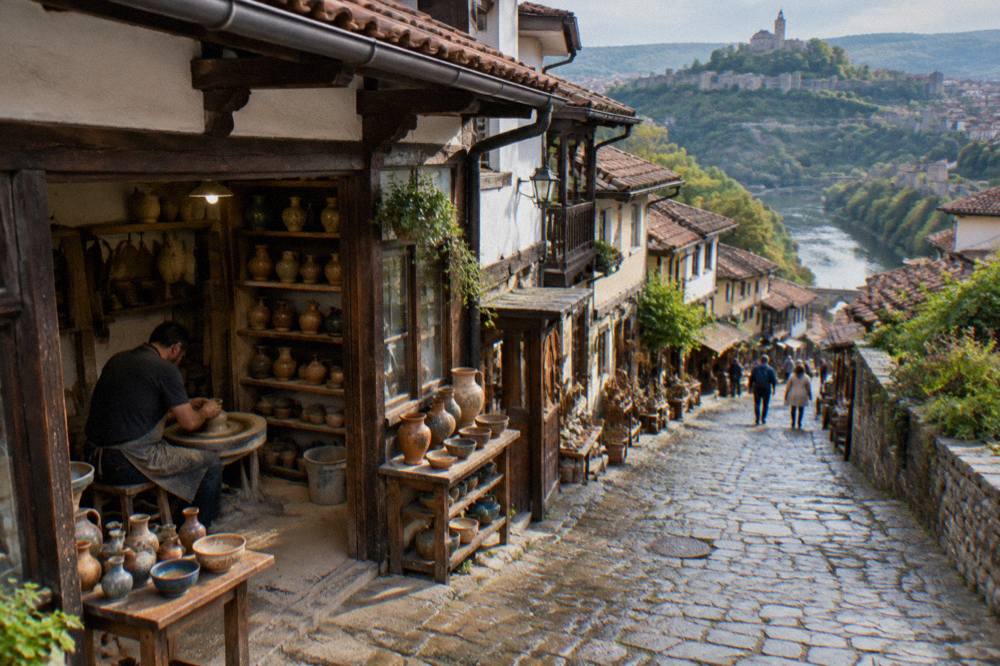
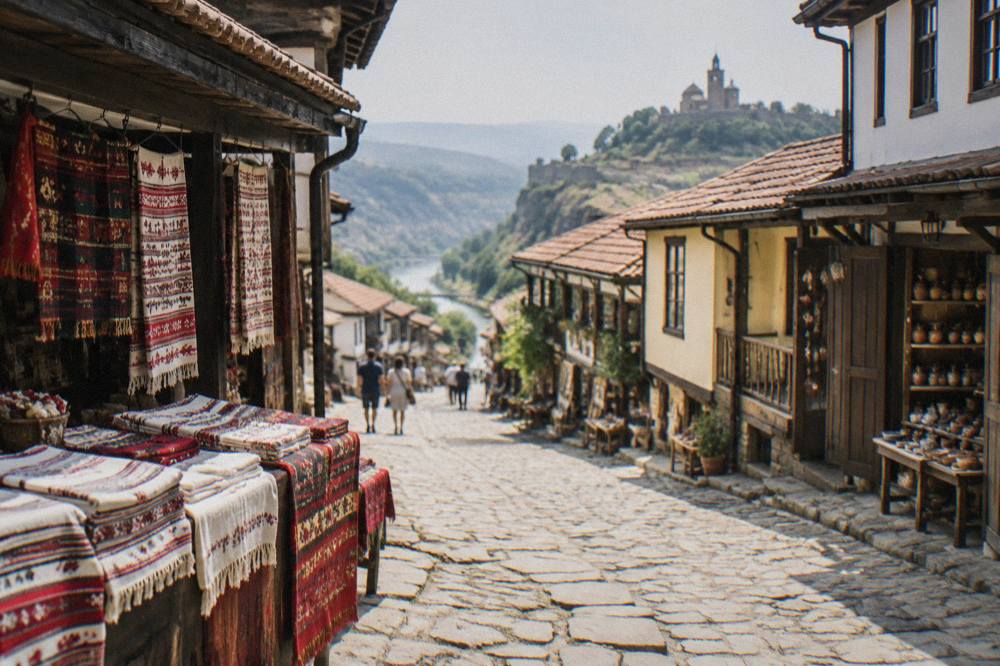
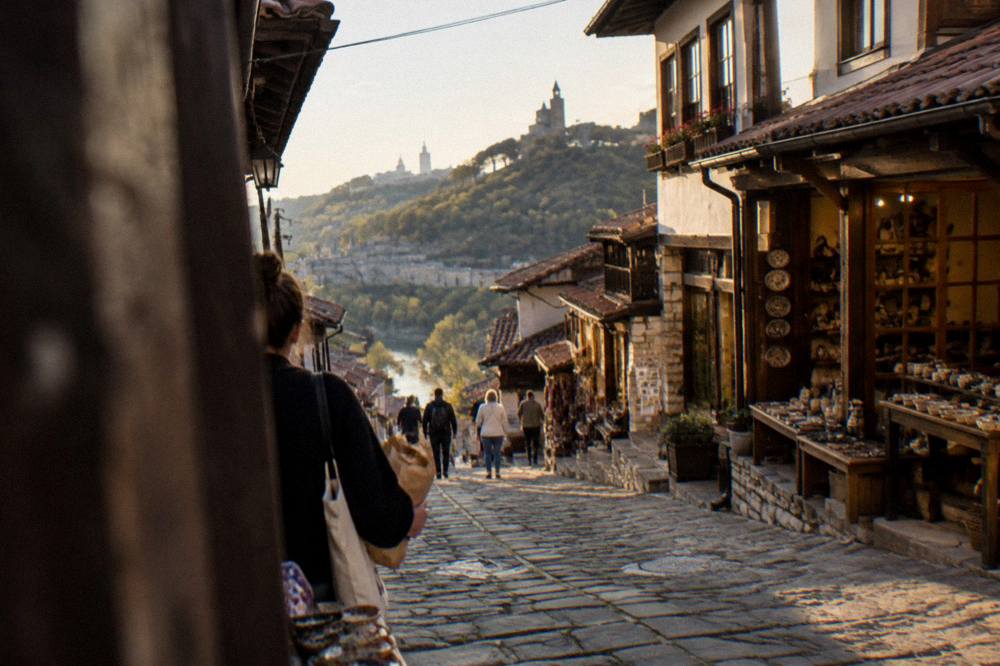
Samovodska Charshiya is the craft street: a historic market street where the small workshops sit side by side. The municipal tourism material presents it as the city's traditional crafts quarter, and the practical way to use it is to walk it slowly, look into the workshops that are open, and buy where the maker is present. General Gurko Street, a short walk away, is the other free public street on the standard circuit, and Sarafkina House, a museum in a house built in 1861, stands at number 88 on it, open Tuesday to Saturday 09:30 to 17:30 with a 5.11 euro ticket.
The museum counters are a separate buying channel. The Regional Museum of History runs the sight network, and its sites, from Tsarevets to the Konak museum built in 1872, are where printed material, guidebooks and reproductions tend to be sold. The two-day pass covering 10 museum sites costs 20.45 euro for an individual, valid 1 April to 30 November, and a family version costs 25.56 euro; the pass is about sightseeing, but it is also the practical way to move through every counter in two days.
| Site on the shopping circuit | Adult ticket | Family ticket | Hours (April to September) |
|---|---|---|---|
| Tsarevets Architectural-Museum Reserve | 7.67 euro | 10.23 euro | Daily 08:00 to 20:00 |
| Archaeological Museum | 5.11 euro | 7.67 euro | 09:00 to 18:00 |
| Museum "Revival and Constituent Assembly" (the Konak) | 5.11 euro | Not published | 09:00 to 18:00 |
| Sarafkina House (88 General Gurko St) | 5.11 euro | Not published | Tue to Sat 09:30 to 17:30 |
The Tsarevgrad Tarnov multimedia visitor centre, the wax-figure attraction on the same circuit, charges 7.67 euro for an adult ticket and is open 09:00 to 19:00 from April to September. A self-guided audio tour of the city and the fortress pairs well with a shopping day, since it sets its own pace around the same streets: the self-guided audio tour of Veliko Tarnovo and Tsarevets covers the ground the craft streets sit on. Check availability for the wine tasting if bottles are on the list, and read on for the crafts themselves.
Rose Oil, Pottery And Textiles: The Bulgarian Buys Explained
Rose oil is the buy Bulgaria is nationally known for, and in Veliko Tarnovo it is sold as cosmetics and oil rather than picked locally: the rose fields themselves sit in the Rose Valley around Kazanlak, about 98 road km away, reachable as a day trip. Pottery is the local craft buy, worked in the Samovodska Charshiya workshops. Textiles, woodcarving and copper follow, and the Etar open-air museum near Gabrovo, about 53 road km away, is the region's reference point for traditional crafts, with an adult ticket at 7.16 euro.
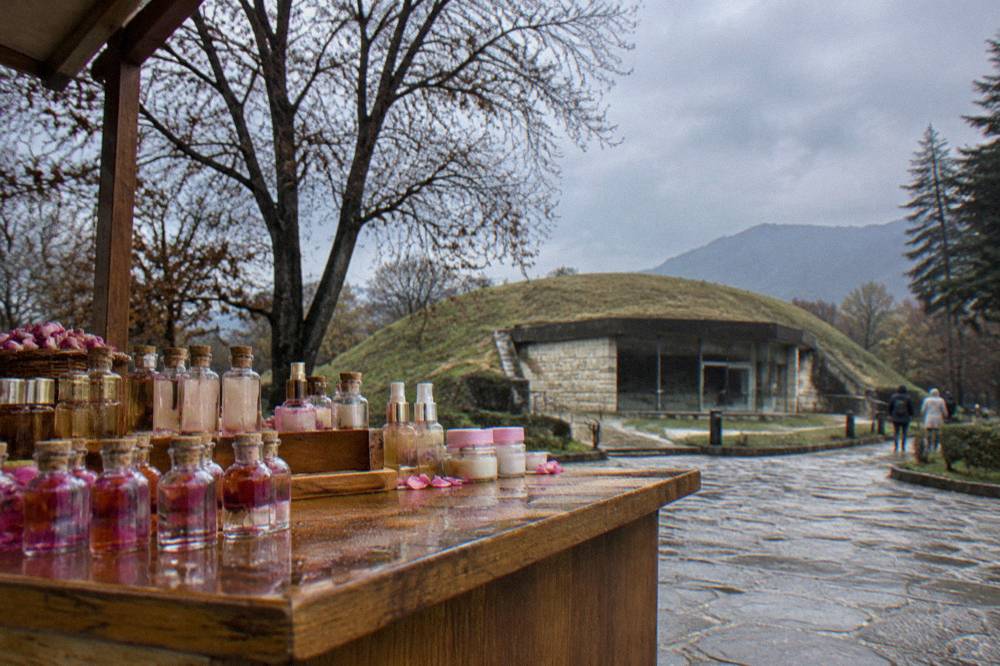
The rose connection is worth getting right. The Thracian Tomb of Kazanlak, inscribed by UNESCO in 1979, is the anchor sight of the valley, and the rose industry around it produces the oil that ends up in the cosmetics sold across Bulgaria. The Kazanlak and Rose Valley day trip is the route for anyone who wants to buy rose products at the source; in Veliko Tarnovo itself, the craft streets and museum counters carry the same product categories. No specific shop is recommended here, because none had its stock or prices confirmed: the working method is to compare the ingredient list and the price per millilitre between two or three counters before buying.
Pottery is the craft with the deepest local claim. The workshops on Samovodska Charshiya work in the Bulgarian tradition of hand-thrown, decorated clay, and buying at the workshop means the piece can be packed on the spot, in the maker's own packing. The practical rule for ceramics in checked luggage is newspaper, a rigid box and no air gaps; for hand luggage, a single wrapped piece survives better than several loose ones.
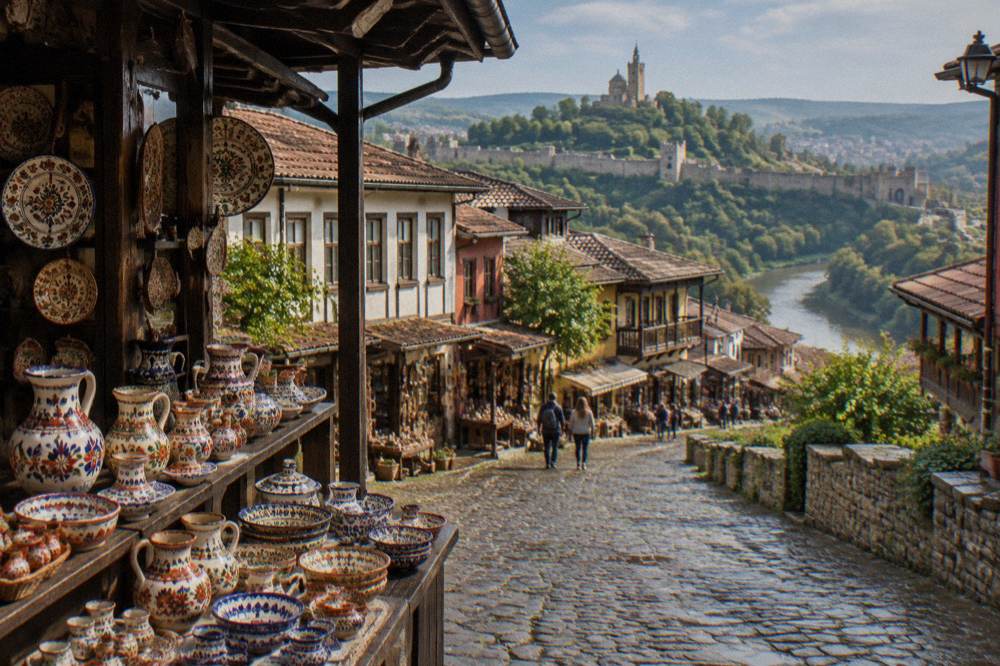
Textiles and woodcarving round out the list. The Bulgarian food guide covers what goes in the edible suitcase, and the breakfast traditions page adds the banitsa and breakfast side of the pantry. For the non-edible side, the benchmark trip is Etar, the architectural-ethnographic complex near Gabrovo, where the crafts are demonstrated in working conditions and the ticket prices are printed by the museum itself.
| Etar ticket category | Price |
|---|---|
| Adult | 7.16 euro |
| Student or pupil | 3.07 euro |
| Pensioner | 4.09 euro |
| Child under 7 | Free |
Etar is open all year with no days off, and its International Fair of Traditional Crafts is reported for 4 to 6 September 2027, as a jubilee edition with a focus on blacksmithing; the 2026 pattern is the same fair in early September. The Etar complex guide covers the trip in full.
Bulgarian Wine And Rakia: The Bottle Run In Veliko Tarnovo
Bulgarian wine is the one category best bought in Veliko Tarnovo rather than on a craft street: a guided tasting in the city centre walks through the local grape names before you commit to bottles, and rakia, the fruit brandy, is the other liquid souvenir the country is known for.
The wine logic is simple. A bottle bought blind at a counter is a guess; a bottle bought after a tasting is a decision. The rakia and Bulgarian wine background and the food guide above cover what the labels mean, and the wine tasting tour page, Bulgarian Wine Tasting Experience in Veliko Tarnovo, is the practical link. For the customs side, the general rule for entering another country with alcohol applies, and the Bulgaria travel tips page collects the entry basics: Bulgaria is a full Schengen member since 1 January 2025, the Entry/Exit System has run at all external borders since 10 April 2026, and the single European emergency number is 112.
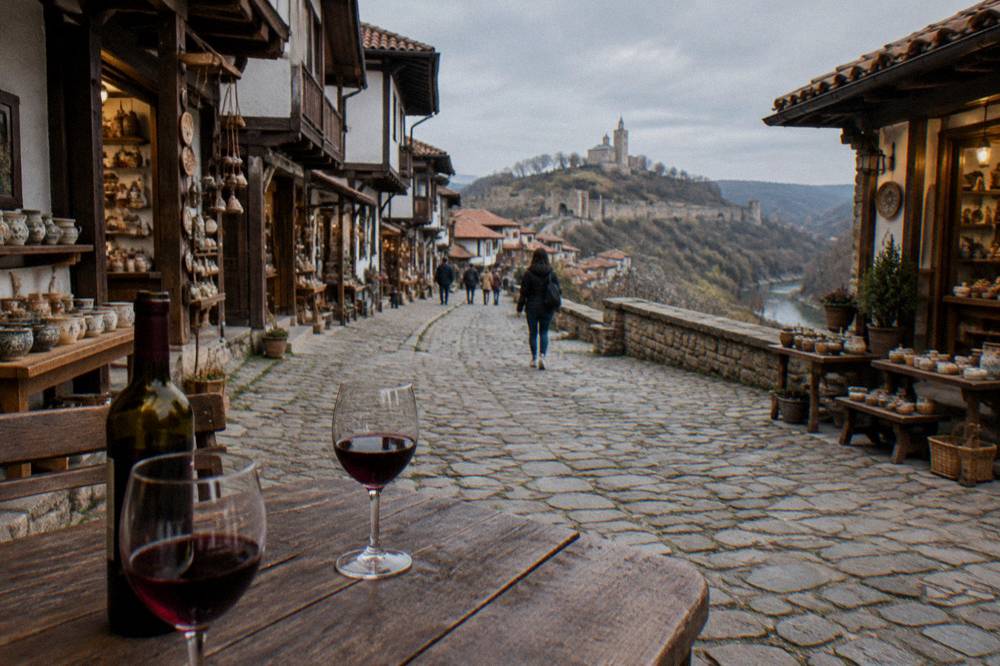
Packing is the part that decides the trip. Wine and rakia travel in checked luggage only, wrapped separately, with the bottle necks taped against the caps and each bottle sleeved in a sock or bubble wrap inside a plastic bag. A hard-shell case with a rigid layer at the bottom holds three bottles comfortably; anything more is a decision about weight as much as breakage.
Souvenir Shopping Beyond The City: Etar, Tryavna And The Monastery Circuit
The strongest souvenir day trips from Veliko Tarnovo are Etar for traditional crafts, about 53 road km away, Tryavna for woodcarving, about 42 road km, and the Rose Valley for rose products, about 98 road km to the Kazanlak tomb, and a car booked in the city is the flexible way to link them. Each is a paid-sight destination with its own shopping angle, and each is reachable on the roads described in the how to get to Veliko Tarnovo guide; the car rental overview collects the options.
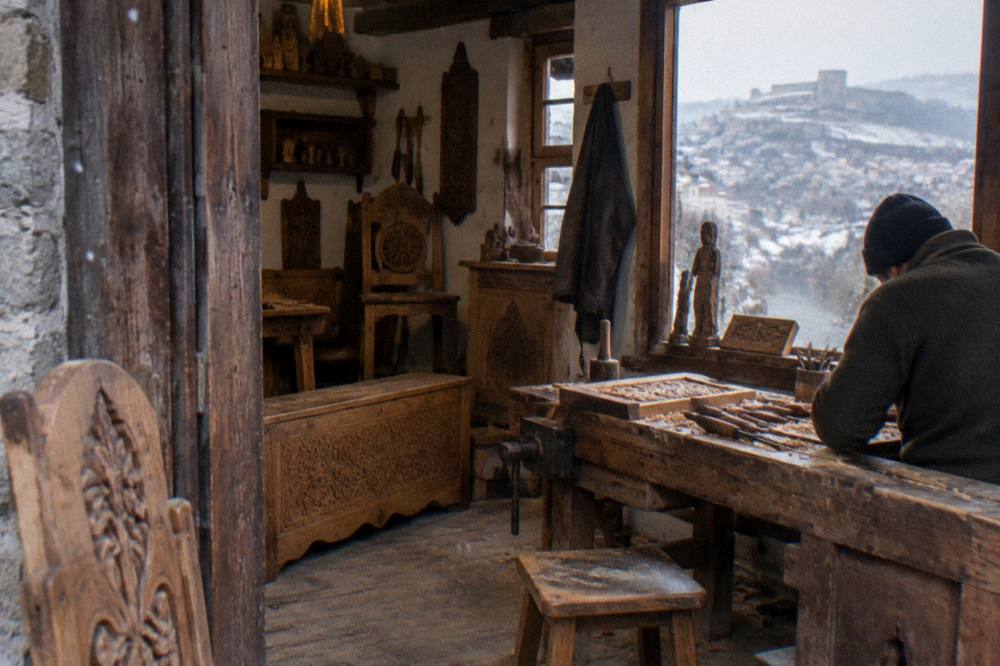
Tryavna's craft identity is woodcarving, and its old town is the place where the carved furniture and icon-stand tradition is displayed; hours and prices for the Tryavna museums were not confirmed, so check locally before the trip. Bozhentsi, about 46 road km, is the architectural reserve in the same hills. The two monastery circuits, Dryanovo at about 33 road km and the churches described in the churches and monasteries near Veliko Tarnovo guide, sell icons, prints and candles rather than crafts, and monastery shops keep their own hours.
| Souvenir day trip from Veliko Tarnovo | Distance by road | What it is known for |
|---|---|---|
| Tryavna | about 42 km | Woodcarving, old town |
| Bozhentsi | about 46 km | Architectural reserve |
| Etar (near Gabrovo) | about 53 km | Traditional crafts, open-air museum |
| Kazanlak and the Rose Valley | about 98 km | Rose products, Thracian Tomb |
| Nicopolis ad Istrum | about 20 km | Roman ruins, Tentative List since 1984 |
Nicopolis ad Istrum, the Roman site about 20 road km north, is on UNESCO's Tentative List since 1984 and holds no shops, but it pairs with a village drive on a lighter day. A guided waterfalls and caves tour covers the natural side of the same radius: the full-day waterfalls and caves tour around Veliko Tarnovo is the roster option.
When To Plan A Shopping Trip: Fairs, Seasons And The Weather
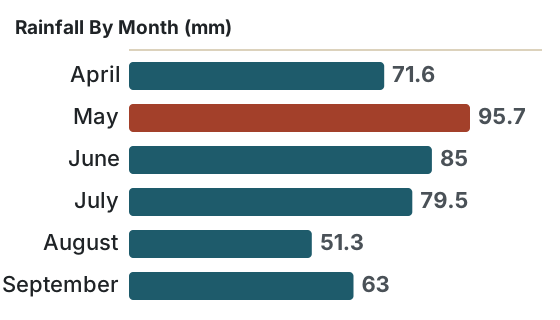
The crafts-buying season runs with the museum season: April to September, when Tsarevets is open 08:00 to 20:00 and the Etar fair fills the first weekend of September, while the Rose Valley culmination is reported for 4 to 6 June 2027. The ERA5 reanalysis, 1991 to 2020, puts the mean daily high at 21.7 C in May and 25.4 C in June, with May the month with the highest rainfall, 95.7 mm, and August the lowest, 51.3 mm.
| Month | Mean daily high (ERA5 1991-2020) | Rainfall (ERA5 1991-2020) |
|---|---|---|
| April | 16.9 C | 71.6 mm |
| May | 21.7 C | 95.7 mm |
| June | 25.4 C | 85.0 mm |
| July | 27.6 C | 79.5 mm |
| August | 28.1 C | 51.3 mm |
| September | 23.3 C | 63.0 mm |
The season matters for the itinerary as much as the weather. The funicular at Trapezitsa runs 1 May to 31 October and stops for the season on 31 October 2026; Trapezitsa itself is closed to visitors from 30 November 2026 to 31 March 2027; Konstantsalieva House in Arbanasi goes to a Friday-to-Sunday schedule from 30 November 2026 to 20 March 2027; and winter hours across the museum sites start on 25 October 2026. A late-autumn or winter shopping trip therefore leans heavier on the free streets and the indoor counters, and the best time to visit Veliko Tarnovo and weather guides carry the detail.
The calendar events are the fixed points. The 28th International Folklore Festival ran 18 to 25 July 2026, Arbanasi Summer Music ran 15 to 25 July 2026, and the city holiday falls on 22 March. The Christmas market in Marno Pole park follows a late-November-to-1-January pattern, with no 2026 dates announced; when it runs, it is the crafts-buying event of the winter, and the spring and autumn guide covers the shoulder-season version of the same trip.
Paying, Packing And Getting It All Home
Every price in Veliko Tarnovo is quoted in euro, because Bulgaria adopted the currency on 1 January 2026 at the fixed rate of 1.95583 lev per euro, and the lev no longer circulates, so there is no exchange step for visitors arriving from another euro country. Cards work alongside cash at the museum ticket offices and larger shops, and the two-day museum pass at 20.45 euro is bought at the counters. The euro and money in Bulgaria guide covers the changeover in full, and the cost overview page puts the ticket prices in the context of a whole visit.
For the journey out, the packing rules are the ones above: rigid containers for pottery, sleeved and taped bottles in checked luggage for wine and rakia, and rose oil in its original sealed bottle, since it is a concentrated product that airlines treat as a liquid. Anyone flying home through Sofia, Varna or Bucharest Otopeni should read the nearest airport guide: Sofia is about 216 road km, Varna about 214 and Bucharest Otopeni about 205. The train option, with changes at Gorna Oryahovitsa on the Sofia route, is covered in the train station guide, and the getting around page handles the last kilometre between the craft streets and the stations.
A stay built around shopping works best in the old quarters, and the where to stay guide maps the districts against the sights. After the bags are full, the restaurants guide is the evening plan, and a walk past the Asenevtsi Monument, free and open at all hours, closes the loop between the buys and the city that made them.
Common Questions About Shopping In Veliko Tarnovo
What to buy in Bulgaria?
Rose-oil cosmetics, hand-thrown pottery, woodcarving, copper work and Bulgarian wine or rakia are the categories Bulgaria is known for. In Veliko Tarnovo the first four are found on the free craft streets, Samovodska Charshiya and General Gurko Street, and the wine is best chosen after a guided tasting in the city.
What souvenirs is Veliko Tarnovo known for?
Samovodska Charshiya is the traditional crafts quarter of the city, so the local souvenir is the workshop object itself: pottery, textiles, carved wood and metalwork bought where it is made. Icons, prints and books come from the museum counters of the Regional Museum of History network.
Is shopping in Veliko Tarnovo expensive?
The sight prices are fixed and published: Tsarevets costs 7.67 euro for an adult and the Archaeological Museum 5.11 euro, and the two-day pass covering 10 museum sites is 20.45 euro. Workshop and shop prices are set individually, so compare two or three counters before buying; the cost overview page puts the trip in context.
Can I buy rose oil in Veliko Tarnovo?
Yes, rose-oil cosmetics are sold in the city's shops and counters, though the rose fields themselves are in the Rose Valley around Kazanlak, about 98 road km away, reachable as a day trip. Check the ingredient list and the price per millilitre before buying, and treat the Kazanlak trip as the source option.
Do shops in Bulgaria take the euro?
Bulgaria has used the euro as its currency since 1 January 2026, at the fixed rate of 1.95583 lev per euro, so every price is quoted in euro and the lev no longer circulates. Cards are accepted at the museum ticket offices and larger shops.
When is the best time of year for a crafts trip?
April to September lines up the longest sight hours with the fair calendar: Tsarevets runs 08:00 to 20:00 in that window, the Etar International Fair of Traditional Crafts fills early September, and the Rose Valley culmination is reported for 4 to 6 June 2027. Winter hours at the museum sites start on 25 October 2026, which shortens the paid-sight part of the day.