ESIM And Mobile Data In Bulgaria
Bulgaria is a full Schengen member and a euro country since 2026, and a phone set up before arrival is the difference between finding Tsarevets on your own terms and hunting for a shop that sells a physical SIM.
Buy an eSIM before you fly or pick one up on arrival, keep your home number active for banking codes, and remember Bulgaria uses the euro since 1 January 2026 and runs the Entry/Exit System at its borders since 10 April 2026.
Veliko Tarnovo sits on a bend of the Yantra river in northern Bulgaria, an inland city of about 77,000 municipality residents built around Tsarevets Fortress, and it rewards a phone that already works when the bus pulls in. The city has no airport with scheduled flights, so nearly every visitor crosses a land border or arrives from Sofia, Varna or Bucharest Otopeni by road or rail, and that journey is exactly where data runs out. Bulgaria has been a full Schengen member since 1 January 2025 and has used the euro since 1 January 2026, which changes both what a SIM contract looks like and what roaming means for visitors from the rest of the European Union.
This page covers phones and data on a Bulgarian trip, and it anchors everything to the practical realities of reaching and exploring Veliko Tarnovo. For arrival logistics, the getting to Veliko Tarnovo guide covers the routes, and the broader Bulgaria travel tips page collects the other paperwork questions in one place.
What Should You Know About ESIM And Mobile Data In Bulgaria Before You Arrive?
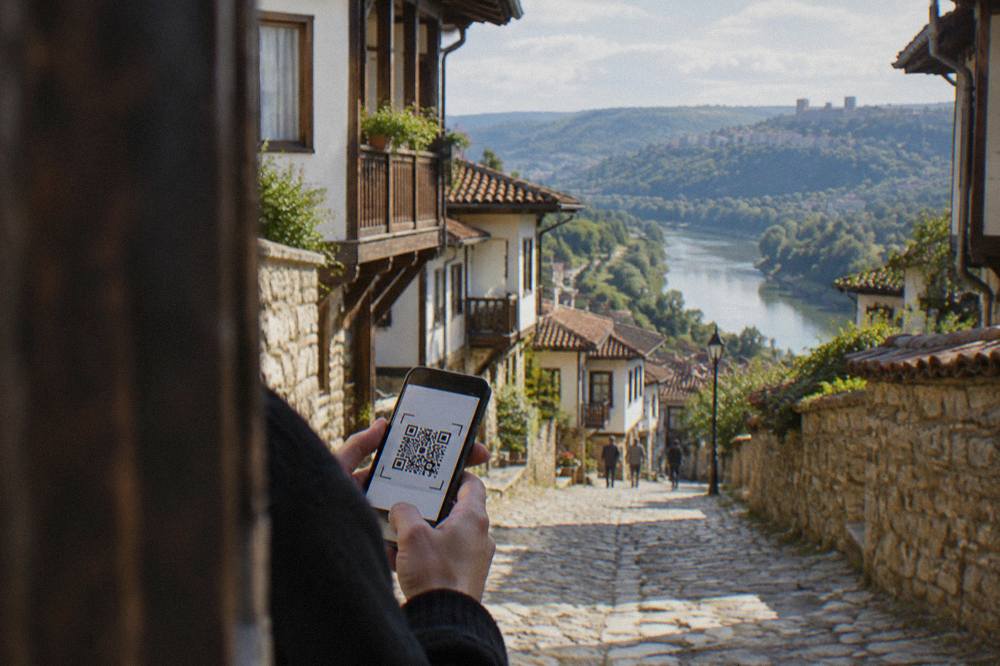
An eSIM is a digital SIM profile you download onto a compatible phone instead of inserting a physical card, and in Bulgaria it is the fastest route to data because you can install and activate it before you leave home, the moment you land, or on the bus.
Bulgaria has been a full Schengen member since 1 January 2025, so travellers from inside the Schengen area cross without passport checks, while arrivals from outside meet the Entry/Exit System, running at all external borders since 10 April 2026, which records biometric data at the booth.
The core decision is between three setups. A domestic plan with EU roaming works for visitors whose home operator includes Bulgaria in its roaming zone, and for them the phone simply carries on working. A travel eSIM bought before departure gives a data package independent of the home number, which keeps banking verification codes arriving on the original line while the eSIM carries the internet traffic. A local physical SIM remains an option on arrival, sold at phone shops in the bigger cities, though Veliko Tarnovo's own retail offer is limited compared with Sofia or Varna.
Two Bulgarian specifics shape the choice. First, the euro changeover on 1 January 2026 means every price you see quoted locally, from museum tickets to a coffee, is in euro, so a data package priced in euro maps cleanly onto the rest of the trip budget. Second, the country's geography funnels visitors along a few long road and rail corridors, and maps, timetables and translation apps are what make those corridors easy, which is the whole argument for having data from the first minute.
There is a timing angle as well. An eSIM profile can be installed over home Wi-Fi days before departure and left dormant until it registers on a Bulgarian network, which removes any airport scramble. A physical SIM, by contrast, needs a shop, a passport for registration under Bulgarian rules, and a few minutes of paperwork, none of which is convenient with luggage in tow after several hours on a bus from Sofia or Bucharest.
Which Devices And Plans Work For Bulgaria ESIM Use?
Any phone released in recent years that supports eSIM profiles can hold a Bulgarian or pan-European data plan alongside a home line, and the practical rule is to check the setting before departure rather than at the airport. Travellers from inside the EU can often roam on their existing contract, while visitors from the United States, United Kingdom, Canada and Australia enter visa-free for up to 90 days in any 180 and typically buy either a travel eSIM or a local SIM on arrival.
The check itself takes a minute. The phone's network settings show whether an eSIM can be added, and the device manual states which bands it supports. European networks operate on frequency bands that mainstream flagship and mid-range phones sold worldwide handle without issue, and Bulgaria's market follows the same European technical standards, since the country is an EU member state. Older single-SIM phones without eSIM support simply fall back on the physical SIM route or on hotel and cafe Wi-Fi.
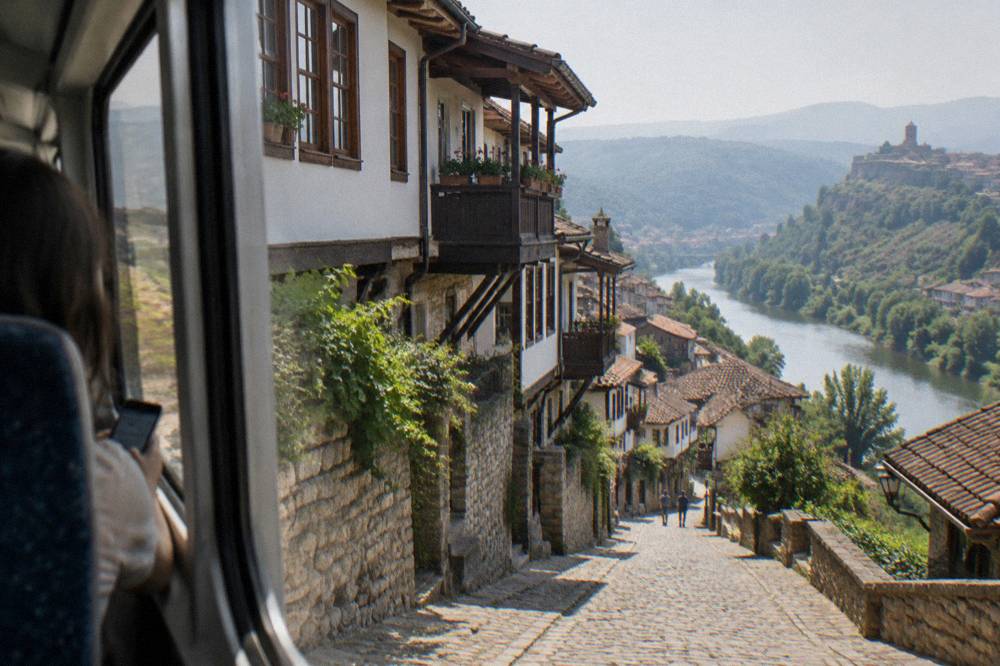
For the arrival itself, the route matters. Sofia is about 216 road km from Veliko Tarnovo, Varna about 214 and Bucharest Otopeni about 205, and each of those journeys involves several hours of road or rail where a mapping app is the difference between a smooth transfer and a missed stop. The train from Sofia involves a change, usually at Gorna Oryahovitsa, with the fastest connections on the timetable at 4 h 33 min, while the bus runs about 3 to 3.5 hours. The nearest airport to Veliko Tarnovo guide compares the three gateways, and the table below shows what each involves.
| Arrival gateway | Distance to Veliko Tarnovo | What the journey involves |
|---|---|---|
| Sofia (SOF) | about 216 road km | bus about 3 to 3.5 hours, or train with a change at Gorna Oryahovitsa |
| Varna (VAR) | about 214 road km | 16 direct buses a day and one direct train of 3 h 53 min |
| Bucharest Otopeni (OTP) | about 205 road km | direct buses of about 3 h 50 min to 4 h 15 min |
Once the phone is online, the first app worth opening is a mapping one, because Veliko Tarnovo is a vertical city of hills and stairs, and the old quarters cluster tightly around the river bend. A guided walking tour of Veliko Tarnovo is the other way to solve that orientation problem, with a guide leading through the fortress hill and the old streets, and it pairs well with a day of independent wandering afterwards. The tour is on the tour page with Check availability before you commit to a date.
How Much Data Do You Need For A Veliko Tarnovo Trip?
A city break of two to three days in Veliko Tarnovo runs comfortably on a small data package, because the heavy consumption, mapping the hillside streets, translating a menu and checking museum opening hours, happens in short bursts, while the day trips to Arbanasi, Etar or the Valley of Roses stretch the map screen time. There is no Bulgarian figure that dictates a package size, so the planning method is to match the package to the itinerary.
The itinerary is the variable. The one day in Veliko Tarnovo plan keeps everything inside the city, between Tsarevets, Samovodska Charshiya and the viewpoints, and needs little beyond maps and tickets. The three days in Veliko Tarnovo version adds Arbanasi and the monasteries, and a self-drive week along the northern Bulgaria road trip route adds real kilometres, with Emen Canyon about 32 km by road and Ivanovo's rock-hewn churches about 128 km from the centre.
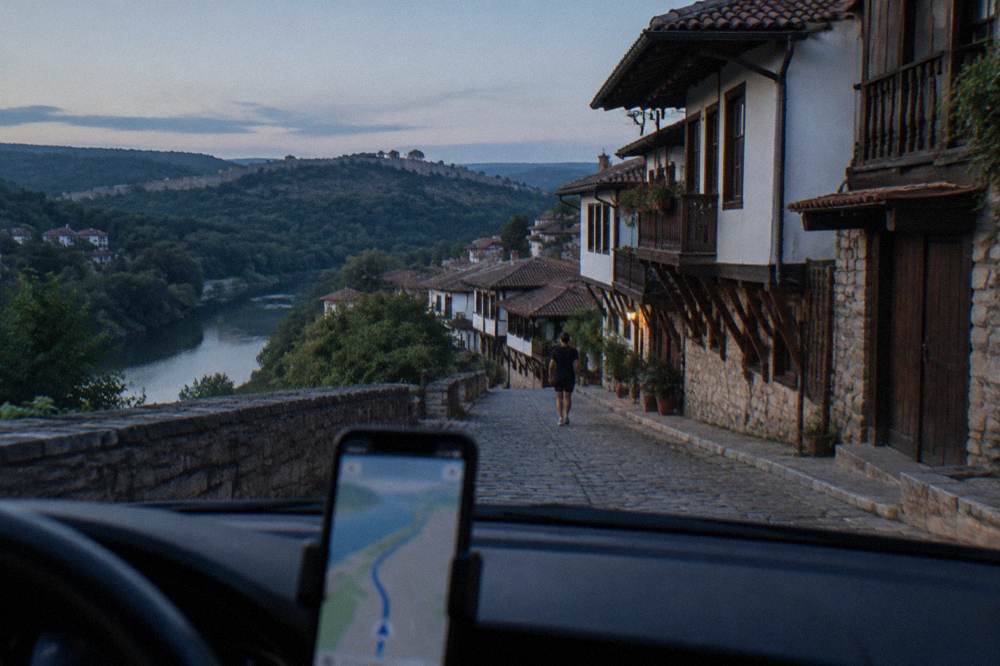
The cultural programme also rewards a working connection. The Sound and Light show on Tsarevets runs on announced evenings only, with no fixed nightly schedule, and the show's own site is where dates appear, so a phone is genuinely the tool for catching a performance. Watching from Tsar Asen I Square is free. The same goes for the seasonal museum calendar, where winter hours at the Regional Museum of History's sites start on 25 October 2026 and Trapezitsa closes entirely from 30 November 2026 to 31 March 2027, details worth checking on the day rather than assuming.
Translation deserves a word too. Bulgarian uses the Cyrillic alphabet, and menus, street signs and museum labels mix Cyrillic with Latin script in varying proportions. A translation app with a camera mode works offline once the language pack is downloaded, and that single download does more for a smooth visit than any amount of extra gigabytes.
| Trip shape | Typical data demands | What drives them |
|---|---|---|
| City break, 1 to 2 days | low | maps between the fortress, old streets and museums |
| Two to three days with Arbanasi | low to moderate | adds a short hop of about 2.8 km straight-line to the village |
| A week with day trips | moderate to high | road navigation to Etar, Tryavna, Dryanovo and the Rose Valley |
| Winter visit | low | shorter days and the Christmas-market season in Marno Pole park |
Where Does Mobile Coverage Matter Most Around Veliko Tarnovo?
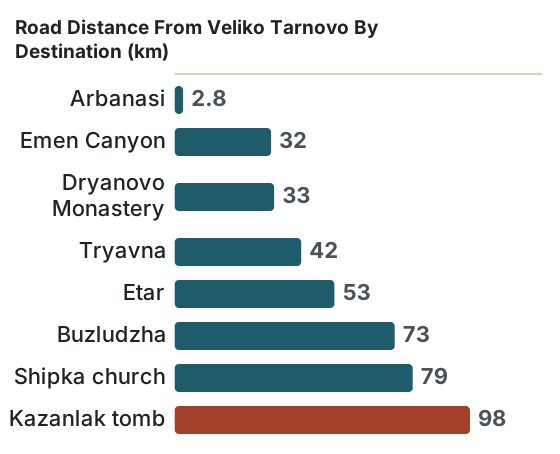
Coverage planning around Veliko Tarnovo follows the roads, because the day-trip ring spreads across northern Bulgaria through Gabrovo, Dryanovo, Lovech and the Shipka pass, and the hills that make the region scenic are the same hills that can thin a signal on a minor road. The city and the main corridors to Sofia, Varna and Ruse are well served, while remote spots like Buzludzha at about 73 road km sit in open countryside where offline maps are the sensible backup.
The practical habit is to download offline map tiles for northern Bulgaria before setting out, a step that costs nothing but storage and removes the dependency on a bar of signal at a viewpoint. The same applies to tickets and confirmations: the Regional Museum of History sells its tickets through an online ticket page, and a screenshot of any booking survives a dead zone. The getting around Veliko Tarnovo guide covers the in-city movement questions, and the Veliko Tarnovo parking guide handles the driving ones.
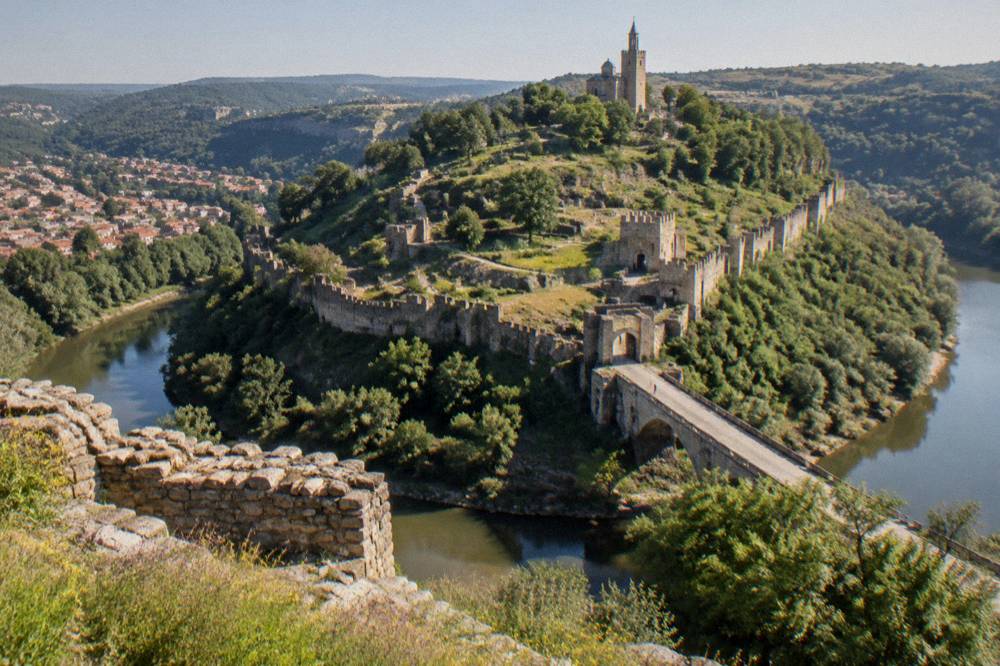
The day-trip distances below give a sense of the ring, and every figure is a road distance from the centre of Veliko Tarnovo. Long days out on these routes are exactly the trips where a guided product takes the navigation burden off the phone entirely, leaving the data for photos and translation instead. The wider set of guides lives on Veliko Tarnovo Travel Guide.
| Destination | Road distance from Veliko Tarnovo | Known for |
|---|---|---|
| Arbanasi | about 2.8 km straight-line | village churches and Konstantsalieva House |
| Emen Canyon | about 32 km by road | gorge of the Negovanka river |
| Dryanovo Monastery | about 33 km | monastery and Bacho Kiro cave area |
| Tryavna | about 42 km | old town and woodcarving heritage |
| Etar | about 53 km | architectural and ethnographic open-air complex |
| Buzludzha | about 73 km | monument on the Shipka mountain |
| Shipka church | about 79 km | memorial church near the pass |
| Kazanlak tomb | about 98 km | UNESCO-inscribed Thracian tomb from 1979 |
How Do Roaming, The Euro And Entry Rules Change Your Phone Plan For Bulgaria?
EU visitors roam in Bulgaria under the same European roaming framework that applies across the union, so a plan that includes EU roaming carries its domestic terms into the country, while visitors from outside the EU buy a travel eSIM or a local SIM and should ignore any old advice about the lev, because Bulgaria has priced everything in euro since 1 January 2026.
The Entry/Exit System adds a biometric step at external borders, and no ETIAS authorisation is needed because no start date for that scheme has been announced.
The euro point matters more than it first appears, because it removes a whole category of phone-era friction. Every price a visitor now checks, from the 7.67 euro adult ticket at Tsarevets to the 5.11 euro ticket at Trapezitsa, is quoted in the same currency as most European data plans, so budgeting for connectivity and budgeting for sights happen in one currency. The Bulgaria euro and money guide covers the changeover in full, and the Veliko Tarnovo cost guide puts the museum prices in context.
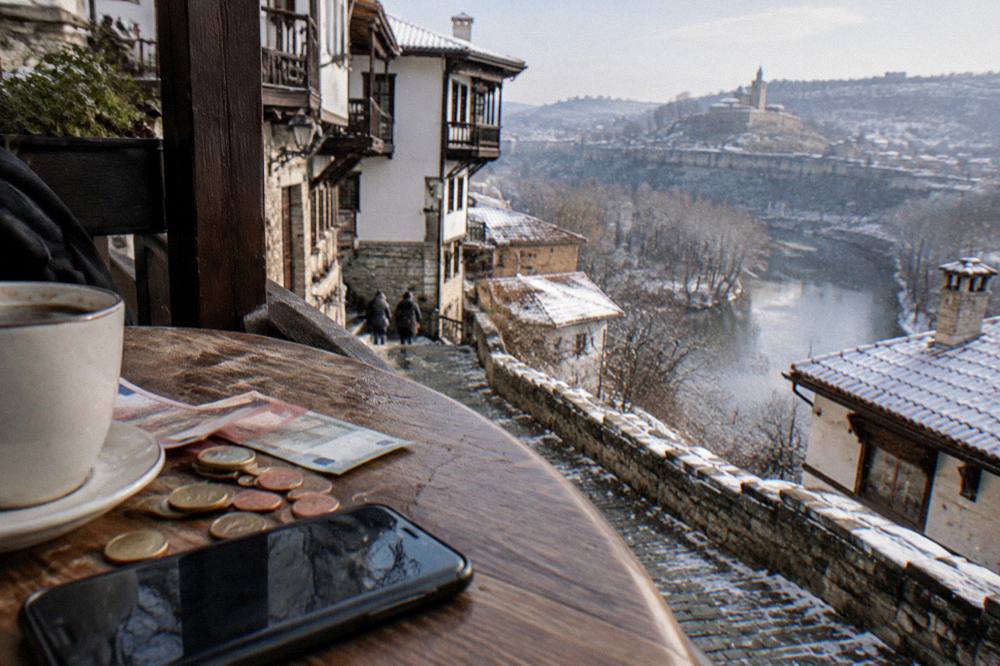
Entry formalities are brief for the visa-free nationalities, which include citizens of the United States, the United Kingdom, Canada and Australia with 90 days in any 180. The 112 emergency number is free and works EU-wide, and it is the number to know for any incident on the road-trip ring. The climate is worth one glance too, since phone batteries behave differently across the seasons: the ERA5 reanalysis, 1991-2020, puts the mean daily high at 28.1 C in August and the mean daily low at -3.8 C in January, and a phone mounted on a dashboard in summer or used gloveless in winter will reflect those numbers.
| Month | Mean daily high | Mean daily low | Rain |
|---|---|---|---|
| January | 4.9 C | -3.8 C | 56.1 mm |
| April | 16.9 C | 6.0 C | 71.6 mm |
| July | 27.6 C | 17.2 C | 79.5 mm |
| October | 17.6 C | 8.0 C | 58.9 mm |
What Are The Alternatives To An ESIM In Bulgaria?
The alternatives are a physical prepaid SIM bought on arrival in a bigger city, a roaming add-on from a home operator, and plain Wi-Fi, which hotels, cafes and the museums' visitor infrastructure provide in the city centre, and each has a place: the physical SIM suits a long stay, roaming suits a short EU visit, and Wi-Fi plus offline maps can carry a careful traveller through a weekend, though none of them replaces data on the road corridors where Veliko Tarnovo's itineraries actually happen.
The physical SIM route has one Veliko Tarnovo-specific caveat: the city is compact and its retail offer is smaller than the capital's, so visitors landing in Sofia, Varna or Bucharest and transferring onward will find the widest choice at the point of arrival. The Veliko Tarnovo train station guide and the Veliko Tarnovo bus station guide describe the arrival points, and the Veliko Tarnovo car rental guide covers the self-drive alternative for the day-trip ring.
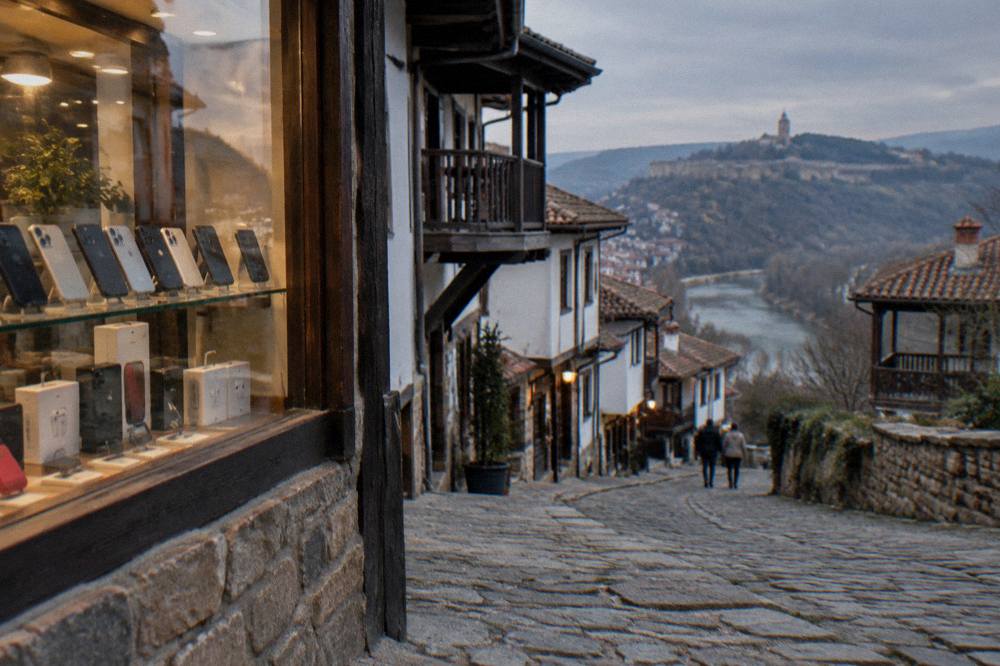
For timing the whole trip, the best time to visit Veliko Tarnovo guide weighs the seasons, and the events calendar rewards a working connection: the International Folklore Festival ran 18 to 25 July in 2026, Arbanasi Summer Music ran 15 to 25 July 2026, and the city holiday falls on 22 March every year. The Christmas market in Marno Pole park follows a late-November-to-1-January pattern, with 2026 dates announced closer to the season by the municipality, which is precisely the kind of fact a phone checks in real time. A look at the Veliko Tarnovo weather page rounds out the seasonal picture before the trip is locked in.
Common Questions About ESIM And Mobile Data In Bulgaria
Is Bulgaria In The EU Roaming Zone?
Yes. Bulgaria is an EU member state and follows the European roaming framework, so a plan that includes EU roaming carries its domestic terms into the country. Bulgaria has also been a full Schengen member since 1 January 2025.
Does Bulgaria Still Use The Lev?
No. Bulgaria adopted the euro on 1 January 2026 at a fixed rate of 1.95583 lev per euro, and every local price is now quoted in euro. Old advice about paying in lev is out of date.
Do You Need ETIAS To Visit Bulgaria?
No ETIAS authorisation is currently required, and no start date for the scheme has been announced. The Entry/Exit System, a biometric border register rather than a travel authorisation, has run at all Schengen external borders since 10 April 2026.
Can You Buy A SIM Card In Veliko Tarnovo?
Physical SIM shops exist in Bulgarian cities and the widest choice is at the arrival gateways of Sofia, Varna and Bucharest. Check the current price on the official ticket page before booking any related product, and treat Veliko Tarnovo's own retail offer as smaller than the capital's.
What Is The Emergency Number In Bulgaria?
112. It is free of charge, works across Bulgaria and the wider EU, and is the number for police, fire and medical services.
Will An ESIM Work In Veliko Tarnovo And On Day Trips?
An eSIM on a European network plan works in the city and along the main corridors, while the remote day-trip spots reward offline maps as a backup. Download map tiles for northern Bulgaria before setting out.
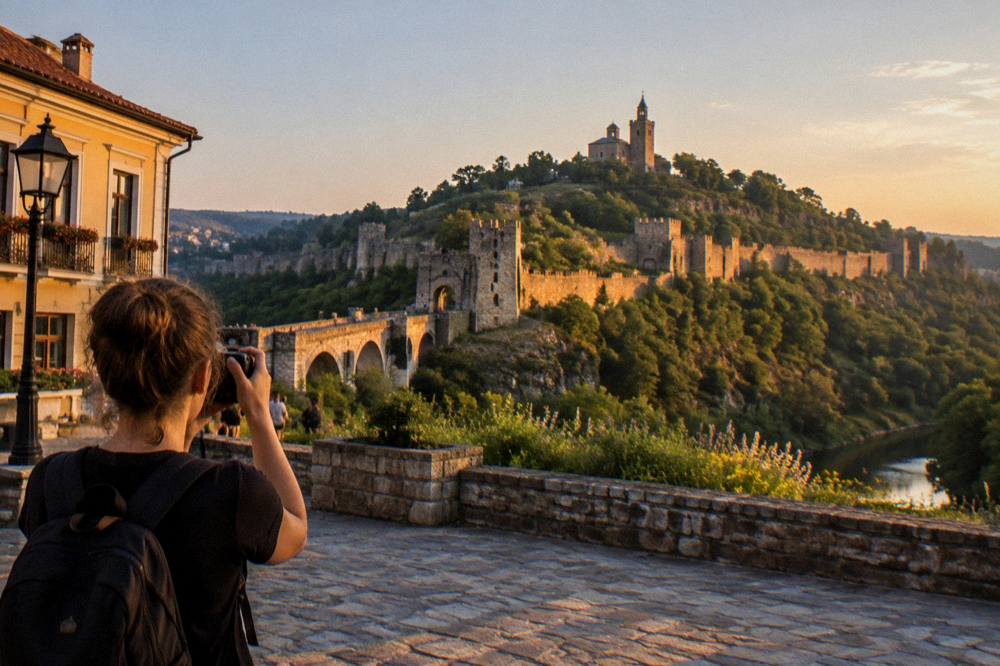
A phone that works from the first minute turns the whole region into a day trip: the fortress hours, the announced evenings of the Sound and Light show, the train times and the mountain roads all live online now, and the city rewards the visitor who arrives already connected. Set the plan up at home, keep the home line for banking codes, and let the eSIM carry the maps through the hills of northern Bulgaria.